
Vladimir Putin is shaking the world order in a way that brings to mind something I have heard Russians say about themselves: We Russians punch a man in the face to make him understand us better. Invasion is not going to make friends of the Ukrainians. Besides, it makes no sense to claim that Ukraine is an integral part of the historic Russian Empire and then to treat it like a conquered colony.
The Russian language borrows extensively from other languages. Derived from “masquerade,” maskirovka is a loan word that broadly means “deception,” with ambiguous overtones of getting away with what one ought not to get away with. In politics and on the battlefield, every kind of deception is therefore justified, and one prime expression of it is known as vranyo, for which there is no equivalent in English. The word is a figure of speech that captures a favorite Russian gambit of telling lies that nobody is expected to believe but that cause confusion all the same. Dostoevsky wrote a classic essay on the subject, and it is analyzed at length and with authority in Ronald Hingley’s The Russian Mind (1977). A typical example of it is Putin’s daily promise that Russian troops had taken up stations on the Ukrainian border solely as an exercise when in fact he was deep into planning the invasion. No vranyo goes too far. Why, Europe has been so aggressive that Putin is compelled to threaten that he might have to “vitrify” the whole continent.
Putin’s maskirovka has no bearing on reality. In the time of the czars, Ukrainians and Russians were seen as members of the same family. The Bolshevik Revolution then imposed communism; means could be bad and even murderous if ends — resolving the wrongs of humanity — were good. Putin sees no reason to remind anyone that between 1917 and 1945, Ukrainians endured two onslaughts close to genocide. Behind an international façade, Stalin and the Politburo had the interests of Russia at heart, and non-Russians were there to serve them. In pursuit of agricultural policy, Stalin deliberately imposed famine on Ukrainians, as a result of which 11 million of them died of starvation in 1932–33. This is one of the 20th century’s unforgivable and unforgettable crimes. In 1941 the German army invaded and over four years of occupation killed 6.85 million Ukrainians, according to one reliable estimate. In every country under Nazi occupation, nationalist movements resisted, but some Ukrainians were so anti-Russian that they collaborated with the Germans. Putin stigmatizes this minority by calling for “denazification” today. The Organization of Ukrainian Nationalists (OUN) was a network at home and abroad that kept alive the idea of national sovereignty. Partisans attacked the Nazis and then the Soviets. For the KGB, the OUN was nothing more than bandits and terrorists, and they suppressed it, assassinating Stepan Bandera, its leader, with a poison gun in Munich in 1959.
Born in 1952, Putin could never have thought that he would live to see that in the eyes of the public the familiar communist belief system had proved a harmful fantasy. By the time he was 40, he had already come to the conclusion that Russia was confessing to mistakes it had not actually made. His speeches and pronouncements convey a needling sense of resentment that so many people had suffered so much and there was nothing to show for it. The collapse of the Soviet Union, he said openly in 2005, was “the greatest geopolitical catastrophe of the century.” The inhumanity of such a statement has to be a matter of character. Oleg Gordievsky, the KGB rezident (chief) in London who was a British double agent, once told me that he had met Putin at some point and the coldness in Putin’s eyes was all one needed to know about the man.
Putin began his career with the KGB and was stationed in Dresden, one of the East German cities at the center of the Cold War. He learned German. He would have had dealings with Hans Modrow, the Communist Party first secretary who dutifully destroyed all the files compromising Westerners, most of them apparently German politicians, and with Alexander Schalck-Golodkowski, an inventive international fraudster whose scams in precious metals, insurance, and stocks lent a false glow of success to the bankrupt East German economy (a great subject for a best seller).
Back in Saint Petersburg, then called Leningrad, Putin reached the rank of lieutenant colonel in the KGB and began to work at a humdrum level for the party. His move to Moscow was presumably to take part in the ongoing dispute between Mikhail Gorbachev, the party general secretary, and Boris Yeltsin, the president with the courage to say that some things were wrong in Russia and he could put them right. Both men saw themselves as absolute rulers. Normally, one of them would have sent the other into exile or had him murdered. In 1991, a number of Communist hard-liners, among them the head of the KGB, staged a coup designed to save the rule of the party. The coup was planned so carelessly and incompetently that it had the contrary effect of leaving Yeltsin at the top and sidelining Gorbachev. The republics proceeded to declare their independence. Though it looked as though the Soviet Union had fallen apart by accident, in fact it was a triumph of nationalism, the genuine and permanent enemy of communism. Ukrainians, Balts, Uzbeks, and all the rest of them could feel liberated, but Russians had to face up to the immense and shameful crimes that had been committed in their name.
A man in Yeltsin’s position had the unusual opportunity to set up the institutions for the proper functioning of a democratic political system. But Yeltsin showed no interest in anything so academic; he played the clown and was often drunk on public occasions. In 1994, landing at Shannon airport in midmorning, he failed to emerge from the plane and so did not inspect the guard of honor waiting for him. Widely shown on television, a film of this incident, with Irish dignitaries standing and waiting on the tarmac, made Yeltsin a figure of fun rather than a responsible president. In Washington in 1995, the guest of President Clinton, Yeltsin got drunk and went out in his underwear to hail a cab, saying he wanted a pizza. He co-opted his daughter Tatiana Dyachenko and other relations and friends into a team recognized and mocked throughout the country as “the Family.” They were eager for power and riches, and none too fastidious about how to acquire them. Thanks to the Family, in a few short months Putin, then still relatively an unknown quantity, managed to become first director of the Federal Security Service (FSB), successor to the KGB, and then — without explanation for the choice — Yeltsin’s successor as president of Russia. There was one condition. Putin was obligated to pass a presidential decree that corruption charges against the outgoing president and his relations would not be pursued. Sure enough, Putin’s very first presidential decree, signed on December 31, 1999, duly placed Yeltsin and the Family outside the law, allowing them to keep their ill-gotten gains. Evidently Putin knew a good thing when he saw it.
Putin and a tame friend, one Dmitry Medvedev, openly played an almost childish game with the Russian constitution whereby when one was president, the other was prime minister. When their terms of office were completed, they changed places and carried on as before. A small and easily managed amendment to the constitution was enough to allow Putin to stay in power from 1999 to the present, and possibly up to 2036.
The great 19th-century Russian historian Nikolay Karamzin thought that the one word “thieving” summed up the state of his country. The Putin era has presented the watching world with the figure of the oligarch. The transfer of the managed economy to capitalism was an experiment involving trial and error. Economists, some of them advised by counterparts from the West, had plans and proposals for privatization. It is no surprise that, in practice, privatization turned out to be ferocious asset-stripping. Fortunes of a size hitherto unheard of depended on acquiring state property on the cheap. Businessmen, real or pseudo, appeared from nowhere with all sorts of get-rich-quick schemes. Inside jobs might entail knowing whom to bribe or pay off and then how to launder the money and keep it safe from nosy inspectors. Putting a foot wrong is a threat to life and liberty.
The title of Supreme Oligarch belongs hors concours to Putin. After starting with nothing, he now possesses 20 villas and palaces, nine of them built in the ten years he’s served as president. Anders Åslund, the Swedish economist who is one of the foremost authorities on the subject, estimates that Putin has a fortune somewhere between $100 billion and $130 billion. (Anecdotal evidence: I have a friend who sold his collection of Russian art ostensibly to the Russian state, only to learn that it was delivered to one of Putin’s houses.)
Putin’s critics finish in prison or in the graveyard. Daily life in Russia is a continuous scandal of Stalinism at second hand. Mikhail Khodorkovsky was once the chairman of Yukos, a company with rights in several Siberian oil fields. Said to be worth $15 billion, he was one of the first to take a position against Putin, whose revenge was to have Khodorkovsky tried for tax evasion and fraud and sentenced to 14 years in prison. (He was released after ten and left Russia in 2013.) In 2000, some three weeks after Putin had become president, Boris Berezovsky accused him of illegal tampering with the constitution. One of Berezovsky’s many holdings was a television channel, and when this was sequestered, he went into exile in England. There he continued to campaign against Putin until, in 2013, he was found alone and dead in his house. Sergei Magnitsky, a tax lawyer rather ironically working for the grandson of the leading American communist Earl Browder, discovered that tax officials had stolen $230 million. Pursuing that tax-fraud case, he was arrested in 2008 and a year later murdered in prison.
In 2000, Putin resolved the fighting in Chechnya by reducing Grozny, its capital, to rubble — for Putin evidently the look of victory. Anna Politkovskaya, a first-rate journalist, covered this and other atrocities. Found dead in the elevator of her apartment in 2006, she was also one of half a dozen guinea pigs used to test a lethal nerve agent that was available only through government sources. Another victim was Viktor Yushchenko, who survived poisoning in 2004 to become the Ukrainian president (2005–10) but was left with a disfigured face. Boris Nemtsov and Alexei Navalny were both potential prime ministers. The former was out walking close to the Kremlin on a February day in 2015, when a white van drew up and a man got out and shot him dead. The latter exposed corruption and was poisoned with a nerve agent in 2020; he survived and was sent to prison on fake charges.
Memorial, a Russian rights group that records crimes against humanity in the Soviet Union, especially under Stalinism, has been closed down. In 2020, according to the latest official figures, there were 380 political prisoners in Russia. Maskirovka or not, Russians are being submitted to the gradual rewinding of their nation’s history.
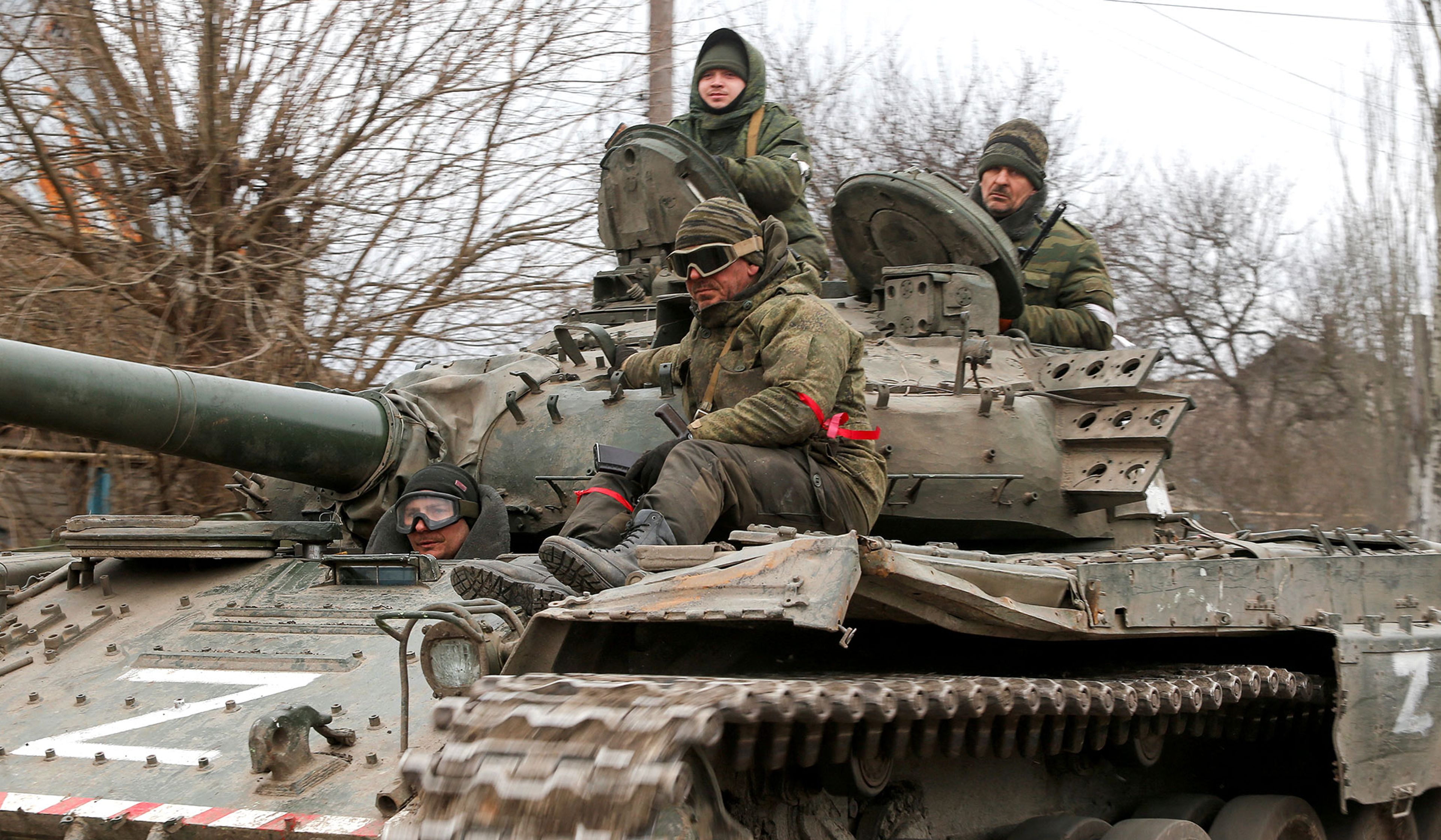

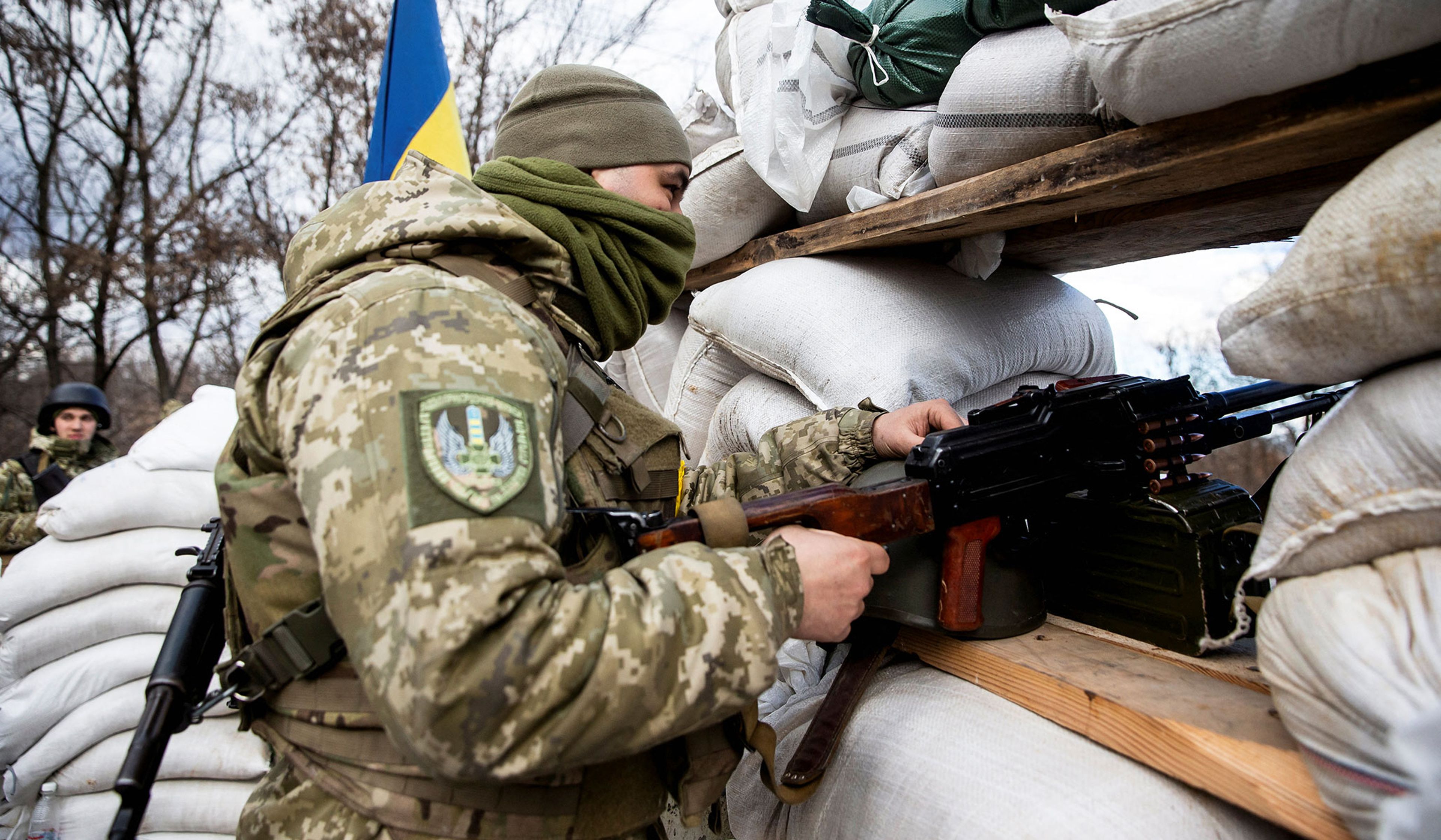
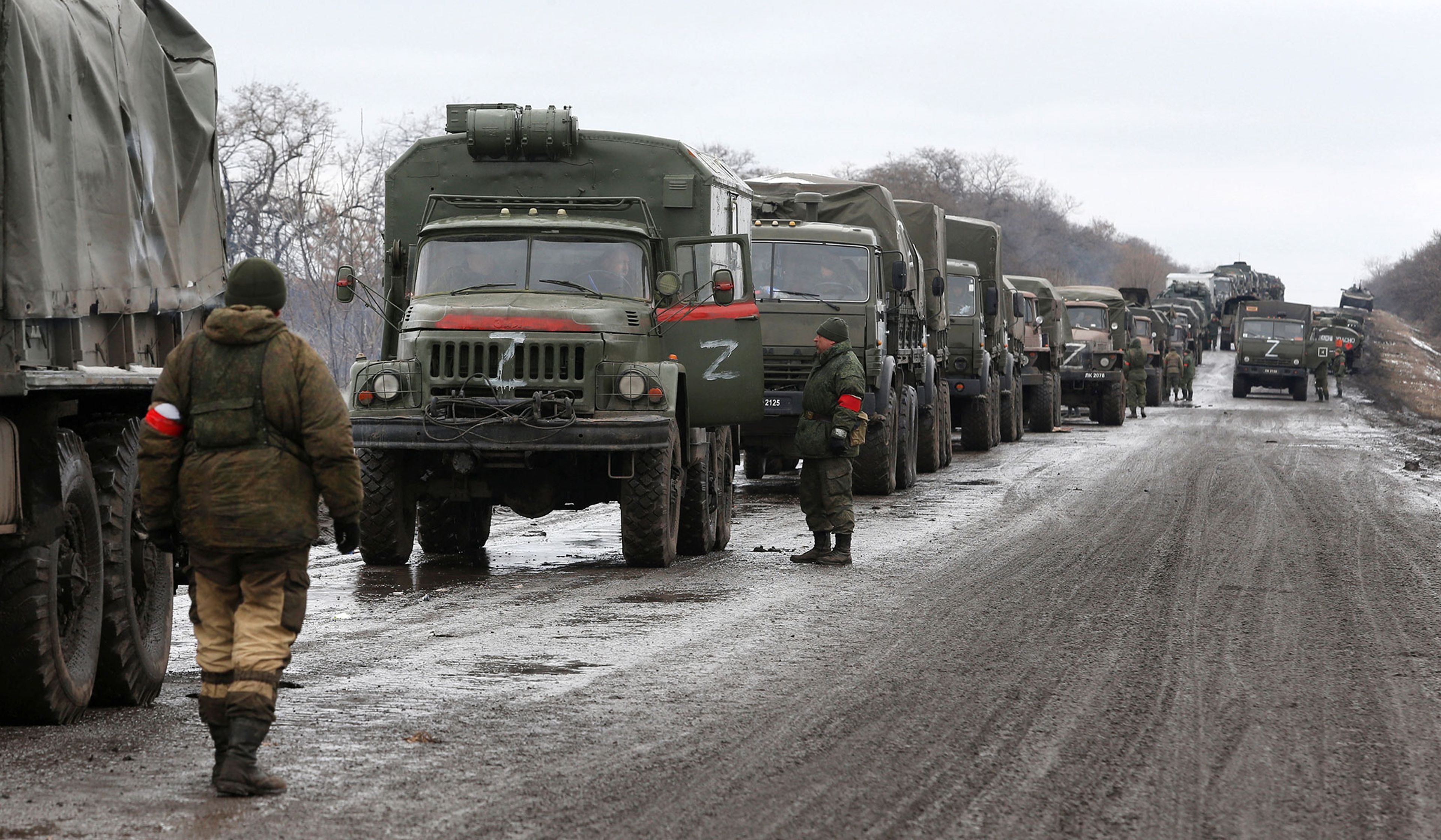
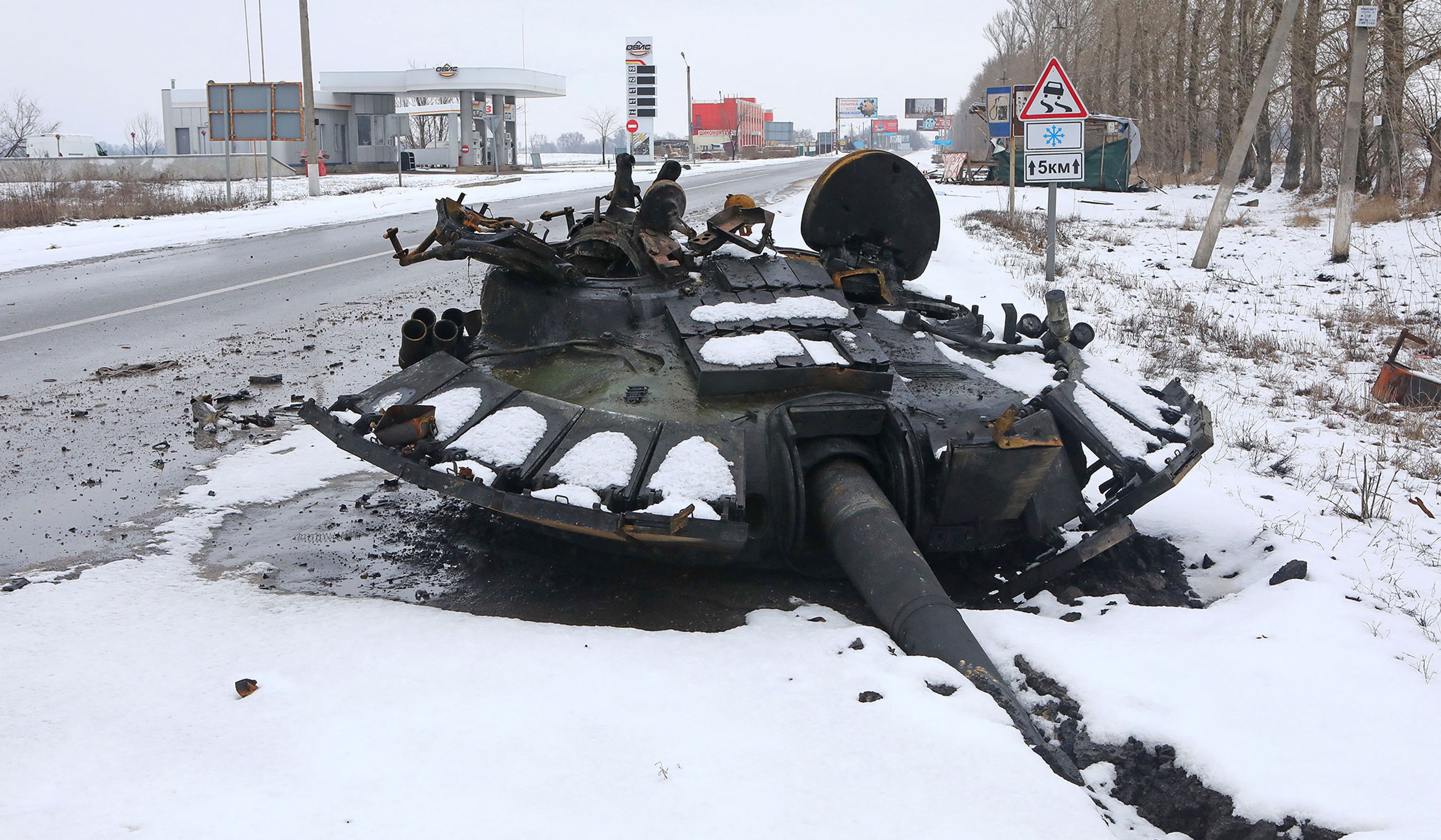
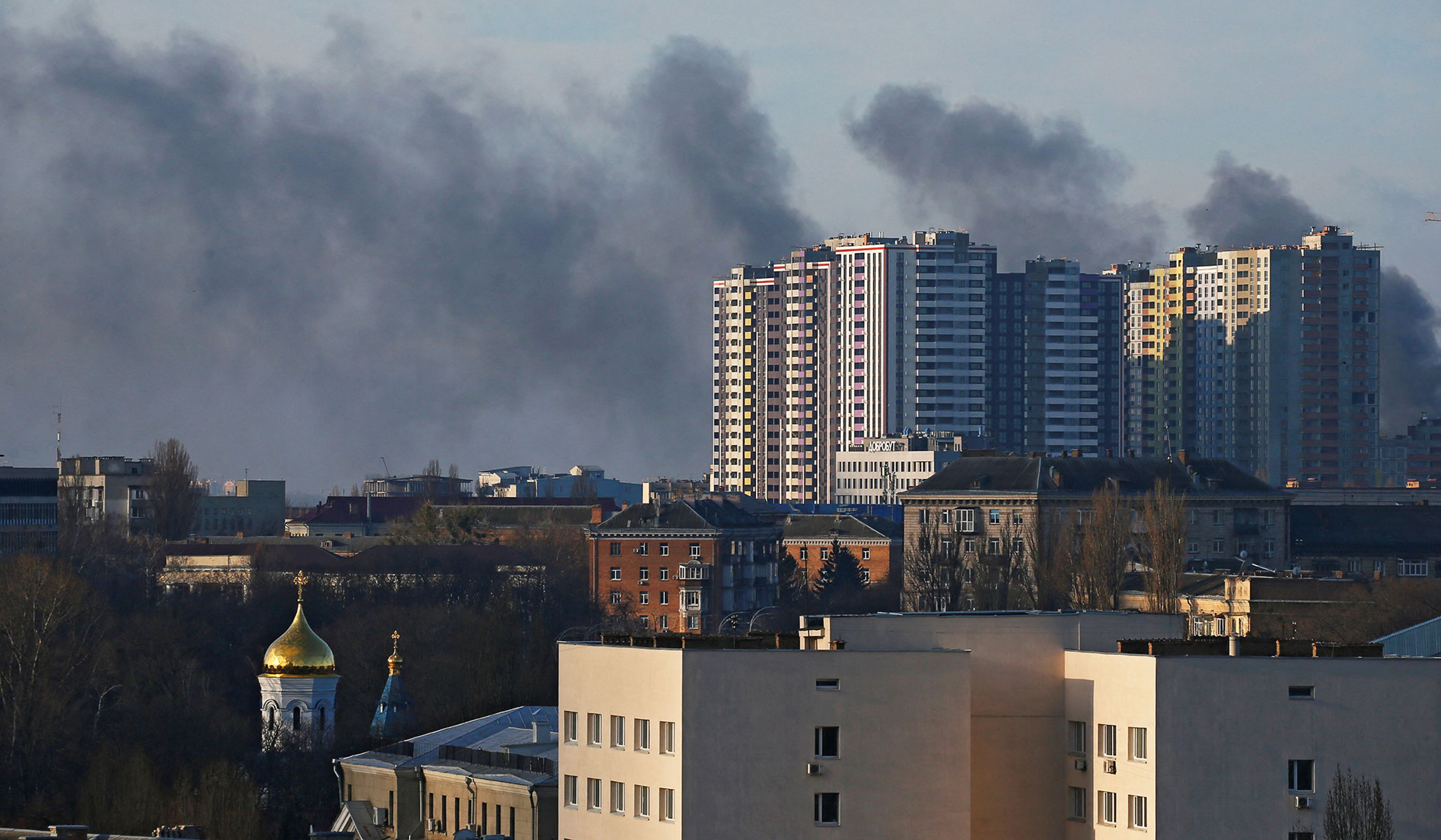
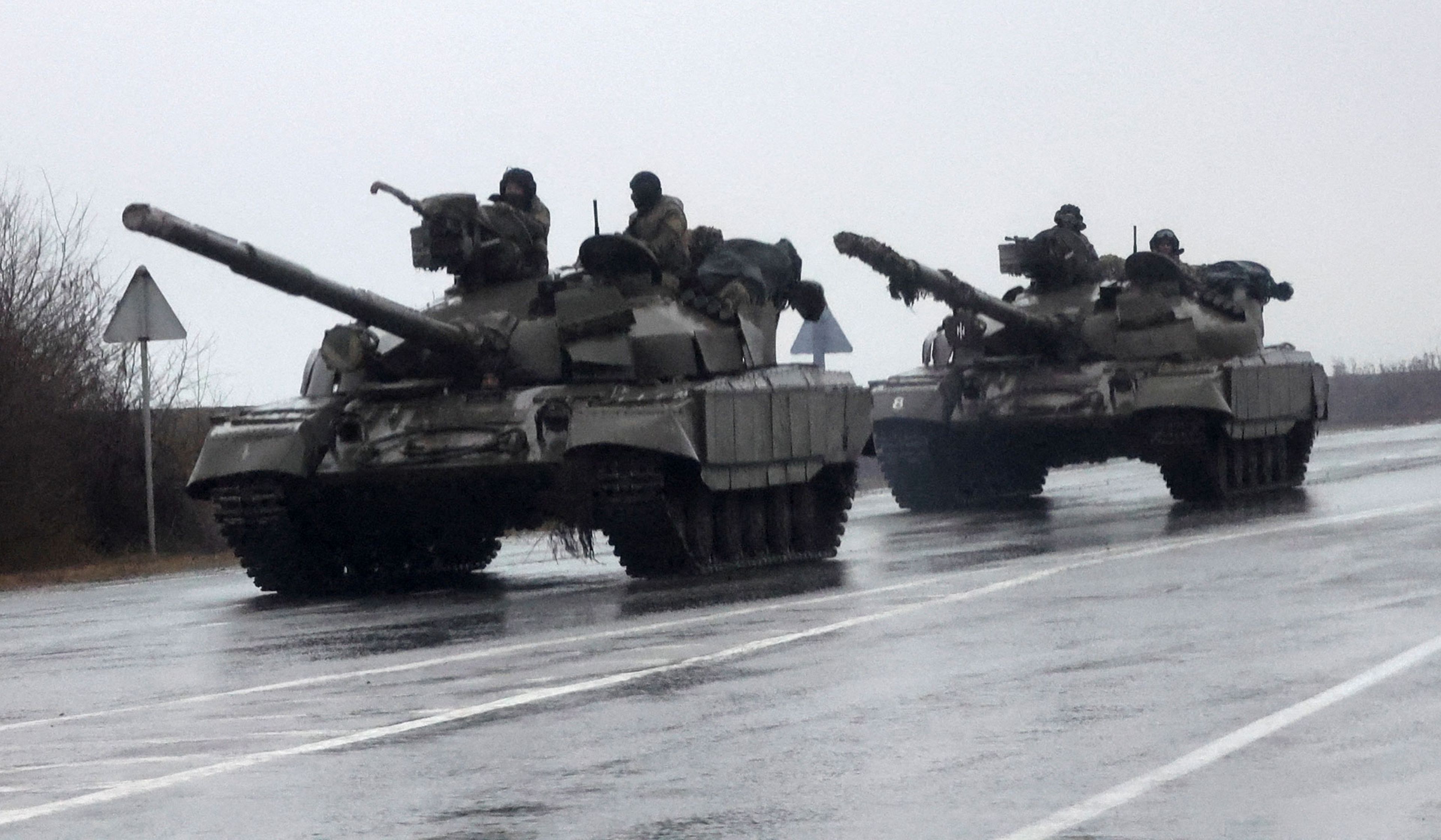
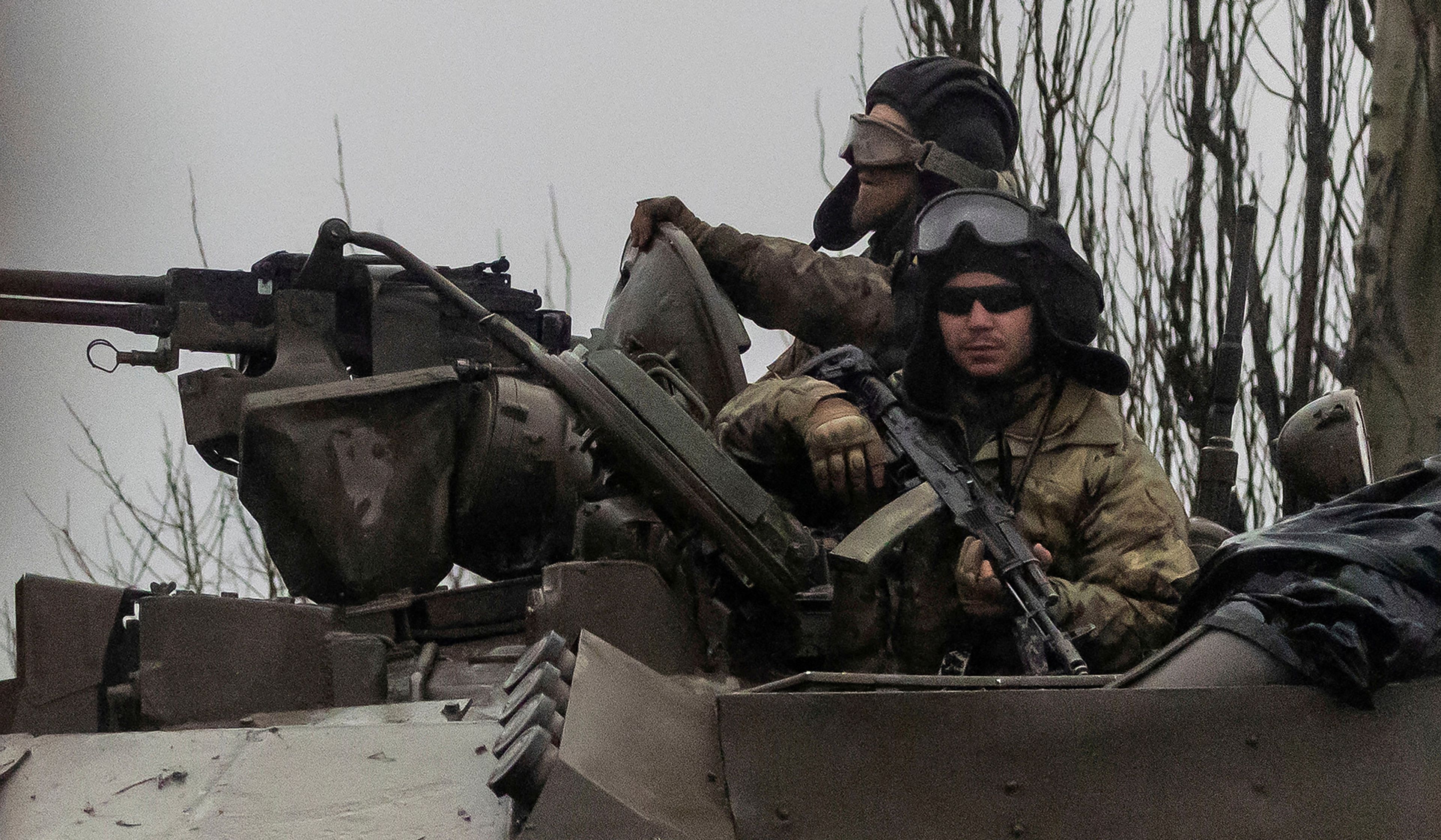
Pro-Russian troops in uniforms without insignia atop of a tank with the letter “Z” painted on its sides in the separatist-controlled settlement of Buhas (Bugas) in Donetsk Region, Ukraine, March 1, 2022.
Alexander Ermochenko/Reuters










Comments