The Ten Year War, liberal journalist Jonathan Cohn’s account of the fight over Obamacare, does not exactly make for gripping reading — even for those of us who take a keen interest in the ever-divisive health-care law.
It’s not about the policy of Obamacare and its pros and cons, at least not predominantly. Instead, it focuses on the processes through which Obamacare became and remained the law, drawing on Cohn’s years of reporting on the debate and interviewing the major players. Readers learn all about the high-level discussions, the meetings hashing out the nitty-gritty details, the deals with interest groups, the contentious town-hall meetings, the razor-thin votes. To stick with this book through 300-plus pages, one really has to care how the sausage was made — and politely ignore the narrative’s leftward tilt.
Yet there are big lessons for conservatives here. The Democrats succeeded in passing Obamacare, while Republicans failed numerous times to destroy it, and The Ten Year War explains why. The Right faced a host of disadvantages: It had less interest and expertise in health care, less power in Congress when it got a chance to pass something, less coordination and agreement as to what the final policy should look like, and insufficient sway on the Supreme Court when that body got a chance to address the law’s legal defects.
In essence, we neglected an important issue, didn’t win enough elections, and didn’t know what to do with Congress even when we controlled it.
Cohn starts with a brief look at the longer history of American health care and the efforts of presidents to get the government more involved. FDR considered making health care part of the New Deal but feared backlash from state medical societies. Harry Truman made a push for single-payer but ultimately failed. JFK started, and Lyndon Johnson finished, the drive to establish Medicare and Medicaid. Richard Nixon put forward a plan for the government to cover the uninsured. And of course, Bill Clinton began his presidency advocating a sweeping health-care plan that slowly but spectacularly went down in flames amid opposition from conservatives and interest groups.
The obvious pattern here is that, Nixon excepted, all these presidents were Democrats. By the time Obama came on the scene, the party had made health care a priority for half a century — and was strongly dedicated to the proposition that the government should provide care to people who couldn’t afford it. They tried over and over again, and they developed a healthy stable of health-care experts. The Right fought these efforts, as did industry groups, with, for example, Ronald Reagan arguing against socialized medicine alongside the American Medical Association in the 1960s. But the issue was simply never as high a priority for conservatives. They mainly reacted to what liberals proposed.
Thus it was hardly surprising when Barack Obama showed up with a strong desire to pass health-care reform, though some advisers feared a repeat of the failure under Clinton. Obama had released a framework during the campaign, and numerous top-tier health-care experts were on board to design the policy. And despite Republicans’ general neglect of health care, the basics of Obamacare bore a strong resemblance to a law Mitt Romney had signed as governor of Massachusetts, with support from both the public and scholars at the Heritage Foundation, a conservative think tank.
Perhaps most important, though, was the partisan balance of Congress. Obama’s Democrats controlled the House and had a 60-vote, filibuster-proof majority in the Senate. If they stuck together behind a plan, they could pass it, even if they couldn’t draw any Republican votes on the strength of the Romneycare comparison. This was crucial, because no Republicans ended up coming along for the ride.
Cohn notes various popular theories as to why Romneycare, but not Obamacare, got some conservative support — partisanship, growing distrust of government on the right, the fact that Obama was black. There were also some key differences between the two situations, including that Romneycare was a state-level reform that didn’t threaten federalism, and that Massachusetts’s health-care system was a mess before Romneycare in ways that the law helped to fix. Specifically, the state had already forced insurers to enroll people who didn’t sign up for coverage until after they’d gotten sick, a problem that a mandate requiring uninsured individuals to buy coverage can address.
Whatever the reason for Republicans’ unanimous opposition, it couldn’t stop the Democrats. They spent months hammering out a deal that could pass, meaning, for example, that it was acceptable to moderates worried about expanding the deficit and to industry groups with the firepower to kill the bill if they became motivated to spend lots of money on ads. The full details of all this are not particularly interesting, frankly, but one aspect of the process stands out: The House and the Senate were in constant communication with each other to ensure that their plans didn’t drift too far apart, with the president helping to guide the process as well.
Then everything came to a head. The House and Senate passed their bills, differing in only a few important respects; the final step was for the two houses to work out a compromise in a conference committee and re-pass the final version. But as those negotiations dragged on, Republican Scott Brown won his special election in Massachusetts, taking over the late Ted Kennedy’s Senate seat.
The Senate bill had passed with the bare minimum of 60 votes, meaning that the seat’s changing hands would doom the final bill. The Democrats saved the effort by eliminating the need for a final bill: The House passed the Senate’s bill verbatim, despite the fact that it still needed work. Then the Democrats cleaned up the law, as best they could, with a separate bill passed through the un-filibuster-able “reconciliation” process, in which all provisions in a bill have to be budget-related.
The law was unpopular and vulnerable for years afterward, but the Right kept failing to destroy it.
There were two serious legal challenges, both of which failed despite a majority of the Supreme Court’s having been appointed by Republican presidents. One argued that the federal government lacked the authority to require Americans to buy health insurance. The other argued that, because the law quite explicitly offered subsidies only on insurance exchanges established by states, subsidies should not be available in states that relied on the federal exchanges instead of creating their own. Bush II appointee John Roberts sided with the Court’s liberals in both cases to make a majority, and Reagan appointee Anthony Kennedy joined in for the exchange-subsidies case. The only aspect of the law to die was a threat to cut off all Medicaid funding to states that refused to expand the program. (Yet another challenge, still ongoing, is far weaker legally and almost certain to fail, though Cohn asserts that “virtually any outcome now seems plausible” because there are so many of those evil Republican-appointed justices.)
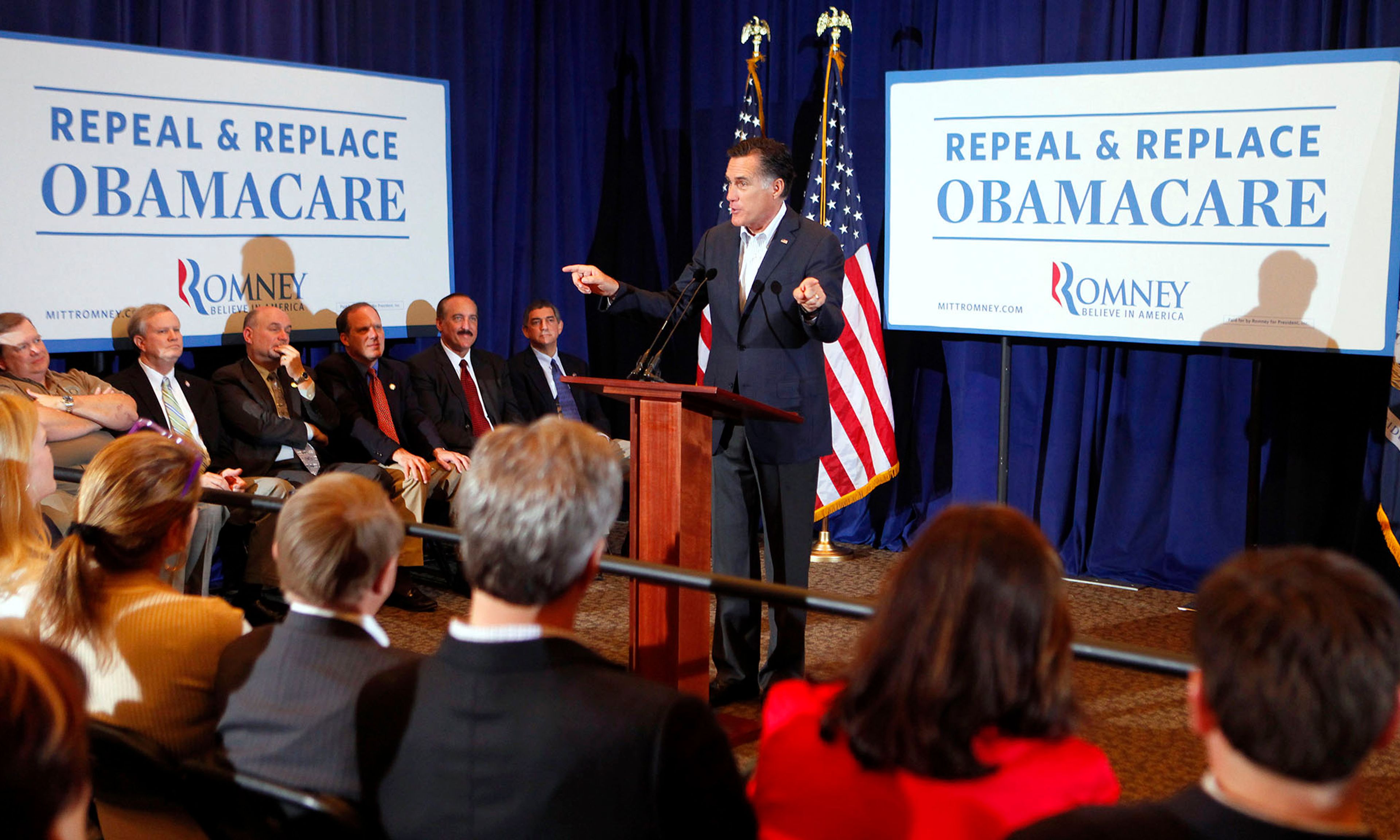
Then came the 2016 election of Donald Trump, paired with GOP majorities in the House and the Senate. But attempts to repeal and replace Obamacare didn’t turn out much better than the lawsuits had.
For one thing, Republicans didn’t have 60 votes in the Senate, meaning any changes they made would have to fit into the confines of the reconciliation process. But just as important, Republicans weren’t all on the same page. They knew they didn’t like Obamacare, but they didn’t know what to replace it with. The Freedom Caucus in the House was willing to kill measures it deemed insufficiently aggressive; moderates in the Senate were willing to kill measures that messed with Obamacare’s more popular provisions or cut too much from Medicaid. And, unlike the process that led to Obamacare’s creation, when it came to repealing the law, the two houses didn’t coordinate their actions from the beginning to find common ground, and the White House wasn’t overly helpful either. To top it all off, the Congressional Budget Office estimated that tens of millions of Americans would lose coverage under the GOP’s proposals, largely because the agency thought people wouldn’t buy plans if they were no longer forced to.
In one particularly embarrassing episode, Republicans in the Senate tried to pass a “skinny repeal” — basically, a rollback of some key Obamacare provisions rather than a full overhaul of the law — that they didn’t even want to become law. The idea was to skip to the next part of the process, where the two houses would conference together directly to hammer out a real plan. Three Republican senators, including John McCain, voted with the Democrats to kill that bill.
Ultimately, two different repeal efforts died in 2017. Republicans had to settle for ending the individual mandate in their tax-cut bill at the end of the year, along with some executive orders from the Trump administration to expand access to lower-cost plans. The former victory will last, since it was achieved through actual legislation and the mandate’s end has proved less consequential than many expected. But the executive orders will likely come and go as the two parties take turns occupying the presidency.
A deep-in-the-weeds explanation of the grueling process that led to our current health-care landscape is not for everyone. But it’s essential reading for Republican policy-makers who want things to turn out differently next time.












Comments