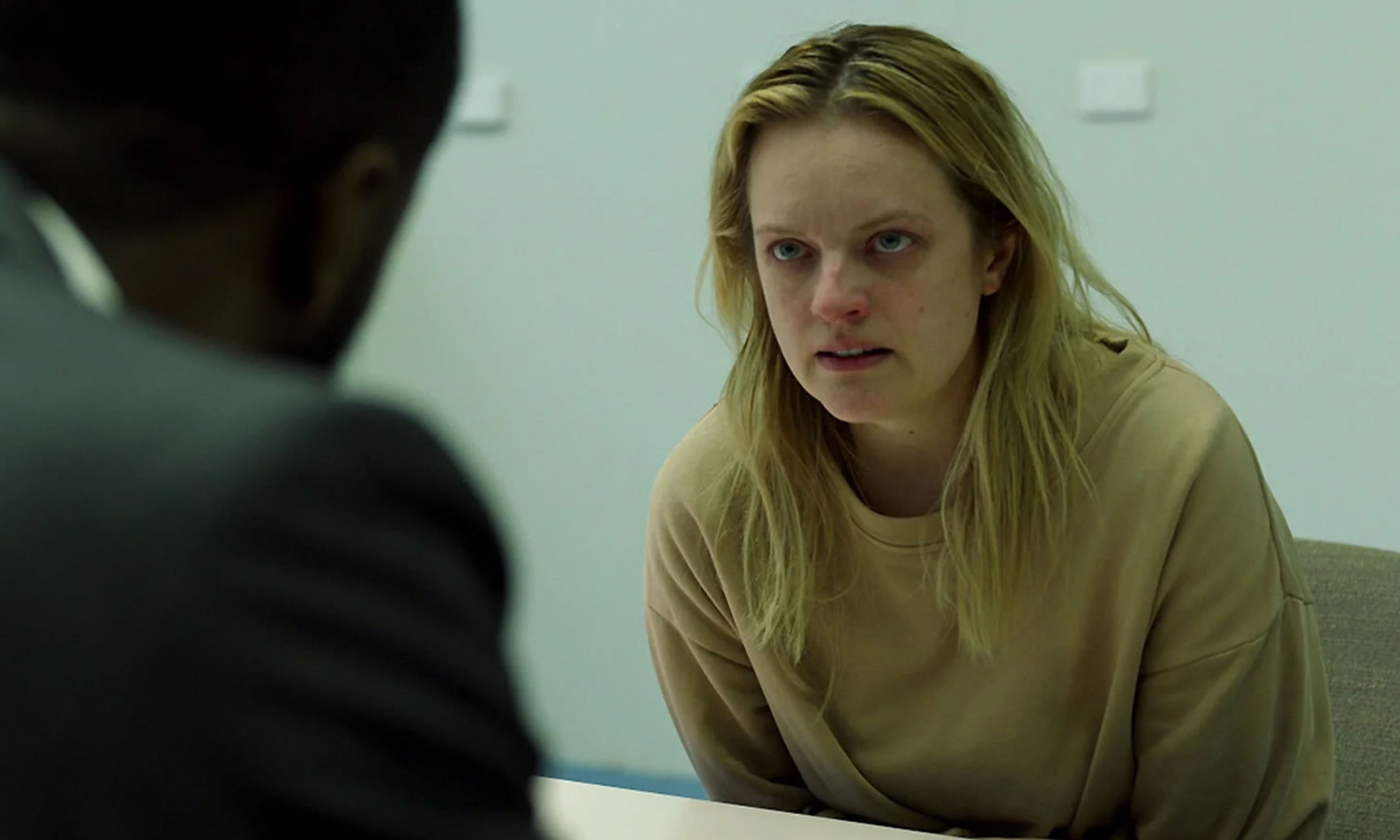
Elisabeth Moss first entered cultural consciousness as the audience surrogate in the first season of Mad Men: the frumpy, awkward, innocent, and entirely unready for Madison Avenue secretary to whom all the ways of late-1950s advertising culture needed to be explained, and whose eventual transformation and ascent made her an ideal avatar for viewers who wanted to simultaneously luxuriate in the glamour of America before the social revolutions and imagine themselves as trailblazers who would have fused the old cool with the new female empowerment. A shot from the final season, of Moss’s Peggy Olson leaving one job for another in sunglasses and a bright late-Sixties outfit, trailing a cigarette from the corner of her mouth, became one of the most widely trafficked girlboss GIFs: You’ve come a long way, baby, in one image, one character arc.
That was pre-Trump Moss; post-Trump Moss became a different kind of audience surrogate, playing Offred in Hulu’s immensely successful adaptation of The Handmaid’s Tale. In that show the arc of Mad Men is reversed: Instead of watching a talented woman rise through and despite the patriarchy, we watch the patriarchy take its revenge on upper-middle-class feminism, with Joseph Fiennes’s friendly but finally malignant Commander replacing Jon Hamm’s flawed but fundamentally supportive Don Draper as the archetype of masculinity, and literal physical torture replacing the social slights and cruelties that Peggy Olson once survived. And then, of course, once the show (unfortunately) leaves Atwood’s book behind we get to watch Offred fight back, using a different set of gifts from the ones Olson used in her ascent, becoming not a trailblazer or a transformer but a raging revolutionary.
It’s a testament to Moss’s skill set as an actress that she works in both of these roles—as the naïf-turned-girlboss and as the martyr-turned-avenger. (It’s also a testament to the ironies of Hollywood that Moss has built her career on these kinds of roles while remaining a member of the Church of Scientology.) And for anyone who doesn’t care to stream the whole of Mad Men or the whole of The Handmaid’s Tale, you can get a sense of the secrets of her stardom in the latest movie version of H. G. Wells’s old sci-fi tale The Invisible Man, which recenters a story that usually focuses on the disappearing scientist by making the woman he stalks and torments the protagonist instead.
Unlike some other Me Too–era gender-role reversals, this one works pretty well, mostly because it’s true to the original story concept, which assumed that invisibility would breed sociopathy. And Wells’s idea of a scientific breakthrough allowing adepts to pursue invisible surveillance is also easily updated for an age of digital anxiety: Here the sociopath is named Adrian and played—though he barely appears—by Oliver Jackson-Cohen, and his character is some sort of tech gazillionaire (“He’s a world leader in the field of optics,” someone says—hint, hint) who lives in a cliffside home near the world capital of paranoia, San Francisco.
As the movie begins, his Bluebeard’s castle has become a prison for his wife, Moss’s Cecilia, whose sleeping-pill-abetted escape past various video cameras takes up the taut opening scene and delivers her to the dubious safety supplied by her sister (Harriet Dyer) and the ranch house of their policeman pal James (Aldis Hodge) and his daughter Sydney (Storm Reid).
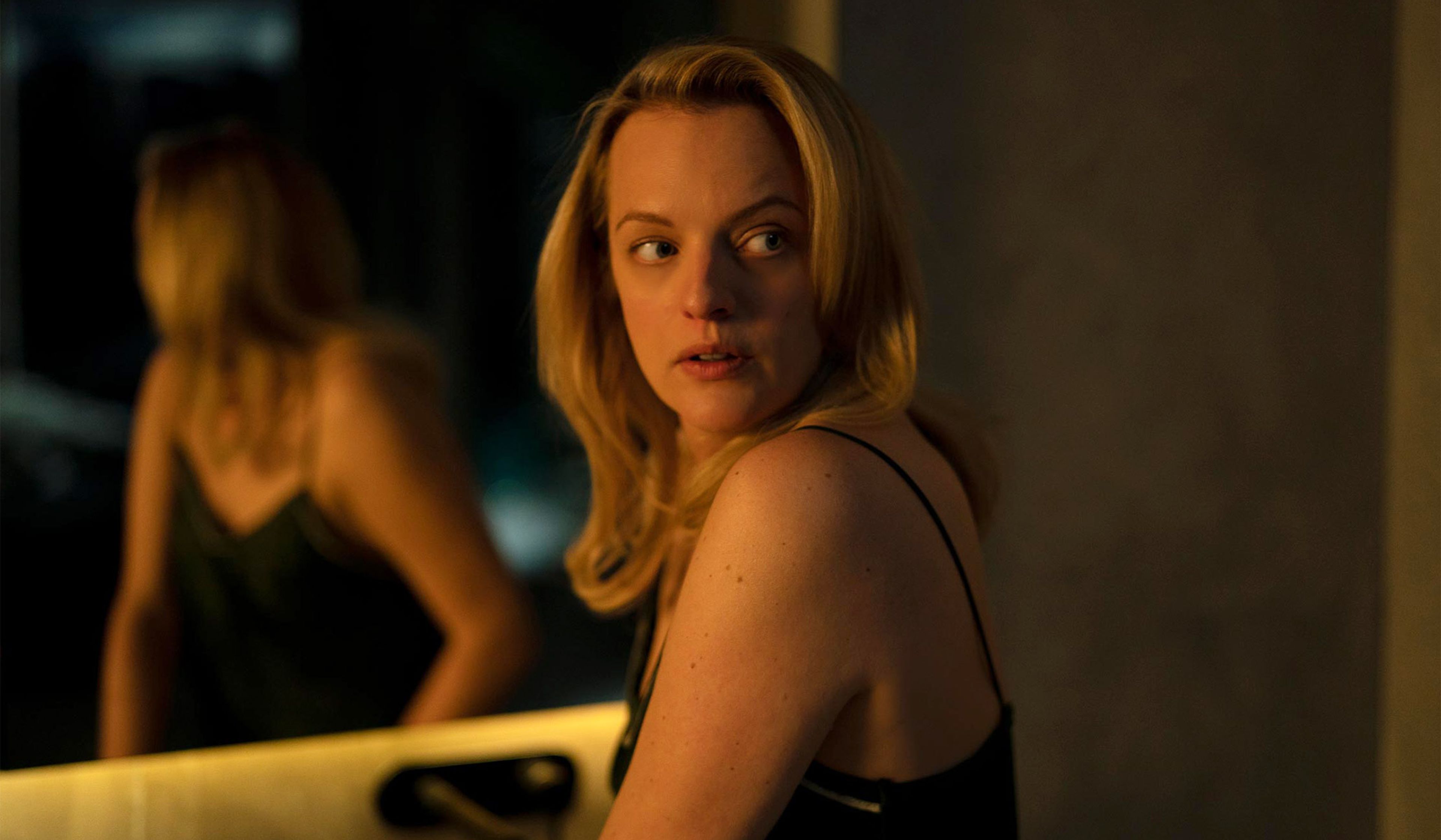
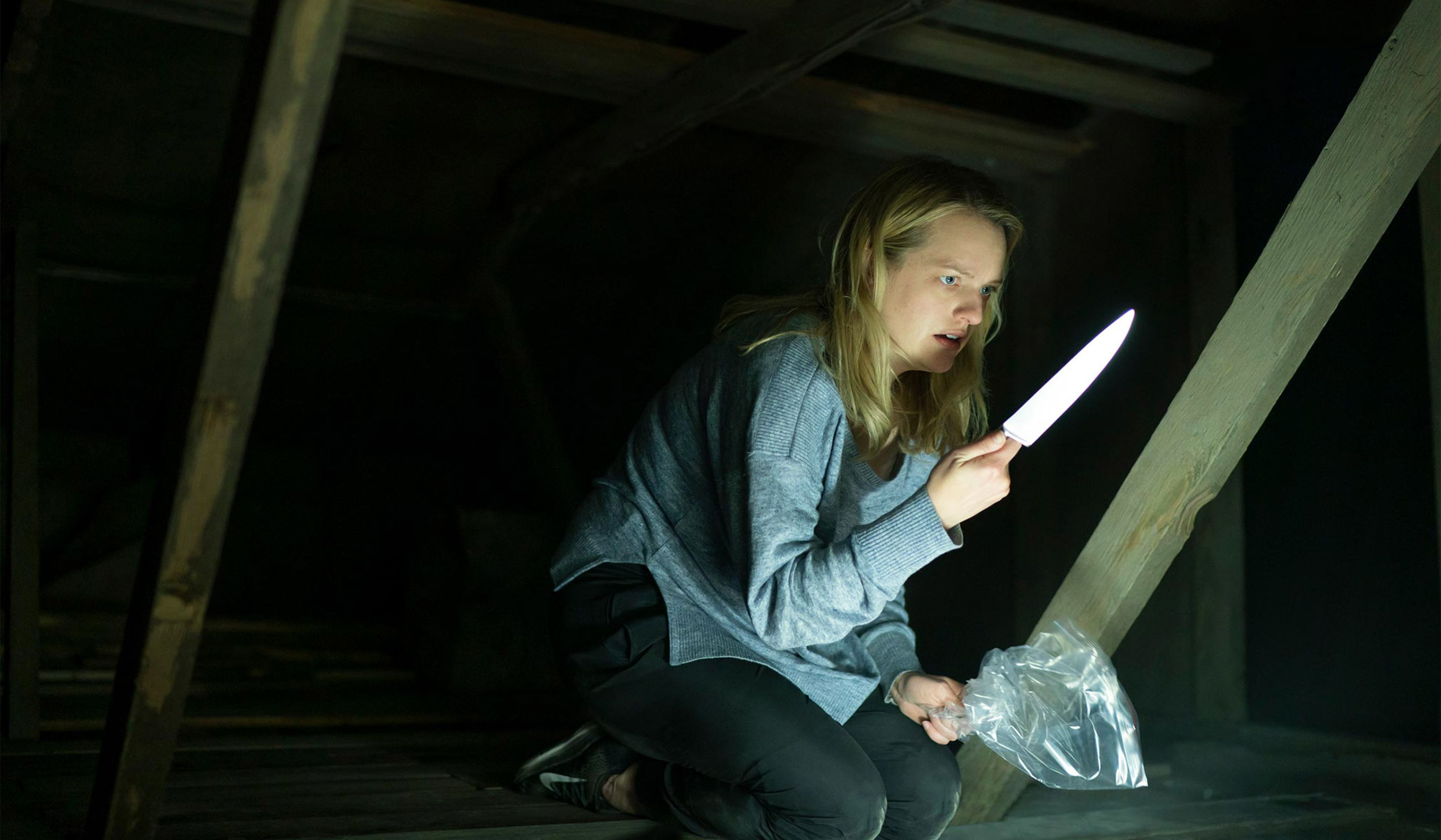


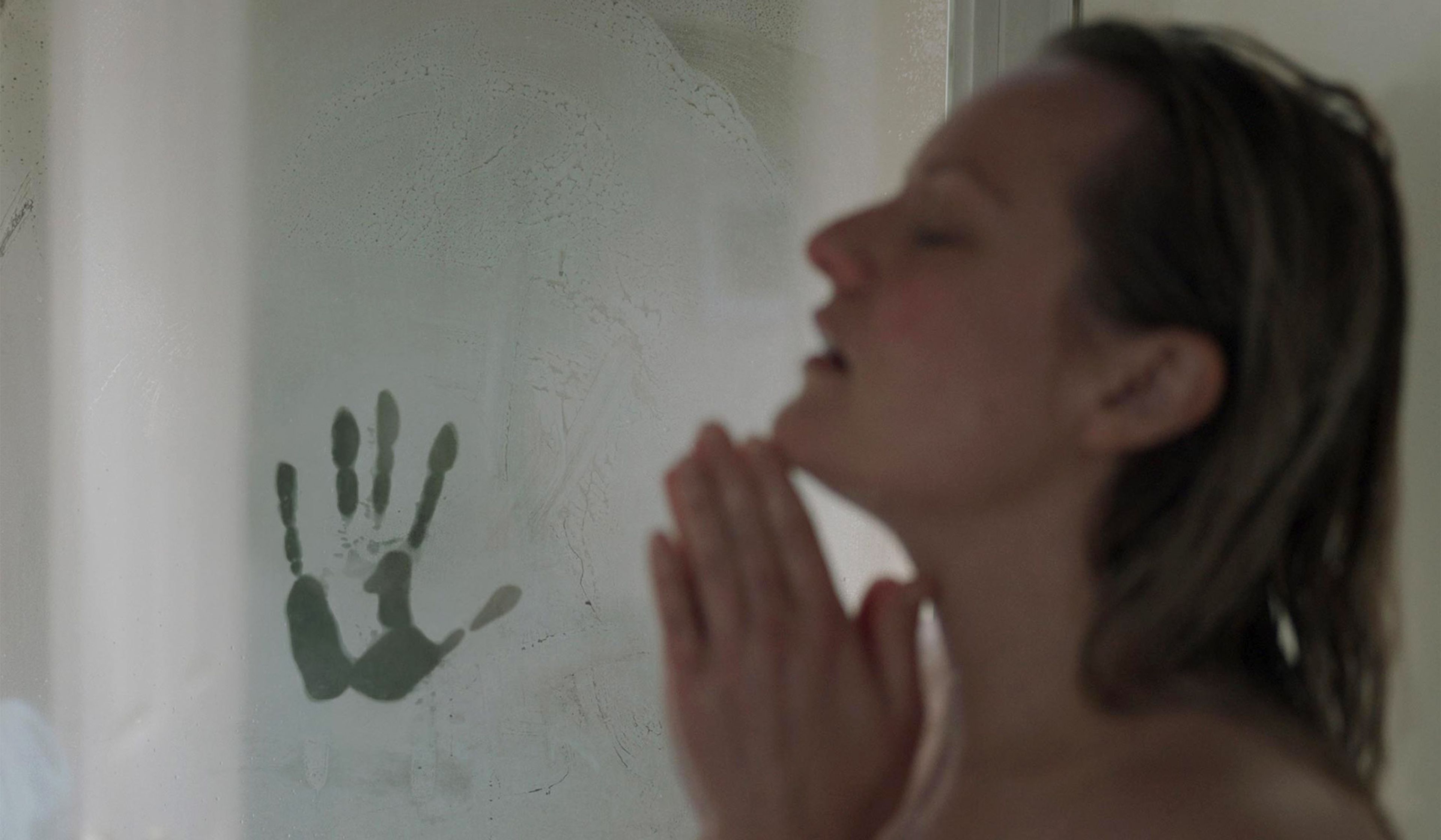
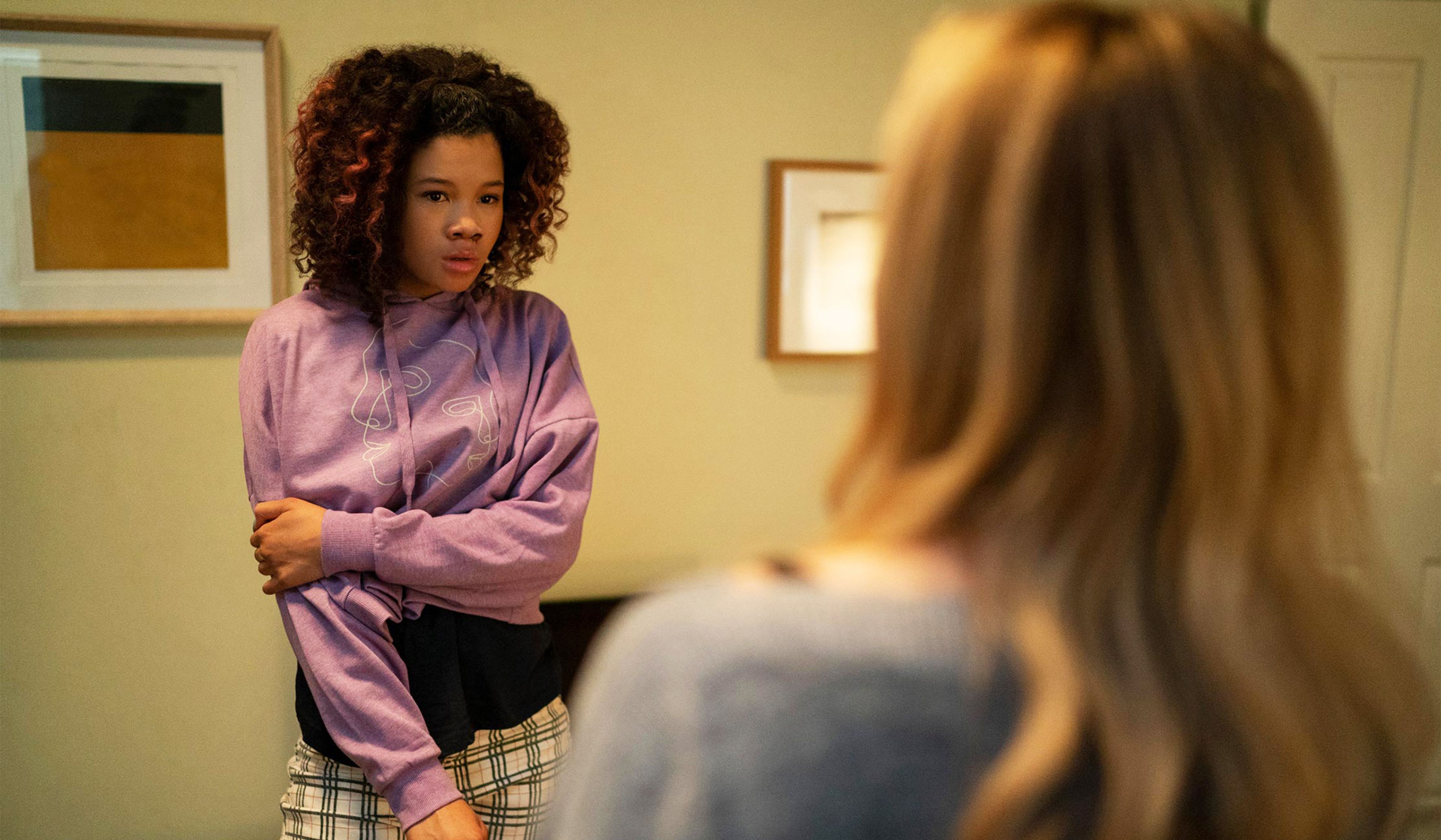

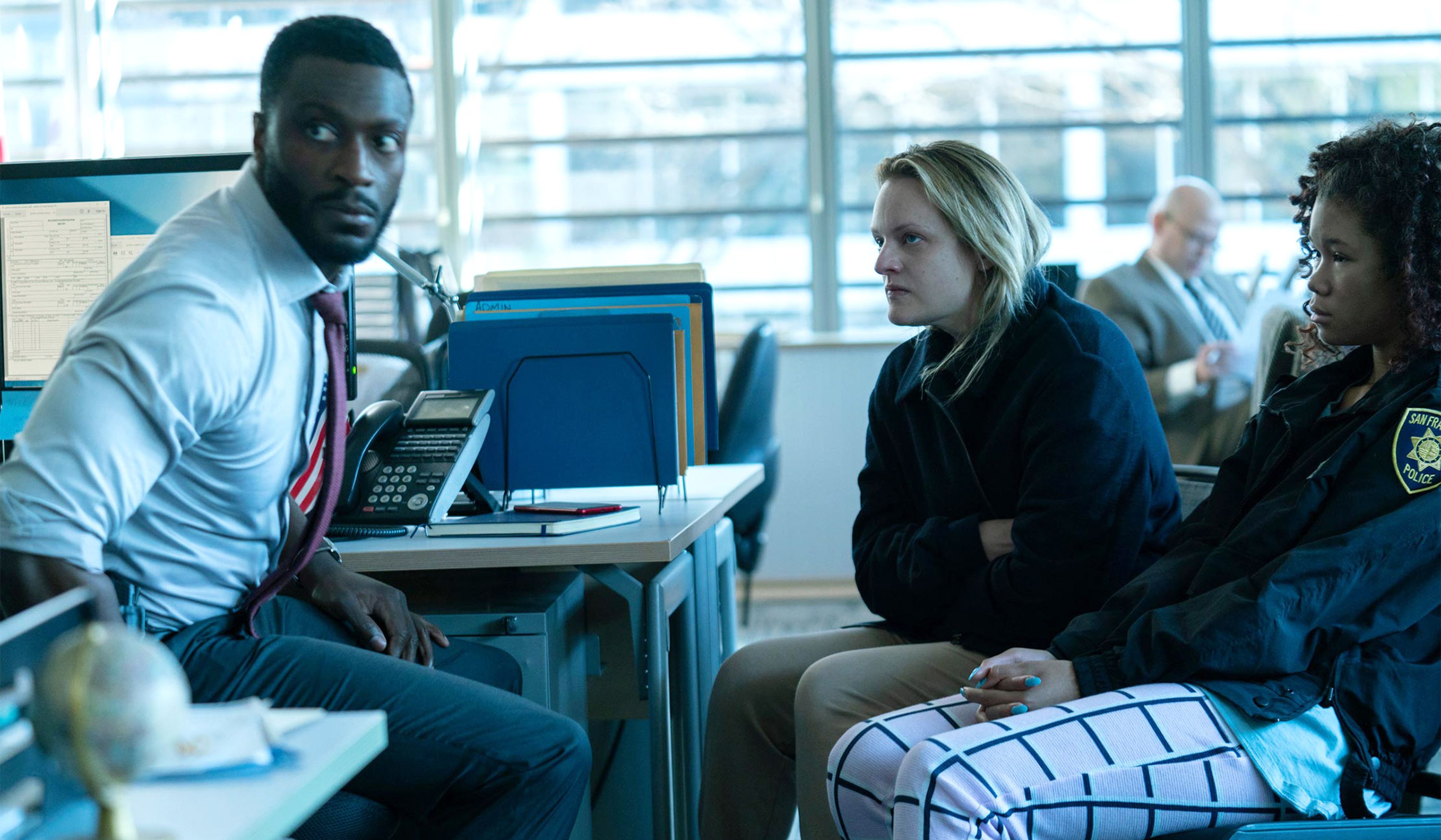
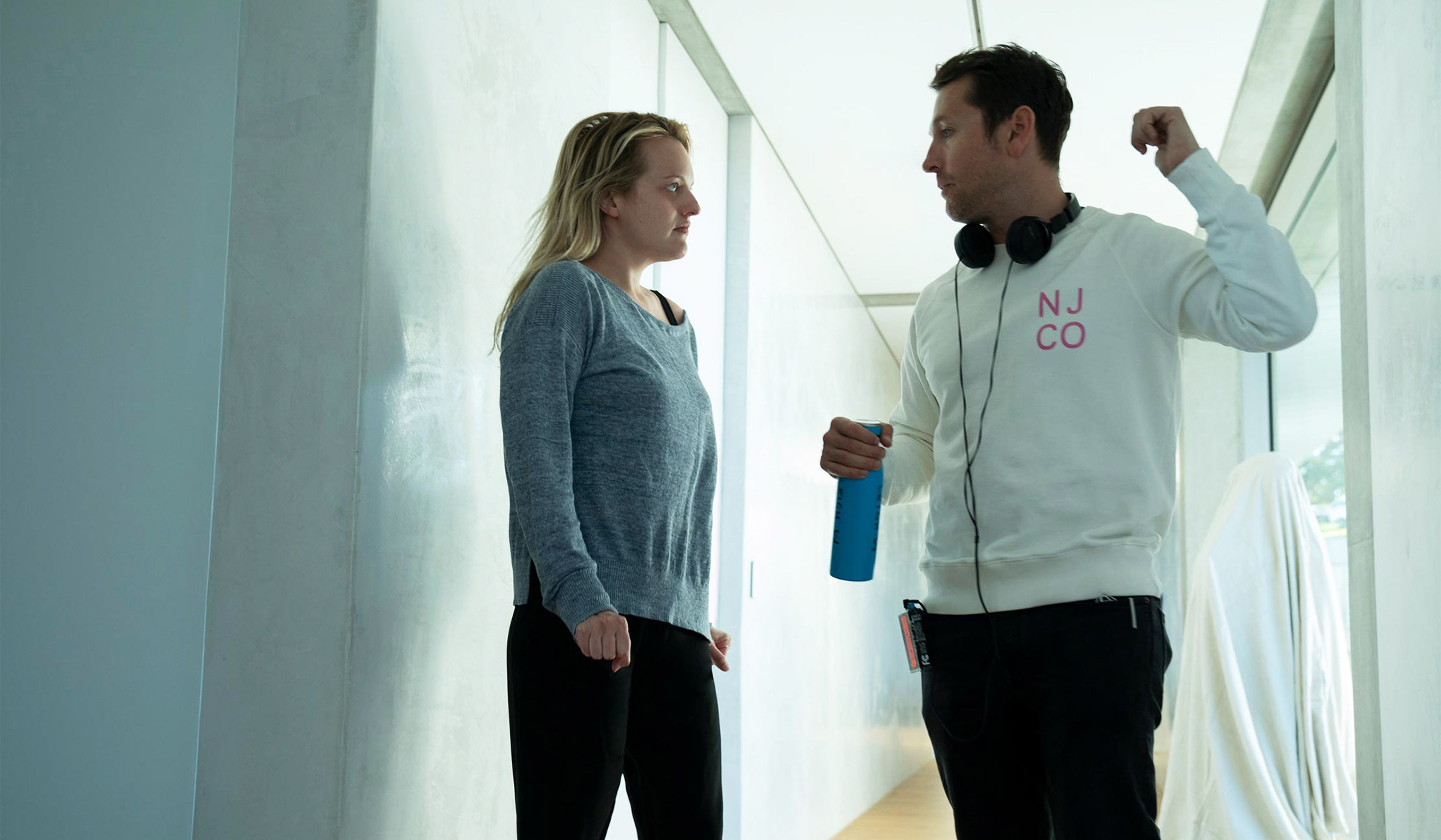
Elizabeth Moss in The Invisible Man
Universal Pictures
Cecilia is sure that Adrian will find her, but instead he (apparently) kills himself and leaves her all his money through the offices of his lawyer brother (Michael Dorman), who seems as cowed and traumatized by his late sibling as Cecilia was. For a day she’s happy, wealthy, and free, and then—well, then the stalking begins, the creepy shots of “empty” rooms, the flickers and soft noises and puffs of frosty breath as the not actually dead husband circles her, terrifies her, and makes all her friends and loved ones believe that she’s gone mad.
Watching Moss’s character walk the path from terror to relief to greater terror and then finally make the inevitable horror-movie transformation where she discovers a capacity to fight back, you can see in microcosm the strengths that have made her an icon on TV. And the chief of these, I would submit, is the mutability of her face, which, with its strong nose and cheekbones and deep-set eyes, can shift, depending on setting and makeup and emotion, between being striking and being forgettable, between being blithe and being harrowed, between resilience and brokenness, between looking youthful and looking middle-aged, much more sharply and dramatically than the blandly lovely visages of many movie stars.
Because of this the persecuted Moss and the ascendant Moss, the traumatized Moss and the cucumber-cool Moss, don’t just feel like different variations in a performer’s repertoire; they feel like very different people who are contained within a single actress’s range. The Invisible Man is finally just a disposable thriller, but it has enough quality in its writing and plotting to show what television viewers knew already: Its star is most unusual, and her stardom is unique.












Comments