
While other Americans were spending Sunday, January 1, watching football, nursing their hangovers, or going to church (or in many cases all of the above), Donald Trump was busy on social media blaming the pro-life movement for the GOP’s underwhelming performance in the 2022 elections.
“It wasn’t my fault that the Republicans didn’t live up to expectations in the MidTerms,” Trump wrote on Truth Social on New Year’s Day. “It was the ‘abortion issue,’ poorly handled by many Republicans, especially those that firmly insisted on No Exceptions, even in the case of Rape, Incest, or Life of the Mother, that lost large numbers of Voters.”
There was some truth to Trump’s post: Although every single abortion law in America now — as was the case before Roe — includes at least an exception for when the mother’s life is in danger, a handful of GOP candidates did make comments suggesting they oppose any and all exceptions. Those candidates, such as Doug Mastriano in Pennsylvania, tended to be Trump’s picks.
But Trump’s New Year’s Day musing was mainly an exercise in blame-shifting and missing the point — two big points, really. First, flawed Trumpy GOP candidates hurt the party in 2022 much more than the issue of abortion did. Second, while the pro-life movement faces serious challenges and a long battle ahead, it is doing better in the wake of the Dobbs decision than conventional wisdom and gloomy takes such as Trump’s would suggest.
After the dust from the midterm elections settled, it was clearer that the biggest electoral disappointment for Republicans — the failure to take back the Senate — couldn’t be attributed to the abortion issue. In Georgia, Trump recruit Herschel Walker lost a Senate race by a point, while Georgia GOP governor Brian Kemp, who had signed a ban on early-pregnancy abortion (at about six weeks, when a baby’s heartbeat becomes detectable), won reelection by 7.5 points. The disparity between Walker’s performance and Kemp’s can’t be chalked up to voters’ preference for GOP governance at the state level and Democratic governance at the federal level. Nate Cohn, the polling and elections analyst at the New York Times, reported in December that GOP House candidates (who were pro-life) won in total more votes than Democratic House candidates in the four battleground states where Senate GOP candidates lost: Pennsylvania, Arizona, Georgia, and Nevada. “Republicans would have won the Senate, and fairly decisively, if only the likes of Dr. Mehmet Oz or Herschel Walker had fared as well as Republican House candidates on the same ballot,” Cohn wrote. If abortion is a decisive issue for a voter, it makes little sense to cast a ballot for a pro-life House candidate but against a pro-life Senate candidate.
One of the most accurate polls of the midterms, conducted by the Siena College Research Institute in partnership with the New York Times, even found that voters in Arizona, Georgia, and Nevada on election eve preferred a GOP Senate majority. (Voters were evenly split on the question in Pennsylvania.) In Arizona, the final Siena/Times poll was spot-on: It showed Republican Senate candidate Blake Masters trailing by six points even as Arizona voters said, by a seven-point margin, that they would prefer GOP control of the Senate. Masters ended up losing by five points while Arizona Republicans won six of the state’s nine U.S. House seats and held on to control of the state legislature.
As for the GOP’s slim House majority, the abortion issue was just one factor among several. House Republicans won the national popular vote by about three percentage points, which is exactly where their lead in generic congressional-ballot polling stood before the Dobbs decision in June. Most election analysts thought a three-point popular-vote victory would translate into a healthier majority in the House, but GOP votes were poorly distributed in 2022. GOP candidates ran up the score in heavily Republican districts, and they improved their margins in heavily Hispanic and black districts despite not winning many of them. The GOP’s weakness in the suburbs was likely exacerbated by the abortion issue, but that weakness has been apparent since the party’s populist turn in 2016. Contrary to expectations, the redistricting that followed the 2020 census benefited House Democrats in 2022.
Flawed Trumpy candidates were a drag in the House as well. As Philip Wallach of the American Enterprise Institute wrote in the Washington Post, in 114 House races decided by less than 15 points, “candidates bearing Trump endorsements underperformed their baseline by a whopping five points, while Republicans who were without Trump’s blessing overperformed their baseline by 2.2 points — a remarkable difference of more than seven points.” In Ohio, Trump-backed J. R. Majewski, who had expressed support for the QAnon conspiracy theory and faced allegations that he had misrepresented his military service, was crushed in a heavily Republican district. In Michigan, Republican Joe Gibbs also lost by double digits after narrowly ousting incumbent Republican Peter Meijer in a primary race that focused on Meijer’s vote to impeach Trump in 2021.



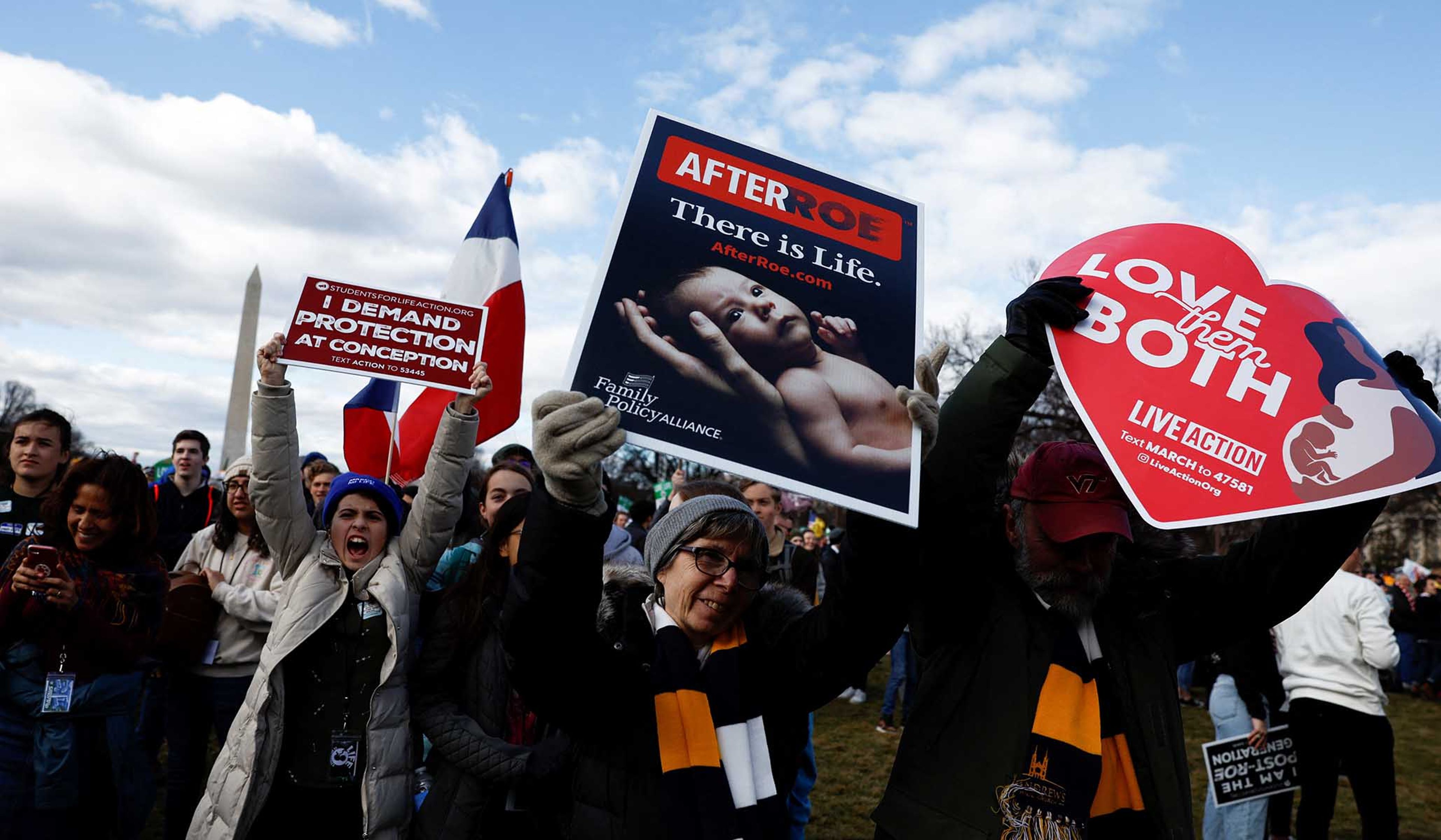

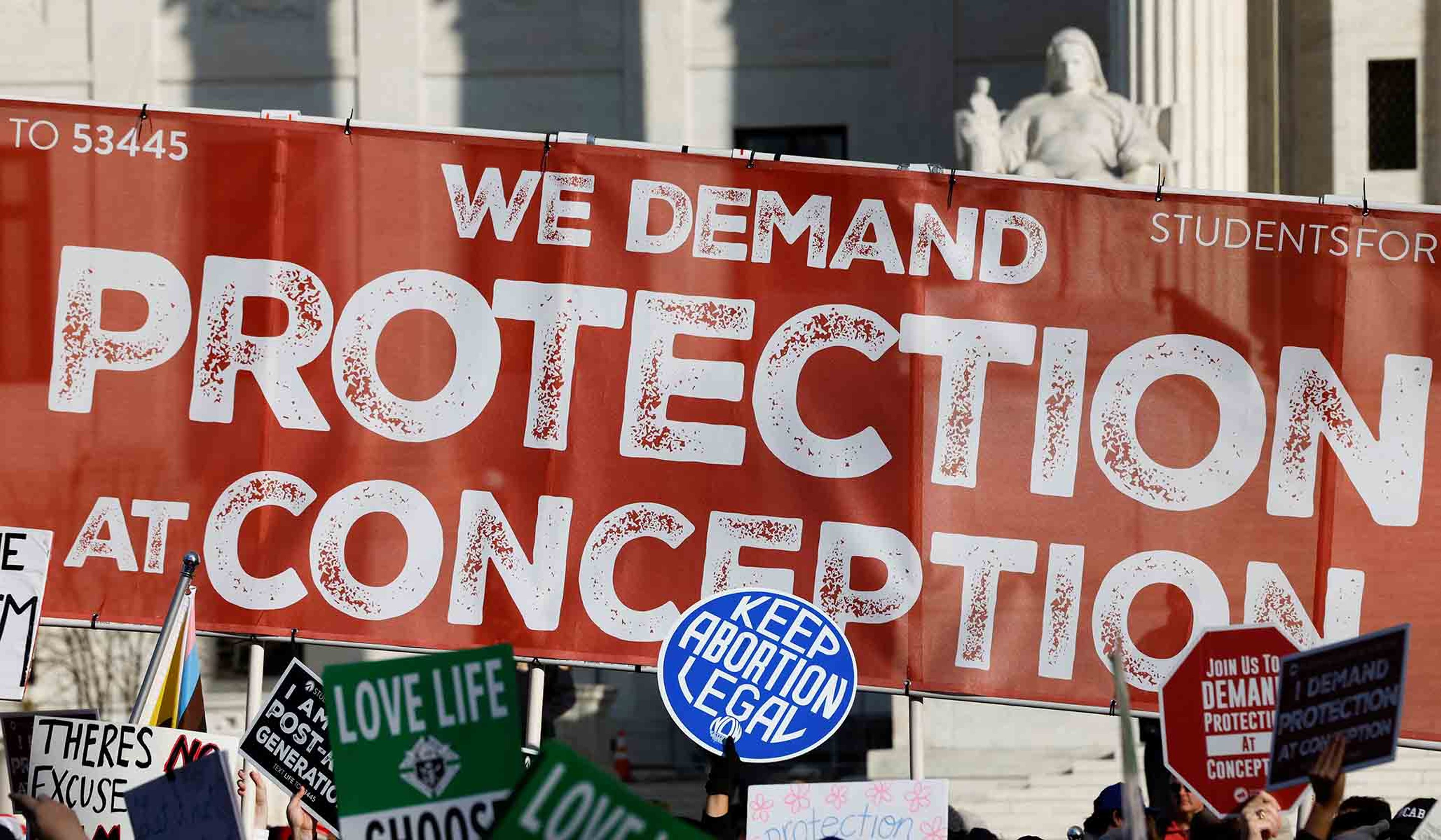



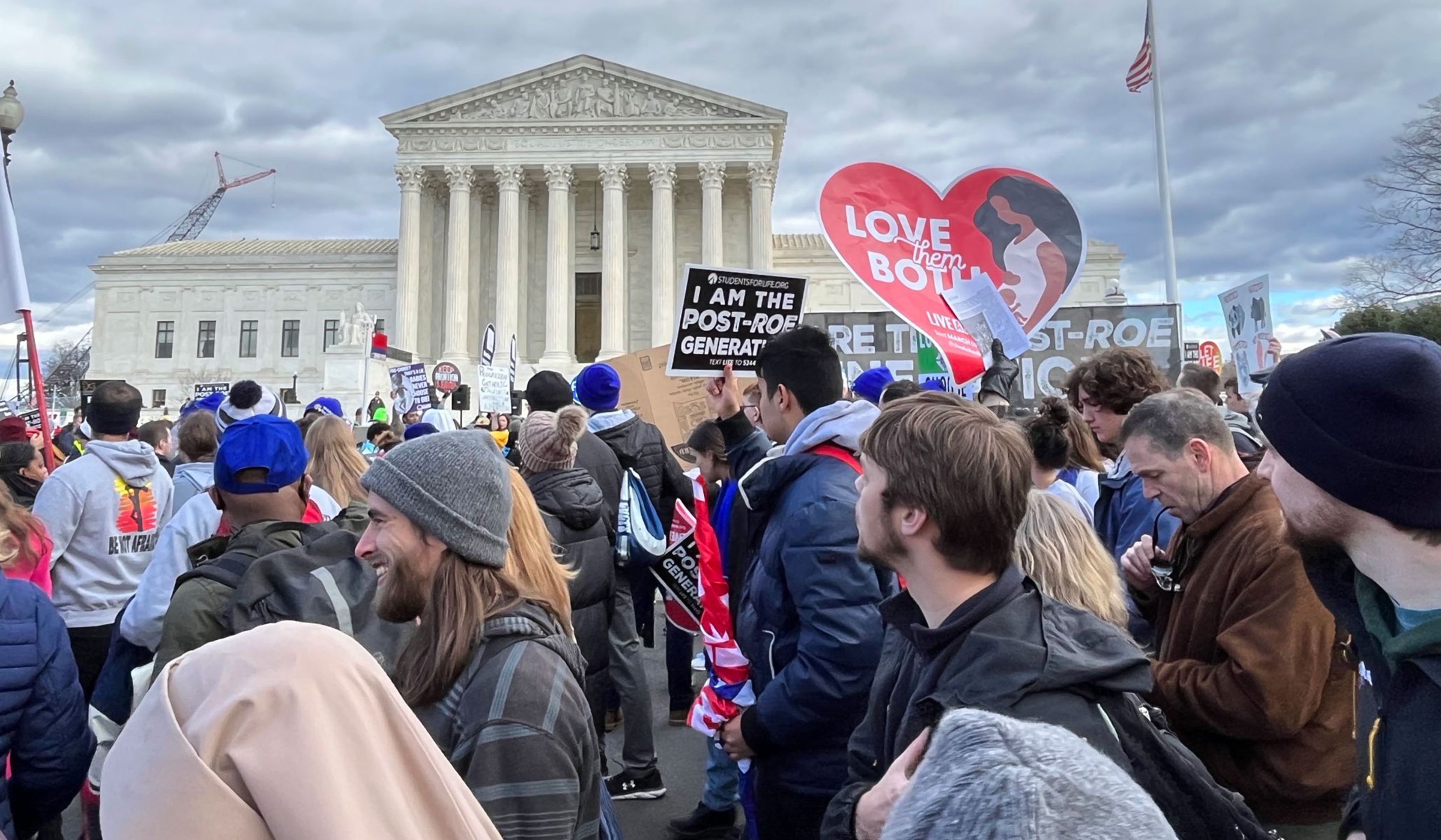




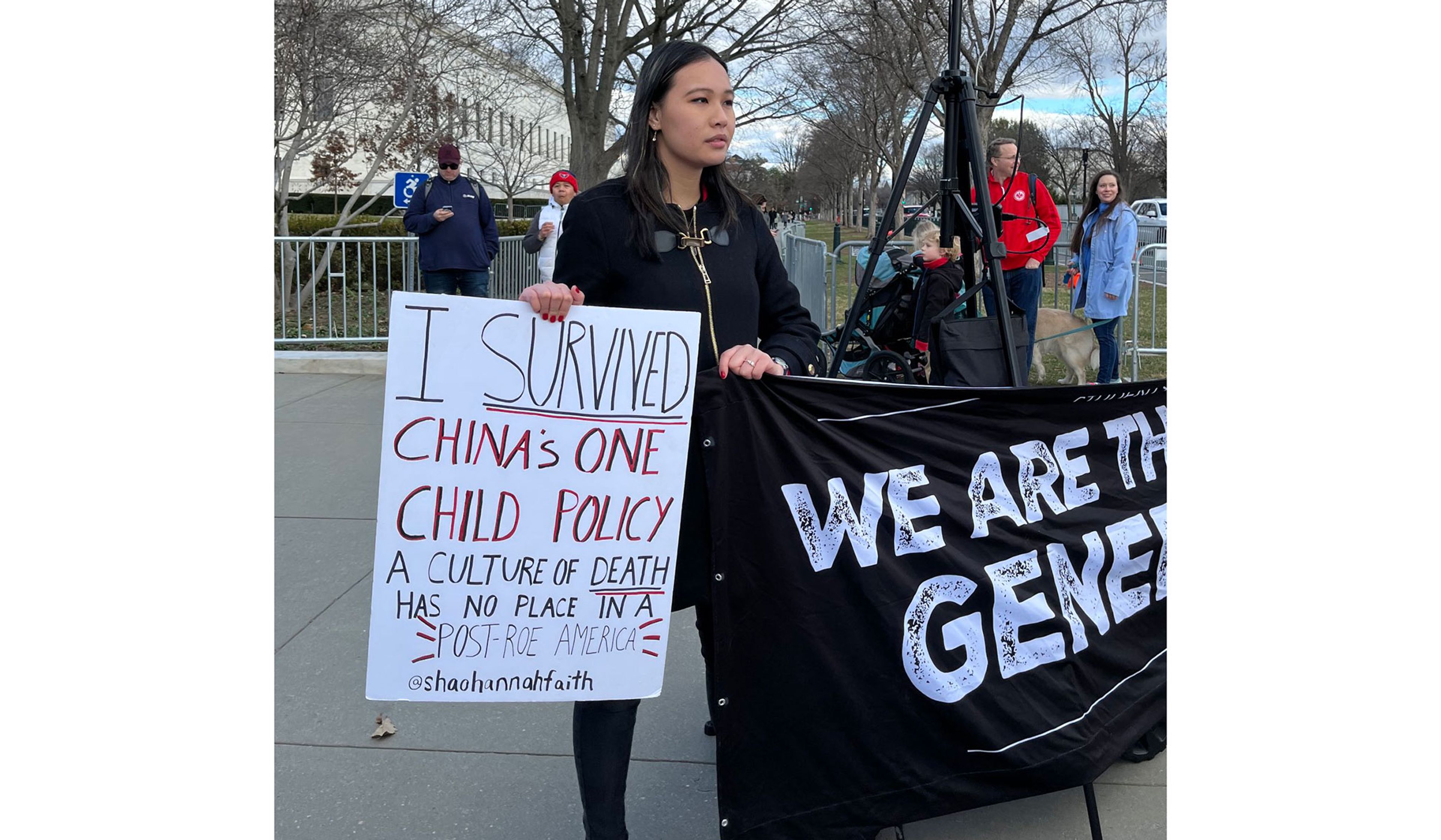
Pro-life demonstrators take part in the annual March for Life in Washington, D.C., January 20, 2023.
Evelyn Hockstein/Reuters
Perhaps the worst act of Republican self-immolation was in Washington State, where incumbent Jaime Herrera Beutler was targeted by Trump and his allies in the primary over her vote to impeach Trump in January 2021. Herrera Beutler is a pro-lifer who tells a beautiful story about rejecting abortion after being told that her unborn baby had a condition, Potter syndrome, with a 100 percent fatality rate. (With the help of an experimental treatment, her baby became the first child to survive it.) But Herrera Beutler lost in the primary race by half a percentage point to Joe Kent, who faced criticism over his ties to white nationalists. Kent then lost to the Democratic candidate in November. No one believes that pro-life Herrera Beutler would have lost the general election if she had been renominated.
There were some races in which the abortion issue played an outsized role. Republican Yesli Vega, for example, lost a suburban Virginia district after letting herself be baited by a Democratic tracker into speculating that the odds of getting pregnant by being raped are lower than the odds of getting pregnant by having consensual sex — a comment that predictably and reliably was featured in Democratic TV ads. While Vega lost by five points in a district Joe Biden had carried by seven points, pro-life Virginia Republican Jen Kiggans defeated an incumbent Democrat by three points in a Virginia Beach district that Biden had carried by two points.
Of course, too narrow a focus on the GOP’s midterm performance relative to expectations could hide the fact that 2022 was the best year to date in the history of the American pro-life movement. A few years ago, the prospect of overturning Roe v. Wade seemed distant. Imagine you had been told in 2019 that the Supreme Court would overturn Roe a few months before the 2022 midterms, and that half of the states would have significant restrictions on abortion, including more than a dozen with laws generally banning abortion except in limited circumstances. What would you have expected? A prediction that out-of-power Republicans would take the House and pro-life GOP governors would make a clean sweep would have been very optimistic. The loss of a handful of House seats, which makes little practical difference in governing, is a small price to pay for the restoration of the constitutional authority of the American people to provide meaningful legal protections to unborn children.
Only in the past five years or so has there been a concerted effort to pass “heartbeat bills,” banning abortion about six weeks into pregnancy, in purple states such as Georgia. Some pro-lifers feared that this course went beyond what the public as well as the Court would accept. Brian Kemp’s resounding victory in Georgia shows the contrary.
There is good reason, however, for concern about the future of those laws. At the federal level, Democrats have a challenging but realistic path in 2024 to winning enough Senate seats to abolish the filibuster, take back the House, and enact a federal abortion bill that effectively creates a right to abortion through all nine months of pregnancy in all 50 states. There’s also a chance the 2024 presidential election swings the Supreme Court to the left: By 2028, Justice Alito will be 78 and Justice Thomas 80. To reverse the Dobbs decision, a Democratic president and Senate would likely need to replace two justices who have been appointed by Republican presidents. At the state level, as many as ten potential referenda — in Arizona, Florida, Idaho, Missouri, Montana, Nebraska, North Dakota, Ohio, Oklahoma, and South Dakota — could reverse pro-life gains in 2024. The pro-life side lost every state ballot initiative in 2022. The effort to create a constitutional right to abortion throughout pregnancy in Michigan, for example, prevailed by 13 points, while the state’s Democratic governor won reelection by eleven points.
To win at the state level, pro-lifers need to conduct sophisticated and well-funded campaigns. They need to craft laws that will have sufficient public support over the long term. And they need to ensure that exceptions to the laws are properly understood and followed.
Every current abortion law includes at least one exception regarding risk to the life of the mother. But abortion advocates have whipped up fears that doctors could be prosecuted if they don’t wait until a life-threatening condition presents an imminent danger, even though all state laws allow for immediate treatment that would result in the death of the unborn child when such conditions arise. In some hospitals in some states with pro-life laws, lawyers and administrators have told doctors to delay care in these circumstances, but they did not need to, and, by law, this should not be happening anywhere. There is no harm in enacting additional legislation ensuring that the conditions most commonly threatening expectant mothers are explicitly covered (while still deferring to the reasonable medical judgment of doctors) or in passing laws that will make it easier to win malpractice lawsuits against hospitals that fail to provide proper care in such circumstances. At the very least, attorneys general should be doing what they can to ensure that hospitals are following the law.
The ability to engage in the agonizingly slow, difficult, and unsettled process of democratic politics may at times not feel like much of a victory. But it’s important to keep life in perspective: Laws now on the books are saving the lives of tens of thousands of human beings each year, and overturning Roe was the greatest victory for constitutionalists and pro-lifers in half a century.












Comments