The Baby Boomers, by their sheer numbers, have distorted American life since their birth. America replaced a cult of the soldier at war with a cult centered on his children. As the Boomers got older, the cult of youth was replaced by nothing less than an eternal cult of the 1960s. Much later, the financial bailouts in 2008 and 2009 were a way of saving and reinflating Boomer retirements. Arguably, the preferred policy of the COVID era — the lockdown — is another Boomer distortion. No matter the damage to their children and grandchildren, these Boomers need to be kept respirating so they can buy up more Rolling Stones boxed sets into their 80s.
Helen Andrews, a senior editor at The American Conservative, has given this generation a much harsher evaluation in Boomers: The Men and Women Who Promised Freedom and Delivered Disaster. They did not merely distort American life, they nearly vanquished it.
Andrews is a Millennial who, early on, sensed that hers was “a dispossessed generation.” At first the dispossession was financial. Boomers, many of whom paid for their college education by slinging burgers or washing cars in the summer, encouraged their kids to take on five- and six-figure debts to receive the same education. But when Millennials began entering the workforce, a Boomer-induced crash of inflated housing led to a Boomer-focused rescue plan, while Millennials dealt with policies of austerity and contraction of the job market just as they should have been making their mark and forming families of their own.
The numbers prove this is not a baseless gripe. Recent studies have shown that when Boomers collectively hit age 35, their generation possessed 21 percent of the nation’s wealth. Millennials are nearing that average age themselves, and they possess just over 3 percent of the nation’s household wealth. Currently Boomers possess 57 percent of the nation’s loot.
But for Andrews the dispossession is larger than just lost career years and delayed marriages. She argues far more sweepingly that the effect of Boomers on civilization has been the “most dramatic sundering of Western civilization since the Protestant Reformation.” This is overstatement for effect. And yet by the end I was almost persuaded.
Andrews’s Boomers is modeled after Lytton Strachey’s Eminent Victorians. In that 1918 book, Strachey attacked four universally admired figures of Victorian English life: Florence Nightingale, Cardinal Henry Edward Manning, Thomas Arnold, and General Charles George Gordon. Strachey’s book, coming at the end of the charnel house of World War I, was well timed. Readers such as Bertrand Russell and Edmund Wilson felt that his poisonous portraits left the pretense of Victorian Age moral superiority in ruins.
In a very sharp introduction, Andrews lays out her main case that the Boomers made bids for personal freedom but ended up destroying the institutions and restraints that made their freedom safe or tolerable.
Surprisingly for a Southern conservative, Andrews charges the Boomer generation with destroying the political Left. The younger, college-educated left wing that was coming into being in the ’60s and ’70s openly despised labor unions as seeing to “the care and feeding of incompetent white people” (Murray Kempton). Andrews recalls:
In 1977, the workers at the Virgin Records plant came to the conclusion that the Sex Pistols’ single “God Save the Queen” was treasonous, and they downed tools in protest. After weeks of negotiation, [Virgin CEO] Richard Branson prevailed and the workers were forced to produce the record. The fact that this is remembered as a victory for free speech and not a corporate boss quashing labor is the decline of the Left in a nutshell.
By the time this new educated elite came to dominance under the governments of Bill Clinton and Tony Blair, Andrews observes, Boomers had taken “what was supposed to be the most effective mechanism in history for guarding the rights of the disadvantaged, the left-wing parties of the Western democracies, and seized them for the wealthy and privileged.”
But Blair and Clinton are figures a lesser writer would have chosen to focus on. Andrews gives us successive portraits of six Boomers: Steve Jobs, Aaron Sorkin, Jeffrey Sachs, Camille Paglia, Al Sharpton, and Sonia Sotomayor.
Paglia’s chapter is representative of the wandering spirit of the book, and the way Andrews is able to explore several topics through one character. Andrews paints a portrait of a female academic who mastered the literature of her discipline and witheringly attacked certain feminist pieties about sex. But the evident admiration in the portrait makes it all the more damning. The insights that issued from Paglia’s celebrity academic career sputtered out almost immediately because she took as her subject matter the ephemeralities of pop culture. Andrews suspects that watching all that television did in fact stunt Paglia’s intellect. And for all the skepticism she aimed at certain feminists, Paglia fell prey to liberationist sentimentality, which forbade her to oppose forthrightly the ruinous consequences of the sexual revolution. Through Paglia’s example we learn to resent the over-elevation of pop culture, the withering of academia, and the naïveté of a generation that thought the worst effects of free love could be handled tidily by penicillin.
Jeffrey Sachs, the development economist, is another truly inspired choice. Through his efforts to help the third world, Sachs, a Harvard man, became a template for the financial self-seeking and insider-dealing that has continually corrupted relations between the West and the former colonies of Western powers. Sachs flatters himself as a liberal and nothing like the old imperialists he despises. Andrews half agrees. He is nothing like them, because the old imperialists actually stuck around, bore the consequences of their decisions, and took responsibility for their successes and failures. Sachs just jets back home to give more paid speeches.
Among the great joys of Boomers are what I call drive-by character assassinations and appreciations, not all of them of Boomers. One of my favorites in the former category is of Laurence Tribe, who defended affirmative action in theory throughout his career, but then opposed it in practice when he thought doing so would advance his legal goals, only to discover that he was wrong about how the Supreme Court actually works. There are unforgettable anecdotes about Cherie Blair’s entitlement, James Baldwin’s dishonoring his hosts, a “hysterical crying jag” by Harold Bloom, and a telling conflict between Chicago’s ethnic lobbies and the Southern Christian Leader¬ship Conference. Andrews will not let the structure of the book rob readers of the best anecdotes.
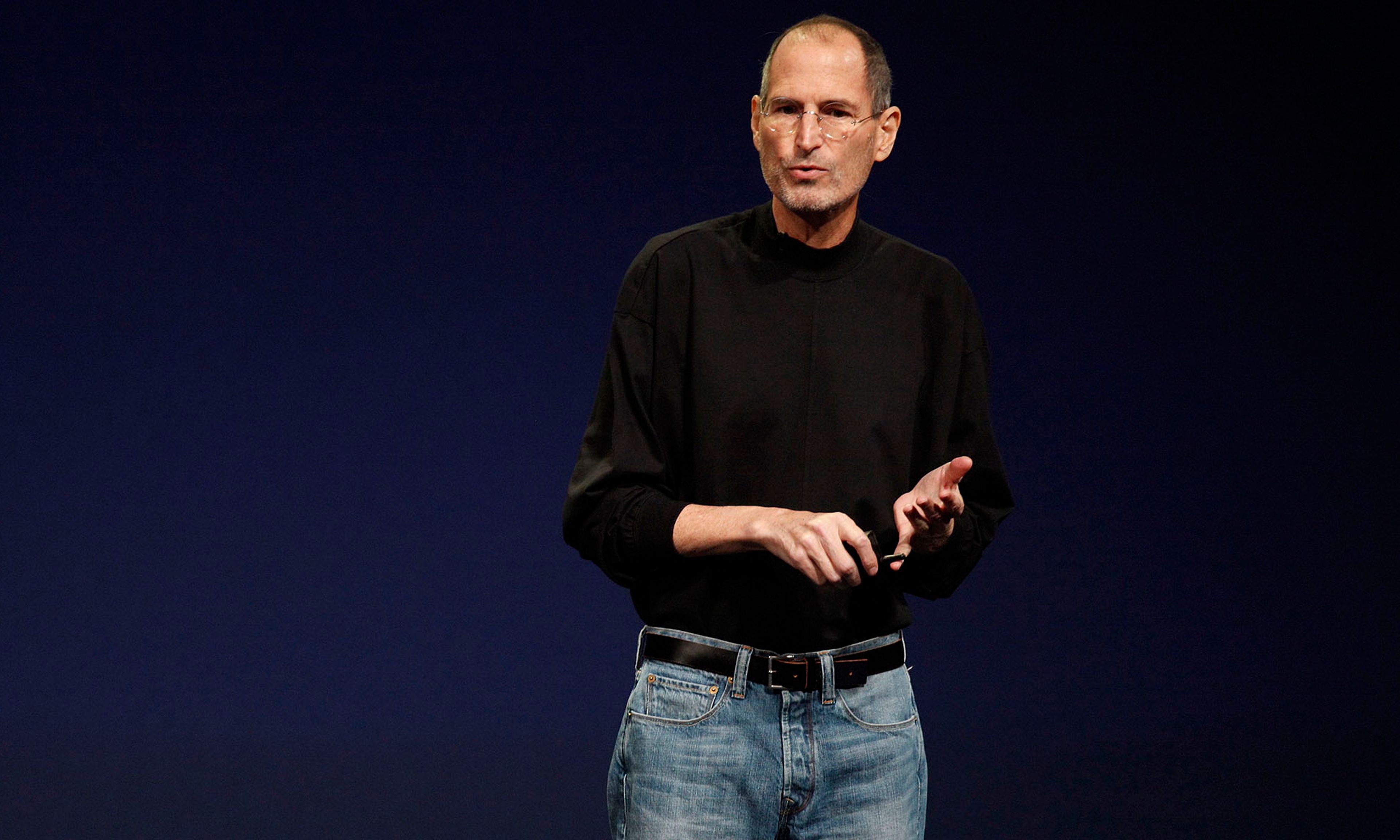
And there are surprises. Steve Jobs has been portrayed in the popular imagination as a furious autocratic boss and a “bad dad.” In fact, that portrait was hammered into life by another subject of the book, Aaron Sorkin, in the film he wrote about Jobs that centers on the entrepreneur’s off-again, on-later relationship with his daughter. Jobs is an obvious choice for summing up the Boomer generation because his career was about marrying the marketing copy of the Whole Earth Catalog with the technological revolution of modern computing and making billions and billions of dollars while doing it. He could easily be parodied as a total fraud who became “the man” while posing as a rebel; the arch capitalist who talks like a hippie; the sellout who made his image a sell-job.
Andrews tips her cap in that direction, but she does something more subversive with Jobs. What redeems Jobs is his fatherliness, his paternalism. It is Jobs who takes on a responsibility given up by many other fathers and institutes content-bans on apps, ultimately holding the dam against Apple products’ becoming even more pornified. Jobs, unlike his successor Tim Cook, wanted to make products that were American-made, partly out of his own stubborn and in-built patriotism. And ultimately, Jobs does a fatherly thing in trying to build an inheritance, namely his company. In Apple he built an institution that can reflect his values after his death and, to some degree, restrain his successors. Jobs built, whereas the mode of Boomers more generally is to tear things down and demand impertinently that the people suffering as a result greet them as liberators.
What Andrews has produced in Boomers is surely the most fun conservative book in a generation. We needed it, having suffered for too long under a raft of unambitious and repetitive books from young conservatives that amount to little more than poor imitations of Ann Coulter.
But I do have two mild criticisms to offer. The first is that over the course of the book Andrews doesn’t quite tell the story behind what she deems one of the major legacies of the Boomer generation. “The most glaring objective consequence of the boomers’ embrace of mass culture,” she observes, “has been the death of both folk culture and high culture.”
This is true, and it’s something I’ve struggled with mightily myself in life and on the printed page. It’s precisely where her case that the Boomers are a uniquely vandal generation is the strongest. Folk culture has a way of reorienting precisely those of us who feel abandoned by our circumstances or by our parents. What we have instead is a culture dominated by endless reiterations of the Boomer childhood. Think of earnest Gen Xers such as Jakob Dylan re-recording the Mamas and the Papas. We are marooned on a cultural island with the records our parents chose for us.
And second, Andrews’s form of fun is itself a little Boomerish, as was Strachey’s. She finds almost nothing redeeming in our parents’ generation. But one of the Boomers’ besetting faults was their inability to forgive or understand their own parents. It’s a fault Millennials can’t afford to repeat, even if only for mercenary reasons. If Boomers are going to die with nearly three-fifths of our nation’s wealth, we had better find a way to be written into their last wills.











Comments