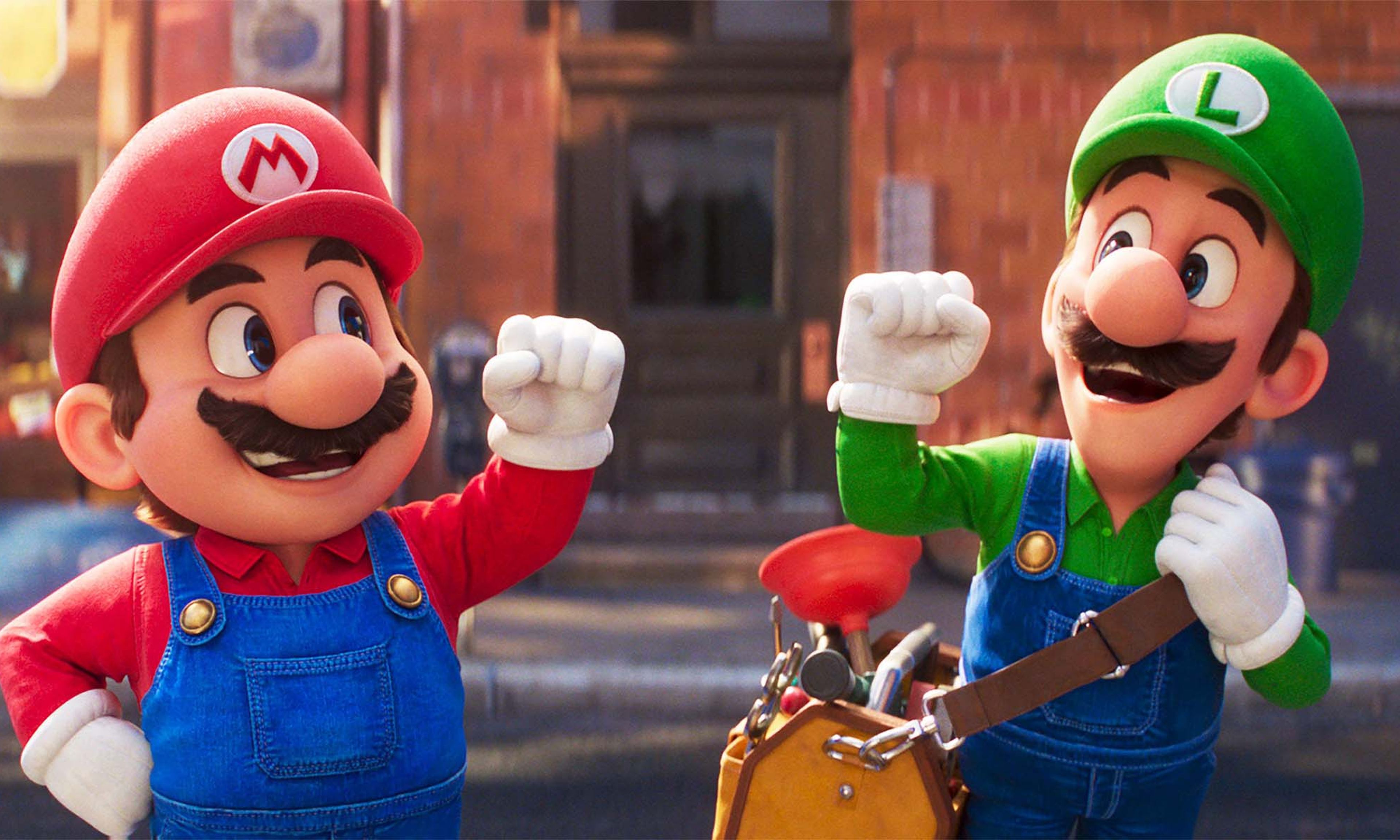
Ours was not a video-game household, but Nintendo still cast a long shadow over my 1980s childhood. As a six-year-old I slipped next door, to the shag carpet of a multifamily flophouse, to play Super Mario Bros. and Duck Hunt with a future juvenile delinquent named Tony, who impressed me with his swearing and persuaded me that all the games were called “Mintendo.”
Then, as a fourth-grader, I was mocked for not owning a Nintendo system, with such preteen remorselessness that my parents finally broke down and bought me a Game Boy. It was a vanishingly rare act of cultural appeasement on their part; indeed, you could say that Nintendo is the only pagan god to whom they ever gave a pinch of incense. Alas, it came too late to matter for my social standing, the fourth-grade boys having moved on to a fascination with the World Wrestling Federation instead.
The Game Boy came with two game cartridges: Tetris and Super Mario Land. The latter is still the only real video game I have ever beaten.
All of this is to say that even if I’m not the precise target audience for The Super Mario Bros. Movie, the animated trifle that’s doing Top Gun: Maverick numbers at the box office, I’m not immune to the mystic chords of memory that it’s striking, the nostalgia that it’s trading on. And then, of course, in another sense I am its exact target audience, since I’m a parent of small children, and part of the movie’s success probably reflects the simple desperation for family entertainment, the dearth of G-rated spectacle in the post-Covid moviegoing landscape. Such parental desperation helped make the Puss in Boots sequel an outsize hit; now it’s making The Super Mario Bros. Movie bigger than John Wick, bigger than any recent superhero movie, maybe even bigger than the Avatar sequel before all is said and done.
If you just watched the Mario movie without knowing any of this cultural context, though, the scale of its success would be entirely mystifying. And honestly it’s still a little bit mystifying, even given the parental relief and late–Generation X/early-Millennial nostalgia that are propelling its success.
The best thing that you can say about The Super Mario Bros. Movie is that it knows exactly what it wants to be: a movie for seven-year-olds that’s faithful to its video-game source material, that uses the leaping, ducking, pipe-descending, powering-up visuals of the game to good effect, that doesn’t try to appeal to adults with random grown-up pop-cultural references or sophisticated jokes. You can summarize the whole thing in a sentence: Mario and Luigi (the voices of Chris Pratt and Charlie Day), two flailing Brooklyn plumbers, are pulled into a parallel dimension where they have to save Princess Peach (Anya Taylor-Joy) and her Mushroom Kingdom from the conquering hordes of Bowser (Jack Black), mostly by jumping around and finding magic boxes that let them power up to super strength.
That’s it, that’s the story. (With, okay, a detour to the monkey kingdom ruled by Kong and his son Donkey Kong as well.) There’s no attempt at “gritty reboot” energy, of the sort you had in the weird live-action Mario movie starring Bob Hoskins and John Leguizamo 30 years ago. Nor is there any of the adult knowingness that pervades the lousier sort of children’s entertainment. Nor is there the kind of therapeutic, no-villains-or-romances storytelling that defines a lot of current-era Disney productions. Things are simpler in Marioland: There’s a hero, a princess, a bad guy to defeat, a world to save, and you’ll be out the door in 90 minutes.
That simplicity explains why you have some online conservatives declaring a great culture-war victory because Mario has succeeded in doing boffo box office without “going woke.” They’re not exactly wrong; Princess Peach gets some girlboss moments, but overall this is a much more conventional piece of storytelling than recent kid-movie flops such as Lightyear or Strange World.
But the Mario movie is less a proof of concept for a new age of classically themed children’s storytelling than a kind of lowest-common-denominator success story. Its outline is basic and traditional as a default rather than as a conscious creative choice. It was saved from the weaknesses of contemporary children’s storytelling because, on the evidence, nobody put any creative energy into its story at all.
To the extent you can draw any cultural lesson here, it’s that pre-woke archetypes can triumph at the box office when they’re embedded in harmless productions pitched at a first-grade level and devoid of all real attempts at wit or surprise or creativity. If that’s what passes for a triumph for cultural conservatism these days, so be it — but I’m not sure how many more such victories I can take.












Comments