Spring colds are cruel. Maybe they are allergic reactions, maybe they are viruses in training to be the next Covid. They come at night with the slow, steady slide of mucus from the back rooms of the nose down the throat, there to return in the morning as coughs. They come in the afternoon with the absolute necessity of forgoing work and pleasure in order to go to bed, before going to bed for real (but going to bed at any hour is now, and for the next week — two weeks? — the new real).
Spring colds shrink life to the footprint of necessities that the city provides but, in providing, imprisons. Mail, newspaper, and pizza — delivered. Laundry — picked up and returned. Diner food, Thai food, coffee, ATM, prescription refills, green cold goo to rub on your temples and neck if your cold turns to headache — all within a two-block radius. And the entertainment of charter-school kids in neckties or plaid skirts, older girls dressing down for summer, dogs of noble breed, bums in their lean-to bum houses, Hasidic vans merrily celebrating the incumbent holiday, is everywhere and for free.
Given the inevitability of illness, who could ask for more? I could. The spring cold suffered in the city deprives one of spring, substituting instead the city’s simulation. As the zoo is to the veldt or the museum to sampling fish and philosophy in the actual ancient port, so is city spring to spring. The city tries. There is a star magnolia on a southeast corner one block from my building. It is the first flowering tree to flower. This year, as if in imitation of human illness, it was pinioned by the scaffold girdling the building it ornaments. It flowered even so; even the blossoms below the scaffold’s planks popped, inner clocks overruling lack of light.
In the little park which is all that remains of Peter Stuyvesant’s farm, daffodils appeared. A bronze Stuyvesant looked at them approvingly, at the Quaker meetinghouse that flanks his park less approvingly. In other nearby parks later-blossoming magnolias did their thing. Tiny plantings in church grounds, avenue dividers, and fronts of townhouses acted as toeholds of nature. The green market hosted merchants of plants, both seasonal and merely odd (cactuses, succulents).
Together these urban slices of spring were like a review of a concert, rather than the symphony itself. And like spring, they came and went. One day when I felt energetic enough to actually sit outside the coffee shop and pretend I was on the Via Veneto, a neighbor remarked that she had taken her older husband, walker-bound, to the park. She pointed out the new leaves. “But he doesn’t care.” Grow old along with me. I still care, though, enough to regret losing a spring from a stock that will not grow larger. I know upstate is in a different zone, everything starts later there (even as it ends earlier). But how much longer would illness push my luck?
Came normality once more into the bus. The woods along the Thruway were stippled with new leaves, thick enough to impart a light green wash, not so thick yet as to form an impenetrable mass. That was a good sign. The apple trees in the big bisected orchard were light green too, having already shed their blossoms. That was a bad sign. When we turned into the college town where we park our car, all doubt ended. Magnolias stood each in a pool of fallen, fleshy petals, like discarded bedclothes. But enough remained on the branches to make a fine painterly splash. Forsythia when it leafs out is a dull bush, or maybe its dullness is borrowed from the way it is so often planted, in straight lines like boundary markers. Such thoughts were of no account, now was its canary-yellow prime.
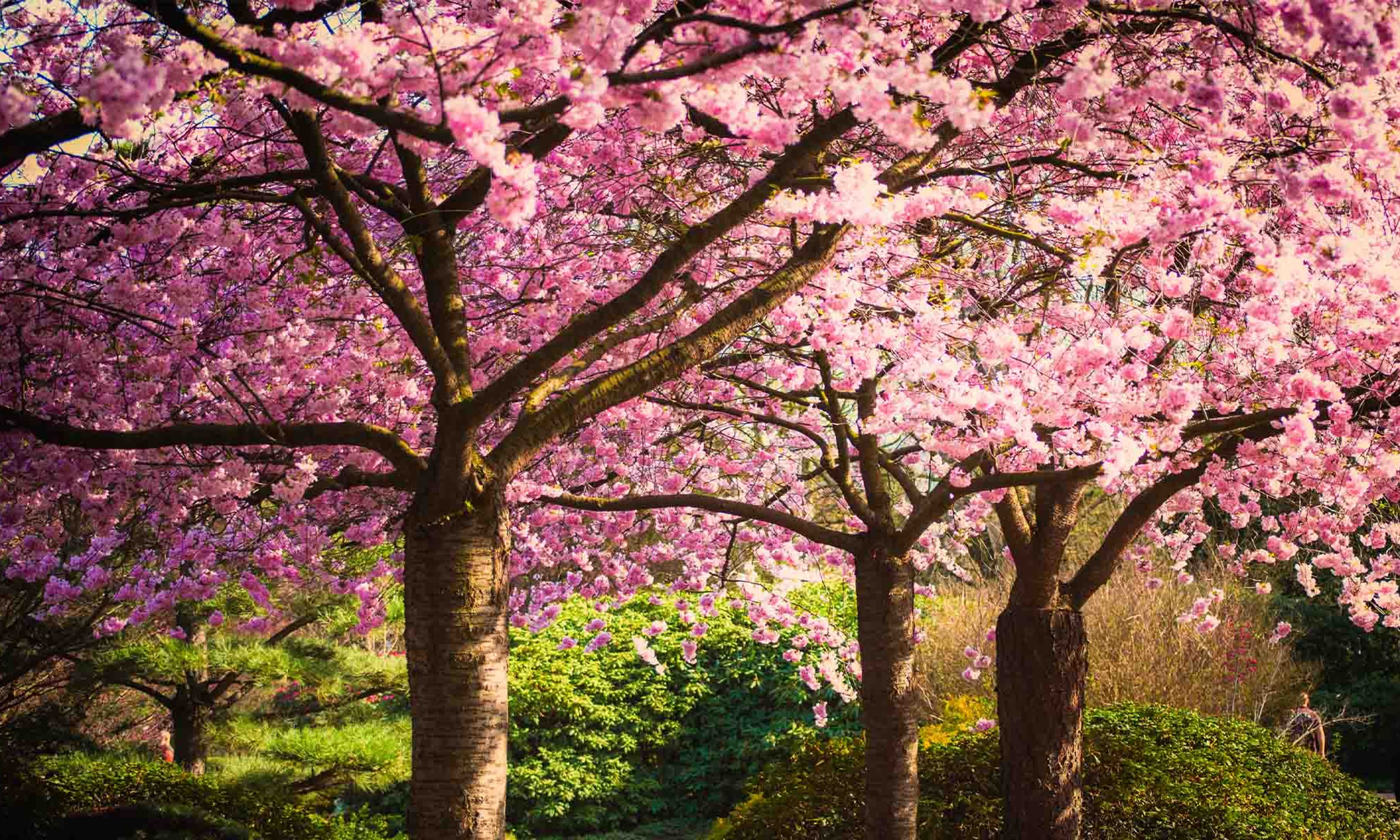
When we got to our house we saw that we had hit the bullseye of the prime, plus the tail end. The only thing red about bloodroot is its root; the flower is the purest white of anything that grows. An early riser, its fallen petals lay scattered, but around corners and in the shade, a few stems still showed full white faces. The bleeding heart, another cardiac-themed flower, was just beginning to swell. The lawn was, first, a lawn, fairway green; do not look for it come summer, it will be parched. Second, it was scattered with violets, lawn as garden. Mayapples opened their umbrellas like beachgoers; Dutchman’s-breeches were strung out to dry. The cherry, loveliest of trees, was at its misty peak. For years we did not know we had one. If you miss the exact week, you miss its bloom, and we did not pay enough attention to its bark to notice it. But one spring we were startled by its ghostly glory, since when it has only grown taller and more striking. Either side of the driveway was crowded with daffodils. I was dismayed to learn recently that they are eye candy only; bees gain no benefit from them. I do, case closed.
So much for sight. For sound came the nighttime peepers, so relentless they would be threatening if they were not joyous. We found two clinging to a pane of window glass, hoping our lights would attract bugs.
“Who knows if Jove who counts our score / Will toss us in a morning more?” Right you were, Doctor, and lucky we were to see and hear these days and nights.
It rained off and on over the weekend; a third of the cherry blossoms came down. On to monkshood, and the last doughty Thanksgiving kale.











Comments