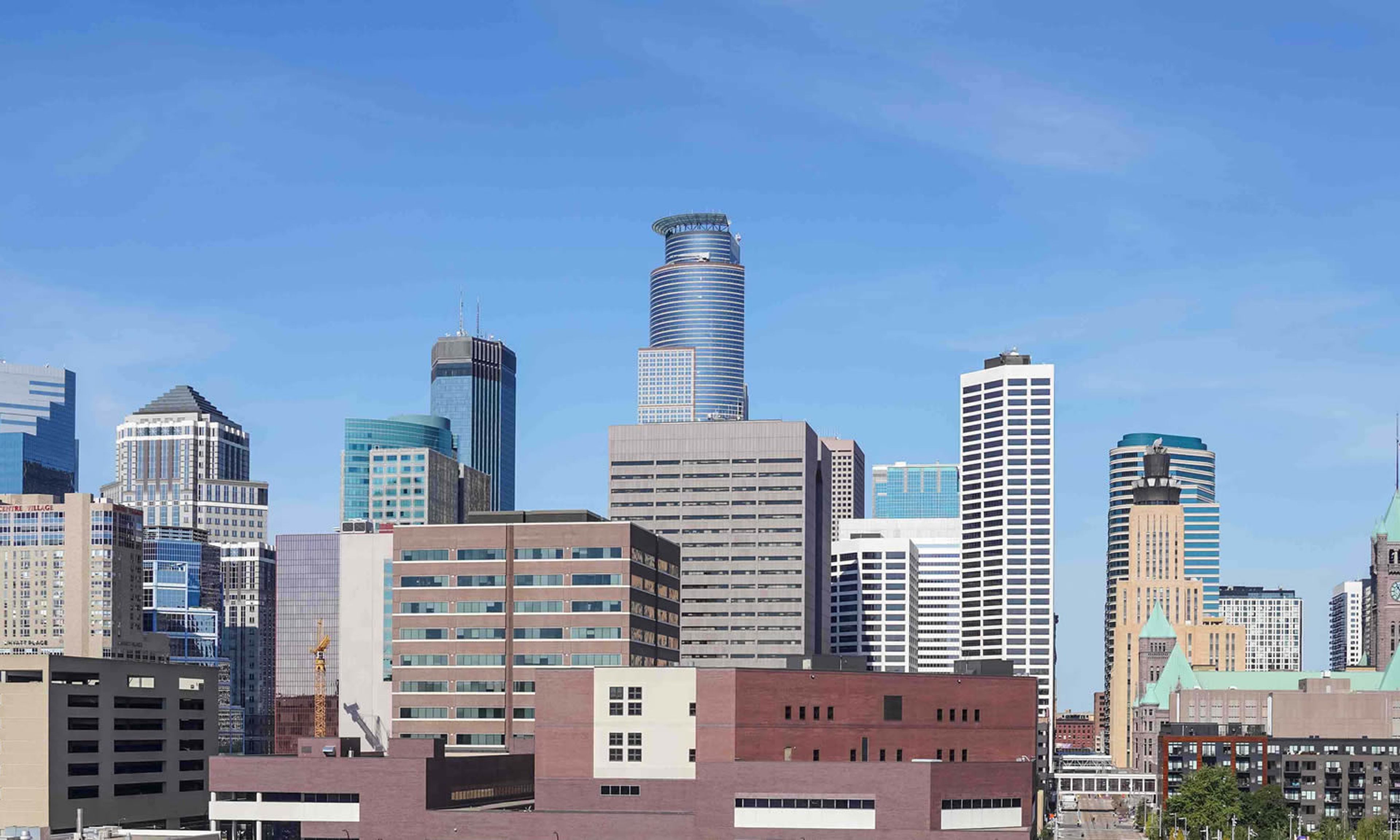
I live in Minneapolis. I love it. Always have. I am not in awe of the leadership. The other day the Park Board, which you would think was concerned with things like mowing the grass and oiling the swing sets, held an emergency session to take up the Very Important Issue of allowing the State Patrol to use a park building on occasion. Since the State Patrol was involved in restoring public order/bringing down the militant fist on innocent civilians (take your pick; everything’s a choose-your-path adventure book these days), it would be inappropriate to let them use the building.
One Park Board commissioner — there are nine, just as on the Supreme Court — had previously attracted criticism for opening up the parks to homeless encampment, a decision that resulted in the usual disorder. Filth and fires, syringes crunching underfoot, needles strewn like pine needles, sex-trafficking, and so on. The people who lived in adjacent neighborhoods were unhappy and, when quoted by local media, would say things like “I’m a liberal, and I want these people to get help, but they are defecating on my steps.” You understand what they mean, but it’s just odd that “wishing people would not defecate on your steps” somehow makes you MAGA-adjacent.
Anyway. The mayor vetoed the State Patrol ban. This was surprising. Few have been impressed by the mayor’s performance in the last year. Imagine being on the prow of the Titanic, smacking into an iceberg, casting your anxious eyes up to the bridge, and seeing Shirley Temple behind the wheel. That would be odd, since Shirley Temple was not alive in 1912, but you get the idea. There is something about the mayor that makes Justin Trudeau look like the oiled-up ’roid-swollen Stallone-types of 1980s action movies.
The sudden infusion of spinal fortitude might have something to do with his reelection bid.
What effect do these policies have on the daily life of the city, though? Not much. I don’t want to sound like the Portland reality-deniers — “Aside from the nightly Antifa mobs destroying things, it’s actually pretty chill” — but this is not a dead city. This is not a dying city. This is a city that took two roundhouse punches to the face and fell down and saw three revolving referees holding up many fingers while a constellation of birds and stars swirled around its head.
One punch was the summer of fire and destruction. This will not happen again, I think. Our leadership learned a lesson: When you let people burn down a police station, it does not have a pacifying effect. Wrecking stuff is fun, and stealing things under the general ollie-ollie-in-free of a Righteous Cause is fun and personally profitable.
The effect on the neighborhoods was devastating. The city leaders seem to have figured out that letting mobs burn down the city is unpopular with the segment of the electorate that does not burn down the city.
The biggest punch was COVID — or rather the reaction to it. Downtown was doing nicely before the . . . the Sino-pathogen, if I may lapse into hate speech. The eternally self-renewing fortnight devastated the commercial ecosystem of downtown. The restaurants and service shops that populated the extensive skyway system relied on customers from the office towers, and when the laptop class went home to Zoom in pajamas, everything withered, and most of it died. Like any downtown, the streets had a scattered population of hoopleheads and miscreants, but now they had the joint to themselves.
But. I go to work downtown every day, and I’ve never had a dangerous moment. I go to a 50-story skyscraper, apparently unpopulated, and sit at my desk in the empty office, and write. There’s still a pizza joint in the lobby, hanging on. There’s still Dave the Hot Dog Guy over in the building across the street, the last vendor in a once-bustling food court. There’s still the little convenience store in my building, which opens for a few hours.
The other day I stopped in to buy something, just to thank them for sticking around, and the most Minnesotan thing happened. They had an Internet problem and couldn’t take credit cards. Only cash. I had no cash. The nice lady behind the counter didn’t mind — just come back tomorrow and pay us.
Many bonds have frayed over the last year, many new suspicions birthed, old suspicions enflamed — but we’re still a place where the nice lady takes your word that you’ll come back tomorrow and pay up. It’s still a good place, and people know that. It has problems, because it is composed of human beings, and they tend to complicate things. It will come back.
This may seem like whistling past the graveyard. But we have a gorgeous graveyard. It’s called “Lakewood.” It’s the place to get planted. It was founded early, and the city grew around it. The deep blue bowl of the lake Bde Maka Ska rests to its west, and in between there’s a vestigial remainder of the city’s old trolley system. One line, one restored car, clattering back and forth to provide a reminder of what the old streetcar system was like. Between the streetcar and the water’s edge, you’ve cars and cyclists and skaters and pedestrians. It is a gorgeous place in the summer; it contains a bleak Nordic truth in the winter. The headstones of the past, unmoving; the water of the day, ever restless. In between those two we pass, knowing we are Minneapolitans, and knowing this means something good.
The city government, upon reading that: Well, he’s not going anywhere. Jack up his property taxes.











Comments