Buying a coffin is nobody’s idea of shopping, a friend of mine once said. I would certainly rather go to a yard sale or to Etro or even to the grocery, but a coffin is one of those inescapable purchases. Like gas, but for a shorter trip. Also like gas, you want to make sure you have it before you set out.
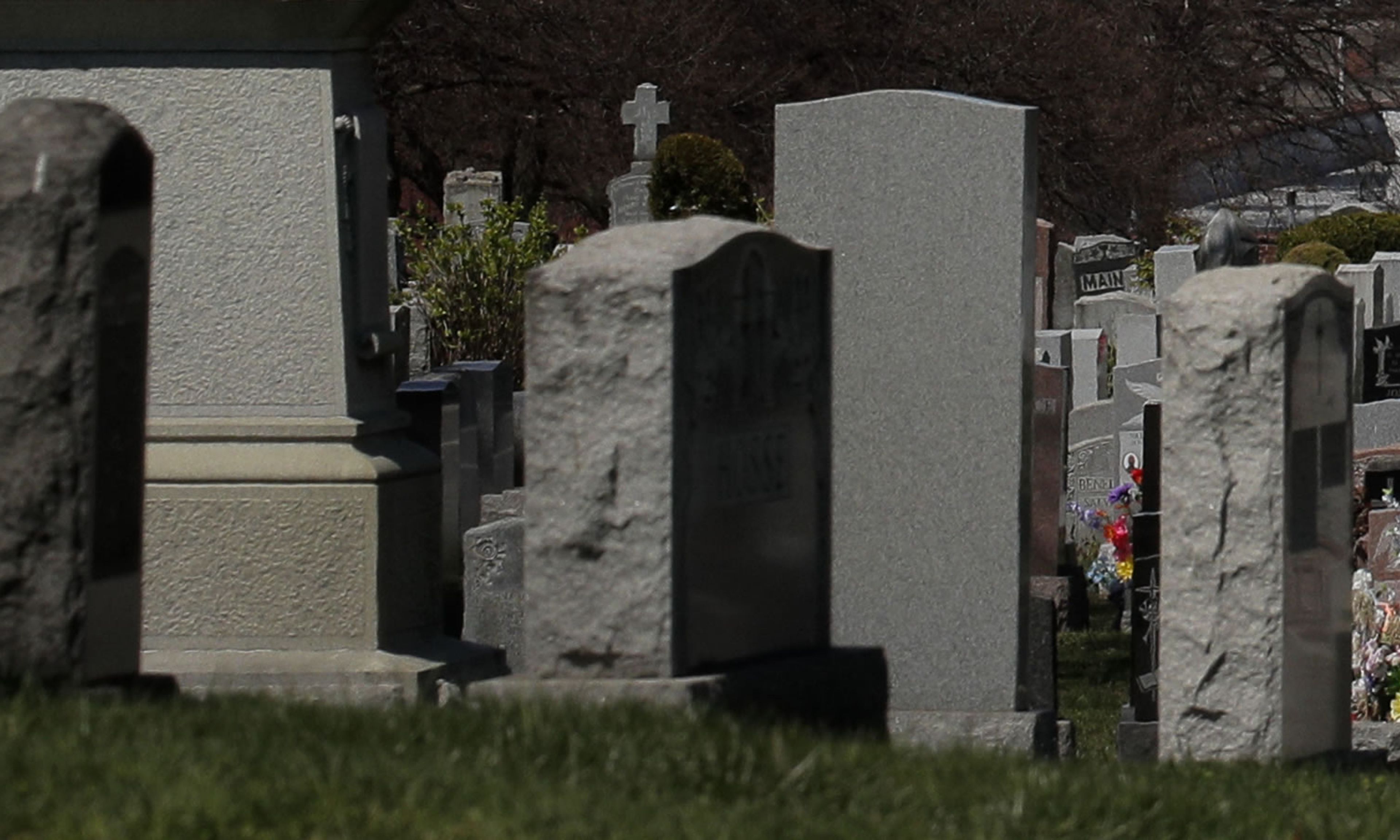
The city is large and, according to the census, still growing. As a consequence of its fecundity it is interwoven with cemeteries. Digging around in the financial district recently they found an old slaves’ burial ground. Mammon covered it, but now you can peer at it through a Plexiglas peephole at street level. The city’s first Sephardic synagogue left three little rearguards as it moved uptown, in Chinatown and the Village and along the old Ladies’ Mile. The first is inhabited by Revolutionary War veterans, the second by hostas that put out pale purple flowers in summer. As time passed, the city and its cemeteries moved farther and farther north and east. The drive to the airport from midtown takes you past a necropolis in Queens. Jan Lukas, the émigré photographer who did so many NR covers, loved urban juxtapositions, and one of his favorites was the view, back towards the skyline, from among the headstones, catching the verticals of both, skyscrapers vs. earthscrapers.
I once did a shoot for a documentary in Green-Wood Cemetery in Brooklyn. The set-up was complicated. The first shots of the battle of Long Island (1776), one of George Washington’s worst defeats, were fired in what is now Green-Wood Cemetery. Who fired? Foraging parties from the British and American armies, encountering each other in a watermelon patch. What watermelon patch? One planted to refresh sightseers who came to look at the Devil’s footprint. How had the Devil left his footprint there? A black fiddler named Joost was coming home from a party one Saturday night when he met a dark stranger, also with a fiddle, who challenged him to a musical competition. Joost was losing until a midnight church bell marked the beginning of the Sabbath; he started to play a hymn, and the stranger stamped his foot and vanished. We ended up not using the scene — too much story. The other thing I remember about Green-Wood Cemetery is the elaborate stone gate, now home to escaped parrots. The city’s shadow cities now stretch out into Long Island, Westchester, and New Jersey. Cremation makes them smaller, but we will never escape them.
My parents picked their burial plots years ago in the upstate town where my mother grew up. Though I visited there periodically all my life, for the longest time I never knew the cemetery existed — if you keep to the same street, you never know what is in the next block — but when I first went there it turned out to be quite near the center of town. It was designed at the same time (mid–19th century), and in the same style (pastoral), as Green-Wood Cemetery, under the influence of the Romantic Movement and perhaps also of a tender recoil from the carnage of the Civil War. The dead would be held in the arms of nature. The sweet lull of the Gettysburg Address — so often wrongly called lean or terse — serves the same function: The o’s and r’s of the opening (four score and seven years ago our fathers brought forth) soothe like mourning doves. The upstate cemetery, which is maintained by the donations of families who have more members in it than out of it, has fallen on hard times, and is no longer as well manicured as its designers intended. But the bones of their landscaping endure, and the tall attentive trees (until they die too) still maintain the original vision.
I was recounting all this to my trainer, Shawn, who works me out three times a week, and with whom I discuss our families, what’s on TV, and the crimes of the day. He is from the islands, and his family has a graveyard in the Bluff, the village where he lived for the first eight or ten years of his life. He used to harvest land crabs in the cemetery in season, and at night he saw apparitions there. What did they look like? I asked. A light, with a figure inside, he said. What were the apparitions doing? Sitting on graves. This week he told me the graveyard might have been moved or lost; there have been hurricanes since he left, over 30 years ago, and the graves were in sandy soil. I hope not — there are always hurricanes in the islands, and Shawn’s family’s burial ground sounds like it has been there for a while.
Graveyard apparitions appear to have an ongoing interest in their last not-so-resting places, and most of us, even the Bertrand Russell rationalists, feel the tug of some such belief. Yet we also know that funerals, burials, and graves are chiefly for the survivors — the spectators, not the stars of the show. They are the bon voyage party; also the good riddance party. You had a good run, we say to the departed, now back to the race. You said it of your dead, and others will say it of us. Tragedy, untimeliness, and unfinished business may complicate matters, but this is the aggregate, the net of net; this is the big picture.
My father has a picture of a B-25 fighter-bomber on his wall. That was my plane, he said on my last visit. You also flew B-17s, I prompted him. They had four engines, he said, but I liked B-25s better. He asked repeatedly how I had come and how much the trip had cost me, but the specs of his aircraft in the Army Air Corps in World War II were clear and present.
Deuteronomy said it well. “I have set before you life and death . . . therefore choose life.” When the time comes, and after it has gone, back to work.











Comments