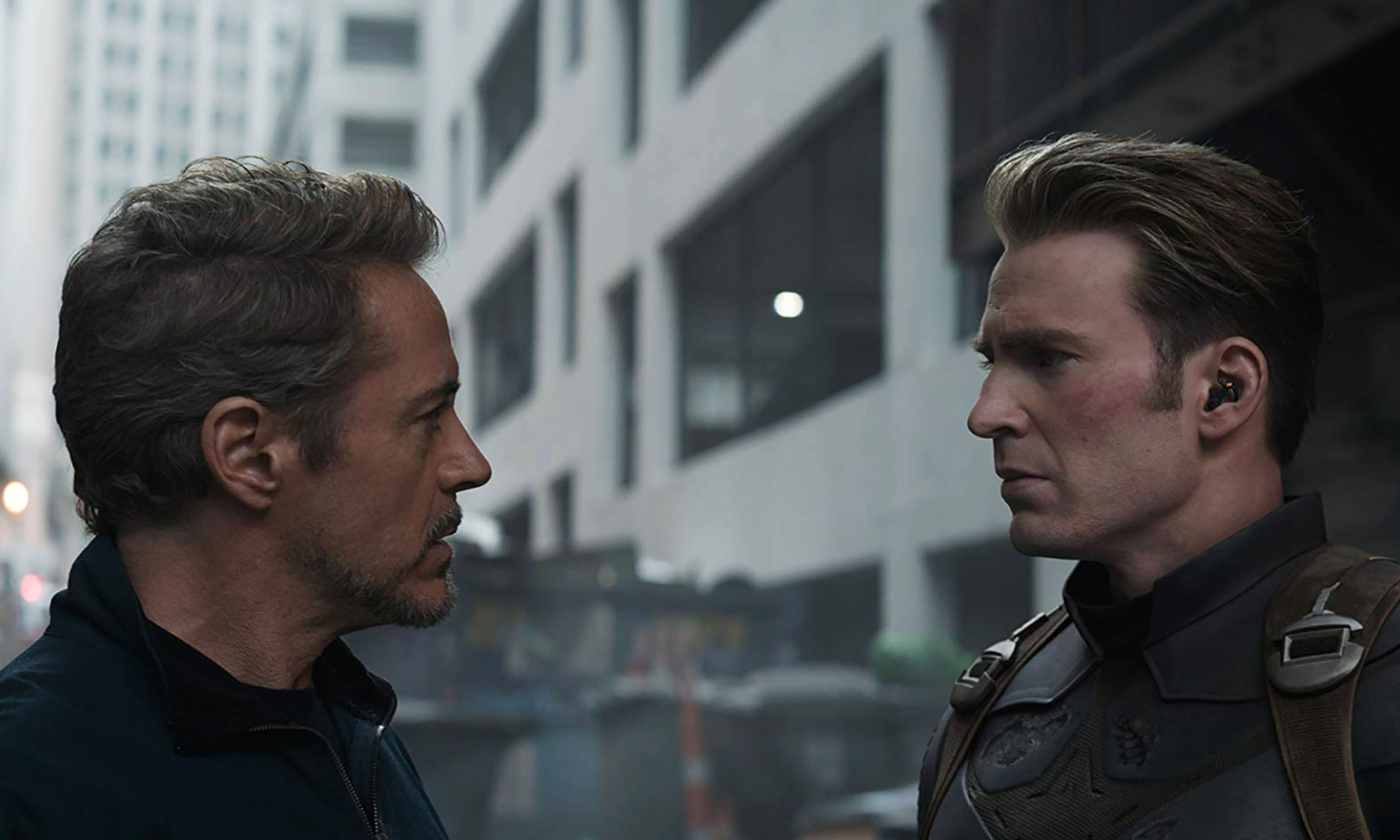
All this is true enough, but if you attend the three-hour experience that is Avengers: Endgame, you may have a sense that you are worshiping in the modern-Hollywood version of the Gothic cathedral. Since the debut of Iron Man in 2008, the Marvel Cinematic Universe has slowly risen like a Chartres above the cinematic countryside, its towers raised by 15 directors, scores of screenwriters and composers, a cast of hundreds, and the technical work of thousands upon thousands more.
All movies are collaborative, and most blockbusters these days are sequels or reboots, but the Marvel Universe is still something else: a unified vision sustained across more than a decade of moviemaking and 48 hours of total saga running time, at a cost of billions and with global box-office returns approaching $20 billion, with no single actor or director dominating, no single movie standing alone above the pack. To watch its culmination — or, rather, the culmination of this phase, since a universe this profitable must continue — is to feel oneself deep inside a pop-cultural edifice, in which the vault of the central story makes space for countless side chapels and stained-glass memorials, serendipitous reminders that the Marvel Universe is vast and that God’s eye is on the lesser superheroes too.
It is also to remember that every civilization gets the cathedral it deserves. The collaboration that was Notre-Dame de Paris created something far greater than any of its builders could have managed on their own, and nobody — save perhaps the dimmest fedora-bro atheist — visits the Gothic cathedrals and thinks them a shallow exercise that sucked up talent that might have found better uses elsewhere.
But I’m afraid that’s still my churlish thought about the Marvel Universe, even after reaching the altarpiece of Avengers: Endgame — a culminating action tableau memorably described by The Ringer’s Sean Fennessey as “like Raphael’s The School of Athens, but with guns, shields, and a Pegasus.” These movies have been so consistent across all the years and installments and characters because their primary métier is shallowness — a charming, engaging, quick-with-the-quip shallowness, a shallowness embodied by talented actors and enlivened by explosive action sequences, but a shallowness all the same. And their cost, in dollars and talent-hours both, is too high to justify their lame deliverables, their cardboard mythologies, the fundamental emptiness beneath their pomp.
I was less churlish after finishing Endgame’s immediate predecessor, Avengers: Infinity War, which had a rare weight among Marvel movies because alone among them it let its caped and armored heroes fail, and even saw many of them die. But that failure, the failure to stop the semi-genocidal Thanos (Josh Brolin, but purple) from wiping out half the population of the universe, was always destined to be temporary, and here we are back again for an Endgame in which the remaining superheroes will inevitably find a way to reverse the villain’s victory.
That reversal involves time travel, the most well-worn form of genre plot, which means that we also get the most fan-servicey forms of fan service — the chance for the present-day Thor (Chris Hemsworth), Captain America (Chris Evans), Iron Man (Robert Downey Jr.), Black Widow (Scarlett Johansson), Ant-Man (Paul Rudd), and a few lesser sidekicks to drop back into the action of prior Marvel movies, to meet past selves and dead fathers and past loves while they collect the McGuffins required to undo the Thanocide.
Along the way, as ever in Marvel movies, there’s a lot of funny business, a lot of charm; if you look up “charm” in your favorite online dictionary, you’ll probably find a clip of bantering Avengers. There is A+ work from Hemsworth as a depressed, gone-to-fat Thor, and from Brolin as the mournful supervillain. And then at the end there’s a small dose of moving self-sacrifice, though as ever in these movies the limits of everybody’s powers seem set arbitrarily for narrative purposes, making the threat of mortality seem less tragic and more random.
What I’m trying to say is there is nothing bad about this movie, which is why it’s 96 percent fresh on Rotten Tomatoes . . . but at the same time there’s nothing good enough to really justify that 96 percent, nothing to justify the vastness of the Marvel cathedral, the decade of labor that built it, and the roles forgone and scripts unwritten and non-franchise movies left unmade along the way.
“And the wind shall say: ‘Here were decent godless people: Their only monument the asphalt road / And a thousand lost golf balls.’” That’s T. S. Eliot in “Choruses from the Rock,” probably being a bit hard on golf and highways and other blessings of modernity, as I’m probably being a bit too hard on superhero movies.
But the completion of a cultural monument is still a good time to assess its weight and purpose and meaning. And as amazing, as dazzling, as sprawling as the Marvel cathedral feels, even the brightest stained glass and the finest statuary don’t quite compensate for the emptiness upon its altars.












Comments