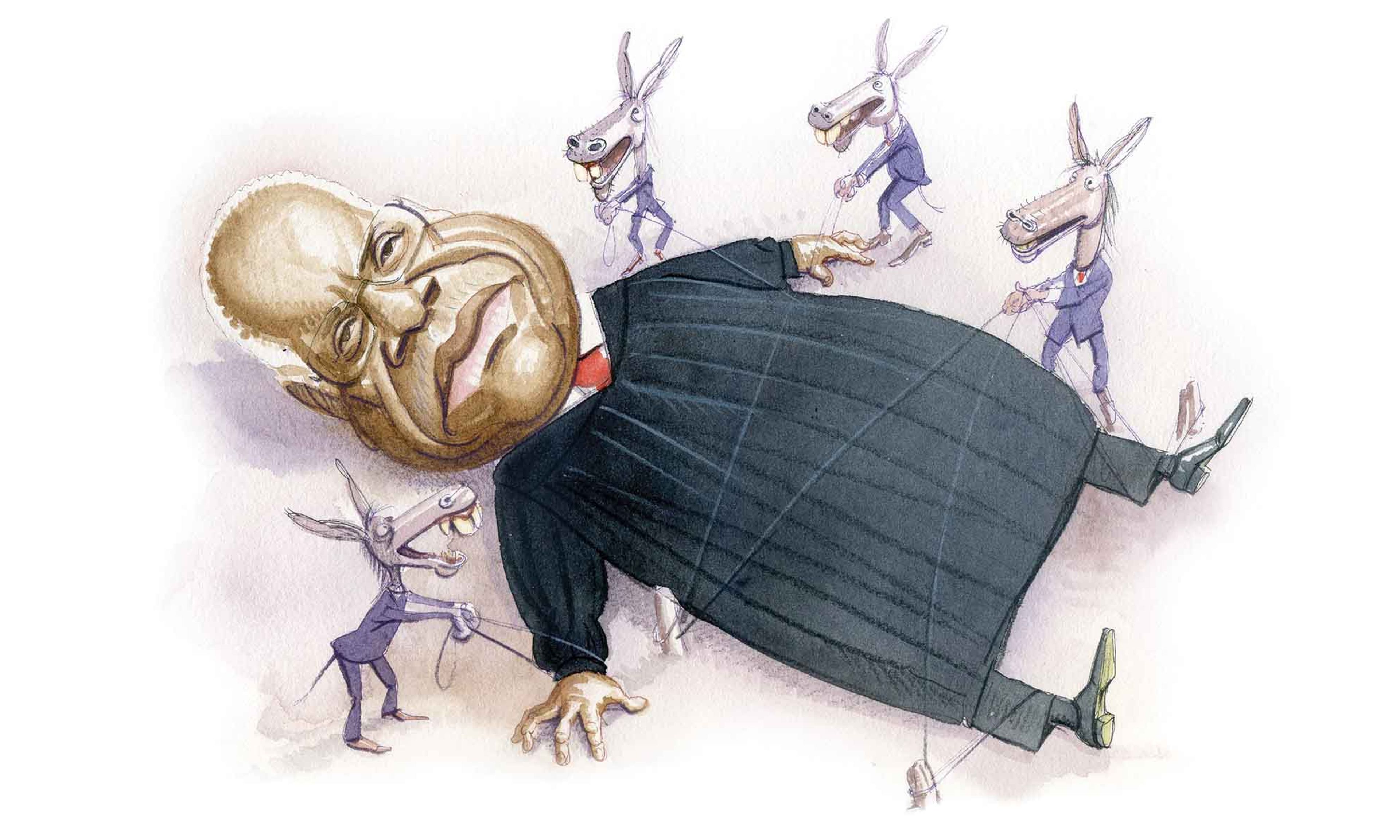
The U.S. Supreme Court is under attack. This assault aims to destroy one of the pillars of our constitutional order: an independent judiciary, appointed and confirmed by the political branches but thereafter answerable only to the process of impeachment and to its own oath to apply the Constitution and written laws. Judicial independence, as Alexander Hamilton wrote in Federalist No. 78, is essential to ensuring the federal courts’ “inflexible and uniform adherence to the rights of the Constitution.”
The motivation for the current multipronged offensive is transparently ideological: Liberals and progressives lost control of the Court, and they are now willing to trash it if the alternative is for it to remain outside their control. They would prefer that there be no part of the federal government that is inflexible, uniform, and fearless in following the Constitution.
In recent weeks, the central front in this war has been “ethics.” The justices have faced a two-pronged offensive. One prong is Democratic politicians arguing for new ethics rules, the centerpiece of which was a Senate Judiciary Committee hearing on May 2 chaired by Dick Durbin, the second-ranking Democrat in the Senate. The other prong is a daily media drip of stories purporting to show ethical violations by the conservative justices and their families. When nothing is available on the justices, the critics go after conservative legal groups such as the Federalist Society, activists such as Leonard Leo, and even a law school the justices have taught at.
The “ethics” barrage cannot be understood in isolation. It is part of a much broader campaign that has been ongoing for decades but has escalated dramatically over the past year.
The Court became more professionalized and less controversial between 1869 and 1937 as it emerged from the dramas of the Civil War and Reconstruction eras. Its decisions and personnel were heavily politicized during the 1930s, when Franklin D. Roosevelt deployed Court-packing threats, rhetorical fusillades, and ultimately his power of appointments to bend the Court away from its traditional adherence to the original constitutional design. Once captured by liberals, the Court enjoyed something of a holiday from partisan or elite politics for the next three decades. Confirmations of the justices were perfunctory affairs even as the Court marched relentlessly towards a liberal-activist approach to individual rights and a nearly limitless view of federal powers. A populist backlash, symbolized by the John Birch Society’s “Impeach Earl Warren” billboards in the mid 1960s, had little traction in Congress or the press.
The first stirrings of change came after Warren announced his retirement in 1968. Lyndon Johnson tried to elevate Justice Abe Fortas to be chief and put a crony in Fortas’s place. This effort met defeat in a bipartisan filibuster that was animated by ideology but aimed at Fortas’s ethical troubles. He eventually resigned from the Court.
The Fortas controversy began with money received from friends, but it was more ominous that he had continued to advise the Johnson White House politically — even attending staff meetings — while kept on retainer by a man under federal investigation who apparently wanted Fortas to arrange a presidential pardon. No Supreme Court justice has ever been removed from the bench — only one was impeached, unsuccessfully, in 1804–05 — and Fortas remains the only justice to have resigned under a cloud of this sort.
Liberal Democrats retaliated by sinking two of Richard Nixon’s nominees, one for suspected segregationist sympathies, the other for mediocrity. Under Earl Warren’s successor, Warren Burger, and with a Republican-appointed majority during the Nixon and Ford years, the Court from 1969 to 1986 trimmed its worst liberal excesses on issues such as crime and federal civil litigation, but it also handed down Roe v. Wade and continued its march to the left on sexual, religious, and racial mores.
For the most part, alarmed conservatives did not respond by attacking the justices personally or with demagoguery and yellow journalism aimed at the Court as an institution. They instead set to building. Conservatives in politics pledged to appoint judges who would more strictly read constitutional text. Conservatives in academia began elucidating theories of constitutional originalism and statutory textualism. At the intersection of academia and politics, the Federalist Society was formed to promote the exchange of these ideas and raise the visibility of their proponents.
In 1986–87, the Reagan administration began to move: William Rehnquist was elevated to chief justice, Antonin Scalia (one of the original faculty advisers to the Federalist Society) took Rehnquist’s former position as an associate justice, and the following year — after Democrats retook the Senate — Robert Bork was nominated to replace the moderate Lewis Powell.
Socially liberal Democrats, sensing a threat to their hegemony on the Court, were apoplectic. Senator Joe Biden had tried to bring about a filibuster of Rehnquist’s elevation, laying the groundwork to argue that the Senate, for the first time in a century, should openly reject qualified nominees because of ideology — an argument Ted Kennedy wielded with demagogic fury in defeating Bork. The nomination process got progressively nastier from there. Clarence Thomas was accused of sexual harassment. Samuel Alito was tarred as a racist with vague associations from his time in college. Brett Kavanaugh was accused of gang rape. Amy Coney Barrett, previously attacked by Durbin and others for her Catholic faith, was even criticized for adopting two children from Haiti.
The Kavanaugh hearings introduced a new element: angry mobs breaking through barricades to invade the Capitol, interrupting hearings, chasing a fence-sitting senator into an elevator, even battering the doors of the Court itself. The next escalation was kicked off by Chuck Schumer, who in 2002 had joined Biden in leading the first-ever filibuster of appeals-court nominees. In March 2020, he stood on the steps of the Supreme Court and bellowed at the two newest justices, “I want to tell you, Gorsuch. I want to tell you, Kavanaugh. You have unleashed the whirlwind, and you will pay the price. You won’t know what hit you if you go forward with these awful decisions.” His defenders claim that he was just talking about electoral results — as if they would “hit” life-tenured judges.
After the 2020 election, Democrats added another angle: The January 6 congressional committee leaked texts by Justice Thomas’s wife, Ginni, to the press and demanded that she testify despite having done nothing other than send her opinions on the 2020 election (which she believed Donald Trump had won) to figures in the Trump White House. Never mind that there was nothing in any of these texts about the views or actions of her husband, and that neither Thomas nor any other justice showed interest in overturning the election outcome in any state.
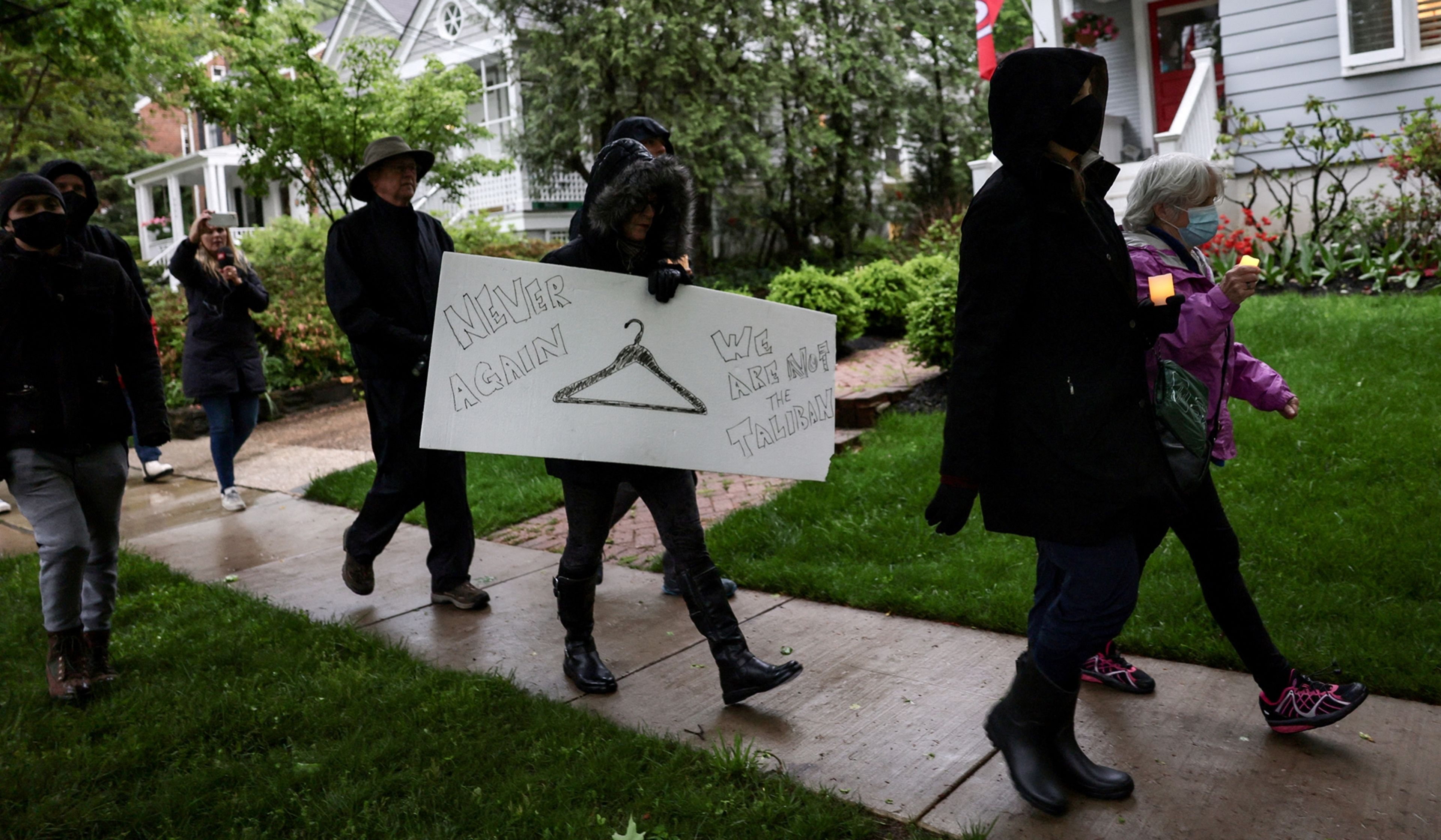
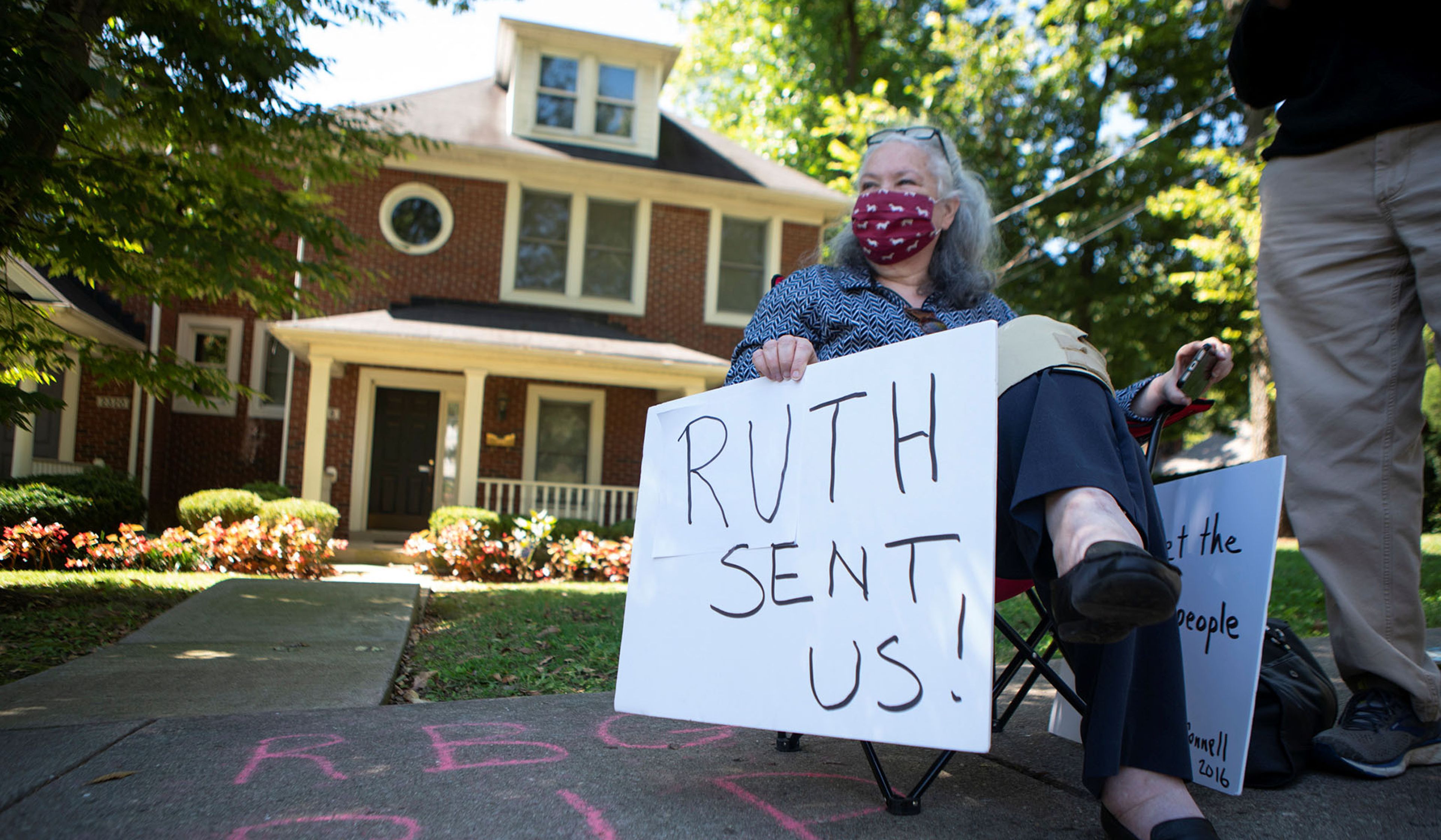
With Roe on the docket in the spring of 2022, the next target was the personal and professional security of the justices. A complete draft of the Dobbs opinion was leaked to the press, an unprecedented breach of trust within the Court that publicly signaled that Roe could be saved only if one of the justices supporting the opinion could be intimidated. Alito has said that he believes the leaker was trying to stop the opinion from issuing and that this made the justices “targets of assassination” requiring round-the-clock security. Gangs of protesters camped outside the homes of the conservative justices, and the Biden administration ostentatiously refused to enforce laws criminalizing such protests aimed at judges. An armed man enraged by the leaked draft showed up at Kavanaugh’s house intending to assassinate him but got cold feet upon seeing the home guarded.
These were tactics dramatically different from how conservatives responded to the Warren Court. They were coupled with a seemingly never-ending parade of bogus demands for justices to recuse themselves or theories about why their nominations were illegitimate.
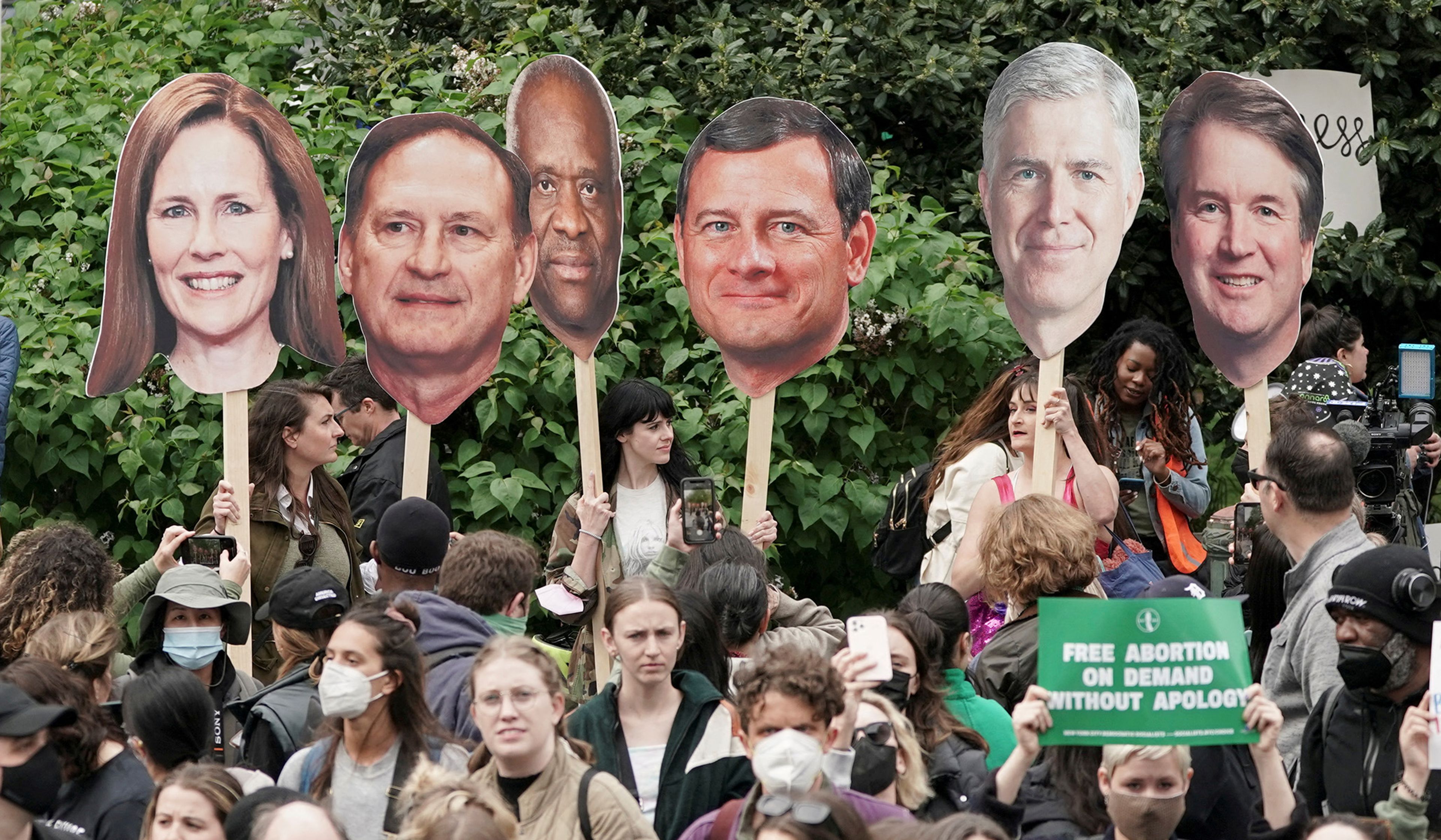
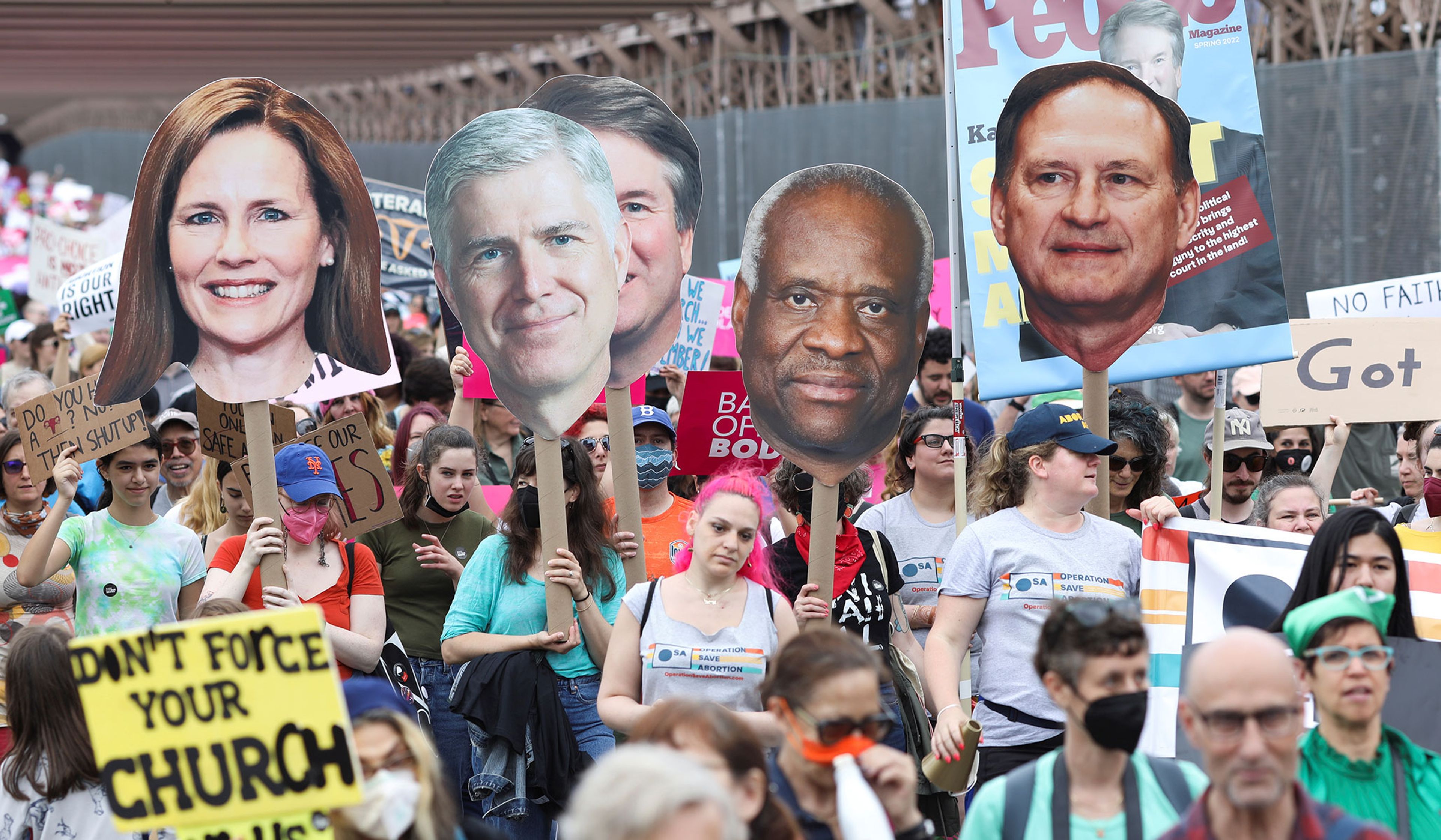
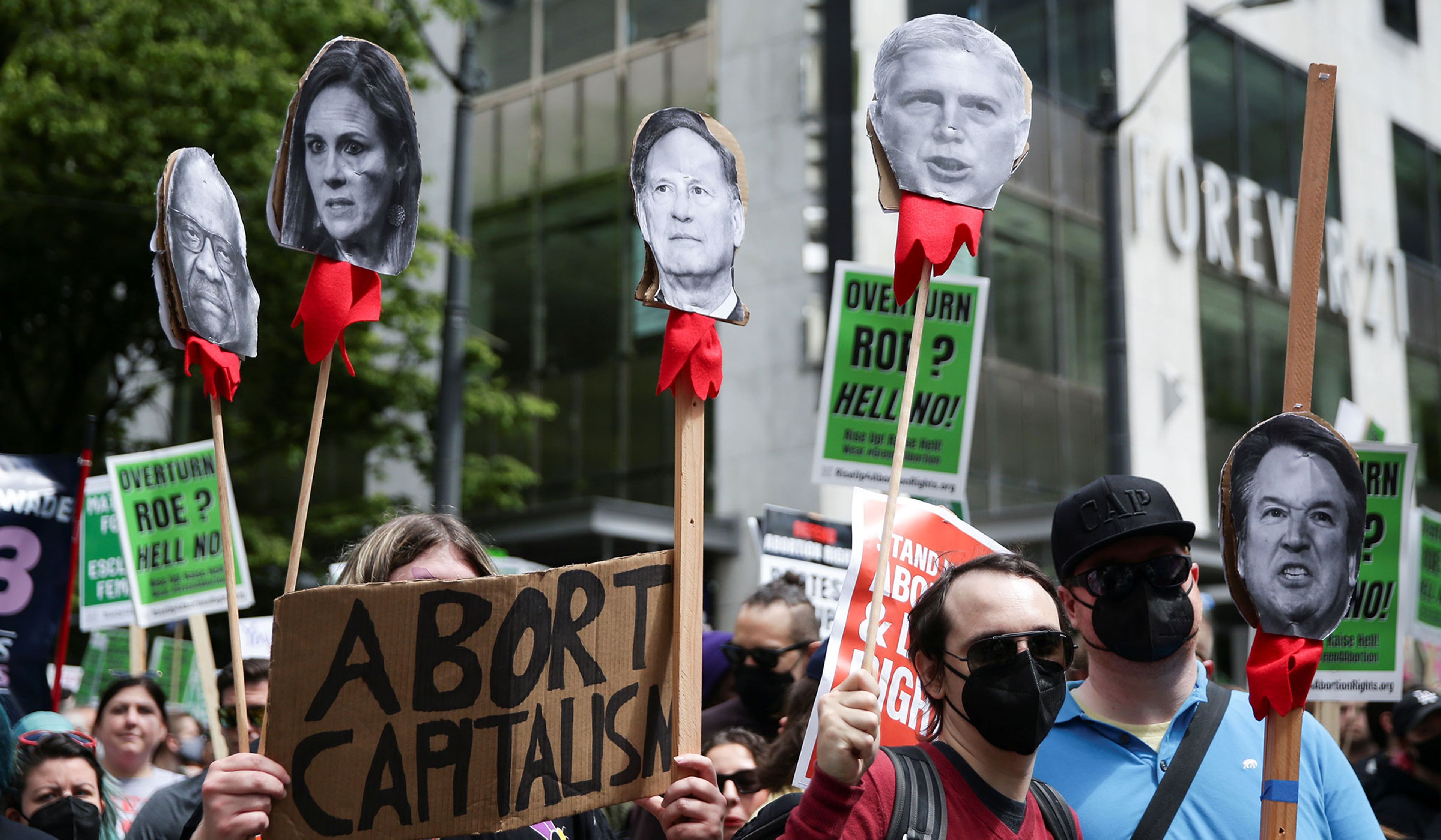
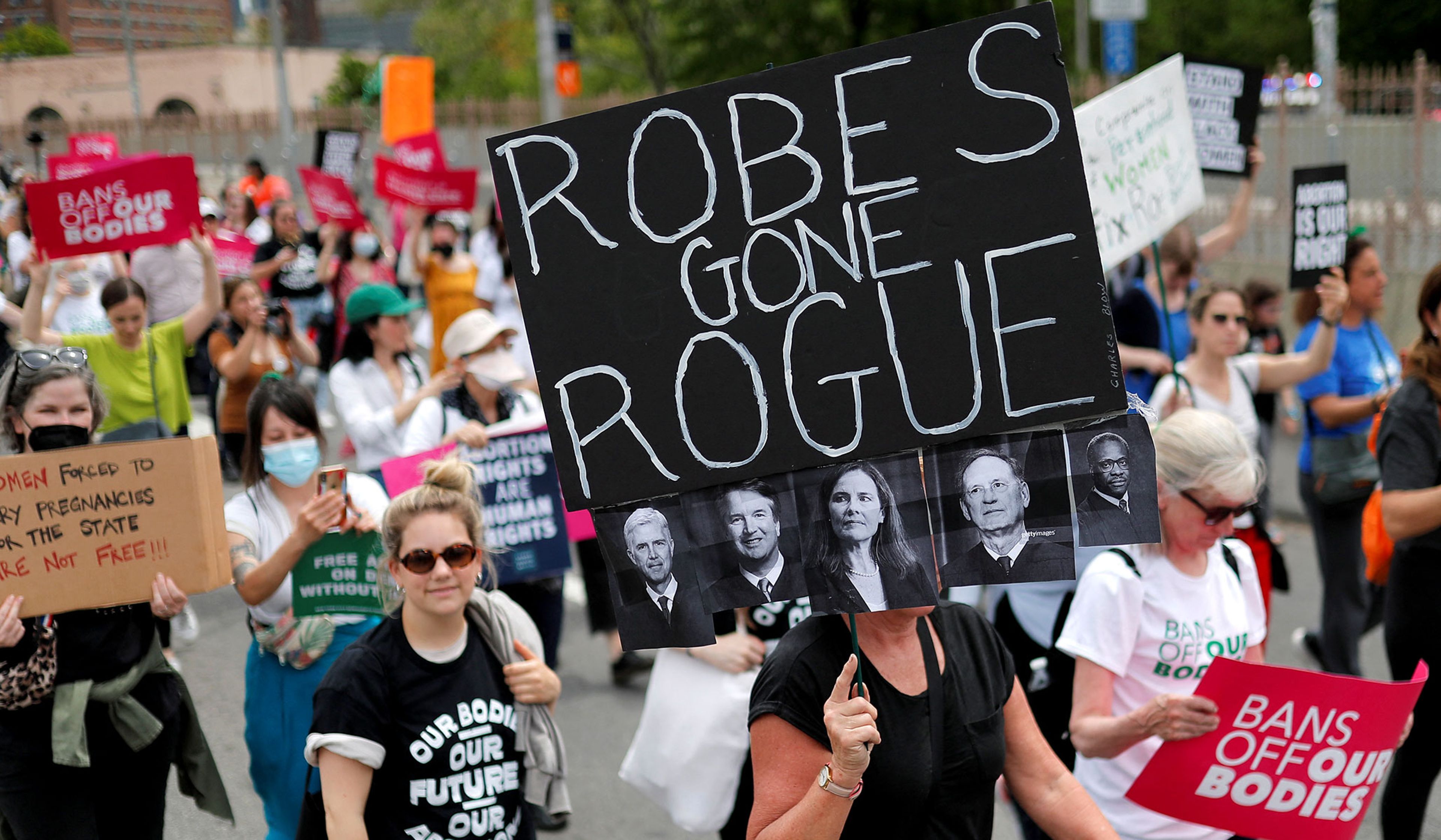
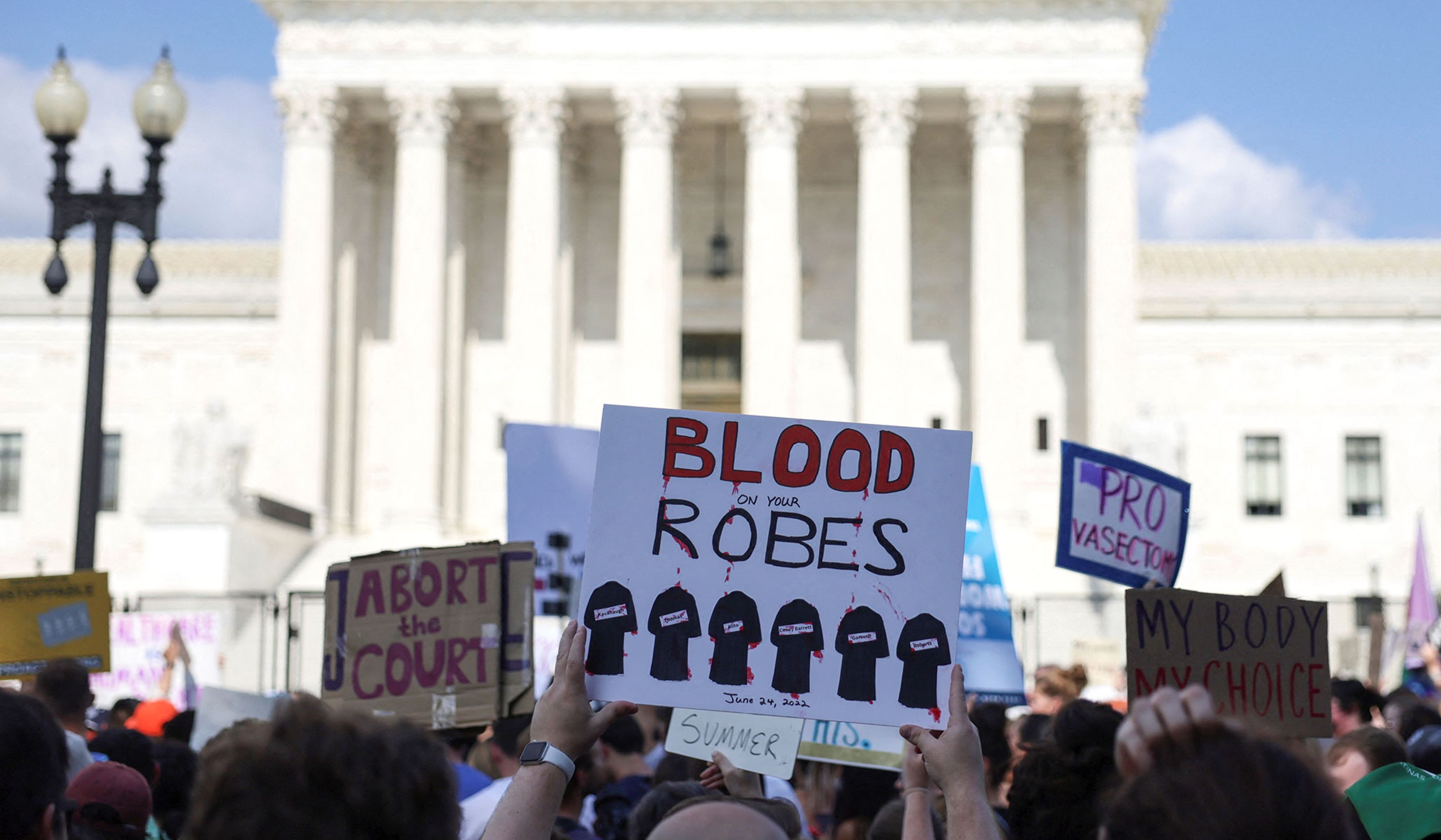
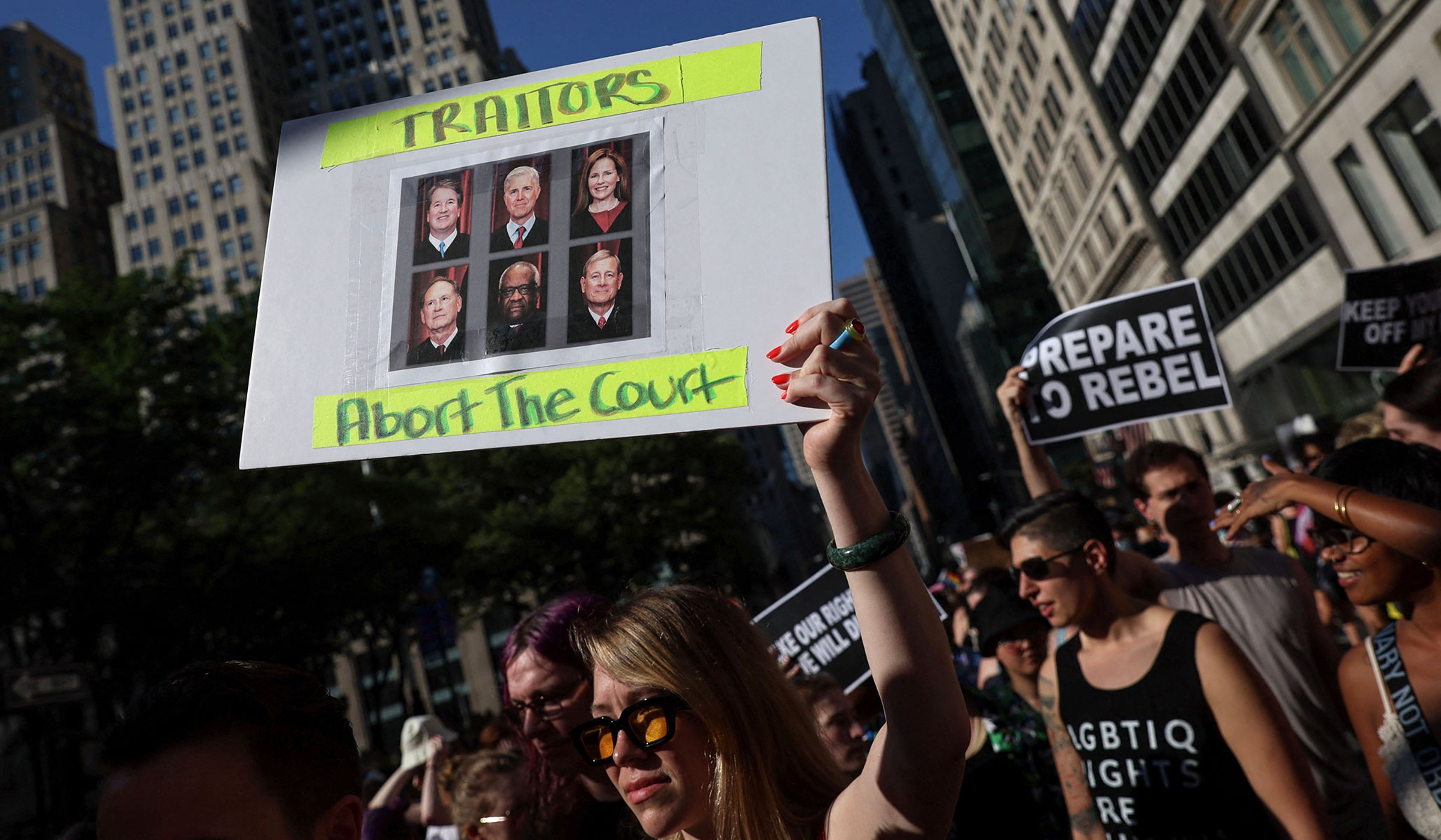
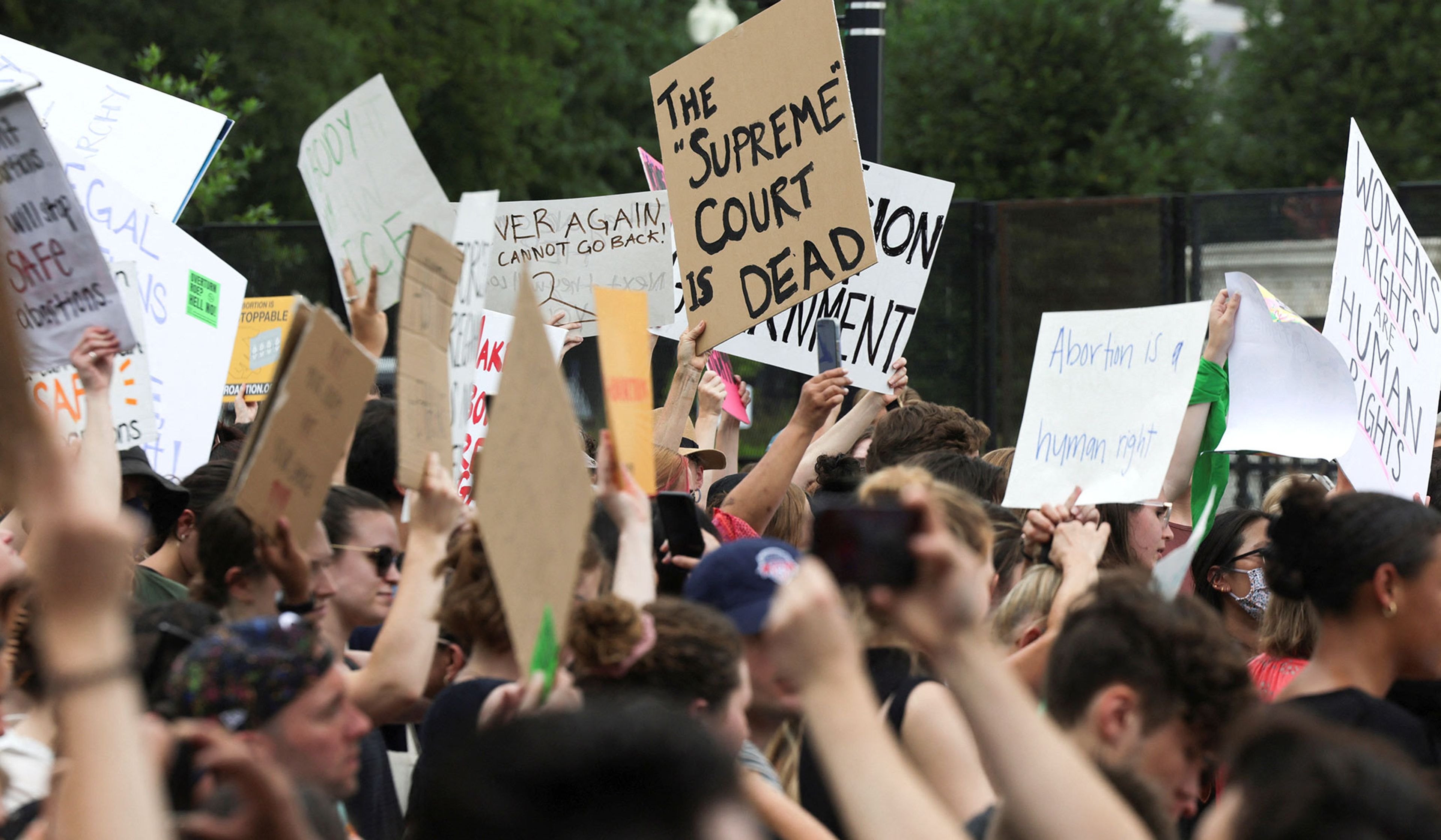
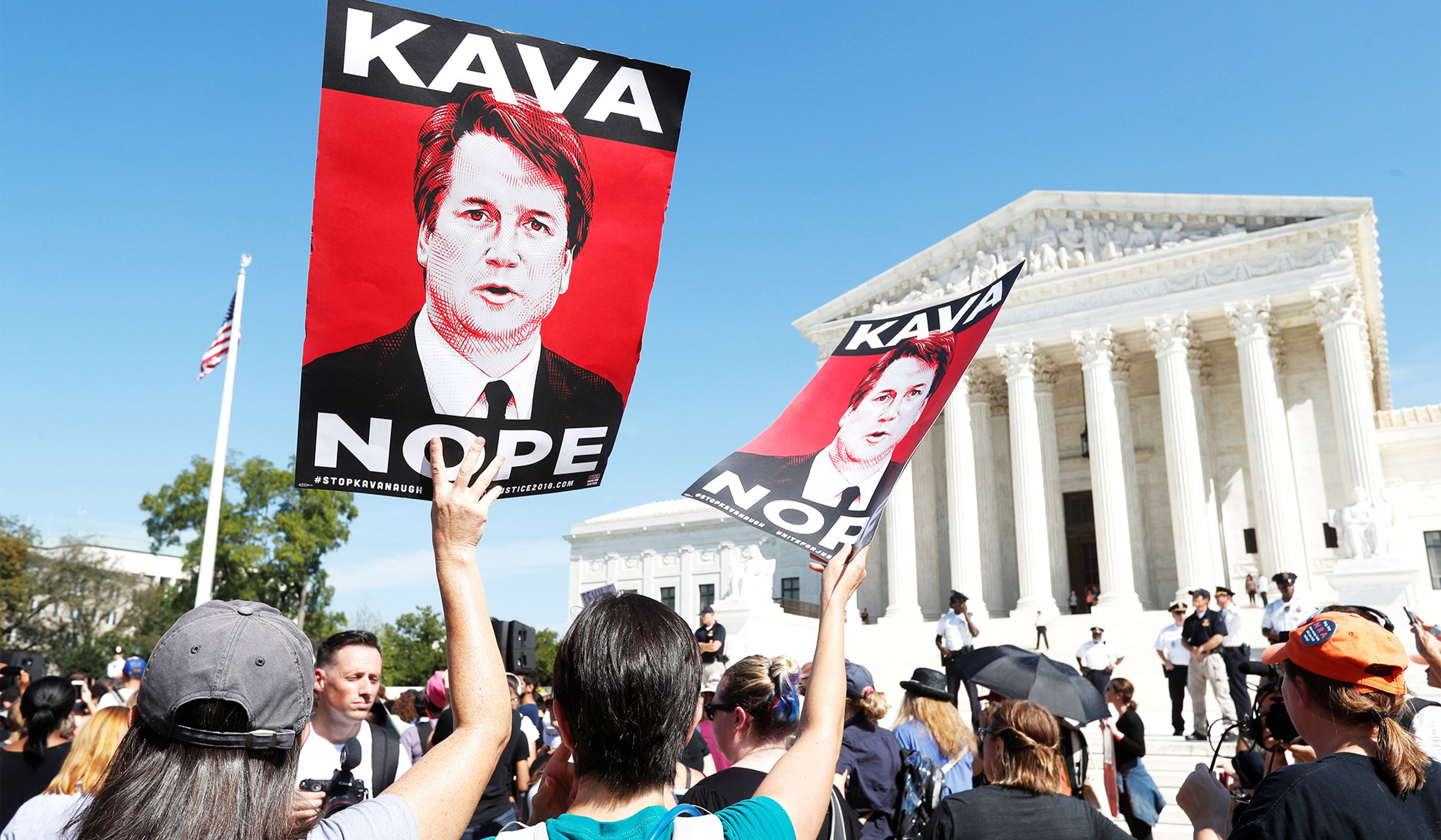
Pro-abortion demonstrators hold up photographs of U.S. Supreme Court Associate Justice Amy Coney Barrett, Associate Justice Samuel Alito, Associate Justice Clarence Thomas, Associate Justice Brett Kavanaugh and Chief Justice John Roberts during a protest in New York City, May 3, 2022.
Jeenah Moon/Reuters
Another crowded docket this spring, including a major challenge to racial preferences in university admissions, set the stage for the current campaign. It began in earnest on April 6 with a report from ProPublica that criticized Justice Thomas for taking vacations with billionaire Harlan Crow and accepting free travel and hospitality from him on those occasions. Since then, stories have been rolled out almost daily from alternating outlets and journalists, with a few (such as ProPublica and Heidi Przybyla of Politico) taking multiple swings. Other criticisms of the relationship between Thomas and Crow have focused on Crow’s purchase of the home of Thomas’s mother and his payment of school tuition for Thomas’s grandnephew, whom Thomas was raising.
The seemingly deliberate pacing of these stories (one a day), their perfect coincidence with what Senate Democrats planned to talk about, and the fact that some of the allegations would be too comically weak standing alone to justify publishing an article about them all point to a coordinated campaign. It remains unclear whose money and research is behind all of this. The apparent campaign has dovetailed precisely with narratives promoted by richly bankrolled activist groups on the left such as Demand Justice, which promote Court-packing and other forms of “Court reform.”
Thomas has long been both a hate figure on the left for being an intransigent black conservative and a regular target for criticism over his wife’s vocal political activism. It is fair to question the judgment involved in Thomas’s relationship with Crow and in the extent to which Thomas disclosed the benefits he received (though paying tuition for Thomas’s grandnephew and helping clean up the neighborhood where Thomas’s mother lives were good deeds that make poor targets for an ethics complaint).
More to the point, there is nothing genuinely improper here, much less anything even vaguely resembling the sorts of influence-peddling and partisan wire-pulling that drove Fortas from the bench. After an exhaustive search, Bloomberg News dug up just one case that reached the Court and was tangentially related to Crow — a case in which he owned a minority stake in one of the defendant companies but that the Court didn’t take and in which nobody wrote an opinion. Under the federal courts’ standard rules for disclosure of a company’s corporate owners, there was no reason for anyone reading the briefs even to know there was a connection to Harlan Crow.
It is especially farcical to suggest that Crow has influenced the jurisprudence of Thomas, who is famously the most immovable figure in the entire landscape of American law and politics. His views were already deeply entrenched by the time the two men met in the late 1990s. There is one and only one well-known way to influence Clarence Thomas, and that is to write a persuasive law-review article. What is apparent instead is that Crow greatly admired Thomas for who he already was and what he already stood for. It may be a bit corny for him to want to preserve Thomas’s childhood home for posterity, but it is hardly unethical.
Gorsuch and Roberts have also been targeted, on even flimsier bases. Gorsuch is accused of not reporting a property sale to a lawyer who is a major Democratic donor. But the lawyer paid much less than the original asking price and says that he had no idea that a Supreme Court justice was behind the LLC through which Gorsuch held the property. A hit on Roberts’s wife complained that she places lawyers at firms that have business before the Court. But she gave up a high-powered career as a lawyer herself to avoid impropriety and now works at a significant remove from her clients’ clients.
The critics are careful to imply, but never to say, that these are issues unique to the conservative justices. They are not. For example, Justices Sonia Sotomayor and Ketanji Brown Jackson have both had to revise their financial-disclosure forms in the past. And a New York Times report even complained that Antonin Scalia Law School at George Mason University was getting conservative justices to teach there — something Harvard and Yale have done with Supreme Court justices for years. Elena Kagan has continued to teach at Harvard, where she was the law dean, and has not recused herself from a landmark pending case involving the college’s undergraduate admissions.
The justices are uniquely unsuited to respond to this negative PR campaign, which is precisely what makes it so effective and so insidious. A politician can get into the mud with his or her critics if need be; but judges are in a bind where they look guilty if they stay silent and partisan if they respond. The critics count on that bind. When Durbin called Roberts to testify at the May 2 hearing — timed to interrupt the Court’s busiest season — the chief justice demurred, noting that the head of a separate branch rarely appears before Congress even as a courtesy.
The nominal demand of the Democrats is for a code of ethics binding on the Court. This is a smokescreen.
First, Congress can pass laws to guide the conduct of the justices, but there are serious constitutional doubts that it can subject them to any discipline apart from impeachment. Only the Court can enforce rules within its own branch unless Congress chooses the tool given it by the Constitution against executive and judicial misconduct. Of course, some Democrats may see a complex and onerous “ethical code” as providing them with a pretext to start impeaching conservative justices just to smear them, but they would need two-thirds of the Senate to actually remove one.
Second, the Court is not lawless. The justices are already governed by a federal statute that specifies when federal judges should recuse themselves from a case, and every term there are several recusals. There are also required disclosure forms, and the justices file them. Congress could tighten or clarify these rules if it wanted. In theory, Congress could crack down on some outside sources of income, such as teaching and book-publishing, but it is hard to see how either of these activities is corrupting in the ordinary course, and public discourse on the law would be impoverished if federal judges were muzzled from publishing scholarly work. Being human, the justices are subject to social pressures, but these have long been a tool of the social Left, and much of the rage from that quarter derives from the recognition that it can no longer influence the current majority.
The justices aren’t hated by progressives for corruption, but for their integrity.











Comments