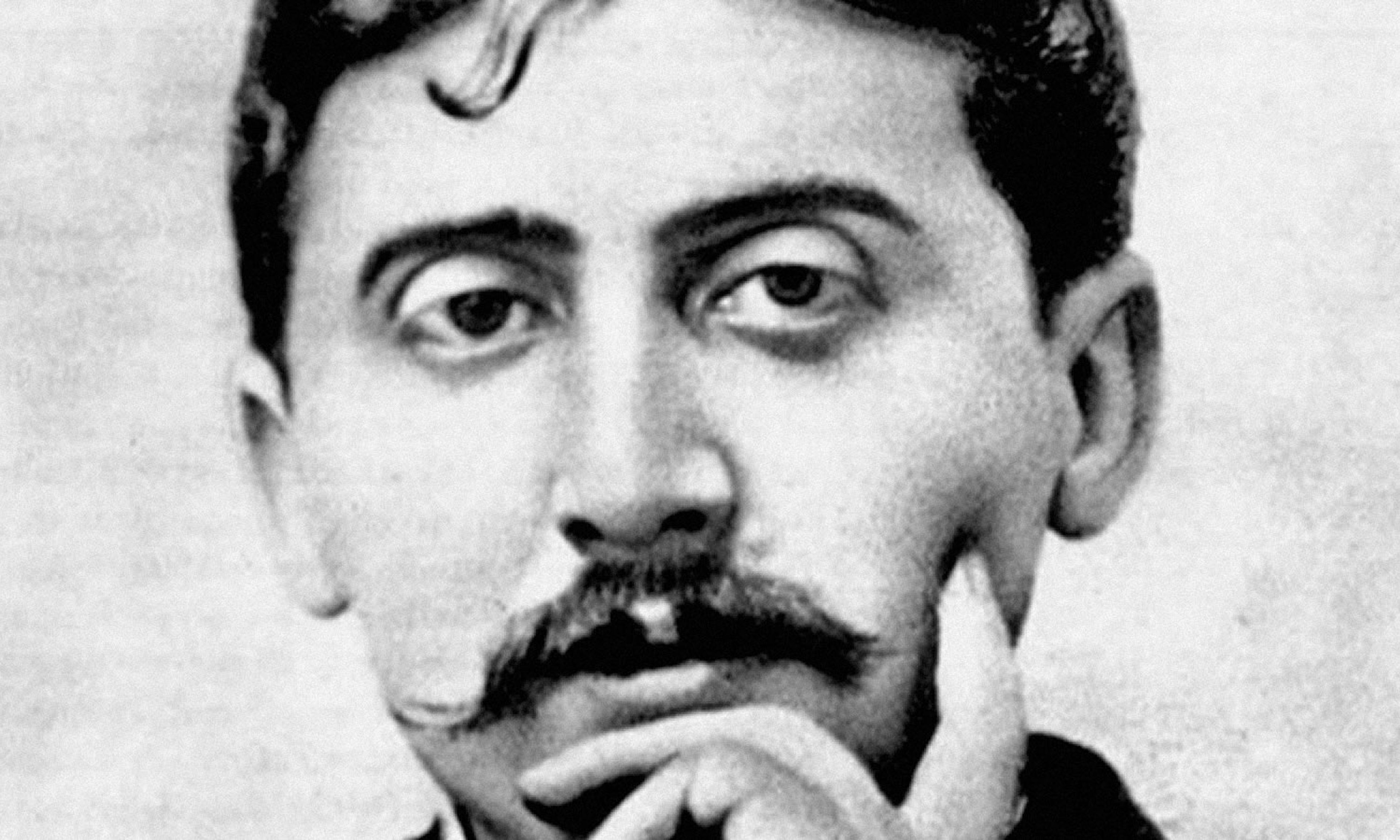
For a long time, I went to bed late. The reason was that I was reading aloud, to my wife, Marcel Proust’s In Search of Lost Time. We did it in the city and the country, so this is both City Desk and Country Life, though the locations are not New York and upstate, but Combray, a small town in the île de France; Balbec, a Channel resort; and Paris, or parts of it: the Champs-Élysées, the Bois de Boulogne, a few homes, theaters, and brothels.
I have read aloud some long books — Travels in Arabia Deserta (two volumes), The Lord of the Rings (three), The Arabian Nights (four) — but In Search of Lost Time is the winner. I used the new Penguin translation, which prints the original seven novels in six volumes, and assigns each tale to a different translator. Years ago, I owned, as every bookworm did, a Modern Library edition of C. K. Scott Moncrieff’s version, done in the 1920s; mine was assembled from lucky visits to street fairs and the Strand. I remember Scott Moncrieff’s English as being more euphonious (his Shakespearean title, Remembrance of Things Past, captures the flavor). Yet I never finished him. He was narcotic, then soporific. The Penguins seem brusque and occasionally brittle, but they get the job done.
The great work would be greater if it were shorter. Proust (I will call the author Proust, and the narrator Marcel) badly needed an Ezra Pound or a Maxwell Perkins, or even a good copy editor. I think 500 pages could easily be trimmed from Search; a thousand would probably be excessive. The problem is that Proust is a lapsed essayist. He talks around his subjects, sometimes around and around his subjects; he writes ten sentences where one would do. Too often he is the boring man at a party who pins himself to your lapel.
He sets himself tasks he cannot perform. Music is important to Search, and Marcel learns an important lesson from a sonata and a septet by a fictional composer named Vinteuil. Unfortunately, describing music is devilishly hard. An impressionist can manage it (Mencken: “Debussy — A pretty girl with one blue eye and one brown one”). The only successful extended example I know in fiction is Thomas Mann’s riff on Beethoven’s Opus 111 in Doctor Faustus. Proust on Vinteuil is deaf and mute. Natural beauty — the flowers of Combray, the sea at Balbec — is equally important to Marcel. Another blank: Proust is no Thoreau.
Sometimes Proust does what he intends, but he might better not have bothered. Marcel is both an invalid and a hypochondriac; medicine naturally provides him with hundreds of metaphors. These have aged badly, like Elizabethan discussions of humors. Sometimes what Marcel thinks was nonsense the day it was written. Love fills his thoughts — his own for two girls, Albertine and Gilberte, and the loves of friends of his, notably that of Charles Swann, a rich Jewish aesthete, for Odette de Crécy, his kept woman, later his wife. But Marcel believes that love does not exist: It is always a delusion, always at the wrong time for the wrong person, always an expense of suffering in a waste of shame. Marcel spends one novel keeping Albertine in his mother’s apartment — the longest slumber party in history. He spends most of that time wondering whether she is a lesbian. She seems to be, but she also seems genuinely to like him, and to want to make him happy. Of course he cannot notice that.
About homosexuality. Hurricane Gay will have to subside before we can assess the matter fairly. It certainly seemed to me that there was too much of it in Search. It was dismaying to realize that some gay obsessions (who is gay?) are a century old, as are the answers (everyone!).
When Proust is not saying too much, he says too little. He hyper-analyzes certain topics, such as jealousy, in a manner that is very French. But he is obtuse and incurious about others. He shows no interest in why his characters are what they are. The best Marcel can offer is steampunk science — when someone becomes gay, it is the hereditary gayness of his family manifesting itself, liked webbed feet in H. P. Lovecraft.
So what did I find? A surprisingly vivid sketch of Paris in World War I. Proust and Marcel turn out to be French patriots (you probably have to be a Francophile to like Search; I plead guilty). Parties. Give Proust a gathering, and he is home free. He is a master of the comedy of boredom, idiocy, and pretension. After reading him, these will never torment you so again. People. Marcel meets a lot of people, and Proust loves them all. Sometimes he loves them too much — he will sculpt a portrait, sharp as a Houdon bust, then mar it by hitting it with a hammer. This overwork damages Swann, and Odette and Marcel’s aristocratic young friend Robert de Saint-Loup. Proust rarely mars his secondary figures or his villains. The Duc de Guermantes and Madame Verdurin are monsters of selfishness; the Marquis de Norpois, a diplomat, is the perfect trimmer (D.C. is full of him; make sure, dear reader, that he is not you). Jupien, the ambitious waistcoat-maker, is another ideal type. Perhaps the most extraordinary character is the Baron de Charlus. We enjoy him because he is an adult baby: He wants what he wants, and he has (he thinks) the social position to get it. He sinks into the most abject vice. Yet in volume six we learn that he fought against sinking further: He turns out to be one of the few characters who is both moral and pious.
Marcel has the last word: “. . . if enough time was left to me to complete my work, my first concern would be to describe the people in it, even at the risk of making them seem colossal and unnatural creatures . . .” That’s worth a thousand and one nights.












Comments