• Is it too late to send Joe Biden on paternity leave?
• In mid October, the State Department informed Congress that the government was in touch with 363 U.S. citizens in Afghanistan, 176 of whom wanted to get out. The day before the U.S. military evacuation wrapped up, Secretary of State Antony Blinken said the administration was tracking “a small number of Americans, under 200 and likely closer to 100, who remain in Afghanistan and want to leave.” The new count reveals the dramatic dishonesty, incompetence, or both displayed by the administration since August’s withdrawal fiasco. Keep in mind that between then and now, several hundred Americans have escaped the Taliban’s grasp. “Trust but verify” has an honorable lineage, but it is sad to have to apply it to our own State Department.


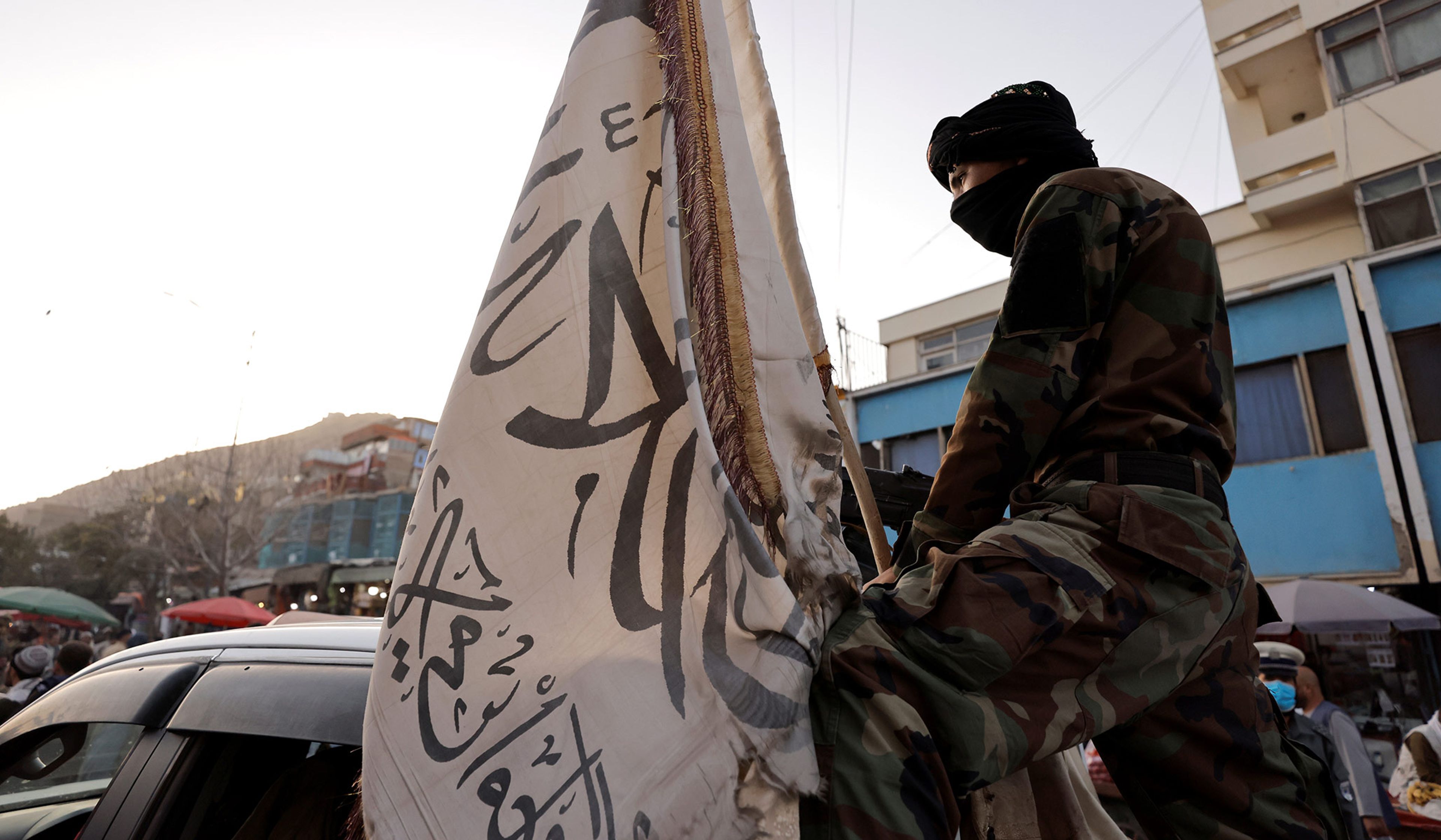
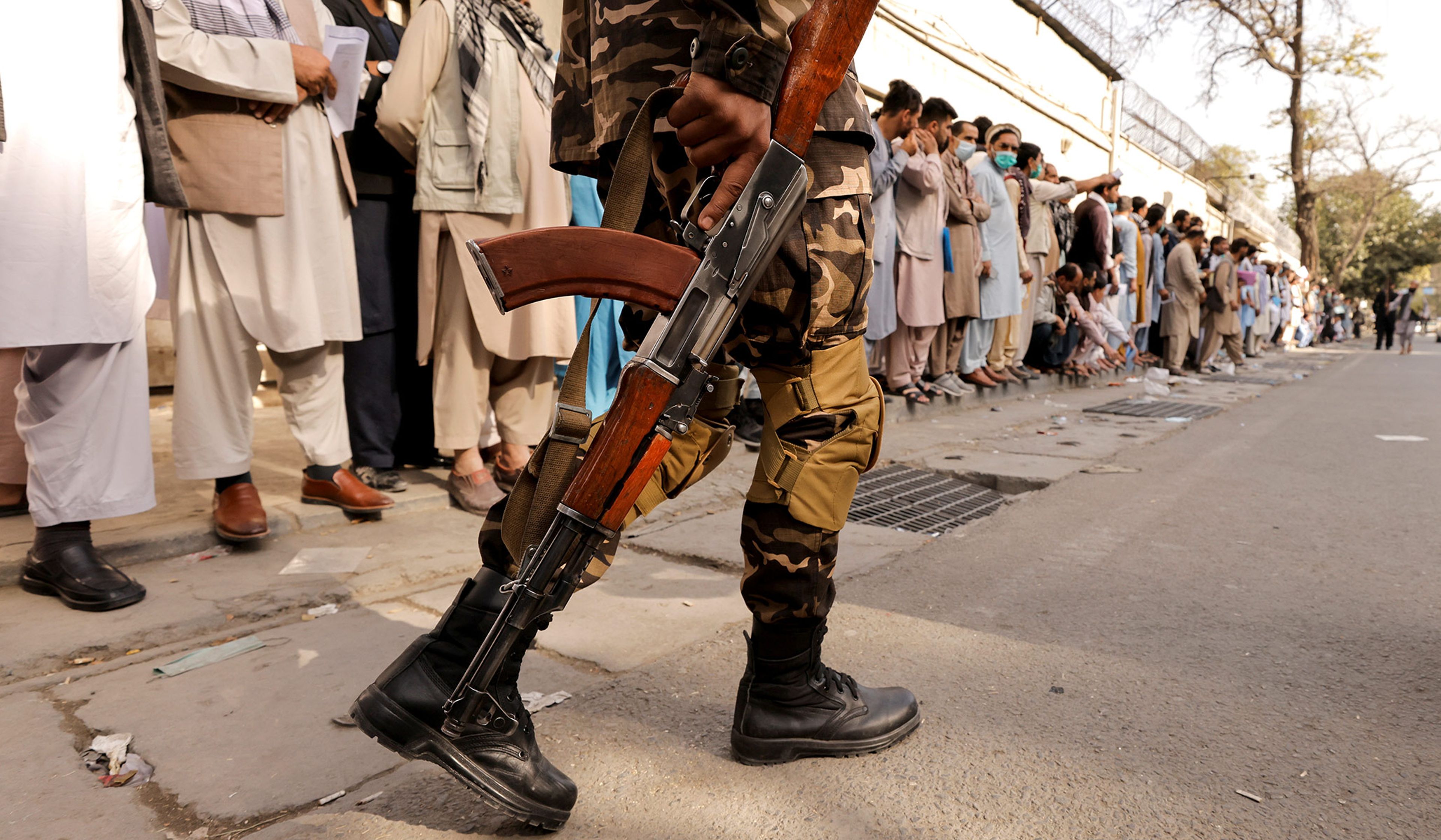
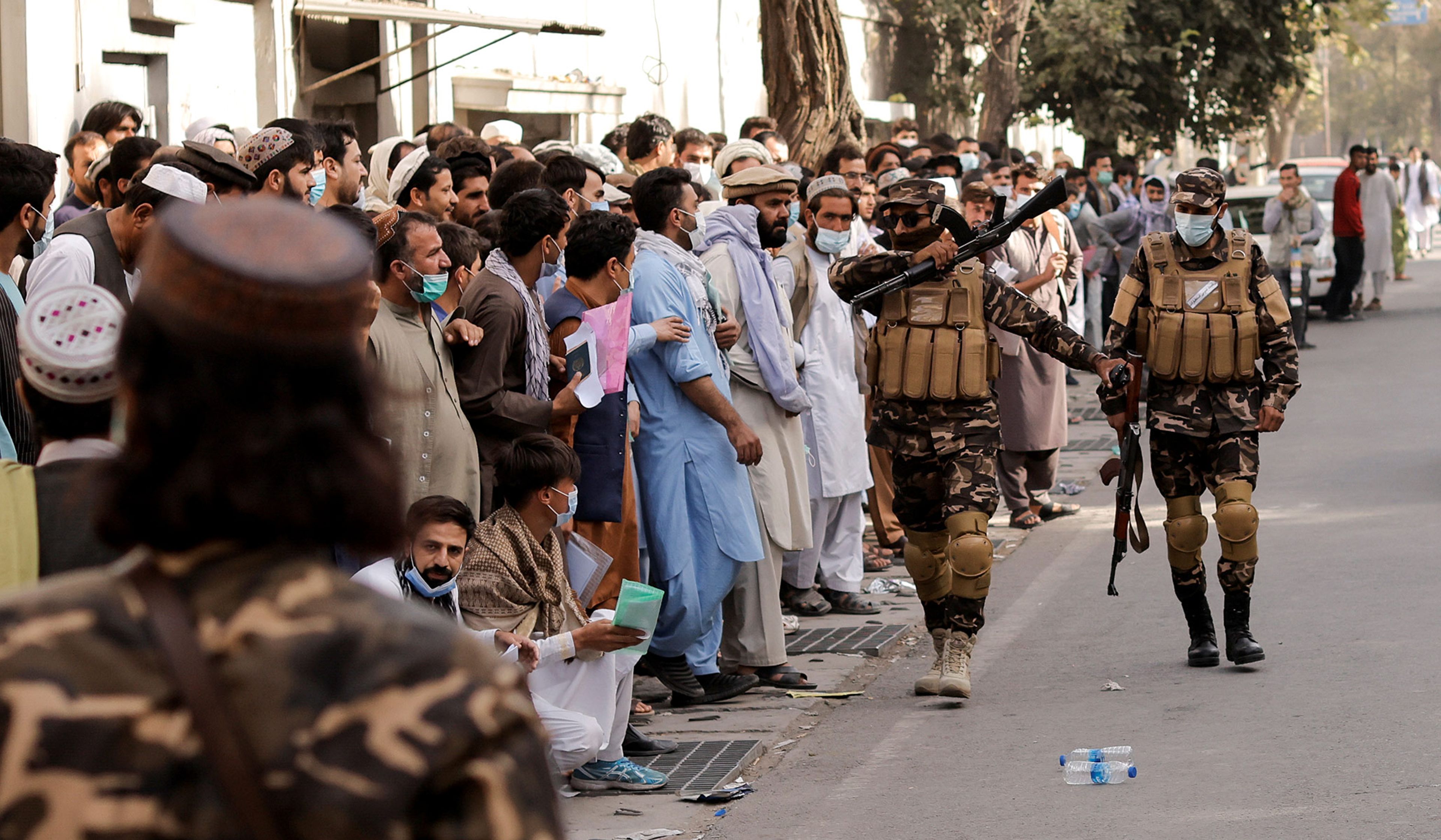
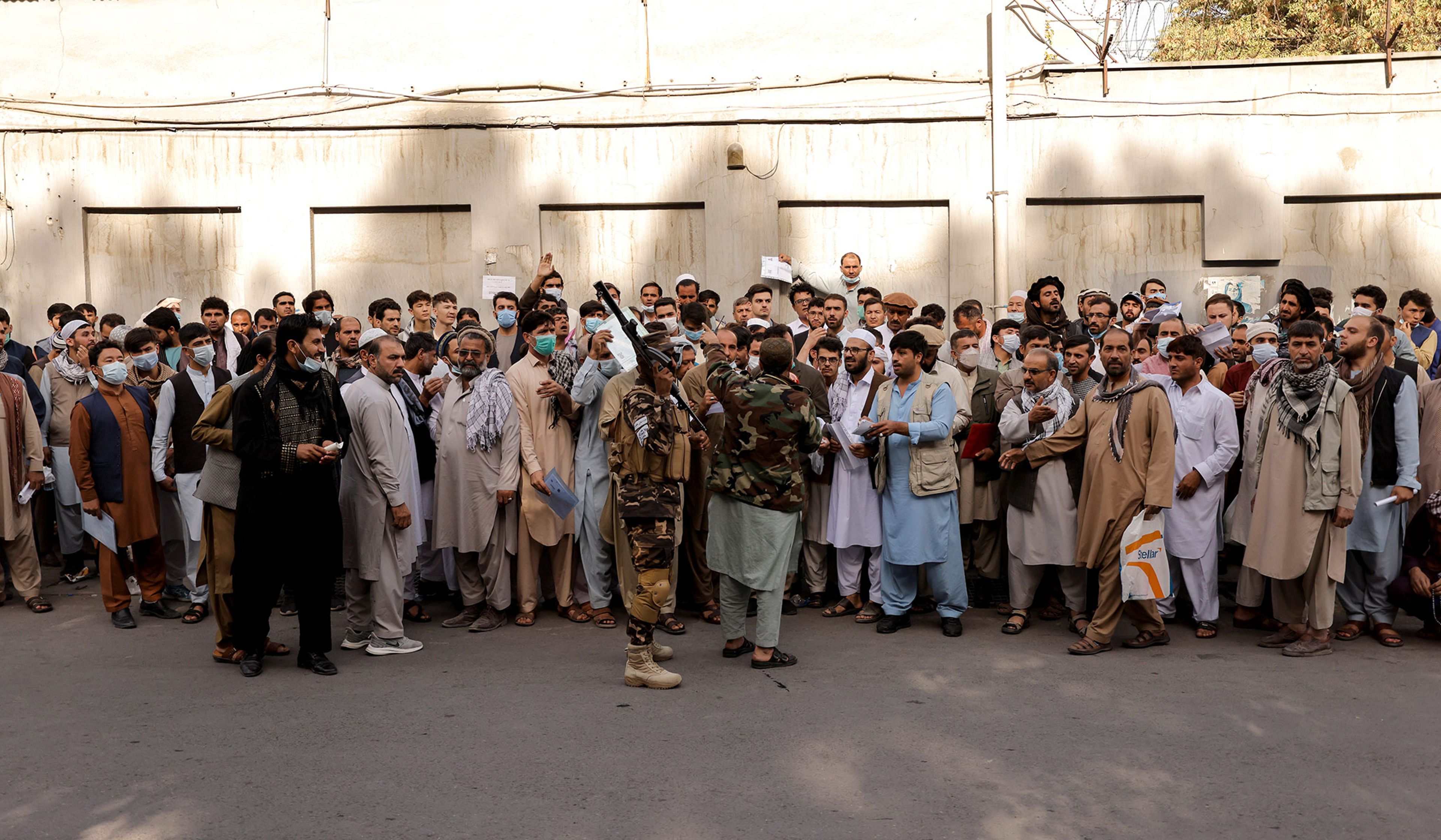

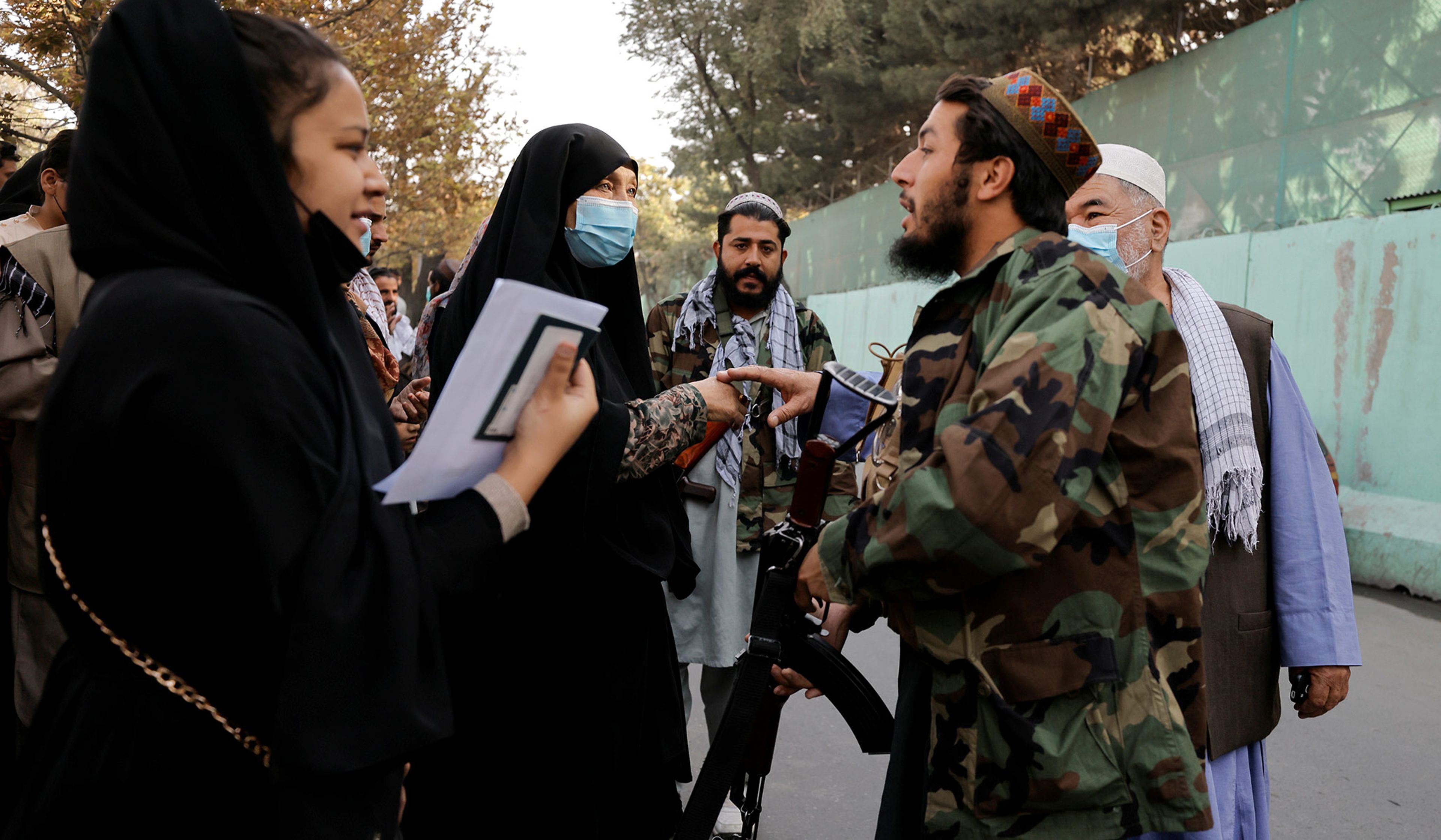
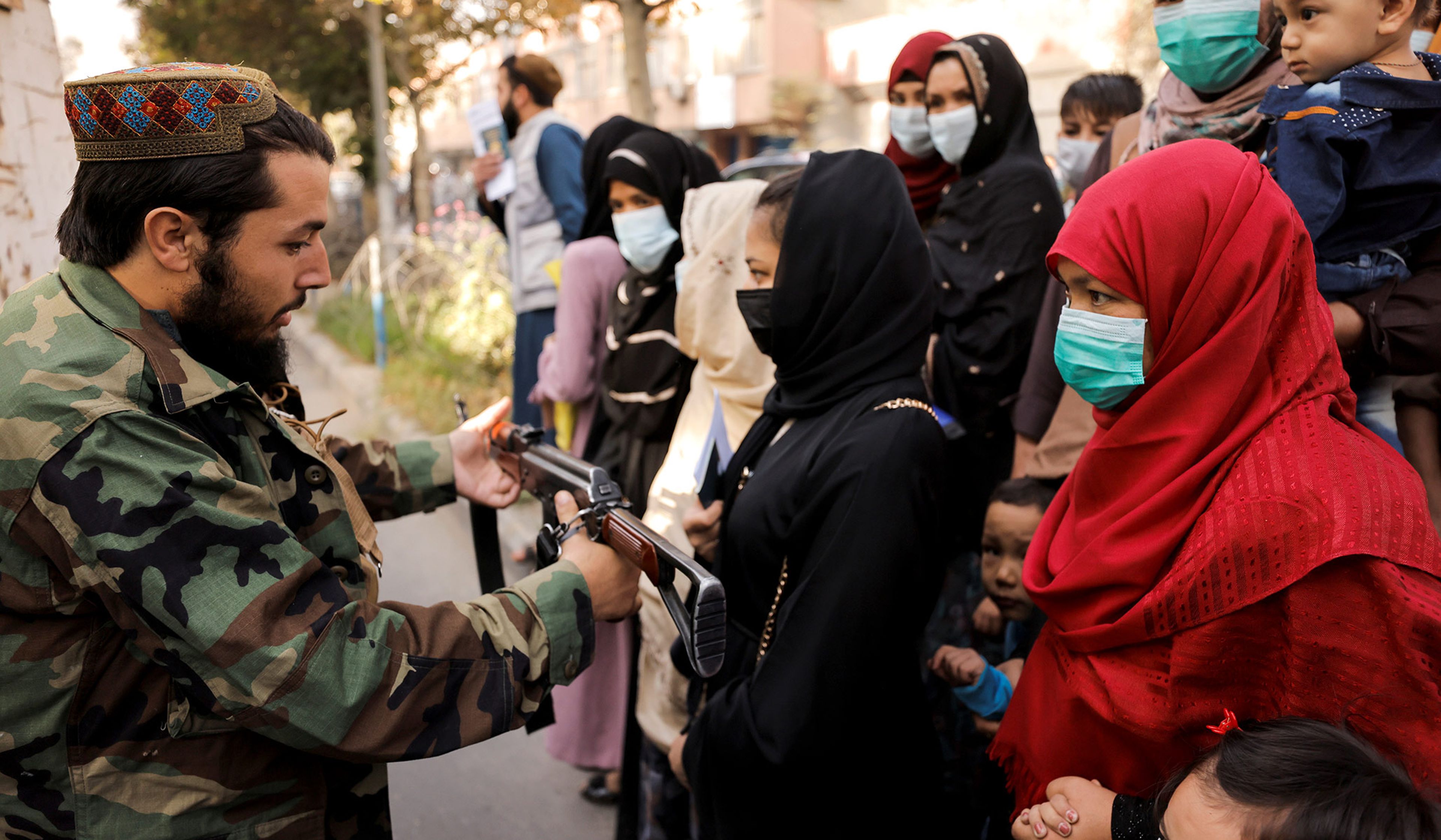
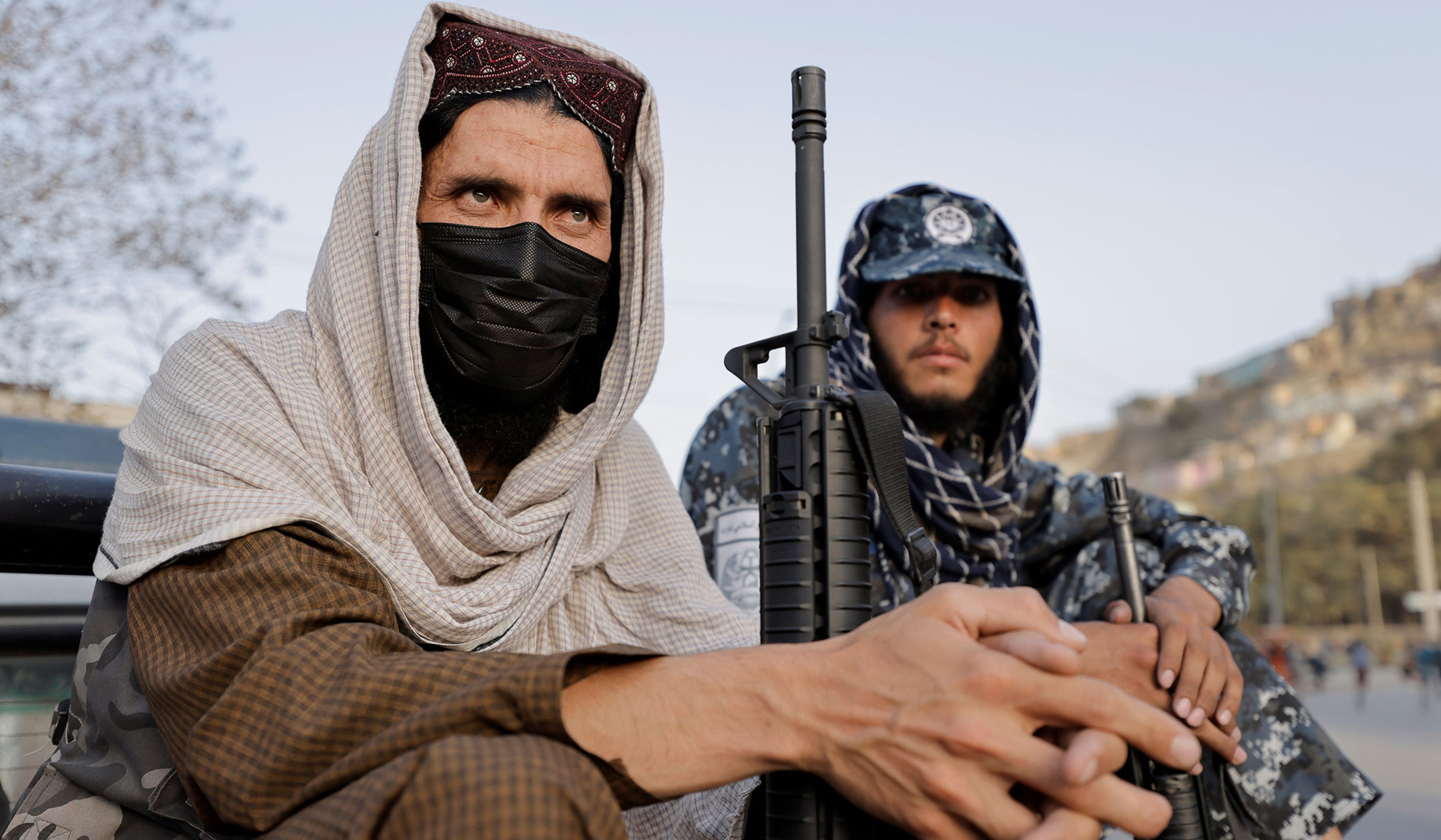
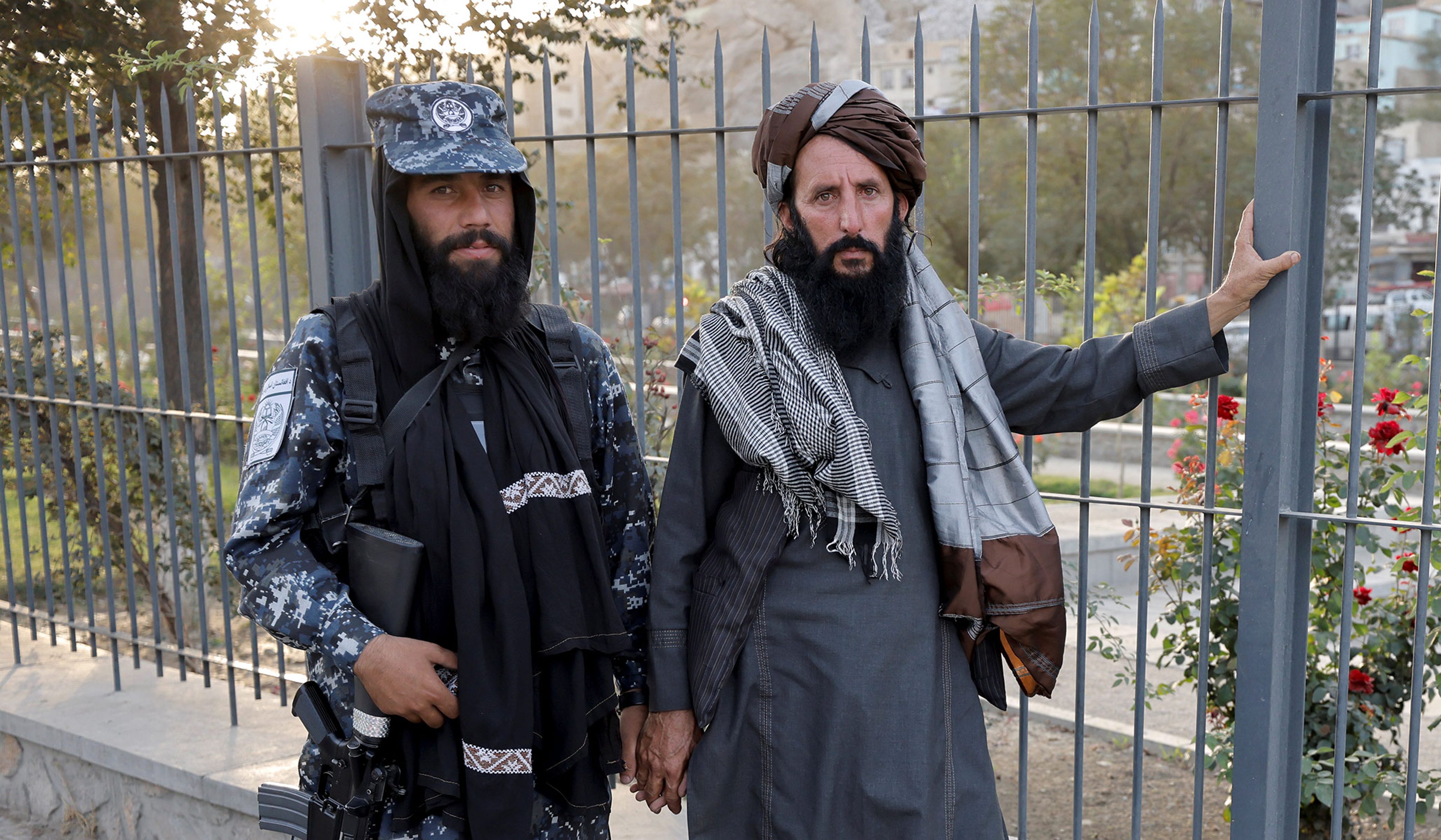
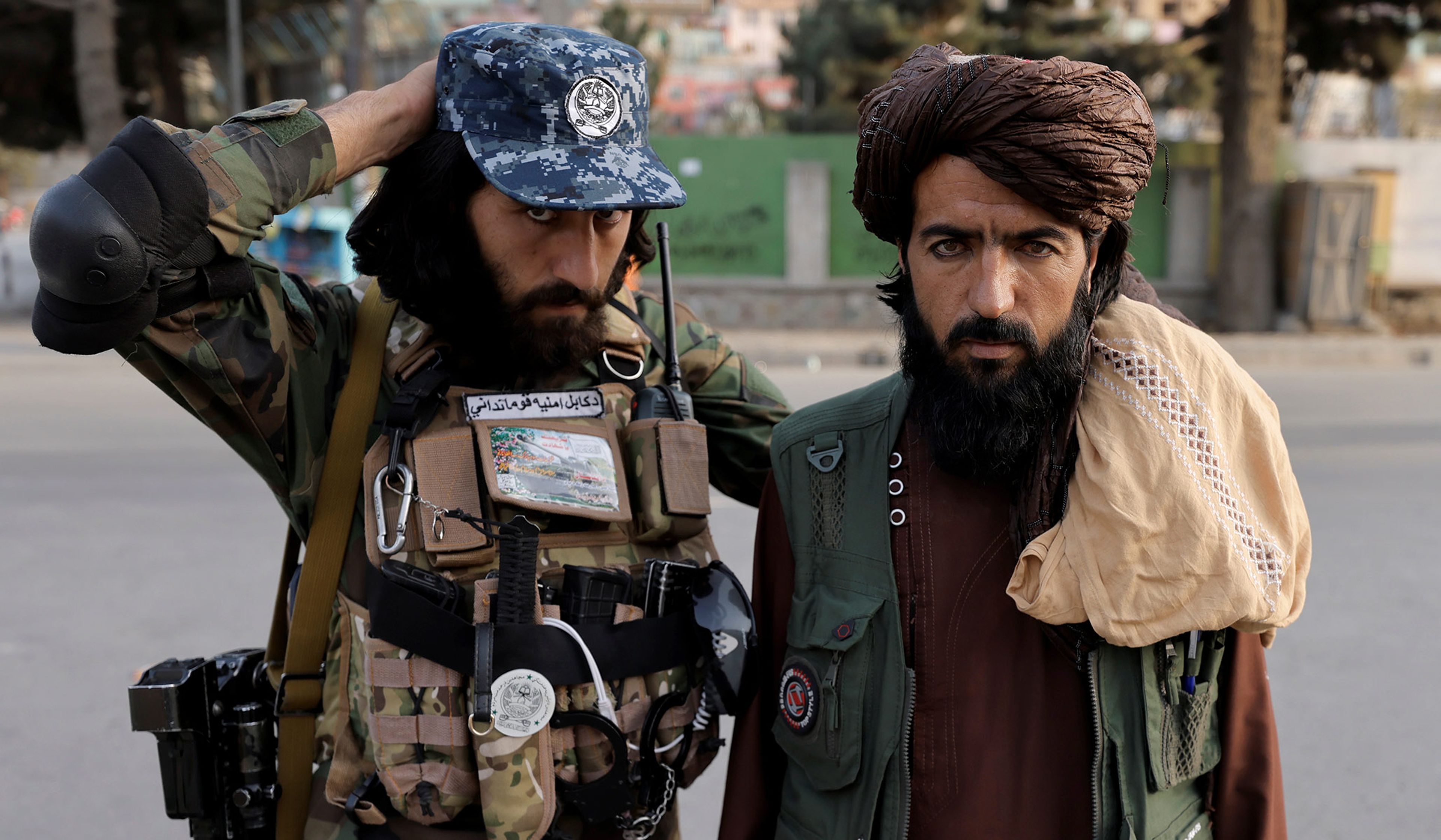

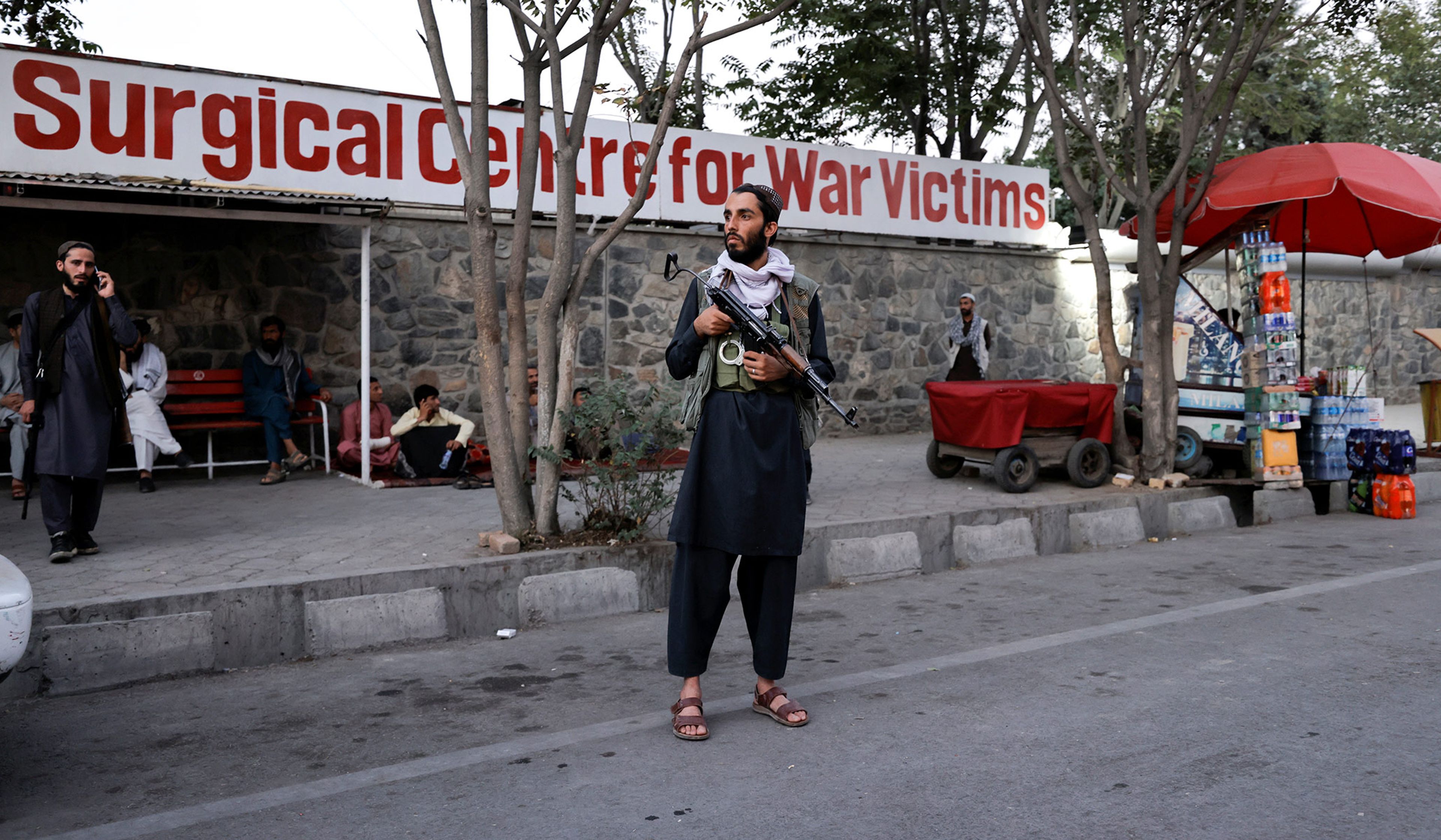
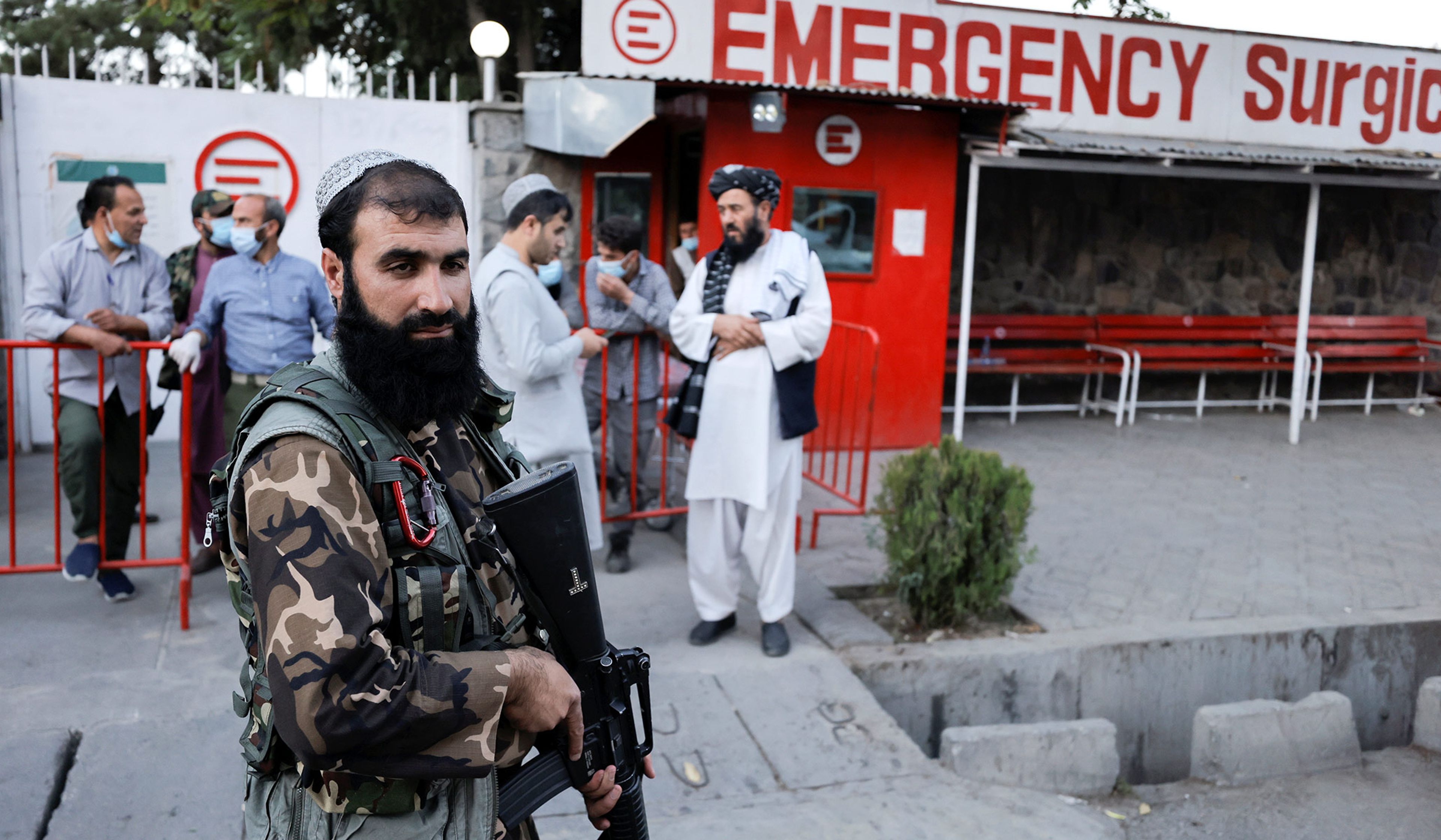
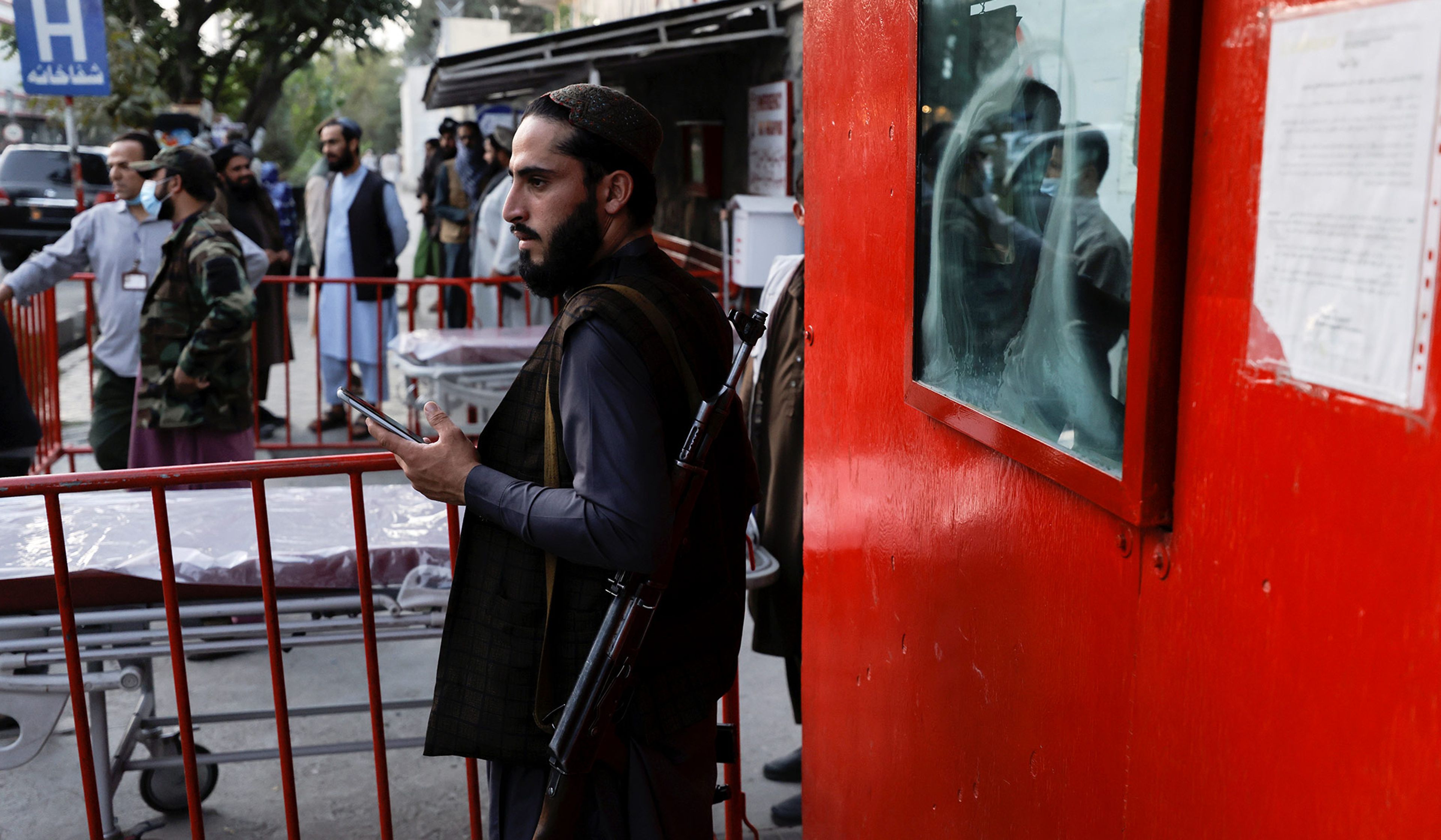
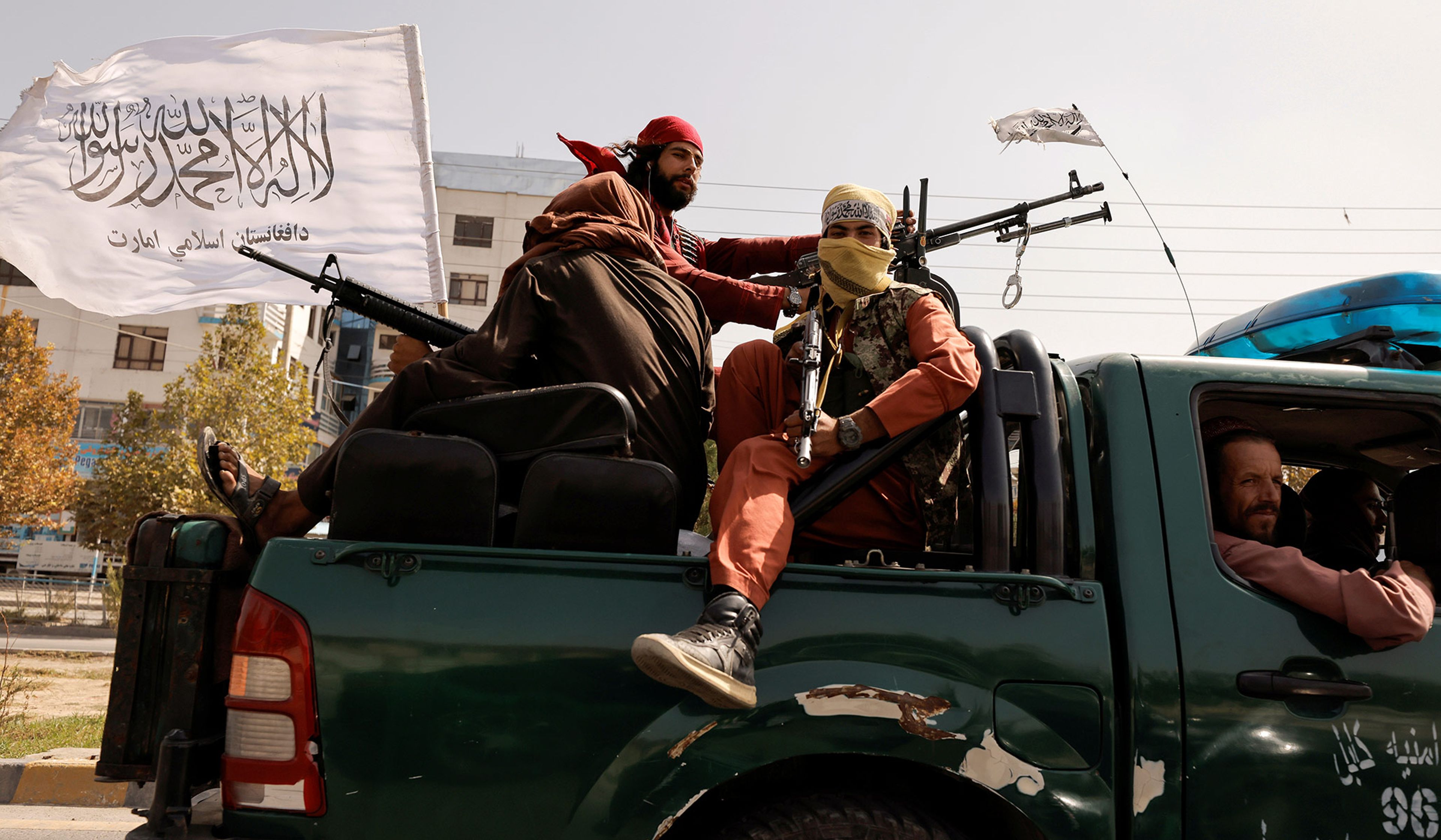

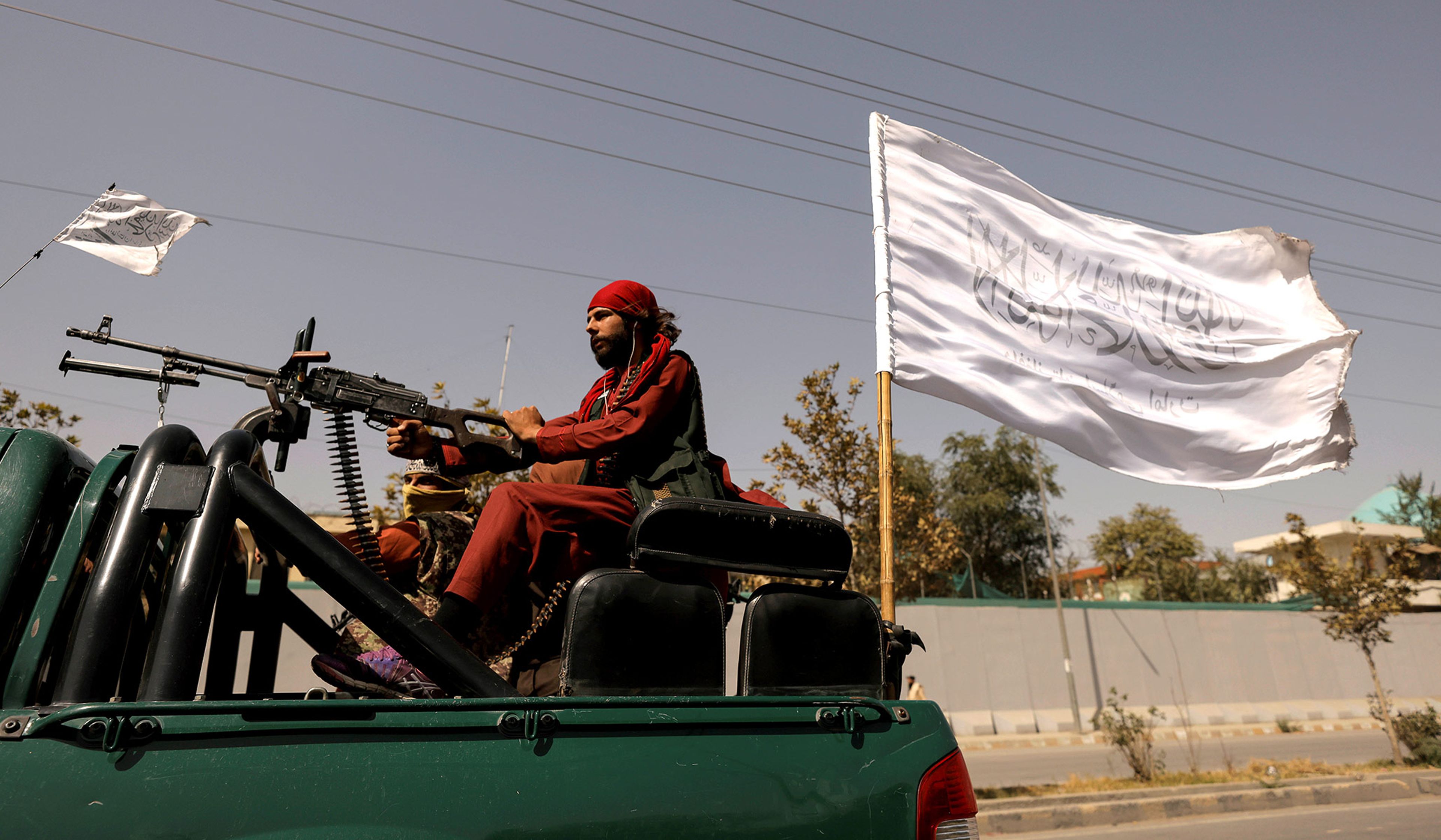
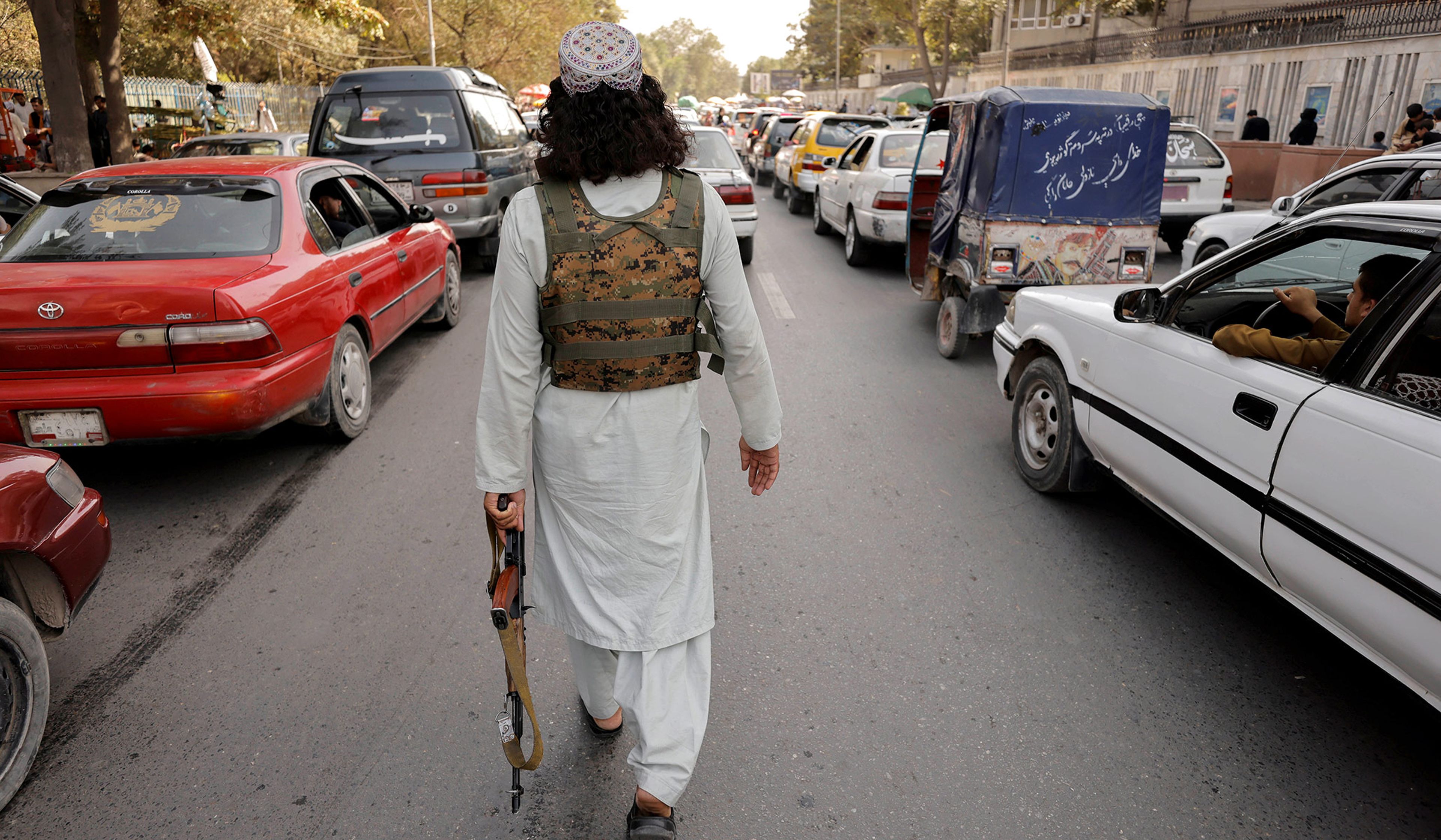
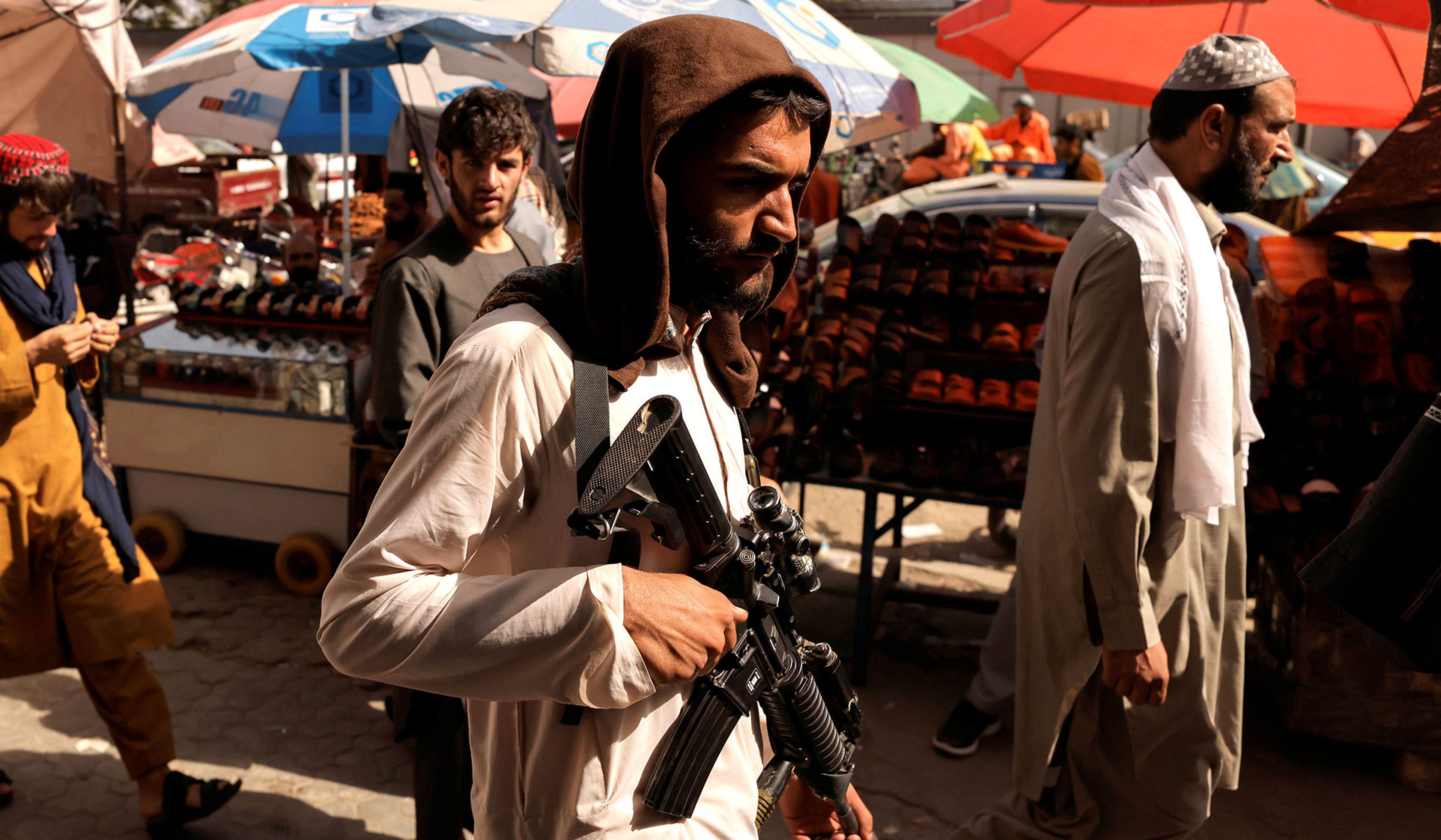

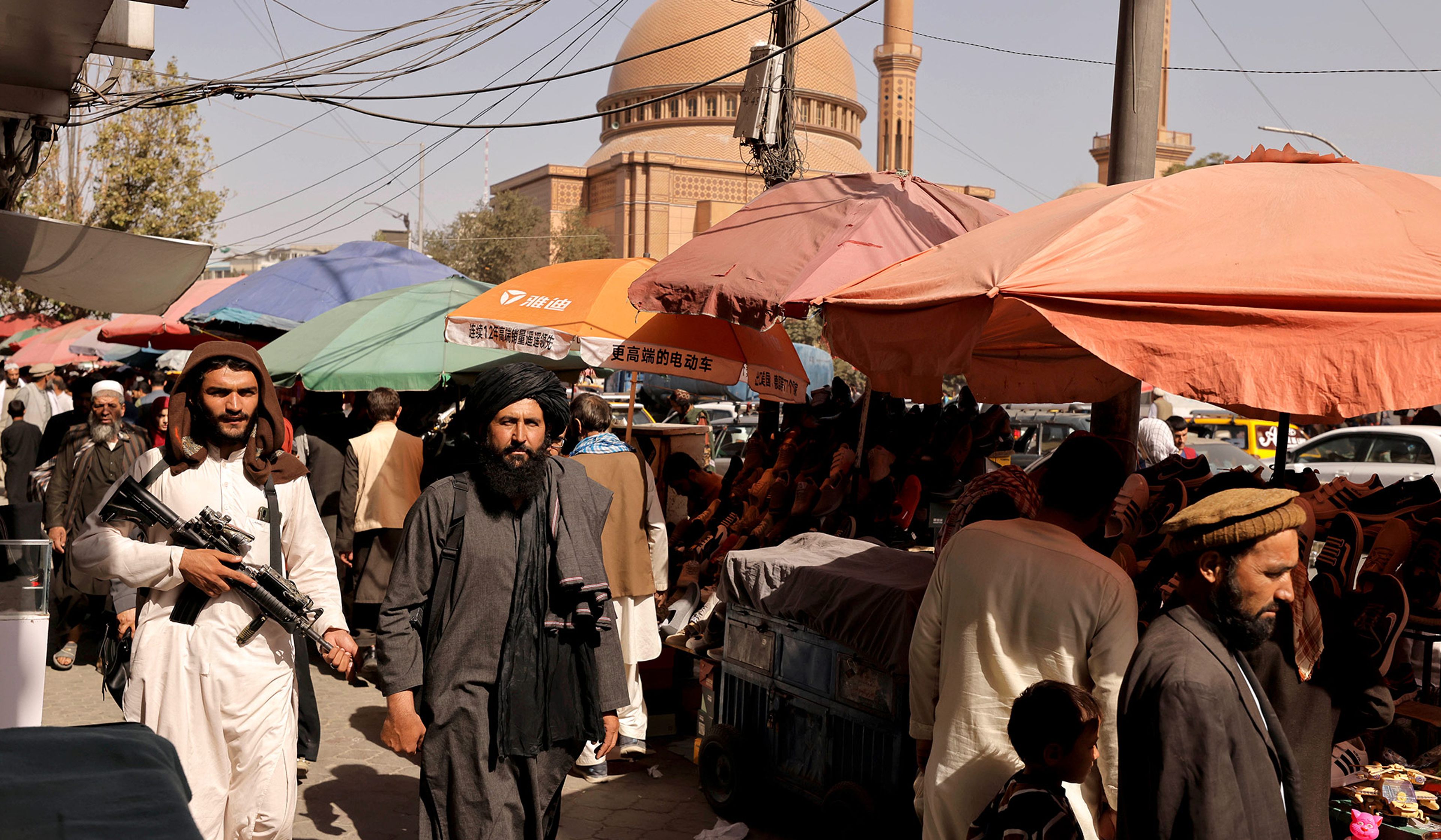
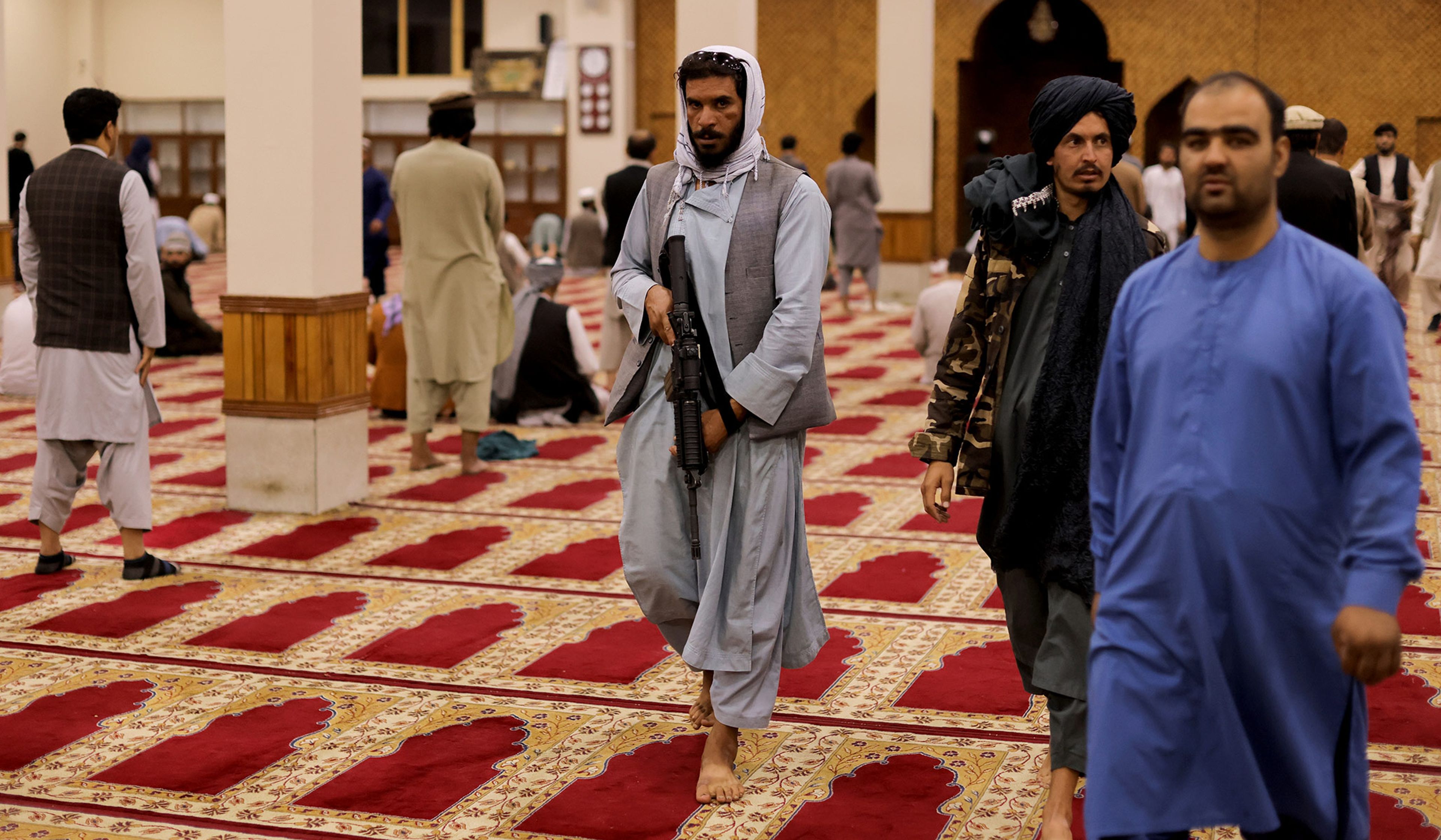








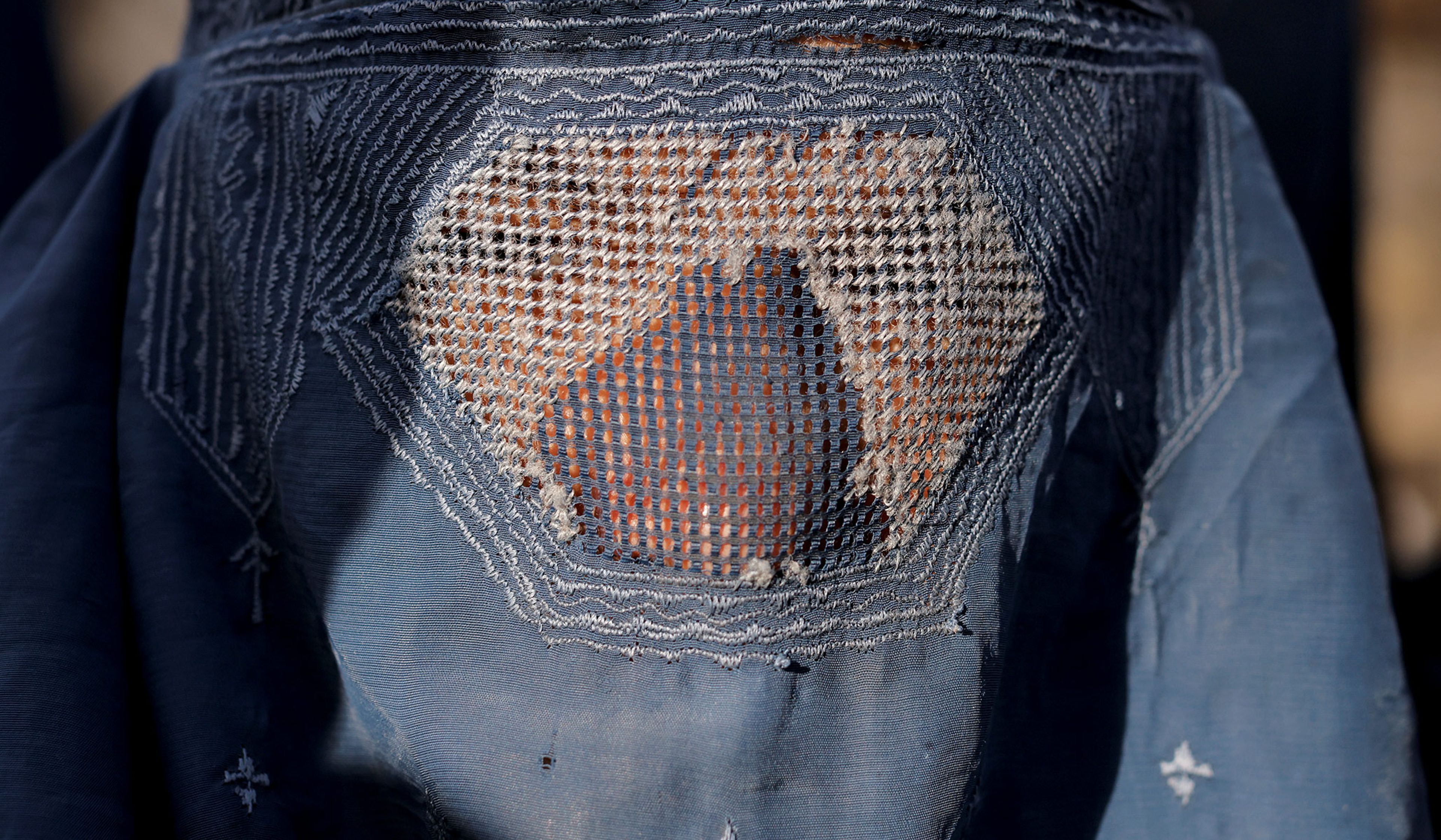

A member of the Taliban stands guard on a street in Kabul, Afghanistan, October 3, 2021.
Jorge Silva/Reuters
• The House committee investigating January 6 is seeking testimony and documents from former Trump adviser Steve Bannon. He is refusing, and now the House has held him in contempt. The vote was mostly along party lines, with a handful of Republicans (mainly those who voted to impeach President Trump) joining the thin Democratic majority. All eyes are now on the Justice Department, which Democrats are urging to indict Bannon for criminal contempt. Though Trump is attempting to assert executive privilege to block all his former aides from complying with committee subpoenas, Democrats shrewdly chose to move against the weakest such claim. Bannon, a private media figure, was no longer a member of Trump’s White House staff at the time of the Capitol riot; consequently, it’s a stretch for Bannon to claim a confidentiality privilege designed to protect presidential communications with top advisers. The point of Bannon’s gambit, it appears, is merely to stretch out the proceedings.
• Donald Trump offered guidance to the select committee: “The real insurrection happened on November 3rd, the Presidential Election, not on January 6th — which was a day of protesting the Fake Election results.” Trump’s efforts to rewrite history serve several purposes: keeping his name before his base, and him as a power in the GOP; raising money, most recently for a new social-media platform. The main purpose, though, is to avoid the shame of failure. This has been a guiding motive throughout his career: saying his TV show was No. 1 when it wasn’t, touting his wine and steaks as great when they were rebarbative, presenting himself as a financial titan even when hopping from debacle to disaster. Solid campaigning and a hapless opponent won him one presidential race. But then, unlike 16 of his predecessors, from Washington to Obama, he failed to be reelected. If politics teaches anything, it teaches you to take your licks, since all pols get licked at one time or another. Trump, the rich-kid amateur, never learned.
• At the January 6 rally in Washington, D.C., Rudolph Giuliani introduced Claremont Institute scholar John Eastman as the legal mind behind the plan to keep President Trump in office. One option, Giuliani said, was to get Vice President Mike Pence to reject many of the electoral votes cast for Joe Biden. Eastman made this case in two memos: a short one published in the book Peril, by Bob Woodward and Robert Costa, and a longer one Eastman himself released after the book appeared. But Eastman, backed by Claremont, has been denying that he advised Trump or Pence to follow this plan. To his credit, he submitted to lengthy interviews with NR’s John McCormack to explain himself. The explanations are, however, unconvincing. Eastman first denied that the longer memo said that Pence was the “ultimate arbiter” of electors — something the memo clearly said was a “fact” — and then he told McCormack that Pence “most likely” did not have the power to throw out electors. Whatever he meant to say in his memo, even Eastman now admits that the theory that Kamala Harris can choose the president in 2025 “doesn’t make a whole lot of sense.” That ought to make the verdict unanimous.
• Speaking of election trutherism, consider the Democrats’ candidate for governor in Virginia, Terry McAuliffe. McAuliffe spent the George W. Bush years loudly claiming that Bush stole his election in 2000. At the Democrats’ convention in 2004, McAuliffe bellowed, “We actually won the last presidential election, folks, they stole the last presidential election.” In his 2008 autobiography, he wrote, “I was mad after 2000 because they stole it from us and we let them.” To this day, McAuliffe will not concede that Bush was legitimately elected. When offered the opportunity this fall, he rehashed complaints about the case’s having reached the Supreme Court and excused himself by noting that he was the party chairman at the time. In other words, he said that Bush stole the election because saying that was his job. When conspiracy theorists on the left attacked Bush’s 2004 reelection — recall the Diebold voting-machine panic — McAuliffe commissioned a “comprehensive investigative study” to “address the legitimate questions and concerns that have been raised in Ohio,” including “anomalies . . . compared with exit polls” and “whether the touch-screen machines and tabulating systems functioned properly.” This to “investigate” a state Bush carried by more than 118,000 votes. In 2019, McAuliffe was at it again, warning that voting machines might let Russians steal the 2020 election for Donald Trump. Naturally, he also credits the myth that Stacey Abrams was the rightful winner in Georgia in 2018. This is toxic coming from either party, and it should stop.
• CDC director Rochelle Walensky indicated that even after children aged five to eleven are eligible for vaccination, the agency won’t change its guidance that recommends that they wear masks all day at school. The insistence upon masking children, who even when unvaccinated face a negligible risk of getting a severe case of COVID-19, is the one area of policy in which American liberals don’t want to imitate the rest of the world, which has moved away from such guidance. Walensky provided a glimmer of hope to masking critics by adding the qualification that the purpose of preserving the guidance was to allow time for efforts to vaccinate kids to make headway. But with the CDC having already blown up many obvious off-ramps for returning the country to normalcy, it’s hard to be too optimistic. Yet there will always be another reason to be risk-averse. Perhaps the next explanation will be that juvenile vaccination rates are too low. Better to admit that masking schoolkids is pandemic theater, and end its run now.
• Lawrence Tabak, the principal deputy director of the National Institutes of Health and its deputy ethics counselor, informed Congress that the agency had indeed funded “gain of function” research on coronaviruses found in bats, through grants to the private research group EcoHealth Alliance. Tabak’s letter makes it sound as though EcoHealth misled the federal agency about its research, and that the organization broke its promises to keep the NIH informed of developments. Anthony Fauci’s sweeping statement that “the NIH has not ever and does not now fund gain-of-function research in the Wuhan Institute of Virology” was, in short, false. We now need to know what else EcoHealth Alliance did not tell NIH, and what else it has hidden since the COVID-19 pandemic began — which is to say that we need a full congressional investigation of the role U.S. research dollars may have played in a global catastrophe.
• Governor Greg Abbott (R.) of Texas says that COVID vaccination is wise but should be voluntary for Texans. Neither the government nor private employers should force people to receive the shot. That’s a reasonable view. What’s less defensible is his recent executive order forbidding any “entity” in Texas to compel receipt of a vaccine. It would be an overreach for the government to tell companies they may not make vaccination a condition of employment, and an additional overreach for the governor to tell them that on his own authority. The saving grace of the order may be that, as drafted, it does not appear to have much effect. Ordering a company not to “compel” vaccination is not legally identical to ordering it to hire people who aren’t vaccinated. Maybe the drafting was sloppy; or maybe the governor has decided that pointless gestures on COVID should not be the exclusive pastime of liberals.
• In September, Florida governor Ron DeSantis nominated Joseph Ladapo to be state surgeon general. Last week, as his confirmation vote approached, Ladapo requested a meeting with Tina Polsky, a Democratic member of the Florida senate. Polsky asked Ladapo to wear a mask in her office; he refused but offered to meet with her outside. She explained that she had been diagnosed with breast cancer in August and would begin radiation treatment the next week. If Polsky were to catch COVID-19, it would delay her treatment. Ladapo still refused to wear a mask. Polsky declared that she did not want to go outside and asked him to leave her office, which he did. Refusing to wear a mask when a cancer patient specifically asked him to do so was phenomenally rude and unwise, and raises questions about Ladapo’s judgment — as does refusing to wear a mask after being asked more than once to do so by someone he wants to vote to confirm him.
• When is a wealth tax not a wealth tax? When, Treasury Secretary Janet Yellen doublespoke, it is “a tax on unrealized capital gains of exceptionally wealthy individuals.” The latest plan by the Democrats to help pay for what will be unaffordable is to tax what should be untaxable, namely gains that exist only on paper, and thus are in no sense income. Never mind the logistical obstacles that have caused even Nordic states to abandon wealth taxes. Even if any such tax would pass constitutional muster (debatable), it would remain undesirable, not least as a disincentive to long-term investing and an invitation to confiscation. And if anyone derives any comfort from the fact that this proposed tax would affect only “exceptionally wealthy individuals,” he or she should turn to the history books. Taxes that begin by being imposed on the rich do not end there.
• When the White House proposed a new rule giving the IRS access to cash-flow data on any bank account holding more than $600, Yellen defended the low threshold as a means of ensuring that “individuals can’t game the system and have multiple accounts.” Seriously, the Biden administration called for a vast financial-surveillance regime on the off chance that a billionaire might open several thousand bank accounts. The rationale was ludicrous, even to Senate Democrats, who quickly raised the threshold from $600 to $10,000 and added new exemptions for wage deposits and payments under federal programs. That’s a step in the right direction: Spying on almost everyone is slightly less bad than spying on everyone. Still missing from the revised proposal, though, is a rationale for the new threshold. If $600 was unreasonably low, why is $10,000 the right number? The answer: It’s not. The IRS has no authority to peer into any American’s bank account without probable cause.
• In the heat of the 2020 campaign, Biden promised to study proposals to pack the Supreme Court. This was a dodge: Endorsing Court-packing would be a radical, unpopular flip-flop, but foreclosing the issue would depress progressive activists and deprive Biden of a weapon to brandish at the justices. Hence the commission, which has now released a series of draft reports. Predictably, as the work of a committee of three dozen lawyers, they are lengthy (203 pages), dense, and full of weasel-word caveats. Yet the draft report on “membership and size of the court,” even as composed by a committee handpicked by a Democratic administration, comes nowhere near an embrace of the dangerous proposal last decisively defeated in 1937. There is considerable ammunition in the report for opponents of Court-packing, but the commission refuses to recommend against it, and studiously ignores a “Keep Nine” constitutional amendment to foreclose it. Progressives are angry that Biden’s commission has buried the issue in Beltway sludge, but Republicans should slam the coffin door shut.
• As of October 22, the country has a “gender strategy,” in the form of a 42-page White House report on how to fix such persistent problems as gender-based unfairness in the realm of health care (in fact, women outlive men in this country by 5.7 years), education (nearly 60 percent of bachelor’s degrees are being awarded to women these days), and violence (nearly 80 percent of homicide victims are male). The report also contains hand-wringing about racial and ethnic minorities, transgender people, gay people, people with disabilities, rural residents, and everyone “adversely affected by persistent poverty or inequality.” The report notes also, without quite grasping who might be to blame for the situation, that the rights of girls and women are in jeopardy in Afghanistan. In short, the dull and vapid “National Strategy on Gender Equity and Equality” is the usual porridge of Democratic Party priorities, written for an audience that is convinced that only massive and continuing federal intervention can bring us social justice. In reality, American women (and men) would like Joe Biden to stop faffing around with blue-sky schemes intended to make us all equal and simply get a handle on the various crises he has created, worsened, or failed to control, from inflation to the border chaos to COVID.
• The National School Boards Association has apologized for a letter to Merrick Garland’s Department of Justice that drew a comparison between domestic terrorists and parents who speak out about or protest school policies, inspiring Garland to instruct the FBI to involve itself in conflicts between parents and school boards. “There was no justification for some of the language included in the letter,” acknowledged the association. We’re still waiting on an apology from Garland, whose dismal performance as attorney general discredits him — and vindicates Mitch McConnell — more with each passing day.
• The Washington Post reported in June that police had arrested a man for disorderly conduct during a tense discussion of “transgender rights policy and racial equity plans” at a Loudoun County, Va., school-board meeting. The incident went viral, becoming (in the letter to Merrick Garland, among other places) an example of right-wing extremism against the public schools. The county prosecutor pushed for jail time. The conservative Daily Wire uncovered the rest of the story: In May, a boy wearing a skirt had committed a sexual assault against that man’s ninth-grade daughter in a girls’ bathroom at her school. At the meeting, the superintendent denied any such assault had happened. After the report, the superintendent conceded that his remark was “misleading,” and a judge found the assailant guilty. By then, however, the assailant had already been transferred to another school, where he was soon accused of another attack. Whether he indeed is “gender fluid,” as reported, or is merely exploiting the schools’ attempt to accommodate people who are, this case appears to illustrate both the danger of the policy and the lengths to which bien-pensant opinion will go to avoid confronting it.
• If we may adapt Oscar Wilde: To appoint a woman like Catherine Lhamon to the Department of Education’s office for civil rights once may be regarded as a misfortune; to do it twice looks like callousness. Back in 2011, Lhamon was one of the figures responsible for the infamous “Dear Colleague” letter that stripped elementary due-process protections from college students accused of sexual misconduct. Having won the presidency, Joe Biden made clear his intention to restore Lhamon to her previous role. Her confirmation was accepted by the Senate 50–50, with Kamala Harris breaking the tie. Lhamon has clearly learned nothing since her last go. Asked during her Senate hearing what she thought of Betsy DeVos’s restoration of due-process protections at America’s institutions of higher learning, Lhamon declined to reconsider her prior opposition to hearings and cross-examination; reiterated her preference for the single-investigator model, which places prosecutorial and judicial powers in the same pair of hands; and reaffirmed her belief that presumption of innocence is not a relevant standard in college adjudications. Worst of all, Lhamon refused to disavow her 2020 asseveration that the changes ushered through by DeVos had made it “permissible to rape and sexually harass students with impunity.” Biden wanted a zealot, and he got one.
• On October 20, the State Department tweeted, “Today on International Pronouns Day, we share why many people list pronouns on their email and social media profiles.” The tweet linked to an article put out by the department, which explained that, in the United States, “they/them/theirs” is the pronoun of choice for “some individuals who identify as gender nonbinary or who prefer not to share gender information,” while “some people are pioneering gender-neutral pronouns such as ze/zir/zirs.” The article went on to note that the State Department had announced in June that individuals would be allowed to begin identifying on their passports as male or female irrespective of their biological sex. Which will doubtless be a relief to those U.S. passport holders still stranded in Afghanistan.
• A nightmare accident on the set of Rust, a western starring Alec Baldwin, injured director Joel Souza and took the life of cinematographer Halyna Hutchins. Baldwin fired a prop gun that he had been told was “cold” — i.e., unloaded — but in fact was not. Souza sustained a shoulder wound; Hutchins’s family must deal with her violent and senseless death, as must Baldwin, the unwitting perpetrator. Into this tornado of woe stepped author and newbie politician J. D. Vance, supposedly engaged in a primary contest for a GOP senatorial nomination in Ohio, in fact chasing front-runner Josh Mandel in a race to see who can be most witlessly demagogic. Vance took to Twitter to ask CEO Jack Dorsey to reinstate former president and frequent Baldwin critic Donald Trump (Baldwin mimicked Trump on Saturday Night Live). “Dear @jack let Trump back on. We need Alec Baldwin tweets.” Normally this would be rock bottom, but Mandel will no doubt strive to go lower.
• “Transitory” inflation is sticking around longer than originally forecast by the Biden administration. It is complicating the Democrats’ efforts to pass a massive increase in federal spending: Senator Joe Manchin keeps noting that inflation is already too high. The main cause of the inflation, as the administration itself agrees, is broken supply chains. But that is a problem this administration is singularly ill equipped to solve. Scott Lincicome detailed some of the issues in The Dispatch recently: Port efficiency has long been hampered by union contracts that limit hours of operation and block automation; local governments have placed limits on how high cargo containers may be stacked; the federal government restricts shipping between U.S. ports to American ships; tariffs are causing a shortage of truck chassis. The solutions would seem to require reining in regulation and unions and cutting taxes. None of that comes naturally to the party in power.
• Clarence Thomas recently celebrated his 30th anniversary on the Supreme Court. The Court’s senior justice remains its most singular figure. From his hardscrabble beginnings in Pinpoint, Ga., in the waning days of Jim Crow, Justice Thomas has followed his own path, one quite different from the self-conscious careerism of many in the nation’s judicial elite. His baptism by fire in the Senate Judiciary Committee in the fall of 1991 represented a novel escalation in the judicial-confirmation wars and left him with no illusions. He has long preferred the company of ordinary Americans to that of Beltway panjandrums and spends his time away from the Court traveling the country in his RV. Even his famous silences during oral argument reflect a distinct philosophy of how the justices should hear from advocates. For these three decades, Justice Thomas has been the conscience of the Court, calling it always back to its source of legitimacy in the texts enacted by the people and their representatives. His originalist philosophy has been more rigorous and less compromising even than that of his great colleague, the late Justice Antonin Scalia. Yet he has too often led without followers. With Scalia’s passing in 2016 and the addition of three Republican appointees to the Court since then, Justice Thomas’s moment for leadership has arrived.
• Apple complied with Chinese-government orders to take two apps hosting the Bible and the Koran off its app store in China. The BBC reported that the Koran app was “removed for hosting illegal religious texts.” Apple’s yielding to the demand abets the Chinese Communist Party’s ongoing persecutions of religion. In Xinjiang, conventional Muslim religious practices and outward signs of Islamic belief are cause for arrest. The government’s crackdown on Christianity across the country has forced Chinese worshipers to accept government control or go underground, and has featured arrests of prominent leaders, such as Bishop Joseph Zhang Weizhu. This is the second time in recent months that Apple has acceded to the demands of an authoritarian regime. Ahead of Russia’s Duma elections this year, it removed a voting app associated with allies of Alexei Navalny, the Putin opponent and democracy activist imprisoned in Siberia. Apple seems to believe that other people’s freedom is a small price to pay for market access.
• Enes Kanter is an NBA player from Turkey. He has used his platform to campaign for freedom, democracy, and human rights in his home country. That is admirable enough. But he has also campaigned for freedom, democracy, and human rights in other countries — most recently China. He has highlighted Beijing’s persecution of Uyghurs and Tibetans, for example. The NBA at large has wanted to appease the PRC, for profit (as has the corporate world in general). Enes Kanter has shown what conscience is.
• Thirty-eight years as a Conservative member of the British parliament had made Sir David Amess a very well-known figure in the land. His weekly “surgeries” (as meetings with constituents are known) were open to one and all. When Ali Harbi Ali turned up at one of these surgeries, two elderly women were there, but no one else. The 25-year-old Ali drew a knife and stabbed Amess frenziedly. Apparently smiling, he stood still waiting for the police. Born and brought up in Britain, Ali went to a Christian school, and one of the teachers said he happily attended morning assembly and sang hymns. According to neighbors, he was “a good boy, polite and friendly.” And well-connected, too. His father had been director of communications in his native Somalia, and fled to London to escape the civil war waged by al-Shabab, the local Islamists. He lived apart from his son and could say after the murder of Amess, “I’m feeling very traumatized.” The young Ali was in fact known to the counterterrorism police. He had taken part in Prevent, a program intended to reform Islamists, but MI5 did not formally investigate, leaving him to become what jargon now calls a “bedroom radical.” Ali’s trial for murder and terrorism will be held in March.
• Welsh journalist Gareth Jones is among the unsung heroes of the 20th century. A Russian-speaker, he saw for himself that Stalin’s mass collectivization in the early 1930s was a deliberate imposition of famine on Ukraine. As many as 7 million Ukrainians died of starvation, and he had the rare integrity to report it. Soon afterward, he was murdered in Mongolia by Chinese bandits who very likely were Soviet agents. In 2019, Polish film director Agnieszka Holland dramatized Jones’s life, and the Polish Cultural Institute in Moscow, together with Memorial, an NGO that does justice to the victims of Stalin, recently arranged a showing of this film. The showing had hardly begun when some 30 masked men burst in shouting nationalist slogans and disrupted the event. Arriving, the police locked the doors and held the Memorial staff in for hours. Had the living Gareth Jones been there, he would not have been surprised.
• The New York City Public Design Commission voted to remove a statue of Thomas Jefferson that had stood in the chamber of the city council since 1915, based on his lifelong slave-owning and racist views. The statue shows Jefferson holding the Declaration of Independence. New York’s solons might consider why they, rather than distant relatives or Oxbridge chums of English noblemen, hold their jobs; America’s independence surely has something to do with it. They should also recall that the war that ended race-based chattel slavery here was fought under the aegis of Jefferson’s document, which, as Abraham Lincoln put it, expressed “an abstract truth, applicable to all men and all times.” Words fitly spoken count as much as or more than deeds or miscellaneous opinions; their authors deserve honor accordingly.
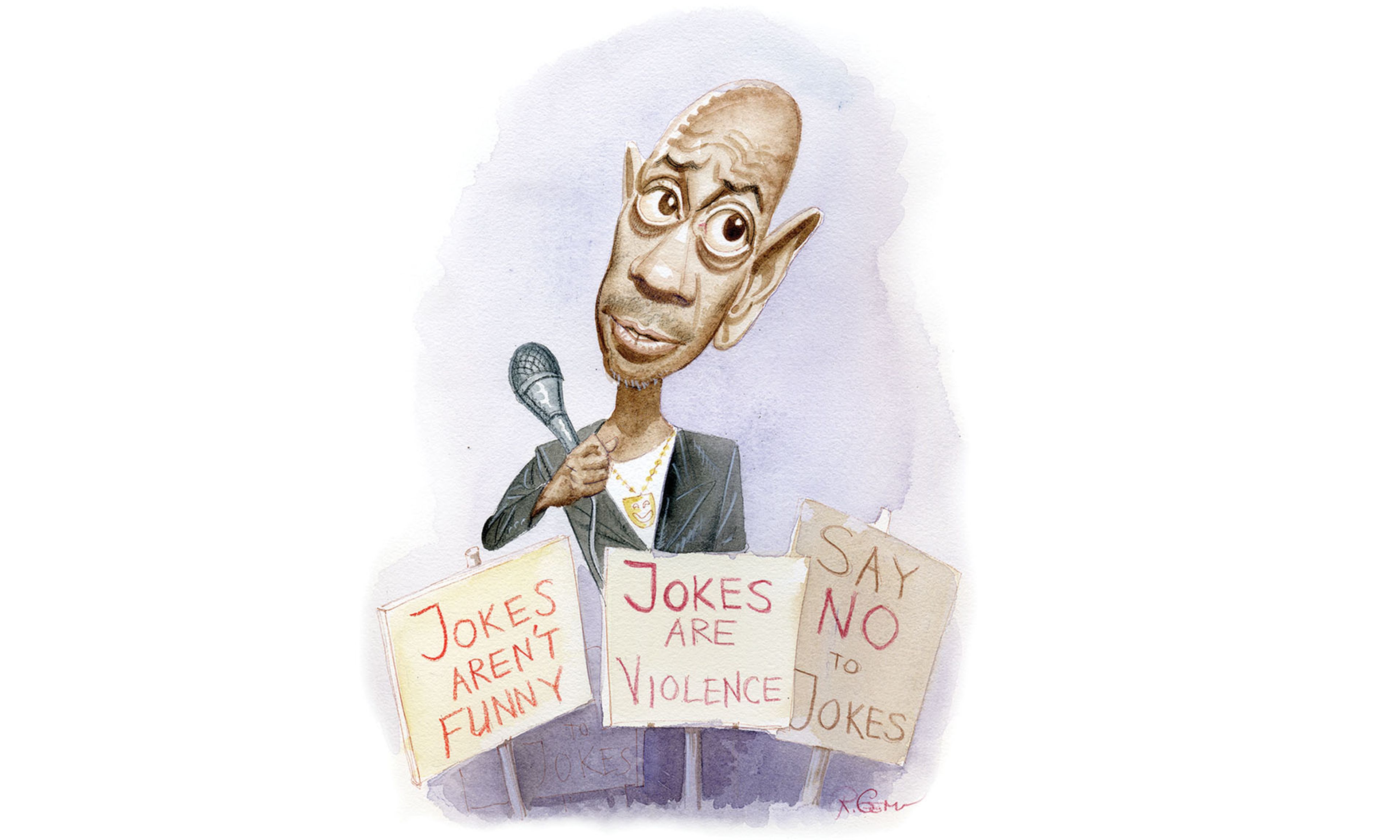
• The silly squabbling of a few Netflix employees about Dave Chappelle’s comedy special The Closer should have amounted to nothing, and Netflix should have ignored it. Chappelle didn’t speak about transgenderism in a way that would cause any reasonable person much consternation, but he did make a few jokes about it, and that can no longer be tolerated by some. At first, he got a strong statement of support from corporate bosses who defended artistic freedom in principle and noted that he hadn’t said anything that struck them as hate speech. But as a tiny group of activist protesters, described as numbering in the “dozens” by the New York Times, staged a brief walkout on October 20, co-CEO Ted Sarandos cowered before their wrath, saying he had “screwed up” in not showing more sensitivity toward the trans community. Days later, Chappelle hinted to an audience at a London gig that he was afraid Netflix might pull the special, in which case he vowed to take the monologue on the road. The chilling effect of this ridiculous episode is evident: Comedians who are less successful than Chappelle, which is to say nearly all comedians, will think twice before offending progressives.
• Last month the Massachusetts Institute of Technology pulled its invitation to Dorian Abbot, a prominent geophysicist, to give a lecture on its campus, citing his opposition to affirmative action. “Words matter and have consequences,” said Robert van der Hilst, the head of MIT’s earth-, atmospheric-, and planetary-sciences department. A few brave dissenters have spoken — and acted — in Abbot’s defense. David Romps, formerly the director of UC Berkeley’s atmospheric-sciences center, resigned after he was unable to persuade his colleagues at the center to host Abbot’s lecture not only for his expertise in climate science but as a statement in favor of academic freedom and integrity. Cancellation for political beliefs “signals that some opinions — even well-intentioned ones — are forbidden, thereby increasing self-censorship, degrading public discourse, and contributing to our nation’s political balkanization,” argued Romps. If there is hope for America’s universities, it’s because of the likes of David Romps.
• Covering the controversy, a New York Times reporter spoke to Abbot’s peer Phoebe A. Cohen, a geosciences professor at Williams College. “This idea of intellectual debate and rigor as the pinnacle of intellectualism comes from a world in which white men dominated,” she told him. Oblivious to the scientific and philosophical achievements of, e.g., Chinese, Indian, and Islamic civilizations, she also seemed to forget her own academic credentials. Neither more nor less than male scientists, she’s expected to demonstrate respect for rigorous rationality, part of whose beauty is that it transcends race, class, and sex.
• In September, an associate dean at Yale Law School joined the school’s director of diversity, equity, and inclusion in summoning a second-year student to the office of student affairs and requesting a public apology for a purportedly offensive email he’d sent. The email in question, inviting classmates to a social gathering co-hosted by the Native American Law Students Association and the Federalist Society, provoked complaints from nine other students. The infraction: The accused had used the phrase “Trap House,” originally a reference to inner-city drug dens but now a common colloquial term for party venues. The phrase is innocuous enough to be included in the title of the most popular left-wing podcast in the country, “Chapo Trap House.” But Yale Law has a lexicon of its own, and “Trap House” carries “triggering associations,” claimed the diversity officer, who happens to have served in the Obama administration. Worse yet, the email’s association with the Federalist Society was “very triggering for students who already feel like FedSoc belongs to political affiliations that are oppressive to certain communities.” When the student rightly refused to apologize, Yale administrators made thinly veiled threats, suggesting they might report the incident to the bar association during his ethical examination. Once again, the people who demand trigger warnings are quickest on the trigger themselves.
• In a new memoir, Katie Couric admits to “protecting” Ruth Bader Ginsburg from her own comments about athletes who kneel during the playing of the national anthem. It was October 2016, and the furor of Colin Kaepernick’s protest was at its height. Unfortunately for Couric, what was supposed to be a softball interview question went awry when Ginsburg responded, “If they want to be stupid, there’s no law that should be preventative. If they want to be arrogant, there’s no law that prevents them from that.” What’s more, the protests showed a “contempt for a government that has made it possible for their parents and grandparents to live a decent life.” Couric faced a “conundrum” — her word — when the Supreme Court’s chief of PR called and asked her to edit out the problematic answer. Couric complied, reasoning (falsely and condescendingly, it seems to us) that Ginsburg was “elderly and probably didn’t fully understand the question.” Our own view of Ginsburg is now slightly higher, and that of Couric confirmed.
• No longer will Superman be the defender of “truth, justice, and the American way.” The Man of Steel’s new motto is “truth, justice, and a better tomorrow,” a “more inclusive mission statement,” as one headline put it. According to DC Comics, the character’s “evolving” credo better reflects “the storylines that we are telling.” Doubtless that is true. Superman’s motto has changed before with the times; “the American way” was a World War II–era addition to the original. This new iteration reflects the current culture — to our great discredit.
• Southwood High School in Shreveport, La., was in turmoil. In a span of just three days, 23 students were arrested for fighting. What could possibly stop the chaos? Dads. Armed only with their presence, bearing, and a healthy stream of dad jokes, more than three dozen fathers teamed up to patrol the hallways, keep the peace, and set a good example. “We’re dads,” Michael LaFitte, the founder of Dads on Duty, told CBS News. “We decided the best people who can take care of our kids are who? Are us.” In the week after the dad patrol launched: not a single fight.
• Raúl Baduel was a favorite general of Hugo Chávez, because Baduel supported him against a coup attempt in 2002. Yet Baduel turned against Chávez as the strongman drove Venezuela into dictatorship and poverty. Thereafter — and proving Baduel’s point — Chávez imprisoned Baduel, calling him a traitor. “If I’m a traitor to just one person, that’s fine,” said Baduel. “But at least I didn’t betray millions of Venezuelans.” He has died at age 66 in the underground military-intelligence prison known as “The Tomb.” A man of honor. R.I.P.
• Hard work, ability, and patrons who recognized both elevated Colin Powell, Bronx-born son of Jamaican immigrants, to the chairmanship of the Joint Chiefs in the George H. W. Bush administration. Desert Storm, and the triumphant eviction of Saddam Hussein from Kuwait, made him a national hero. The book tour for his 1995 memoir My American Journey was a one-man presidential primary: crowds — white, black, old, young, right, left — snaked around blocks and parking lots to get signed copies. Then he announced that he would not run. There is a tide in the affairs of men, and this was Powell’s flood. He served as George W. Bush’s secretary of state, but his advocacy of a second war against Iraq diminished him, certainly in his own eyes. He spent the rest of his days seeking to recover a measure of his lost standing by moving left, endorsing Barack Obama twice, Hillary Clinton, and Joe Biden. Better to remember him as a well-spoken and dutiful patriot. Dead at 84, R.I.P.
China’s Missile ChallengeAnother week, another threatening move by China, this time a secret test of a new nuclear-capable hypersonic missile.
The Financial Times broke the story in mid October, citing five officials who maintained that Beijing’s August test of the new weapon system had surprised U.S. intelligence. The concern is that by combining two technologies — a missile that briefly orbits the earth with a glide vehicle that extends its range — this weapon, unlike intercontinental ballistic missiles, can change its trajectory to avoid U.S. missile-defense systems.
In short, China has just tested a space missile that can potentially hit any target on earth.
There’s no denying the gathering danger (a few months ago we learned of two new nuclear-missile silo fields in Western China), although for now, we don’t have the national resolve to meet this moment.
President Biden’s defense-budget proposal this year would actually have cut defense spending if Congress hadn’t intervened. And the Biden administration’s response to the rocket test was, to say the least, muted. “We welcome stiff competition, but we do not want that competition to veer into conflict,” White House press secretary Jen Psaki said. Usually, sovereign countries don’t “welcome” other countries’ developing new ways potentially to obliterate their cities.
We need to do everything we can to enhance our missile defenses. With an eye to the China threat, we should push to base missile interceptors in Australia and sensors in India and deploy more sensors in space. We need to work to develop a directed-energy or laser defense, a technology out of science fiction but one that is plausible and could more readily defeat hypersonic missiles.
We also need to modernize our nuclear infrastructure and realize that the China threat will require a new generation of artificial-intelligence, space, unmanned, and cyber capabilities that may not suit the defense establishment or pork-barreling congressmen but are absolutely essential if we aren’t going to be left behind by a determined foe.
Meanwhile, there’s ample reason to believe that the Chinese hypersonic weapon was developed with the help of U.S. know-how, which argues for a harder line against U.S. technology flows to Chinese tech firms that have a relationship with the Chinese military.
The New York Times ran a long feature recently on how the Biden administration is struggling to come up with the right words to characterize our current posture toward China, but definitely doesn’t want to use the phrase “Cold War,” in part because, it argues, we are not primarily in a military competition with the Chinese. Do the Chinese know that, though? Everything indicates that an essential part of their strategy is threatening U.S. bases and our homeland, not least to deter us from intervening in the event of an invasion of Taiwan.
A persistent feature of the Cold War was the argument that we couldn’t see and raise Soviet capabilities, or we’d simply fuel the arms race. But then, as now, the race was on, whether we liked it or not. The Chinese are making their intentions completely clear. Shame on us if we refuse to understand that.











Comments