‘Where in D.C. do you live?”
“I live in Florida.”
“Oh, I just assumed. Florida, huh. Not D.C.”
“No.”
Oh, I just assumed. In TV studios and the like, I have this conversation a lot. But it’s the next part that peeves me: “So, what do you do if you want to go out for a nice dinner?”
What do I do? I go out for frickin’ dinner. We have restaurants here, you know.
Suffice it to say that the perception of Florida that is prevalent in the Northeast and on the West Coast bears little resemblance to the reality on the ground. In the ongoing coronavirus pandemic, our arbiters of taste have taken to talking about this state as if it were filled with unreconstructed morons who, absent the stern instructions of a luminary such as Andrew Cuomo, would start wantonly licking one another or burning down the children’s hospitals. Day in, day out, they have obsessed over the beaches and they have obsessed over our governor and they have obsessed over our citizens. “Floridiots!” one headline read.
Well, my name is Charles and I’m here to tell you that these people are wrong. As a matter of fact, Florida is a fabulous place to live — and, moreover, far from being an eccentric backwater, it is a compelling, important, and up-and-coming part of the United States of America, filled with interesting and capable people from all walks of life. Want a prototype of the New South? That’s Florida. Want to know what the “red-state model” looks like when it works? That’s Florida. Want a vision of what a genuinely diverse America might look like in the future? That’s Florida, too.
I suppose I have always loved this state. It was the first place I visited in the United States, back when I was three years old, and I was taken immediately by the sunshine, the palm trees, the friendliness of the people, the wide-open spaces, the beaches, and, of course, by Walt Disney World. The Florida of my childhood imagination was inextricable from Orlando, which was understandable but also a huge mistake, because, just as it is useless to talk about America as if it were a monolith, so it is a mistake to make narrow references to Florida or to Floridians. In reality, Florida is a number of states bundled into one. There is very little of consequence that ties together Miami, Jacksonville, St. Augustine, Orlando, Tampa, Tallahassee, and Key West, each of which has a distinct culture, a distinct history, a distinct architecture, distinct food, and a distinct political outlook. The same rule goes for Floridians. What is a Floridian, I wonder? Is it a southerner? A transplant from New York? A descendant of freed slaves? A Cuban émigré? The answer: It is all of these, and more.
Even in my part of North Florida, which is sometimes nicknamed “South Georgia,” the geographical diversity of the population is remarkable. If you go to a bar during college-football season, you will mostly see people in Gators and Bulldogs paraphernalia. But if you drive around a neighborhood on game day, you will learn just how many of the state’s citizens are from somewhere else. From my window today I can see flags for Auburn, Ohio State, Michigan, Clemson, Wisconsin, and Notre Dame. There’s even a flag for Tottenham Hotspur, an English Premier League soccer team. A similar story is told by the front license plates on the cars in my street. There are Jacksonville Jaguars fans, sure. But, in addition, I can see support for the Patriots, the Bears, the 49ers, the Steelers, and the New York Giants. All told, almost all my friends here are from somewhere else: New Jersey, Chicago, Philadelphia, D.C., France, Ireland, Venezuela . . .
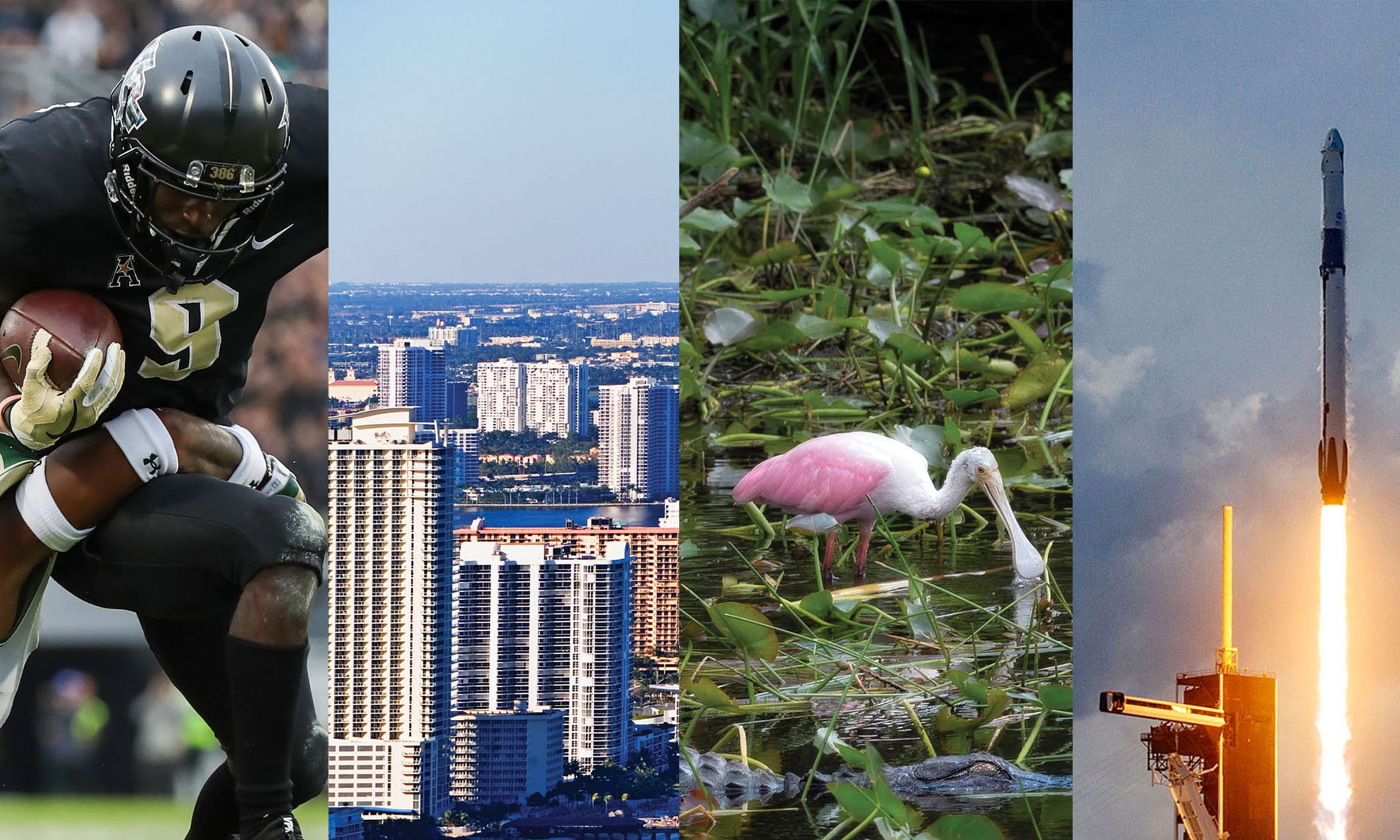
And why wouldn’t they be, when there is so much to do here? Florida has more coastline than any other state besides Alaska — almost all of it publicly accessible — and it is warm enough to swim or surf in the ocean for the entire year. It boasts three professional football teams, two professional baseball teams, two professional basketball teams, and two professional hockey teams — more in each category than any state except California. Its major college-football teams (the Gators, Hurricanes, and Seminoles) rank among the best in the country, it produces more FBS recruits than any other state, and it has a Friday Night Lights culture second to none. It hosts the majority of MLB spring-training games, it is home both to the most golf courses and to the PGA itself, and it accommodates the country’s largest motor race: the Daytona 500.
If sports aren’t your thing, worry not, for Florida is the entertainment capital of the world, too. Walt Disney World, its most famous offering, is the size of San Francisco and contains four amusement parks, two water parks, dozens of hotels, and hundreds of restaurants. Nearby Universal Studios has two amusement parks, a water park, and a major concert venue. And, elsewhere, you can enjoy Sea World, Fun Spot, Legoland, Busch Gardens, and Gatorland — all of which, like Disney and Universal, are open year-round. In most parts of the state you can find a good selection of restaurants and bars, ranging in style from cheap fried-shrimp-and-beer pop-ups to middle-range started-by-my-Cuban-great-grandfather staples such as Columbia to high-end icons such as Bern’s Steak House, which is home to the world’s largest private wine collection. Because there are so many major cities, it is all but guaranteed that touring musical acts will stop somewhere within driving distance. And if you live on the state’s east coast, you merely need to step outside in order to watch the rockets launch from Cape Canaveral. As Dr. Johnson never said, if you are tired of Florida, you are tired of life.
Oh, and we also have Publix, the greatest supermarket chain that has ever existed anywhere in the known universe. Don’t argue with me — I am merely sharing a stone-cold fact, handed down from on high. Publix is the only supermarket chain I have ever encountered whose fans talk about it as one might a college football team, with trash-talking to boot. “Meijer? Don’t make me laugh. Have you even tried a Publix sub?” “Whole Foods? Pah.” “Stop & Shop? You philistine.” A few years ago, a Buzzfeed Community post about the glories of Publix temporarily got flagged as “sponsored content” because it was so effusive in its praise that the moderators assumed it must have been paid for. It turned out that this was a mistake. The author genuinely meant it.
With so much good happening across the state, it is perhaps unsurprising that the Florida legislature meets for only two months each year, and that, when it does, it has proven extremely good at limiting the government to its appropriate role. According to the Cato Institute, Florida is the freest state in America, and has been for a while. It’s No. 1 in fiscal freedom, it’s No. 1 in educational freedom, and it ranks high up the list in almost every other category, too. The state has no income tax, and, as of 2018, the legislature has been constitutionally barred from raising any statewide tax or fee without the consent of supermajorities in both legislative houses. This year, my property taxes actually went down — by a lot. (I can hear you crying in New York. Or Texas.)
But here’s the thing: Despite its having a well-limited state government, Florida’s everyday services are both friendly and efficient. Ask Floridians about their experience with the DMV and they will tell you that they actually enjoy going. When I moved here from Connecticut, I walked in without an appointment and, within 18 minutes, I had two new license plates and two new driver’s licenses, and my wife had registered to vote. This was typical. Occasionally, I have had to deal with the state’s business-registration and sales-tax offices and, each time, I have left the conversation with the impression that the representative did not see it as his job to screw me over or to wring any available coins from my pocket. This was, let’s say, not my experience in Connecticut.
You will perhaps notice that I have barely mentioned the weather. This is because Floridians come eventually to regard “the weather,” with the notable exception of hurricanes, as something that happens to other people. Sure, our weather can be interesting: Sometimes it rains while the sun shines, and when it storms it storms so dramatically that my house shakes with each clap of thunder and the rain brings to mind the climactic scene in Jurassic Park. But, all in all, these things represent mere interruptions to the assumed default, which is blue skies, high temperatures, and sunshine. As a native Englishman, I can barely convey in words the joy that I still feel each morning when I wake up and see light streaming in through every window. There is much good to be said about Great Britain, but the prevalence of heavy gray skies is not among them. In Florida, there is no such thing. It’s either perfect or it’s biblical.
Mostly, it’s perfect. In my closet, I have a collection of sweaters, pants, and coats that I built up over years spent in England, New York, and Connecticut, but unless I am obliged to visit somewhere cold, I never touch them. Instead, I wear flip-flops, shorts, and a T-shirt. Locally, I drive a golf cart, and when I need to go anywhere farther afield, I can do so with refreshing ease. Other than in and around Orlando, the traffic is invariably light, the roads are a flat and pothole-free dream, and, because the state is so long and thin, one can get almost anywhere within a few hours. I-95 may indeed be the most boring road in the world, but I would happily take boring over what the residents of Los Angeles, Houston, Chicago, New York, and Boston live through every day.



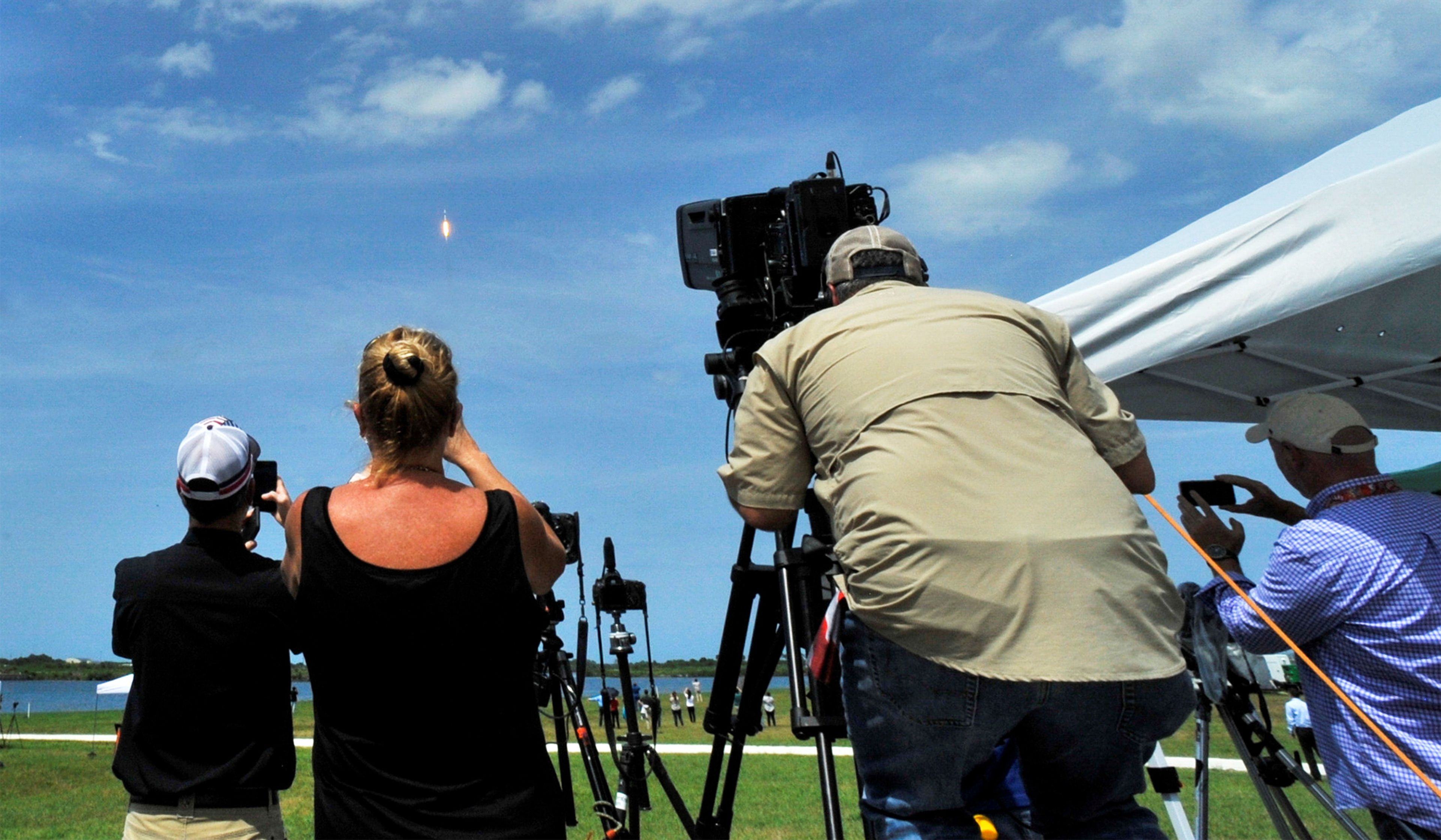
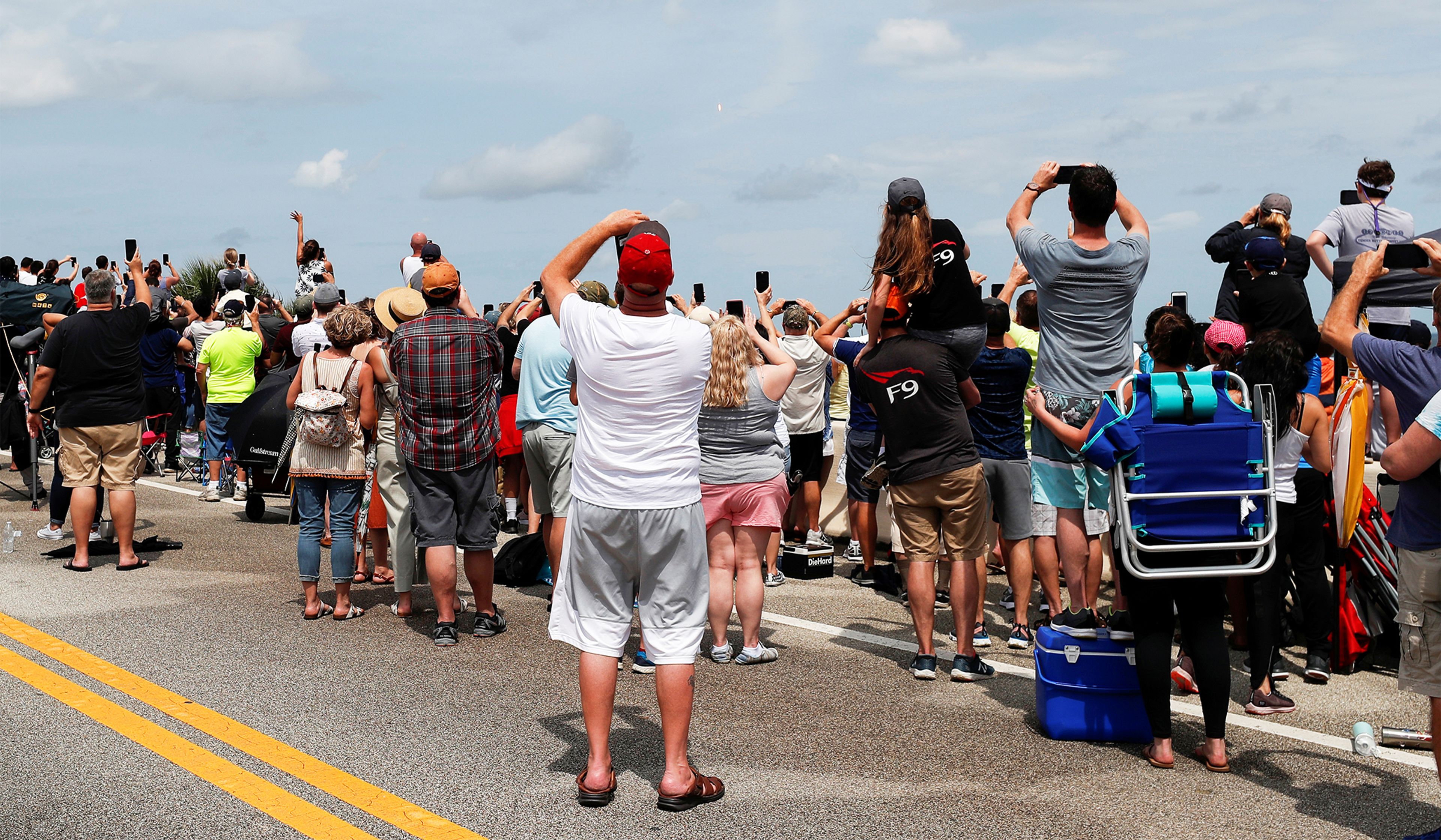

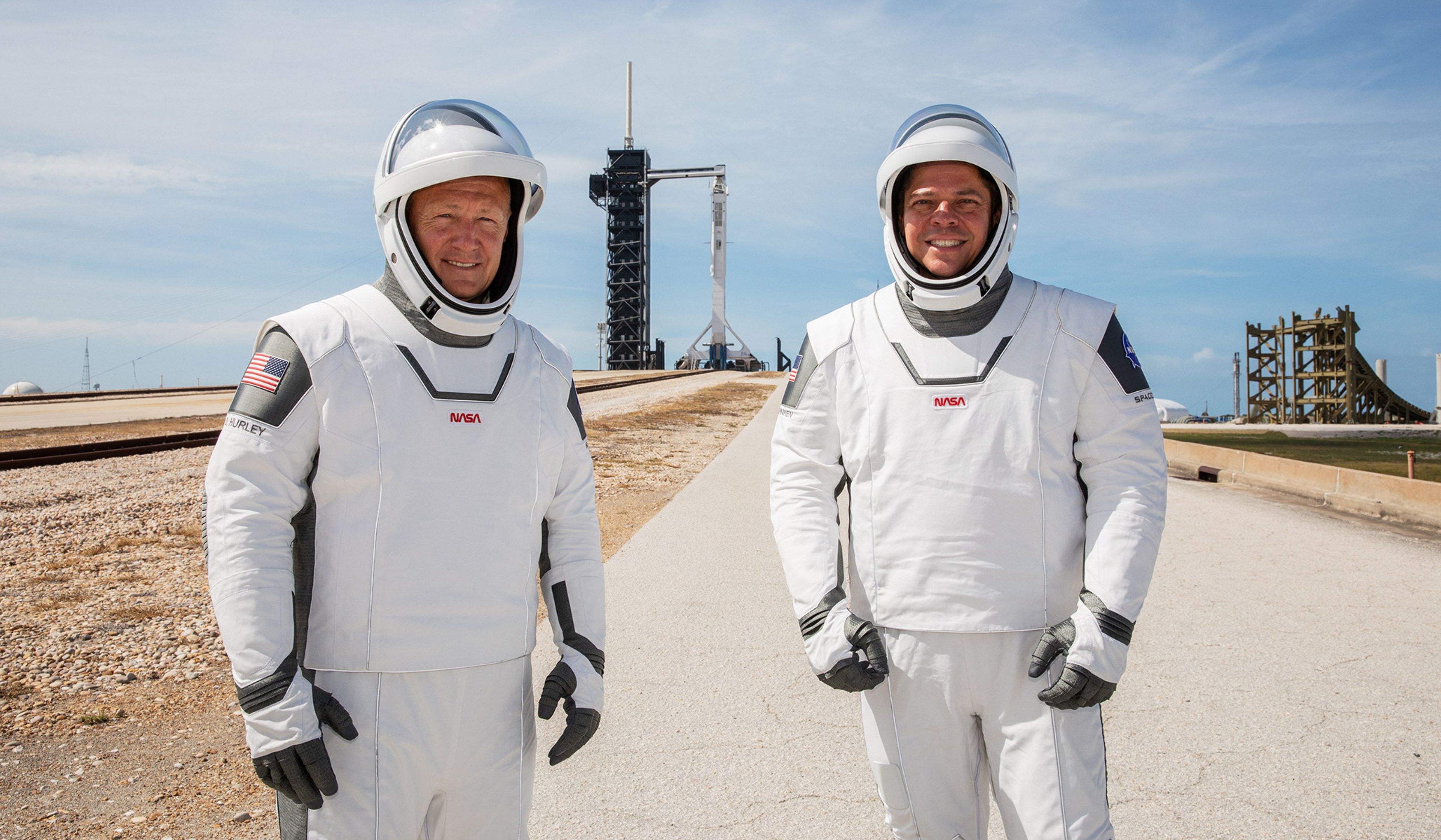

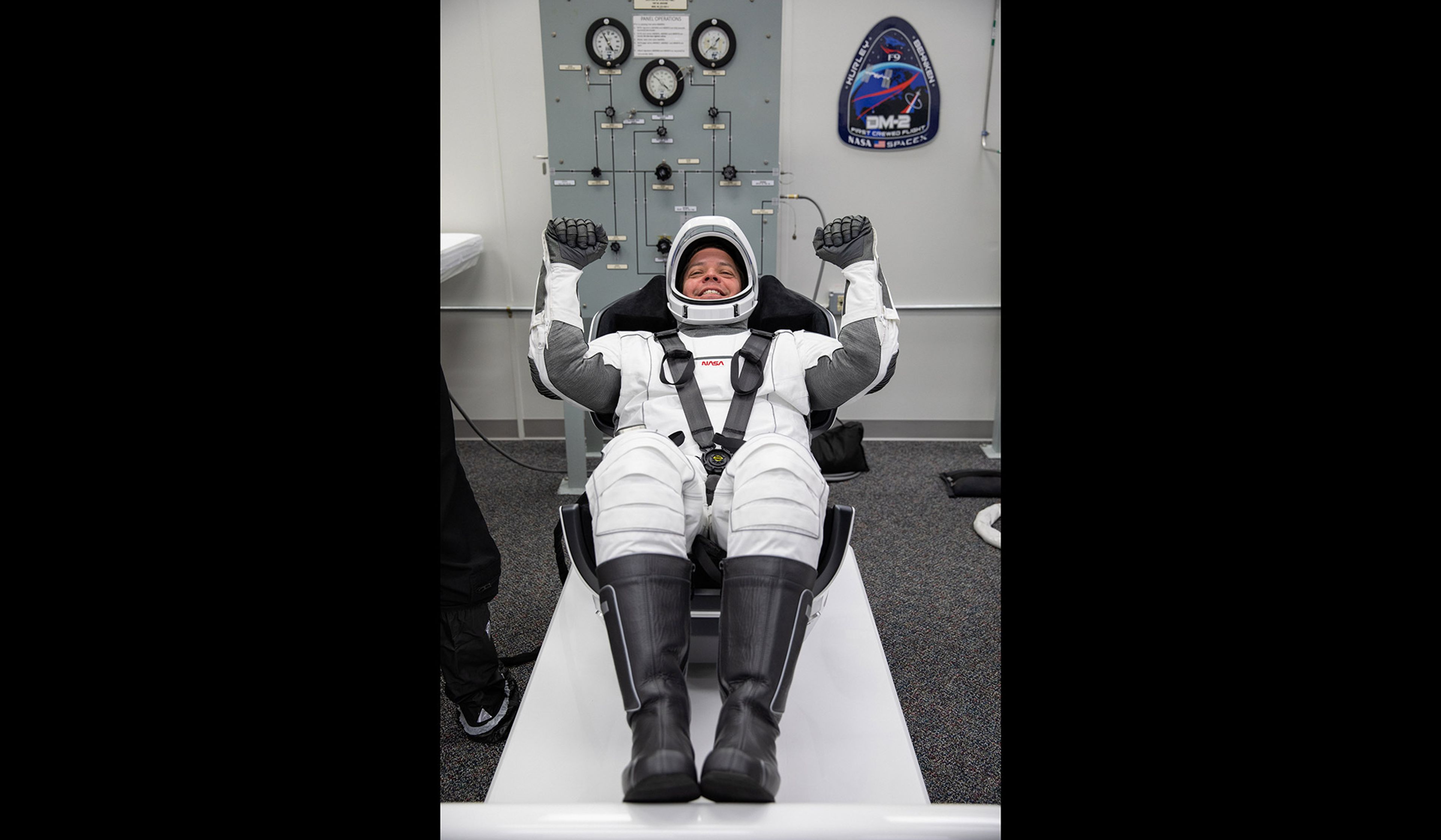
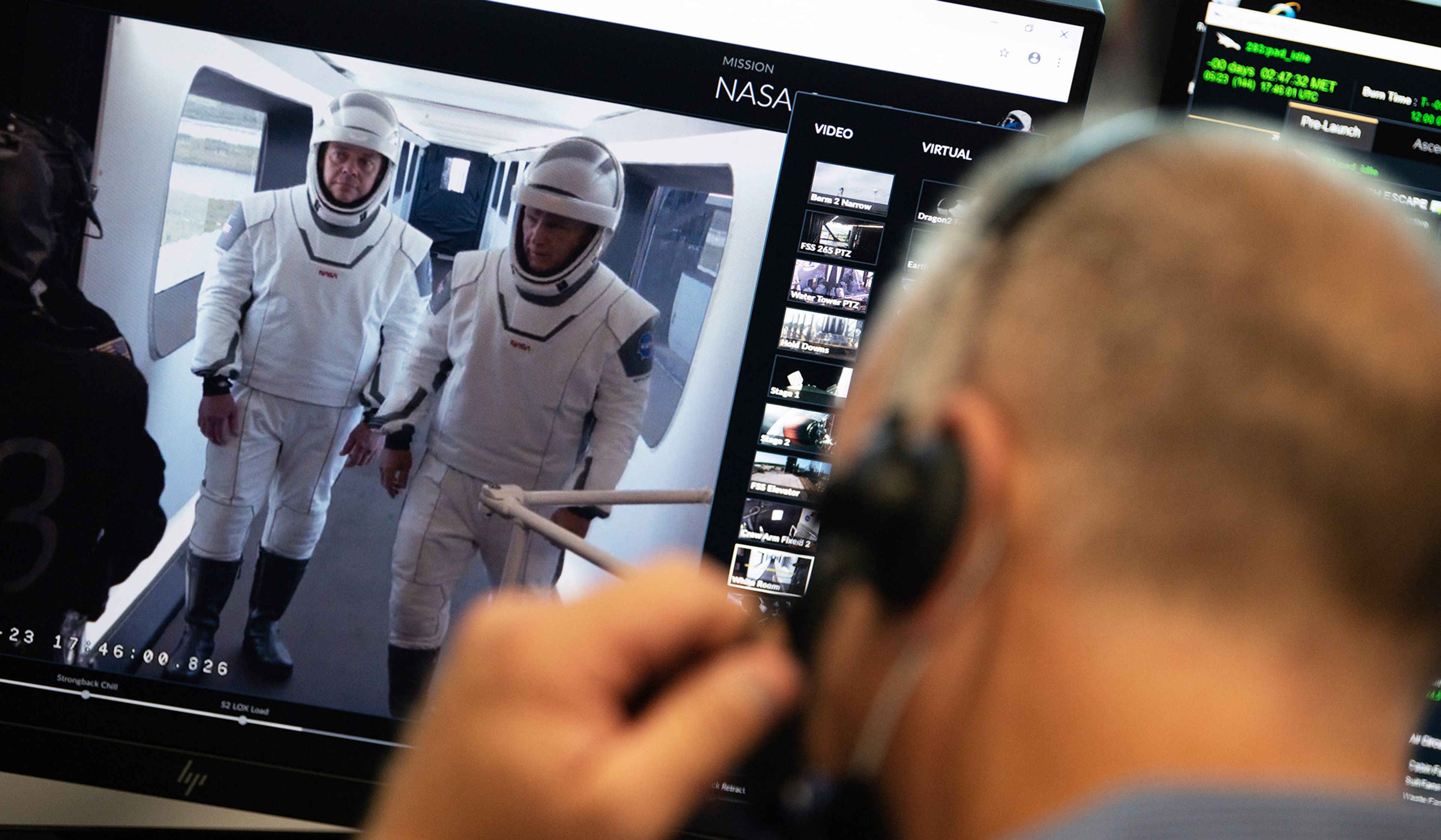

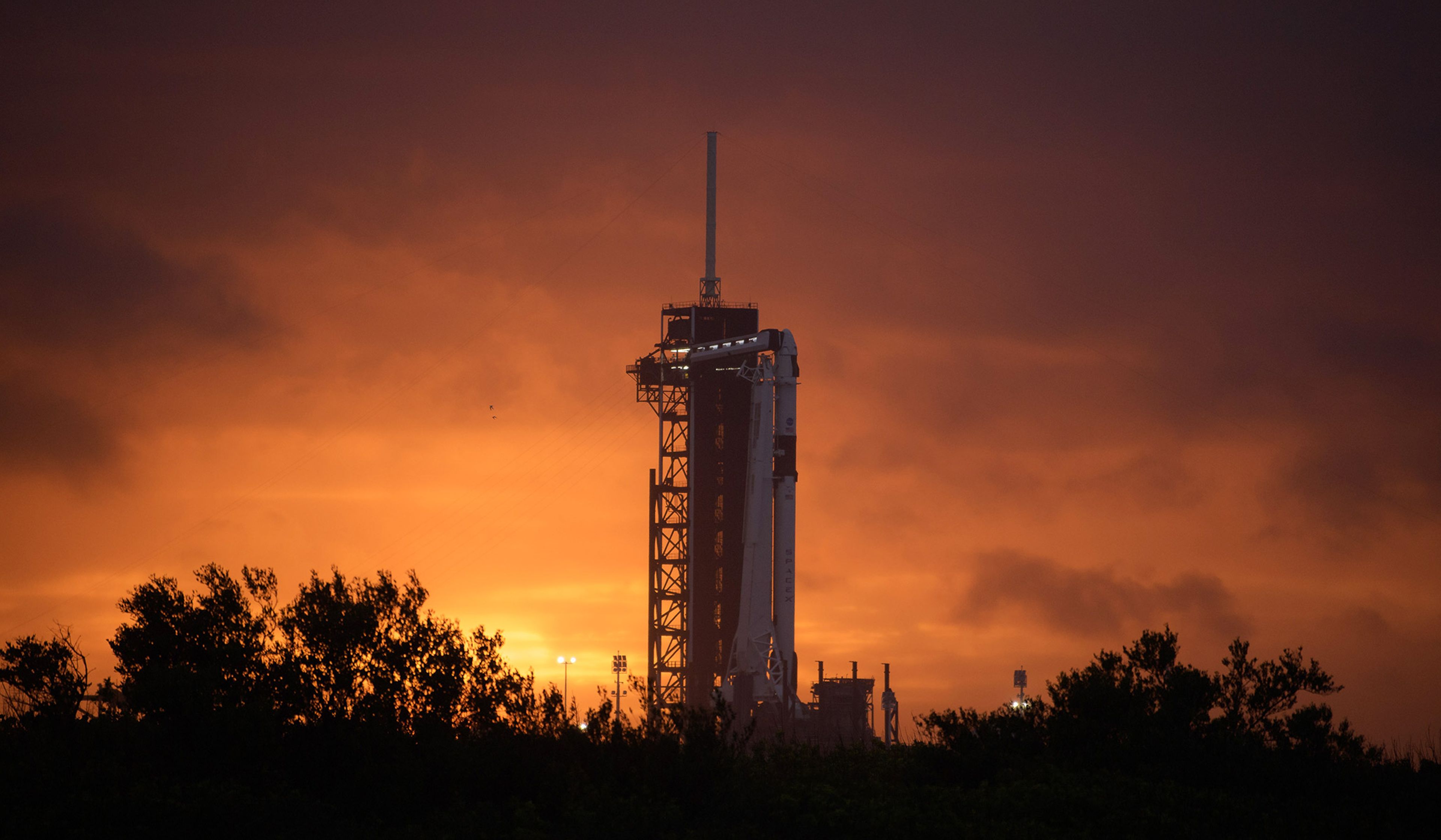
A SpaceX Falcon 9 rocket and Crew Dragon spacecraft carrying NASA astronauts Douglas Hurley and Robert Behnken lifts off during NASA’s SpaceX Demo-2 mission to the International Space Station from Kennedy Space Center in Cape Canaveral, Fla., May 30, 2020.
Joe Skipper/Reuters
Is there a downside to all this? Sure there is. Etymologically, the word “Florida” is an adaption of the Spanish word “florido,” which means “full of flowers.” And boy is that true of this place — if by “flowers” we mean “animals that will happily kill you.” In Britain, the worst thing that any native creature is likely to do to a person is look at him disparagingly. And even now, having lived here for a while, I never cease to be amazed by the sheer lethality that is on offer. Forget the Everglades National Park; I am treated to the full zoo experience every time I walk outside. There are so many alligators in the river outside my house that my four-year-old has taken to telling me that one of them is in our swimming pool and watching with delight as I am forced to make sure that he is lying. At least once per day I see a venomous snake in the grass outside, and occasionally I see one on the outdoor dining table. Several times per year, our local beach is strewn with dead jellyfish, and, from time to time, we see a flag flying that warns us that sharks live here and that we, not they, are the intruders. To spend a day living in Florida is to be accorded a reminder that, absent human intervention, huge swaths of the United States would return swiftly to seed. In 2019, we left town for a week to ride out a supposedly impending hurricane and, when we returned and opened our shutters, a veritable menagerie crawled out. I have rarely seen so many geckos, frogs, spiders, and small birds in one place.
At some point, it is usual for skeptics to say, “Aha, and what about ‘Florida Man’?” And, well, I’m glad you asked, because that’s actually an interesting story in and of itself. You are probably under the impression that we hear so much about strange crimes in Florida because Florida is a hotbed of weirdos and miscreants. But, if so, you are wrong. The real reason that you hear so much about strange crimes in Florida is that Florida has the nation’s most expansive and most enthusiastically enforced sunshine law and, as a result of that law, lazy journalists are able to get hold of information in Florida that they would not be able to obtain elsewhere. Look closely at the next Florida Man story you read, and you will without a doubt see the words “according to the arrest report” glued to the most salacious details. Why? Because, unlike those in every other state, Floridian arrest reports are made public within hours of having been filed. In fact, almost everything related to government in Florida is publicly accessible, and it has been, in various forms, since 1909. Not only do the latest iterations of the law provide a “basic right of access to most meetings of boards, commissions and other governing bodies of state and local governmental agencies or authorities,” but they cover an enormous variety of “public records,” including emails sent to and from public officials, airport-parking receipts, and, yes, the details of arrests. So, next time you read about some half-naked guy driving a motorcycle into a swamp in pursuit of a Komodo dragon, remember that it could just as easily have happened in South Dakota, but that, if it had, you wouldn’t have heard about it.
Well, maybe . . .
There is, of course, another reason for the prevalence and enduring popularity of Florida Man memes among the “smart set”: that it is easier to fall back upon amusing stereotypes than to grapple with the intolerable reality — which, in this case, is that Florida is growing in population and in influence, and, frankly, that it is a better place for middle-class families than almost everywhere else on the coasts. The next town over from me is growing so quickly that there are developments in which every house has been sold but not a single brick has been laid. Which is appropriate, because, in some respects, Florida in 2020 feels reminiscent of California in the 1950s: a place to which ordinary people are flocking in order to take advantage of the nice weather, good economy, open spaces, and explosive construction.
It is an age-old tradition that the residents of populous, well-established, and culturally prestigious places will resent the upstart localities that they fear are stealing their neighbors. In the 18th century, Europeans openly looked down upon North America, regarding it as an inferior backwater that would never amount to anything and to which nobody should aspire to move. In the 19th century, a shift in power away from the South and toward New York and the industrial Midwest caused great consternation among the old guard — especially in Virginia. In the 20th century, Americans who moved to California and the West were seen as curious at best. And today, as the Sun Belt continues to attract refugees from the crowded, expensive, and conformist cities of the Northeast and the West Coast, a similar consternation is evident. Florida? Florida? Not D.C.? I just assumed . . .












Comments