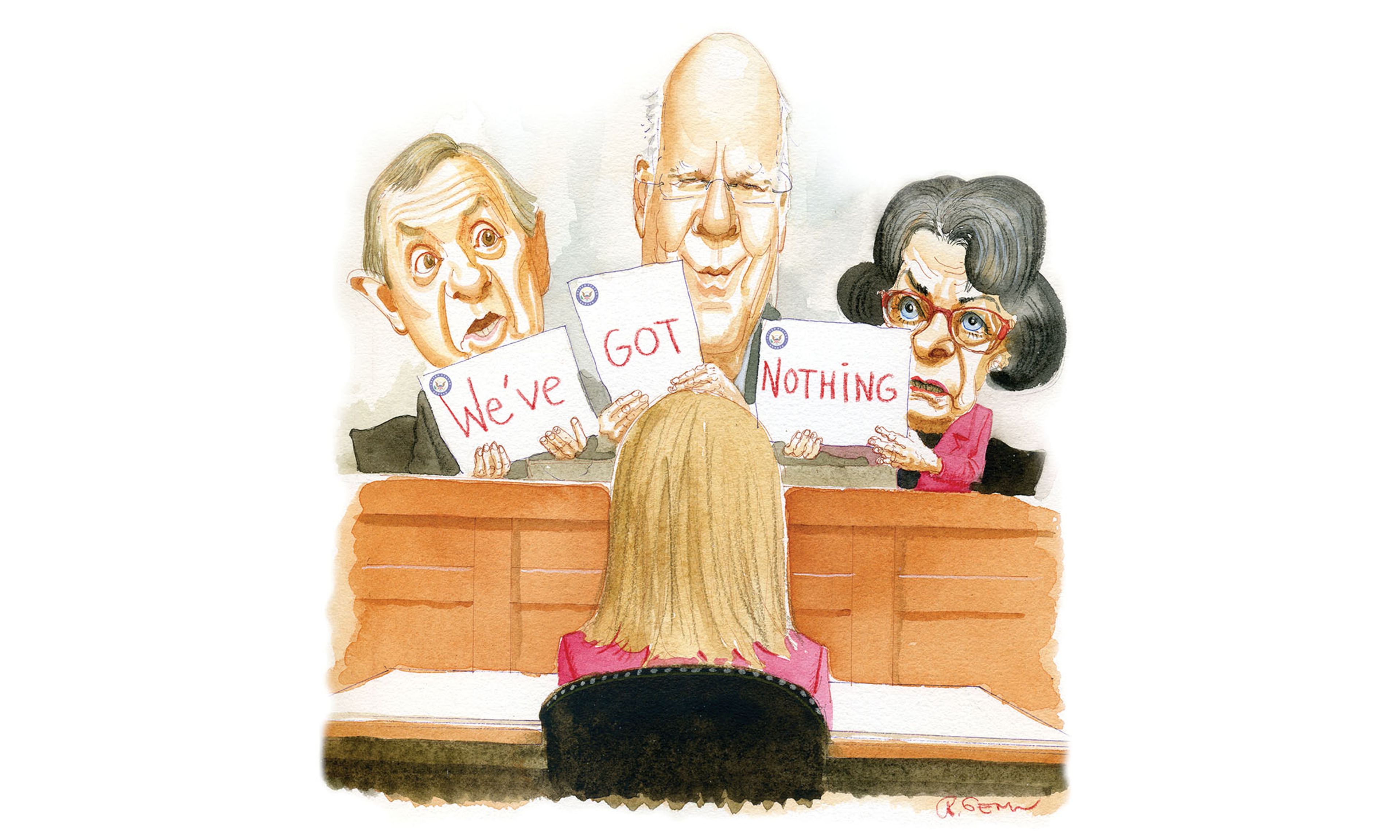
• We would tell you the joke, but then it would become an issue, so we will wait until after the election.
• When President Trump came down with the coronavirus, it seemed like nemesis. He has mostly belittled it since it appeared on these shores, suggesting that it will soon go away or touting magic-bullet cures. He has scorned to wear a mask and mocked those who do, encouraging a culture of masklessness in the West Wing. After three days at Walter Reed Hospital, he returned to the White House with all the subtlety of a rock video, claiming to be completely well even though his skin was the color of clay and he breathed like a beached whale. Though Trump is old and overweight, he never smoked or drank, and possesses unusual vitality. May it see him through. But his characteristic carelessness and bombast, combined with the nakedness of his self-interest in downplaying a political threat, have hurt his reelection chances. His administration, the nation, and his fellow sufferers, 214,000 of them dead, deserved better.
• “I want to be alone,” said the beautiful, elusive Greta Garbo in Grand Hotel. Joe Biden, not so beautiful but equally elusive, says much the same thing when asked whether he will favor packing the Supreme Court, by adding new justices, as president. “It’s a great question,” Biden told reporters, “and I don’t blame you all for asking. But you know the moment I answer that question, the headline in every one of your papers will be about that.” Well, yes. There is an ongoing presidential election; Biden is not only running, but has a good chance of winning. His views on the composition of the most important portion of a collateral branch of government are naturally of interest. Even more oddly, he said, “You’ll know my opinion of Court-packing when the election is over” — making Biden a walking Obamacare bill: We’ll have to elect him to know what’s in him. If Biden persists in offering a blank to the world, his opponents are permitted to fill it in.
• At an event in Miami, Biden asserted that if Judge Amy Coney Barrett is confirmed to the Supreme Court, “she may very well move to overrule Roe.” He added, “The only responsible response to that would be to pass legislation making Roe the law of the land,” and he promised to support such an effort if elected. (He sponsored legislation to this effect while in the Senate.) Far from being a moderate position, “codifying” the Supreme Court’s landmark abortion decision would be well out of step with the views of most Americans. Though surveys suggest that a majority supports Roe in theory, very few Americans support the policy landscape that has resulted from it. Just 13 percent of Americans, for instance, would permit elective abortion during the last three months of pregnancy, as Roe and subsequent jurisprudence do. Democrats are convinced that Roe gives them the upper hand when it comes to abortion politics, but their hold on public opinion is far more tenuous than they would like to believe.
• The first rule of a vice-presidential candidate is to do no harm. Mike Pence and Kamala Harris were so intent on obeying that rule in their debate that they ducked most of the questions while getting in a few good hits at each other’s running mates. Both put in fine, forgettable performances, which is probably just what each of them wanted.
• The moment that debate concluded, the left-wing spin machine whirred into motion, crafting the narrative that Vice President Mike Pence had lost because he had interrupted his opponent, Kamala Harris. Joe Biden’s running mate arrived well prepared for this eventuality; at the first possible opening, she issued a stern, evidently pre-planned line: “Mr. Vice President, I am speaking.” Harris herself went on to interject several times while Pence was speaking, as well as to cut off moderator Susan Page and continue speaking after her time had ended. Nevertheless, Harris’s champions insisted that Pence had committed the cardinal sin of “mansplaining” — a favored progressive term for when a man with abhorrent views says anything to a woman with the right ones — and that he had demonstrated his affinity for white supremacy by occasionally speaking over her. In reality, Pence debated Harris no differently from the way he debated Tim Kaine in 2016: politely, firmly, and somewhat contentiously, as is expected. In the name of feminism and Democratic votes, Harris’s fans are presenting her as a consumptive Victorian heroine.
• Senator Mike Lee (R., Utah) ignited a Twitter firestorm in trying to make a constitutional point. “The word ‘democracy,’” he wrote, “appears nowhere in the Constitution, perhaps because our form of government is not a democracy. It’s a constitutional republic. . . . It should matter to anyone who worries about the excessive accumulation of power in the hands of the few.” As a matter of political architecture, Lee is right. The structure of the federal government — three branches, one of them divided in two; the federal government itself set apart from the states — was designed to block tyranny wherever it might arise, in individuals or majorities: Lee’s “few” might equally be aspiring dictators and their cronies or the tribunes of populist movements run amok. But America’s nature is democratic for all that. The Constitution invokes “We the People”; the Declaration posits “the Right of the People to alter or to abolish” governments gone radically astray. The people should be devoted to liberty and equality, but we must never imagine that those ends can be fulfilled by Platonic guardians or iron abstractions. Democracy must be instructed and upheld in every generation. Jefferson, Publius, and Lincoln did a good job saying so, but they were not on Twitter.
• FBI agents foiled an attempted kidnapping of Michigan governor Gretchen Whitmer by members of a group that calls itself the “Wolverine Watchmen.” It’s unclear how competent the arrested individuals were, or how likely the plan was to succeed. But they had spent some time planning and preparing for it, training themselves for combat, imagining the logistics, and even casing the area around Whitmer’s summer home. Their ultimate goal was to take her out of state and put her on “trial” for purported abuses of authority pertaining to measures she undertook to combat the spread of the coronavirus. Whitmer has in fact misused her authority, but the remedy is to be found in the ballot box and the courts, of which the latter will be busy handling these sinister clowns.
• Speaker Nancy Pelosi suddenly endorsed a bill, floated three years ago by Representative Jamie Raskin (D., Md.), that seeks to declare President Trump incapable of holding his office under the 25th Amendment. The president, the amendment says, can be declared incapable by the veep and a majority of the cabinet “or of such other body as Congress may by law provide.” (The president may rebut; if the declaration is made twice, Congress may confirm it by a two-thirds vote of both chambers.) Raskin proposes as an “other body” a bipartisan 17-member commission of doctors, shrinks, and former executive office holders. We are in the home stretch of an election. Pelosi should think again — or just think.
• In the depths of the coronavirus pandemic, economists worried that lockdowns would inflict a historically deep, protracted recession. While GDP plummeted in the second quarter, recent data suggest that the coronavirus will leave fewer scars than originally expected. Forecasters expect GDP to grow at an annualized rate of 35 percent this quarter, commercial-bankruptcy filings have fallen below their pre-pandemic trend, and the Department of Commerce reports that the vast majority of business closures were temporary. Meanwhile, the labor market has recovered more quickly this year than after previous recessions, with the unemployment rate expected to decline to 7 percent by the end of 2021. While the pandemic is far from over, the relatively upbeat numbers speak to the resiliency of the domestic economy.
• President Trump tweeted that he was calling a halt on talks about COVID-relief legislation until after the election because Nancy Pelosi was asking for too much. A few hours later, he tweeted that there was little danger of doing too much. Then he urged Congress to act fast to support airlines and small business. The next morning, he also said that he would sign a bill for stimulus checks to individuals if Pelosi let Congress send him one. Action on COVID relief might buoy the economy and help Trump’s reelection campaign. His performance makes it less likely, while also making it harder to blame inaction on the Democrats. This would be strange behavior, if anything the president does could be considered strange anymore.
• The Orthodox Jewish community in and around New York City is claiming discrimination in the face of COVID regulations. Orthodox life revolves around large families and large celebrations, which they are loath to forgo; because the Orthodox were so hard hit in COVID’s first wave, many believed, wrongly, that they had achieved herd immunity. But with the onset of autumn, cases spiked again, leading the state to close schools and indoor dining in affected neighborhoods. Orthodox Jews protested, sometimes riotously. Bad luck and mistakes played a role: The crisis came in the midst of the week-long Sukkot holiday, and health warnings were initially given in English, not Yiddish. Believers rightly protest regulations that are enforced more stringently against worship services than liquor stores. But faith-blind health regulations must be obeyed by all, because viruses are equally faith-blind. Salus populi suprema lex.
• Washington hates Silicon Valley. Politicians on both sides of the aisle cast Big Tech firms alternatively as leftist censors, right-wing agitators, or outright thieves. The problem? Big Tech overwhelmingly benefits American consumers. As one example among many: The prices of technological devices have fallen 85 percent over the past 20 years. Not to worry — the House Judiciary Committee found a shortcut. Its Democratic majority has proposed to break up Big Tech firms by rewriting antitrust law so as to dispense with the “consumer-welfare standard.” Historically, lawmakers could punish companies for monopolistic practices only if they reduced economic welfare by, say, fixing prices. Now, lawmakers want to break up firms simply because they are big. We should be careful, because glitches in the legal code are especially hard to fix.
• For years, the United States tried to sort out the issue of how to handle local sales taxes in an age of online commerce; a modus vivendi eventually was worked out, though it remains far from perfect. Imagine trying to manage the same problem on a global scale — which is what the Organisation for Economic Co-operation and Development (OECD) is attempting. The old rules, based largely on physical presence, served the pre-digital economy reasonably well, providing a degree of certainty that enabled trade and investment. But Facebook and Twitter can serve customers from Helsinki to Singapore without many of their workers venturing very far from sunny California. The OECD is attempting to deal with this development. And more to the immediate political point, it is trying to counteract big firms’ tendency to relocate certain operations to low-tax jurisdictions for tax-accounting purposes. Washington has complained loud and long about this corporate practice, but also worries, rightly, that the OECD proposal will end up putting special burdens on the tech sector, which is dominated by U.S.-based firms such as Facebook and Google. Tax competition is generally good — it keeps the politicians from getting too greedy. But predictability and cooperation are good, too, and U.S. technology companies already endure unfair and sometimes arbitrary treatment abroad, particularly in Europe. Balancing these goods will require a delicacy and intelligence not often on display in Washington.
• Among the questions being put to Illinois voters on November’s ballot is whether to change the basis on which the state’s income tax is levied from a flat rate of 4.95 percent to a more progressive structure capped at 7.99 percent. This move is supported by Governor J. B. Pritzker (D., as if you couldn’t guess) and the Democratic majority in the state legislature. Given the way Illinois has been run, this would be akin to giving a drunk the keys to a bar. The beauty of a flat tax is that it means that all taxpayers have some skin in the game, meaning that tax increases would come at a greater political cost than they would when the bulk of the pain is borne by a much smaller, more affluent group of voters, many of whom, incidentally, already suffer from some of the highest property-tax rates in the nation. Illinois has had a high out-migration rate for years now, with the largest group being of working age. If the flat tax steepens, this trend is likely to continue — particularly, we imagine, among some of the more significant “contributors” to the state’s battered treasury. A bar can run dry.
• Last year, the New York Times launched its 1619 Project, which places slavery at the center of the American founding. This year, the project’s lead writer, Nikole Hannah-Jones, was awarded the Pulitzer Prize. Now Bret Stephens — also of the Times, and a previous Pulitzer Prize–winner — has taken a scalpel to the project. He does so in a smart, searching, fair-minded essay of 3,000 words, published in the Times itself. Whatever the virtues of the 1619 Project, says Stephens, the project has “failed.” Good for the Times for publishing the essay, and good for Stephens for writing it.
• “College football holds a special bipartisan place in the American heart,” Matthew Mayhew, an Ohio State professor, wrote in an article for Inside Higher Ed, co-written with a doctoral student and titled “Why America Needs College Football.” Indeed, the Buckeye professor opined, as the Big Ten prepared to begin play after a pandemic-delayed start to the season, “college football might help get us through these uncharacteristically difficult times of great isolation, division and uncertainty.” Within five days, however, Mayhew had recanted his anodyne position: “I am sorry for the hurt, sadness, frustration, fatigue, exhaustion and pain this article has caused anyone,” Mayhew wrote in an epic self-cancellation that reads like a parody of wokeness but isn’t. “I am just beginning to understand how I have harmed communities of color with my words. . . . I learned that Black men putting their bodies on the line for my enjoyment is inspired and maintained by my uninformed and disconnected whiteness and, as written in my previous article, positions student athletes as white property.” And Mayhew pleads: “I hate that my students have to carry my ignorant racist energy with them at all times.” Though Mayhew “aches” for the “hurt” that he has caused, he is committed to a reformed life: “To really begin the long process of antiracist learning, I am designing a plan for change,” which, for our professor, will “involve unlearning and relearning by listening, reading, dialoguing, reflecting and writing as a means for increasing my awareness and knowledge about systemic racism.” “I know it’s not anyone’s job to forgive me,” Mayhew laments, “but I ask for it — another burden of a white person haunted by his ignorance.” It would be easy to make fun of this guy. But sadness, frustration, fatigue, exhaustion, and pain are surely the mots justes.
• Daniel Webster decried those who “think what is right may be distinguished from what is wrong with the precision of an algebraic equation.” Today’s senators let the CBO handle the math, but the belief that Webster opposed is still being propounded — by no less an authority than the Mathematical Association of America, which has decided that what their field needs most is an infusion of Black Lives Matter. Radical politics and math instruction may seem to have little to do with each other, but the MAA insists: “The data are clear: these issues are inseparable.” Even worse, the “current United States leadership . . . consistently promotes policy in direct opposition to data and science-based evidence.” A case in point: “Critical race theory,” which the president has criticized, “is an established social science inquiry which is grounded in decades of scholarship.” That could be taken as an indictment not of the president but of recent scholarship, but the MAA knows better: “As mathematicians, we notice patterns. . . . We see the pattern of science being ignored and the pattern of violence against our colleagues that give voice to race and racism.” And you thought trig was excruciating.
• Darren Walker, president of the left-wing Ford Foundation, has apologized for using the term “tone-deaf” in a recent interview. Walker professed to be “deeply sorry for using this ableist language,” and he apologized “to the millions of people with disabilities and the disability community.” To be tone-deaf is not to be afflicted with a disability, though, but to be, according to Merriam-Webster, “relatively insensitive to differences in musical pitch.” In the context in which Walker used it, it was an expression that means “having or showing an obtuse insensitivity or lack of perception particularly in matters of public sentiment, opinion, or taste.” We’ll need another term for obtuse oversensitivity.
• “Until the day we have a medical vaccine, food is the best vaccine against chaos,” said the Norwegian Nobel Committee’s press release, quoting the World Food Programme, which is the winner of the 2020 Nobel Peace Prize. This awardee is a commendable one. For starters, it’s the world’s largest humanitarian organization by reach. In 2019, the WFP helped some 97 million people across the world, distributing over 15 billion rations at low cost. And under David Beasley, a former governor of South Carolina who was nominated to lead the WFP by Nikki Haley, it has provided food to countless millions during the pandemic, in an effort boosted by the U.S. government. At 75 years of age, the U.N. and its agencies face a crisis of purpose and legitimacy, as Chinese co-optation of the World Health Organization and other bodies has made evident. But the Nobel Committee has provided us a reminder that when such institutions work — backed by American leadership — they’re capable of doing a lot of good in the world. Beasley says that the WFP needs almost $7 billion to avert famine as the pandemic rages. That’s one cause at the U.N. worth fighting for.
• As U.S. officials negotiated with the Taliban in Doha, Qatar, President Trump sprang a surprise tweet: “We should have the small remaining number of our BRAVE Men and Women serving in Afghanistan home by Christmas!” The announcement stunned U.S. negotiators and Taliban negotiators alike. The Taliban negotiators, naturally, were more pleased than their U.S. counterparts. All the U.S. leverage was taken away. Trump’s tweet was obviously, nakedly, a campaign ploy. “Troops home by Christmas” is an old concept, virtually a cliché. Whatever you think of the continuation of Americans in Afghanistan — and we are wary of the deadly alliance between the Taliban and al-Qaeda — this impulsive presidential tweeting is no way to run a war.
• Taiwan’s defense ministry reported that in 2020 it has scrambled more than 4,000 jets to intercept Chinese aircraft, which is more than double the number for all of last year. Beijing’s pressure on the territory has increased significantly in the past couple of months alone; it sent those aircraft over the Taiwan Strait’s median line and even into portions of Taiwan’s air-defense identification zone. There’s little doubt that the Chinese Communist Party is biding its time for the best opportunity to seek reunification by force. The big question is whether Taiwan can deter or repel a Chinese invasion. Defense analysts just aren’t sure. China’s recent military buildup has been staggering, and Taiwan’s military preparedness is in doubt. Still, it has some things going for it: a rugged terrain that would allow guerrilla-style forces to inflict pain on the People’s Liberation Army, Beijing’s lack of preparation for a large-scale amphibious landing, and continued U.S. support — which Beijing should be reminded of.
• Irina Slavina was an independent journalist in Russia: a very hard and dangerous thing to be. She was harassed for years by the authorities. Recently, her apartment was raided and all the tools of her trade confiscated: notebooks, phone, laptop, etc. Soon after, she killed herself, lighting herself on fire in front of the ministry of internal affairs. It is difficult for those of us in the Free World to place ourselves in the shoes of Irina Slavina and her like. We are so lucky, and the Russian government, like all dictatorships, is damnable.
• Captain John R. Nettleton was the commander of the Navy base at Guantánamo Bay. He had an affair with the wife of Christopher Tur, a commissary worker. He also had a drunken fight with the aggrieved man. Shortly thereafter, Tur drowned. Nettleton was charged with covering up the fight and lying about the affair. The captain was sentenced to two years in prison. At the trial, he said, “Command is an honor and a responsibility. I failed, and I know that I am accountable for my actions.” That is a statement befitting an officer. It is especially refreshing in this age of perpetual deflection.
• Louise Glück once called Henry Wadsworth Longfellow “easy to understand, easy to like.” She added: “I don’t want to be Longfellow. Sorry, Henry, but I don’t. To the degree that I apprehend acclaim, I think, ‘Ah, it’s a flaw in the work.’” Though intending no putdown, the Swedish Academy has awarded her the Nobel Prize in Literature for 2020, citing her “austere intelligence” and “refined sense of composition.” Taut but never forced or high-flown, her lyric poetry depends on the beauty of everyday English as spoken well by those who might have come to take it for granted. Her sentences are lucid yet fathomless. She reflects on heavy matters, death and family conflict, in direct, complete sentences that now and then surprise by switching to a playful tone: “Are there souls that need / death’s presence, as I require protection? / I think if I speak long enough / I will answer that question.” Glück, the 13th American Nobel laureate in literature, joins an exclusive but eclectic club, which includes T. S. Eliot and Toni Morrison. Brava.
• Arsenal, the English soccer club, laid off Gunnersaurus, the fat emerald-colored dinosaur who for 27 years had served as its mascot. Since the pandemic began, matches have been closed to fans, whose entertainment in the stands was his reason for being. Mesut Ozil, an Arsenal midfielder and its highest-paid player, earning more than $400,000 a week, tweeted that, as long as he was with the team, he would pay the salary of “our big green guy,” who, under the costume, is of course a human being. Jerry Quy has had the job from the beginning, in the 1990s. Ozil’s tenure with Arsenal has been marked by some storm and stress, but put that aside for now. Look: He just scored a point for generosity. Stand and applaud him.
• Bob Gibson, Whitey Ford, Joe Morgan — whoever wants to know baseball history in the golden age that was the third quarter of the 20th century had better learn about them. Between them, they played for twelve world-championship teams, made 29 All-Star Game appearances, and won three MVP awards, three Cy Youngs, and 14 Gold Gloves. Gibson, the St. Louis Cardinals’ hard-throwing right-handed ace in the 1960s, stepped up to big games like no other pitcher of his generation; his performances in the 1964 and 1968 World Series made jaws across America drop. The pitching record for most World Series wins, ten, belongs to Ford, Mickey Mantle’s best friend and the southpaw ace of the New York Yankees in the long final stretch of their 40-year dynasty. Morgan was already a veteran second baseman but little noted when in 1972 he was traded to Cincinnati, where his speed, plate discipline, and sharp defense all kicked into gear, as did the fabled Big Red Machine, some of the best baseball teams ever assembled. Nearly 1 percent of the Baseball Hall of Fame, Gibson, Ford, and Morgan died in October, within ten days of one another. R.I.P.
• Eddie Van Halen came to America as an immigrant from the Netherlands, speaking no English, but he made his fame and fortune with the universal language of guitar rock. By the time of his death, few had added more to its vocabulary. He was a mechanical innovator, designing his own rebuilt “Frankenstein” guitar and patenting a device to allow him to tap the strings with both hands at once. He was a guitarist’s guitarist, revered and imitated by fellow musicians. Van Halen, the band he co-founded with his brother on drums, was also just plain fun. They brought a California sun-suds-and-babes glee to hard rock that broke with the gritty, bluesy, sometimes pretentious tone of “guitar god” bands. Their sound — which evolved to include Eddie’s work on the synthesizer — helped define the musical landscape of the 1980s. So did their hairspray-and-spandex look. Van Halen’s combination of musical virtuosity, panache, and longevity richly earned them a place on the very short list of the greatest American bands, even as they revolved lead singers. Eddie also added a famous guitar solo to Michael Jackson’s “Beat It.” His death, at 65 after a long battle with throat cancer, leaves behind one of rock’s most distinctive legacies. R.I.P.
The Task Ahead
Joe Biden’s lead in national and key-state polls is larger than Hillary Clinton’s was at this time in 2016. The Democratic Party appears highly likely to retain the House and is currently favored to take the Senate as well. Americans could find themselves living under all-Democratic rule in Washington, D.C., for the first time in a decade.
In the interim, the Democratic Party has moved ever farther left, on issue after issue. Obamacare now represents an inadequate amount of control over health care for the party’s leaders, who split between those who want fully socialized medicine and those who want to move halfway there. Pro-life Democrats have nearly gone extinct, and the party backs taxpayer funding for abortion to an unprecedented extent. Democrats want to weaken statutory protections for religious liberty that passed Congress nearly by acclamation in the 1990s. They are heedless of the need to enforce the immigration laws where they are not hostile to it. They are eager to end features of the constitutional order they find inconvenient.
It is unfair to say that Biden is too hobbled by age to resist his party’s leftward lurch. Even when he was young and vigorous, he always went wherever the party wanted. And when it comes to foreign policy, where the president has great leeway, Biden’s judgment has been erratic — at best. He opposed the first war against Iraq, supported the second one, reversed himself on that, floated a plan to divide Iraq that all its factions rejected, and opposed the surge that brought a measure of stability to the country. The one great foreign-policy triumph of the Obama administration, in which he served — the bringing of Osama bin Laden to justice — was something he opposed. Meanwhile, he hopes to revive one of Obama’s signature mistakes, the wretched Iran deal, which shook our allies without improving Tehran’s behavior.
A Democratic sweep of the election would be perilous for the country and is well worth resisting. That it has such a high probability of occurring is to a large degree the responsibility of President Donald Trump. The president has, to be sure, often shown canny political instincts, as in his extraordinary primary victory in 2016. He has also advanced a great many conservative policy objectives and thwarted liberal ones, compiling a record better than even some of his supporters on the right expected when they voted for him. His conservative judicial appointments, regulatory restraint, pro-life policies, defense of conscience rights, and reorientation of Mideast alliances have been particularly commendable. And he has had to work against a frequently irresponsible opposition, a hypercritical media, and the sheer bad luck of a vicious pathogen.
But the personality traits that made us doubt his suitability for high office in 2016 have undermined his effectiveness, have led him to bad decisions, and now threaten to drag conservatism down to a consequential and avoidable defeat. After running as a successful businessman, he has turned out to be an extraordinarily poor manager of the federal government, repeatedly warring against not only the permanent bureaucracy but his own appointees. He has been too indecisive, too poorly advised, and too uninterested in follow-through to set a clear policy on troop numbers abroad or explain what he wants to do on health care. He has counted on his personal rapport with dictators to produce results for the country that have not been forthcoming. He has sometimes abused, and exceeded, his legitimate powers. And he has been a glutton for pointless controversies involving media figures that not one in 50 Americans would be able to identify on the street.
His characteristics and habits have sometimes served him and the country well, as when he moved our embassy in Israel to Jerusalem over the hysterical objections of alleged experts, none of whose dire predictions came to pass. But they also made him a consistently unpopular figure even when he was presiding over a strong economy. They led to the humanitarian and political debacle of large-scale family separations at the Mexican border, and they prevented any deal to put immigration enforcement on a more solid footing. They kept him from pursuing any coherent strategy for dealing with China: His administration’s main accomplishment has been getting Beijing to promise it will buy American products, promises that are already proving empty. And they have hampered both the administration’s policy against COVID and his ability to be a credible and consistent spokesman for it.
When unemployment was falling, wages were rising, and nobody had heard of the coronavirus, Trump could count on the support of a significant number of voters who disliked much of what they see in him but thought the results were pretty good. Now he has to overcome the majority’s steady disapproval of him while also explaining away poor conditions.
Most conservatives, for all of that, will still and understandably be in his corner. He sides with us on many things, from taxes to conscience rights to judgeships, while the Biden Democrats are our committed opponents on everything. A much smaller number of conservatives will find that his defects preclude a vote for him. Whatever their views of the incumbent, conservatives should strive to prevent the consolidation of a left-wing monopoly on power in the elected branches of the federal government. No doubts about the president should undermine the urgency of retaining Republican control of the Senate, which every conservative should now desire as a bulwark against runaway leftism and the destruction of American institutions. Should that fail as well, it will be all the more urgent for conservatives to rally popular opposition to initiatives that would weaken the nation.
And, obviously, to defend constitutional government, core American rights, and the free market. But conservatism also needs a practical, solution-oriented program. We must devise an agenda that meets the country’s needs — that extends opportunities to people whether or not they have college degrees, that encourages family formation, that allows the purchase of affordable catastrophic health coverage, that reforms immigration to better serve the interests of our citizens — and that can command the political support to be implemented. One way or the other, conservatives will have our work cut out for us.
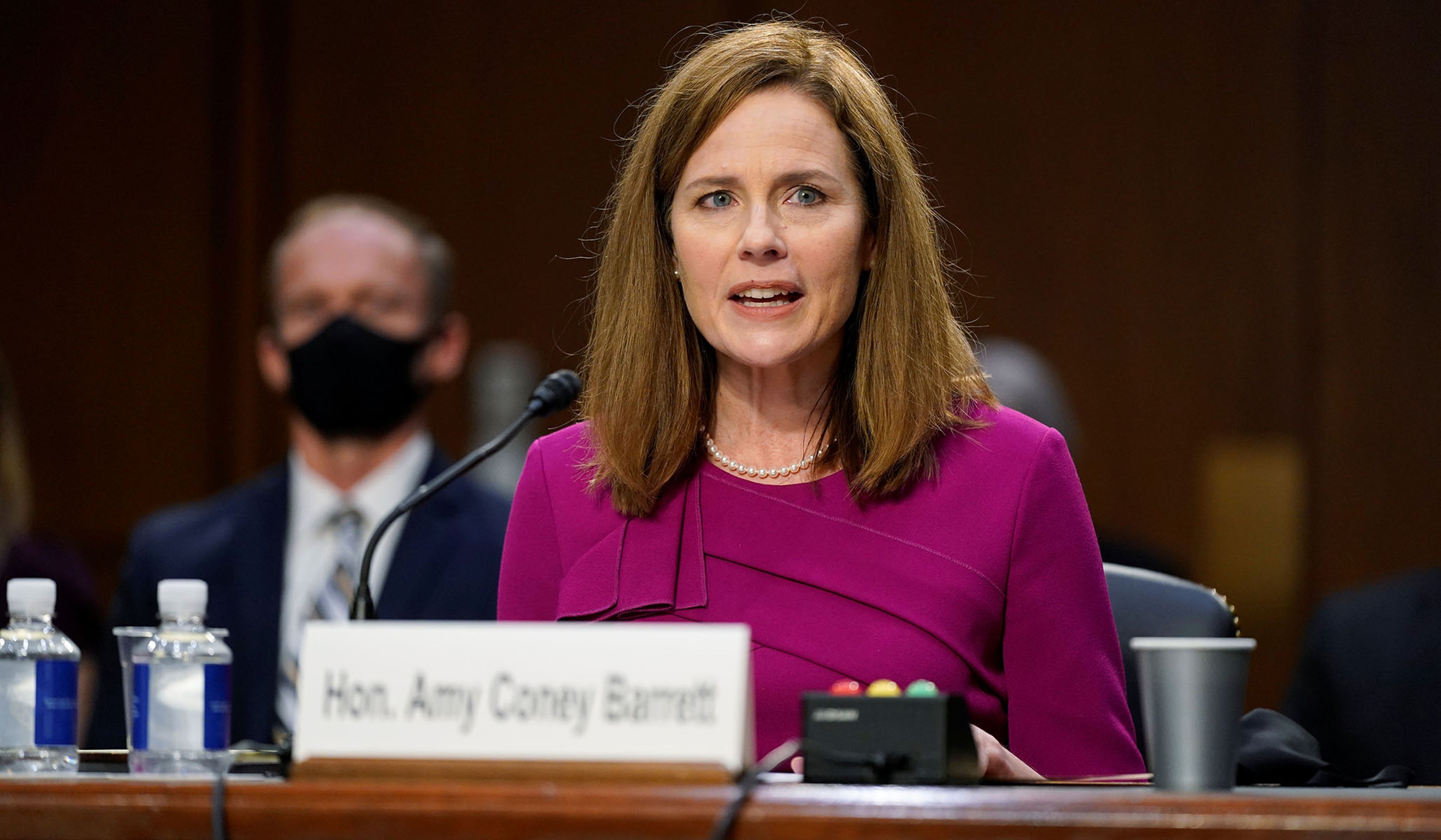
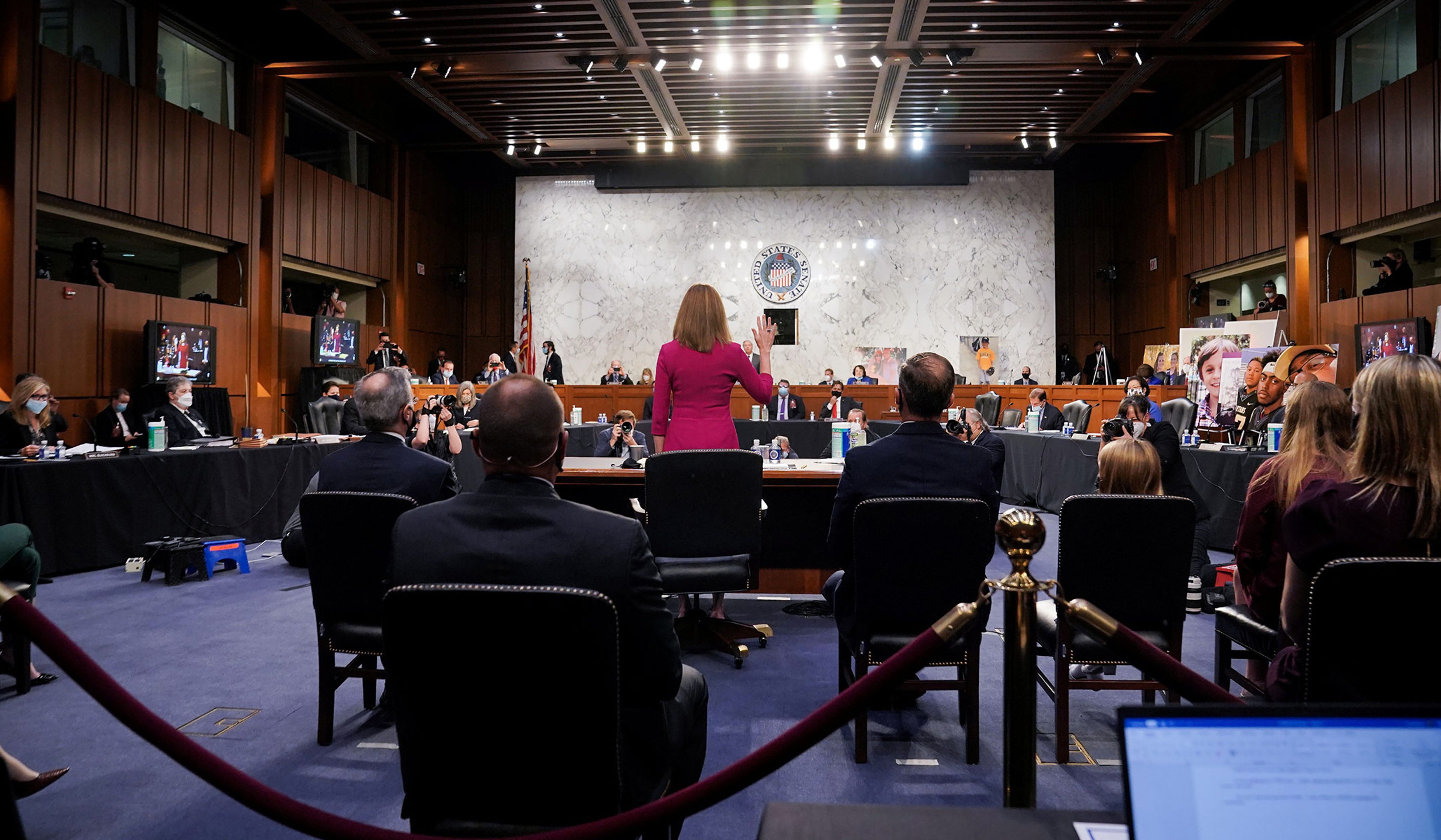
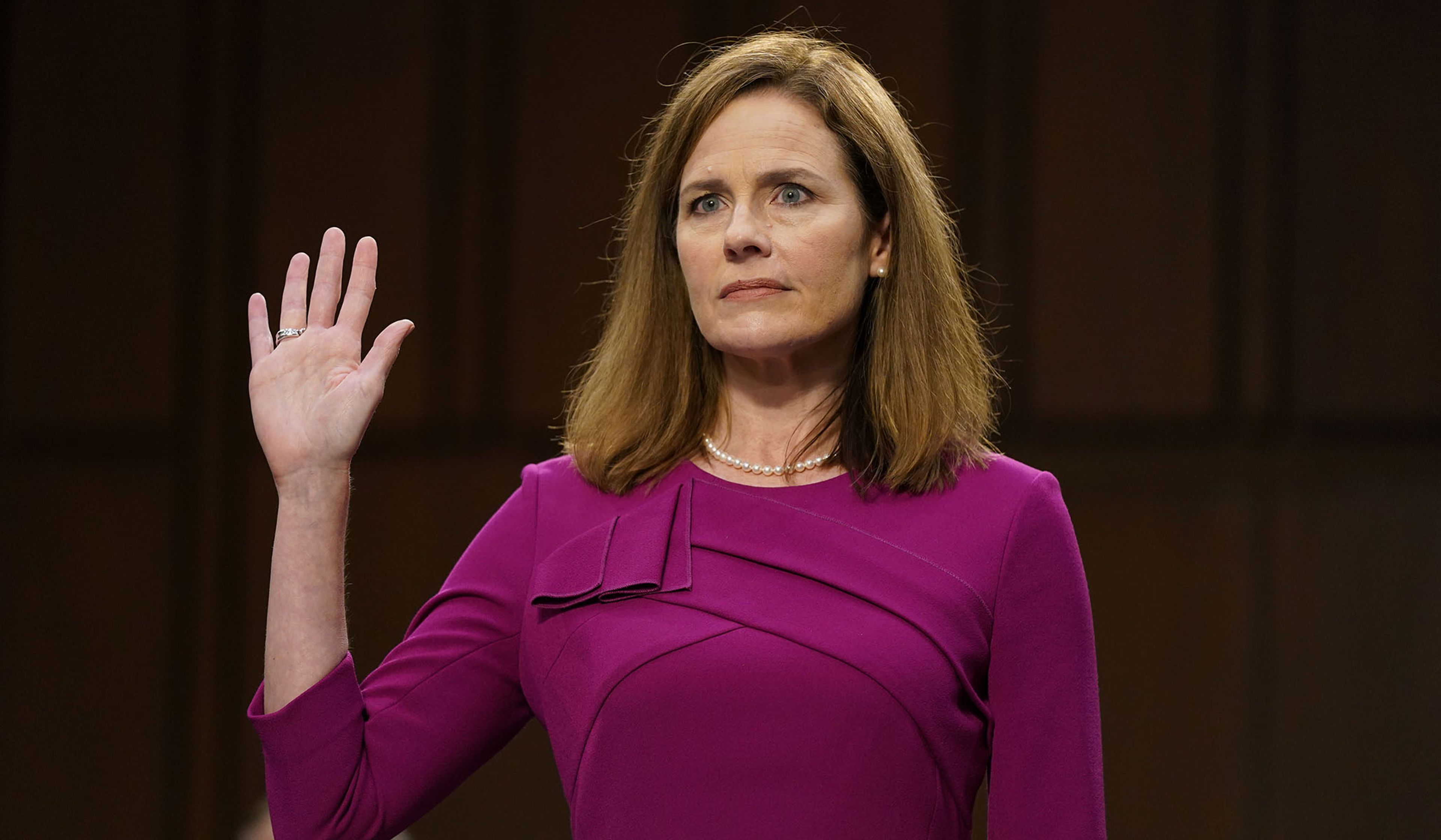
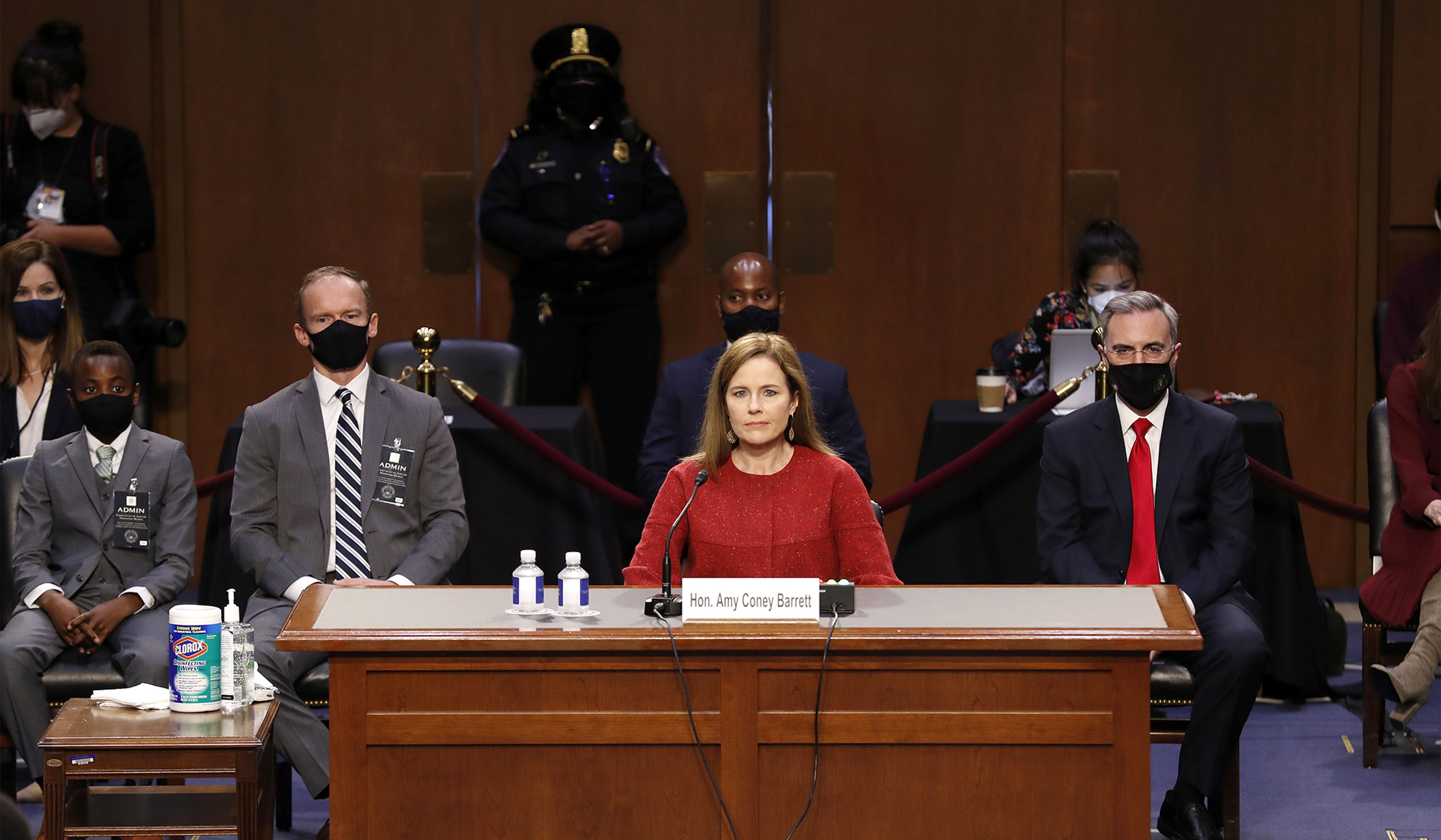
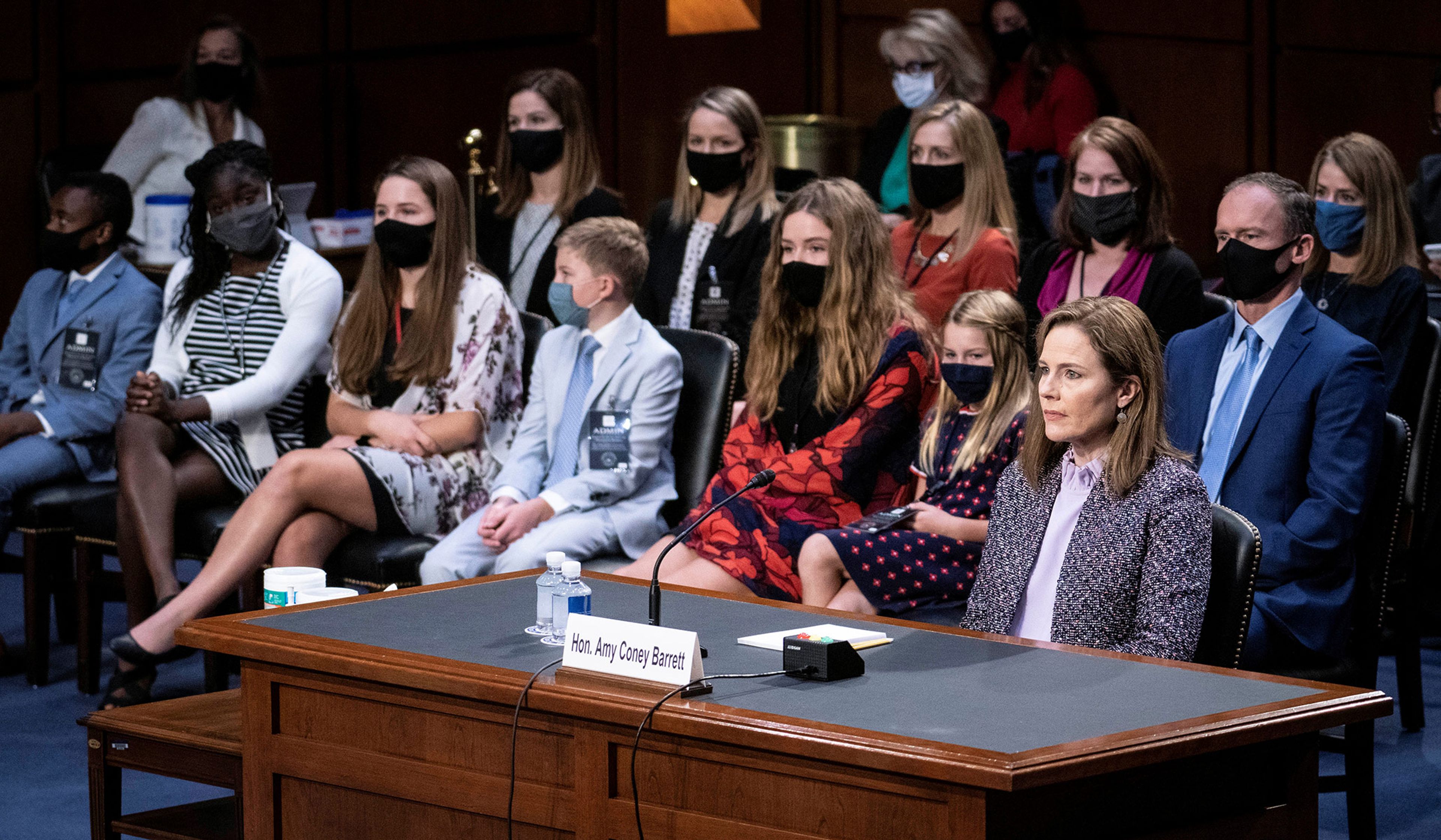
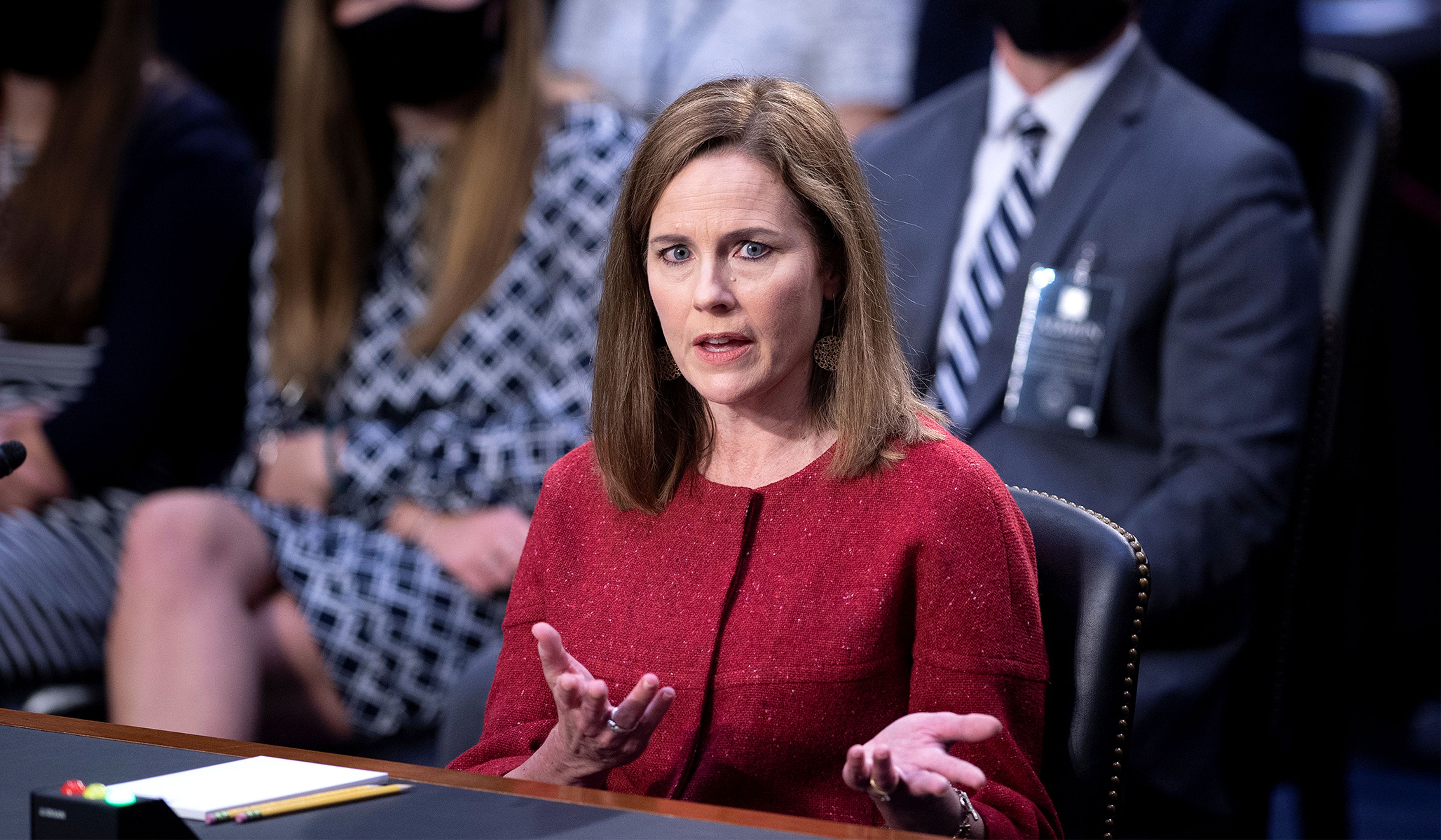
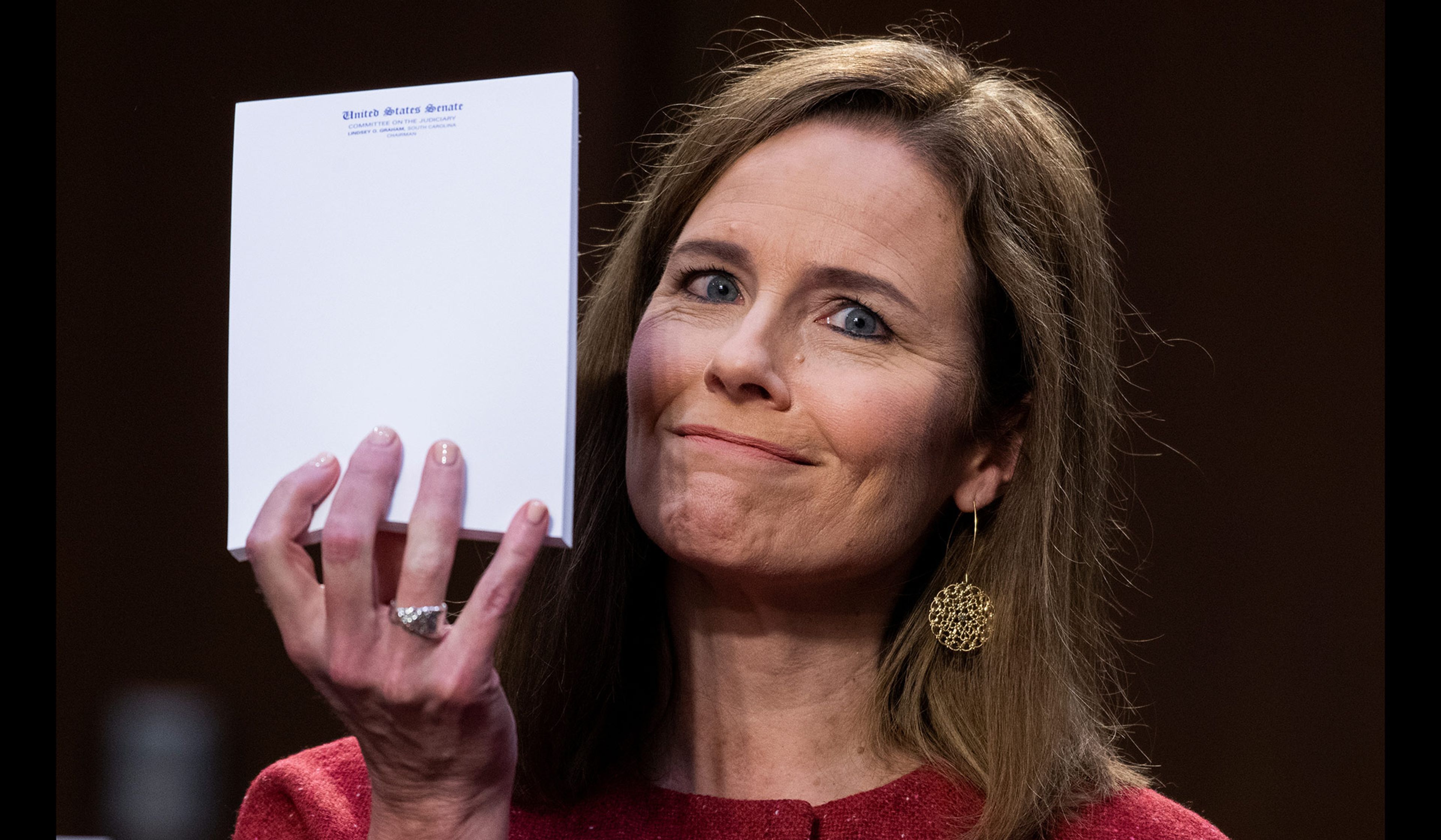
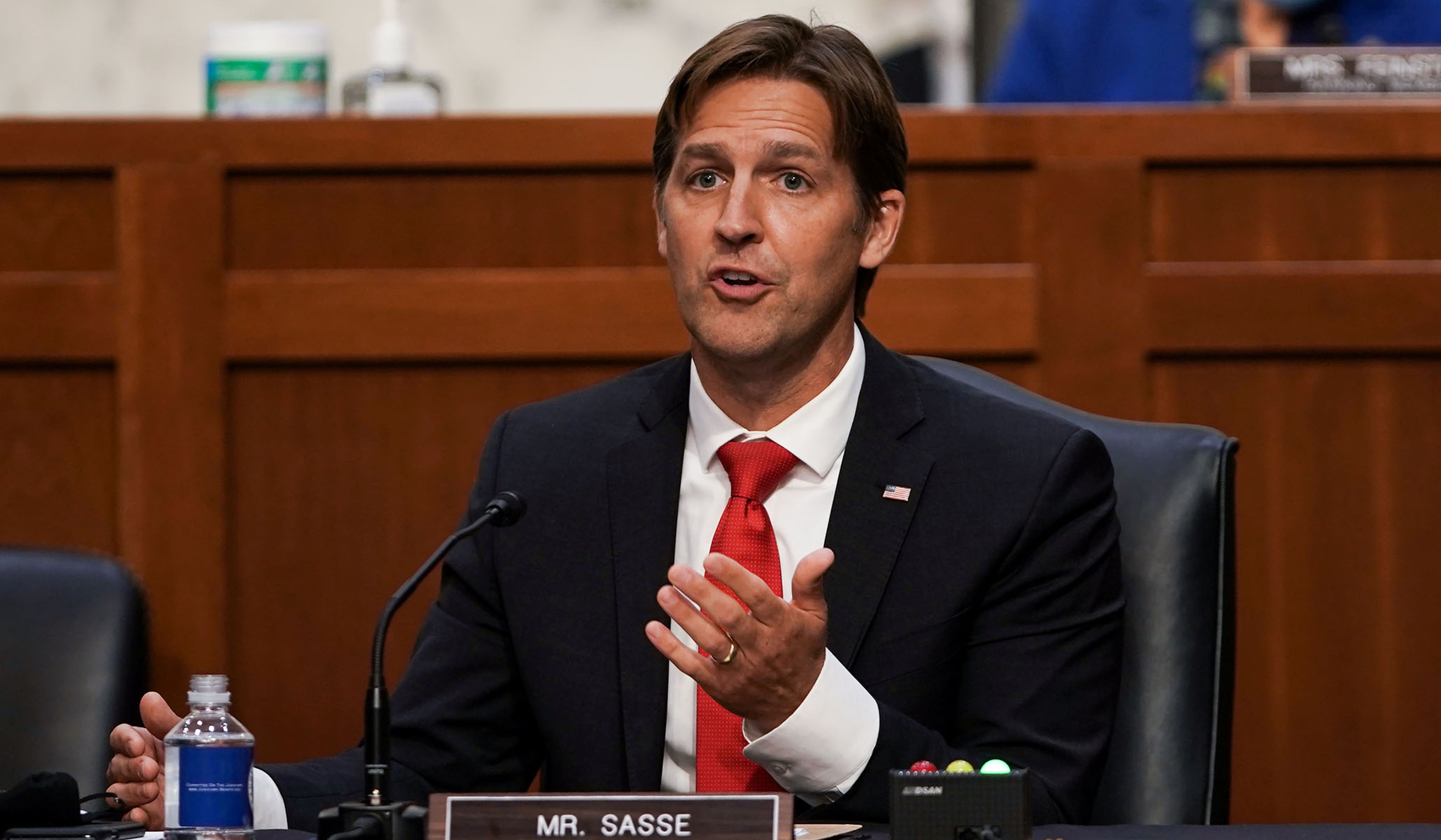
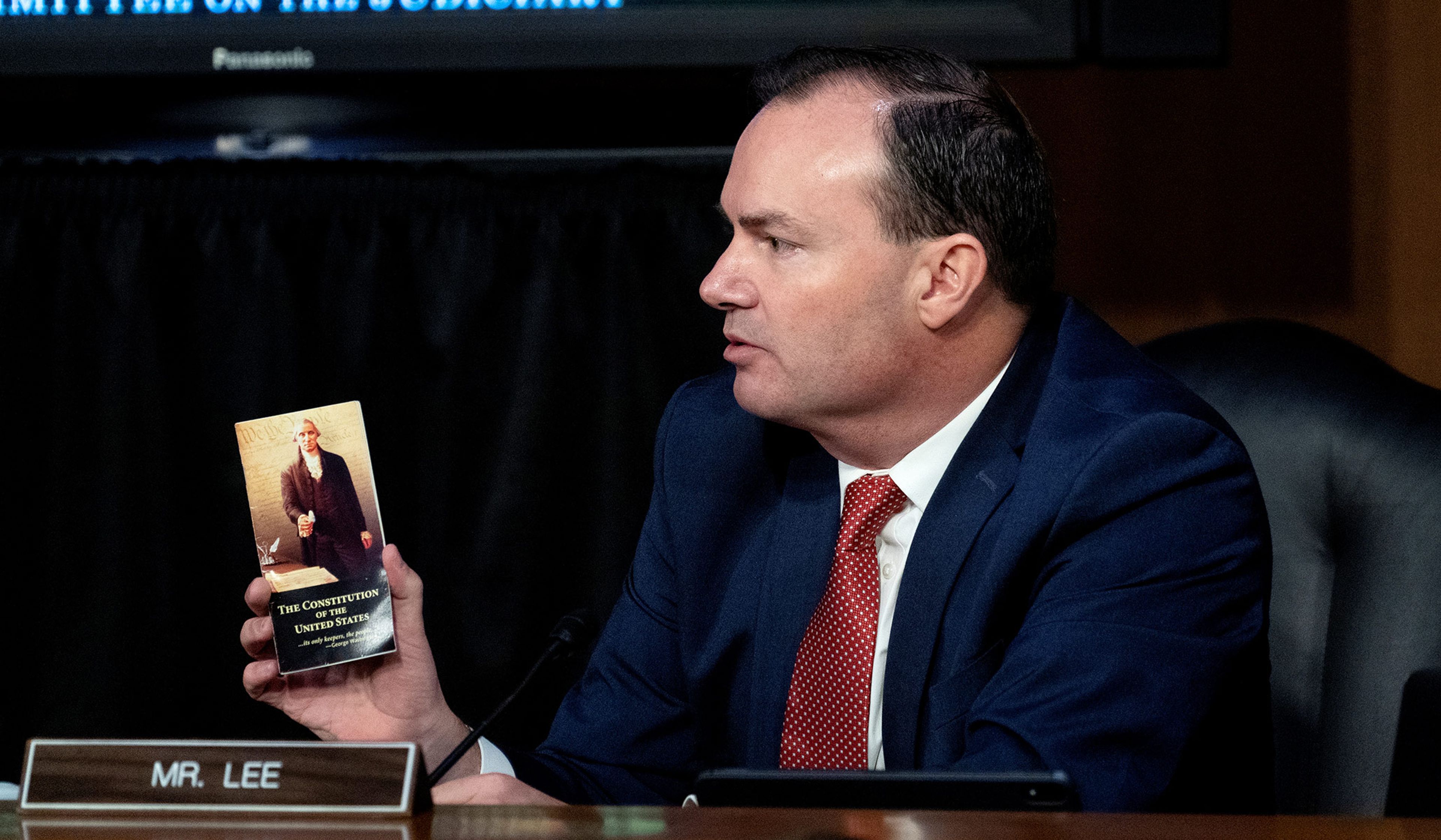
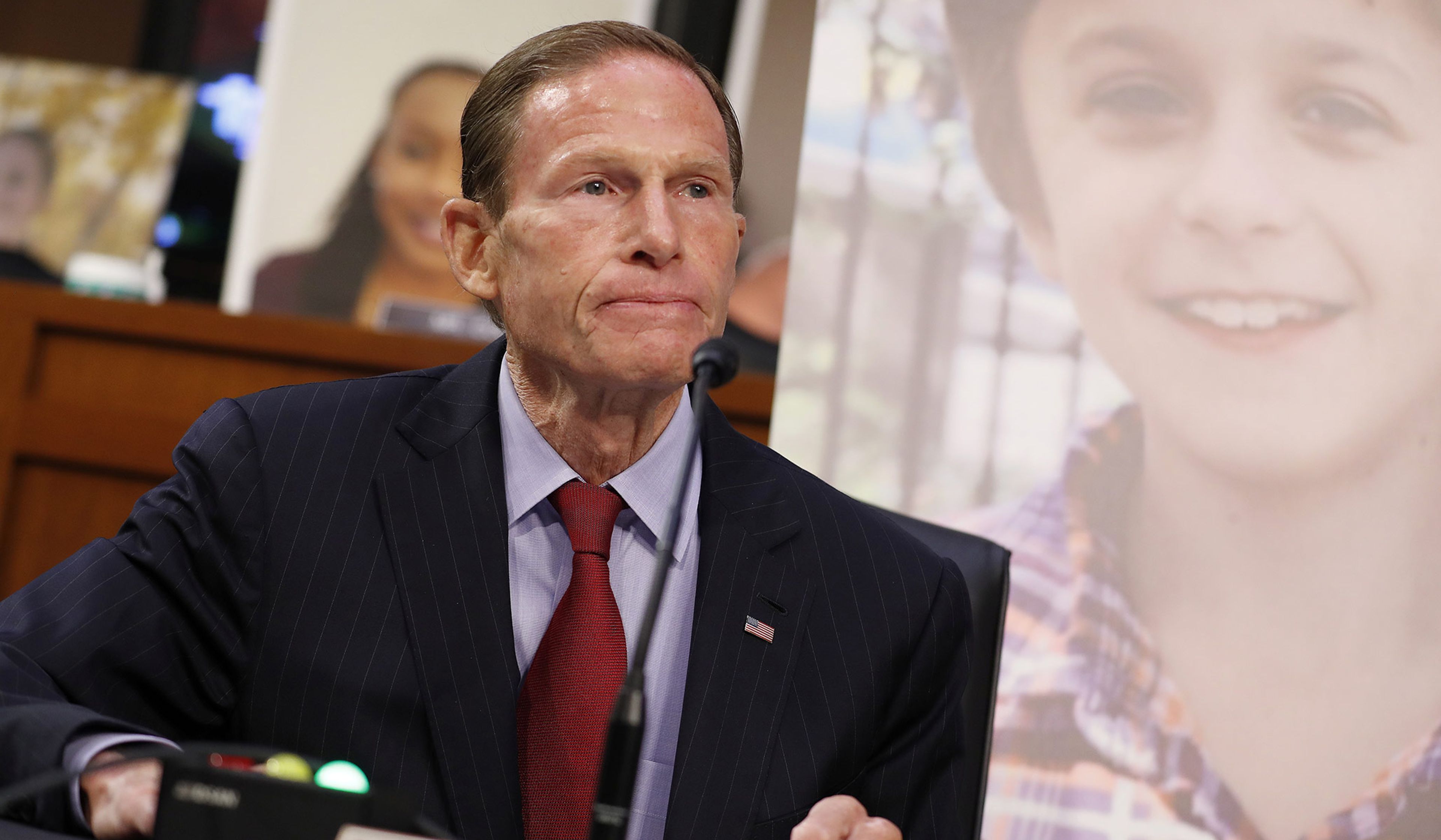
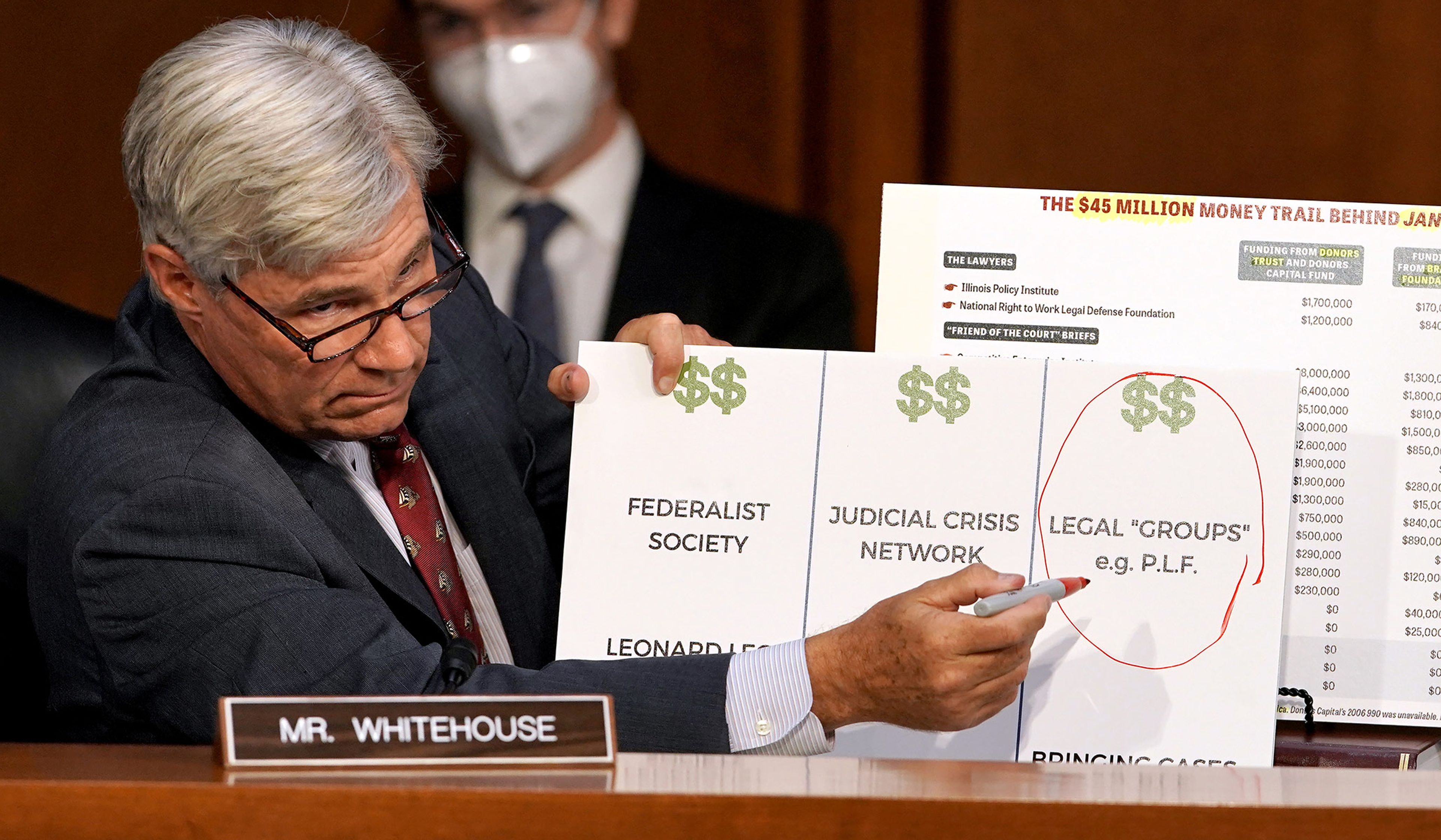
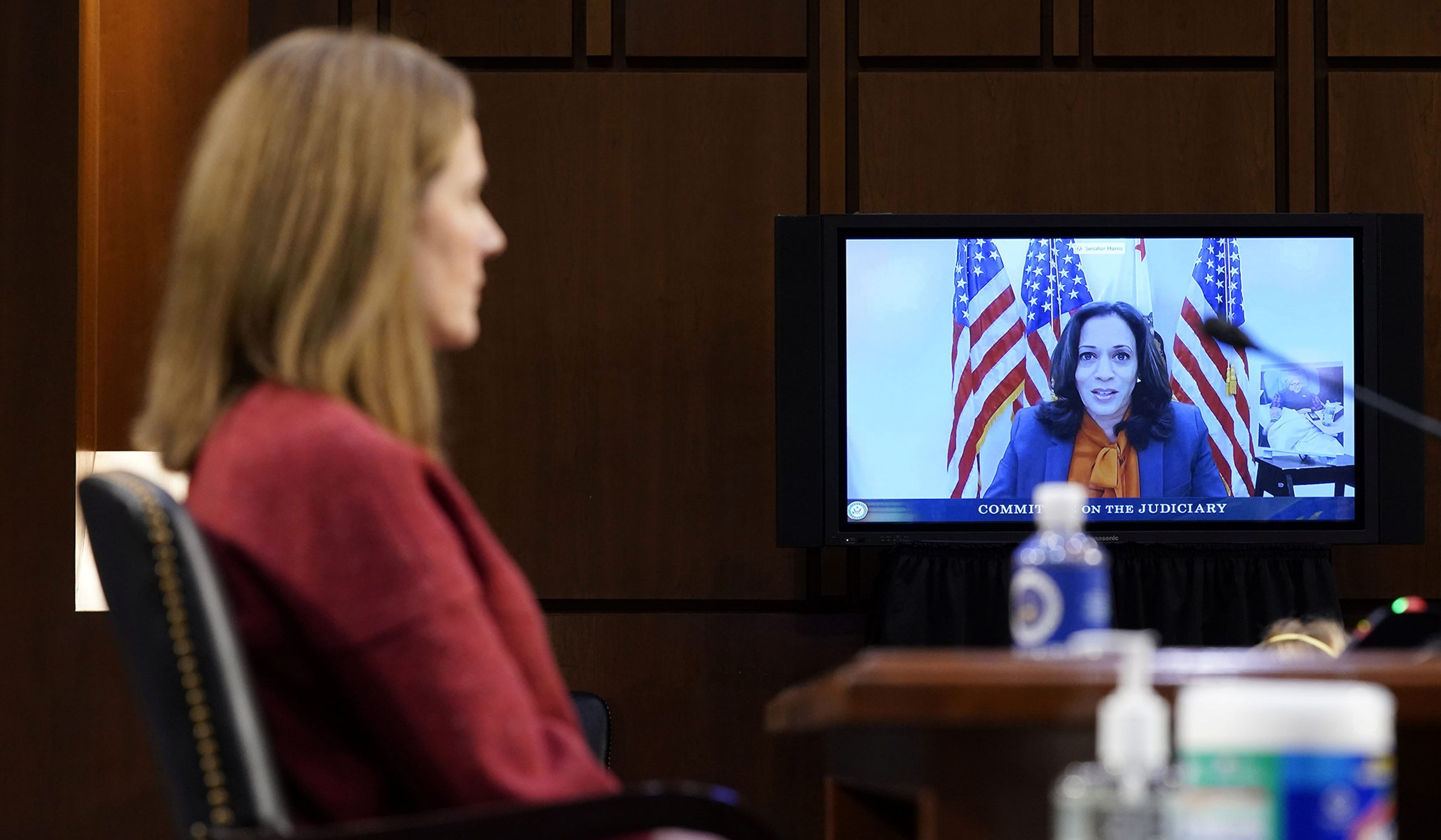
Supreme Court nominee Amy Coney Barrett speaks during a confirmation hearing before the Senate Judiciary Committee, Washington, D.C., October 12, 2020.
Patrick Semansky/Reuters Pool
Barrett Rising
Judge Amy Coney Barrett remains on track to confirmation to the Supreme Court at this writing, with hearings underway. While Democrats have often tried to sink Republican nominees to the Court after their hearings have finished, their efforts against her have so far been half-hearted. They know they don’t have the votes to stop her, and they know they don’t have the materials to make her unpopular, either.
So they have used the hearings for two main purposes: to highlight issues that hurt President Trump rather than ones that are likely to cause her serious trouble, and to stroke the erogenous zones of their base. They have established that Barrett believes that some gun regulations are incompatible with the Second Amendment, that she is pro-life, and that she believes that Chief Justice John Roberts stretched the text of Obamacare in order to uphold it. All of these beliefs should be considered marks in her favor.
They have not established — they have not come within spitting distance of establishing — what they are trying to insinuate: that she would find flimsy legal pretexts for junking Obamacare, or would mow down all gun regulations, or would somehow prohibit in vitro fertilization. They can call her an extremist all they like. They’ll be calling her “Justice Barrett” soon enough.











Comments