When I learned that my first job out of college would take me to a political magazine in Washington, D.C., I headed to the serials room of the main library at the University of Michigan. To get there, if memory serves, I would have walked by rows of card catalogues, whose contents covering several million books were then shifting onto computers that displayed bright green text on vacuum-tube monitors. It was the spring of 1992, and I wanted to use the amazing technology of microfilm.
My goal was to read articles by Fred Barnes, the White House correspondent for the New Republic and my future boss. I had worked with microfilm before, but I was more accustomed to the method that it had replaced: opening thick volumes of the Readers’ Guide to Periodical Literature, jotting down references on request slips, and hoping the library had physical copies of what I wanted to examine. With microfilm, I could just grab a box of reels and go to a terminal. For two or three evenings, I ignored my senior thesis on an obscure novelist from the 18th century and devoted myself to reviewing years of Fred’s journalism. As I turned the spools and adjusted the focus, my research felt fast and efficient.
This was before the internet; I’m barely old enough to know what it was like to be an adult in a world without the Web. My first professional online experience came in the cub-reporter pit at the New Republic, which had a dial-up modem and a subscription to LexisNexis, a database that was a gusher of news and information. I became addicted to its searching powers and instant results as I chased down accounts of events, profiles of politicians, and copies of speeches. The technology of journalism was transforming right before us on our screens, and even a conservative like me, who is supposed to regard change with suspicion, saw it as good.
What many of us failed to appreciate at the time was how the digital revolution also would alter the partisan politics of journalism as the media descended into the tribalism of nightly shout shows, social-media cesspools, and lost authority. Today, it’s tempting to ask: Weren’t things better a generation ago? I hear both old and young conservatives yearn for those bygone days when television’s talking heads were more polite, social media meant a phone call, and voices of authority seemed more trustworthy.
That’s when I think about the “Clinton Suck-Up Watch” — and remind myself that the media world we inhabit now is in fact much like the one we hoped for back then. It’s possible to believe that journalism has never been worse than it is in the 2020s. For conservatives, however, it’s also possible to believe that it’s never been better.
The New Republic of the 1990s was liberal but also willing to make room for a right-leaning reporter like Fred, plus me, his eager aide. Fred used to say that there’s only one story in Washington and it revolves around a single question: How’s the president doing? In the summer of 1992, the answer was: Poorly. President George H. W. Bush, a Republican, was headed to defeat against Bill Clinton, the Democratic governor of Arkansas, in a three-way race that included Ross Perot. Much of the press corps swooned for Clinton, in a display of bias that most media liberals either failed to notice or refused to acknowledge. The New Republic was different. The staff there saw the bias plainly, and although they supported Clinton — the magazine eventually endorsed him — they were also willing to call out the biggest brown-nosers in the business. Thus was born the Clinton Suck-Up Watch, a feature that pointed out the media’s most sycophantic displays of affection for its preferred candidate.
As a young and unproven reporter at a magazine whose staff consisted of massively talented writers, including Michael Kinsley, Michael Lewis, and Andrew Sullivan, I had a hard time breaking into its pages with a byline. Yet the Clinton Suck-Up Watch gave me a weekly opportunity to contribute. I strived to come up with suggestions for it. A few of them saw print.
It was also my small protest against the larger media’s professed commitment to objectivity, which it had proclaimed throughout the post-war period to disguise ideological biases. Conservatives grumbled that most journalists were liberal, and they even had an organization, the Media Research Center, dedicated to proving the point. Defenders of the press usually replied to the charge with some version of the claim that reporters and editors were honest professionals who could set aside their personal views as they gathered and disseminated the news. This was laughable, as the MRC revealed in its newsletters — that is, news delivered by letter in a stamped envelope. Yet nothing undermined the media’s claims of objectivity quite like the Clinton Suck-Up Watch, which appeared in a liberal magazine with an elite readership.
The sucking-up was bad enough. The refusal to admit the bias was a cover-up operation that made matters worse. It also betrayed the deepest traditions of American journalism, in which writers and editors announced their perspectives rather than tried to hide them. From the founding of the nation and well into the 19th century, newspapers were openly partisan. “Protestations of impartiality I shall make none,” wrote William Cobbett in 1797. “They are always useless and are besides perfect nonsense, when used by a news-monger.” Because printing was expensive, Cobbett and his colleagues worked for publications that required subsidies, which they received from party loyalists and included patronage in the form of government printing contracts. This scandalized nobody and produced some of America’s greatest opinion journalism. The Federalist Papers, after all, is fundamentally a collection of op-eds.
One of the authors of those famous op-eds was Alexander Hamilton, a politician who also founded the New York Post because he wanted to influence politics during what is sometimes labeled the “party-press era.” The newspapers of the day were so explicitly aligned with parties that many of them advertised their allegiances on their nameplates. Several of these have survived into our time with relic-like titles, such as the Arkansas Democrat-Gazette of Little Rock and The Republican of Springfield, Mass. (Amusingly, the Herald-Whig of Illinois and the Cecil Whig of Maryland also continue to publish, though probably only a few of their readers recognize their partisan origin.)
As printing presses improved and paper became cheaper in the 1830s and 1840s, however, publishers saw that readers could provide a major source of revenue. The era of the party press evolved into the era of the penny press as a new generation of publications aimed to sell to the masses, which meant selling to readers of all political persuasions. Many papers maintained partisan commitments, but they became better known for sensational crime stories that drove newsstand sales. The invention of the telegraph also hastened the demise of partisan journalism because the wire services wanted as many newspapers as possible to buy their articles. They began to invent a mode of reporting that tried not to take sides.
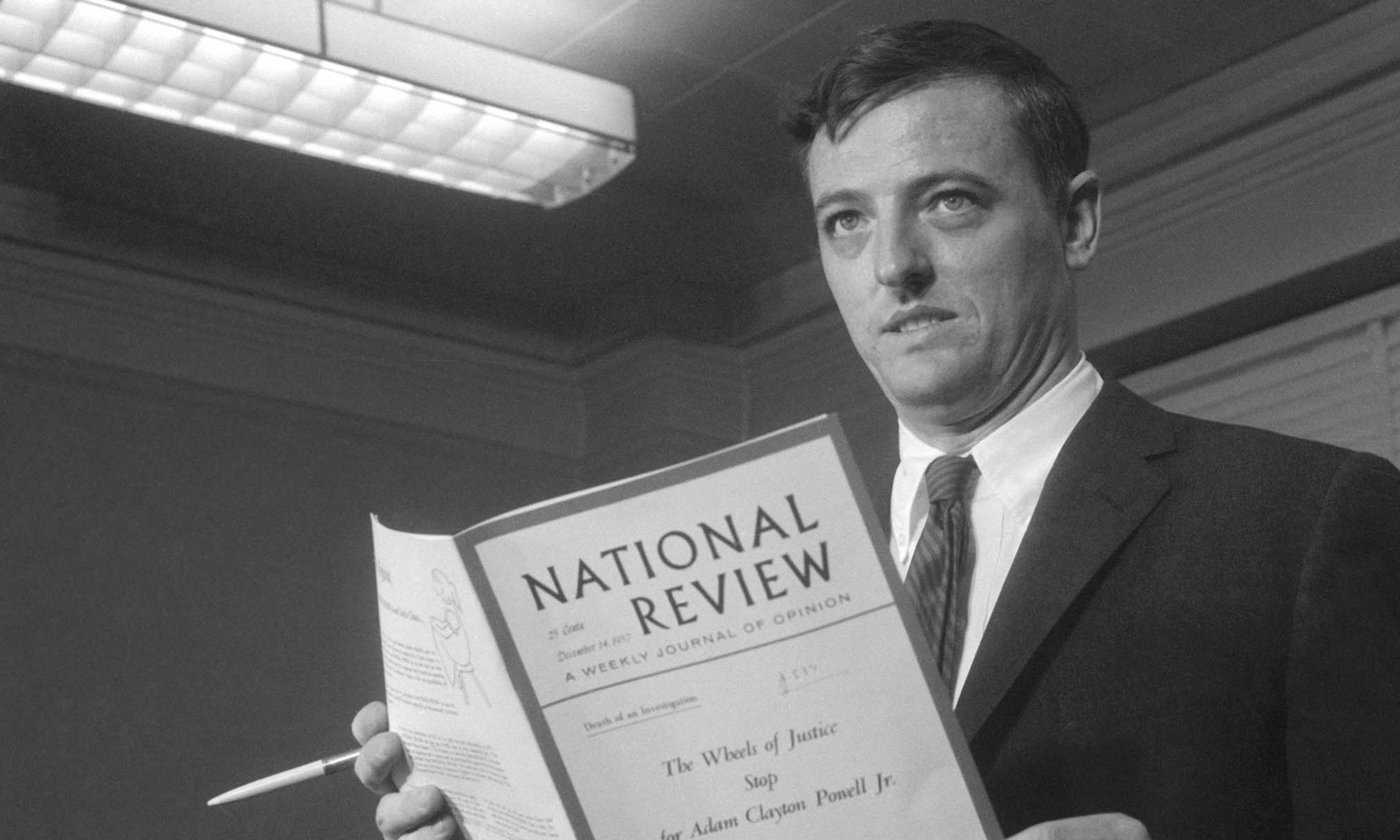
By the first decades of the 20th century, many journalists spoke of objectivity in political reporting as an ethical obligation. A lot of them meant well. Yet the media of the day still had loud critics. Mostly they were liberals who thought the press was too conservative and favored Republicans. As New Deal liberalism became the country’s reigning ideology, however, this dynamic reversed. Meanwhile, at the dawn of the television era, the Federal Communications Commission adopted the so-called Fairness Doctrine, whose professed aim was to keep political bias out of broadcast news but whose effect was to tighten liberalism’s grip on the press. In 1955, William F. Buckley Jr. founded National Review in part because conservative ideas were missing from much of the media. Ever since, complaints about the liberal media have been a cornerstone of conservative politics.
I woke up to them as a college freshman in 1988, when I became a regular visitor to my dorm’s small library and discovered NR. It was unlike anything I had encountered before. Up to then, I had kept up with current events by watching Tom Brokaw on the NBC Nightly News and reading Newsweek, to which my parents subscribed. My favorite magazine probably was Rolling Stone, to which my parents did not subscribe but that I sometimes bought. Yet National Review offered a new way to think about American politics and culture. As it turned me into a conservative, its writers inspired me to consider making journalism my career.
For a liberal who wanted to work in the media, the best employment destinations included the juggernauts of journalism, from the New York Times and the Washington Post to magazines like Time to the major television networks. For a conservative, however, the choices were limited to a handful, such as the editorial pages of a few newspapers, Human Events, and this magazine. I wound up at the New Republic at least in part because there weren’t many other choices. I’m grateful for my time there, and I learned a lot, but I knew from the start that it wouldn’t become my professional home.
Then the internet began to change everything. That observation is a truism, but as we start to forget what we left behind — a media system that conservatives saw as rigged against them — it’s also a truth worth remembering. When I joined the staff of NR in 1998, I also joined a team of early adopters who believed in the promise of the internet. Two years later, the New York Times cited me and my colleagues Rich Lowry and Ramesh Ponnuru as part of a group who were “using the Web to create national alternative newspapers, which publish early and often.” That was far more credit than I deserved — never trust the New York Times! — but the attention was flattering. The article also helped persuade me that big changes were coming to the media even though I couldn’t see clearly what they would be.
More than two decades later, we have the benefit of hindsight. Ronald Reagan set the stage in 1987 with the repeal of the Fairness Doctrine, a regulatory disruption that allowed Rush Limbaugh to conquer talk radio and Roger Ailes to launch Fox News. Then the internet smashed the rest of what we used to call the “mainstream media.” Now that term feels positively antiquated.
Today, the conservative media is a brilliant mess. It includes traditionalists and libertarians, hawks and doves, neocons and paleocons, Trumpers and Never Trumpers, and more. It includes scurrilous grifters who seek cheap clicks and personal fame as well as some of the finest reporters and editorialists who have ever practiced journalism. Opinions may vary on who is who, but perhaps most of us can agree that what makes the best work possible is the internet’s vast ocean of information. It’s a snap to look up the full text of The Wealth of Nations by Adam Smith or the last time a Republican presidential candidate carried California — or how Dan Rather of CBS peddled lies about the military-service record of the second President Bush in 2004 only to have a group of little-known bloggers rise up and rebut the smears with facts in a way that would have been impossible just a few years earlier.
New challenges have emerged in the form of Big Tech censorship, some of it directed by federal agencies in violation of the First Amendment. Yet conservatives in the 2020s find themselves in open competition for the hearts and minds of their fellow citizens in a media made up of news and opinion websites, X (formerly Twitter) accounts, and Substack newsletters. Several years ago, my own career at National Review took a twist when I started to write less and podcast more, in a medium that I did not imagine before it was created. Never have people enjoyed better ways to learn about our world, and never have conservatives had so many ways to help them do it.
If what we have is more cantankerous and partisan than anything in living memory, it’s also more honest in its orientation and closer in spirit to what the Founding Fathers knew in their time. And it looks a lot like the media that I think I wanted, back when I was reading microfilm and wondering whether I could find my way into it.










Comments