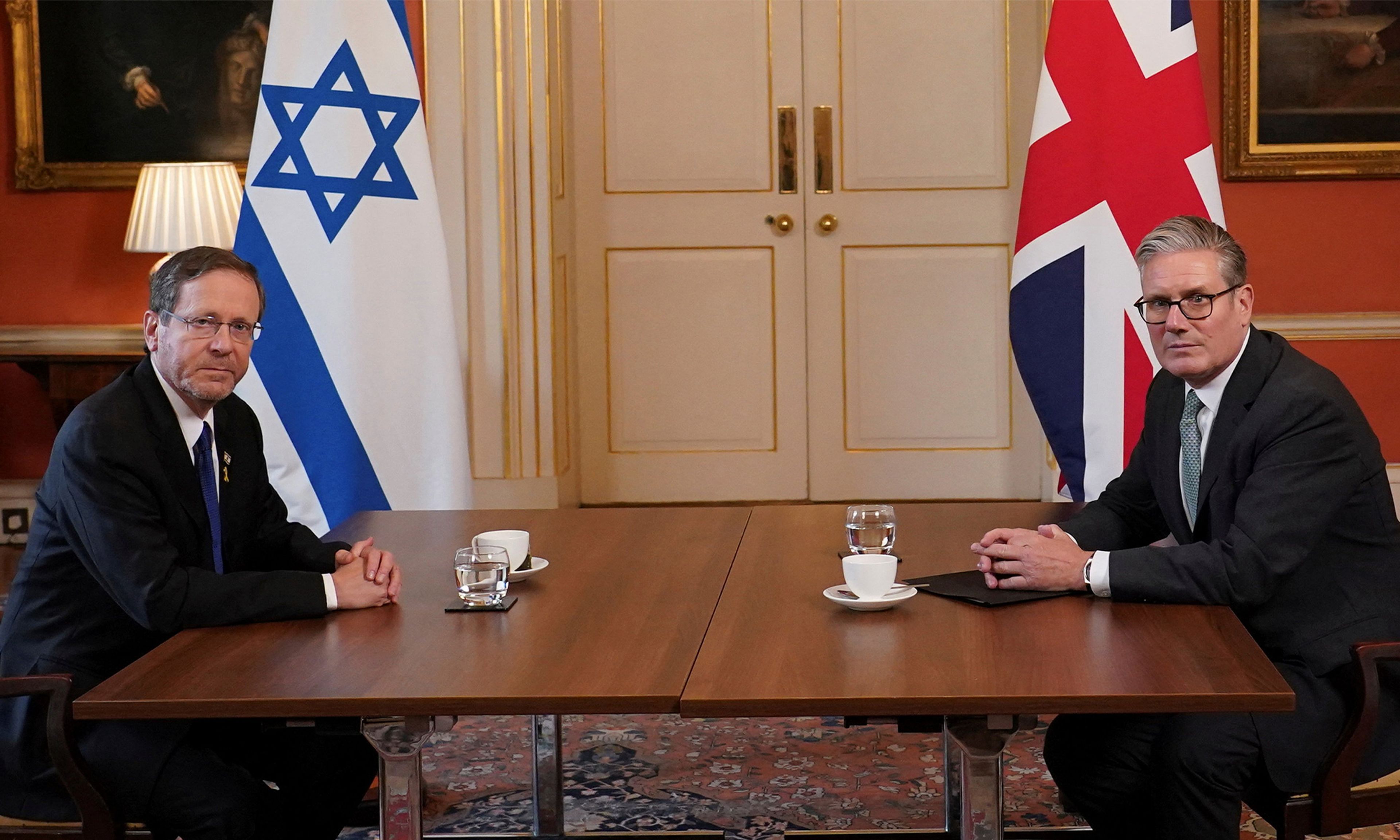
When Keir Starmer’s Labour Party won the July 2024 election, one could have been forgiven for thinking that his government’s stance on Israel would not differ much from that of his Conservative predecessor, Rishi Sunak. For many months after the October 7, 2023, attacks, Starmer, as Labour leader, had stood by Israel’s right to defend itself and refused to dance to the tune of the far left despite relentless criticism. But in March 2024, Labour reported that it had lost 23,000 members, in large part owing to the party’s stance on the war in Gaza. In the traditional Labour stronghold of Liverpool, posters declaring that “a vote for Labour is a vote for genocide” were plastered on walls and lamp posts.
When Starmer took office, the U.K.-Israel relationship was still flourishing, with the countries having agreed in spring 2023 to a “roadmap” document for enhancing cooperation in areas such as trade, tech, and health. More important, the roadmap also elucidated how the U.K. and Israel could work together to contain a national security threat from the Islamic Republic of Iran. MI5 has confirmed that, since 2022, U.K. security services have foiled 20 “potentially lethal” regime-backed terrorist attacks in the U.K., the most recent of which, in May of this year, was a plot to blow up the Israeli Embassy in London. The opening statement of the roadmap document, “The bilateral relationship has never been stronger,” was, at the time, undoubtedly true.











Comments