
• We prefer to assume the Republicans have just finished phase one of a rope-a-dope strategy.
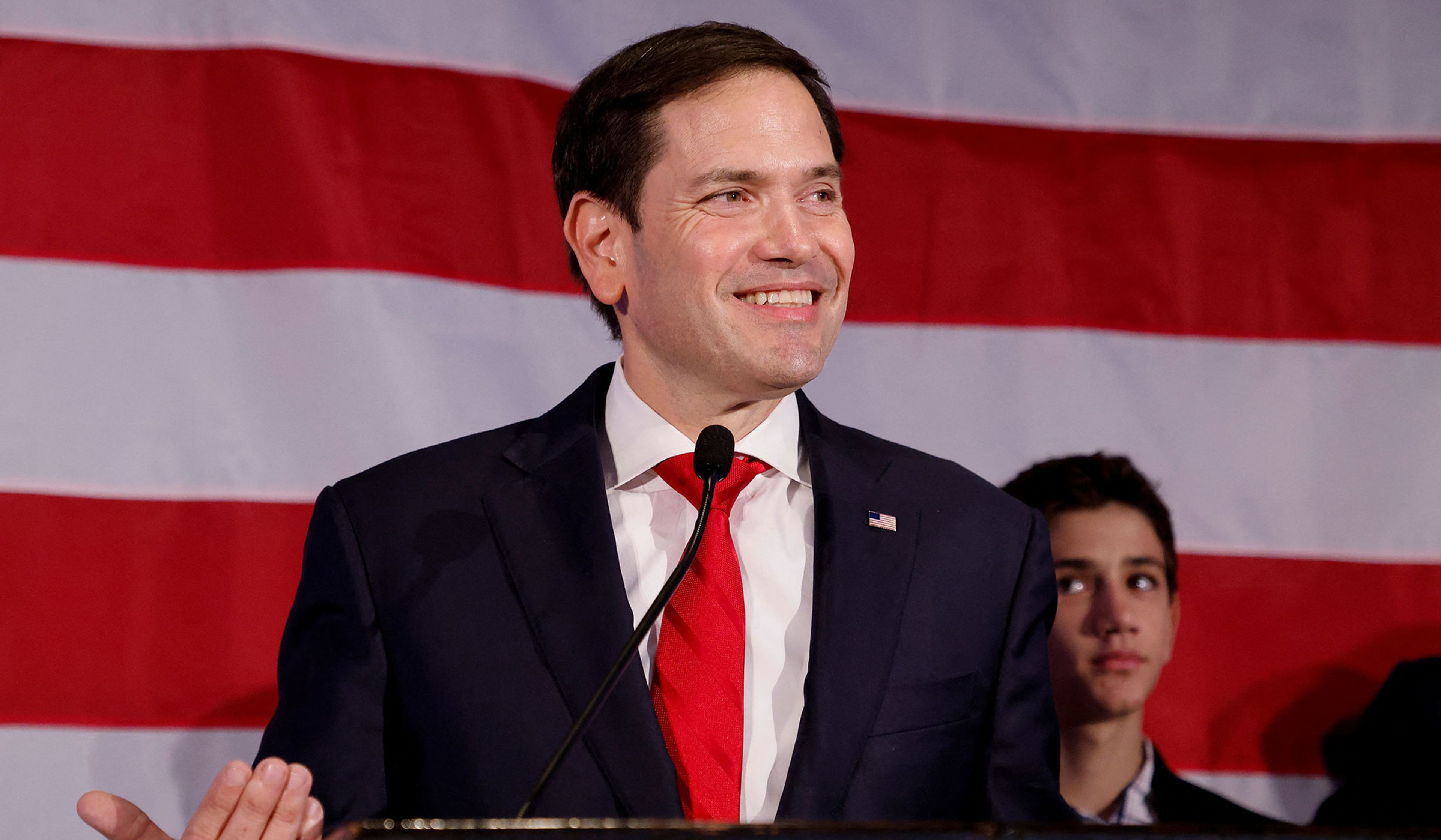
• Long an archetypal “swing state,” Florida has produced nail-biter elections on a regular basis for decades. This year, it did the opposite. In 2018, Ron DeSantis won the governorship by 0.3 percentage points. On Tuesday, he won reelection by 20. In 2018, Rick Scott won his Senate race by around 10,000 votes. On Tuesday, Marco Rubio won by well over a million votes. The rout was comprehensive. Every single Republican candidate for statewide office won — all by ten points or more; the GOP was set for supermajorities in the state senate; and it took 20 of the 27 races for the federal House of Representatives. In the process, Republicans flipped Miami-Dade County (which Hillary Clinton took by 29 points and Joe Biden took by seven) as well as Palm Beach County, Osceola County, Hillsborough County, Duval County, and Pinellas County (Charlie Crist’s home) — all of which went for the Democrats in 2020. This was a landslide, a sweep, a zipping — the overdetermined result of good governance, solid party organization, friendly in-migration, Covid-era frustrations, and a Democratic Party that has all but given up in the state. “Swing state”? That’s now an open question.
• Donald Trump’s life for the last two years has been consumed by efforts to avenge the sting of his 2020 loss. Three days before this year’s election, at a rally in the key state of Pennsylvania, he took a swipe at DeSantis, bestowing on him a Trumpy name (“Ron Desanctimonious”), evidently for the crime of possibly challenging him for the 2024 presidential nomination. If you were a Republican or a conservative interested in winning a Senate seat for partisan or ideological reasons, this was a misstep. If you were Trump, it was a true step in the only race that counts, the quest for ego sustenance. GOP voters: Don’t say you weren’t told.
• Brian Kemp was reelected as Georgia’s governor. Though his margin of victory was large, his win was not inevitable. Donald Trump made it a mission to defeat him after he refused to play along with Trump’s stolen-election nonsense in 2020. Trump endorsed David Perdue, the former Georgia senator, in the Republican primary. Going up against the former president, who remains the most prominent personality in the Republican Party, was no small task, but Kemp conducted his campaign with considerable skill. He split Perdue’s supporters in the primary and consolidated the state’s GOP fundraisers behind him. When the primary ballots were counted, he had won roughly three-quarters of them. Then he turned his fire on his second-time Democratic general-election opponent, Stacey Abrams, touting his record as a tax-cutting, pro-life conservative who stood up to the Left in the controversies about Covid restrictions and Georgia’s election law. While other Republicans were relying on the national environment to carry them across the finish line, Kemp was methodically exploiting every weakness of Abrams and touting every achievement of his own to any Georgian who would listen. The voters did, and they rewarded him with a landslide victory.
• Democrats are crowing that the backlash to Dobbs helped them salvage the midterms. Elsewhere in this issue John McCormack reviews the evidence and persuasively concludes that they are overestimating this effect. Note, though, that even the Democratic interpretation amounts to finding the virtues in a new status quo in which there is no federal abortion right — and, unless the Democrats sweep in 2024, none in the offing. Constitutionalism and the right to life have won an important, if partial, victory, and the conservative task now is to defend and extend it.
• The 2022 elections provided yet more evidence of an unfortunate attribute of much of modern American voting: greater lags in the time required for final results to come in. This would be annoying in itself. Add to this the combination of greater attention paid to results as they roll in, the necessarily limited transparency of the voting process itself, and the frequent pattern in which large tranches of Democratic votes get counted last, and you have a recipe for suspicion, easily exploited by demagogues. It doesn’t have to be this way. Following the embarrassment of the 2000 election, Florida reformed its voting processes in such a way that its results are now often some of the earliest known in the country. Pre-canvassing ballots, getting rid of incompetent officials and ensuring that those who remain have adequate resources, preventing judicial extensions of voting deadlines, and setting appropriate limits on registration would help. Republican state legislatures should not mandate delays to the start of vote-counting, as some have done. And sclerotic blue jurisdictions such as New York and California, where vote-counting often takes weeks after Election Day, are in most dire need of reform. If we can’t count the votes faster, there will only come more mischief from both sides.
• At a pre-election meeting with supporters, President Biden spoke of student-loan forgiveness as “a law” that he got passed “by a vote or two.” It was in fact the result of executive action, with which Congress had nothing to do. “It is frightening,” commented one pundit, “that Biden does not know, or remember, what he recently did regarding an immensely important policy. He must be presumed susceptible to future episodes of similar bewilderment. He should leave the public stage on Jan. 20, 2025.” The pundit was not a Russian bot or an RNC staffer, but George Will, the Washington Monument of judicious conservatism. Biden’s boasts and flubs are an extension, however extreme, of a lifelong series. But if the soon-to-be octogenarian president is stepping into the grayland of mental erasure, then party elders — meaning, primarily, Barack Obama — must begin considering his endgame.
• A crazed nudist illegal immigrant, residing in storage units in Berkeley, broke into the San Francisco home of Nancy Pelosi. His latest drug of choice was Q-ish conspiracy theories, so he decided, as one would, to confront the speaker and demand that she tell him “the truth.” She being in D.C., he found only her 82-year-old husband, Paul. When the cops arrived after Mr. Pelosi managed a covert distress call, the intruder hit him in the head with a hammer and fractured his skull (he has been released from the hospital and is expected to recover). The only appropriate response to this stew of madness and disorder is sympathy and best wishes for the Pelosis. Instead, winger Twitter lit up with speculation that this was a gay tryst gone wrong. Donald Trump Jr. posted a picture of his Halloween costume: men’s briefs plus a hammer. We sometimes remember malice when it is funny (Talleyrand, Wilde). Stupid malice, not so much. Buy a Joker mask next year, Junior.
• After what briefly appeared to be a surprisingly competitive reelection race against Evan McMullin, the independent who ran with the backing of the Democrats for Senate in Utah, Mike Lee has been handily reelected. Lee’s voting record has been exemplary: on judges, on guns, on spending, on federalism. A top-notch legal mind, Lee puts the Constitution foremost in his work as a legislator and has distinguished himself on the Senate Judiciary Committee. At a time of bombast and insults, his deportment has been invariably civil and courtly. McMullin, for his part, has been a shape-shifter whose campaign against Lee was based almost entirely on text messages Lee sent to Trump chief of staff Mark Meadows following the 2020 election that were made public by the January 6 Committee. Lee did not show the best judgment in the crisis, but he was insistent that Trump must have the law and the facts on his side in order to go forward. And when the time came for a decision on January 6, Lee properly voted to count all of Biden’s electors, insisting that Congress had no other constitutional choice. If Mike Lee didn’t exist, the conservative movement would have to invent him, and would be hard pressed to do so.
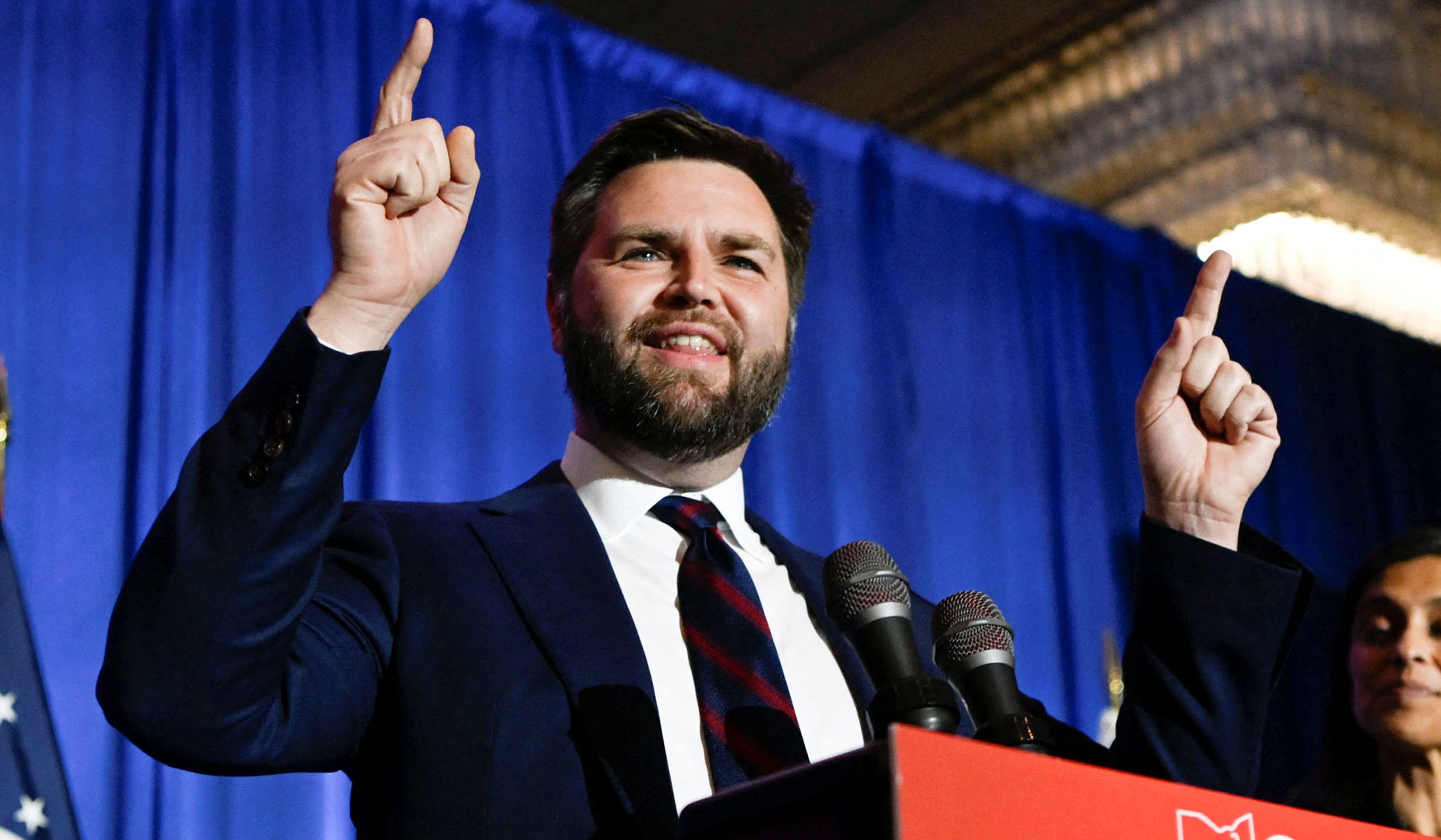
• Hillbilly Elegy author and venture capitalist J. D. Vance prevailed in his bid to represent Ohio in the U.S. Senate. Polls had shown the race tight through the summer and even most of the fall. But Vance managed to defeat Ohio Democratic representative Tim Ryan in the contest for the seat being vacated by Rob Portman. With help from Mitch McConnell, Vance won comfortably but not overwhelmingly — by less than Donald Trump’s margin in the state in 2016 and 2020, by far less than the margin of any other Republican seeking statewide office this year, and by a pittance compared with Portman’s margins in 2016 and 2010. But a victory is a victory. And there is evidence that Vance is capable of both thoughtful contributions to our civic life and decent character. At his best, he has excoriated elites for poorly serving working-class Americans — while also urging the latter to do what they can to better their own lots. At his worst, which was often during this campaign, he has tried to mimic Trump and promised to use government power to punish liberals. That got Trump’s endorsement, and thus the nomination, but even in a red state it limited Vance’s appeal. Let’s hope he is not done changing his mind.
• The Federal Reserve raised the federal-funds rate by 75 basis points for the fourth meeting in a row. The target window is now 3.75 to 4 percent, which is roughly the same as it was in 2008. That’s right: After almost a year of steadily rising interest rates, the federal-funds rate has only just now approached the level everyone considered normal before the Great Recession. Rates were near zero for so long that some seem to have forgotten what it’s like for money to have a price. Real interest rates remain negative, and inflation is still high. The Fed must continue to raise rates to restore price stability.
• Joe Biden seems to believe a conspiracy theory on gasoline prices. He believes that oil companies’ profits are too high and that they aren’t letting the price of gasoline go down. But they could keep prices artificially high only if they were colluding — which they lack the power to do. Oil companies do not set the price of gasoline. Gas stations do, and most of them are small businesses in a highly competitive market. Oil companies don’t even set the price of oil. Commodities traders do, and they are all over the world. The number of people who would have to be involved in a conspiracy to fix oil prices would be, conservatively, in the hundreds of thousands. Based on oil companies’ extraordinary profits last quarter, Biden has floated the idea of a windfall-profits tax. But nobody should make decisions, or accusations, based on one quarter’s numbers, even if they come out right before an election.
• Add another case to the file on unintended consequences of Covid lockdowns: alcohol-induced deaths. They increased by 26 percent from 2019 to 2020, according to a new CDC report — from about 39,000 to about 52,000, the fastest annual rise in over 40 years. Such deaths are two and a half times more common in men than in women, and the rate is highest for people aged 55 to 64. That people would struggle with addiction in the absence of community was predictable. We now have a sense of the magnitude of the lockdown effect, and it is harrowing.
• The Florida Board of Medicine and the Florida Board of Osteopathic Medicine voted to ban hormonal and surgical gender transition for minors, although those children already receiving hormonal treatment may continue. In other states, legislatures have banned the treatments, but lawsuits have so far prevented these laws from taking effect. Since the penalties in this case are professional as opposed to criminal — meaning doctors who violate the new rules could lose their licenses — the strategy should better withstand litigation. If it is successful, other states could follow suit. The state may be one of several governments that are leading the way to a humane consensus.
• Police in Bullhead City, Ariz., arrested Norma Thornton, 78, in March. She had violated a city ordinance. Anyone caught sharing food in a public park with the intent to perform an act of charity faces up to 120 days in jail, $1,431 in fines, and two years’ probation. “A PR nightmare,” an officer making the arrest can be heard saying on body-cam footage. Charges were dropped, but local officials warned her not to repeat the offense. She’s suing the city, seeking no financial damages but only a legal right to feed the poor. The law she broke was intended to encourage homeless and destitute people to go to shelters, but the demand for beds and meals in Bullhead City exceeds the supply. Hence Thornton’s initiative. The former restaurateur wishes to provide, gratis, a service that the law assumes is already sufficient to meet the need. What a specimen of bureaucratic sclerosis.
• On October 31, the Supreme Court heard oral arguments in the cases of Students for Fair Admissions v. Harvard and Students for Fair Admissions v. University of North Carolina. The cases present the Court with an opportunity to rule that affirmative action violates the 14th Amendment, the Civil Rights Act of 1964, or both. The Court has given us more than half a century of bad jurisprudence on affirmative action, including the 2003 case Grutter v. Bollinger, in which Justice Sandra Day O’Connor — nominated to the Court by Ronald Reagan — upheld affirmative action while suggesting that “25 years from now, the use of racial preferences will no longer be necessary.” It has been almost 20 years, and affirmative action hasn’t shown any signs of slowing down. If the law “does not pander to faddish theories about whether race mixing is in the public interest,” as Justice Thomas suggested in 2016, then it is time for the Court to put an end to affirmative action in college admissions.
• A jury in Wisconsin found Darrell Brooks guilty of all six counts of first-degree intentional homicide in connection with last November’s massacre-by-SUV at a parade in Waukesha. Brooks killed six and wounded dozens. At the time of his massacre, Brooks already had multiple cases pending in Milwaukee County, involving second-degree reckless endangerment and possession of a firearm by a felon. Just over a week before, he had secured a release from custody on a $1,000 cash bond after being indicted on several charges. (Milwaukee County district attorney John Chisholm, a Democrat, comfortingly said in the aftermath of the atrocity that his office would conduct a review of the “inappropriately low” bail recommendation.) Brooks also had an active warrant for his arrest in Nevada, where he was a registered sex offender. In 2006, he was convicted of statutory sexual seduction after he had sex with a 15-year-old girl and impregnated her, according to local police. The parade massacre was an avoidable tragedy and another example of the danger of permissive DAs.
• As NR reported online, Representative Don Beyer (D., Va.) fired a staffer for allegedly acting on behalf of the Chinese embassy. Congressional sources had told NR earlier that the staffer, Barbara Hamlett, had sent emails to, placed phone calls to, and even shown up at the offices of other congressional staffers to invite them to meetings with the embassy’s staff. Congressional staffers said Hamlett had described herself as a 34-year veteran of Capitol Hill, and according to her LinkedIn page she had come out of retirement three years ago to take a job as Beyer’s scheduler. It’s still unclear why she worked with the Chinese embassy to set up these meetings, but she clearly went about this work clumsily enough to be reported. We can’t count on every bad actor to be so careless.
• There has been another Israeli election, which will produce another Israeli government — headed by a familiar figure, Benjamin Netanyahu, who is back in power after 17 months out. For the sixth time, he will be prime minister. This time, he has allied with religious parties, including one led by Itamar Ben-Gvir, whose roots are in theocratic radicalism. Even some longtime backers of Netanyahu fear that this new governing coalition will be too extreme. “King Bibi” may have to preside more wisely than ever, in a country hot with factionalism, and facing the usual dangers from abroad — not least from Iran.
• In Brazil, there is good news and bad news. The good news is that the country’s democracy appears to be intact. President Jair Bolsonaro, who is right-wing, had indicated that he might try to find a way to stay on if he lost the election this year. He did lose it, very narrowly. And he has not conceded defeat — but he is cooperating in a transition. The bad news is that Lula da Silva, the leftist whose earlier presidential term was marked by surprising moderation but also rampant corruption, will be president again.
• After months of public speculation and back-and-forth deliberations, Elon Musk is officially the owner of Twitter. The tech billionaire’s $44 billion purchase of the social-media giant was finalized at the end of October. It caused hysterics and garment-rending in the progressive chattering class, and saber-rattling and threats of government retaliation from Democrats. They are alarmed for the same reason that many conservatives are optimistic: Musk’s advocacy of free speech on the platform, in contrast with the Twitter Trust and Safety Team’s ideologically skewed censorship of voices that dissent from the progressive line. But reorienting the entire company’s philosophy — as well as its business model, which will rely on paid subscriptions — will be no easy task. Some of Musk’s early moves were salutary: He fired a number of high-ranking Twitter executives, including CEO Parag Agrawal and senior legal representative Vijaya Gadde, a main architect of Twitter’s politicized content moderation in recent years. Others were ham-handed, as when some of the laid-off had to be sheepishly offered their jobs back. Musk’s stated goal of restoring free and open debate on Twitter is noble. Users of the platform should wish his success.
• Some employees of Penguin Random House have demanded that the company back out of publishing a book by Supreme Court justice Amy Coney Barrett. Along with hundreds of others in the publishing industry, they signed an open letter urging that Barrett’s contract be canceled on the grounds that, by joining in the majority opinion overturning Roe, she had committed an “assault on inalienable human rights.” Penguin Random House has refused to back down: “In an intelligent free society we need to disseminate ideas in a robust form so that we can discuss them,” a spokesman said, noting that the company’s goal is to publish books “so that people can read them, and evaluate them on their own.” If the letter-signers find such a prospect alarming, they might want to rethink their line of work.
• Kyrie Irving, of the Brooklyn Nets, tweeted a link to a “documentary,” Hebrews to Negroes: Wake Up Black America. The film, available on Amazon, tries to cast doubt on the Holocaust and asserts that African Americans are the true descendants of the ancient Israelites. In other words, not just Holocaust-denial but Jew-denial. It also falsely claims that Jews (who are not the true Jews, but whatever) controlled the American slave trade, and hits the standard Jewish-greed-and-power buttons. The Nets suspended Irving and compelled him to apologize. But the problem here goes beyond an NBA star and his beliefs, just as the recent antisemitic spoutings of Kanye West go beyond him and his. The documentary has become an Amazon best seller. Fans of these enormously famous figures are being taught dangerous lies.
• Bono, the lead singer of U2, told the New York Times in an interview, “The off-ramp out of extreme poverty is, ugh, commerce, it’s entrepreneurial capitalism.” Bono has been pushing back on the government-knows-best assumption behind much of developmental economics for years now. He personally knows how well capitalism can work (he’s worth around $700 million), but unlike other wealthy celebrities, he doesn’t think capitalism is only for him. Bono understands that the freedom he has to create music, sell albums, and make money from his work is the same type of freedom that all people need to prosper. Free markets allow people to find what they’re looking for.
• That pang of guilt that you’ve been trained to feel anytime you throw plastic in the garbage can instead of the recycle bin is unwarranted. Some on the right, such as the writer John Tierney, have been arguing against the efficacy of plastic recycling for years, but now even Greenpeace is admitting it doesn’t actually work. In a new report, the environmentalist group says that even the plastics best suited for recycling are less than 30 percent recoverable. When you factor in all the resources used in transporting, sorting, and processing plastics that recycling entails, the environmental payoff just isn’t there. That recycling plastics isn’t useful should have been obvious: If recycling added value, you’d be paid to do it. Other forms of recycling, as with metals, are profitable and beneficial; not plastic recycling. All those advertising campaigns to convince you that not putting a water bottle in the recycle bin makes you an animal-killer were for naught. Throw it away guilt-free.
• Ashton Carter worked in government, on and off, from Reagan through Obama. He was secretary of defense from February 2015 to January 2017. When he was not working in government, he was teaching at Harvard. He was born in 1954. He went to Yale, majoring in history and physics. He went to Oxford as a Rhodes Scholar and earned a doctorate there in theoretical physics. He knew a lot about nuclear weapons. And he was committed to a strong defense: the ability to deter potential aggressors, and the ability to win wars, if necessary. When he was defense secretary, he was often asked why he needed so large a budget. He would point to the threats of the day. Then he would add, “I am the secretary of defense not only of today but also of tomorrow, and I need to ensure that we are the best in the future.” Such a person is valuable, in a dangerous world. Ash Carter has died at 68. R.I.P.
• “There was rockabilly,” said Jerry Lee Lewis. “There was Elvis. But there was no pure rock and roll before Jerry Lee Lewis kicked in the door.” A stylist, Lewis called himself. He crafted and curated his image as a wild man, playing up the manner to which he was born. Expelled from Bible college — “for playing ‘God Is Real’ boogie-woogie–style,” he said — he worked as an itinerant musician before striking gold at Sun Records. “Whole Lotta Shakin’ Going On” shot to the top of the charts in the spring of 1957 and made the poor boy from eastern Louisiana famous and, for a season, rich. His career collapsed the next year when reporters discovered that he had married his 13-year-old cousin, his third wife. There would be seven. Lewis reinvented himself as a country musician and in 1970 recorded a gospel album. He often played standing, pounding the piano keys with his left hand, sweeping across them with his right, sometimes attacking them with his foot. His cousin the televangelist Jimmy Swaggart collaborated with him on a gospel album released earlier this year. Great balls of fire! Dead at 87. R.I.P.
• “Daniel Smith, 90, Dies,” read the headline in the New York Times. “Thought to Be the Last Child of an Enslaved Person.” His father was Abram Smith, born during the Civil War — 70 years old when Daniel was born in 1932. Daniel was born in Connecticut and went to Springfield College, in Massachusetts. He was one of very few black students there — but he was elected president of the student council. In 1963, he attended the March on Washington. In 2009, he attended the inauguration of America’s first black president, Barack Obama. He was long a federal employee, setting up health programs. He faced discrimination and violence. But he apparently never stopped believing in American democracy and the American promise. Upon his retirement in 1994, he volunteered as an usher at Washington National Cathedral. R.I.P.
• In the late 1990s, Lucianne Goldberg became a national figure, playing a role in the Lewinsky affair. It was Lucianne who advised Linda Tripp to tape Monica. Lucianne became a must-have guest on television — chatting with Larry King, for example. She relished the drama, or tragicomedy, and America was exposed to her wit, wisdom, and audacity. We refer to her as “Lucianne” — “Cher”-like — because everyone did. She was a literary agent and sometime politico. She was an adornment to New York society (before she became an adornment to American politics). Recently, her son Jonah circulated a photo of her with Mel Brooks, at Michael’s restaurant. Brooks has his arm around Lucianne, and both faces are full of laughter and delight. Lucianne Goldberg — inimitable — has passed away at 87. R.I.P.
Red Mist
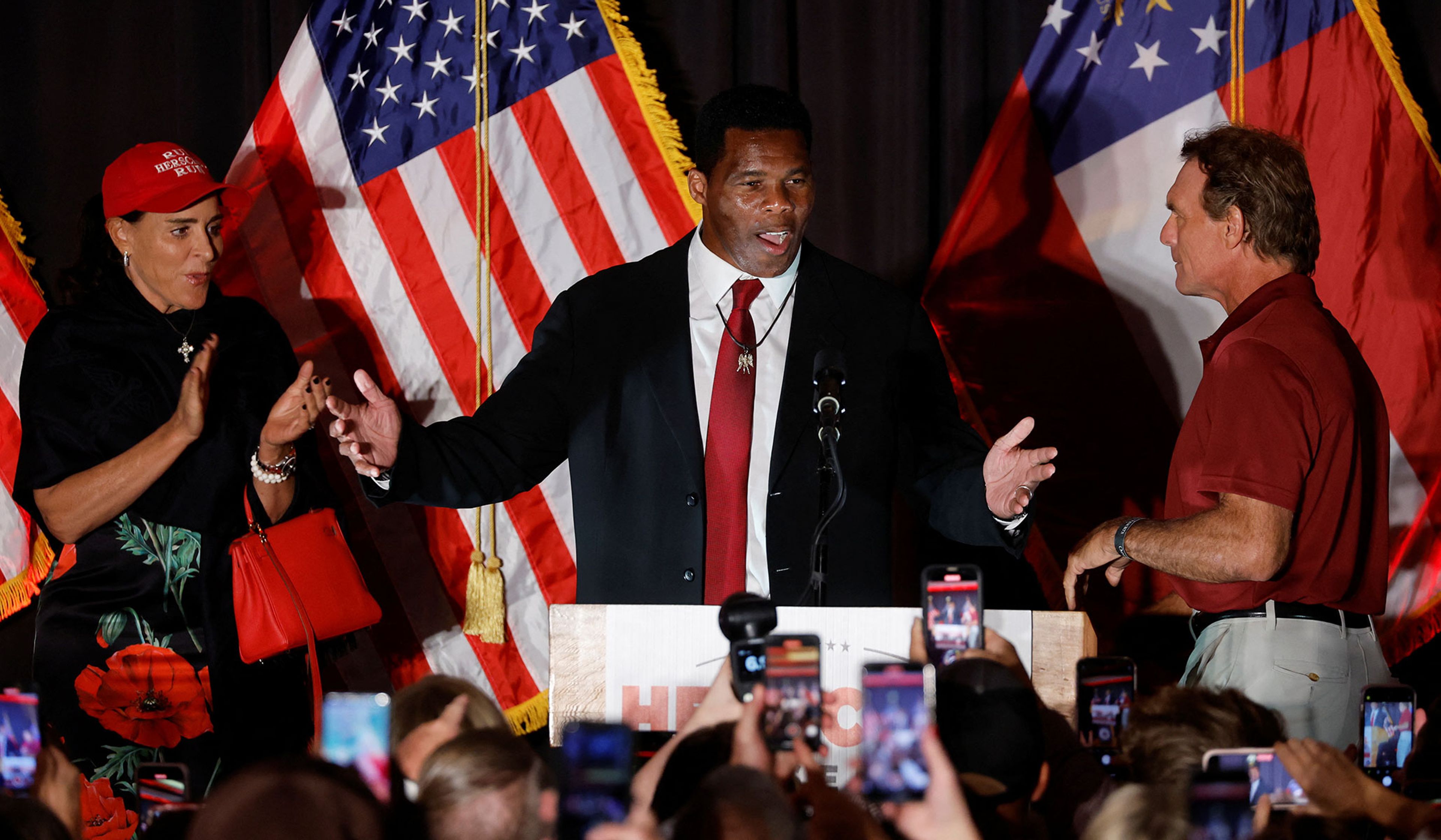
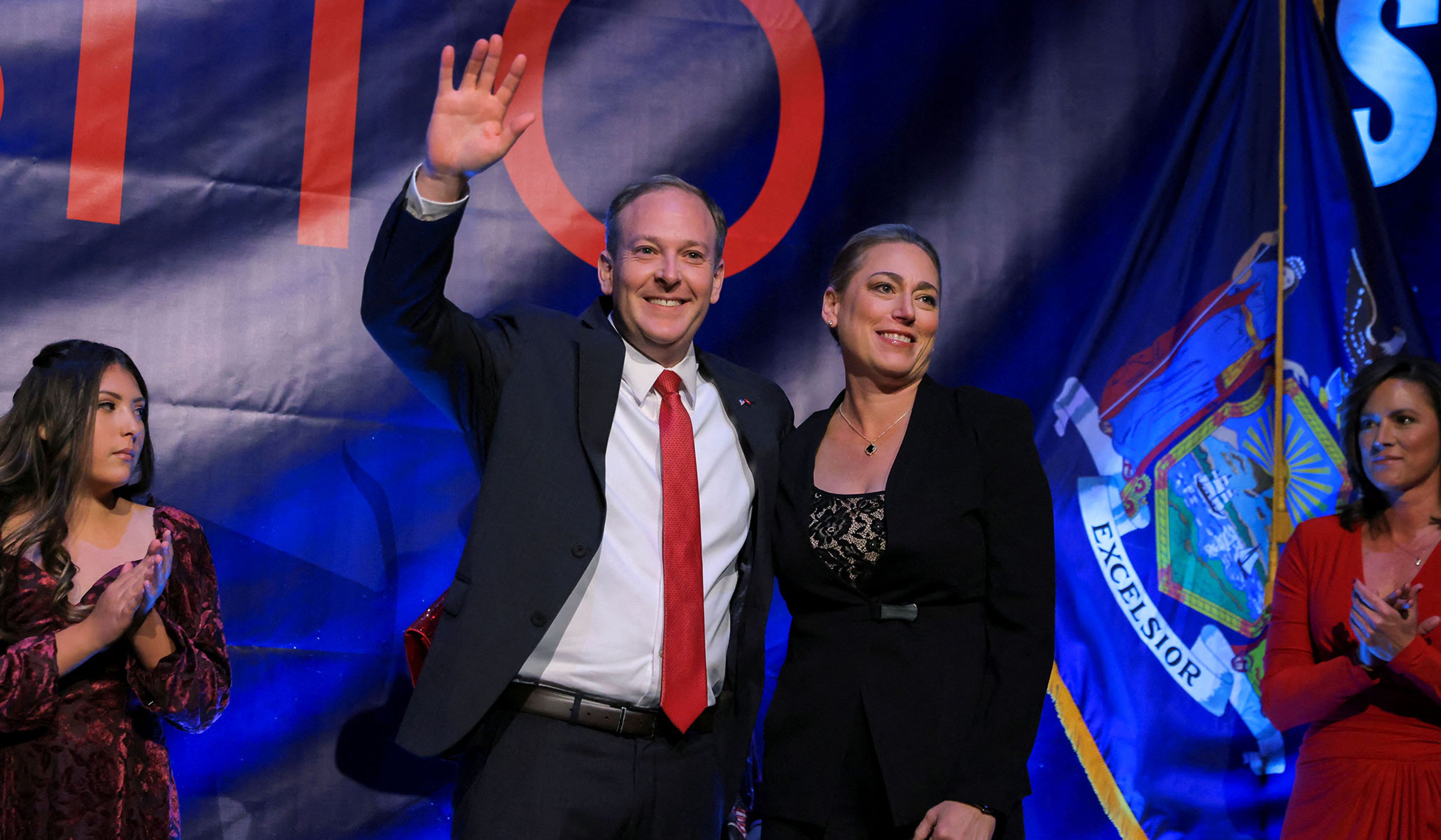
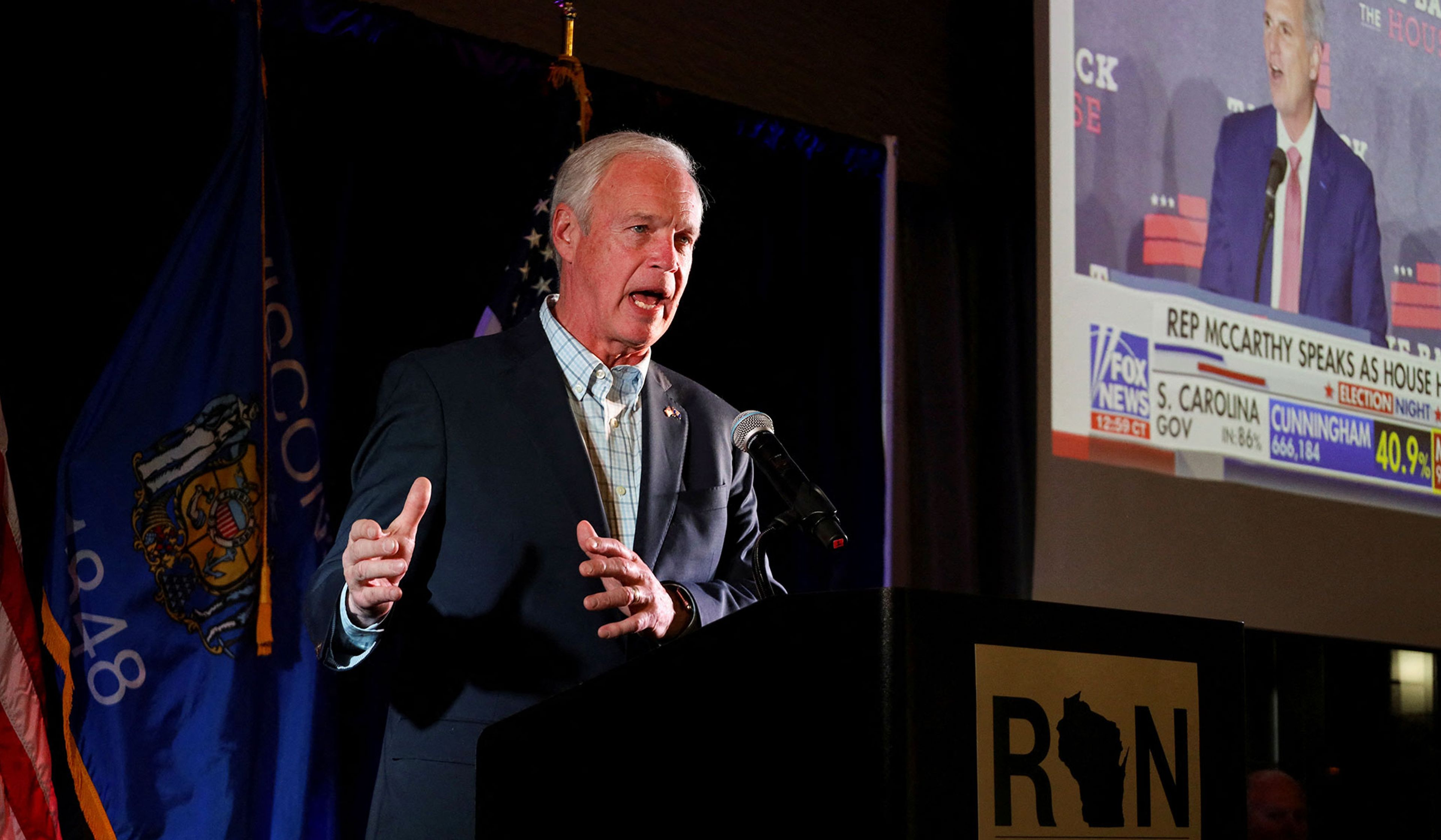
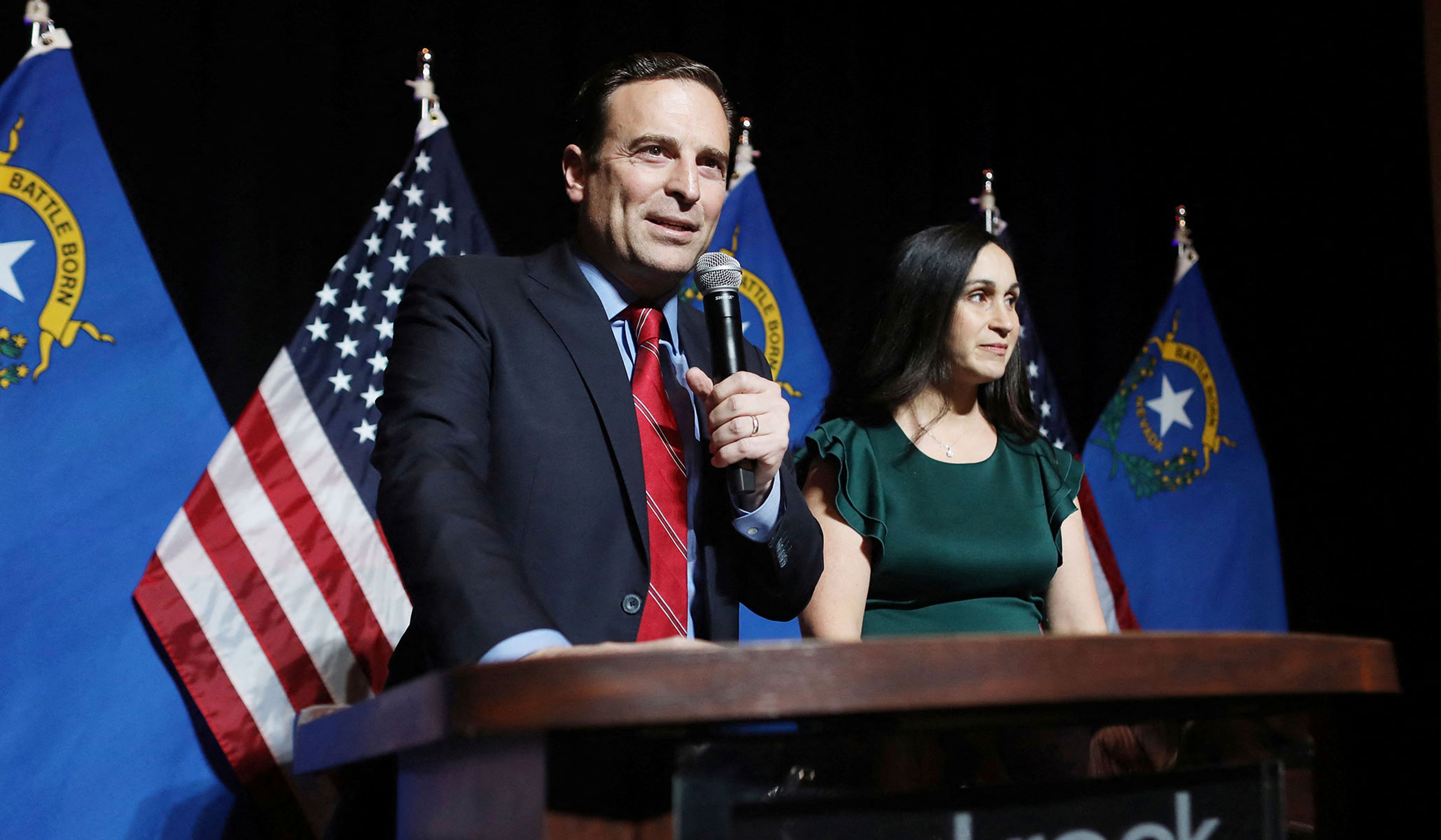
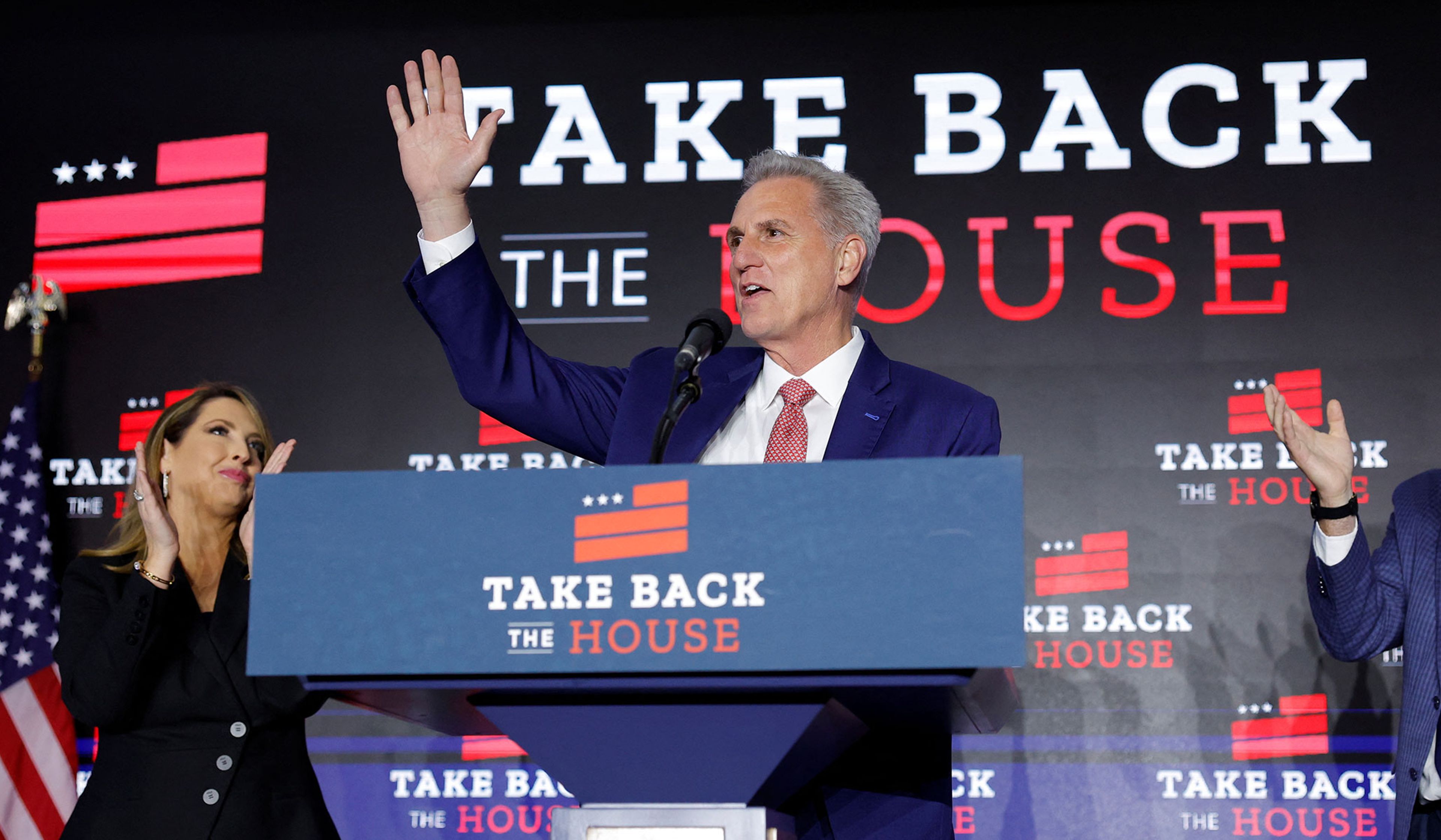
First, the good news, which will not take long to deliver. Nancy Pelosi’s reign as speaker of the House likely is coming to an end, and with it the Democrats’ partisan legislative ambitions. Florida seems to have become a red bastion, and Charlie Crist will go wherever chameleons retire. Stacey Abrams was moved to concede, albeit four years too late. Beto O’Rourke’s biggest win will continue to be the cover of Vanity Fair.
The bad news is more extensive. Republicans fell far short of their expected gains in the House and Senate. They may yet lose a seat in the latter. They narrowly lost governorships they could have won, and lost big in governors’ races that could have been competitive.
Worse, they forfeited winnable races by nominating novices, cranks, and candidates whose primary qualifications were belligerence and fealty to Donald Trump. With a serious nominee for governor and a better nominee for Senate, Pat Toomey’s Senate seat could have been kept. Any number of Republicans could, if nominated, have won the New Hampshire and Georgia Senate races or the race for governor of Wisconsin. A Republican who passed the test of normality could have performed better in the Arizona Senate race. In Michigan, Republicans lost a seat after they booted Representative Peter Meijer in the primary for voting to impeach Trump after the Capitol riot, in favor of a Trump-backed candidate. Although the seat was redistricted in favor of Democrats, it’s worth remembering that Meijer beat the Democratic representative-elect, Hillary Scholten, by six points in 2020, a much less favorable year for Republicans.
The Republican winners of this election were governors such as Mike DeWine of Ohio, Ron DeSantis of Florida, and Brian Kemp of Georgia. They are a varied bunch. DeWine kept Covid restrictions longer than the other two, and DeSantis and Kemp have been tougher on woke corporations. What they have in common, besides incumbency, is a conservatism focused on voters’ priorities. All are pro-life: Those three signed new restrictions on abortion and won by landslide (DeWine, DeSantis) or solid (Kemp) margins. All have welcomed and courted the support of the working-class voters who have joined the party in the Trump years. But all three have political identities that are independent of Trump.
Rarely has an election had simpler and more obvious lessons. Whether Republicans want to learn them is, alas, not obvious.
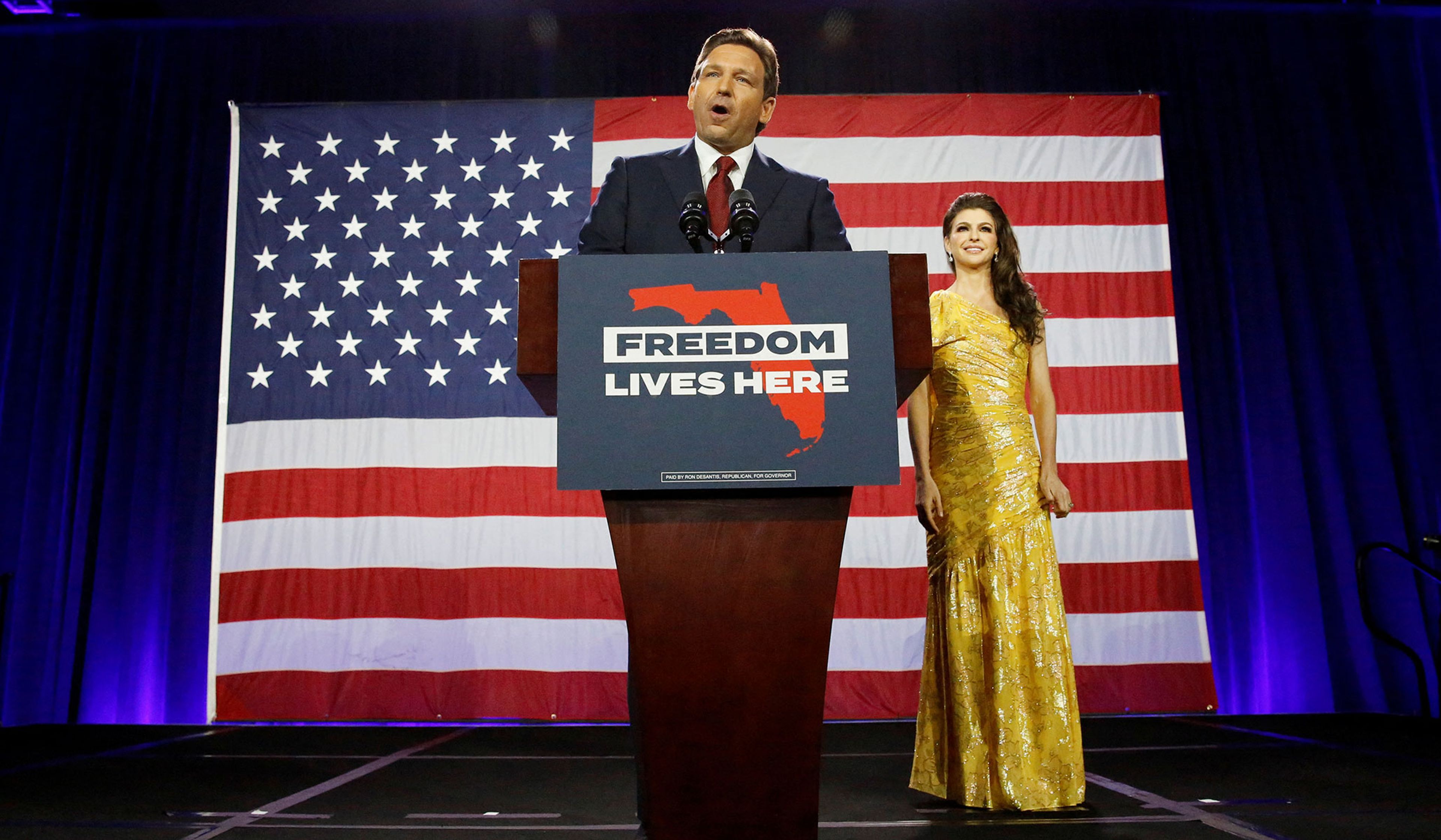

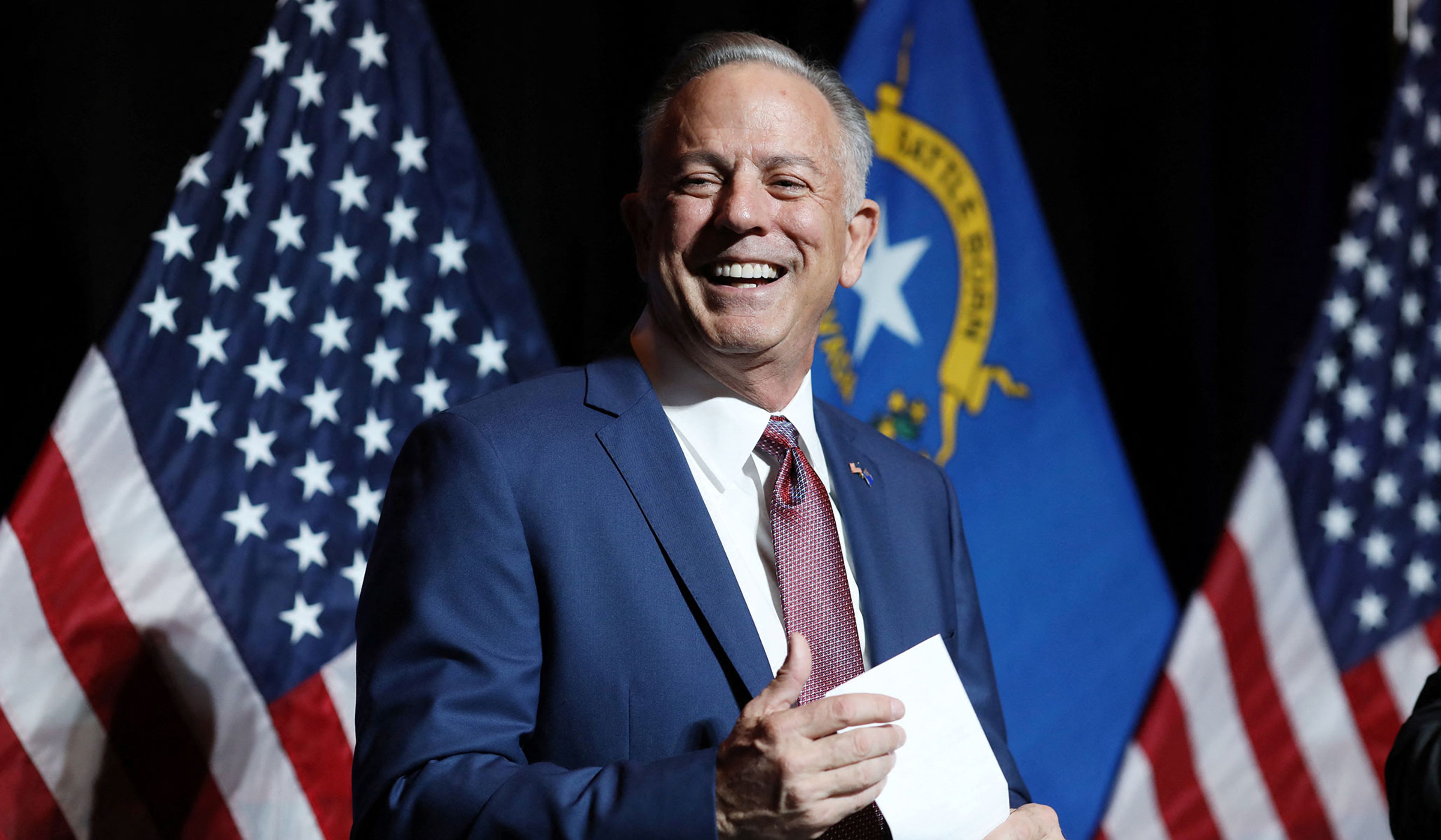
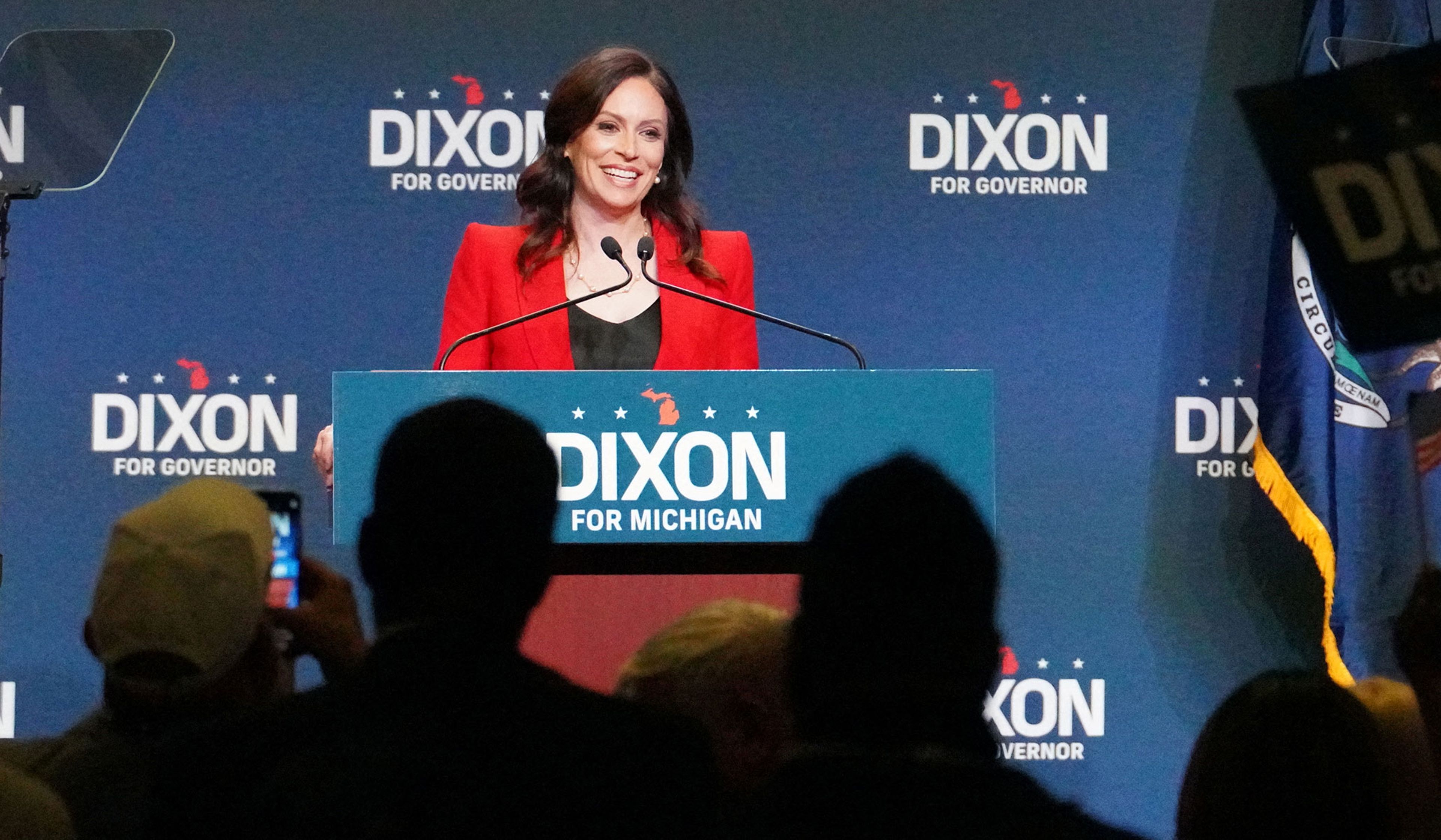
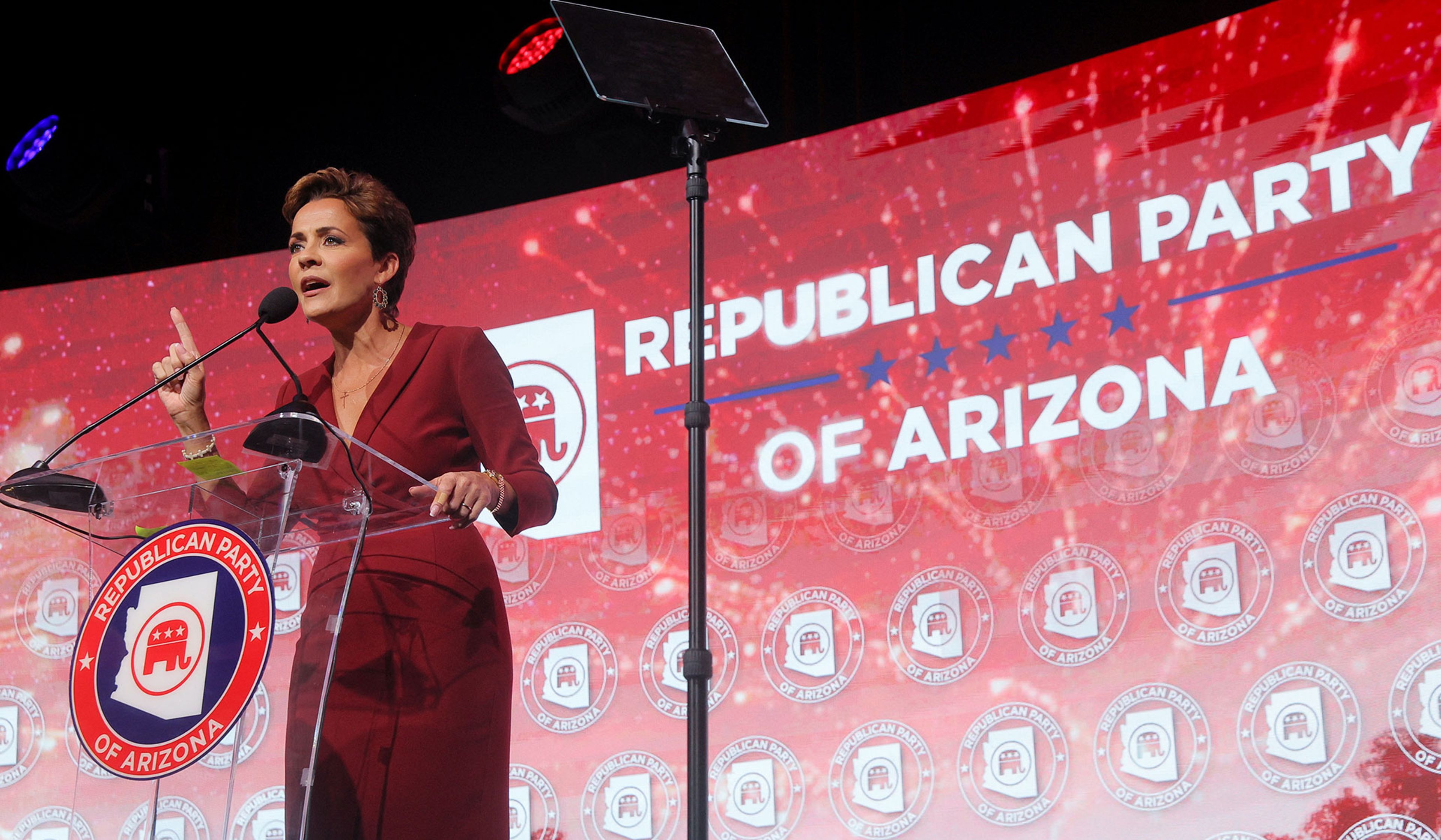
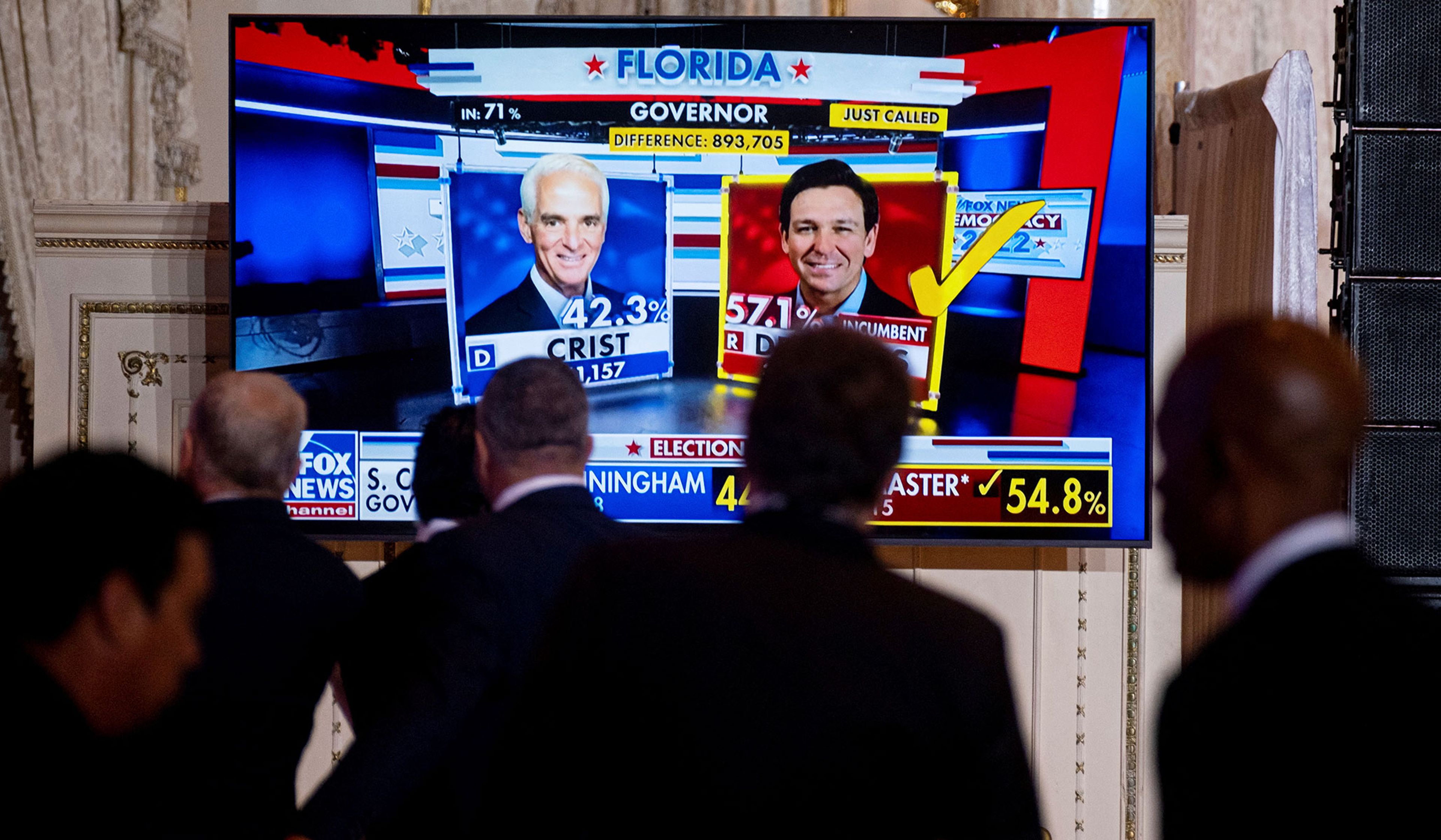
Florida Governor Ron DeSantis speaks with his wife Casey at his side during his election-night party in Tampa, Fla., November 8, 2022.
Marco Bello/Reuters
Uneasy Alliances
One of the chestnuts of 19th-century American verse was “Barbara Frietchie,” by John Greenleaf Whittier, recounting the story of an old Unionist who waved the Stars and Stripes from her window even as Confederate invaders marched through her Maryland town. Moved by a chivalrous impulse, Stonewall Jackson ordered his men to spare “yon gray head.”
No such luck for Tetiana Mudrenko, a 56-year-old nurse in the Ukrainian town, occupied by Russia, of Skadovsk. After telling Russian soldiers and pro-Russian locals that “Skadovsk is Ukraine!” she was hanged in front of the courthouse. The cause of death listed on the official certificate was “mechanical asphyxiation.”
Mudrenko’s lynching was a retail attack. In a wholesale attack, Russia has begun degrading Ukraine’s power grid, in hopes of inducing a nationwide Valley Forge this winter. European nations have responded with gifts of generators.
In the newly GOP House, Ukraine can expect no help from Marjorie Taylor Greene, the ubiquitous populist, who vowed at a Trump rally in Iowa that “under Republicans, not another penny will go to Ukraine.”
A different message was delivered by Frank-Walter Steinmeier, Germany’s president (that is, head of state). Steinmeier is an SDP politician and a veteran of Angela Merkel’s coalition governments, in which he backed close Russo–German relations. No longer. “When we look at today’s Russia,” he said in a speech after visiting Ukraine, “there is no place for old dreams.” Premature negotiations with Putin “would mean a rule of terror for many people in Ukraine. . . . Worse yet, a sham peace like this would only increase Putin’s hunger” for Georgia, Moldova, perhaps even the Baltics. Impressively for a German politician, he drew the real-world conclusion of his analysis. “This society needs strong armed forces. And the armed forces need a society that supports them.” Ukrainians and Russians, Germans and Americans, take note.












Comments