Roe v. Wade and Planned Parenthood v. Casey hang by the thin thread of “reliance.” Chip away at Casey’s assertion that women rely on abortion for their participation in economic and social life, and there is not much left of the cases that have distorted constitutional interpretation and held U.S. politics hostage for nearly 50 years.
The basic assumption underlying Casey’s account of “reliance interests” is that children are an impediment to women’s equality. To be the equals of men, women need to engage in market work at the same rate and pace as men do. But the market requires unencumbered workers; ipso facto, women must be unencumbered to participate, free from the demands of pregnancy and child-rearing. Baked into this view is a materialist account of sex equality that elevates the goods of the market above the culturally essential formation of persons and families, which makes healthy markets possible.
But to undermine Casey’s reliance claim, we need not even make this larger philosophical case. Casey’s account of abortion reliance fails even on its own grounds. To understand why, we ought to focus in on the key passage in Casey:
For two decades of economic and social developments, people have organized intimate relationships and made choices that define their views of themselves and their places in society, in reliance on the availability of abortion in the event that contraception should fail. The ability of women to participate equally in the economic and social life of the Nation has been facilitated by their ability to control their reproductive lives.
The Court makes two claims here: one as regards the interplay of abortion and contraception, the other as regards women’s equal participation in economic and social life. These two are interconnected, but we would do well to decouple them for a spell, to look more closely at each and ask whether reliance upon the right bestowed in Roe is as good for women’s social and economic equality as the Casey Court presumes.
At first glance, the relationship between contraception and abortion seems straightforward: No contraceptive method is foolproof; therefore, for women to “control their reproductive lives,” abortion must be readily available as a backup. And yet, the truth is not so simple.
Economists tell us that the contraception–abortion relationship is a basic lesson in moral hazard: Easy access to abortion disincentivizes people from guarding against the risk of pregnancy inherent in sexual intercourse. And this makes sense of data on abortion rates over the decades: In the period just after Roe, when abortion was made readily available, abortion rates spiked, and not only because women could access, overnight, a procedure that had been more or less legally prohibited; rather, with abortion available as a backstop to contraception, individuals engaged in more sexual risk-taking. And, lo and behold, more risk-taking resulted in more children conceived, and increasingly outside of marriage. Thus, after Roe, greater numbers of women aborted, but the nonmarital birth rate exploded too, for not all women are willing to end the lives of their children. Ironically, in the world that Roe created, the risks of sex — and the responsibilities of having children — have been assumed disproportionately by women. For far too many men, children are no longer part of the sexual bargain.
But after Casey permitted states more leeway in regulating abortion, abortion rates fell, and not only because the procedure became marginally more difficult to procure. People changed their sexual behavior as a result of a change in the laws. As University of Pennsylvania economist Jonathan Klick summarized the econometric studies on abortion policy and sexual behavior: “Individuals, even young individuals whose sexual behavior is often considered to be driven more by emotion than by calculation, are sensitive to the costs of the sexual activity. When those costs increase, . . . individuals engage in less risky sex.”
Following this logic, were Roe overturned and abortion more restricted, people would take greater care to avoid sex when they do not want a baby. Or they would otherwise seek effective technological means to decouple sex from baby-making. Indeed, in the wake of the Texas heartbeat law, we’ve seen proof of concept (at least on social media): “Abortion is banned in Texas: sex strike!” or “Abortion is banned in Texas: contracept!” This is all to say that those urging more consistent contraceptive use would do well to recognize that “relying” on abortion as a backstop is harming their cause. Alan Guttmacher, president of Planned Parenthood when the organization was still anti-abortion and pro-contraception, saw this clearly in the years before Roe: “When an abortion is easily obtainable, contraception is neither actively nor diligently used.”
If “organiz[ing] intimate relationships” in “reliance” on abortion isn’t working very well for “reproductive control,” it is not likely to be “facilitating” women’s advancement, either.
The very idea of relying on abortion for women’s equality would seem to have a rather nefarious historical analogue. When Elizabeth Warren, then a Democratic presidential candidate, hailed abortion rights as “economic rights,” and when both state officials and corporate consultants speak of the business case for abortion, is not the logic eerily parallel to how Democratic legislators in the South justified slavery? Slaveholders “relied” on enslaving black human beings for their economic well-being; women workers, we are told, rely on ending the lives of their unborn children for the same.
But the Casey Court didn’t make the case, and in the decades since, there is no good evidence for the Court’s assertion that abortion is necessary for women’s advancement. While there is no doubt that lower rates of fertility do correlate with higher rates of education and employment for women, there is no evidence that abortion (rather than fertility regulation of various kinds) is specifically correlated with women’s astonishing educational and professional advances over the decades. Anti-discrimination law had already begun to remove legal impediments to women’s full participation in economic and social life before Roe. And as abortion rates have fallen precipitously in recent decades, women’s extraordinary gains have continued apace.
And yet, Roe and Casey — and the equality arguments that pro-choice feminist scholars and politicians employ in support of them — bear some blame for the fact that workplaces remain deeply inhospitable to women (and increasingly men) with children. Rather than challenge workplace norms head-on, the decades-long quest for unfettered abortion feeds into the model of the ideal male worker who is beholden to no one but his boss. If abortion is what enables women to participate in the workplace, then perhaps costly accommodations, flexible work schedules, and part-time-pay equity are not so necessary.
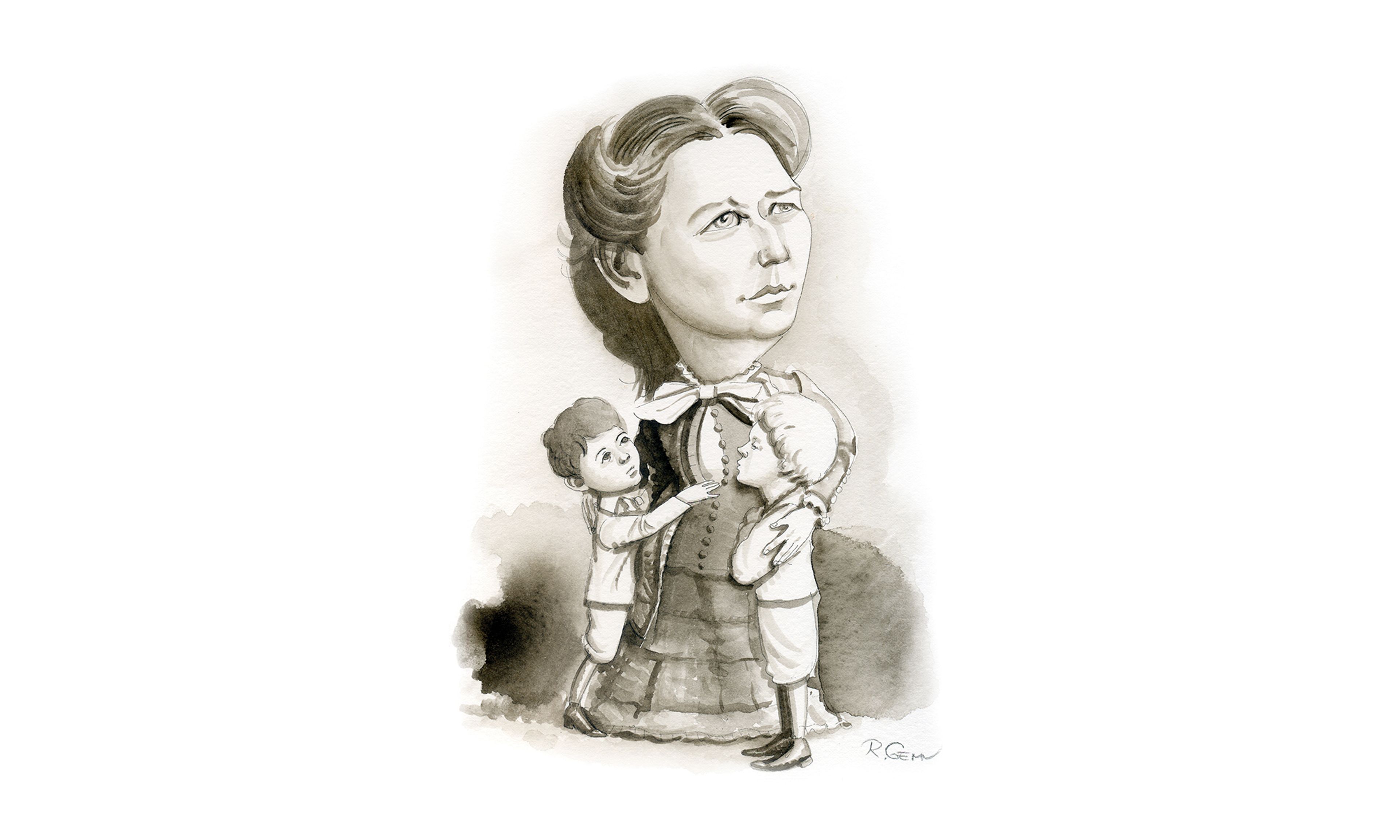
The earliest women’s-rights advocates in this country knew that for women to participate more fully in the economic and social life of the nation, the nation would need to become far more hospitable to children and the women who bear them. The first woman to run for president of the United States, in 1872, was not only an outspoken advocate of constitutional equality for women, she also advocated the rights of children — rights that, as she said, “begin while yet they remain the fetus.” Victoria Woodhull and the women’s-rights advocates of her time knew what 1970s feminist advocates of abortion would come to forget: The advancement of women will be possible only when the dignity of their children, born and unborn, is protected.











Comments