You don’t want to be on Abigail Spanberger’s bad side. The Virginia congresswoman, narrowly elected to a second term on November 3, was furious during an hours-long conference call with her fellow House Democrats. In a profanity-laced rant, she blamed the leftward tilt of her caucus for its surprising losses in the 2020 election. “We need to not ever use the word ‘socialist’ or ‘socialism’ ever again,” Spanberger told her flustered peers. “If we are classifying Tuesday as a success, . . . we will get f***ing torn apart in 2022.”
The Democrats who aren’t named “Joe Biden” or “Kamala Harris” have a lot to be angry about. They assumed defeat not only for Donald Trump but for all Republicans. They were wrong. At the time of writing, Republicans are expected to net about a dozen House seats. GOP House candidates won in the suburbs, in rural areas, and in majority-Hispanic districts in Florida and Texas. The savvy recruitment efforts of Republican House leader Kevin McCarthy paid off. He is now in a position to become speaker after the 2022 midterms.
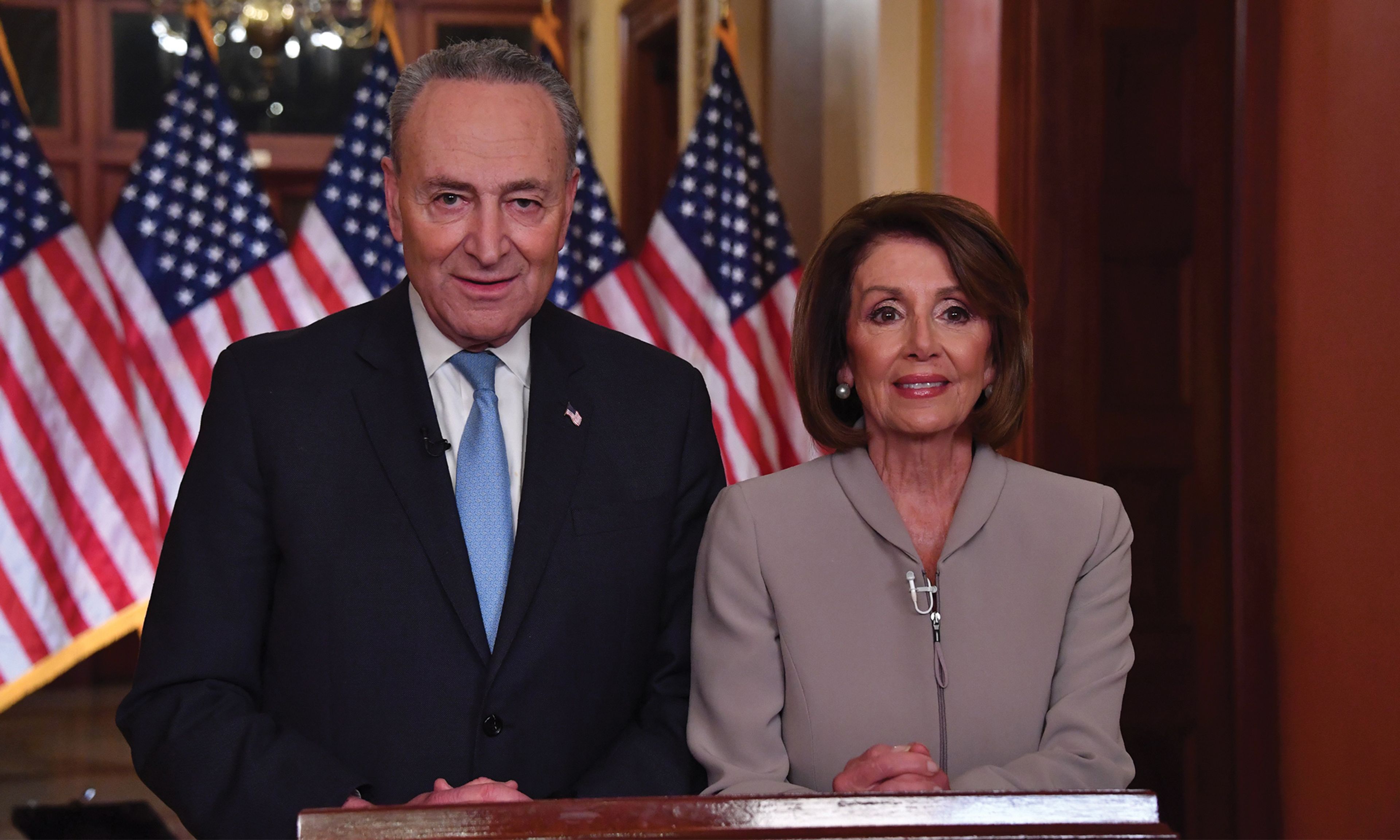
Nor are Senate Democrats any happier than their House colleagues. Chuck Schumer wanted the blue wave to carry him to the majority. But the wave fizzled out. Democrats will have to sweep the two Georgia runoff elections in January to give Vice President Harris the tie-breaking vote. Even in that case, the real power brokers still would be senators Joe Manchin (D., W. Va.), Susan Collins (R., Maine), and Lisa Murkowski (R., Alaska).
If Democrats wield the gavel, these three moderates might give Biden the benefit of the doubt on personnel appointments. But their generosity won’t extend to ending the filibuster, packing the Court, adding states, passing Medicare for All and the Green New Deal, and fulfilling other liberal dreams. The “bold structural reform” that some Democrats believed would give them power for a generation is not going to happen.
How did the Democrats reach this impasse? The party is split between its old guard and a woke social-justice Left whose media celebrity amplifies an agenda that spooks moderates, independents, and Republicans. Suburban and exurban Democrats such as Spanberger and Michigan’s Elissa Slotkin, who also won reelection, are stuck in the middle.
Collectively, the House Democratic leadership is older than the Constitution itself. Nancy Pelosi is 80 years old and has been in charge of House Democrats for 18 years. Steny Hoyer, the majority leader, is 81 years old. And House whip James Clyburn is also 80.
By contrast, the nation’s most famous freshman Democrat, socialist representative Alexandria Ocasio-Cortez of New York, is 31. Her three fellow far-left “Squad” members are all under 50. They’ll soon be joined by “Squad 2.0,” which includes Black Lives Matter activist Cori Bush of Missouri, who is 44, Jamaal Bowman of New York, who is also 44, and Mondaire Jones of New York, who is 33.
Pelosi has catered to the Left to insulate herself from a leadership challenge. Her reluctance to take on the Squad led to two miscalculations that cost the Democrats seats. The first was impeachment. It was the goal of the so-called Resistance since before Donald Trump took office. In 2019, when she became speaker for the second time, Pelosi authorized her committee chairs to launch the “subpoena cannon” and investigate the Trump administration relentlessly. Then, after the transcript of Trump’s phone call with Ukrainian president Volodymyr Zelensky was revealed that September, she allowed impeachment to proceed.
The debate consumed Washington for months. But impeachment was never as popular with voters as it was with progressives. It denied House Democrats in competitive districts the opportunity to rack up significant legislative accomplishments. The first session of the 116th Congress was characterized by exactly the sort of partisan brinkmanship that alienates swing voters.
The situation has not improved. The CARES Act, which provided emergency economic assistance at the outset of the coronavirus pandemic, was emergency legislation that passed both chambers of Congress overwhelmingly. But many progressives grumbled about its contents because of its generosity to businesses big and small. Ocasio-Cortez voted against it. Pelosi took this dissent into account when she stuffed her $3 trillion follow-up bill, the HEROES Act, with left-wing priorities.
It was enough to win Ocasio-Cortez’s vote. But the HEROES Act was a nonstarter in the Republican-controlled Senate. So Pelosi negotiated directly with Steven Mnuchin, hoping that the secretary of the Treasury would give in to her demands.
That was Pelosi’s second mistake. Last August, when the White House suspended talks, Pelosi sat on her hands, thinking President Trump would be forced to yield. He refused. Pelosi did not budge either. Toward the end of September, Spanberger and Josh Gottheimer (D., N.J.) organized a letter to the speaker from 23 at-risk House members. They were desperate for action. “It is essential that we send the Senate a compromise bill before the election that is reasonable and that can be signed into law by the President of the United States,” they wrote. A coronavirus-relief package, they continued, should be “our number one priority in the coming days.”
Pelosi resumed negotiations in early October. But she did not settle for a smaller bill or for a series of piecemeal bills addressing specific industries. Her reluctance denied endangered congressmen a policy win, however meager. If there is a second coronavirus-relief package by the end of 2020, it will come too late to save those House Democrats who have lost their seats.
The smaller and more progressive House Democratic majority will present multiple challenges for Pelosi. She may want to put her former nemesis, John Boehner, on speed dial. Like Boehner, Pelosi may face a serious rival for the speakership. She certainly will have to deal with the rising expectations of the left wing of her party. And she will have to mollify the Left’s disappointment and anger when its grand designs are thwarted by a closely divided Senate and a president preoccupied, at least for the next year, with the coronavirus.
That president, for all his many faults, may be the one man who stands between Democrats and minority status. Given the results of this election, it is not at all clear that any of the other potential Democratic nominees would have defeated President Trump. The public not only rejected Trump’s personality. It also blocked Alexandria Ocasio-Cortez’s policies.
Biden will be the oldest president in American history. At times, he has described himself as a transitional figure. And he selected as his vice president the most left-wing member of the Senate. Today’s Democratic Party resembles nothing so much as an aging and sclerotic aristocracy facing continual revolt from youthful and energetic Jacobins. In 2020, the common sense of South Carolina primary voters kept the radicals in check. But for how long? Democrats beware: Après Biden, le déluge.












Comments