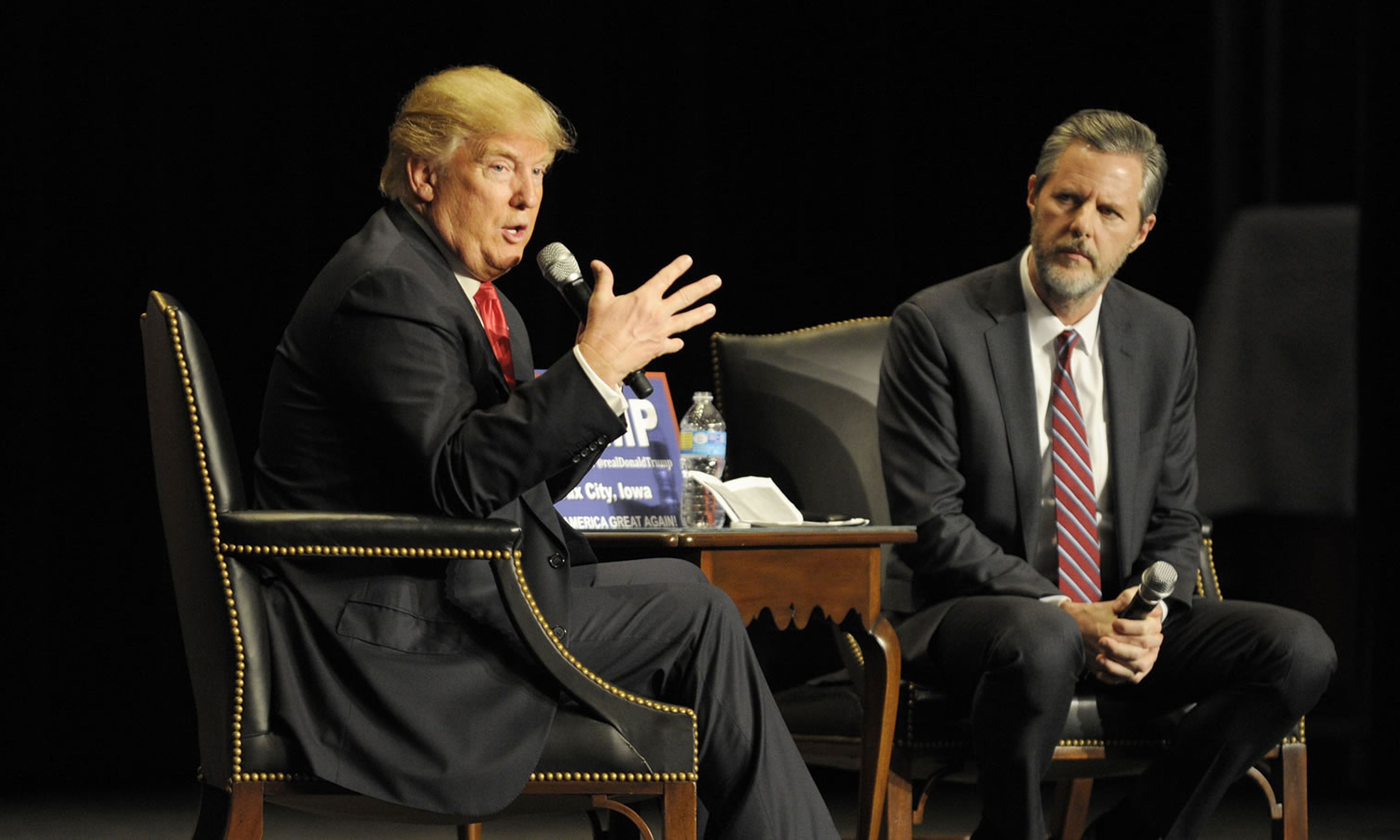
In June, Jerry Falwell Jr., president of the largest Evangelical university in the world (Liberty University; total enrollment: 110,000-plus), took a grinning picture with Donald Trump, then the presumptive Republican presidential nominee, in the real-estate magnate’s Manhattan office. Behind them, clearly visible on the wall, was a much younger Trump, tuxedoed, smirking from the cover of a 1990 issue of Playboy. The judgments of the Lord, it is said, are righteous and just. They are also, on occasion, delivered with a wicked sense of comic timing.
Suffering a series of grievous blows in recent years, culminating in the Supreme Court’s 2015 decision mandating official recognition of same-sex marriage nationwide, the traditional “religious Right” has been in its final throes for some time. The embrace of Donald Trump — an uncouth, unrepentant serial adulterer and alleged sexual abuser; a businessman who’s bullied widows and stiffed workers; and an apologist for brutalities in China and Russia — is its death rattle. But it may also be the occasion for a new, reinvigorated relationship between conservatives and orthodox Christians, refashioned for an America whose religious commitments are dramatically changed.











Comments