Protectionism Revisionism
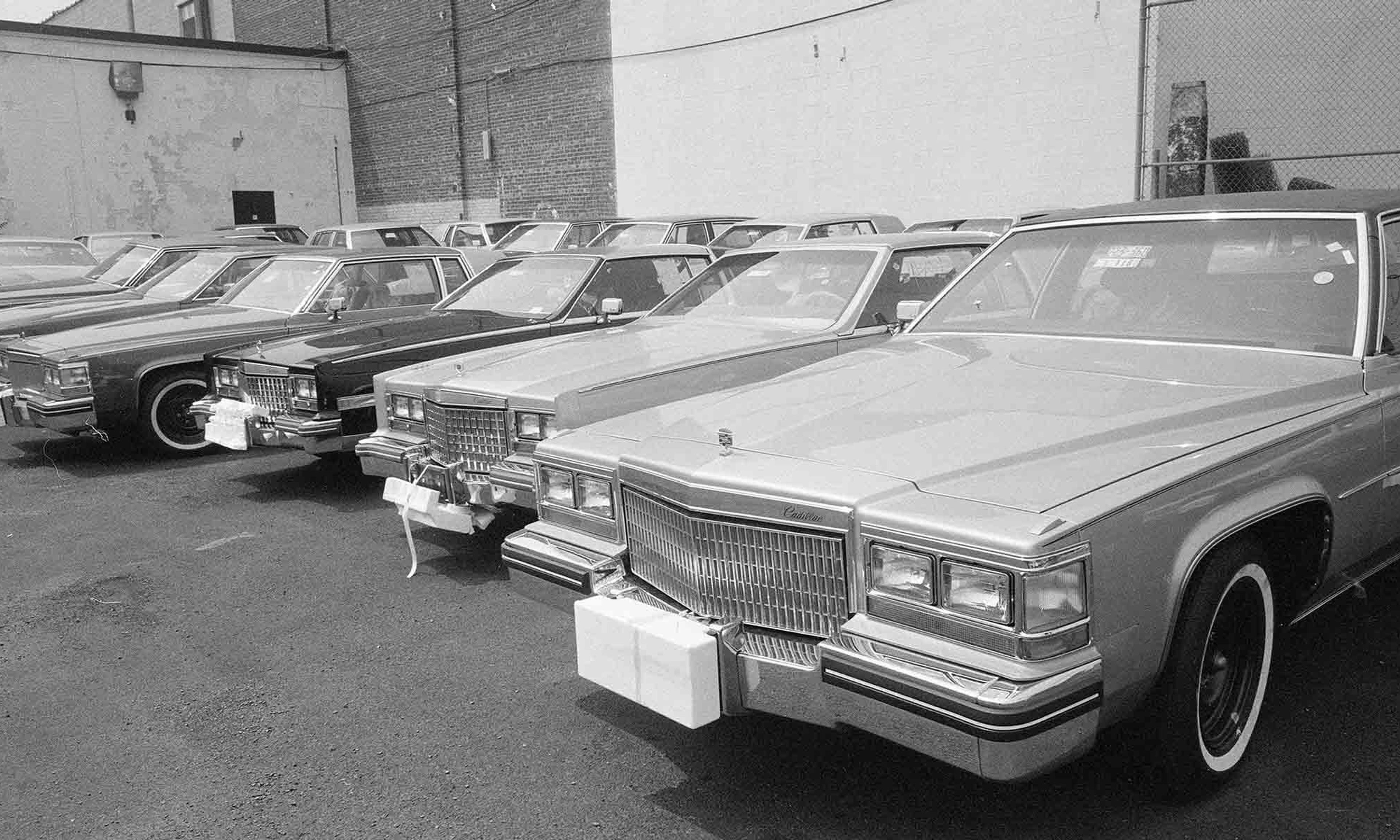
When I grew up in the late 1980s, there were a few universal truths: Guns N’ Roses rocked; Elle Macpherson was otherworldly; and American-made automobiles were to be avoided. Imagine my surprise to have read that the 1980s were actually a golden age of American automotive manufacturing — thanks, of course, to Reaganite protectionism.
Wells King and Dan Vaughn Jr.’s article “The American Camry” (October 17), detailing how U.S. voluntary export restraints (VERs) on Japanese automobiles saved Detroit, is, like GNR and Ms. Macpherson, entertaining. A fuller accounting, however, reveals the VERs to be a cautionary tale of American industrial policy gone wrong.
Start with the consumer costs, which King and Vaughn acknowledge but undersell. Most obviously, the export quotas enforced by the Japanese government decreased the supply of Japanese cars, increasing each vehicle’s average U.S. price by $1,000–2,000 ($2,850–$5,701 in 2022 dollars) — which King and Vaughn estimate cost U.S. consumers an extra $5 billion between 1981 and 1984. But VERs didn’t just increase Japanese car prices; they also allowed “Big Three” automakers and their European peers to increase their prices too — by a per car average of $750–1,000 ($2,138–$2,850) and $6,600 ($18,814), respectively.
Economic studies therefore show that the damage of the new-car taxes, which disproportionately hit lower-income Americans, was much higher than King and Vaughn’s figure — as much as $6 billion (around $16.5 billion today) more than a no-quota alternative in 1984 alone. These estimates are likely conservative but nonetheless equate to hundreds of thousands of dollars per American automotive job supposedly saved or created by protectionism. Furthermore, this price premium persisted for several years after 1984, as the Japanese government continued applying export quotas for another decade.
Meanwhile, VERs likely harmed the U.S. automakers and unionized workers they were intended to help. Unlike tariffs that go to the Treasury, the additional dollars spent by American consumers were transferred as “quota rents” to foreign automakers, supercharging their U.S. competitiveness.
‑Upstart Korean and luxury European automakers also benefited from the quota arrangement, and the Big Three profited too. Unfortunately, Detroit didn’t spend its money wisely, splurging on bonuses, vanity projects, and nonautomotive investments. The American automakers also doubled down on bloated compensation packages for their unionized workers, of a type that required a bailout during the Great Recession.
Detroit automakers made some quality gains in the 1980s but still lagged the Japanese. And while the Big Three spent the rest of the decade trying to match 1980s Japanese quality, Japan’s manufacturers were planning to dominate the 1990s. The quality gap between American and Japanese cars therefore widened, and the Big Three’s outlook remained grim, when the ’90s began.
VERs arguably did accelerate investments by Japanese automakers in the United States in the mid 1980s, but crediting them with all such investment through 1991 is far-fetched. The VERs followed Volkswagen’s late-’70s investment in Pennsylvania and Honda’s in Ohio (announced in 1980), and about a dozen other automobile factories — Japanese, German, and Korean — have arrived since 1992. Moreover, the quotas likely weren’t binding in their final years (limiting their effect on investment), and U.S.-based factories would have made economic sense even without them. Foreign direct investment in motor-vehicle and equipment manufacturing grew faster after 1990 than before.
To the extent the quotas did encourage longer-term foreign investment, it went mainly to nonunion facilities in “right to work” states — hurting the UAW and the Rust Belt communities that the VERs were intended to help.
Combine these outcomes with stagnant productivity, continued long-term declines in Big Three market share, meager growth in exports, real automotive-output growth weaker than overall manufacturing growth, and a U.S. automotive-goods trade deficit that widened substantially (in real terms or as a share of GDP) in the 1980s, and one can call the VERs a “strategic trade policy” success only by defining the “strategy” decades after the fact.
Indeed, subsequent decades saw a truly resurgent American auto industry. The VER tale oddly omits this chapter, perhaps because of the centrality of trade liberalization to the plot. In particular, the relatively seamless trade and investment facilitated by NAFTA created a globally competitive North American supply chain, with the United States as the “dominant link.” Without NAFTA, the Center for Automotive Research noted in 2017, “large segments of the U.S. automotive industry would have moved to other low-wage countries in Asia, Eastern Europe, or South America.”
That deal and the World Trade Organization agreements — both Reagan priorities — have been crucial in attracting more foreign investment, opening new markets, and boosting competitiveness.
According to a 2005 Congressional Research Service report, U.S. automotive-manufacturing output and employment were stronger in the 1990s and early 2000s than in the 1980s and stronger than U.S. manufacturing overall. The industry’s outperformance has continued since that time. Thus, not a single automaker located in North America supported President Trump’s threats to impose “national security” tariffs on imports of automobiles and auto parts into the United States.
The sordid history of American protectionism in the 1980s is, much like an ageing rock band or supermodel, mostly irrelevant today. As I wrote in these pages back in 2017, our globalized modern economy is far different from the one in Reagan’s presidency. But to the extent that there is a lesson to glean from the VERs, it’s that protectionism was a very bad deal for America — and no amount of glossy revisionism can change that.
Scott Lincicome Cato Institute
Wells King responds: Libertarian economics — so elegant in theory, so irrelevant in practice — understandably struggles with case studies of how the real world works. Unsurprisingly, then, Scott Lincicome’s attempt to explain away the success of President Reagan’s quota on Japanese automobiles succeeds mostly in rebutting itself.
In our piece, Dan Vaughn and I explain how Reagan negotiated a de facto quota that gave an American auto industry on the verge of collapse time to retool. Lincicome confirms that this happened, noting in particular the industry’s subsequent strength in the 1990s and 2000s.
We explain how it led Japanese firms to invest in the United States where they had not before, establishing assembly plants and then an entire ecosystem that supported ever-greater foreign investment in the American productive capacity. Lincicome confirms that this happened, and indeed suggests that the quota’s effect on investment could have been greater had it been more rigorously enforced.
While he is hesitant to give U.S. trade policy toward Japan too much credit, his one example of another foreign automaker investing in America is a Pennsylvania Volkswagen plant that opened in 1978. But this is the exception that proves the rule. VW closed the facility less than a decade later, citing the allure of offshoring to Latin America and competition from the new, U.S.-based Japanese plants.
Competing theories will of course generate different policy responses to various challenges. But a theory that cannot accept what did in fact happen may not be a good one.











Comments