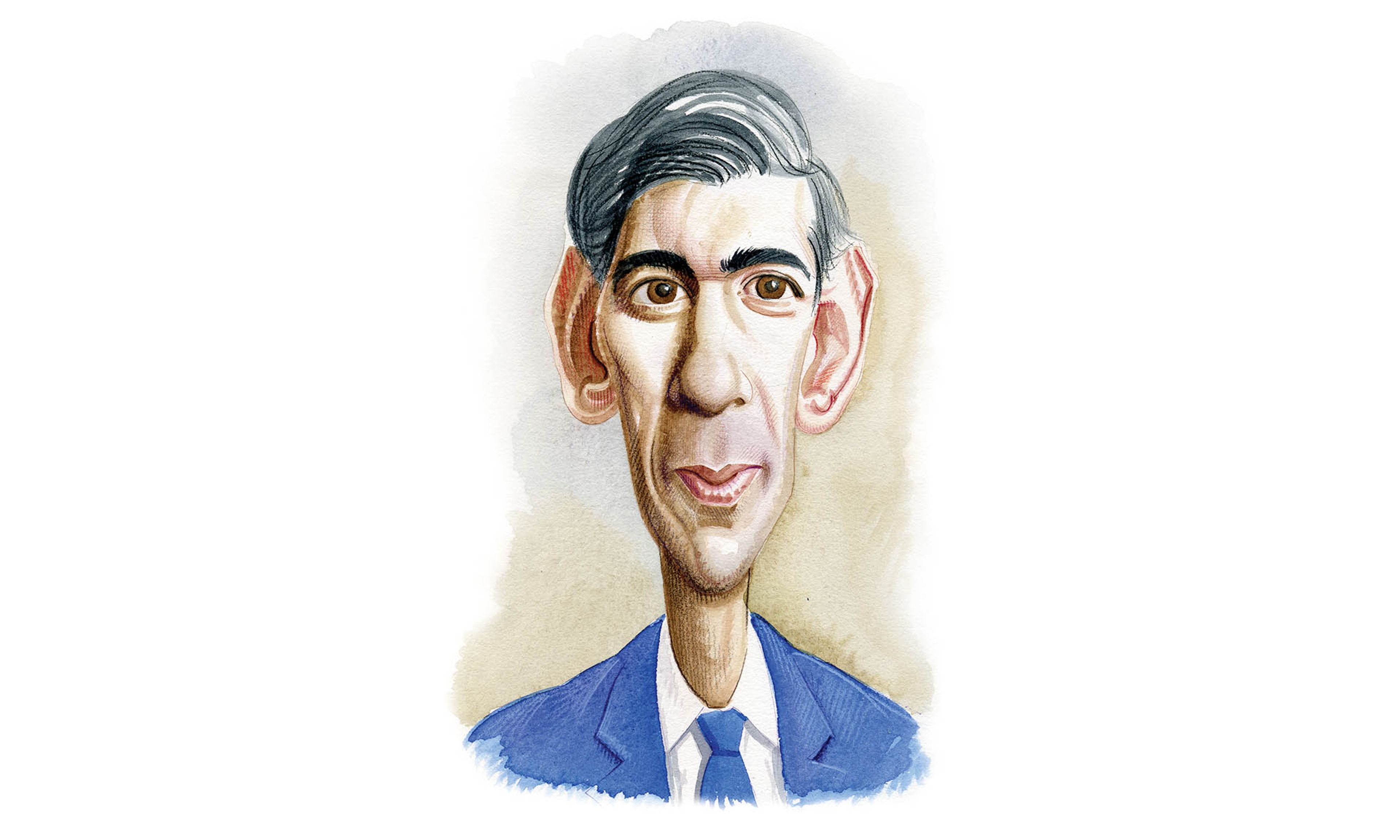
• If Biden can’t keep track of British prime ministers, we won’t be too harsh about it.
• On October 15, President Biden delivered a speech at one of the few places where he is still popular — Democratic National Committee headquarters in Washington, D.C. — where he promised that if Democrats did well in the elections, the first bill he would sign in 2023 would be sweeping pro-abortion legislation. The bill would effectively establish a right to abortion through all nine months of pregnancy in all 50 states; gut conscience and religious-liberty protections; and invalidate any legal restriction that singles out abortion, such as parental-notification laws and 24-hour waiting periods. Shortly after Biden’s speech, Georgia’s Democratic gubernatorial nominee Stacey Abrams floated abortion as a way to rein in inflation. Voters are telling Biden and Abrams they’re having a hard time affording groceries, and Biden and Abrams are essentially replying: Let them eat abortion pills.
• Tulsi Gabbard has woken up and left the Democratic Party. The erstwhile Hawaii congresswoman and presidential candidate, once a rising star in her party and best known for her debate-stage destruction of Kamala Harris, says the Democrats left her. She blames their “elitist cabal of warmongers driven by cowardly wokeness,” “anti-white racism,” transgender extremism, hostility to faith, sympathy for open borders, and willingness to “weaponize the national-security state to go after political opponents.” Gabbard then made campaign stops for Trumpist candidates Kari Lake in Arizona (herself a recently minted Republican) and Don Bolduc in New Hampshire. Time will tell whether Gabbard’s new embrace of Republicans is sincere and sustainable, given her reliably left-wing views on abortion, guns, economics, and climate. But the depth of her estrangement from her old party is apparent. Republicans and the conservative movement have welcomed stranger converts before. We do not share many of Gabbard’s foreign-policy views, and she should have to prove herself to conservatives beyond the first blush of a new romance if she is to become a national figure on the right. But she would be an improvement in any office over any of Hawaii’s Democrats, and as a spokeswoman for disaffected Democrats across the country, she is voicing sentiments that may persuade others to follow her out the door.
• Mike Pence gave a sober and thoughtful speech at the Heritage Foundation, advocating a synthesis of traditional Reagan conservatism and populism as the way ahead for the Right. This approach would absorb certain changes wrought by Donald Trump — for instance, on China and immigration — while placing an emphasis on the culture war and still favoring limited government. On foreign policy, Pence defended American engagement abroad and forcefully pushed back against the neo-isolationists who would abandon Ukraine to the tender mercies of Vladimir Putin. Pence clearly is inclined to run in 2024. His image in the party has been badly hurt by his courageous willingness to defy Trump on January 6, but he’s a voice of reason and principle at a time when both are often in short supply.
• School choice is picking up support from some unlikely sources. Two Democratic gubernatorial candidates, Josh Shapiro of Pennsylvania and J. B. Pritzker of Illinois, have defected from their party’s traditional position and endorsed expanding school choice in their states. In September, Shapiro’s campaign website was updated to read: “Josh favors adding choices for parents and educational opportunity for students and funding lifeline scholarships like those approved in other states and introduced in Pennsylvania.” Pritzker’s support for school choice is perhaps even more surprising. When first elected governor in 2018, Pritzker promised to “do away with” the Invest in Kids Scholarship program “as soon as possible” because it was “taking money out of the public schools.” Four years later, however, the program has not only survived but earned Pritzker’s support. They may be slow learners, but politicians eventually figure out what’s a winning issue.
• Igor Danchenko — the primary source that Christopher Steele embellished in behalf of the 2016 Clinton campaign — has been acquitted of lying to the FBI. The short trial was not designed to resolve a far more important question: whether the FBI lied to the American public. But it did make clear that the bureau gave judges surveillance applications that swore to the veracity of the rubbish in the Steele dossier about a Trump–Kremlin connection, and that it offered Steele classified intelligence and money in the hope that Steele might substantiate that rubbish. (He couldn’t, so it didn’t pay.) This episode is thankfully over, but the need for a reform of the FBI is ongoing.
• When Georgia Republicans enacted an election-integrity bill last year, Democrats across the nation loudly denounced it as a racist voter-suppression effort. Biden, in a typical burst of eloquence, said the law made “Jim Crow look like Jim Eagle.” Senator Raphael Warnock called it “Jim Crow in new clothes.” Major corporations, including some of the largest employers in the Peach State, lined up to condemn the bill in similar terms. MLB pulled its All-Star Game from Atlanta in protest. The attacks were always hysterical and frequently factually challenged. But they became all the more dubious when Georgia saw record-breaking voter turnout — including among minorities and Democrats — in the May primaries. Now the state has broken voter-turnout records again in the early-voting period for the 2022 midterms. The tale of Georgia’s voter suppression has turned out to be just as real as Stacey Abrams’s governorship.
• Democrats have held every statewide executive office in New York since 2007, and they eliminated the last Republican redoubt in the state senate in 2018. New Yorkers have many reasons to be dissatisfied with the results. Governor Kathy Hochul, who took over for Andrew Cuomo in August 2021, is therefore running entirely on negative ads about abortion and January 6. Republican congressman Lee Zeldin, who has been closing the gap in the polls, offers New Yorkers a real choice. His campaign targets the unpopular 2019 “bail reform” law that put felony defendants with prior convictions back on the street. Even New York City’s Democratic mayor, Eric Adams, calls it “insane” and says it is “destroying the fabric of our city.” Crime, the pandemic, and the state’s grim business climate have helped drive the relentless exodus of New Yorkers from the state. The perennial ethical morass in Albany has also gotten worse: Hochul’s first lieutenant governor lasted only eight months before his federal indictment for pay-to-play bribery. Hochul herself is under fire for shady deals for cronies, including no-bid contracts and a massive, wasteful subsidy of a new Buffalo Bills stadium; Hochul’s husband is the general counsel of the company with the current stadium-concession contract. It appears to be the perfect time for Zeldin’s tough-on-crime message.
• If you ask the typical candidate for office whether he will accept defeat come Election Day, the typical candidate (even Alf Landon or Walter Mondale) will say that of course he will win. Fight, fight for every yard, in politics as in football. But this rah-rah rhetoric has a different ring when spouted by a candidate who refuses to accept the result of an election that was already called. Kari Lake, the fervent Trumpist running for governor of Arizona, insists that the 2020 vote in her state and others was “corrupt, rotten.” Because Lake is a sharp, savvy performer, she deftly rebuts questions about election denial by citing the many Democrats (including Hillary Clinton and Stacey Abrams) who have questioned confirmed Republican victories. Good on her for calling the kettle black. That does not mean you should run as a pot.
• After NBC reporter Dasha Burns told her viewers that the Democrats’ candidate for Senate in the state of Pennsylvania, John Fetterman, had “required closed-captioning technology for this interview to essentially read our questions as we asked them,” all hell broke loose — against Burns. Outraged that a reporter had punctured the campaign’s carefully contrived shield, Fetterman’s wife, Gisele, suggested that Burns should face immediate “consequences” for her revelations. Other reporters threw wild accusations. Burns was “ableist.” She was guilty of “overt discrimination.” She had helped to “worsen attitudes and violence towards disabled people.” Was what Burns had said true? That didn’t seem to matter much. In 2015, on the other hand, when Republican senator Mark Kirk had a stroke, the Chicago Tribune made no bones about the importance of the development. “We cannot tiptoe around the issue of Kirk’s recovery and readiness,” the Tribune’s editors wrote in an editorial that endorsed his opponent. “His health is a fundamental component of this race — a hotly contested matchup that could return control of the U.S. Senate to Democrats.” Why was this asseveration not ableist, discriminatory, or likely to worsen violence? The question answers itself. Fetterman is a Democrat. Kirk was a Republican. The inquiry can stop at the gate.
• The hits keep coming for Mandela Barnes, Wisconsin’s Democratic Senate candidate. Barnes saw an August lead in the polls evaporate after TV ads highlighted his past support for defunding the police, a position he now disavows. On October 13, the Milwaukee Journal Sentinel reported that Barnes repeatedly condemned American police officers in TV interviews with a U.S. cable network affiliated with the Russian government. Perhaps the most striking interview occurred after five police officers were murdered in Dallas in 2016. Barnes offered a perfunctory and general condemnation of violence but no words of support for police. He spent the bulk of the interview criticizing them. Barnes, then a member of the state assembly, also provided a sympathetic explanation of the cop-killer’s motive: “When you feel devalued as a person, you can get driven to some extremes. Not to justify it because it shouldn’t have happened, but people have been pushed to a breaking point.” In keeping with the theme of sympathy for atrocities, Barnes has covered for terrorists of various stripes. Alana Goodman of the Washington Free Beacon reports that in 2015 Barnes published a tweet praising Iran’s supreme leader, Ali Khamenei, for supporting Black Lives Matter. The nomination of Mandela Barnes greatly undermines the Democrats’ 2022 campaign boast that they are the party of restoring norms and decency.
• President Biden appears to believe a conspiracy theory about gasoline prices. This is part of a continued effort by the White House to blame corporate greed — rather than government policies — for inflation. If the White House has some evidence that corporations are working together to keep gasoline prices high, it should reveal it. It would be a global scandal. Really, there are widely accepted reasons why prices in markets such as gasoline don’t go down as quickly as they go up. The market for gasoline, which contains thousands of small businesses competing relentlessly on price, cannot be rigged by corporate titans. There’s a political lesson here: If you claim credit when gasoline prices go down, you should expect blame when they go back up. Let the White House enjoy the ride.
• The Biden administration has continued its policy of depleting the Strategic Petroleum Reserve in an effort to reduce gasoline prices. The effects of that policy likely aren’t very large, but since the obvious pro-energy policies are off the table thanks to the Democrats’ environmentalist wing, SPR releases will have to do. Accusations of political opportunism are not quite right. The administration has been pursuing this policy since March; the releases aren’t only because there’s an election around the corner. The issue is that there’s nothing strategic about what the administration is doing. It’s not the High-Gas-Prices Petroleum Reserve. The SPR is supposed to be for acute emergencies or war efforts. Ukraine and Russia are at war, but the U.S. is not. Using SPR releases as a substitute for a sensible energy policy will leave the U.S. in a worse place.
• Biden was elected in good part to be a boring institutionalist who would restore D.C.’s governing norms. He has instead governed as a lawless rogue. His latest bursting of legal constraints was to order student-loan forgiveness with money never appropriated or authorized by Congress, on the tenuous pretext that the 2003 HEROES Act — aimed at wartime emergencies — applied to the pandemic “emergency.” Never mind that Nancy Pelosi had already admitted that a new act of Congress was required, or that Biden himself had said that the pandemic was over. Of his unilateral executive order, Biden remarked, “I got it passed by a vote or two.” His White House offered the implausible gloss that Biden was referring to another bill whose supposed deficit savings gave a fiscal fig leaf to the order, when it was plain that the president simply forgot how he spent half a trillion dollars. Recognizing the weakness of its legal case, the administration has resorted to repeatedly changing the rules whenever it gets sued, so as to deprive particular plaintiffs of standing to sue for just long enough to get the money out the door before Election Day. This legal Whac-A-Mole finally ran into trouble when a federal court of appeals temporarily stayed the program while it hears arguments in a case brought by Nebraska and other states that say Biden is costing them money in their roles as holders and servicers of student loans. The court should find that Biden is the one with no leg to stand on.
• Biden has now gone farther than his old boss in unilaterally rewriting Obamacare. At issue is the “family glitch” that has made a subset of lower-income families ineligible for Obamacare subsidies if at least one household member has access to affordable health insurance at work. The Obama administration conceded that Congress would have to amend the law to end the glitch. But Biden instead announced a unilateral change to the rule. If no injured party is able to sue to block the policy from going into effect, the CBO estimates that the change will cost up to $44 billion over the next decade. The pattern here is that this administration persistently regards the rule of law as a glitch.
• Biden claims that competitiveness is one of his top priorities in economic policy, but the interests of organized labor always outrank it. The Department of Labor is proposing regulations that would make it more difficult for workers to be classified as independent contractors, which is the business model that allows the “gig economy” to function. The gig economy has injected competition into countless sectors over the past decade, and workers choose to be independent contractors for entirely sensible reasons. They get more power to determine their work schedule, and the flexibility of contracting allows them to be small-business owners rather than employees of a corporation. There are trade-offs to that decision, but workers know these trade-offs and still choose the independent-contractor route anyway. The problem for Democrats: Independent contractors don’t unionize. If Republicans take control of Congress, they ought to champion the right to choose freelance work.
• The National Assessment of Educational Progress found educational regress. Eighth-grade math scores are down in nearly every state, and only 26 percent of eighth-grade students are considered proficient. Reading scores continued to decline, as they have done for years. The pandemic school closures almost certainly played a role, but it’s not as though scores were great before Covid. Only 34 percent of eighth-graders were proficient in math in 2019, for example. As for college readiness, the average ACT score this year was only 19.8, down from 20.3 (out of a possible 36). That’s the fifth consecutive year of decline in the average. These results come despite a steady increase in per-pupil spending, plus the huge influx in federal funding as part of the pandemic-aid packages. At some point the question must be dealt with: What are schools doing with all that money? As ideology drives pedagogy and teachers’ unions reap benefits, students are being left behind.
• The Centers for Disease Control is set to adopt an ill-advised recommendation from an advisory committee to add Covid vaccines and boosters to the routine-immunization schedules for children older than six months. The move will succeed mostly in weakening Americans’ already strained faith in public-health authorities and in fueling general skepticism of vaccines. Children, especially those under five, are unlikely to be severely affected by Covid, and it is not at all clear that the benefits of vaccination for them outweigh the risks. Many parents who have themselves been vaccinated against Covid have so far declined to vaccinate their young children for this reason. The CDC was quick to insist that their recommendations are not mandates — doctors’ offices don’t have to follow them and states and localities don’t have to require the various vaccines on the schedule as a condition of day care and school enrollment (as they typically have done). This is an accountability dodge, which enables another: Throughout the pandemic, local governments, schools, and medical facilities have largely deferred to CDC guidance, deflecting any criticism with the response that they are merely following the experts. The CDC seems intent on proving that it deserves no such deference.
• The baby-formula shortage that captured national attention over the summer is ongoing, despite the Biden administration’s attempts to alleviate it. How families are dealing with it has become a question on official government surveys. The Census Bureau’s Household Pulse Survey in mid September found that of the approximately 4.1 million Americans with infants who currently need formula, 1.3 million had difficulty obtaining it in the previous seven days. The problem with baby formula is the government. Owing to the Special Supplemental Nutrition Program for Women, Infants, and Children, which is supposed to be for people in poverty, more than half of all baby formula consumed in the United States is ultimately purchased by the federal government. On top of the problems with WIC, the FDA imposes strict regulations on baby formula, and protectionist trade policies make it nearly impossible to import. The White House’s response to the baby-formula shortage was designed to appear as though the administration was Doing Something, but it did not address the problems that led to the shortage. In the meantime, millions of families have had to work around a market that the government has broken and remains largely uninterested in fixing.
• As part of a “presidential forum” for the online news channel Now This, President Biden sat down with a TikTok “influencer,” Dylan Mulvaney, a man who identifies as transgender. Mulvaney asked Biden what he thought of state bans on medicalized gender transition for minors. These bans are designed to prevent irreparable harm from being inflicted on children who cannot possibly consent to the permanent loss of their fertility and sexual functioning. The president said he thought these state laws were “outrageous” and “immoral.” Biden suggested that more transgender activism would help turn public opinion. “People change their minds,” he said. They do indeed, which is a major reason minors should not be making irreversible changes to their bodies.
• Biden’s new national-security strategy is only partly that. The document presents climate change and other gauzily defined “transnational threats” as comparably alarming to, or even slightly more worrying than, the ongoing efforts by authoritarian powers to contest American strength and overturn the international order. It does identify the threats posed by Beijing and Moscow. But it undercuts its warnings about the CCP by treating it as a potential partner in achieving U.S. goals, and by neglecting to call for sufficient military resources to meet the threats. The dictatorships in Beijing and Moscow present great dangers for U.S. security interests. Future generations of Americans may look back and wonder why an American president wanted to prioritize anything else.
• Within the span of a few days, both Antony Blinken and Admiral Mike Gilday, chief of naval operations, warned that China is preparing to invade Taiwan earlier than had been previously anticipated. The secretary of state, answering a question during an event at the Hoover Institution, said that Beijing’s timeline has grown “much faster” in recent years. Then, later the same week, Gilday said that previous estimates that the Chinese may opt for a 2027 assault on Taiwan need to be replaced by the understanding that that invasion could come before the end of this year. His message was that Washington needs to focus on military readiness. Neither of these comments seemed to be based on specific new intelligence. In both cases, these officials were addressing questions posed to them at an event. Nevertheless, their comments speak to the urgency with which some U.S. officials view the present danger. Unfortunately, so far, a corresponding urgency of action has been lacking.
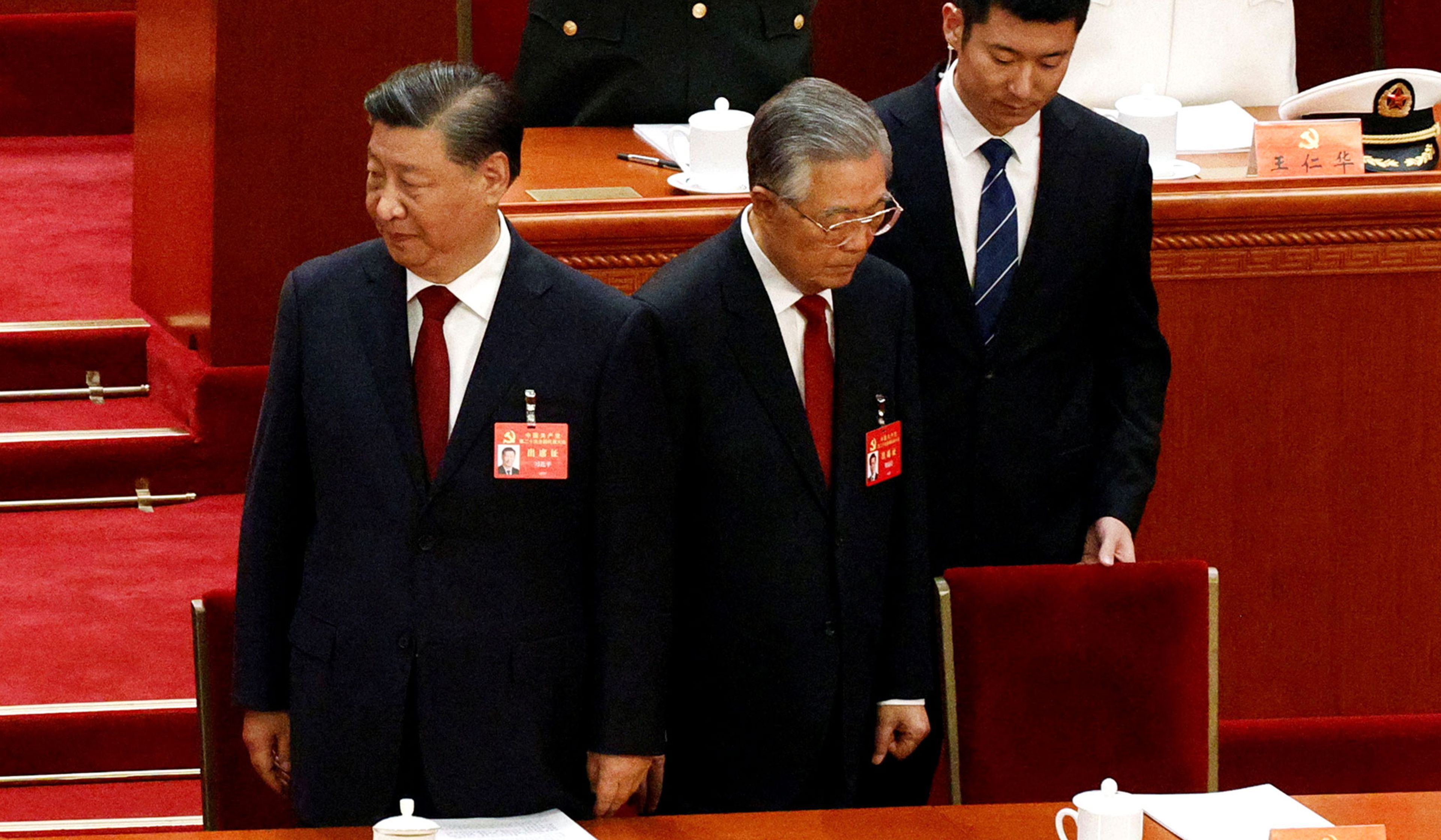
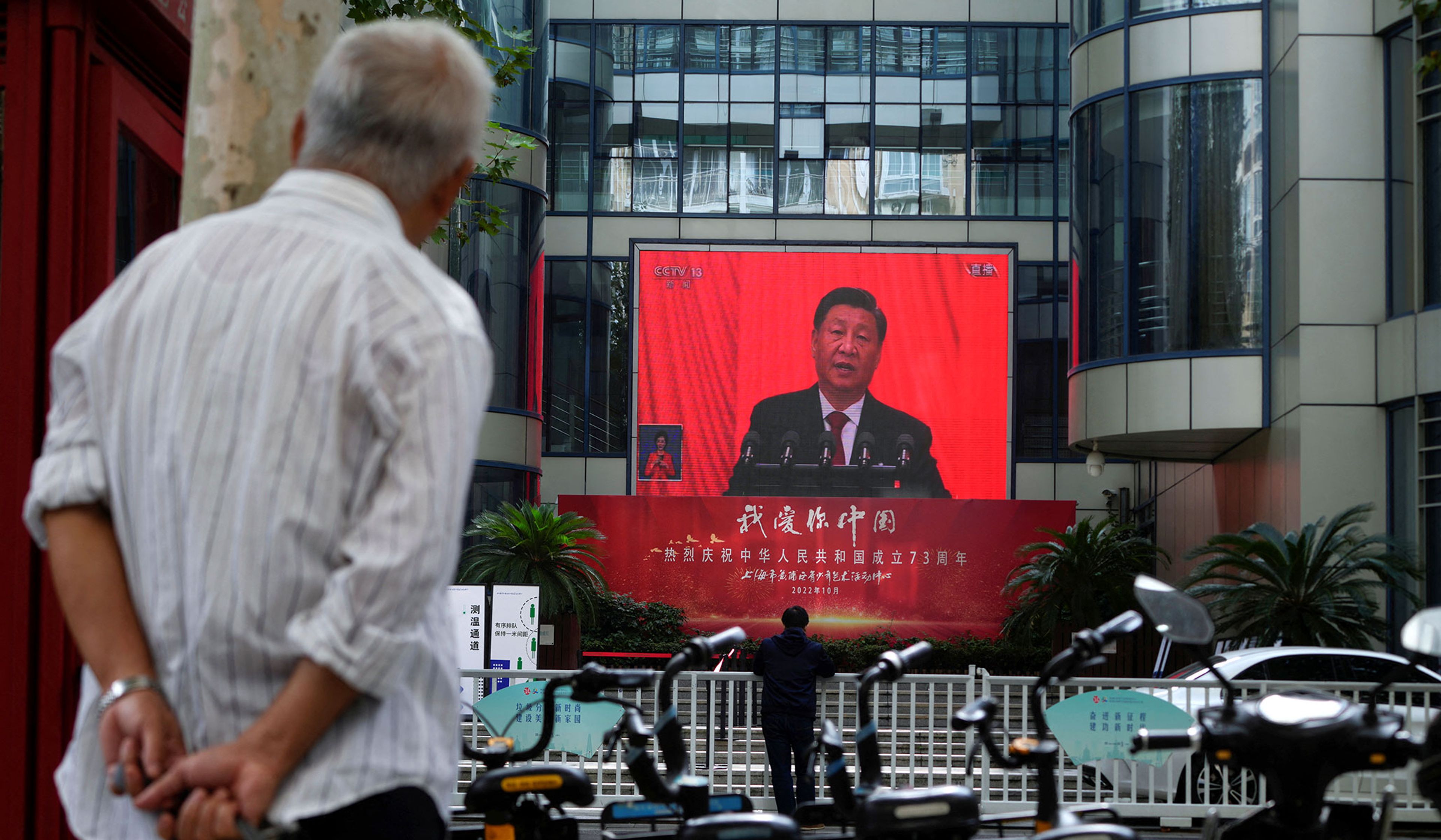
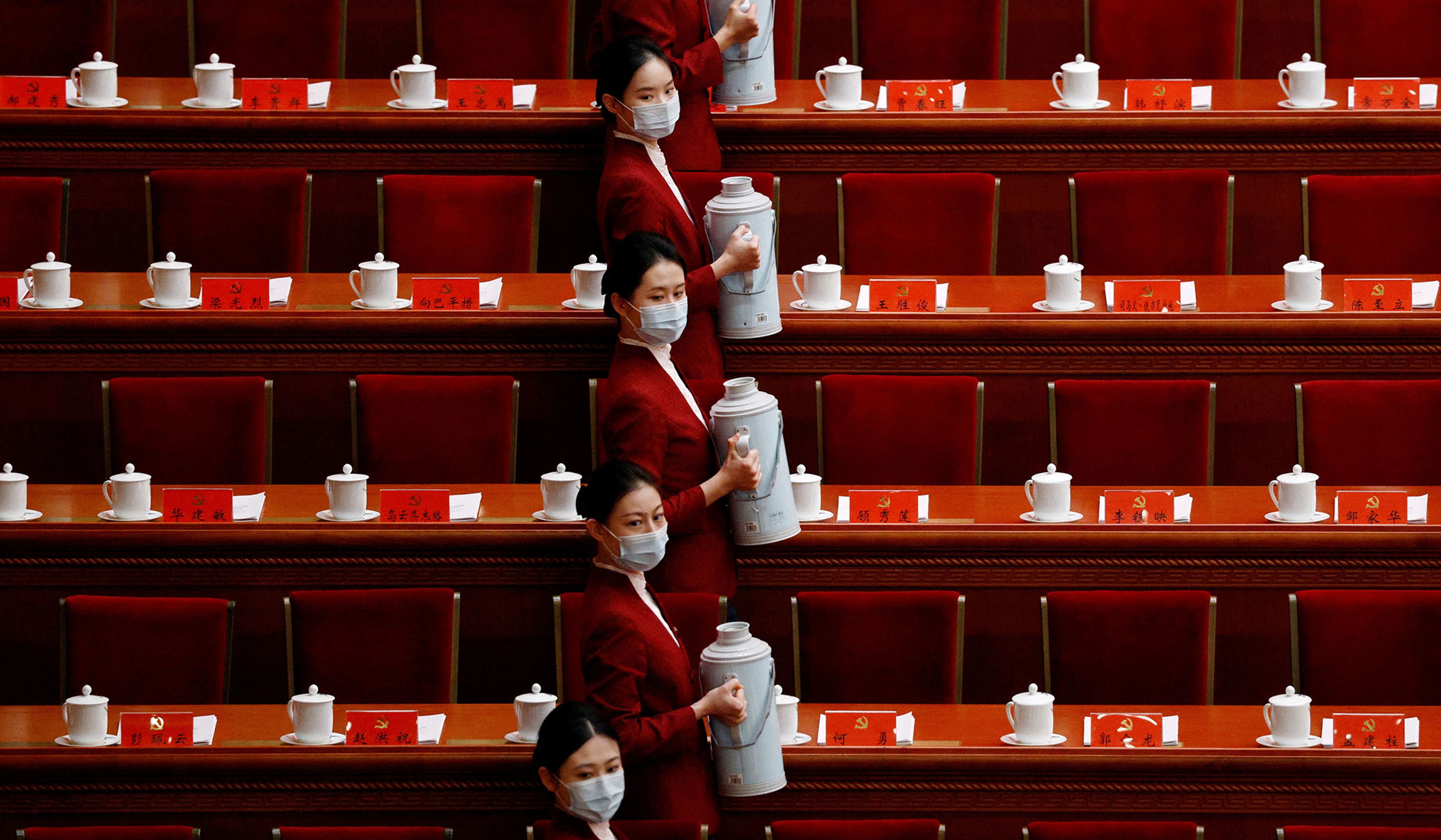
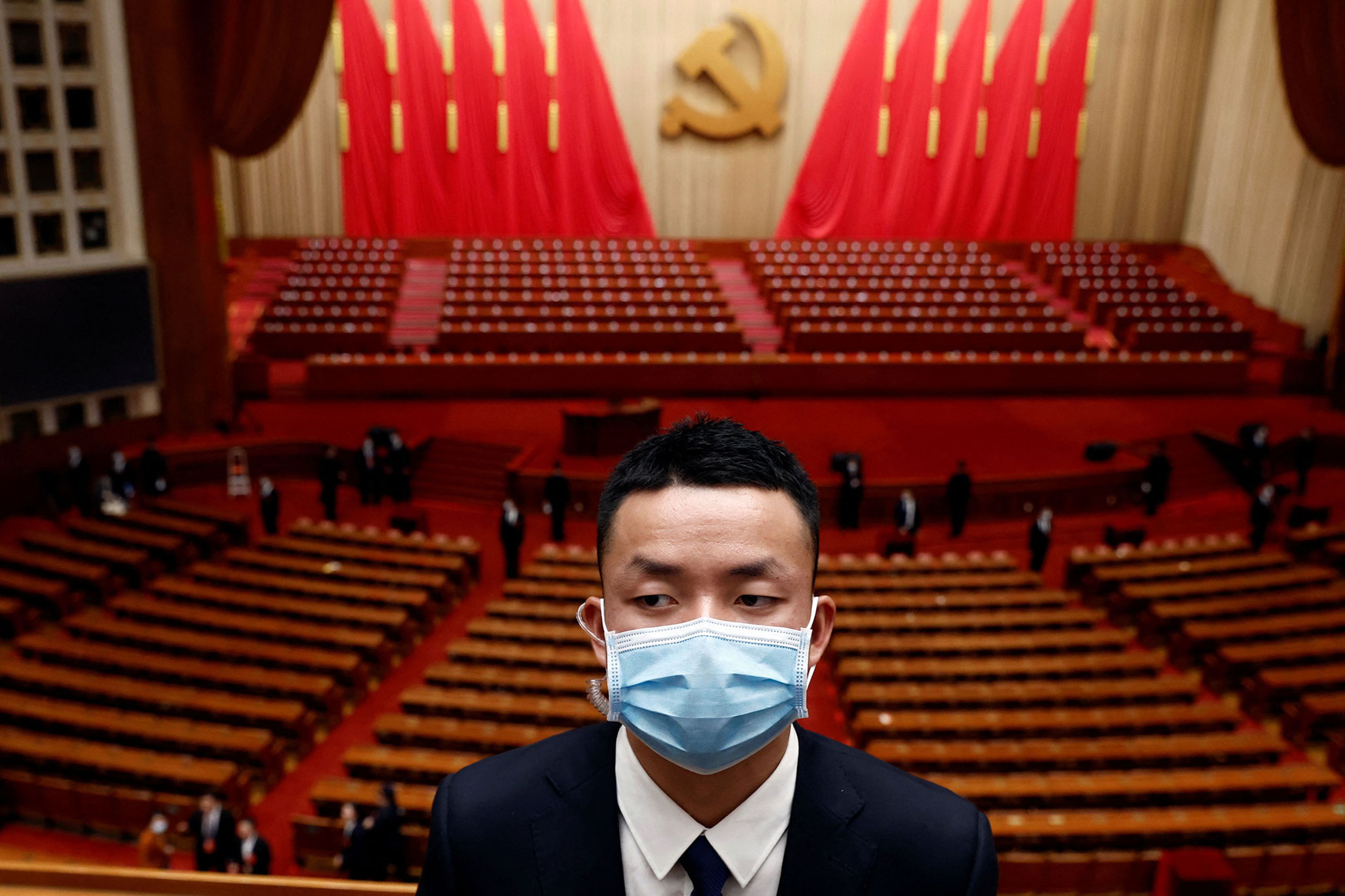
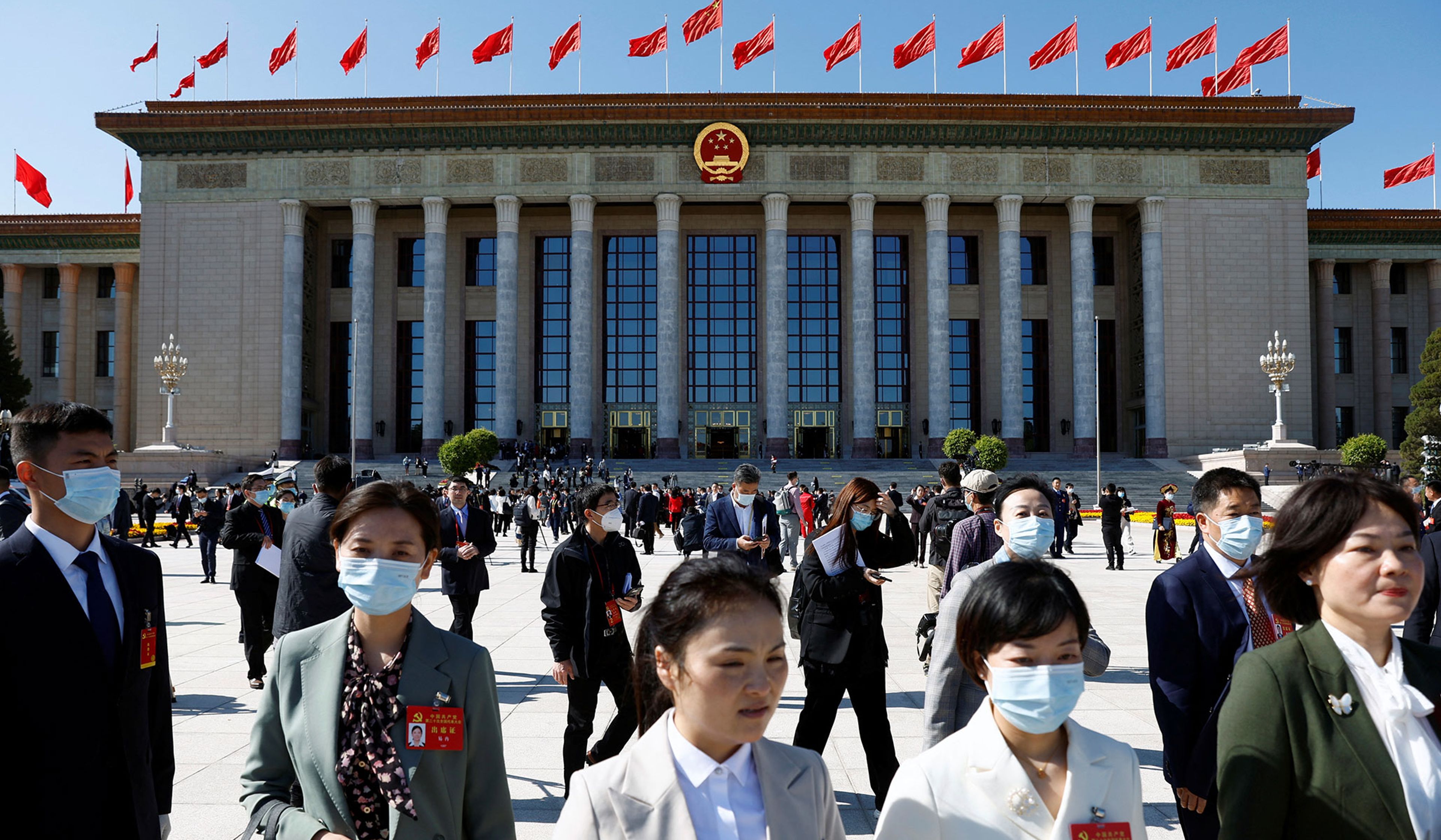
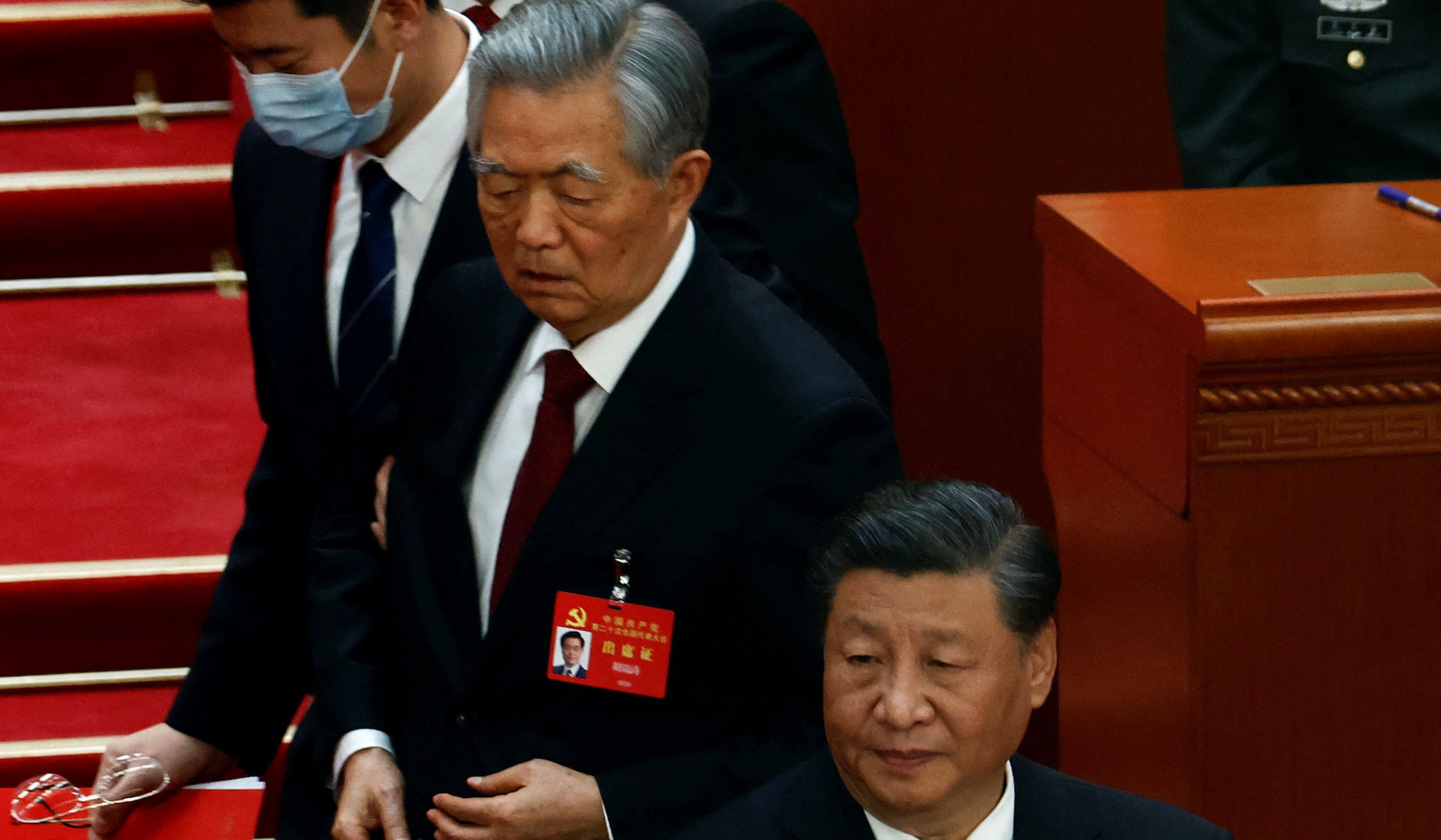
• Hu Jintao, the former leader of China, was conspicuously escorted out of the closing session of the National Party Congress after foreign press had been allowed into the room. Naturally, this garnered attention worldwide, with Xi Jinping having secured a consolidation of power unseen since Mao. There are seemingly two possibilities. That Hu was ill but later recovered is the message that the party’s Xinhua outlet shared on Twitter for an international audience. Government censors blocked any mention of the incident domestically. The second scenario is that Xi was sending a message to other party factions, or at least what remains of them. That theory was boosted when a Spanish outlet released footage showing that Xi beckoned for an usher and apparently directed him to remove Hu after the former leader peeked into a folder in front of him. As intriguing a parlor game as this is, the only takeaway here is that Xi is firmly in control.
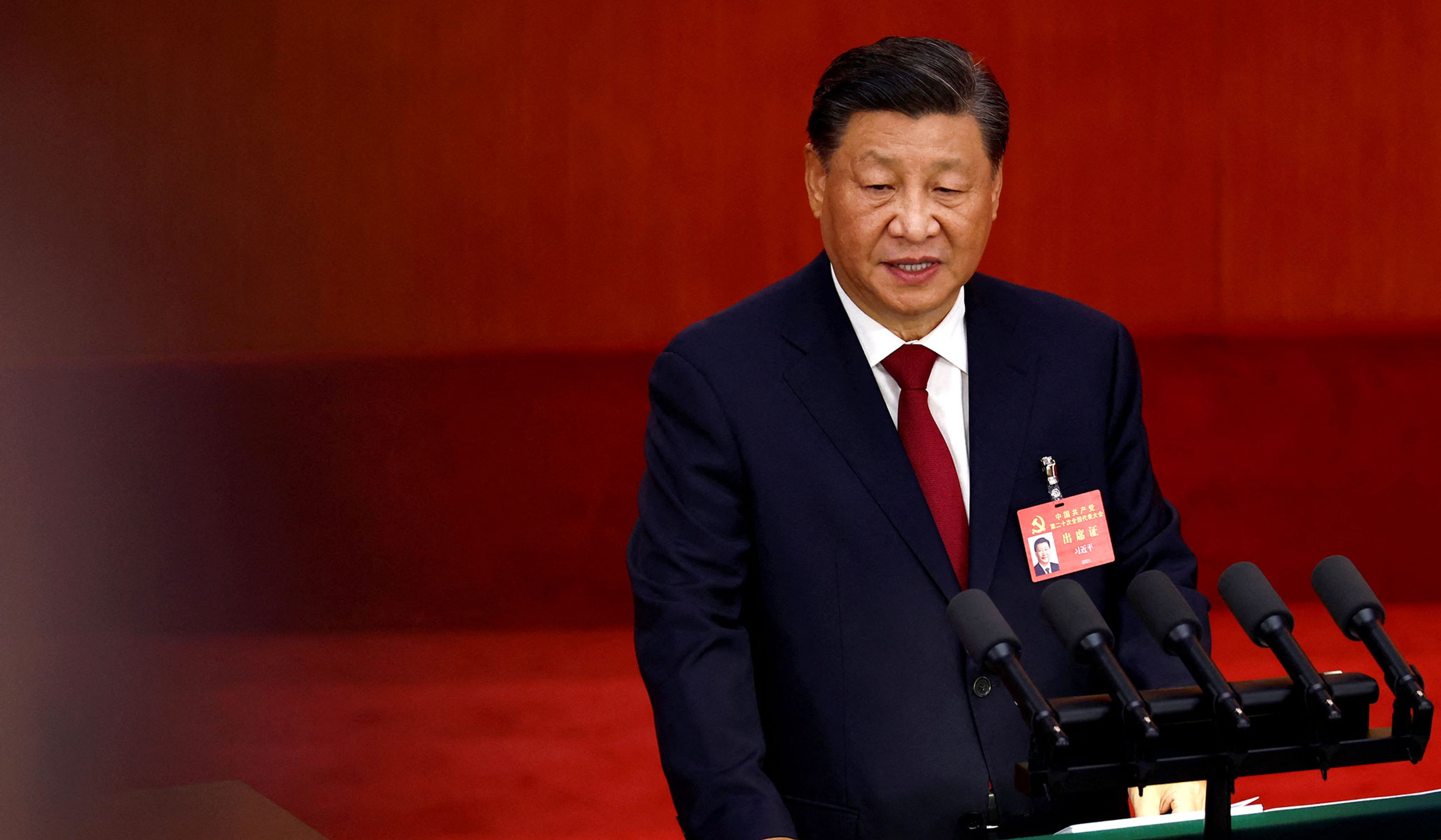
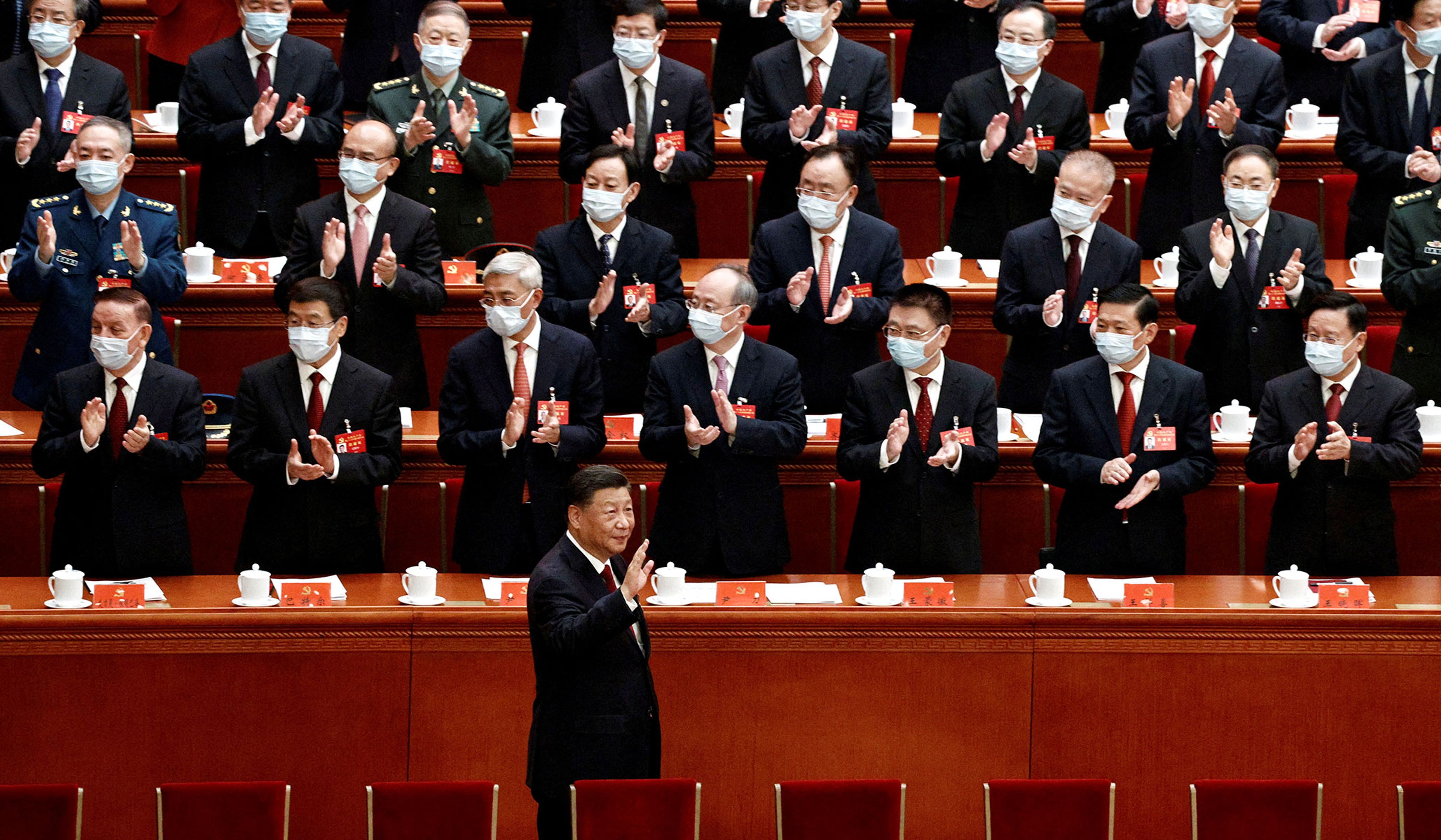
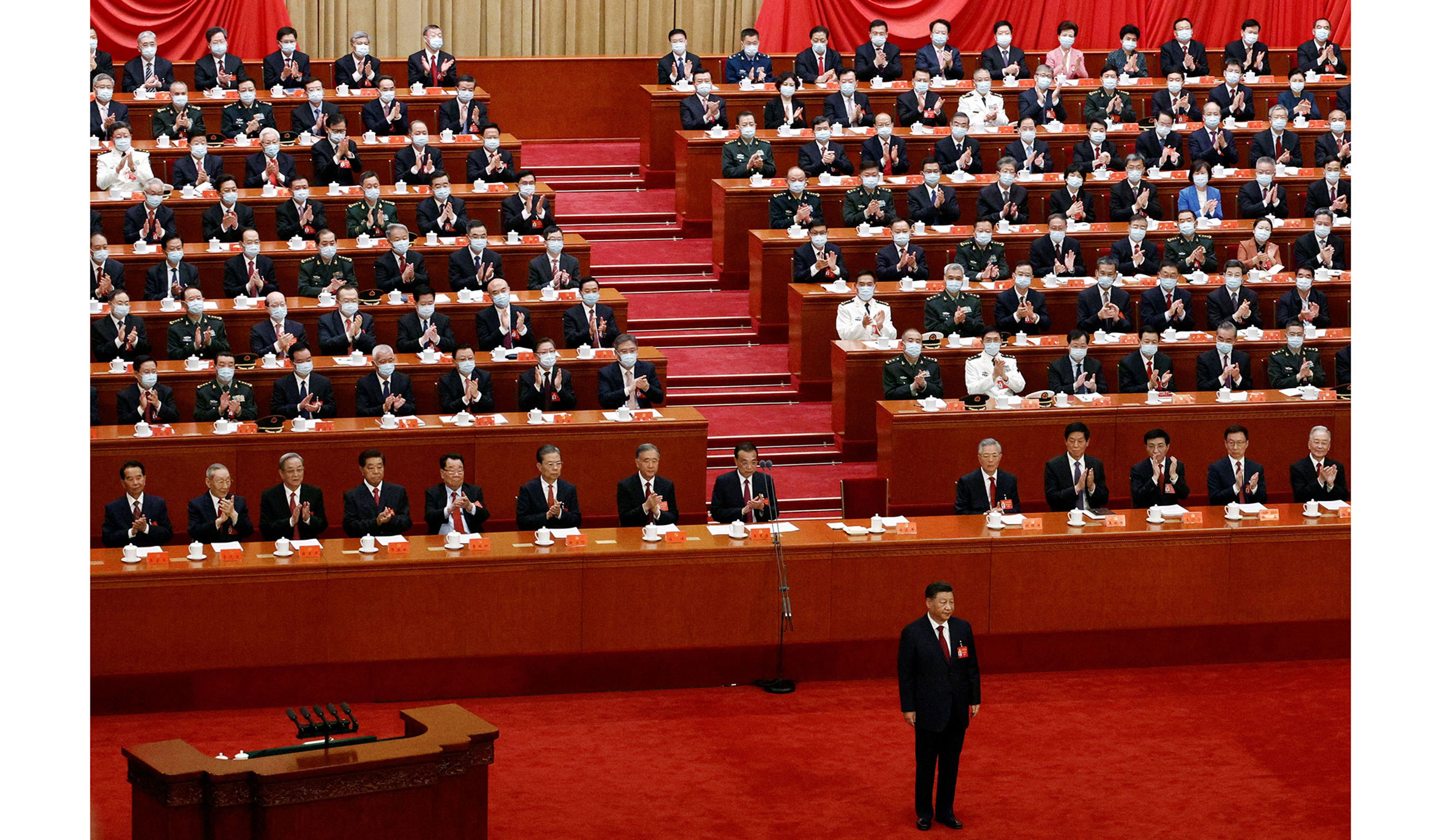
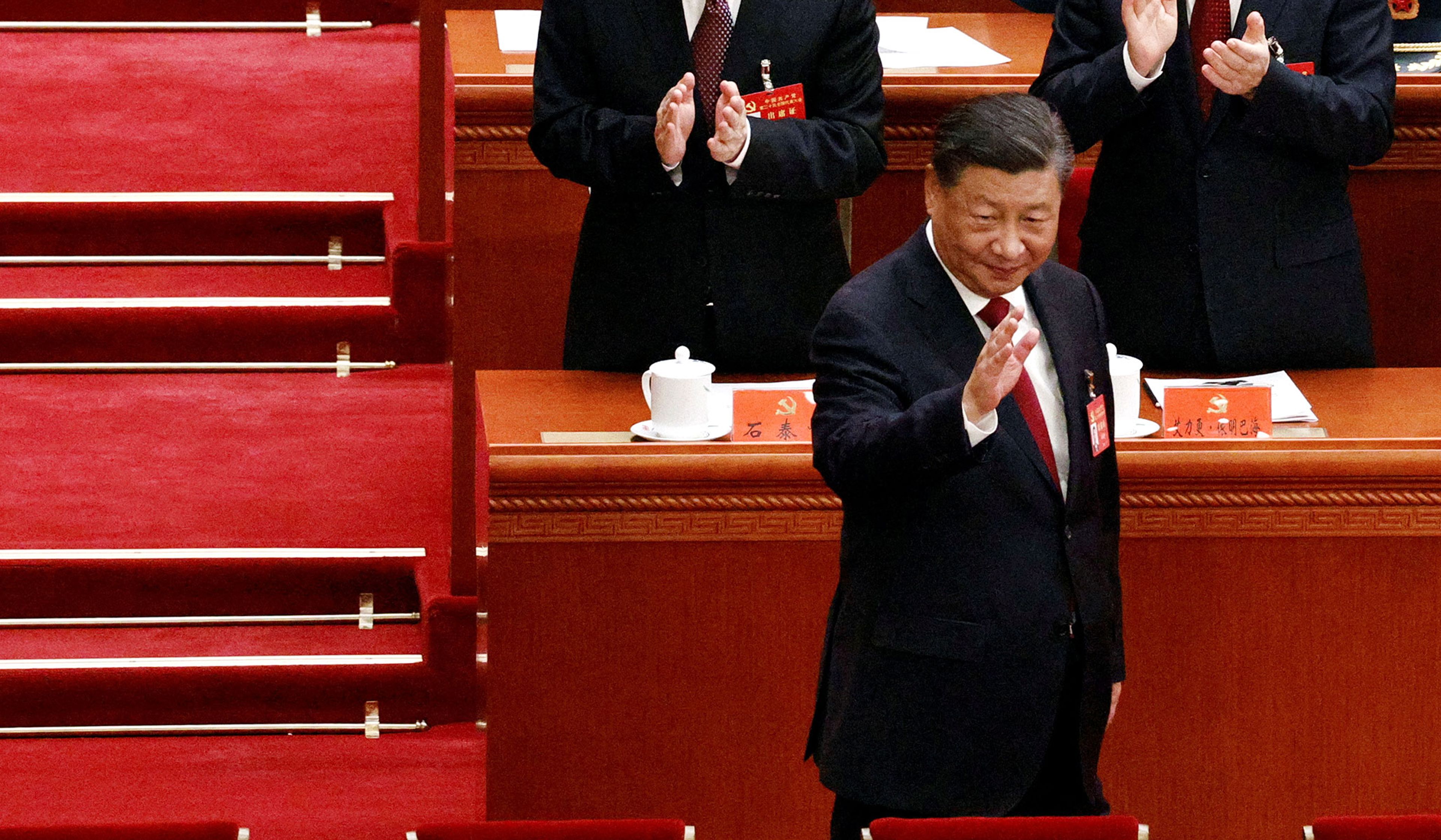
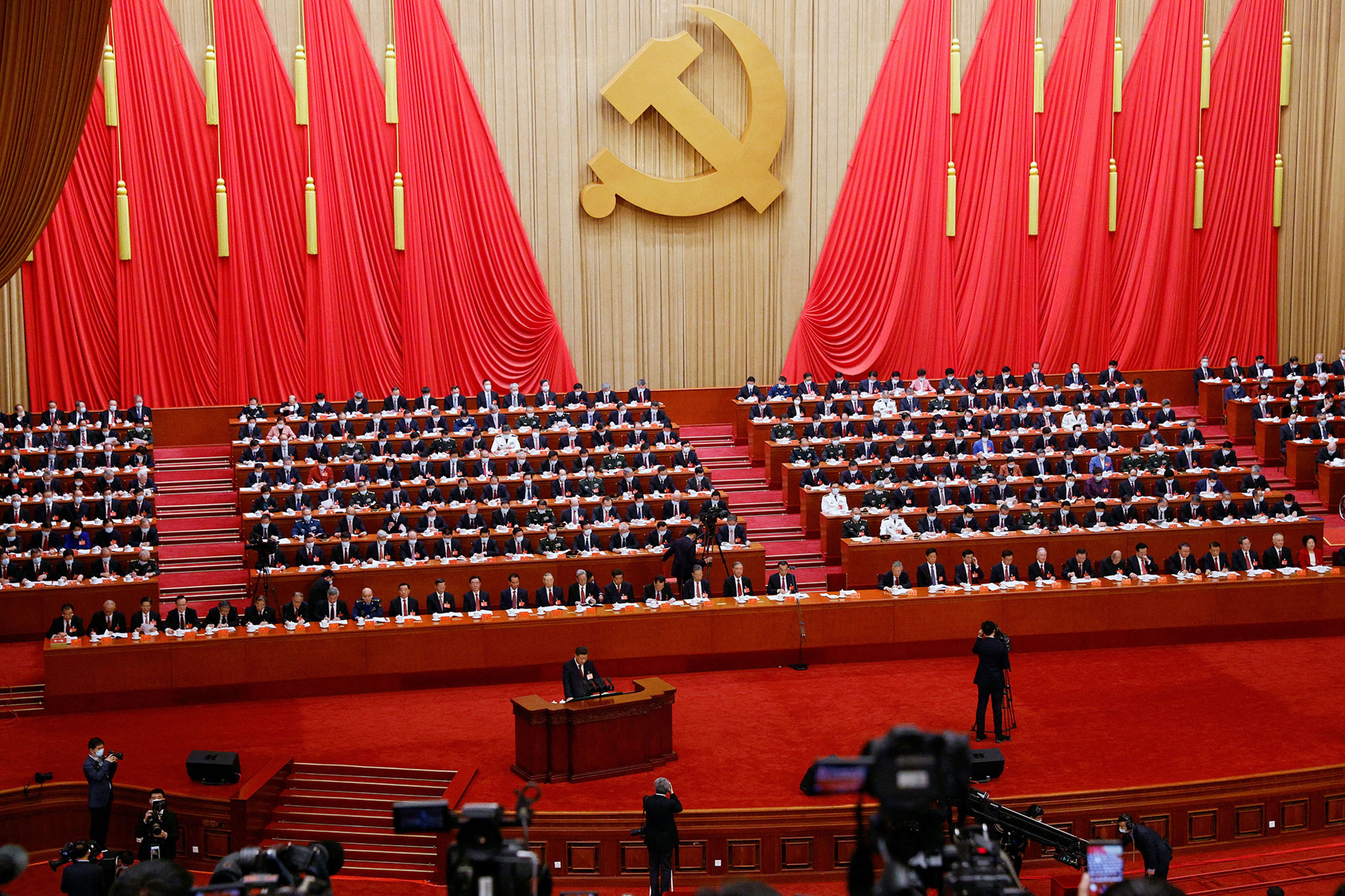
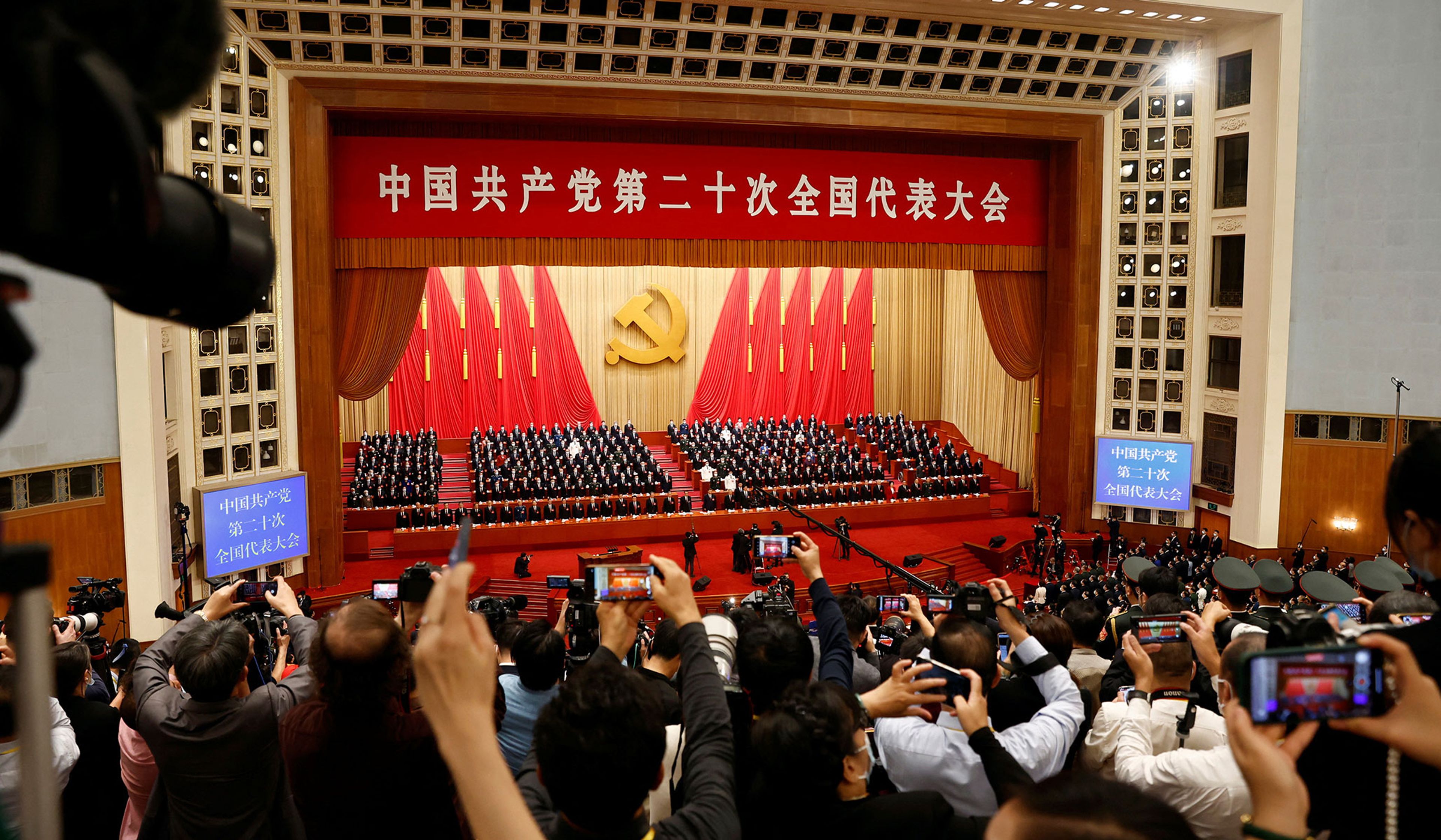
Chinese president Xi Jinping speaks during the opening ceremony of the 20th National Congress of the Communist Party of China at the Great Hall of the People in Beijing, China, October 16, 2022.
Thomas Peter/Reuters
• Rishi Sunak is now Britain’s prime minister, the first of Indian descent, and thus a refutation of a Tory caricature. He succeeds the hapless Liz Truss after a leadership contest carefully organized to minimize the possibility of a Boris Johnson restoration. With the U.K. emerging from the period of financial turmoil triggered by the Truss “mini budget,” Sunak will need to avoid the kind of blunders made by his predecessor, especially as Western markets remain in a dangerously turbulent period. That his chancellor, Jeremy Hunt, is already showing himself determined to secure Britain’s finances will help. Looking to the longer term, Sunak should (and probably does) understand that Truss’s problems were caused not so much by her attachment to free-market principles as by ham-fisted implementation. With an election a little more than two years away, the Tories floundering in the opinion polls, and tough times ahead, Sunak will struggle to keep his party in power, which is why its squabbling MPs should unite behind him.
• It was the fist bump heard round the world, or at least seen round the world: In July, President Biden traveled to Jeddah and warmly greeted Mohammed bin Salman, the ruler of Saudi Arabia. The alliance had cooled over Saudi Arabia’s continuing, and appalling, human-rights abuses. Later in the year, the U.S. appealed to Saudi Arabia to delay cuts in the production of oil — production by OPEC+, a group that includes Russia. The Biden administration says it wanted to deprive Russia of a cash infusion, which Russia needs in its war on Ukraine. Others say that this was a cynical ploy by the administration to keep gas prices steady in advance of the U.S. elections. That would be a rotten, and damnable, use of U.S. foreign policy. In any case, OPEC+ went ahead and cut production, leaving the administration fuming, and the Kremlin richer. Saudi Arabia is an ally, but one of our most problematic. And the more self-sufficient we are in energy, including oil — the better.
• Saad Ibrahim Almadi, a U.S. citizen, flew to Saudi Arabia a year ago to visit family. Saudi authorities immediately arrested him and threw him into prison. The reason: In the course of seven years, Almadi had written 14 tweets critical of the Saudi government. The Saudis have now sentenced him to 16 years in prison, after which he is to be banned from travel for another 16 years. Almadi is now 72. He would be 104 before he was allowed to return to Florida. His son, Ibrahim, says that Saudi authorities have tortured his father, which no doubt they have: That is what they do, routinely. The U.S. must be energetic in securing the release of innocent Americans who are imprisoned abroad, especially if they are being tortured. And if the torturer and jailer is a U.S. ally — shouldn’t our leverage be all the greater?
• Canada has frozen the sale, purchase, and transfer of handguns within its borders. Prime Minister Justin Trudeau hailed the ban, saying in a statement, “Canadians have the right to feel safe in their homes, in their schools, and in their places of worship.” Trudeau has been urging the handgun ban ever since the Uvalde, Texas, and Buffalo, N.Y., mass shootings earlier this year — another indication of how much American events and controversies drive Canadian politics. The handgun ban passed in advance of Bill C-21, a set of amendments currently making its way through the House of Commons that would further criminalize gun ownership in the country. Canadians have little recourse in rejecting the abridgment of their firearm liberties, owing to their lack of anything like the Second Amendment. Perhaps we should start accepting asylees from the north.
• “One always has to dirty one’s hands with the reality of things as they are,” said Cardinal Pietro Parolin, the secretary of state of the Holy See, referring to the deal between the Vatican and China. The two parties agreed to it in 2018 and in October renewed it for two more years. It has never been published but is widely assumed to stipulate that, for every episcopal vacancy, Beijing submits a slate of candidates from which the pope chooses a bishop. That arrangement has historical precedent and is similar to the one between the Vatican and Vietnam. Rome’s aim to ensure that Chinese Catholics have access to liturgy, the sacraments, and pastoral care is reasonable, but so is the objection that the concessions of Vatican diplomats to the Chinese government imply acceptance of its restrictions on religious freedom, most scandalously in Xinjiang, where more than a million Muslim Uyghurs have been locked up in reeducation camps, according to human-rights watchdogs. Cardinal Joseph Zen, who has been arrested for supporting pro-democracy demonstrators in Hong Kong, calls the deal between Rome and Beijing a “sellout” of China’s faithful “underground” Catholics, because it is.
• A Connecticut jury decided that the infamous radio host and conspiracy theorist Alex Jones should pay $965 million in compensatory damages to eight families of Sandy Hook Elementary School shooting victims and one first responder. Jones’s listeners terrorized grieving parents in an abominable manner that warrants the harshest denunciation. According to Huffington Post correspondent Sebastian Murdock: “One person who sent a letter to Mark and Jackie Barden, whose 7-year-old son Daniel was killed in the 2012 Sandy Hook Elementary School shooting, claimed to have urinated on the child’s grave. In another letter, someone threatened to dig up Daniel’s grave to prove he didn’t exist, his parents testified in Jones’ trial on Tuesday.” What is in dispute is whether it does any good for a court to award damages that are, in all likelihood, several times larger than the net worth of the defendant and likely more than the 48-year-old Jones will ever earn over the course of his lifetime. A forensic economist, Bernard Pettingill Jr., estimated Jones’s net worth combined with those of his business entities to be between $135 million and $270 million. Jones’s media company has filed for bankruptcy, which is as close to a happy ending as this story can have.
• A philistine is one who hates art because he so loves himself. It’s a common condition, and Just Stop Oil, a cohort of apocalyptic environmentalists, is an example of it. Under pretext that they — and only they — are in the right, two of these philistines threw tomato soup at a famous Van Gogh in the National Gallery in London. They then glued themselves to the wall. Not to be outdone, another couple of kindred spirits in Germany threw mashed potatoes at an equally famous Monet hanging in the Barberini Museum in Potsdam and then glued themselves to the floor. The pictures were not harmed, and no criminal charges followed. Then 15 more of the same kind of philistines tried to get their point across to the workers in the Volkswagen factory in Wolfsburg, nine of them gluing themselves to the floor. At the end of the day, the workers took no notice, closed the factory’s doors, and went home. After a night stuck to the floor without food or facilities, the nine were loud in their complaints.
• The winner of the 2022 Booker Prize, Shehan Karunatilaka, disclosed that the attack on Salman Rushdie in August caused him to censor some short stories on which he was working at the time. This should be as unsurprising as it is infuriating: As J. S. Mill notes in On Liberty, those whose imagination and creativity and talent are most stunted aren’t the ones on whom violence is inflicted but those who operate under its threat. Besides not getting to read some of Karunatilaka’s bolder writing, we are worse off for all the literature that, because of the specter of retaliation, will never be published.
• As with most things from the modern American world of letters, an interview with Cuban-American writer Alex Perez in the literary magazine Hobart went unnoticed. Then, after one of the magazine’s own editors bothered to read and tweet about it, he and four other colleagues signed their public resignation letter. The former editors claim that Perez’s misogyny and white supremacy (Perez derides the wealthy liberal elites he says have taken over the publishing world) were treated favorably by the interviewer, and that this “sucked beyond measure.” The interviewer, editor Elizabeth Ellen, responded that she never wanted to run Hobart and would rather spend her time writing. Perhaps they should all consider taking a break from both.
• Out: state birds. In: state dinosaurs. Massachusetts has now joined the growing list of states with a representative dinosaur. Said to have roamed the earth millions of years ago, Podokesaurus holyokensis was discovered in 1910 by Mignon Talbot, a professor at Mount Holyoke College. This rather petite — for a dinosaur — specimen is said to have weighed about 90 pounds and could have kept pace with a recreational biker. State representative Jack Lewis led a social-media campaign last year that ended with the “swift-footed lizard of Holyoke” being nominated, and Governor Charlie Baker signed the legislation into law. The move counts, however, as a demotion for the commonwealth’s previous official dinosaur, who served in the U.S. Senate for 47 years.
• Theater, film, and television lost a legend with the passing of Dame Angela Lansbury. Famed for her roles in Gaslight (her film debut), The Manchurian Candidate, TV’s Murder, She Wrote, and the 1991 Disney adaptation of Beauty and the Beast, she also, in 2017, joined the star-studded ranks of actresses who have sniffed down their noses at the March girls in the role of Little Women’s Aunt March. Born in London, Lansbury came to the U.S. with her family in 1940 to escape the effects of World War II. Though it took her a while to find a niche, landing the role of sleuth Jessica Fletcher in the long-running Murder, She Wrote eventually brought her smashing success. On the stage, she was renowned for her roles in Sweeney Todd and Gypsy. She won six Tony Awards (one for lifetime achievement, awarded just this year) and six Golden Globes. She died on October 11, age 96. R.I.P.
• Sacheen Littlefeather was one of the most famous Indians, or Native Americans, in the country. She was an actress, model, and activist. Littlefeather was famous because, in 1973, she appeared at the Oscars ceremony in Marlon Brando’s stead. That night, he won the Best Actor award for his portrayal of Vito Corleone in The Godfather. But, through Littlefeather, he refused it. As Littlefeather explained to the audience, Brando wanted to make a statement about Hollywood’s treatment of American Indians, and also about the Wounded Knee Occupation, which had taken place a month before. The Brando-Littlefeather episode is one of the most notorious in Oscars history. After Littlefeather died, a Navajo writer and activist, Jacqueline Keeler, interviewed Littlefeather’s two sisters — who said that they, and Sacheen, were not Native American at all; that Sacheen had fabricated her identity, her past: everything. Sacheen is not here to defend herself, or to give her side of the story. But if her sisters’ story is true, it is a very American one. We are a land of self-reinvention, and the deception — including self-deception — that sometimes goes with it. Jay Gatsby, among others, would understand. R.I.P.
Building a Wave
The Democrats ran in 2020 with a left-wing platform but a moderate façade. Joe Biden’s own record was well to the right of what his party had become, his principal rival in the primaries was a well-known leftist, and his emphasis during the general-election campaign was that he was not Donald Trump. The public’s revulsion against Trump, together with Trump’s unforced errors, gave Biden a narrow victory, and then Trump’s pique helped to deliver Senate control to the Democrats too. Democrats confused this good fortune for a mandate for that platform.
They began their tenure by pushing through a wholly unnecessary, partisan, and bloated Covid-relief bill — mere weeks after an arguably unnecessary, bipartisan, and bloated Covid-relief bill had already become law. They ignored the warnings that this spending would stoke inflation. They then proceeded to foment hysteria about moderate changes to the election laws of Republican states, presenting the partial rollback of procedures introduced during Covid as the second coming of Jim Crow and demanding a sweeping federalization of election law. When that failed, they turned to seeking $6 trillion in yet more spending.
Meanwhile, an executive branch fitfully led by Biden undid Trump’s successful arrangement with Mexico to control immigration at our southern border. On one issue after another, Biden denied that he had the power to issue unilateral edicts and then did so, student-loan relief being the most prominent example.
As inflation rose, the Democrats first dismissed it as transient, then blamed it on corporate greed, then said their spending would somehow fight it, and finally decided to turn the public’s attention to other issues. One was “election denial.” The Democrats’ campaign exploited a truth: Many Republican politicians disgracefully indulged Trump’s lie that he had won the 2020 election by a landslide. But many of the congressional Democrats who led the investigation of Trump had themselves challenged valid elections won by Republicans; the Democrats happily fell in line behind Stacey Abrams’s own disgraceful lies about Georgia’s elections; and Democrats also cynically funded ads benefiting the very Republicans they portrayed as a threat to democracy, thinking these candidates would be easier to defeat in the general election. No wonder the public dismissed this issue as partisan noise.
The Democrats’ great hope these last few months has been that the public will side with them on abortion in the aftermath of the Supreme Court’s overturning of Roe v. Wade. But Democrats have sometimes betrayed their own extremism on the issue, with candidates in marquee races stating their opposition to any restrictions, even late in pregnancy. Their predictions that mothers would routinely have needed medical care denied and Republicans would attempt to ban contraception have not proven true, which may help explain why their political predictions about the power of abortion to get Democrats elected do not appear to be coming true either. Inflation remains high, and remains far and away the voters’ top concern.
Earlier this year some polls made it appear just barely plausible that Democrats would hold the House while expanding their Senate majority. If that happened, the Democrats would surely see it as a reason to keep doing what they have been doing, only faster. They would junk the filibuster, require taxpayer funding of abortion, outlaw voter-identification in federal elections, and more. Now they seem instead to be on the verge of a rebuke as emphatic as it would be well deserved.
An Asymmetric War
It’s official. A commission of inquiry established by the United Nations Human Rights Council, after inspecting 27 towns and hamlets in Ukraine and interviewing 150 people, found evidence of Russian war crimes, including torture sites, killing grounds, and reports of rape (the U.N. also found two cases of Ukrainian troops abusing Russian POWs). One crime, not unearthed by the U.N., began in an attempt at propaganda: Yuriy Kurpatenko, a conductor in the city of Kherson, refused to lead a performance of a piece in honor of its occupiers, so they went to his home and shot him dead. When the Russian TV network, RT, scrubbed a commentator for wishing, on air, that Ukrainian children be drowned and burned, it seemed a case of what oft was thought but ne’er so well express’d.
The Russians are trying to execute a limited pullback in the Donbas, settling in for the winter behind defensible positions, the better to regroup by spring. The move is accompanied by distraction, physical and psychological: raining missiles and Iranian-made drones on Ukrainian targets, hither and yon; asserting that the Ukrainians intend to detonate a false-flag dirty bomb; stressing the Ukrainian population by attacking the power grid. Putin would dearly like his Belarusian ally Alexander Lukashenko to join a second front on Ukraine’s northeast, although that is the second-to-last thing that an anxious dictator would want to do (the last thing would be to lose power).
The asymmetry of the war remains: Russia has spotty morale and greater resources; Ukraine has sky-high morale and fewer weapons and people to expend. Ukraine depends therefore on the help of sophisticated Western arms — a supply always at the risk of wavering resolve. Italy’s new right-wing governing coalition includes notable Putin admirers such as former prime minister Silvio Berlusconi. But the brand-new PM, Giorgia Meloni, asserted in her inaugural address that Italy would be “a reliable partner of NATO in supporting Ukraine.”
Meanwhile, in NATO’s leading nation, 30 left-wing congressional Democrats issued a letter calling for negotiations with Putin. The letter insisted that the U.S. continue to back Ukraine, and was subsequently withdrawn, but Putin will see it as a crack to be exploited.
On the right, House minority leader Kevin McCarthy said there would be no “blank check” for Ukraine from a GOP-run House. There is no blank check now; the Biden administration titrates its aid cautiously. If McCarthy is not dull enough to believe what he is saying, then he is craven enough to appease the America Firsters in his own caucus. In an indirect riposte, Senate minority leader Mitch McConnell said a few days later that a GOP Senate would ensure “timely delivery of needed weapons and greater allied assistance to Ukraine.” Not for the first time, the wisdom and the honor of the Republican Party rest with the Kentucky snapping turtle.











Comments