The toll of the Covid-19 pandemic has been immense. Over 1 million Americans have died from the virus, many more suffered serious short- and long-term illness, and many millions more have seen their lives disrupted by the measures meant to contain it. Drug- and alcohol-related deaths have soared, as have homicides and fatal car crashes. Where public schools remained closed, students have lost the equivalent of between 13 and 22 weeks of instruction, with the worst results concentrated among poor and minority students. Many students have simply lost contact with the system. And that’s to say nothing of the more intangible effects of the pandemic, including the psychological devastation it has wrought on America’s youth.
Covid-19 also has led to an unprecedented increase in federal spending, further worsening America’s entitlement-fueled debt-to-GDP ratio and making fiscal policy vulnerable to higher interest rates from inflation. During the pandemic, the federal government has spent some $6 trillion on a raft of measures, some wiser than others, designed to forestall an economic depression. The result is that our fiscal breathing room has been greatly diminished, just as retiring Baby Boomers and renewed great-power competition are poised to send federal deficits skyrocketing.
Now consider what would happen if we were hit by another pandemic and another round of lockdowns. Can anyone doubt that the panic and loss of liberty this would entail would endanger our nation’s parlous civic and fiscal health, not to mention our sanity?
Today the pandemic is finally winding down, and most of us are choosing to move on with our lives. But it would be profoundly dangerous for Congress to use this as an excuse for complacency. Covid badly exposed our lack of preparedness for a large-scale public-health emergency, and while we don’t know which virus will pose the next threat, we do know that the consequences of another pandemic could be disastrous. To prevent similar social, economic, and fiscal fallout in the future, it is essential that Congress take action now to stop the next pandemic before it starts.
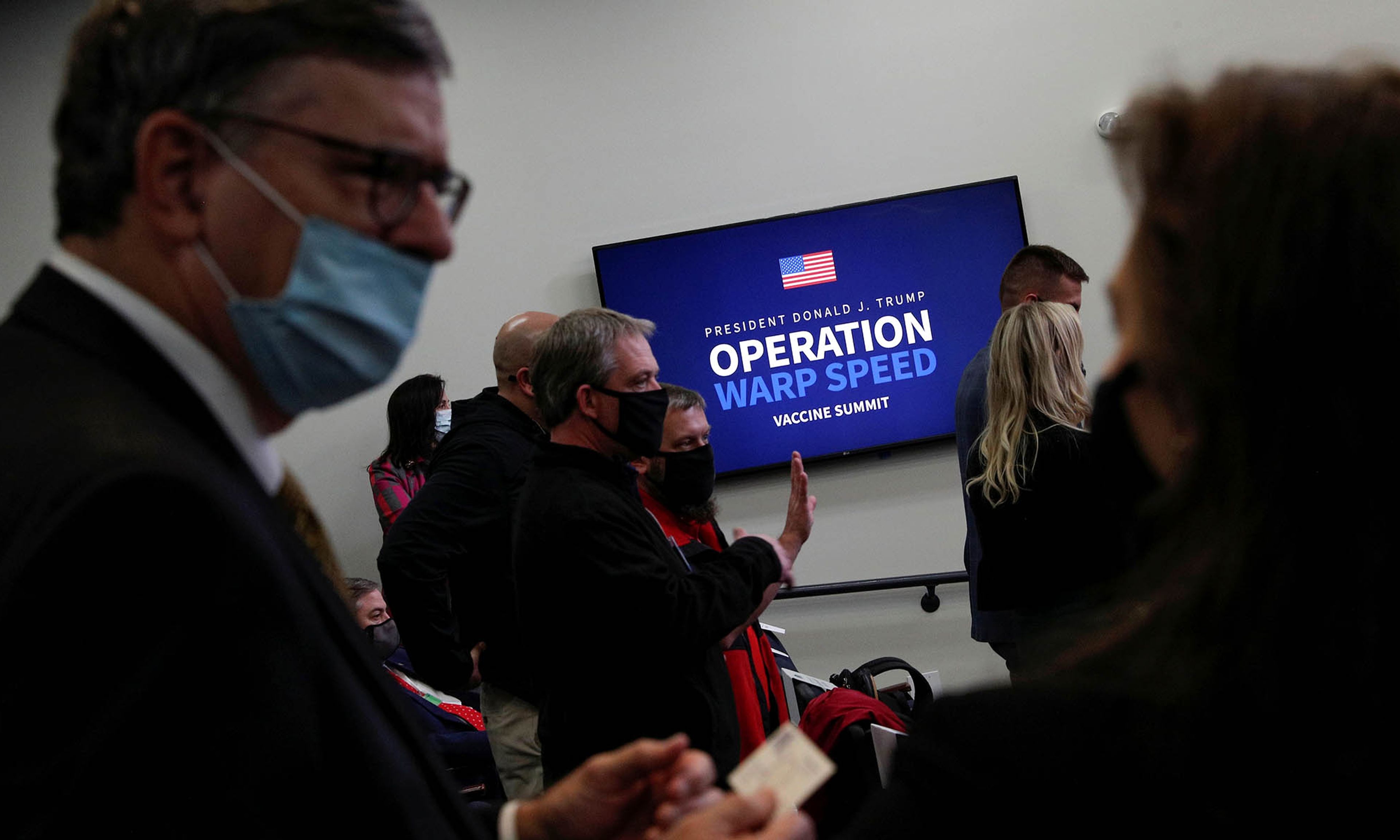
The most sensible way to do this is for the United States to take the lead in developing a suite of measures that can be adapted quickly to identify and end outbreaks of specific pathogens. Operation Warp Speed (OWS), former president Donald Trump’s groundbreaking effort to accelerate vaccine development, has given us a sense of what success can look like. What is needed now are measures that will apply a similar combination of public and private ingenuity to detect outbreaks sooner, better protect people when they arrive, and make effective treatments and vaccines available even faster.
The Biomedical Advanced Research and Development Authority (BARDA) is part of America’s frontline defense against future pandemics and bioweapons. It offers an excellent example of an agency with a track record in leveraging private innovation for public benefit. Founded in 2006 as part of the Pandemic and All Hazards Preparedness Act, BARDA is a federal agency that works with private biotech companies to develop diagnostic tests, vaccines, and treatments for high-risk, low-probability events such as an anthrax attack or a viral outbreak. It invests in medical countermeasures that would be invaluable in the event of a disaster but would not otherwise be commercially viable.
In developing these countermeasures, BARDA has the freedom to use flexible procurement arrangements such as prizes or advance market commitments for vaccines. Advance market commitments, in which the federal government agrees to bulk purchases of medical countermeasures that prove safe and effective, were critical to the Trump administration’s success in accelerating the distribution of Covid-19 vaccines under OWS. In that program, BARDA was the key interface between the federal government and the biomedical industry.
Moderna famously designed its mRNA vaccine within days of Chinese scientists’ putting the genetic sequence of the Covid-19 virus online in January of 2020. Moderna’s remarkable speed reflected the fact that the biotech industry, supported by agencies including the National Institutes of Health and BARDA, had spent the preceding decades studying the viruses that cause SARS and MERS — coronaviruses in the same family as Covid-19. OWS provided the funding and cleared the red tape, but it was the work of such public–private partnerships, dating to the administration of George W. Bush, that laid important groundwork for effective mRNA vaccines.
BARDA is responsible for dozens of FDA-approved medical countermeasures, among them antitoxins for anthrax, monoclonal antibodies for Ebola virus, and burn treatments for chemical and nuclear attacks. And though the Centers for Disease Control (CDC) has yet again been behind the curve on testing and monitoring, in response to the monkeypox outbreak, BARDA’s preparedness investments have helped the U.S. to deploy therapeutics and vaccines against the virus more quickly than would have otherwise been the case.
Preventing the next pandemic will require improved early-detection measures and an even better understanding of the coronaviruses and other viral families that have pandemic potential. But too often the funding for agencies such as BARDA — agencies capable of investing in preparedness — has been limited to countermeasures for known threats, surging during times of crisis such as the 2009 swine-flu pandemic but falling precipitously thereafter, only to surge again as Congress reacts to the next crisis in a panic.
To prevent the next outbreak from becoming a pandemic, Congress needs to invest now, stabilizing funding for pandemic preparedness at a level sufficient for BARDA and similar agencies to develop better warning systems, diagnostic tests, personal-protective equipment (PPE), therapeutics, and prototype vaccines necessary to shut down the next pandemic before it gets started.
For example, the Biden administration recently proposed $40 billion in funding for the Office of the Assistant Secretary for Preparedness and Response, the office in the Department of Health and Human Services that — among other things — houses BARDA. Such funds could be used to develop prototype vaccines and therapeutics for each of the 26 viral families known to infect humans — prototypes with the potential to be tailored to specific, if heretofore unknown, pathogens when an outbreak occurs. Such funding could also make use of existing technologies such as wastewater-monitoring for early-warning systems — identifying where and when new pathogens with pandemic potential are on the rise. Or it could be used to partially onshore critical supply chains for PPE and diagnostic testing, products America was sorely lacking at the outset of the Covid-19 pandemic. Yet the president and his allies in Congress have thus far prioritized student-loan-debt forgiveness and culture-war crusades over preventing the next pandemic.
Given the size of mounting federal deficits, some fiscal conservatives have questioned the need for yet more pandemic-related spending. But blocking funds for BARDA would be a mistake. First, the funding, even on the order of $40 billion, could be accounted for by redirecting unspent federal Covid-relief funds that would otherwise be wasted. And second, this $40 billion is perhaps best understood as a long-term investment to prevent another wave of panicked profligacy in response to a future crisis.
From the outset of the Covid-19 pandemic, the federal government faltered in its efforts to address the virus head-on. The early failure of the federal government to make testing and PPE available at scale only deepened the economic crisis it sought to address with ever more generous relief funding. The success of Operation Warp Speed, while remarkable, is a small consolation given the staggering loss of lives, livelihoods, learning, and liberty associated with the pandemic. We can keep the next outbreak from becoming a pandemic. But doing so will require funding the sorts of innovative public–private partnerships that agencies such as BARDA enable. By acting now, Congress can ensure that we identify the threat sooner next time round and react much more quickly with the PPE, tests, therapeutics, and vaccines that Americans can use to stay safe, healthy, and free.








Comments