In the 1970s and 1980s, when the sexual revolution was still in its heyday, a number of romantic comedies hinted that trouble was ahead. Among the best was When Harry Met Sally (1989), written by Nora Ephron in collaboration with Rob Reiner, about a man and a woman who become friends and, as Ephron later wrote, “make a deliberate decision not to have sex because sex ruins everything; and then they have sex and it ruins everything.”
While writing the film, Reiner, who became the basis for Harry, revealed the dastardliest secrets of the male psyche to Ephron (who was the basis for Sally), confirming her “wildest nightmares of what men thought.” This exercised her so much that she felt her final draft wasn’t so much about “whether men and women can be friends,” as she had first intended, “but about how different men and women are.” Ephron realized that generally, when taken at their most basic, animal level, men want sex, while women want sex as a means to, or as part of, something else. Who knew?
Since tension is the root of all humor, it’s easy to see why these differences lend themselves so well to comedy. Films of this era were replete with scenes in which women emptied drinks over men’s heads, slapped them across the face, and delivered righteous monologues, usually as the sorry studs gaped and floundered and tried to make amends. Of course, these encounters were emblems of an earlier era — techniques picked up from no-nonsense mothers and grandmothers, as depicted in old movies and magazines, that have long since been abandoned.
From the critical post-sex scene:
Sally: You want to act like what happened didn’t mean anything.
Harry: I’m not saying it didn’t mean anything. I am saying why does it have to mean everything?
Sally: Because it does, and you should know that better than anybody because the minute that it happens, you walk right out the door.
Harry: I didn’t walk out.
Sally: No, sprinted is more like it.
Harry: We both agreed it was a mistake.
Sally: The worst mistake I’ve ever made.
Right on cue, Harry insults her, Sally wallops him, and — after multiple apologies and a dramatic profession of love — they live happily ever after. It’s the satisfying conclusion that audiences demand, the sort that plays to our innate desire for a harmonious reconciliation of the sexes and the continuation of our species. Unfortunately, though, this kiss-and-make-up symbolism doesn’t translate quite so easily into real life, where men and women have yet to identify (let alone work through) the profound cultural mistake of the last century. And until we do, we are doomed to be stuck with the kind of sex that “ruins everything.”
The #MeToo movement, a 2017 social revolution designed to expose “the magnitude of the problem” of sexual misconduct, chiefly by the obsessive policing of “consent,” is not the first of its kind. In 1987, Ms. magazine published the astonishing claim that one in four college-educated women will be subject to rape or attempted rape by graduation, and by the ’90s, feminists crying “Take Back the Night” were storming campuses and Congress.
In 1994, Katie Roiphe, then an Ivy League graduate student (and later my professor), published her controversial debut book, The Morning After: Sex, Fear, and Feminism, in which she argued that the one-in-four rape figure was wildly overblown and diagnosed the feminists’ new “bedroom politics” as reactionary and “neo-Puritan.” Roiphe argued that the anti-rape rhetoric, produced by a “culture infatuated with the idea of consent,” resembled the tediously moralizing codes of conduct of the Victorian era, as well as “that 50’s ideal my mother and other women of her generation fought so hard to leave behind.”
Roiphe was right that the feminists then, as now, were missing the mark by some margin. She was right to remind them that the feminine ideals of ages gone by were oppressive and unfair in too many ways to count, and that resurrecting the sexist notion of female fragility is not the answer. Still, an important distinction has been obscured. That women of earlier eras were assumed to be weak doesn’t mean that they were weak. Quite the opposite. Women, before the sexual revolution, were remarkably in possession of a quiet resilience and resolve, an inestimable womanly wisdom, which they passed on from woman to woman, and which is desperately missing today.
Fiction brims with examples of this distinctly female strength. There’s Charlotte Brontë’s young and poverty-stricken heroine, Jane Eyre (1847), who responds to advances from a man she desires — her much older, already married employer, Mr. Rochester — with the assertion, “I am a free human being with an independent will, which I exert to leave you.” There’s Thomas Hardy’s heroine Tess of the D’Urbervilles (1891), who — having been raped, abandoned, and then essentially forced into sexual slavery — reaches for the only means of refusal still available to her, a knife with which to stab her abuser to death. (Alternatively, we might consider a real-life Tess: 17-year-old Christina Abbott, who in 1867, after being raped repeatedly since the age of 13 by her stepfather, sneaked poison into his tea and was, for such courage and resourcefulness, consigned to an insane asylum by the state of Massachusetts.)
No one could accuse Tess of being a wilting flower, of failing to stand up for herself. Hardy even ironically subtitled the novel “A Pure Woman Faithfully Presented,” in order to mock the Victorian feminine ideal, which too often underestimated a woman’s spirit, disrespected her will, and, as with Tess, resulted in her cruel destruction. Still, even Tess acknowledges that she needed some girl-talk and guidance. After her tormentor, Alec, first takes advantage of her, she cries out to her mother, “Why didn’t you tell me there was danger in men-folk? Why didn’t you warn me? Ladies know what to fend hands against, because they read novels that tell them of these tricks; but I never had the chance o’ learning in that way and you did not help me!”
In Jane Austen’s Northanger Abbey (1803), Catherine tells Henry that in marriage, as in dancing, “man has the advantage of choice, woman only the power of refusal.” While it’s true that women back then were extremely hard done by, it’s also true that this “power of refusal” has been womankind’s greatest weapon throughout the ages. As The Atlantic’s Caitlin Flanagan has written, right up until the 1950s, women were reminded that they “were strong in a way that so many modern girls are weak.” If a man tried to take advantage, to push your boundaries, to coerce you into something you didn’t want to do, you were told to “slap him,” “start wailing,” or just “do whatever it took to stop him from using your body in any way you didn’t want, and under no circumstances to go down without a fight.”
It is an irony of tragic proportions that today’s young women, who have never been better positioned to stand up for themselves, have never been worse at doing so.
Take, for example, The New Yorker’s wildly popular short story “Cat Person” (2018). The story is about a 20-year-old woman who pursues a sexual relationship with an older man she barely knows and is only remotely attracted to. (The problem, as we soon find out, is that she only belatedly realizes that she actually prefers the “power of refusal” to the so-called “advantage of choice.”) As their sexual encounter ensues, she thinks about changing her mind, but
the thought of what it would take to stop what she had set in motion was overwhelming; it would require an amount of tact and gentleness that she felt was impossible to summon. It wasn’t that she was scared he would try to force her to do something against her will but that insisting that they stop now, after everything she’d done to push this forward, would make her seem spoiled and capricious, as if she’d ordered something at a restaurant and then, once the food arrived, had changed her mind and sent it back.
Nevertheless, her doubts continue: “She felt a wave of revulsion” and then “her revulsion turned to self-disgust and a humiliation that was a kind of perverse cousin to arousal,” until, the sex being over, she “thought, brightly, This is the worst life decision I have ever made! And she marveled at herself for a while.” Confused and unsettled, the young woman communicates her complicated emotions to a friend, who — like every good girlfriend — assumes that the man must be wholly to blame. She recommends that she reject him without explanation, and our protagonist sends him a blunt text doing just that. The man is left wondering (as anyone surely would) whether he did something wrong, and pivots pathetically from neediness to contempt. That the story’s insight was remarkable is evidenced by the unprecedented response. Not only did it go viral, but young women everywhere began to express how “relatable” the protagonist’s experience was.
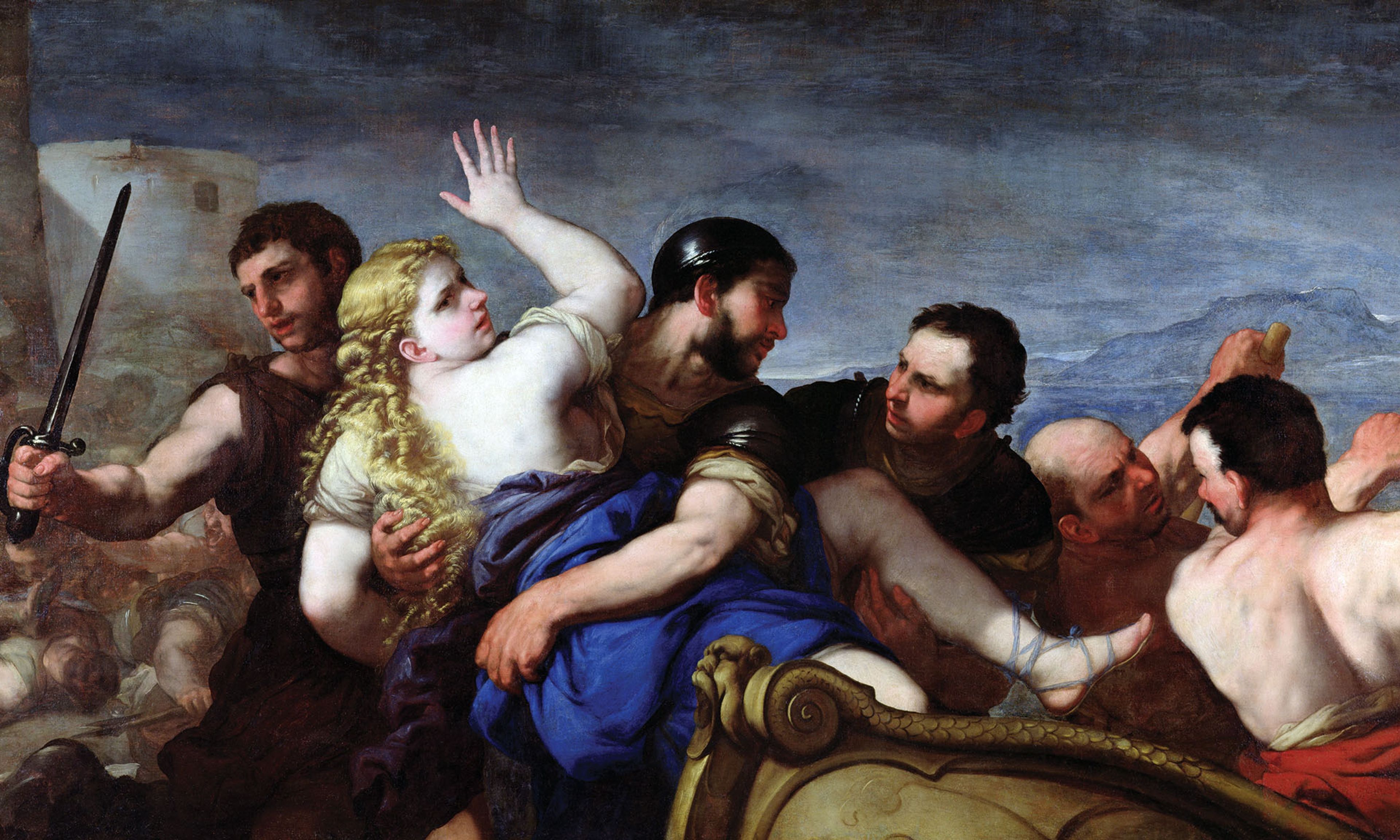
In 1970, Germaine Greer, the famed Australian feminist, complained that “[female] sexuality is both denied and misrepresented by being identified as passivity.” There is obviously something to this. One of the best and oldest illustrations of the point that I can think of is Helen, the fifth century b.c. drama by Euripides. The story goes that Helen, whose mother was raped by Zeus, was conceived as a means of population control: Being the most beautiful woman in the world, she would drive men mad with desire, prompting a war in which they’d kill each other off.
In the same year as Greer, Kate Millett, in her seminal feminist text Sexual Politics, noted that “sex has a frequently neglected political aspect.” (The same can obviously not be said in 2020.) Millett’s work, which began as a doctoral dissertation, focused on the ways in which feminine characters were subjugated by masculine characters in the sexually explicit fictional works of Henry Miller, Norman Mailer, D. H. Lawrence, and Jean Genet. Unsurprisingly, given that the excerpts under study were mostly pornographic, she found most of the depictions of women to be objectifying and degrading. What is surprising is where feminism went next.
Twisting their ideology in all sorts of self-sabotaging knots, feminists attempted to convince themselves and other women that the answer to the sort of passivity that degradation induces is to try to own it, to do to themselves (and perhaps also to men) what is done to them by men. Camille Paglia, for instance, a leader of this school of thought, continues to insist that strip clubs, prostitution, and pornography — which benefit men, not women — all have the potential to unleash the paganistic power of “woman as goddess.” Look where it’s gotten us. If we’re not celebrating the big-bootied rapper Cardi B’s offensively unmusical video “Wet A** P***y,” in which she calls herself a “whore” and writhes around half naked, we’re cheering on Shakira’s stripperesque Super Bowl routine. The point, I think, is meant to be this: If a woman appears to have freely and enthusiastically chosen degradation, then it’s actually empowerment.
Back to Helen, if you please, the woman “whose beauty,” per Marlowe, “summoned Greece to arms / And drew a thousand ships to Tenedos.” Suppose, for argument’s sake, that the rights of women in the 21st century were just as firmly established in the ancient world. Imagine if Helen had, instead of being raped (or seduced, depending on your interpretation), told Paris to get his grubby hands off her, or, better yet, punched him in the face. Imagine if, in response to the fleets of ships sent to steal her away, she had written in the sky (she was half goddess, after all) something to the effect of, “Very flattered, boys, but best turn around because I’m not going.” Or, fine, imagine she had gone, because she wanted to go, but then, after an underwhelming night of passion, noticing all the corpses piled up around her, in a moment of honest self-reflection, thought, “You know, this really isn’t worth it,” and so packed her bags and left. Is anyone seriously going to argue that that Helen, the whole male universe spinning madly around her, wouldn’t amount to the most powerful woman in the history of our sex?
Though it has occasionally and carefully been suggested, for instance by the feminist and Harvard psychologist Carol Gilligan, that men and women might, on the whole, have different priorities and values, and that women’s priorities and values might, on the whole, be better suited to women, this sort of suggestion is typically discarded as “stereotyping” and met with cries of “How dare you suggest that women can’t be as raunchy (etc., etc.) as men!” Of course women can be all those things, but how many actually want to? Research seems to support what common sense supplies. Empirically as well as anecdotally, women are more likely to report feeling “used” after casual sex, while men are more likely to admit feeling like they have “used” women. “Although the advent of birth control in the 1950s has allowed women greater sexual freedom,” explains neuroscientist and sexologist Debra Soh, “we have not been able to override millions of years of evolutionary influence on our mating strategies.”
It’s thought to be Sophocles who said that the male libido is like being chained to a lunatic. Conversely, a woman’s sex drive is more akin to being clipped to a kite — marvelous fun once it’s in the air, but comparatively easier to reel in or detach altogether. This is not exactly the same as female desire (more precisely, the desire to be desired), which knows no bounds, as the Victorian novelists — with all their splitting trees, windswept moors, ferocious storms, and raging fires — surely understood. Take, for example, from the hit Amazon comedy series Fleabag (2016), the protagonist, a self-described “greedy, perverted, selfish, apathetic, cynical, depraved, morally bankrupt” woman in her early 30s, who sleeps with any man who will have her, smashing right through the glass ceiling of vulgarity. Even she admits that her motivation isn’t so much the “feeling” of sex as it is the “drama of it,” “the moment you realize someone wants your body.”
Thankfully, for women, the law now subdues the libidinous madman’s ravings. Gone are the days when men could expect to get away with everything (“boys will be boys”) and women with nothing. Females are perfectly free to live as miserably as Fleabag, hooray! Nevertheless, a stubborn sobriety persists. Women remain the gatekeepers of reproduction, and regardless of what technologies medicine may have concocted to rid us of this responsibility, its psychological and physical burden endures. In other words, while women may be just as interested in sex as men are, they’re naturally and inescapably more invested in its consequences. Given all the cultural spaying and neutering, the habit of turning every sexual behavior into an “identity,” the manuals going into public-school curricula (as documented in Abigail Shrier’s Irreversible Damage, which I review in this issue) promoting anal sex and whatever else, it isn’t exactly surprising that “consent” as guidance doesn’t quite cut it. The questions nag: Consent to what? For what? With whom? Again, though young women have been told the ways in which they might say yes, very few have been encouraged to make use of their time-tested power to say no. Instead, they are left to work it out for themselves, through humiliation and disappointment.
Sally Rooney’s Normal People (2019) is another extremely popular work of fiction by a young woman, this time about the on-again–off-again relationship between Connell and Marianne, beginning in high school and continuing through college. The young couple’s relationship, though not without tenderness, is framed primarily in terms of power balances and consent. The pair are exemplars of how to ensure you’re having consensual sex. In the Hulu adaptation, an “intimacy coordinator” helped facilitate the series’ many, many sex scenes. As one critic, Zoe Strimpel, observed: “All sexual exchanges are peppered with nervy utterances of ‘is that OK?’, ‘if that’s OK’, ‘if you want me to’ and so on.” Marianne has her own “Cat Person” moment when she becomes sexually involved with another young man, Lukas, who, like the hero in Fifty Shades of Grey, is titillated by bondage. In one scene, in which Marianne takes her clothes off and is tied up and photographed and generally not having a very nice time, the reader processes her internal passivity: “Marianne’s bones begin to feel very heavy, a familiar feeling. They are so heavy she can hardly move. Silently she holds out her arms in front of her, elbows together”; “the inside of her body seems to be gravitating further and further downward, toward the floor, toward the center of the earth.” She learns that “she’s tired of making evasive efforts when it’s easier, effortless, to give in.” Then, just when we wonder if she may be about to fall asleep, she regains her confidence and, taking Lukas by surprise, says, “Untie me or I’ll call the police.”
Perhaps it’s inevitable that women’s sexual motives, which are more complicated than men’s, often a mystery even to themselves, are subject to endless scrutiny. When the Monica Lewinsky scandal broke in 1998, Katie Roiphe penned a piece for the New York Times suggesting that — far from being an innocent intern who was taken advantage of — Lewinsky was more akin to the shrewd heroine Becky Sharp in William Makepeace Thackeray’s Vanity Fair (1848), who uses her sexuality to extort precisely what she wants. Maybe. Roiphe certainly intended the comparison as a compliment. However, though power and success are often part of a man’s allure, a woman’s strongest desires can also be the simplest ones — a desire for love, affection, appreciation, kindness, and commitment. In 2018 Lewinsky wrote an essay for Vanity Fair (the magazine), remarking that at age 44, she was only “just beginning” to consider the “power differentials . . . between a president and a White House intern” and was starting to “entertain the notion that in such a circumstance the idea of consent might well be rendered moot.” Interestingly, where Roiphe had afforded Lewinsky “agency” (as the feminists say), Lewinsky framed the affair as something entirely passive, offering her reader, “the dictionary definition of ‘consent’? ‘To give permission for something to happen.’” She goes on, “I meet Regret every day,” noting that what makes it bearable is knowing “I’m not alone anymore.” That much is true.
‘I went on a date with Aziz Ansari. It turned into the worst night of my life,” reads a 2018 headline from Babe magazine. In this excruciatingly detailed account, the author reports the experience of an anonymous 22-year-old woman she calls “Grace” who claims to have had an unpleasant sexual encounter with Ansari, a celebrity comedian, that, with hindsight, she considers sexual assault. They met each other at a party and Ansari asked Grace out for dinner, after which they had their first kiss in his New York apartment and he began initiating sex. Grace insists she was issuing “verbal and non-verbal cues” that things were going too far, all while kissing him, negotiating a second date, and giving him oral sex. Eventually, after telling Ansari, “You guys are all the f***ing same,” she left in a cab. Grace tells the reporter that the “whole experience was actually horrible,” that he was acting like a “horny, rough, entitled 18-year-old,” and that she felt “violated.” Ansari, having already apologized privately, then stated publicly, after the piece’s publication, that he did not know that Grace was uncomfortable because she had not told him.
Thus, round and round the drain the water swirls. Young women of 2020, promised liberation and sexual freedom, have inherited a world in which seduction is indistinguishable from coercion; unwanted attention (the kind that often disappears with the first firm No) is akin to harassment; and nights previously considered “mistakes” — perhaps even the “worst mistake” of a woman’s life — may even amount to a kind of retrospective violation or assault.
When the actress Alyssa Milano initiated the MeToo hashtag on Twitter, she intended to expose the “magnitude of the problem” of sexual misconduct. Most of the discussion has centered on the abusive and criminal, the political and partisan. The former, at least, is of critical importance. But that’s often not what we’re really talking about. The fact is that Western women today enjoy greater rights and opportunities than women at any previous time in history. It’s never been easier for professional, educated women to be intentional and assertive about sex (though the porn and so-called sex-work industries, which, oddly, you seldom hear progressives complain about, are another matter). The trouble is that young women have been encouraged, against their better instincts and interests, to be weak-willed and passive where their foremothers were helped to be strong and assertive.
In a way, it’s easier to gloss over the contradictions and dissatisfaction by focusing on the monsters, such as Harvey Weinstein and Jeffrey Epstein, than it is to take responsibility for the decades-long moral and psychological effects of promiscuous sex on both men and women. The problem is, to develop an idea from the late Cardinal Francis George, that “our society permits everything but forgives nothing.” The former has been disastrous for women, the latter for men. While the obvious solution is for women to permit less and forgive more, we are, in fact, doing the opposite.
In 1998, Bill Clinton’s affair with Lewinsky became one of the biggest news stories of the decade. This was, coincidentally, the same year that saw the premiere of the hit series Sex and the City, the central premise of which was framed as a sociological question: What would happen if women had sex like men? Well, we have the answer, and it’s neither cute nor funny. What we have is regret, confusion, disappointment, unhappiness, loneliness, degradation, bitterness, resentment, hostility, despair, infantilization, humorlessness, and a profound loss of romance. Perhaps what we should ask next is: What would happen if women had sex like women?











Comments