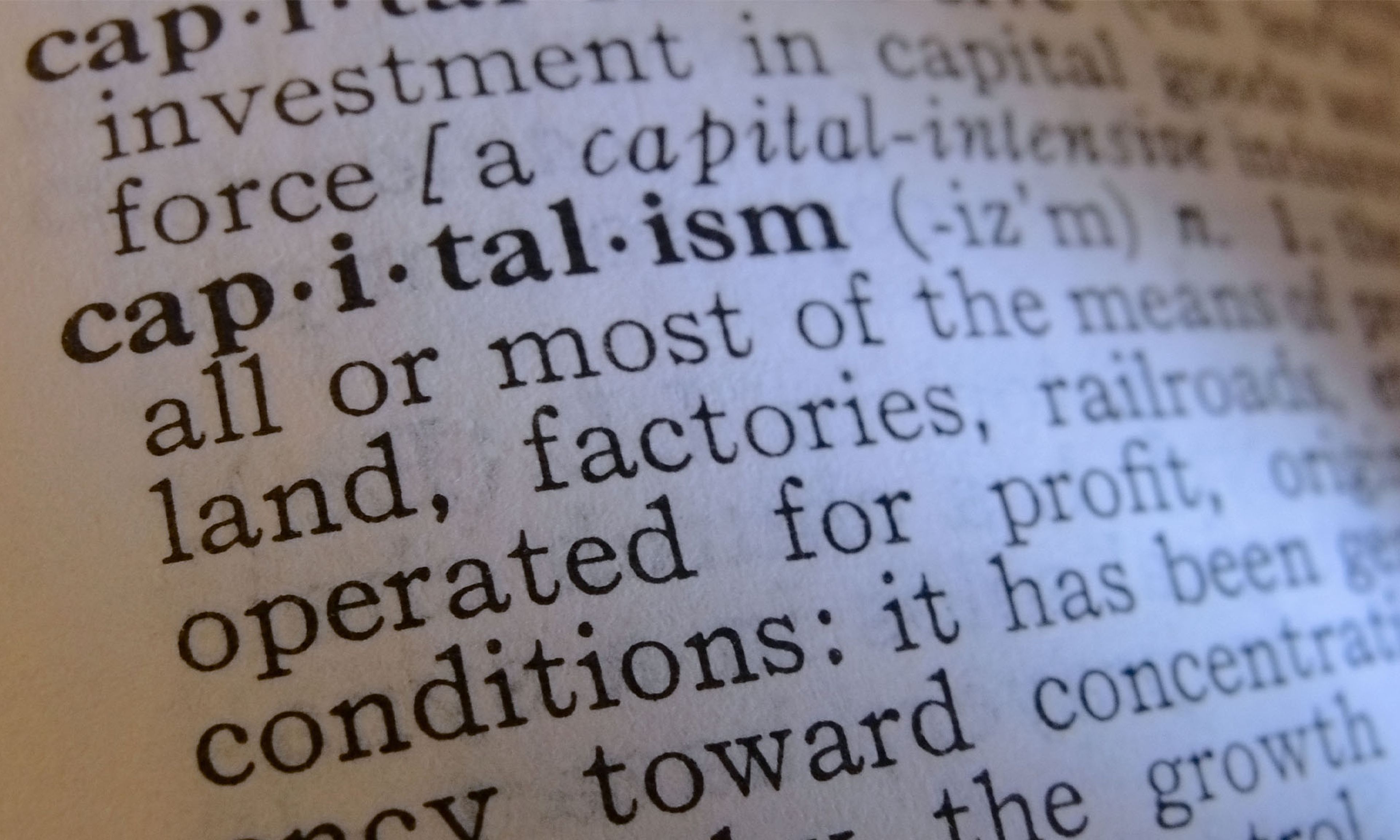
My late friend James Sledd, a University of Texas linguist who was an expert on lexicography among other things, was politically to the left. He distrusted capitalists and corporations. Perhaps it’s no surprise, therefore, that he thought all dictionary publishers should collaborate freely with each other and share their research. Why, he thought, should each publisher compile its own set of illustrative quotations when they could all be consolidated into a single massive database?
Perhaps the issue is passé, given that we now have linguistic corpora that everyone can share — the biggest of which is the Google Books database of 40 million books in more than 500 languages. Big data is an extraordinarily powerful tool for lexicographers. Today, Oxford University Press and Merriam-Webster have pretty much discontinued adding to their hard-copy catalogues of quotation slips. Everything is now captured digitally. But for citations up through 1983, Merriam-Webster, in Springfield, Mass., still maintains its file of 16 million paper citations, the most impressive lexicographic files in American history.
But let’s return to Sledd and consider what he was overlooking: the value of free enterprise in dictionary-making. I have four observations.
1. Competition is as helpful among lexicographers as it is in other realms. As a lexicographer myself, I’m always surprised when people talk as if preparing a dictionary is a leisurely activity. In fact, it’s typically a high-pressure enterprise with strict deadlines and daily quotas. Until recently, dictionaries involved big money because they steadily outsold almost all other books.
So it’s understandable that lexicographers would be intensely competitive. It may surprise you to learn that dictionary staffers frequently play this game: Five to ten of them will sit in a circle, each holding a different dictionary (including their own). Someone will call out a word, and everybody will look it up in the various dictionaries, reading the entries aloud one at a time. The question is which dictionary wins: Which one best captures all the nuances and best describes the word’s history in the most accurate, economical prose? Term by term, which dictionary consistently wins the competition? Whenever the staff finds their own work falling short in any respect, notes are made and entries rewritten. Not until the staffers’ work consistently wins, entry by entry, is the book considered ready for publication.
2. Historically, competition has always fueled ever-greater levels of achievement. When Samuel Johnson produced his great Dictionary of the English Language in 1755, he was trying to best such rivals as Nathan Bailey and Benjamin Martin, both of whom had compiled creditable dictionaries. When Noah Webster undertook his big dictionary in 1807 — to be published 21 years later — he was seriously trying to supersede Johnson. To a great extent, he did so. By the mid 1800s, the British realized that it had been a century since a Briton had produced a seriously good dictionary and that for a long time they had ceded the territory to Noah Webster. That’s when they undertook the Oxford English Dictionary, ultimately completed more than 50 years later, in 1928.
Meanwhile, Americans were producing large dictionaries that might contend against the OED. The Merriams were updating Webster’s work, transforming it into a massive one-volume work called the Webster’s International Dictionary (1890). Bigger and better editions were coming out every 20 years or so. Americans also produced the ten-volume Century Dictionary (1889–91), headed by William Dwight Whitney of Yale. This book, which became an also-ran against the OED, is now generally forgotten. But in its day, it was a serious threat to the editors of the OED. Its mere existence made the OED better than it otherwise would have been. Also, Funk & Wagnalls had started competing against Merriam-Webster. Seeking supremacy among dictionaries, Isaac K. Funk invested more than $50 million in today’s money to produce editions of his Standard Dictionary in 1894–95 and 1903. Merriam-Webster answered with its New International in 1909. Funk & Wagnalls then came out with its New Standard in 1913. The two competitors were marketed aggressively. But after Merriam-Webster produced its Second New International in 1934, Funk & Wagnalls soon became unable to compete effectively.
All this while, you can be sure, the lexicographers were playing their read-in-a-circle game, resulting in constant improvements.
3. Future competition isn’t merely about new words and new meanings. Because dictionary publishers periodically issue press releases about the neologisms they now record — last year, for Merriam-Webster, these included adorkable (endearingly awkward), ICYMI (in case you missed it), shrinkflation (a seller’s giving less of a commodity for the same price), and yeet (to throw) — we tend to think that’s where the action is. The old words seem to be fully covered; it’s just the innovations that need attention now.
That’s not really true. The old terms must be constantly scrutinized for their quality. The read-in-a-circle game is still useful.
The big question today is how to keep dictionaries profitable. More and more people use search engines. In free online searches, Oxford and Merriam-Webster are often the top results. People are notoriously unwilling to pay for online dictionaries. Can publishers sell subscriptions, or should they be subsidized by advertising?
James Sledd might have called these crass questions that only corporations would ask. But one thing is certain: As long as competition exists, the products will get better and better.












Comments