
• We take it back, Mr. President: Please stop trying to reduce inflation.
• President Biden marked the fall campaign season with a speech at Independence Hall, the location and the theme — defense of democracy — designed to wrap him in the spirit of patriotism. But the lighting — what the camera caught was blood red, with dark shadows — was off-message, as were portions of his text. Biden began by blasting “MAGA Republicans” as “extremis[ts] that threaten . . . the very foundations of our republic.” Election denialism and mythmaking about the Capitol riot do threaten legal and political norms for the sake of fundraising and brand definition: a reckless game for wretched stakes. But, although Biden insisted that not every Republican fits that profile, as he went on he included in MAGA’s sinister agenda the right to life, a cause that almost all Republicans, including Mitt Romney and Liz Cheney, embrace. Good anti-MAGA Americans, it turns out, support standard Democratic campaign planks: gun control, lavish infrastructure spending, expanded Obamacare. Biden has been an aggressive partisan for all his many, many years in politics, whether telling black people that the GOP would “put y’all back in chains” or challenging hostile questioners to push-up contests. He can be that, or 1776 redux; not both at the same time.
• Federal judge Aileen Cannon granted former president Donald Trump’s petition for a “special master” to conduct a privilege review of the documents the FBI seized from Mar-a-Lago. Trump’s delay in filing the petition and the judge’s delay in granting it meant that a Department of Justice filtering team (lawyers not assigned to the criminal investigation of Trump’s handling of national-defense intelligence) had completed its review, segregating about 500 pages potentially covered by attorney–client privilege. Not good enough, says Trump, who relies on a wayward Supreme Court precedent to claim executive privilege as well. The government opposes this claim, which courts have already rejected in the Capitol-riot context. Cannon ruled there was no harm in having a special master review documents for possible executive-privilege claims. Prosecutors could appeal but would prefer to avoid the delay. They have thus tentatively agreed to the special master, provided that Cannon blocks the review of about 100 classified documents. These are not plausibly covered by executive privilege, and the government could then use them in its continuing criminal probe (in addition to their use in the assessment of national-security damage from Trump’s removal of the documents, which Cannon has permitted). Trump’s legal victory looks to be both small and temporary.
• For months now, Trump has been making a campaign promise of sorts: If he is elected president in 2024, he will pardon those prosecuted for crimes committed in the January 6, 2021, assault on Congress. Most recently, talking to Wendy Bell, a Pittsburgh radio-show host, Trump said, “We’ll be looking very, very seriously at full pardons, because we can’t let that happen. And I mean full pardons. To many, an apology.” This is one promise that Trump would be likely to keep — and more proof of his unfitness for office.
• Stop us if you’ve heard this one before: Steve Bannon has been indicted. This time, Bannon — hot off his conviction for contempt of Congress — has been charged by the Manhattan district attorney’s office for defrauding donors to his “We Build the Wall” charity. That group raised over $25 million, supposedly to build a border wall with private funds, though in practice it served largely to enrich Bannon and his cronies. Bannon richly deserves to be punished for this abuse of the trust of sincere Trump supporters. That feeling of déjà vu you’re having is because the Department of Justice indicted him for the same thing in 2020 on Donald Trump’s watch, only to have the president pardon Bannon on his way out the door. That pardon was disgraceful, but the effort to get around it with a state prosecution by a progressive district attorney in a blue state in election season is itself nakedly political and chips away further at the idea of apolitical law enforcement. As has been the case so often since Trump’s emergence on the political scene, both Trump’s friends and his enemies push us ever deeper into a downward spiral — with Bannon often the catalyst.
• John Fetterman, the hoodie-wearing, left-leaning lieutenant governor of Pennsylvania, is the kind of Democrat made to appeal in a state whose populist long middle, between Pittsburgh and Philadelphia, James Carville famously compared to Alabama. On the eve of the Senate primary in May, however, Fetterman suffered a stroke, and although he won his party’s nod, he was unable to appear in public until August. Since then his speeches have been short, scripted, and halting. His underlying condition is atrial fibrillation, which was diagnosed in 2017 but not revealed until this year. Fetterman’s combination of poor health and long-standing reticence about his poor health is an imposition on the electorate and should guarantee his defeat in November. Only his opponent, Mehmet Oz, the TV doctor boosted to the GOP nomination by Donald Trump, could provide the miracle cure for his campaign.
• New York’s governor, Kathy Hochul, declared in a speech that her political opponents — Lee Zeldin, the GOP gubernatorial challenger, and Marc Molinaro, a GOP candidate who recently lost a special House race — should see themselves off to Florida because they and their ilk don’t belong in New York: “We’re here to say that the era of Trump and Zeldin and Molinaro — just jump on a bus and head down to Florida where you belong. Okay? Get outta town. Get outta town. ’Cause you don’t represent our values. You are not New Yorkers. You’re not New Yorkers.” These remarks echo those of disgraced former governor of New York Andrew Cuomo, who in 2014 said that “extreme conservatives” who are “right-to-life, pro–assault weapon, anti-gay” had “no place in New York.” Demographic trends suggest that quite a few people have decided on their own that they indeed have no place in the Empire State.
• Ranked-choice voting is a system in which voters can mark not only their top choice among the candidates for an office but also their second and third choices — or even their fourth and fifth. A few conservatives champion the idea, but more are hostile to it, and the latter camp had their views reinforced by the system’s performance in a special election for Alaska’s House seat. Most voters picked a Republican candidate, but the Democrat, Mary Peltola, won. Sarah Palin, the former governor and vice-presidential candidate, was the leading Republican candidate. But there was also a moderate Republican in the race, and too few of his supporters named Palin their second choice for her to win. Palin might well have lost the race under a more conventional system, since she appears to have become unpopular in the state. Ranked-choice enthusiasts also failed to put their best foot forward: Alaska chose not to count any votes until all of them had been cast, leaving voters in the dark about the winner for weeks. Palin will get another shot in November. In the meantime, it is a tribute both to Alaska’s size and to the country’s rural–urban divide that the total land mass represented by House Democrats has more than doubled.
• After getting smeared as extremists on the issue of abortion for more than two months, some congressional Republicans have begun to fight back. South Carolina senator Lindsey Graham introduced a bill banning abortion after 15 weeks of pregnancy. The legislation is a stark contrast to congressional Democrats’ bill, which would effectively allow abortion in all 50 states through all nine months of pregnancy. Graham’s bill includes exceptions to protect the life of the mother and in cases of rape and incest; it also allows states to set earlier limits and bans. At 15 weeks of pregnancy, few Americans could deny the humanity of the unborn child. At that point in development, as one maternity website notes, “your baby is looking more like a little person, with eyelids, eyebrows, eyelashes, nails, hair, and well-defined fingers and toes. If you could see inside your womb, you’d catch your baby sucking a thumb, yawning, stretching, and making faces.” Starting at 21 to 22 weeks of pregnancy, some babies born alive are cared for in the neonatal intensive-care unit and grow up to be children and adults. Many European countries set gestational limits on abortion earlier than 15 weeks, a point in development when an unborn child may feel pain. Congressional Republicans now ducking the issue — claiming abortion is only a states’-rights issue — are acting more out of fear than principle. Congress has previously banned partial-birth abortion, and 51 Senate Republicans plus three Senate Democrats voted for a 20-week limit on abortion in 2015. Ending the barbaric practice of late-term abortion is a sensible and humane policy.
• The Congressional Budget Office’s original score of the so-called Inflation Reduction Act found that it would reduce the deficit by $300 billion over the next ten years, but the bill changed during the legislative process. Now CBO has produced a final score of the bill, long after it was signed into law. It finds that it will reduce the deficit by $238 billion. Broken down by year, the updated score shows that the legislation will actually increase the deficit until 2026 and decrease it thereafter. Congress has a funny way of not doing the spending reductions later when it gets the spending increases now, and the law is still packed with gimmicks that underestimate costs and overestimate revenues. Add to this that Democrats are pumping front-loaded government spending into an inflationary economy, and the full absurdity of the bill’s name is clear.
• The steep costs of extended school closures and remote learning during the pandemic are becoming impossible to deny. The National Assessment of Educational Progress released in September had sobering results: For nine-year-old schoolchildren, reading and math test scores fell from their pre-pandemic levels at an unprecedented rate across the board, but the drop was particularly pronounced for the lowest-performing students. Math scores for those in the bottom 10 percent plummeted by twelve points, as compared with a three-point drop among those in the 90th percentile. The widening gap is hardly surprising: Lower-performing children are more likely to live in areas where schools remained closed the longest, and are least likely to have families who can compensate for the education system’s failures. Without significant remediation, the effects of so many children falling so far behind may compound over time. Extended school closures are proving to be the worst policy of Covidtime.
• The credit-card company Visa will join its competitors Mastercard and American Express in adopting a new merchant code specifically for gun sales. Historically, firearms have been categorized within the international banking system as “general merchandise.” But, under pressure from gun-control advocates and the public-pension systems of New York and California, the International Organization for Standardization has changed that, and Visa, Mastercard, and American Express have now followed suit. Supporters of the move claim that the addition of a unique code for firearms will give America’s financial institutions the ability to track “suspicious” purchases. Yet by their nature, merchant codes do not track what is purchased; they track the category in which a purchase falls. As a result, there is no way for a bank to tell whether a customer at a gun store is buying a firearm or a safe. As for what counts as “suspicious,” that, inevitably, is in the eye of the beholder — and, before long, those beholders will come under withering pressure to take the next step and cease processing firearm purchases altogether.
• As meteorological experts the Beach Boys said, “The West Coast has the sunshine, and the girls all get so tanned.” But will those girls, or anyone else, be able to drive back from the beach if it gets too hot? California had a few hot days, and the state’s electric utilities advised customers not to charge their electric vehicles to avoid overstressing the grid. That would be bad enough, but the state is also banning the purchase of new gasoline-powered cars after 2035. Forcing citizens to become ever more reliant on electricity that isn’t forthcoming isn’t only poor governance or inept management. These policies are the fruit of an ideology that sees human beings as burdens and prosperity as blight. The Beach Boys were also automotive experts, and they spoke of saving their pennies and saving their dimes to buy a brand new 409. But Californians of the future will be saving their pennies and dimes for unreliable electricity if they keep putting radical progressives into power.
• The District of Columbia is now requiring child-care workers to have college degrees. Directors of day-care centers must have bachelor’s degrees, teachers must have associate’s degrees, and assistant teachers must have a child-development associate credential. There are no obvious reasons why a college degree is necessary to care for children. The task has been performed for millennia by people who lacked one. Yet the District of Columbia has decided that it knows best. Proponents of the move say it will increase the quality of child care. But it will also increase its price, which in the district is already the highest in the country. On top of that, it will shut out workers who don’t have the relevant credentials. Requiring unnecessary credentials hurts consumers, employees, and employers — but that is what you get in a city run by the party of scarcity and shortages.
• Polio is making a disturbing reappearance. The first case of the disease since 2013 was uncovered in July north of New York City, in Rockland County, and led to partial paralysis in a young adult. The virus has subsequently been detected in wastewater samples from several surrounding counties, suggesting that many more people are infected who do not yet know it. What makes this particularly troubling is that polio is preventable. Once a major cause of disabilities in children that infected thousands each year, it was considered eliminated in North America decades ago, thanks to the miracle of vaccination. But a long campaign against vaccines by irresponsible actors has spread enough distrust to leave a sizeable portion of the population unvaccinated and vulnerable. We worry that the failure of the Covid vaccines to live up to their initial promise (President Biden infamously declared, “You’re not going to get Covid if you have these vaccinations”) has created a more receptive audience for hucksters to push their broader anti-vax message. But it’s imperative not to conflate Covid shots (which offer temporary protection against the most severe cases) with vaccines such as the one for polio, which has a proven record of offering lifetime protection.
• Bank of America announced a new mortgage program, the Community Affordable Loan Solution, that is targeted by race. Under the pilot program, the bank will require no down payment, no mortgage insurance, and no closing fees, and it will be more lenient in assessing credit than under the bank’s usual procedures. Contrary to some initial press reports, the program is not racially exclusive, but it is being intentionally deployed to target predominantly black and Hispanic zip codes. The bank’s aim to increase homeownership among these groups — especially black Americans, who have suffered much historic discrimination in home buying — is undoubtedly well-meaning, but it is also misguided. The bank claims that federal law and guidance from the Bureau of Consumer Financial Protection allow it to engage in conduct that would be textbook redlining if targeted at predominantly white neighborhoods. Whether or not that stands up in court, it is neither virtuous to make lending decisions on deliberately racial grounds nor prudent to water down credit standards in the housing market as though the 2008 financial crisis never happened.
• Are Jewish colleges illegal in New York City? Yeshiva University concluded that it was inconsistent with Torah principles to allow a gay group official sanction on its undergraduate campus, although it allowed such groups on its less pervasively religious law- and medical-school campuses. In a lawsuit to force the school’s hand under New York City’s human-rights law, the YU Pride Alliance made explicit that it was not merely seeking equal access to buildings on campus for internal meetings: The club’s openly professed goal was to use its approval as evidence that the school’s Torah-based religious doctrine on homosexuality should change. An elected Democratic judge in New York ordered the school to recognize the group, arguing that by providing many degrees in secular areas, it had lost the right to be considered a religious school. This misunderstands the role of religious colleges in preparing their students to enter the secular world informed by their faith — at the same time that Orthodox and Hasidic yeshivas in the state have come under criticism for not offering enough secular education. Mercifully, Justice Sonia Sotomayor temporarily stayed the judge’s order. The Supreme Court should take the case and preserve Yeshiva University’s freedom to pass on its faith to the next generation of Jewish undergraduates.
• David-and-Goliath stories aren’t confined to the Bible. They occasionally happen in the court of law. One such recently occurred in the Buckeye State. The saga began in 2016, when a black undergraduate at Oberlin College tried to buy a bottle of wine using a fake ID while attempting to steal other bottles. This led to a physical altercation between the student and a store clerk. After the student and two friends who had joined the brawl were arrested, senior members of the Oberlin faculty and administration promoted the lie that Gibson’s had a long history of discrimination and had practiced racial profiling by calling the police. The bakery suffered boycotts that devastated its reputation and nearly put it out of business, so it sued the college — and finally it has prevailed. After the supreme court of Ohio denied the school’s cert petition regarding a judgment against it, Oberlin announced that it would pay Gibson’s $36.59 million for defamation and tortious interference. The truth may not always be taught at Oberlin, but Oberlin can be defeated by it.
• There’s no doubt that American aid to Ukraine has been critical in helping to stabilize the front and keep the embattled Ukrainian army in the field and fighting. Since March, the United States has poured billions of dollars’ worth of weapons and ammunition into the effort to repel the Russians, including more than 800,000 rounds of high-explosive 155mm artillery shells. What’s alarming is that the rockets, missiles, and shells that have been given to our Ukrainian allies have not been replenished. In late August, the Wall Street Journal reported that some officials and defense experts have become worried about the “uncomfortably low” levels of combat rounds in U.S. armories. Current stocks are “not at the level we would like to go into combat” with, a defense official told the Journal. All efforts should be made to accelerate production of replacement matériel. The time for the nation to beat its plowshares into swords is now.
• With an anxious eye on Ukraine, other countries are preparing to take up arms in defense of democracy in its everlasting battle against autocracy. First up is Poland. U.S. secretary of defense Lloyd Austin met Polish president Andrzej Duda and his opposite number in the Polish government and told them, “What Mr. Putin did not want to see happen was a stronger NATO on his flank and that’s exactly what he will see.” The United States already has troops in Poland and is about to add 4,700 more. Acquiring three missile frigates, some 30 F-35 aircraft, and 250 of the improved latest tanks, Poland is modernizing its military forces as fast as it can. Next comes Taiwan, where China’s refusal to condemn the invasion of Ukraine is taken as an ill omen. This year, Chinese military aircraft have doubled their incursions into Taiwan’s airspace. Huge exercises have tested the island’s defense capacity. The army is 170,000 strong and defense spending is at a record high of $17 billion. The private sector is also stirring. Robert Tsao, a Taiwanese businessman, is donating $47 million to the training of Taiwanese civilians against an attack from the mainland. Not a moment too soon, democracies are seeing to their arsenals.
• At long last, the U.N. human-rights office issued its report on Chinese brutality against Uyghurs and other minority groups. Michelle Bachelet, the high commissioner, had promised such a report before her term ended. There was pressure on her to publish; there was pressure on her not to publish. She published — minutes before her term ended, on August 31. The report infuriated the Chinese government. “A patchwork of false information that serves as political tools for the U.S. and other Western countries,” said a foreign-ministry spokesman. “Clear and devastating,” said the U.S. ambassador to China, Nicholas Burns. In future years, nobody will be able to say, with credibility, “We didn’t know. We didn’t know what was happening.” Yes, we do.
• Two days before the end of the queen’s long reign, Britain’s prime minister, Boris Johnson, after a considerably shorter and rather messier term in office, was succeeded by Liz Truss, the foreign secretary, who had just prevailed in the Conservative Party leadership contest. Truss faces the toughest challenges of any incoming British prime minister since Mrs. Thatcher in 1979. Britain is in the grip of a deepening energy crisis, inflation is surging, recession looms, government debt is piling up, and union militancy is on the rise. Truss could come across as a Thatcher-tribute act. On the other hand, after a lengthy period when Tory leaders have unlearned the lessons of Thatcherism more thoroughly than changing times called for, there is something to be said for a Conservative prime minister who believes in deregulation, free markets, and low taxation. But Thatcher had time — and the fact that she had been in opposition — on her side. Truss heads a party that has been in government since 2010. The next election is only a little more than two years away. She will need Thatcher’s steel, and her smarts.
• The results of Sweden’s general election are the latest legacy of the premiership of Fredrik Reinfeldt, the leader of the country’s center-right Moderates for part of the last decade. Reinfeldt’s time at the helm was marked by competent economic management but defaced by bien-pensant mush, of which the most damaging was an immigration policy that mixed virtue-signaling and libertarianism, to disastrous effect. Immigration rose sharply, but — Sweden is a conformist place — those who objected were shut out of politically polite society. The newly politically homeless turned to the Sweden Democrats, a party with neo-Nazi roots, which, under a new leader, had been cleaning itself up for years, no small task. None of the established parties of Right or Left would have anything to do with them. The predictable result was that, in this latest election, they established themselves as the largest party on the right (although, as with many such parties, their economic policies don’t fit neatly on either side). At the time of writing, Sweden’s right-of-center parties have a (very) narrow edge as counting continues. If it holds, however hobbled they may be by profound internal disagreements, they will look more likely to form a government than their opponents on the left. The lesson: Popular discontent over mass immigration needs to be listened to, not made taboo.
• In 2020, 78 percent of the Chilean electorate voted to scrap the nation’s old constitution and start the drafting of a new one. But now 62 percent of Chileans have voted to reject the new constitutional draft backed by, among others, the nation’s far-left president and his allies. And who could blame them? The draft was a 170-page, 388-article catastrophe. It guaranteed more than 100 rights — not just housing, sanitation, health care, and so on, but the right to free time, Internet access, sex education, physical activity, and more. It granted rights to nature and animals, abolished the national senate, mandated gender parity in government, and legalized abortion and the “freedom of gender identity.” Not for the first time, Chile has been spared a revolution.
• Notre-Dame de Paris needs a new roof after the fire that tore through the cathedral three and a half years ago. Restoration began in earnest in 2021. The French government hopes for completion by 2024, although craftsmen warn against rushing it. Companies bidding to work on the project have recruited the meticulous and thorough carpenters at Guédelon Castle in Burgundy. For more than 20 years, builders have been constructing the castle from scratch, relying on materials and methods that would have been available to their forerunners in the 13th century. They cut and hew each beam by hand. “This isn’t just nostalgia,” says Stéphane Boudy, one of the carpenters. “If Notre Dame’s roof lasted 800 years, it is because of this. There’s no heart in sawmill wood.” La Forêt, as the cathedral’s roof is known, because so many trees contributed to its composition, was a complex structure whose exacting restoration few would be qualified to undertake. Leaders of the Guédelon project, which they describe as an exercise in “experimental archaeology,” could not have foreseen that it would be a training ground for such a grand endeavor, but it is. Dieu merci.
• The realization that Thomas Jefferson was not a saint has led the editors of the University of Virginia’s student newspaper to symbolic patricide: They seek the scrubbing of Jefferson’s legacy from the school that he founded, and do so by exercising liberties that he worked to enshrine. What’s most lamentable isn’t the historical semi-literacy of ingrate sophomores at a “public ivy,” but their willingness to cede the tradition that the primary author of the Declaration of Independence represents to oafs of the tiki-torch-carrying sort. Coming to terms with Jefferson’s moral faults is one thing; reducing him, and his public meaning, to those faults is entirely another.
• A Brooklyn mom of a child struggling with gender dysphoria went undercover in TrevorSpace, the anonymous online forum for LGBT youth hosted by the well-funded and influential Trevor Project, to search for resources for de-transitioners (those who wish to return to identifying with their biological sex). As Caroline Downey reported for NRO, she found none. Instead, she found aggressive gender-reassignment referrals; adults encouraging minors to buy “packers” (artificial phalluses), chest-“binders,” and gender-transition medication behind their parents’ backs; and many troubled kids in need of counseling. The explicit topics she saw minors and adults discussing included bestiality, masturbation addictions, and assorted sexual fetishes. The progressive nonprofit claims it’s saving kids, but kids may need saving from it.
• When most Americans think of Major League Baseball, they think of Cracker Jack, Babe Ruth, and “Take Me Out to the Ball Game.” They don’t — and shouldn’t — think of medical sex changes for children. But unfortunately, that’s often what today’s MLB fans are funding. Nate Hochman’s analysis for NRO found that some 20 out of the 30 teams in MLB are partnering with or directly funding groups that promote or actively perform sex changes on children as young as twelve. Citing this reporting, Senator Marco Rubio (R., Fla.) sent a letter to the owner of the Tampa Bay Rays presenting concerns about the Florida franchise’s funding of a medical clinic that provides hormone suppressants to minors. As Rubio pointed out, countries including Sweden and Finland have recently moved to ban or severely restrict such interventions on children. Is it too much to ask that MLB be less progressive than Scandinavia?
• The pastime itself has changed. Major League Baseball has approved rule changes for the 2023 season. They include a strict pitch clock and a ban on defensive shifts. A limit on the time a pitcher is allowed between pitches has long been in the official rulebook but not enforced. The introduction of a pitch clock in the minor leagues has reduced the average game time there by nearly half an hour. The elimination of defensive shifts — two infielders will now be required on each side of second base — should have the opposite effect: A batted ball that goes through for a base hit instead of being snagged for an out prolongs the game. MLB’s primary aim is not to shorten games but to increase the pace of play, although those objectives are correlated. Players on the committee deliberating the two innovations voted unanimously against them. In a statement, the players’ union noted that “on-field rules and regulations” affect the performance of those who throw, hit, and catch the ball. The new rules are an inside pitch that will jam them and restrict their ability to play as smart as they would like. For better and for worse, strategy will be sacrificed to speed.
• After 70 years of her reign, the idea that Elizabeth II might one day be gone was still somehow unthinkable, so much had the queen become part of the country’s image of itself. Her successor, Charles III (as Brits must learn to think of him), must ensure that the break with the past is personal, not institutional. One of the strengths of the British system is the thread of continuity that runs through it, a thread ultimately held in place by the monarch, best understood these days as a symbolic incarnation of the British state. This was something that Elizabeth understood perfectly. She was not important, but what she stood for was. Her role was to unite a sometimes fractious kingdom. Her destiny was to have to do so through an era of sometimes bewildering change. Remaining steadfastly (and properly) above politics, she performed this task skillfully and diligently right to the end, earning herself a position in British minds and, often, hearts that was a tribute to a life very well lived. R.I.P.
• Elizabeth II inherited her destiny; Mikhail Gorbachev stumbled into his. Tough enough to reach the top of a brutal system, he was enough of a realist to see that the USSR was being undermined by a rotting economy, but, except in one vital respect, still in thrall to the thinking that had led to disaster. An old-fashioned Soviet-style efficiency drive (mainly consisting of a disastrous anti-alcohol campaign) failed. Its successors, glasnost and perestroika, allowed people to talk about what was wrong but denied them the tools — market-oriented reform — to fix it, a recipe, particularly within what was an empire in all but name, for the unraveling that followed. Where Gorbachev differed from his predecessors was in his refusal to resort to violence (other than in some isolated incidents for which he may or may not have been responsible) to hold together either the Soviets’ outer empire in Eastern Europe — a loss he didn’t by then seem to mourn — or the Soviet Union itself, a dissolution he opposed until the last moment. Nor did he let his domestic failures tempt him into adventurism abroad. So, while he was a failure, he failed with grace, and for that we should be grateful. R.I.P.
• For years, Ken Starr seemed on track to be nominated to the Supreme Court. Instead he was plunged into controversies. Born in 1946, he grew up in San Antonio. He would clerk for Warren Burger, the chief justice. President Reagan nominated Starr to the D.C. Court of Appeals; Starr, at 37, became the youngest person ever to serve on that court. In the administration of George H. W. Bush, he served as solicitor general. In 1994, fatefully, a three-judge panel asked him to be the independent counsel in the Whitewater matter. This led to investigations of other Clinton scandals, culminating in the Lewinsky affair, which resulted in the president’s impeachment. Critics said that Starr was Javert, obsessed and demonic; others of us thought he was doing his job amid liars and subverters. Later on, Starr served as the dean of the law school at Pepperdine University, and then as the president of Baylor University. He also practiced law — some clients being more savory than others. He was on the defense team of Jeffrey Epstein, infamous for sexual predation. In 2020, he was on the defense team of President Trump, in his second impeachment. Ken Starr was known to WFB and others at NR. He was a guest on at least one of our cruises, gentlemanly and knowledgeable. He was a far cry from what his enemies painted. Ken Starr has died at 76. R.I.P.
September Surprise
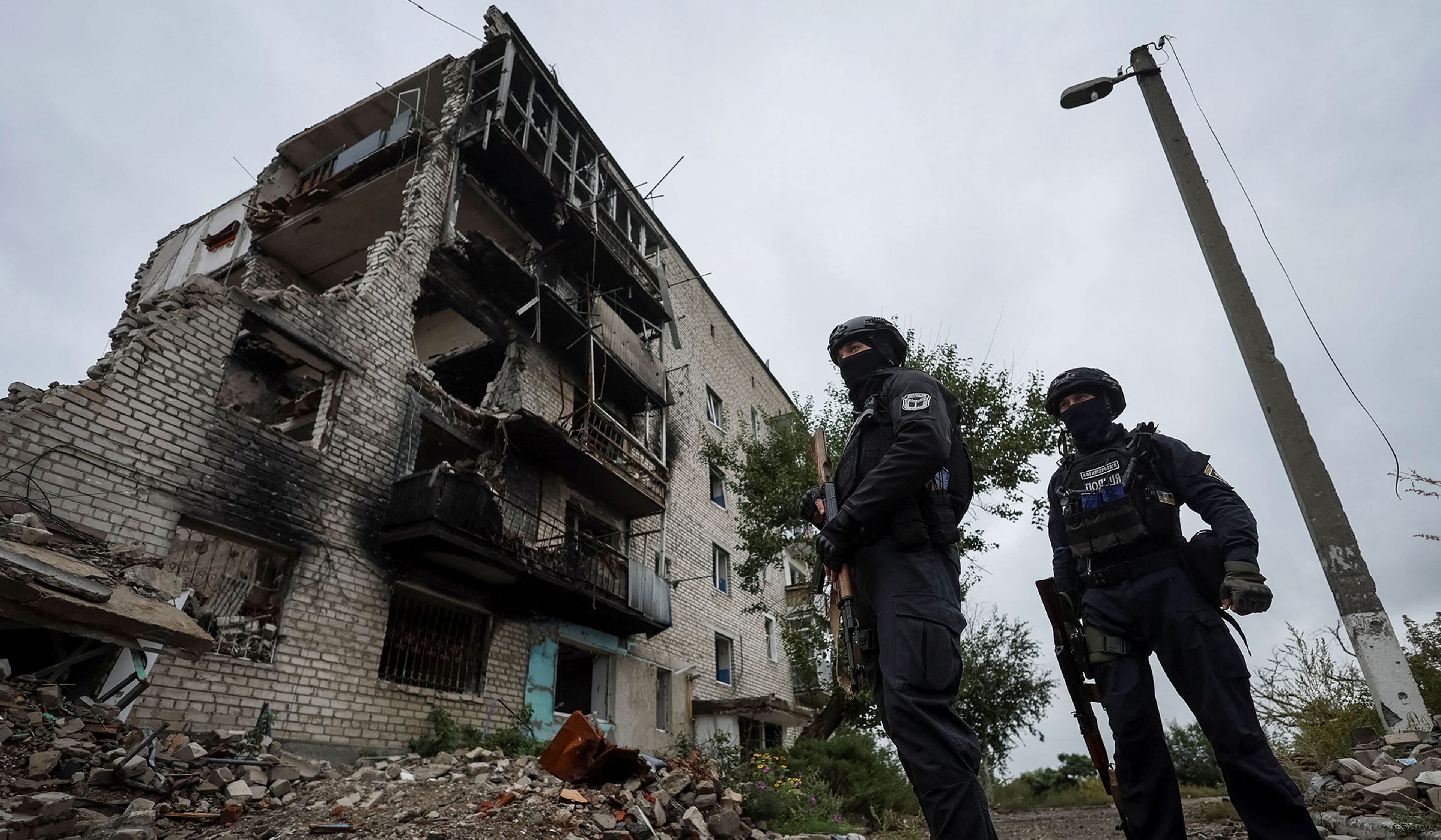
After a late summer of tense and grinding combat, the war in Ukraine suddenly races along. A Ukrainian advance toward Kherson in the south left Kharkiv in the north weakly defended. Ukrainian forces have broken through Russian lines there, while continuing to exert pressure in the south. The loss of men, equipment, and territory on the Russian side has been so great that even Russian state media admit it. What accounts for it?
In war, Napoleon supposedly said, moral power is to physical as three parts out of four. The moral balance has been on the Ukrainian side from the beginning. Victims of a remarkably greedy and grotesque attack, the Ukrainians fight for their homes and their identity as a people. They have been armed by the United States, Britain, and other members of NATO, and supported by European neighbors generously harboring millions of refugees.
Elements of the Russian army appear by contrast to be in moral collapse. Putin hesitates to impose conscription, because that would risk wrath on the home front, especially in St. Petersburg and Moscow. As a result, many Russian troops are poor, from the hinterlands, badly equipped. Long-range artillery, wielded by the Ukrainians, has shredded behind-the-lines supply depots. Russia has been reduced to asking North Korea and Iran for matériel. Its soldiers resort to war crimes. Bucha was only the first of liberated areas to supply sickening details.
What can we expect the Russians to do to retrieve the situation? They count on natural-gas shortages come winter to weaken Europe’s resolve. Demonstrations in capital cities against high prices, manned in part by right-wing and other pro-Putin elements, have already occurred. Russian mischief at the Zaporizhzhia nuclear plant could threaten Europe and Turkey with a Chernobyl-style event. Meanwhile, Russian military blogs, and even official media, broadcast calls for sterner measures. The trouble with Putin, these proto-critics allege, is that he has been too nice. Putin, old and ailing, may be at a late-Gorbachev moment, threatened by hard(er) liners as well as Russian liberals. He has unleashed more than he expected. The old FSB man, however, knows how to survive.
Ukraine’s valiant and unexpectedly successful fight should inspire freedom-loving people everywhere. National spirit is not always a force for reaction; the future does not belong to top-down societies and iron fists. Americans, including American conservatives, tempted by strange gods, should heed the lesson.














Ukrainian service members ride a BMP-2 infantry fighting vehicle in Kharkiv Region, Ukraine, September 13, 2022.
Gleb Garanich/Reuters












Comments