• Fires, floods, locusts, plague—at least they’re canceling Keeping Up with the Kardashians.
• President Trump remains behind Joe Biden, but the race is tightening — and tightening more in the key states than in the rest of the country. Concern over crime and disorder is rising, including among Biden voters, suggesting that Trump has an opportunity to convert some of them. If, that is, he stops putting obstacles in his own path. When on-the-fence voters think of him, “bringer of order” is probably not the first thing that comes to mind. The more discipline he can show between now and Election Day, the better his chances will be.
• Is Biden running for president, or for banker? He seems to be keeping banker’s hours. In the first ten days of September he spoke publicly six times in four states; the rest of his campaign time was devoted to virtual events, or . . . nothing. Yes, the 2020 campaign is happening in a pandemic. Biden can pull a strong performance when necessary (see his primary debate with Sanders). And his opponent sets a low bar for productivity (Trump’s day minus TV time, Twitter time, and phone chats with pals doesn’t leave a lot). But the presidency is a tough long haul: All the young men who have recently held it — Carter, Clinton, W., Obama — left with gray hairs. Nothing against septuagenarians — so long as they have what it takes.
• Trump announced new additions to his list of potential Supreme Court nominees. Like the previous lists, it is full of eminently qualified conservative jurists. If he is reelected and gets the chance to make another nomination, he might choose someone who isn’t on the list: Brett Kavanaugh wasn’t on either of the lists he made before the 2016 election. But those first two lists helped to reassure conservatives that he would side with them on a crucial issue. He has delivered on his promise in office, and the new list serves mostly to remind conservatives of that important fact.
• In an aside in a rambling statement to the press, President Trump said that soldiers are “in love with me” and added, “The top people in the Pentagon probably aren’t because they want to do nothing but fight wars so that all of those wonderful companies that make the bombs and make the planes and make everything else stay happy.” In the last several decades, U.S. military leaders have in fact often been more wary than civilian ones about using force abroad. There is much to be said in favor of Trump’s foreign and defense policies. Making that case need not involve repeating the ignorant slanders of the Chomskyite far left.
• If you are president and you speak to Bob Woodward, you look bad. And if you are president and you don’t speak to Bob Woodward, you look bad. President Trump chose the first option, and he looks bad in Woodward’s latest, Rage. The exchanges from the 18 recorded interviews that Woodward conducted that have gotten the most play concern what Trump knew of COVID-19 and what he said about it. Trump to Woodward February 7: “more deadly than . . . even your strenuous flu.” Trump in public February 26: “It’s a little like the regular flu that we have flu shots for.” Why the disparity, Woodward asked Trump, March 19? “I wanted to always play it down . . . because I don’t want to create a panic.” But panic arises when problems are not faced, not when they are. A lifetime of playing the media and playing with rivals unsuited Trump for dealing with a virus, which does not play. Far more troubling is how close we came to war with North Korea; then, Defense Secretary James Mattis slept in his clothes and prayed at the National Cathedral. We dodged that warhead, Trump claims, because of the relationship he established with Kim, whom he calls “beyond smart” (Kim addresses him in letters as “Your Excellency”). But did Trump’s pre-thaw bluster bring on the threat he averted? As usual Woodward throws out tidbits that historians will be sifting for years. But perhaps the big get is how unsurprising it all is. Trump is Trump: The best, the worst, and the Trumpiest of him are always out there for all to see.
• E. Jean Carroll, a 76-year-old former columnist for Elle magazine, claims Donald Trump sexually assaulted her in the fitting room of a midtown Manhattan department store about a quarter century ago — she’s not sure what year, or what time of year. Though some friends say she told them at the time, she did not report the matter to police. In 2019, she released a book including the allegation, drawing predictably breathless media coverage. The president denied it in Trumpy fashion (she’s “not my type”). Carroll promptly sued him in New York state court for defamation, claiming the denial smears her as a liar. Carroll is using defamation as a pretext to litigate an assault claim long past the statute of limitations. Essentially, Trump was just pleading not guilty to her underlying charge. That’s not slander. Trump has responded by invoking laws permitting him to substitute the United States as the defendant and move the case to federal court, because when he issued the denial, he was a government official engaged in official duties. That will kill the case under sovereign-immunity principles. The media howled, but it was legal gamesmanship on both sides.
• In his attempt to dig up dirt on the Bidens in Ukraine, Rudy Giuliani hooked up with Andriy Derkach, a Ukrainian member of parliament. Derkach has now been sanctioned by the U.S. Treasury Department as a Russian agent. He “has been an active Russian agent for over a decade,” said Treasury, “maintaining close connections with the Russian Intelligence Services. Derkach has directly or indirectly engaged in, sponsored, concealed, or otherwise been complicit in foreign interference in an attempt to undermine the upcoming 2020 U.S. presidential election.” Interviewing Giuliani on MSNBC, Jonathan Capehart said, “I’m trying to understand how someone of your stature and career — what happened to you, Mayor Giuliani?” A good, painful question.
• Two police officers were fighting for their lives after being shot multiple times at point-blank range while doing paperwork in their parked police car outside a train station in Compton, Calif. As we write, the suspect remains at large. Ordinarily, such a cowardly and heinous act would be universally condemned, but apparently not in 2020. A few demonstrators blocked the entrance to the hospital in Lynwood, where the officers were being held in critical condition, and proceeded to chant abuse such as “We hope they f***ing die” and “Kill the police.” The FBI has been summoned to help track down the gunman, whom President Trump has called an “animal” deserving of the death penalty. Los Angeles mayor Eric Garcetti told CNN’s Anderson Cooper that one of the wounded officers, a 31-year-old mother of a six-year-old boy, courageously saved the life of her 24-year-old male partner by applying a tourniquet to his wound while bleeding from her own gunshot wound to the face. We wish a full and speedy recovery for both, and justice for the culprit.
• The New York Post has been having a field day with young folks arrested after a window-smashing spree in Manhattan during a New Afrikan Black Panther Party rally. The perps turn out to be pale and privileged. The first we learn from their mugshots, the second from personal info, both helpfully supplied by the Post. One is a model, one is a graphic designer, one goes to Sarah Lawrence, one is the son of a novelist and comic-book writer, one is the daughter of an architect with a house in Litchfield, Conn. The last has red hair, prompting the Post to dub her “Little Red Rioting Hood.” Next to them, Al Sharpton is the voice of sanity; in a recent TV discussion, he slammed defunding the police as the dream of “latte liberal[s] as they sit around the Hamptons.” It is tempting to dismiss it all as cosplay for radikids. But the damage they did was real — $100,000 worth, according to cops — and their ideals are awful: One rioter’s notes, seized by police, cited Stalin and Trotsky approvingly. Ignorant young people can become ignorant, dangerous adults. Ioseb Jughashvili and Lev Bronstein did.
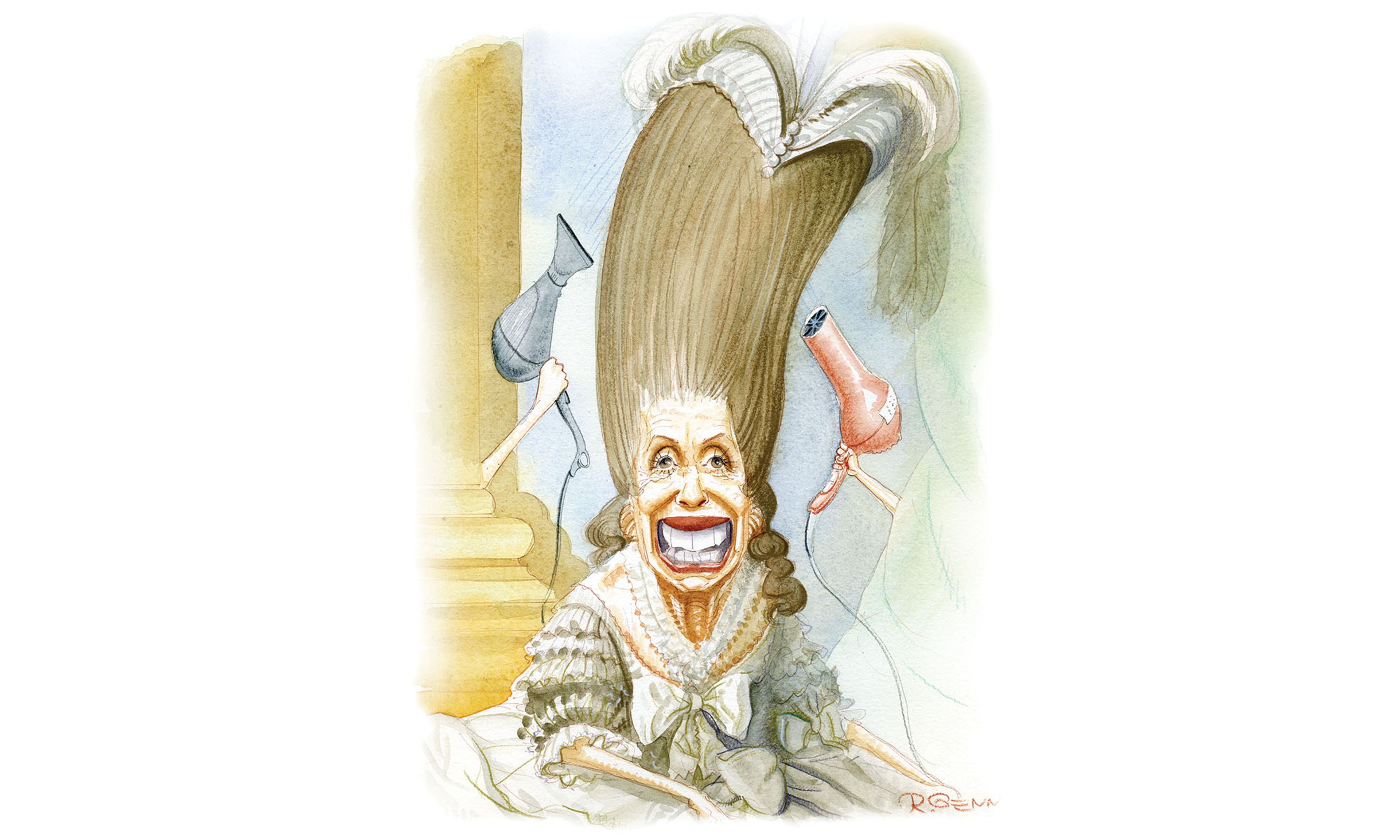
• When Speaker Nancy Pelosi was photographed in a San Francisco hair salon, in violation of local lockdown rules, her defense was . . . interesting. “I take responsibility for trusting the word of a neighborhood salon that I’ve been to over the years many times,” said Pelosi. “When they said they were able to accommodate people one person at a time, I trusted that. As it turns out, it was a setup.” San Francisco allows salons to service customers only outdoors. If the salon told Pelosi they could take her inside, they were misinformed; if they told her so as part of a scheme to make her look bad, they were dishonorable. But then, Pelosi did look bad. Lockdowns easily — necessarily? — lead to niggling and snooping, which is why they should be instituted only in cases of dire need, such as pandemics. Nancy Pelosi, third in line for the presidency, should know the rules herself, lead by example — and not shift blame.
• Third time’s the charm, right? Mississippi residents must hope so, as the third iteration of their state flag is up for a vote on November 3. The current version, in use from 1894 to 2020, has ignited controversy over the years for being the only state flag to bear Confederate symbols. It came under fire again after the George Floyd killing in May, leading Governor Tate Reeves to declare he’d immediately sign into law any new-flag legislation passed by the legislature. This being done, the newly created Commission to Redesign the Mississippi State Flag issued a call for flag designs, due by August 1. After reviewing over 2,000 submissions, the committee chose the “New Magnolia,” which features — among other emblems — 20 white stars surrounding a magnolia flower and the motto “In God we trust.” This last bit has raised its own share of controversy (the Satanic Temple seems to have a problem with it), but we find the new design beautiful and hope the residents of Mississippi do, too.
• A working group created at the behest of Mayor Muriel Bowser submitted its recommendations on public facilities in the nation’s capital. The group explains that their “decision-making prism focused on key disqualifying histories.” Such histories include “participation in slavery, systemic racism, mistreatment of, or actions that suppressed equality for, persons of color, women and LGBTQ communities and violation of the DC Human Rights Act.” It’s a difficult standard for men and women of centuries past to live up to, especially since the D.C. Human Rights Act was passed in 1977 and has since been updated to include gender identity, a concept unfamiliar to the country’s founders. Those whose names are said to need replacing include Alexander Graham Bell, John Tyler, James Monroe, William Henry Harrison, Woodrow Wilson, and Benjamin Franklin — whose last political act was an attempt to abolish slavery. The group also calls for the removal, relocation, or recontextualization of the Washington Monument and Jefferson and Mason memorials (Mason, it should be noted, was an ardent opponent of slavery despite his ownership of a large Virginia plantation). Bursts of iconoclasm rarely make fine distinctions.
• Before the kickoff game of the 2020 NFL season, members of the two teams, the Kansas City Chiefs and the Houston Texans, linked arms at midfield and observed a moment of silence, to protest racism. The crowd response included some animated booing. During the national anthem before the 13 games played the following Sunday, some players knelt while others stood. Some raised a fist. Others sat on the bench. Six teams stayed inside the locker room; perhaps they figured that any posture they adopted during the anthem would be read as a partisan political statement. The league decided to play “Lift Every Voice and Sing,” sometimes called “the black national anthem,” after “The Star-Spangled Banner” before every game during Week 1. An appropriate ceremonial touch, it could have been enough. In recent weeks, outside the lines, some professional athletes have spoken with passion and eloquence about racism in personal as well as in general terms. They deserve honor. On-field expressiveness is a different matter. The pregame gesturing that the NFL has been experimenting with has been extravagant and offended some fans. In the end, restraint elicits more respect than overstatement does.
• Congress’s eviction moratorium has expired, and legislators seem unlikely to renew it anytime soon. Yet, taking a cue from its predecessor’s “pen and phone” style of executive lawmaking, the Trump administration has decided to step in. Under a new rule, many tenants can stop themselves from being evicted by giving their landlord a form asserting that they meet certain requirements, such as falling under a generous income limit ($99,000 for individuals and $198,000 for couples). The legal justification is paper-thin: Congress has not given the executive branch any explicit authority to stop evictions, so the policy is being run through the Centers for Disease Control — which claims, incredibly, that its authority to stop diseases from spreading across state lines is so broad as to encompass this heavy-handed, nationwide housing policy. The public-health rationale is an obvious pretense, the policy is already facing court challenges, and the administration should drop it before judges force them to.
• On September 13, Trump signed an executive order paving the way for Medicare to pay the same prices as other developed countries’ health agencies for prescription drugs. Owing to a lengthy rulemaking process, the measure will not take effect in the near future, but, if implemented, it would limit the availability of medicines and reduce the innovative capacity of the pharmaceutical sector. The U.S. leads the world in drug development, and Trump is right to take issue with the comparatively high prices paid by Americans. The administration should therefore work to make other countries shoulder more of the cost of drug development. Skeptical of imports as this administration is, the last thing it should be importing is price controls.
• The Senate subcommittee that handles antitrust policy held a hearing on whether Google has harmed competition in online advertising — something it appears to have done, as is also true of Facebook. Many critics of the tech giants want antitrust enforcers to restrain them, or even break them up. But the companies’ stranglehold over digital-ad revenues could be addressed by relaxing antitrust laws for the media outlets that do business with them. Let them band together to bargain with the giants over ad rates and the like. Whatever else antitrust law is good for, it shouldn’t be used to shield Goliath from David.
• Critical race theory is in the news, which isn’t good for critical race theory. After an episode of Tucker Carlson’s show highlighted reporting done by Christopher Rufo of the Discovery Institute and City Journal on the federal government’s mandating of critical-race-theory propaganda seminars for federal employees, President Trump sent down word that this must end, and OMB boss Russ Vought sent out a memo prohibiting any new spending on what Vought calls “divisive, anti-American propaganda.” It seems to us strange that a government infected with “systemic racism” would spend such splendid sums to have itself systematically lectured on systemic racism — systemic racism should be made of sterner stuff. We know that the federal government does not always hire the best and brightest, and that some federal workers need some training on how to behave in the workplace, including how not to be boobs in racial and sexual contexts. The president himself could use the occasional reminder on that score. But indoctrination is not workplace training: It is indoctrination. The president is right to work to eliminate what amounts to a program of political propaganda conducted on the public dime as a requirement of government employment, and federal agencies resisting that effort, the Centers for Disease Control prominent among them, do not have a leg to stand on. This is not a thought that often crosses our minds, but: Federal workers deserve better.
• It is an ill wind that blows Jeff Bezos no good. Amazon, the Seattle-based online superstore, is hanging out a very large “Help Wanted” sign, and it expects to add about 100,000 workers to its payroll. With the COVID-19 epidemic continuing to constrain national life, Amazon expects the recent shift toward online shopping to continue and to deepen, not only for the more durable consumer goods sold on Amazon but also for the groceries sold at the Whole Foods stores Amazon acquired in 2017. The hiring spree will bring Amazon’s workforce to about 1 million, with about 700,000 of them in the United States. The firm opened some 100 new U.S. facilities, ranging from fulfillment centers to sorting stations, in September alone. While we would not go so far as to declare, “What’s good for Amazon is good for America,” the firm’s ability to thrive in the restricted environment imposed by the coronavirus response is a welcome reminder of the public benefits that accompany the private profits of a robust and innovative free-market system.
• Five years ago the Academy of Motion Picture Arts and Sciences, whose principal task is to hand out the Oscars each year, blanched and cringed when detractors razzed it for including no black nominees among the 20 actors so honored. Instead of responding that one year’s sample is not obviously meaningful, or that blacks have in recent years been proportionately represented in the acting categories, the Academy instead implicitly granted the premise of activists and went on an affirmative-action frenzy, abandoning its nearly century-long tradition of extending membership only to well-established industry veterans by sending out scads of invitations to young people, women, and minorities in hopes of changing the tastes of the voting body. This year, the same Academy that in the last seven years has given its top prize to a Korean film about class inequality, three films about the suffering of black people, and a sci-fi fable about intolerance announced that, beginning in 2024, no film may be considered for Best Picture unless it meets a freshly established set of “representation and inclusion standards.” Most Oscar-caliber films are already financed, produced, or distributed by companies that meet the new requirements. This year the Academy should give an award for the best performance of virtue to itself.
• Netflix released a statement saying it was “deeply sorry for the inappropriate artwork” used to promote Cuties, a French-language film about the hyper-sexualization of children, after a promotional poster (showing preteen girls dressed like strippers and posing suggestively) caused a furious backlash. The streaming service still released the movie to its 192 million subscribers, however; the filmmakers insisting that it was “a social commentary against the sexualization of young children.” But the full movie, which contained even more instances of child sexualization than the initial poster, failed to reassure. Progressive journalists and critics rushed to denounce those objecting to the movie as right-wing conspiracy theorists and puritans, in which case we need more of each. The problem with Cuties is not its message. It’s that in sending that message, the film itself sexualizes children — something that no one (artist, feminist, or anything else) should have a license to do.
• Disney’s Mulan remake had already faced its fair share of controversy over star Liu Yifei’s public support for the Hong Kong police. But when the movie premiered this month, astute viewers noticed that the credits thank a handful of government entities in Xinjiang. Apparently, the production crew filmed scenes in China’s far west in 2018, when the widespread human-rights violations in the region were already well known. Unsurprisingly, the local government offices acknowledged by Disney are involved in perpetrating and covering up the Uyghur genocide. Disney joins the disturbingly long list of multinational corporations that have turned a blind eye to the genocide in Xinjiang. It includes the NBA, McKinsey, and major clothing brands. Still, Disney stands apart from the rest for being the first American entity to thank the CCP for its help. Since its U.S. premiere, Mulan has attracted criticism and congressional scrutiny in the United States. And it’s been spurned by Chinese consumers; on its opening weekend in China, it grossed just $23 million. Still, Disney, which has yet to issue an apology, doesn’t seem to have learned its lesson. American consumers should make sure that it does.
• And then there were four. Egypt (Sadat) normalized with Israel in 1979. Jordan (King Hussein) normalized 15 years later. Flash way forward to August 2020: The United Arab Emirates normalized with Israel, and the next month another Gulf state, Bahrain, did. More are almost surely to come. Fear of Iranian hegemony in the Middle East is a major cause of this trend. There is something else to consider: The recent normalizations prove that Israel can indeed reach agreements with Arab states, even before a resolution of the Palestinian problem — a problem that, for more than 70 years, has seemed intractable, but that one day will be proven otherwise. The Trump administration, the Israeli government, and those Gulf governments deserve great credit for the recent steps. We look forward to the fifth state: the fifth, and then the sixth, Arab state to establish normal diplomatic relations with the Jewish state, Israel.
• Dictators abroad, helped by U.S. companies in the suppression of people under those dictators’ rule. It’s an old story. And it has continued in Belarus: Sandvine, Inc., has helped the dictatorship of Alexander Lukashenko block much of the Internet, to the detriment of the democratic opposition. But here is a brighter story out of Belarus: involving Svetlana Alexievich and diplomats of the European Union, stationed in Minsk. Alexievich is the most prominent writer in the country, the Nobel laureate in literature for 2015. She is also an oppositionist, meaning that her safety is threatened. EU diplomats have taken to staying with her in her home, in round-the-clock shifts, in order to afford her some layer of protection, or a buffer, between her and state-security agents. This is a laudable act of solidarity.
• Last year, RFE/RL — that storied and sterling combination of Radio Free Europe and Radio Liberty — returned to Bulgaria and Romania. Now it has returned to a third EU state, and NATO member: Hungary. This is because of the fading out of independent media, and a profusion of disinformation, in that country. The “information landscape” was “degraded,” as RFE/RL says. Hungarians can consume all the state media, and state-friendly media, they like. But now they will have the option of RFE/RL, which is good news indeed. The “radios” withdrew from Bulgaria, Romania, and Hungary once before — after the Fall of the Wall and a democratic flowering. May they be able to withdraw again someday soon.
• In Iran the sport of wrestling is taken seriously. Winner of several national championships, the 27-year-old Navid Afkari might well have represented Iran at the Olympic Games. In 2018 he and his brothers Habib and Vahid took part in an anti-government demonstration in Shiraz that turned ugly. The Basij are a paramilitary force responsible for keeping order, and one of them was killed. The murder was pinned on Navid, presumably because national figures cannot be allowed to protest. Amnesty International declared that the trial of the three men was “a travesty of justice.” Habib and Vahid received long prison sentences and 74 lashes, which could prove fatal. Navid said, “If I am executed, I want you to know that an innocent person, even though he tried and fought with all his strength to be heard, was executed.” The International Olympic Committee was only one of several institutions worldwide appealing to the mullahs, and President Trump added his voice: “I would greatly appreciate if you would spare this young man’s life.” They execute children in Iran, so what chance did Navid have? They hanged him.
• Paul Rusesabagina is the “hotel manager,” immortalized in the 2004 film Hotel Rwanda. President George W. Bush saw it twice. He met with Rusesabagina in the Oval Office. Rusesabagina was hailed for sheltering more than a thousand people, Hutus and Tutsis alike, during the Rwandan genocide in 1994. After threats on his life, he went into exile in 1996. He has a Belgian passport and a U.S. green card. He is a strong opponent of Rwandan dictator Paul Kagame. Recently, Rusesabagina traveled to Dubai, where he was apparently snatched by Rwandan forces, evidently with the cooperation of UAE authorities, and flown to Rwanda. He now faces charges of terrorism. The Kagame dictatorship is an outstandingly brutal one. The United States should ask — loudly — “What gives with the hotel manager?”
• Headlines recently trumpeted the discovery of life on Venus, but that life, if it actually exists, is most likely located in Venus’s atmosphere 30 miles or so above the planet’s surface — a good thing if you’re a microbe, since temperatures down on the ground can reach 800 degrees Fahrenheit. Scientists deduced the possibility of life by detecting in Venus’s atmosphere a gas called “phosphine,” which so far has been produced only by living creatures. Phosphine is said to have an indescribably awful and powerful smell, with the saving grace that it will kill you almost instantly if you inhale it. Scientists are excited, but let’s not put out the welcome mat too soon.
• Novak Djokovic, the best player in men’s tennis, found himself behind early in his fourth-round match against Pablo Carreño Busta in the U.S. Open. Djokovic took a spare ball and hit it lazily toward the back of the court, more in frustration than in anger, it appeared, although the incident provoked a flurry of tsk-tsking to the effect that his temper was excessive and his self-control insufficient. The moment might have gone unremarked had the ball not struck a line judge in the neck. She fell to the ground. Alarm flashed across Djokovic’s face. He rushed to her side. She left the court. So did he, soon after. Tournament officials disqualified him for violating an “abuse of balls” rule, which includes a prohibition against hitting a ball out of the court intentionally and hitting it “with negligent disregard of the consequences.” After a long discussion with tournament officials, he gathered his equipment and went home. There’s no fighting in tennis. Djokovic issued a detailed apology on Instagram. “Thank God,” he wrote, that the line judge, according to officials, “is feeling ok.” Said like a sportsman.
• Robert J. Samuelson has been a columnist at the Washington Post since 1977. He wrote a column for Newsweek from 1984 to 2011. His focus has been economics — or the intersection of economics and politics. Samuelson is a writer who learns a lot and imparts this learning to readers, in a fairly nonideological way. Thus, he is a teaching columnist, one of the best kinds. He is now retiring. For all these years, he has been a credit to “columny,” to borrow a word from another of the best, William Safire.
• “Let’s get into the fight!” Sergeant First Class Thomas Payne, a Delta Force operator, shouted at his teammates above the gunfire. It was 2015, in Hawija, Iraq, and the mission to liberate hostages held by ISIS fighters had erupted into a vicious firefight. Payne and his elite team of Army special operators had already cleared one structure in the prison compound, freeing 38 hostages, when a call for help went out to clear a second building. Without any regard for his safety, Payne “climbed a ladder to the building’s roof, which was partially engulfed in flames, and engaged enemy fighters below with grenades and small arms fire.” He then entered the building “under intense enemy fire, enduring smoke, heat, and flames to identify the armored door imprisoning the hostages.” Returning with bolt cutters, he again and again entered the inferno, working to cut the locks to free the hostages, “even though ordered to evacuate the collapsing building.” Each time he entered, Payne “consciously exposed himself to enemy automatic gunfire.” His efforts, and the sacrifice of his teammate Master Sergeant Joshua Wheeler, who was killed in action, gallantly contributed to the rescue of 75 hostages. At a White House ceremony on September 11, President Trump, in the name of the Congress, awarded Thomas “Patrick” Payne, now a sergeant major, a well-deserved Medal of Honor, the citation for which we have quoted above.
• What virtues do we ask of team-sports stars? Tradition: a long enough tenure in one place to set down deep roots with one franchise and its fans. Excellence: team championships and unforgettable moments of individual accomplishment. Commitment: a work ethic and craftsmanship, maximizing an athlete’s natural gifts and developing new skills over time. Constancy: consistency and durability. Sportsmanship: good nature in public and grace in both victory and defeat. Tom Seaver and Lou Brock, two baseball immortals who died at 75 and 81, respectively, embodied all of this and more. To New York Mets fans, Seaver was “The Franchise,” as a pitcher a perfect blend of brains and brawn, power and control, the star of the 1969 Miracle Mets, a thoughtful matinee idol and a ferocious competitor, nearly a unanimous Hall of Famer, the only pitcher since 1920 to win 300 games with a career earned-run average below 3.00. To St. Louis Cardinals fans, Brock was a smiling gentleman who found an extra gear in the World Series (where he hit a record .391 in three Fall Classics) and retired owning the stolen-base record book, having swiped 118 bags at the advanced age of 35. R.I.P.
Wick Allison, RIP
There was no confusing William Rusher — the exacting, iconic, and, by 1988, retiring publisher of National Review — with the man who assumed his duties: Lodowick Brodie Cobb Allison, better known as “Wick.” Now, here was a pro, with great successes in the magazine business (stress on the latter word). The founder of D, the influential Dallas-based journal, and Art & Antiques, Wick was an entrepreneur, a force of personality — energized and young and determined (and loud) — who many believed might help NR achieve dizzy new heights. He had a secondary, and very Rusher-like, goal: dictating the ways of a Republican Party sorely in need of a new era. Alas, such lofty expectations (confounded by the peccadillo-laden realities of opinion journals) were never reached. But, boy oh boy, did Wick Allison ever give it a go, with flair and verve and sometimes intimidation. And there were impressive victories to claim: In his brief tenure at NR’s historic HQ at 150 East 35th Street, he professionalized stodgy practices and conceived of an innovative thing called “Town Hall” that thrives to this day. Ditto for National Review Institute: He played a central role in its launch.
It’s accurate to call Wick Allison a visionary. It’s also accurate to say that as NR publisher, he was involved in head-butting, excesses, presumptions, and overreaches. So came the parting: By late 1991, Wick was headed back to Big D. Many good things would happen there. D magazine, back in his hands, became a true media empire. There would also be his central role in saving The American Conservative. He remained on good terms with many at NR (for which he wrote on occasion) and on one special night in 2005 played host to his old boss when WFB was inducted into the Magazine Editors’ Hall of Fame.
Allison learned nearly a decade ago he had bladder cancer. So began a prolonged fight, waged with grace and grit, all while championing his beloved Dallas. And those in need: Privately, he engaged in relentless corporal works of mercy.
This spring, as the fight approached its end, Wick took himself to his beloved Catskills lodge, where for years he delighted in his passion for fly-fishing. The night closed in slowly, affording him weeks in the company of his wife Christine and their four daughters. They were with him when he passed away on September 1.
Back when he reigned on East 35th Street, the practicing Catholics would often gather at noon to indulge in the aged and holy practice of praying the Angelus. One would always find Wick, a Catholic convert, in the thick of it. That is a good way to remember him, at one with work and God, unabashed. The strife is o’er. Rest in peace sorely deserved, old comrade.



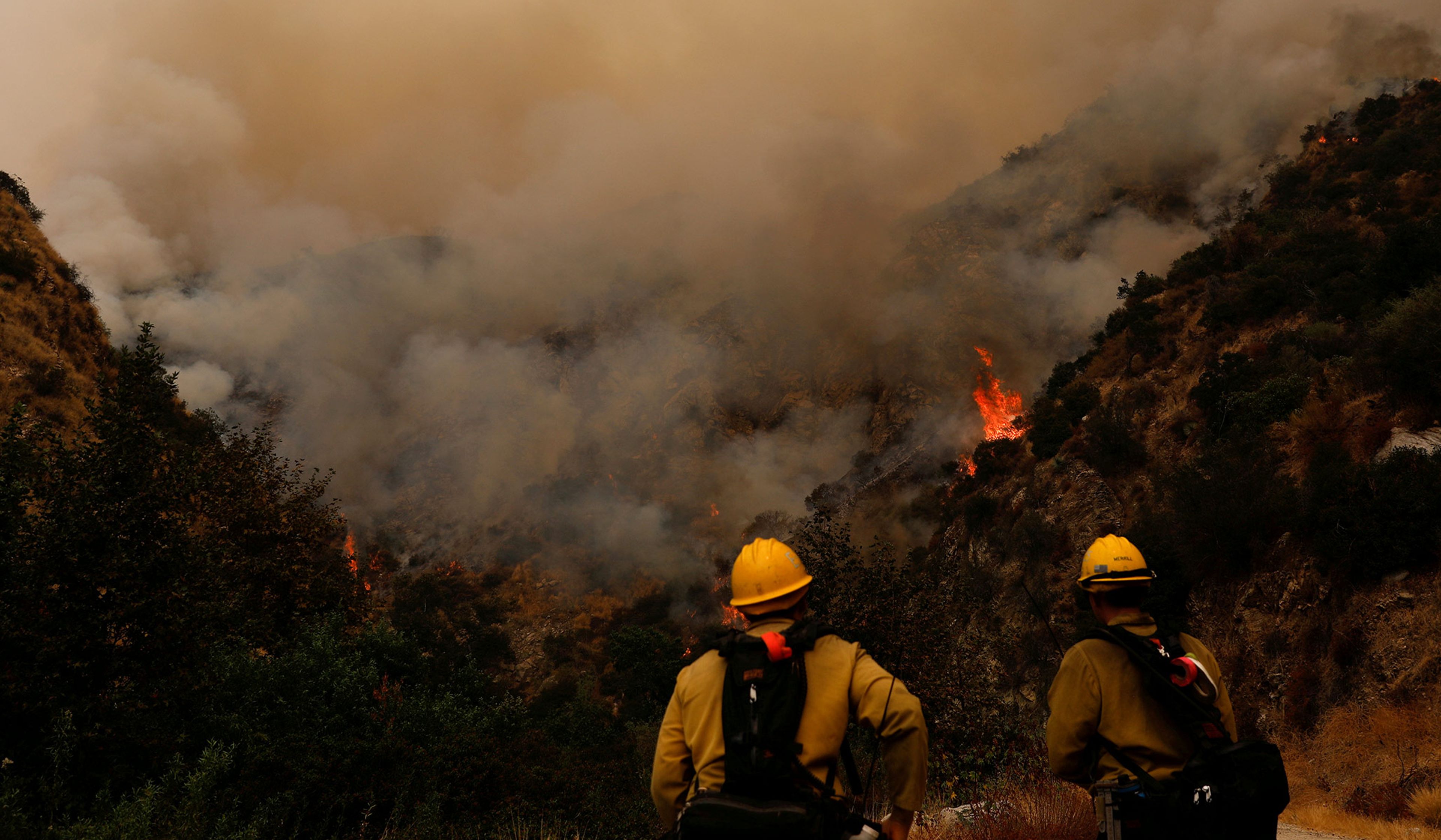


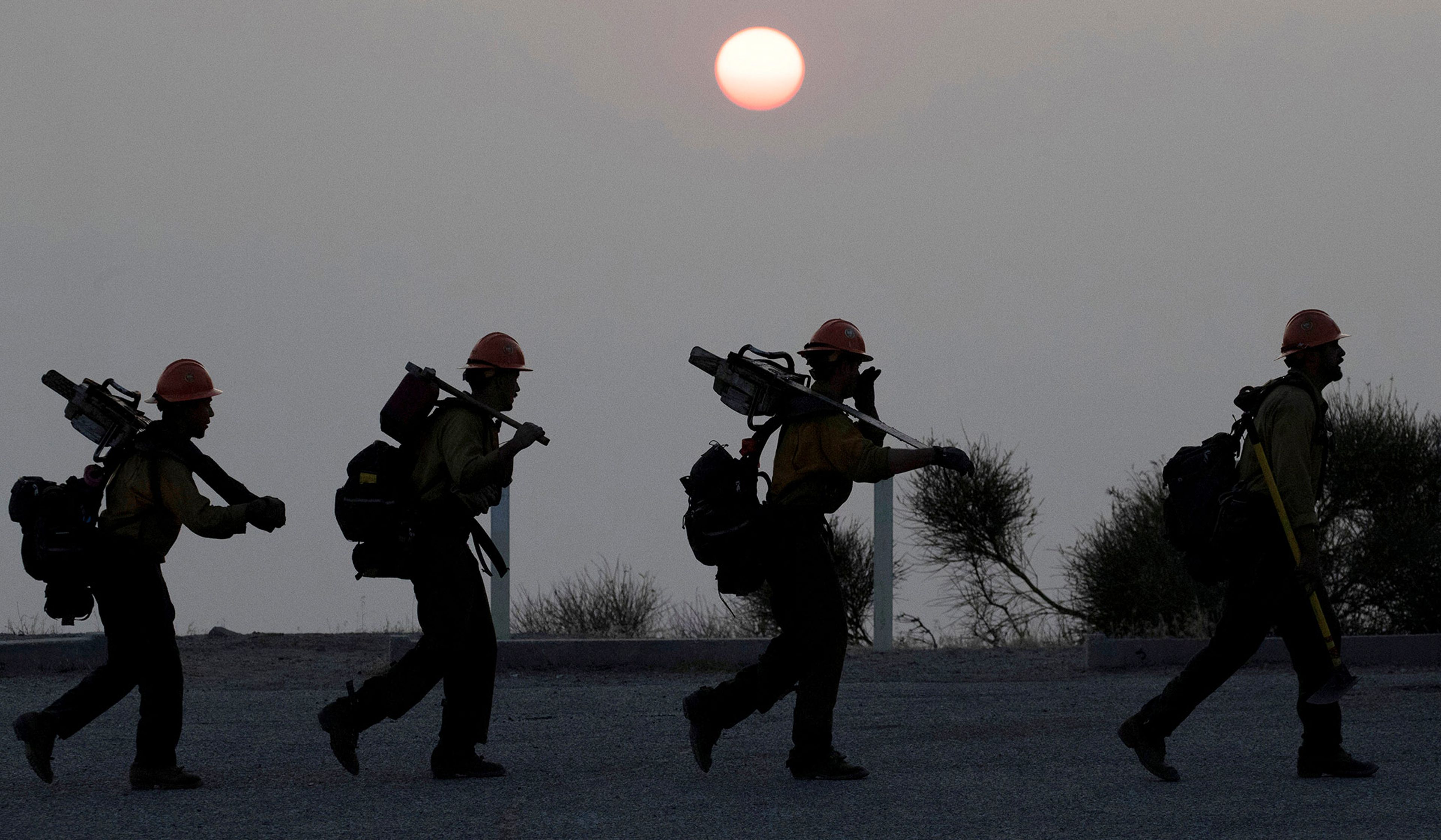
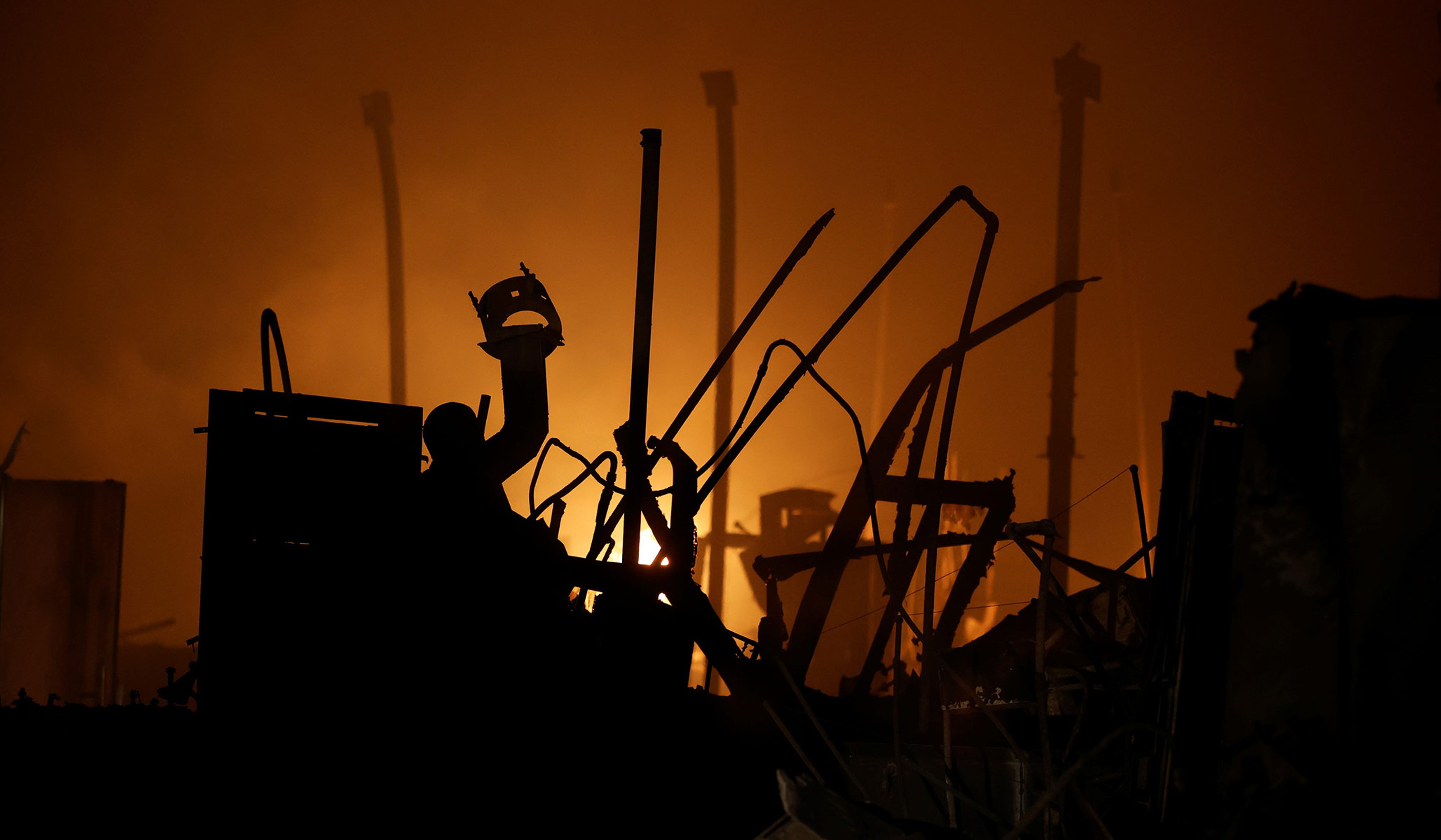
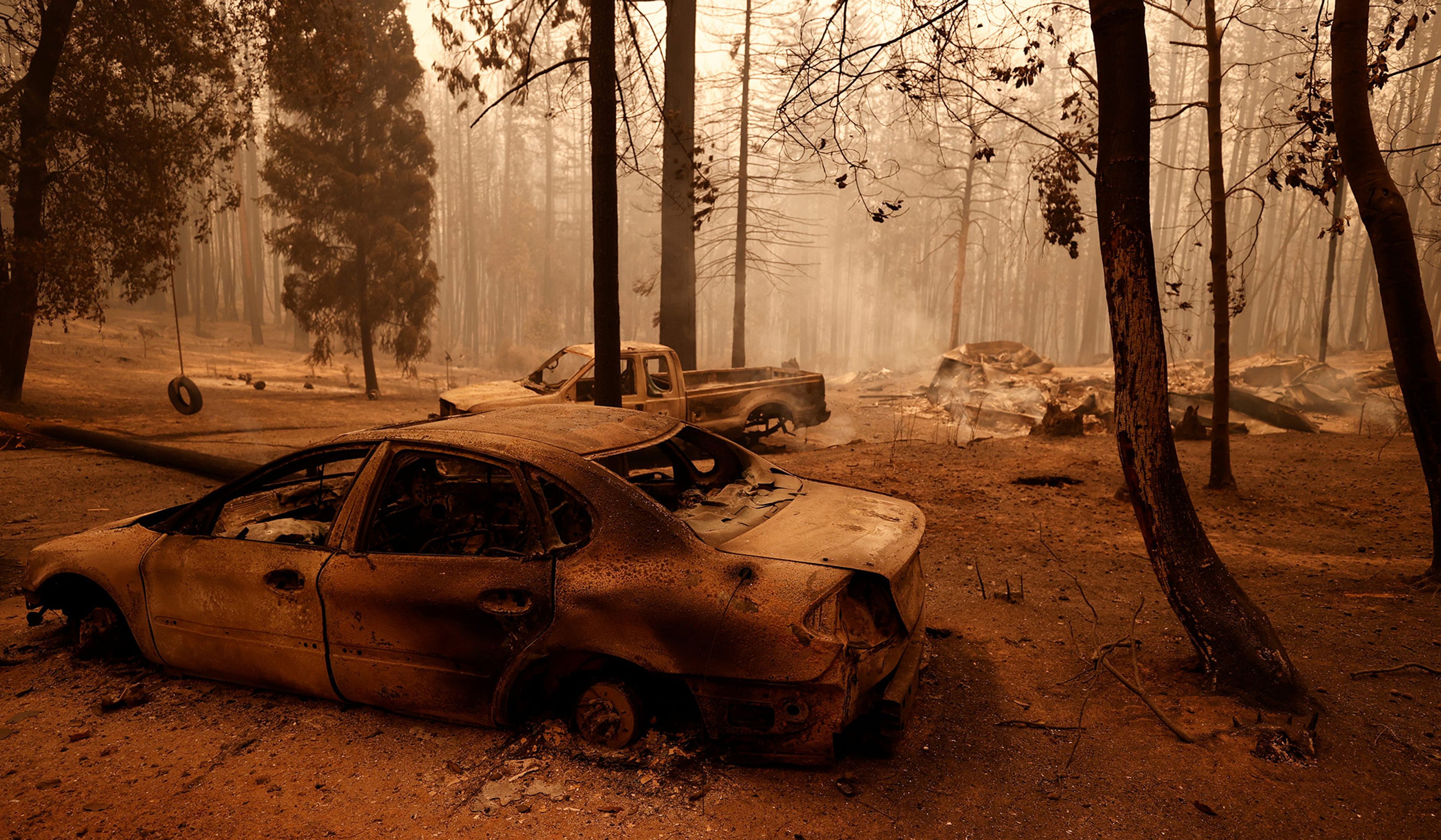
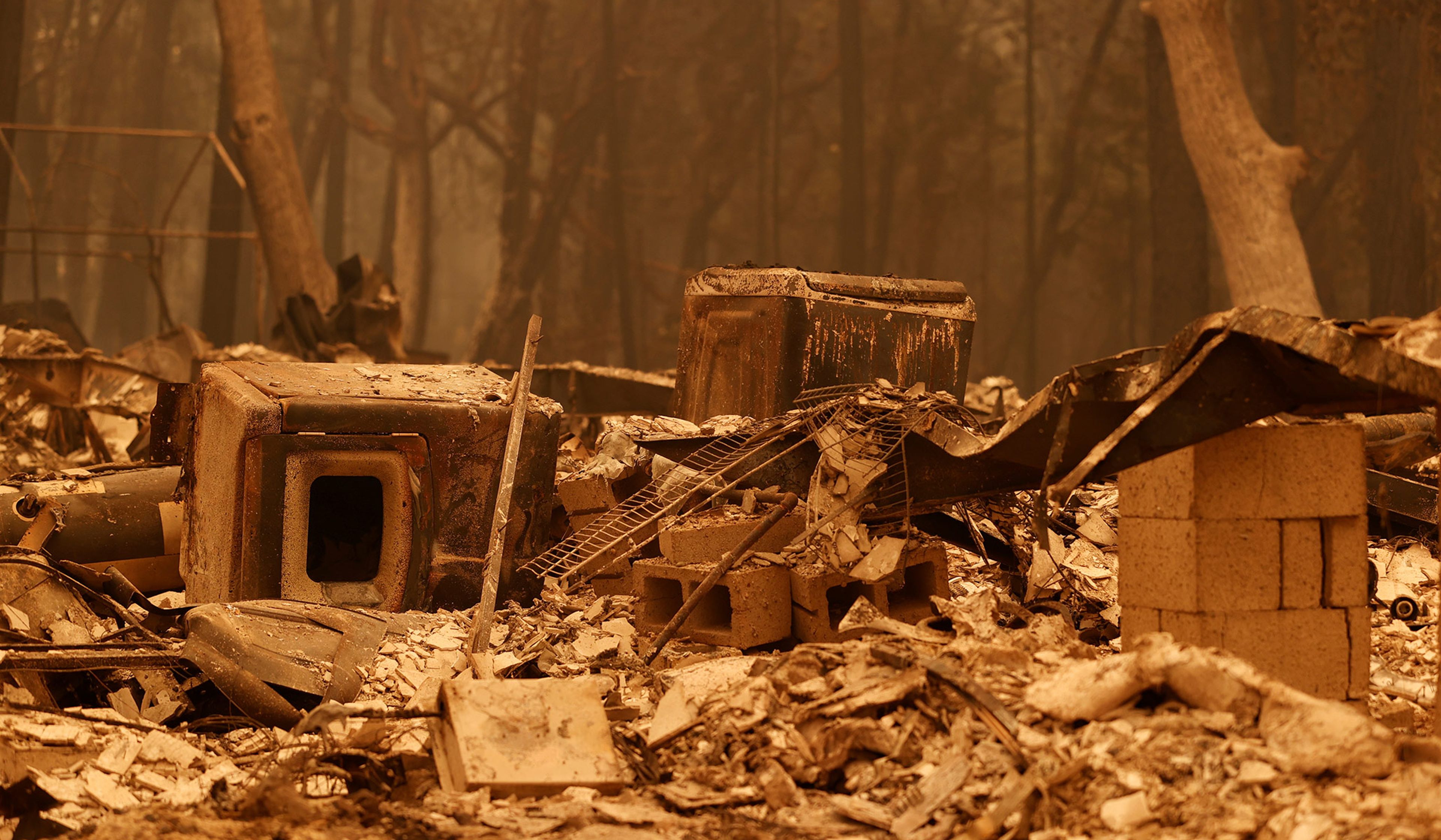

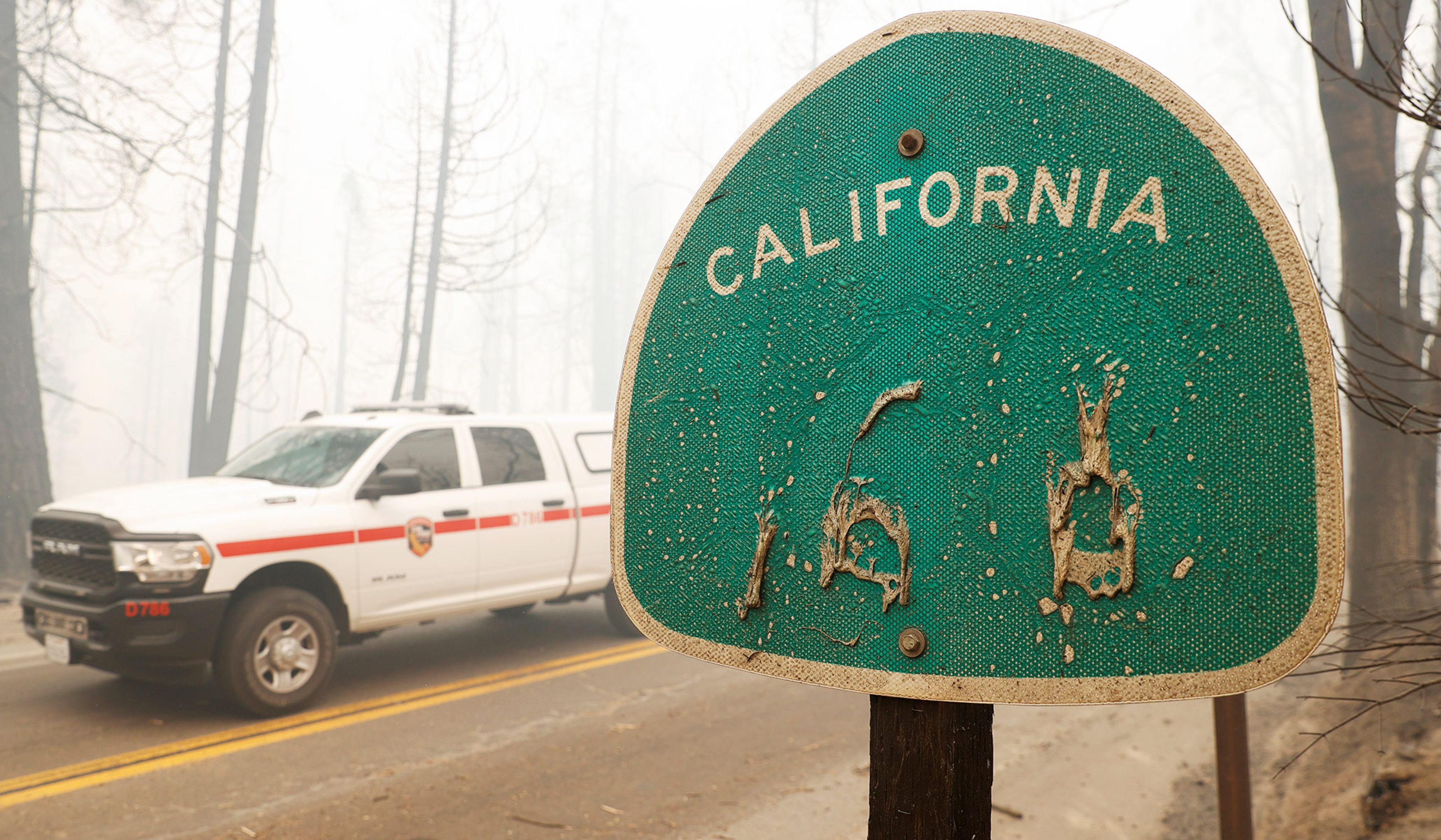
Firefighters watch the Bobcat Fire after an evacuation was ordered for the residents of Arcadia, Calif., September 13, 2020.
Mario Anzuoni/Reuters
California Burning
At some point in the next 30 years, global temperatures are expected to rise 1.5 degrees Celsius above their pre-industrial levels. If we doubled the average fuel efficiency of all the cars on the planet, decreased the amount of global automotive travel by half, increased solar-energy usage 100-fold, and increased wind-power capacity by ten times, we would go half of the way toward averting that temperature increase, assuming all the projections are correct and nothing changes in the interim.
A tall task, but that is how California governor Gavin Newsom plans to combat the wildfires that are consuming his state. We wish the governor luck in remaking the global economy to his liking. In the meantime, how about a Plan B?
Fire plays a natural role in regulating the lifecycles of trees and vegetation. In the pre-industrial era, more than 4 million acres burned in California annually. Fortunately, we now have the knowledge and technology to prevent wildfires. Prescribed burns and proactive clearing of dead vegetation are known to reduce the speed and intensity of fires by diminishing the stock of combustible material, but well-intentioned public officials have long put a monomaniacal emphasis on suppression, rather than prevention, of fires.
In 1911, after a series of devastating fires across the American West, Congress passed the Weeks Act, which increased federal funding for firefighting efforts. The U.S. Forest Service subsequently required that all fires be suppressed before reaching ten acres and pledged to put out any fire within the day.
In California, the upshot was a reduction in annual burning by 95 percent, and an attendant increase in the state’s vulnerability to fires. Dead trees and overcrowded forests became literal tinderboxes. Add to that decades of mismanagement and a recent spike in tree mortality, due primarily to drought, and you get frequent, devastating fires.
The solution is simple in principle if not in practice, but a web of interests has held back progress in the Golden State. Landowners and forest managers who may be liable for burns that go awry opt to allow overgrowth instead. Environmental regulations add needless obstacles, too, and local governments go to great lengths to avoid the inconveniences that come with controlled burns.
Better forest management would go a long way toward making California safer. We should make room for businesses and households to solve the problem on their own by incentivizing private burning and clearing.
If not, households may take a different approach — leaving the state altogether. The cost of wildfire insurance has already caused a dropoff in home sales in California, a trend exacerbated by high taxes and poor state-government services. California lost a net total of 1 million residents between 2007 and 2016, and a UC Berkeley poll found that more than half of the state’s voters have considered leaving for political reasons.
We suspect Newsom’s proposal to reduce carbon emissions won’t stem the flow.











Comments