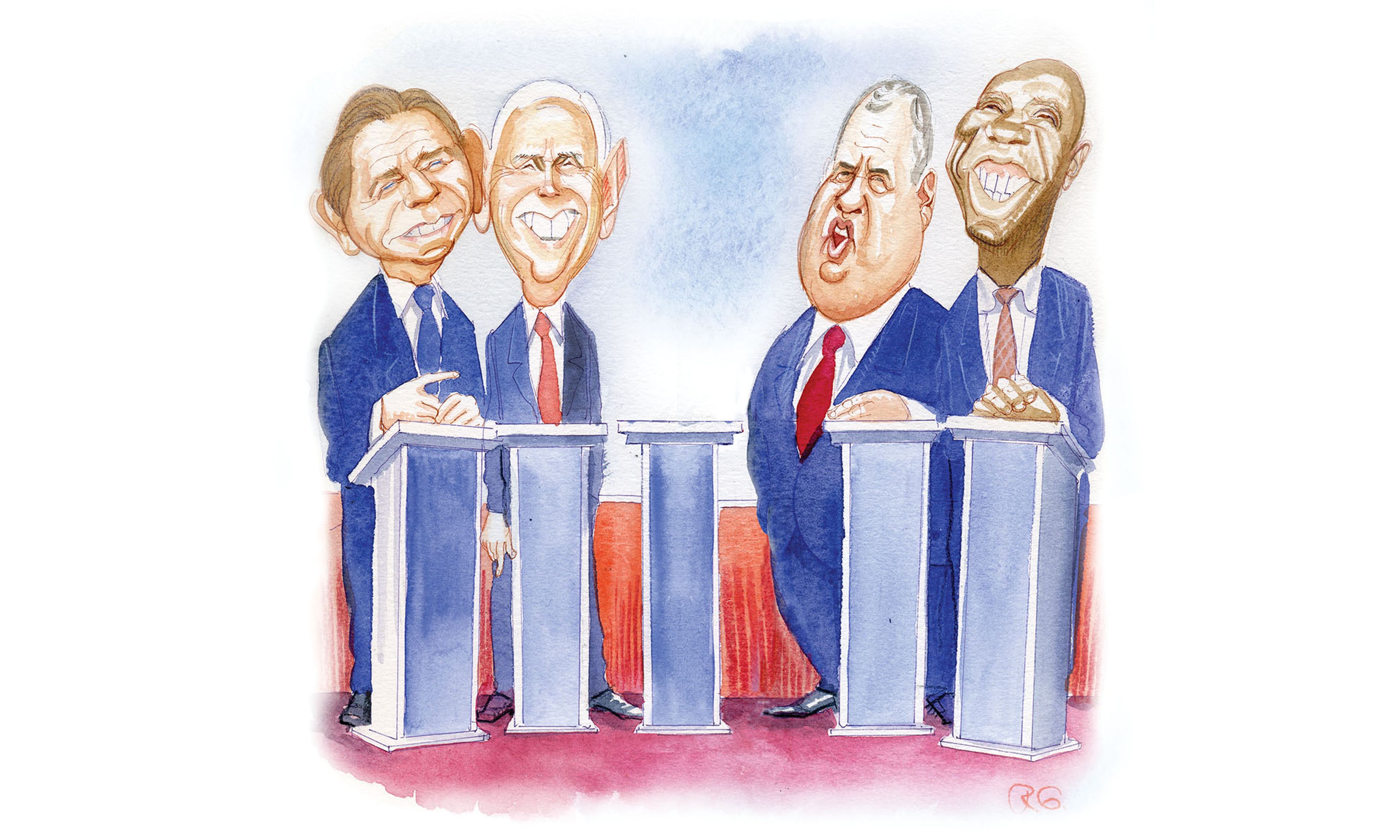
• Where was Vivek Ramaswamy on 9/11? We’re just asking questions.
• The sweetheart plea bargain that the Department of Justice offered to the president’s son Hunter was so appalling that it unraveled when Judge Maryellen Noreika questioned its terms. Yet new reporting by Politico suggests it was even worse than previously known: The DOJ had earlier planned to drop the case entirely. Hunter’s lawyers, having already admonished prosecutors that filing charges would be career suicide, threatened that in any trial the president would be called as a defense witness. Delaware U.S. attorney David Weiss was going to fold. Then, however, IRS whistleblower agents testified that Weiss was giving Hunter special treatment. Hence the generous offer: no felony charges (not even the gun felony), two tax misdemeanors, no jail time, sweeping immunity. After that deal blew up, Attorney General Merrick Garland addressed the PR problem by naming a special counsel: Weiss, the very prosecutor whose politically calculated failure to file charges has let most of the potential ones fall victim to the statute of limitations. Whether this will work depends on how gullible the public is.
• Missing from the GOP presidential candidates’ first debate in Milwaukee was Donald Trump. “The public knows who I am,” Trump wrote on his social-media site two days before showtime. “I WILL THEREFORE NOT BE DOING THE DEBATES!” Of course the public knows who the 77-year-old media hog is. What the public does not know is how he would act face-to-face with the Republicans he has been belittling or ignoring for months, or how they would interact. That is the purpose of a debate in a system that picks officeholders by vote, not coronation (Kari Lake, who says the primary is over, missed that week in civics class). Trump does not care because he is lazy (why work if not working works as well?); cowardly (why risk a confrontation with Chris Christie, a brawler who is out to get him?); and savvy (his absence was bound to have as much impact as his presence, and he scored a twofer by counterprogramming an interview with his Renfield, Tucker Carlson). Republicans should again take up the cause of reforming entitlements — in this case, Trump’s.
• Kari Lake, the Republican nominee for governor of Arizona in 2022, has indicated that she will next run for the U.S. Senate. She also spoke to Steve Bannon about Donald Trump. “He won in 2016,” Lake said. (True.) “He won even bigger in 2020.” (Not true.) “All that January 6 was was a staged riot to cover up the fact that they certified a fraudulent election.” Lake further described January 6 as a “fedsurrection.” Arizona Republicans should nominate someone else; she will probably say she won anyway.
• From the moment rioters stormed the Capitol on January 6, 2021, legal scholars have tried to conjure One Weird Trick from the text of the Constitution that would bar Donald Trump from seeking office again. A new case to that effect was made recently by professors Will Baude and Michael Paulsen, who claim that Section 3 of the 14th Amendment — barring anyone from federal office who has “engaged in insurrection or rebellion against” the United States — applies to Donald Trump for his conduct after the 2020 election. Their argument is unconvincing as both originalist and textual analysis: Section 3 was written to deal with the specific context of ex-Confederate soldiers and politicians, and fitting Trump’s conduct (however odious) into the four corners of the text requires a tortured redefinition of insurrection and of enemies of the United States. No legal deus ex machina will spare Americans a Trump candidacy; judgment upon him will have to be rendered by the voters.
• Vivek Ramaswamy, a Republican presidential candidate, was talking about the Ukraine war. “I would freeze the current lines of control,” he said. He would also go to Moscow. “Just like Nixon went to China in 1972, I think Putin is like the new Mao.” On the subject of China: Ramaswamy said that if he were president, he would back Taiwan until such time as the United States achieved independence in semiconductors — i.e., “until the end of my first term, when I will lead us there.” And after that, no. Elsewhere, he talked about 9/11. “I think it is legitimate to say how many police, how many federal agents, were on the planes that hit the Twin Towers. Maybe the answer is zero. It probably is zero for all I know, right?” But he is just asking questions. Ramaswamy is a smart investor, and he seems intent on not going broke overestimating the good sense of primary voters.
• By 14 points, Ohio voters shot down Issue 1, a measure that would have increased the threshold for amending the state constitution via ballot initiative from 50 percent of votes cast to 60 percent. The initiative was worth supporting on good-government grounds but became politically inextricable from the abortion controversy, since the November ballot includes a measure to add a sweeping right to abortion to the state constitution. The outcome was taken as another sign of political strength for pro-choicers, although other states have shown a similar reluctance to raise voting thresholds even when abortion is not a front-burner issue. For example, by a two-to-one margin, South Dakotans voted in early June 2022 against establishing a 60 percent threshold for ballot measures increasing taxes or appropriating more than $10 million. Unfortunate as this loss in Ohio is, conservatives should immediately begin turning out every vote they can against the abortion initiative.
• Massachusetts has effectively determined that faithful Catholics should be barred from fostering children. Mike and Kitty Burke, a married Catholic couple who struggled with infertility, applied to become foster parents through the state department of children’s welfare. Though Massachusetts has many more children in need of foster families than it can place, the Burkes were turned away. A social worker had determined that, while they were “lovely people,” they “would not be affirming to a child who identified as LGBTQIA.” The couple had been open under questioning about adhering to their church’s teachings on marriage and sexuality and said they would not support a medical gender transition for a hypothetical minor in their care. They are now suing, assisted by the Becket Fund for Religious Liberty. Their prospects for prevailing in court are good, though it is disturbing that they had to go to court at all.
• Police in Marion, Kan., raided the office of the local newspaper and seized computers and cellphones. They searched the home of Eric Meyer, the paper’s owner and editor, and added to their sweep the home of a Marion councilwoman. The reason, or pretext, for the dragnet was that someone had sent a reporter a letter from the state government to a local restaurateur, who then accused the paper, the Marion County Record, of sharing the confidential document with the councilwoman. Meyer says that the paper did not and suspects that it was set up. The reporter checked state databases to verify the letter’s authenticity, but the Record published no mention of it. The search warrant, based on fanciful allegations of identity theft and “unlawful acts concerning computers,” was later withdrawn by the county attorney. The Kansas Bureau of Investigation has taken over the case. Meyer notes that the Record was critical of the police chief, Gideon Cody, when he was hired earlier this year. Meyer’s 98-year-old mother, the co-owner of the paper, was present for the raid and died shortly afterward. The local press may not be what it once was, but its enemies still seem to fear it.
• The wildfire in Lahaina, Hawaii, is now the deadliest wildfire in the U.S. in over 100 years. At time of print, there were 115 reported deaths, with 850 people still missing. After initially saying “No comment” to reporters’ questions about the fire, Biden visited Hawaii and talked about himself. He repeated the same stories about deaths in his family that he has told to parents of soldiers killed in combat, and he exaggerated a story about a small kitchen fire at his home in 2004. Meanwhile, progressives have tried to inject climate-change hysteria into the tragedy, despite the IPCC’s having said that wildfire variability has almost nothing to do with climate change. Wildfires are almost always human-caused, and the Hawaii fires don’t appear to be an exception. An invasive species of wild grass that authorities knew was dangerous was insufficiently contained, and the state’s electric utility may have prioritized “energy transition” over commonsense wildfire-mitigation efforts with its equipment. The professional management of environmental risks does not benefit from political opportunism.
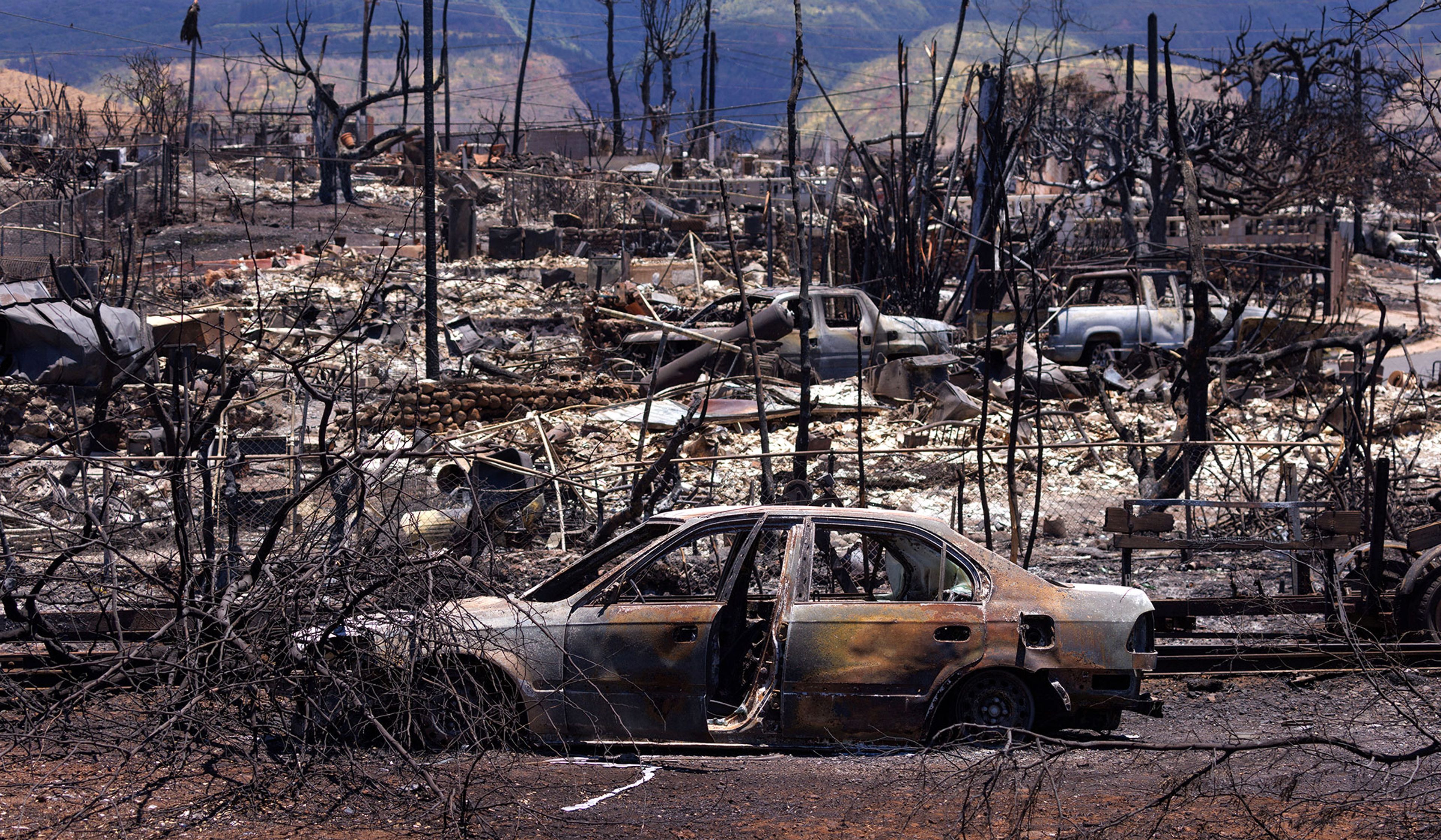
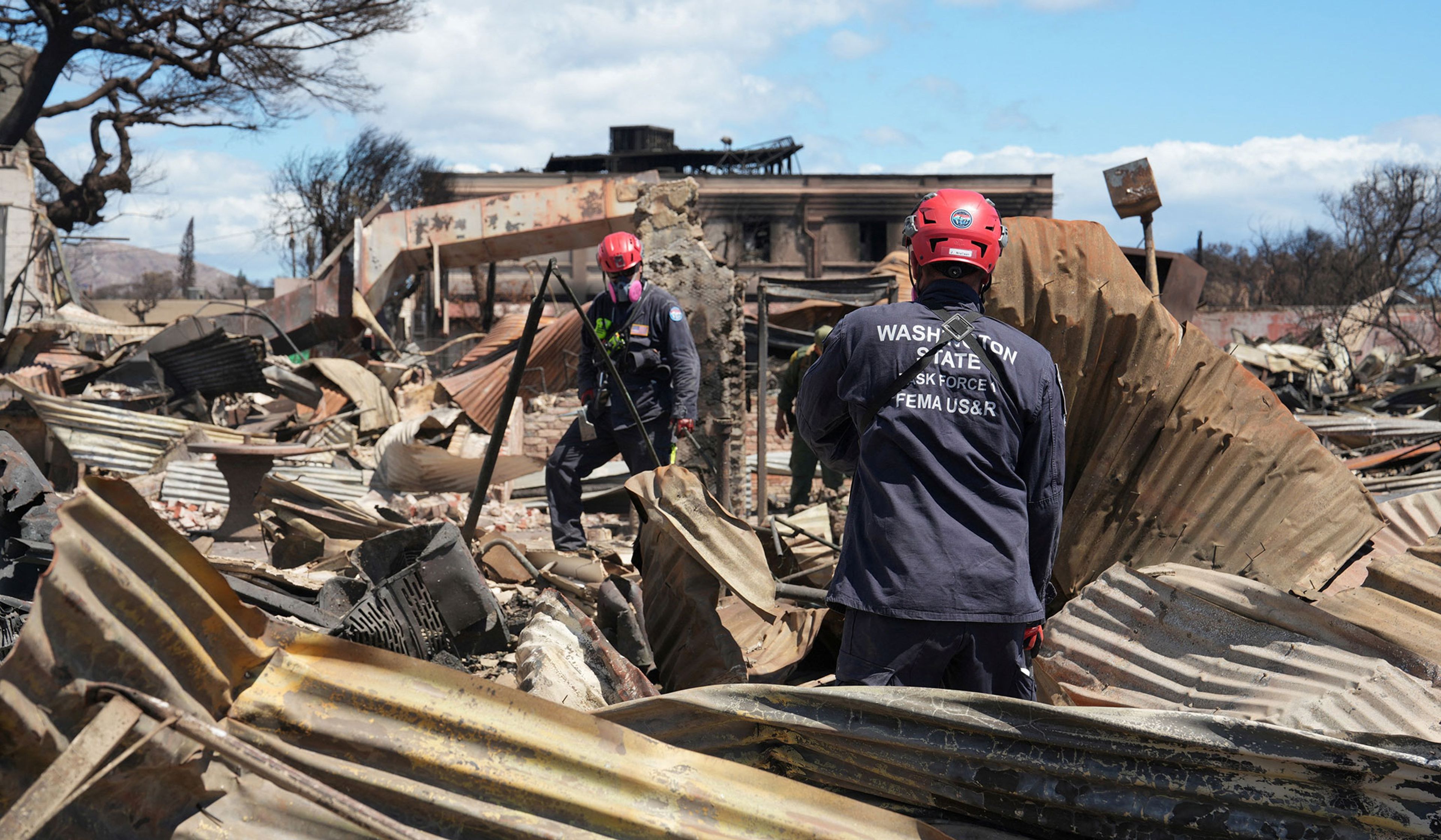
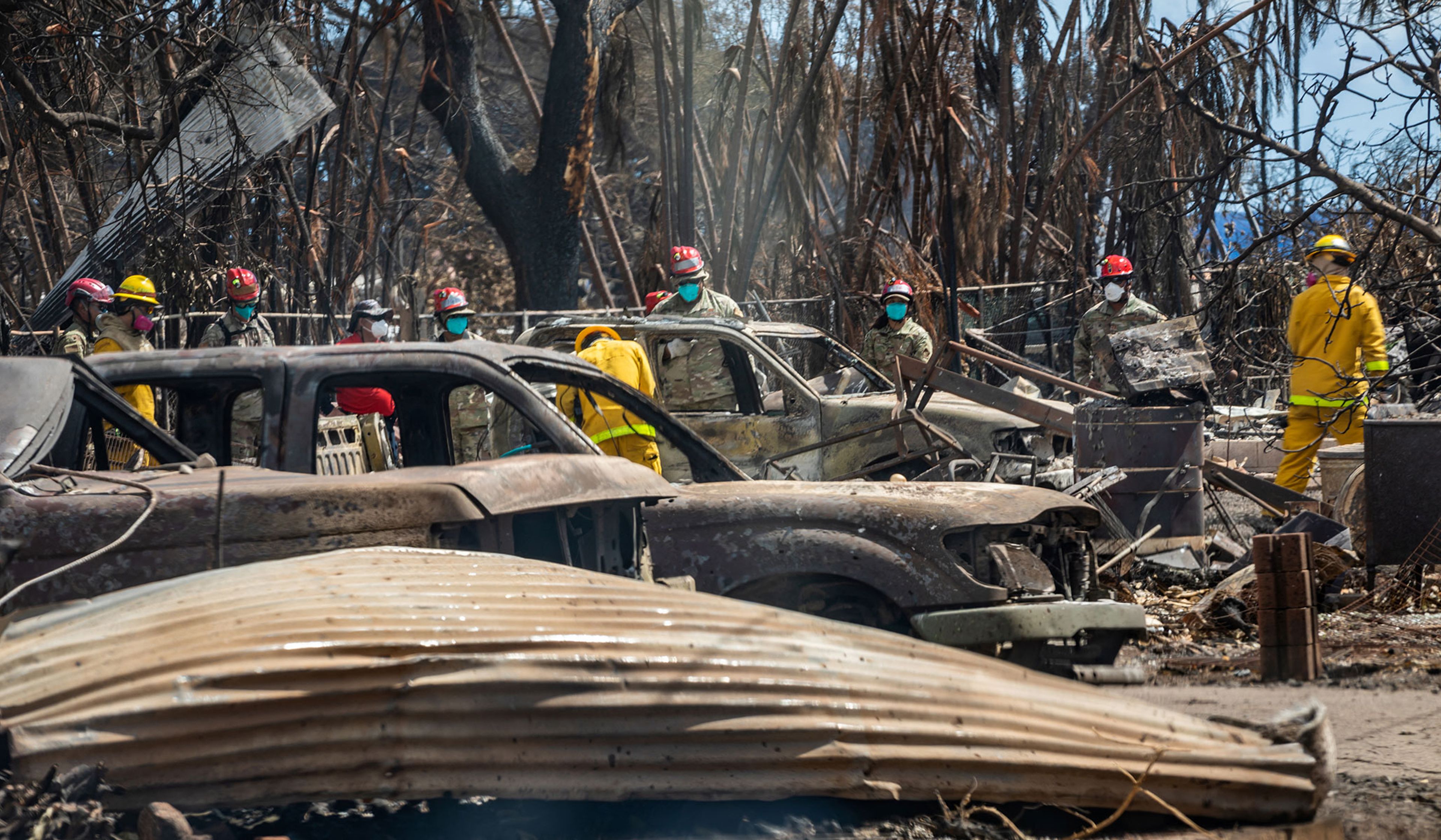
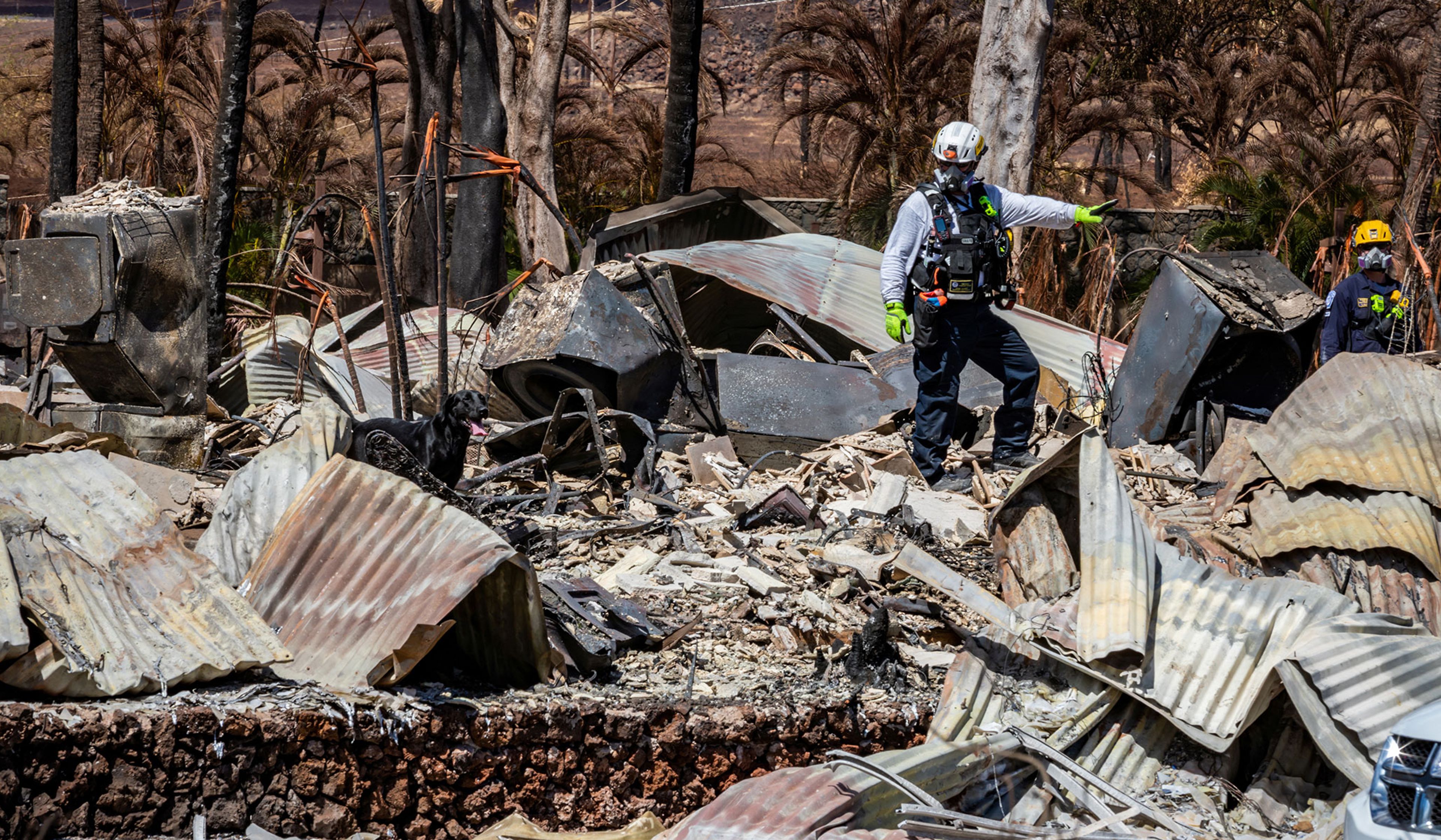
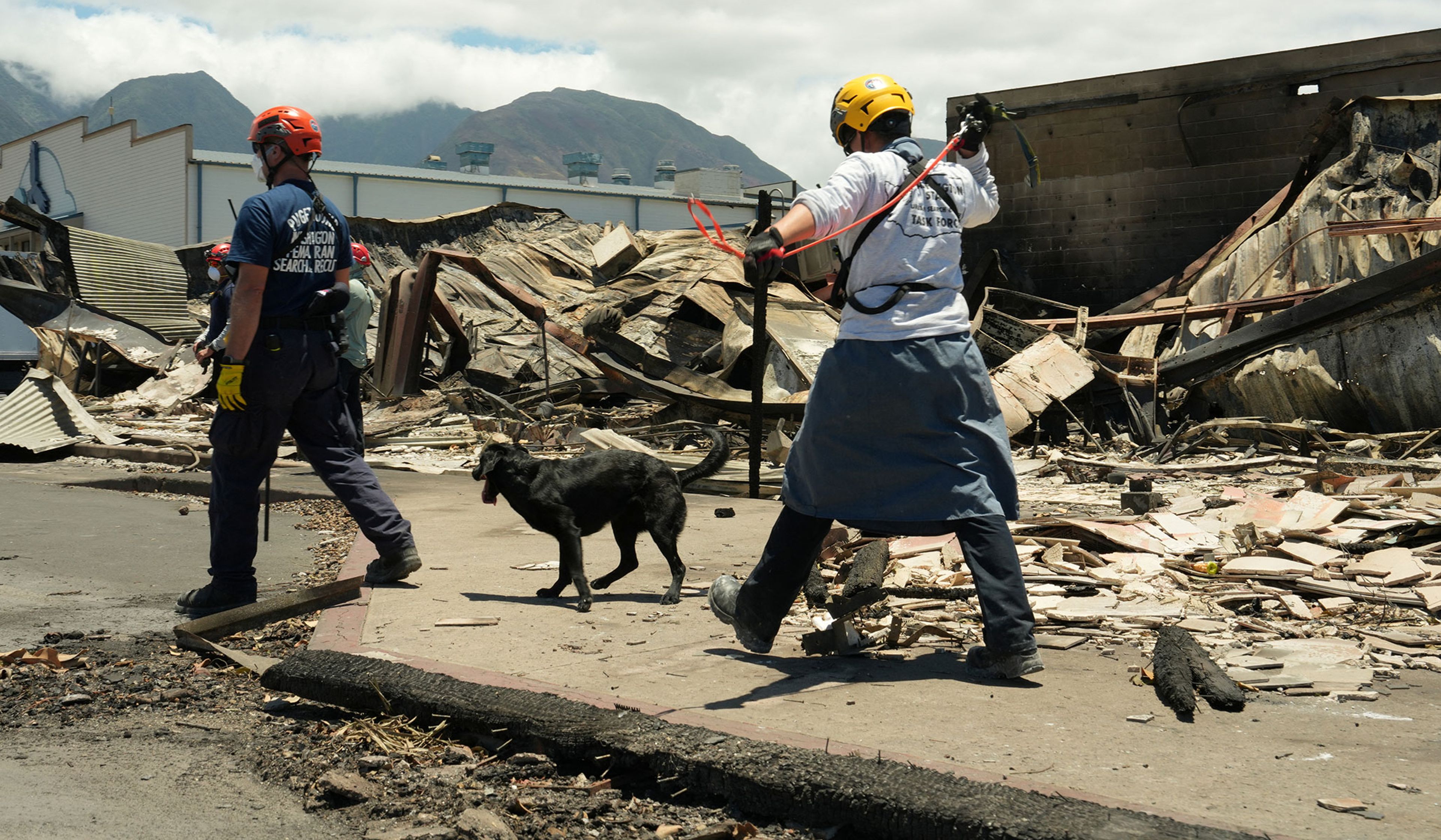
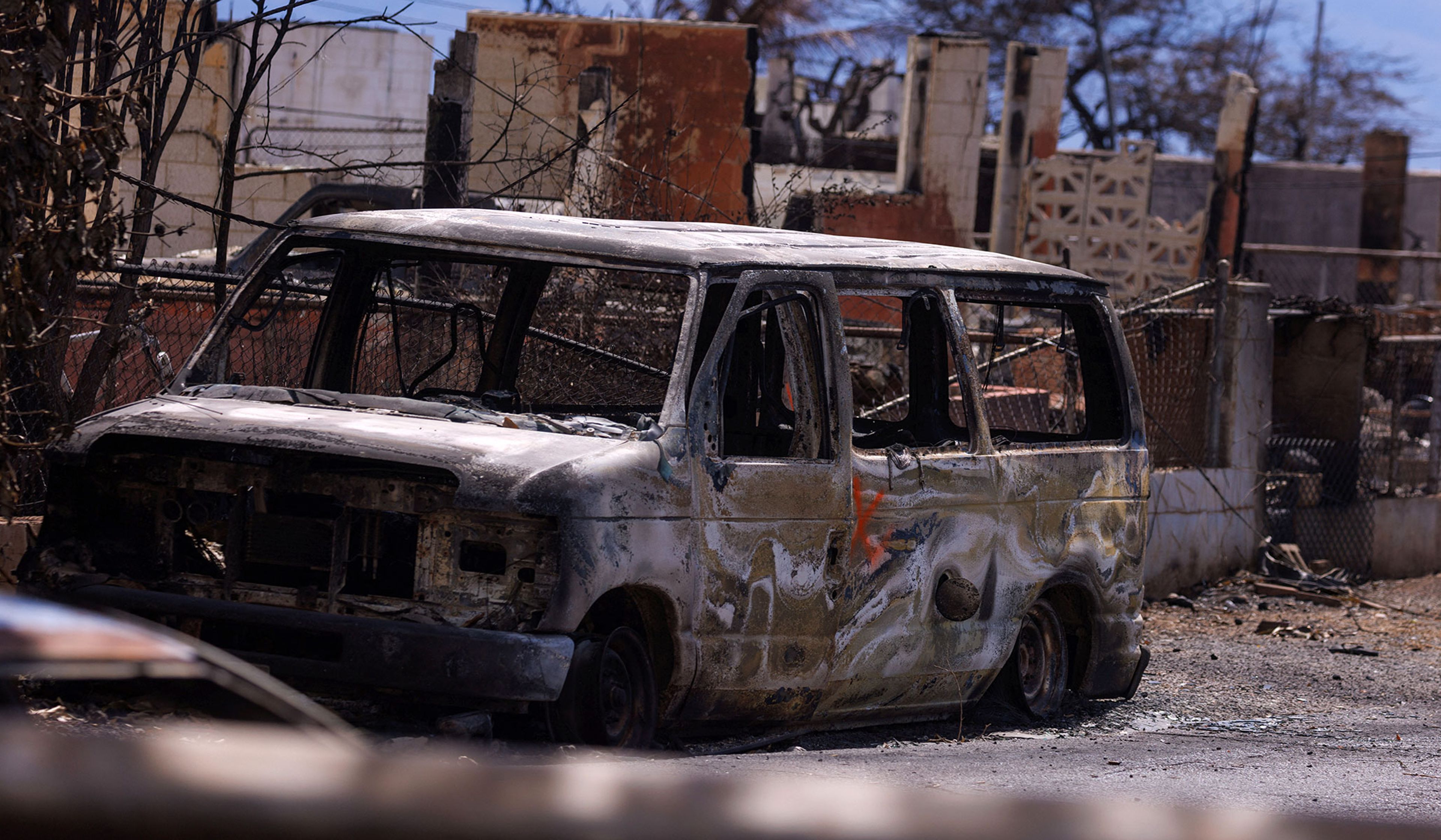

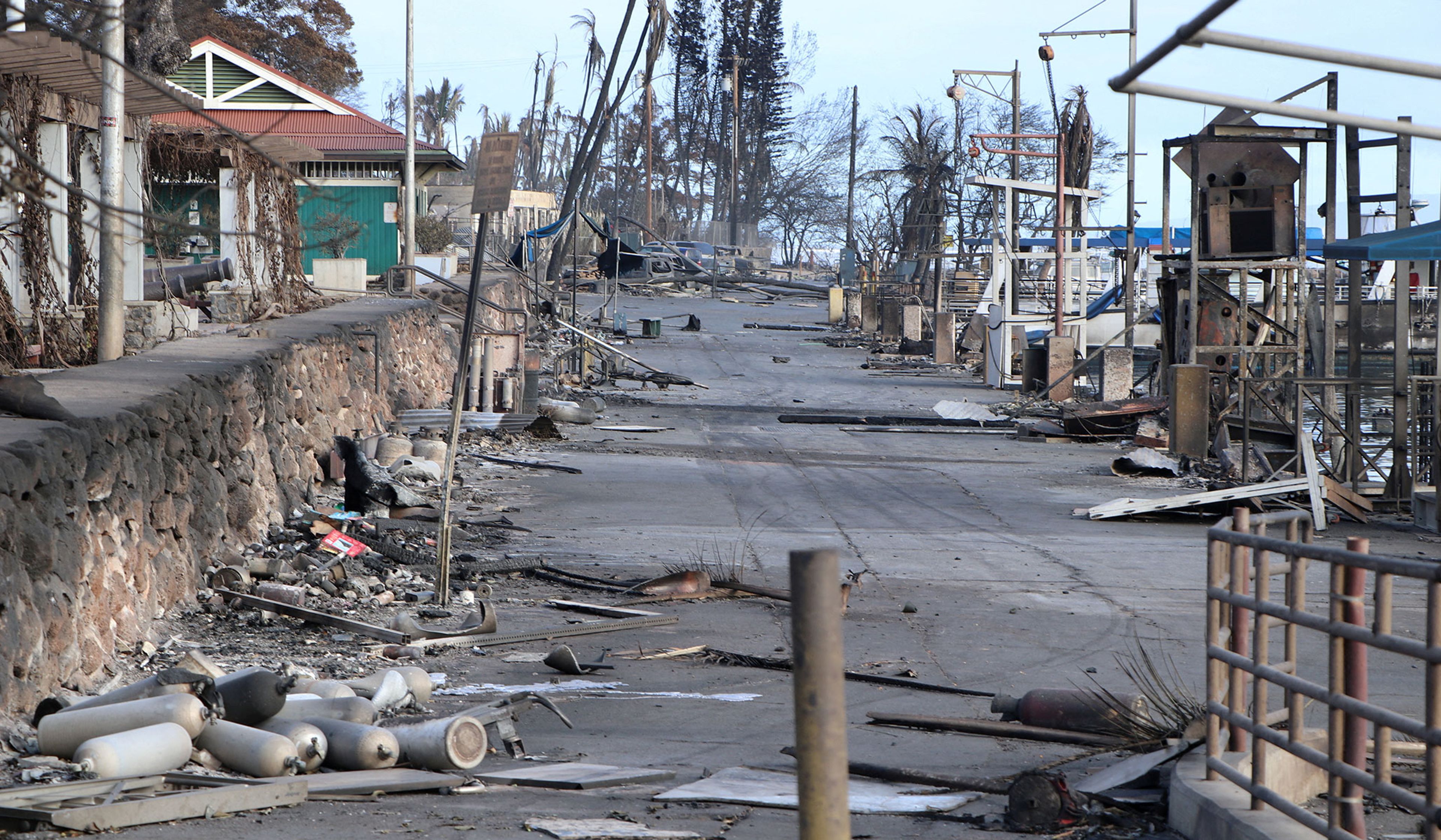
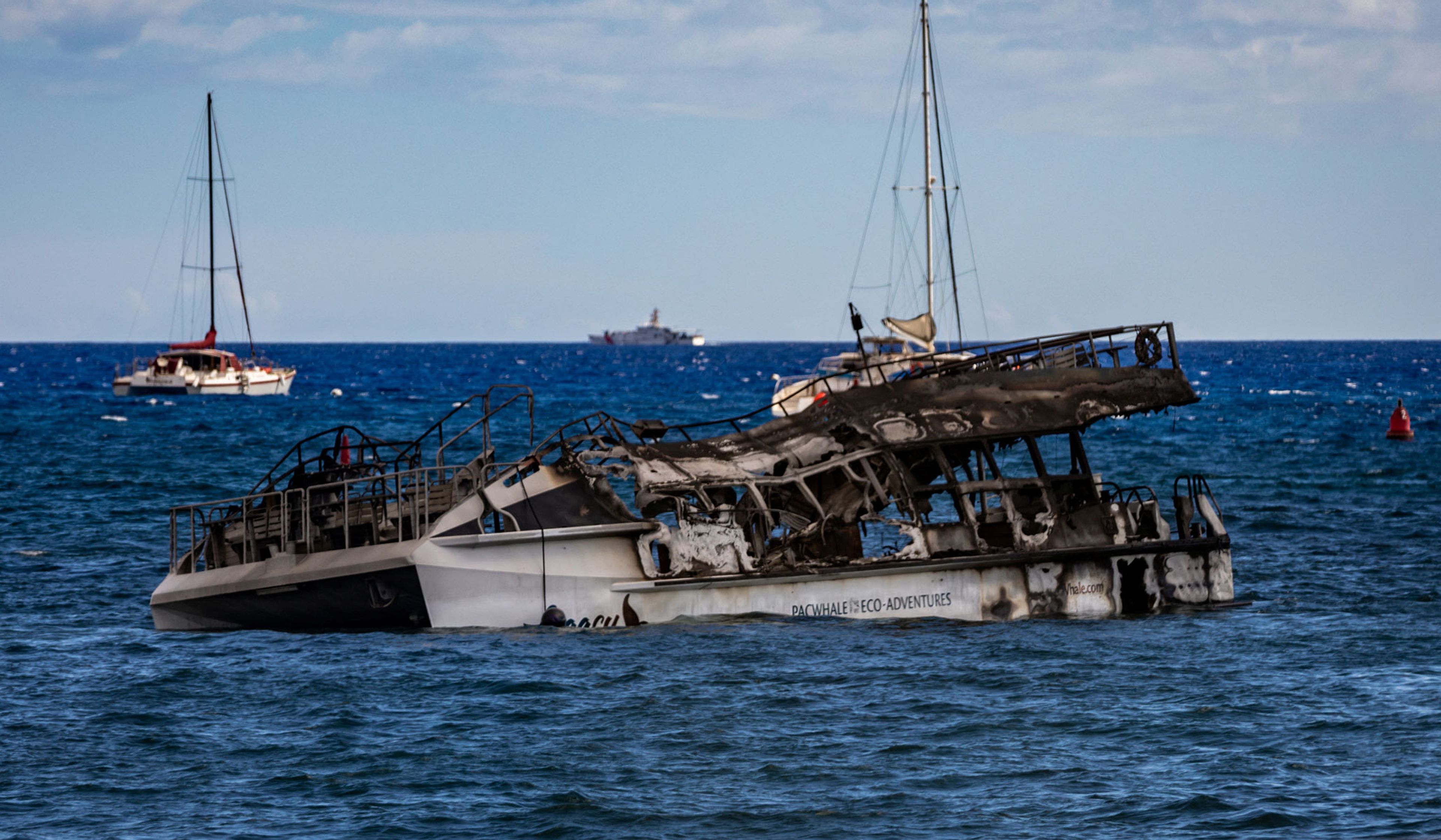
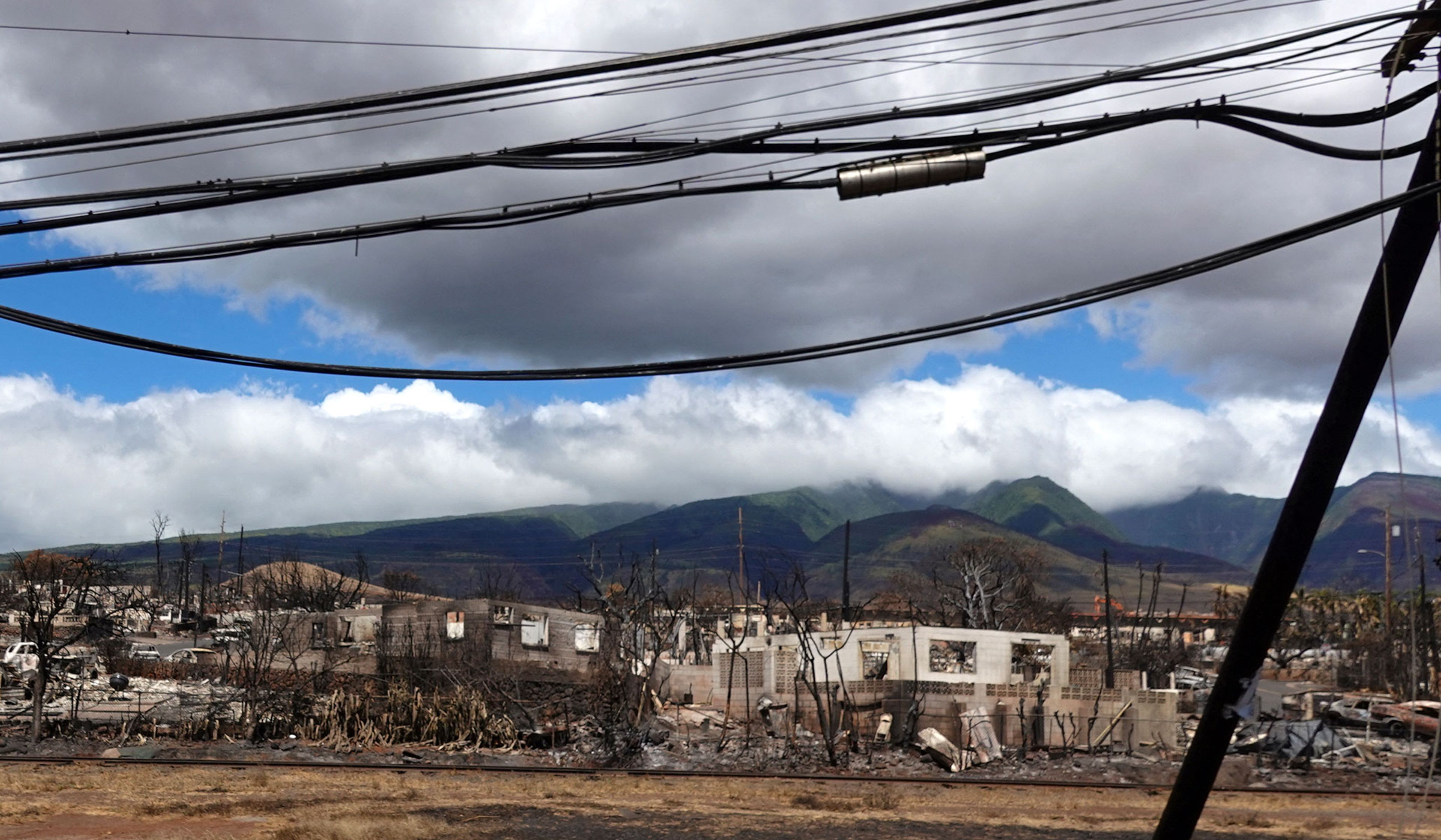
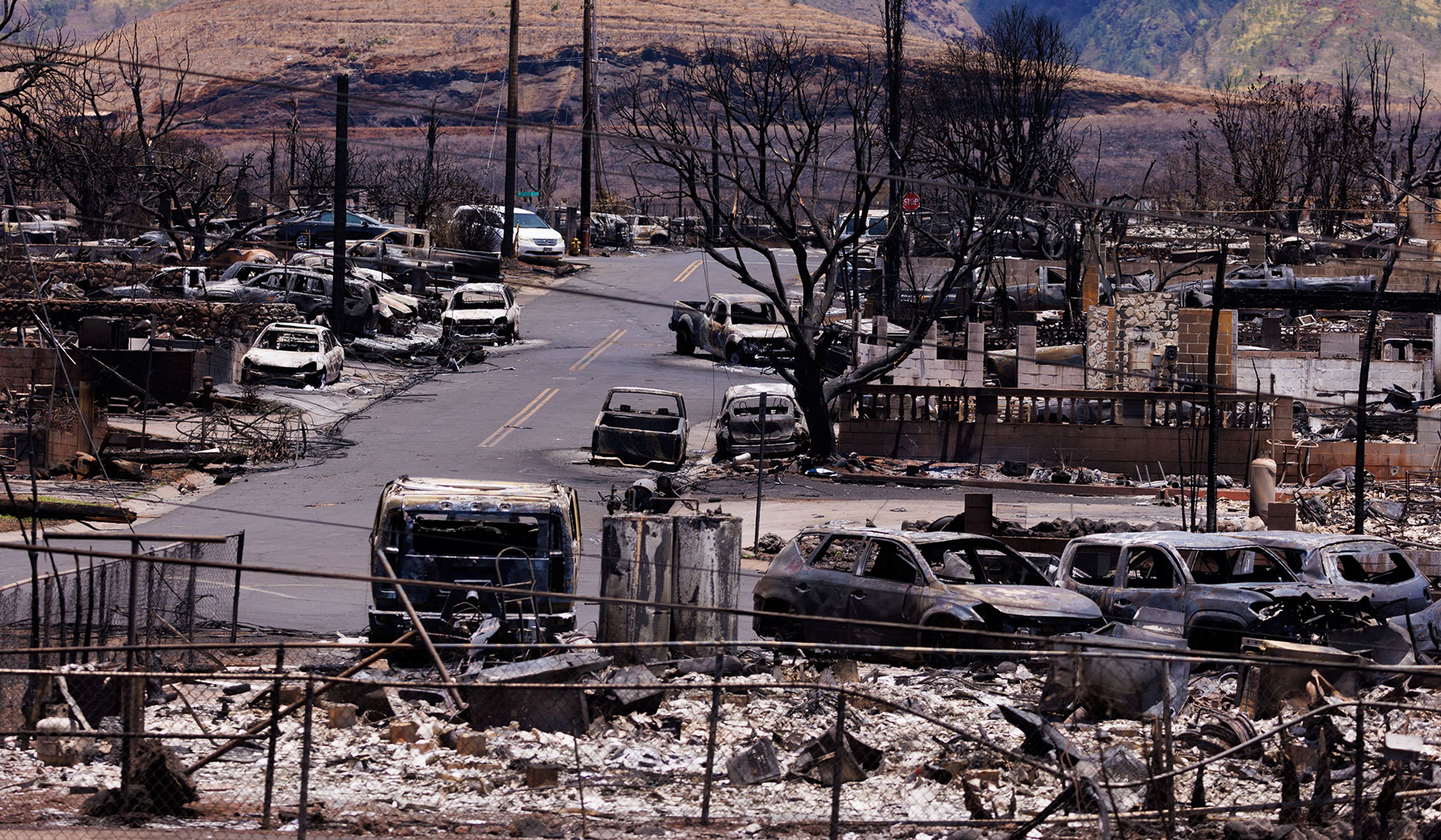
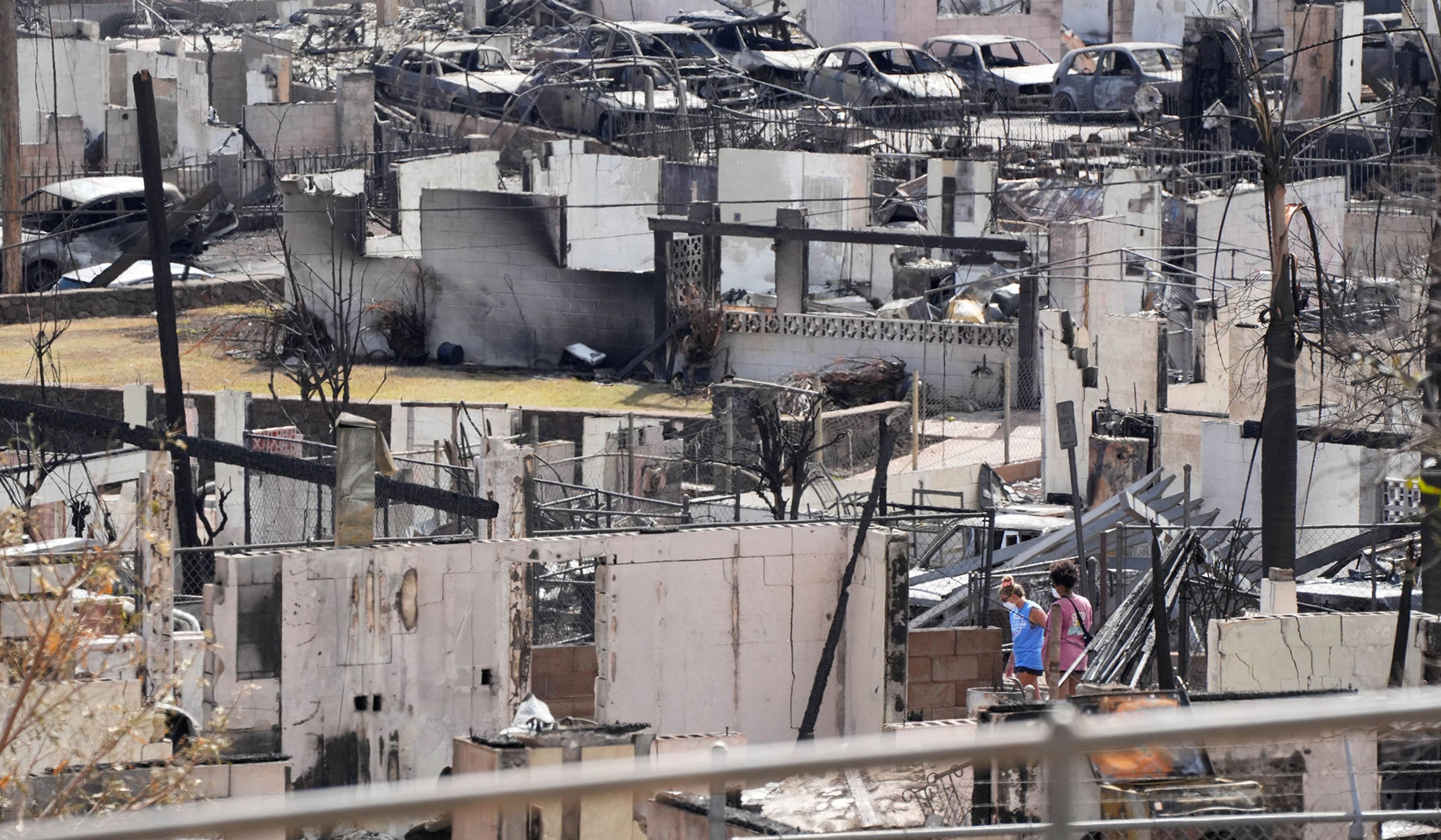
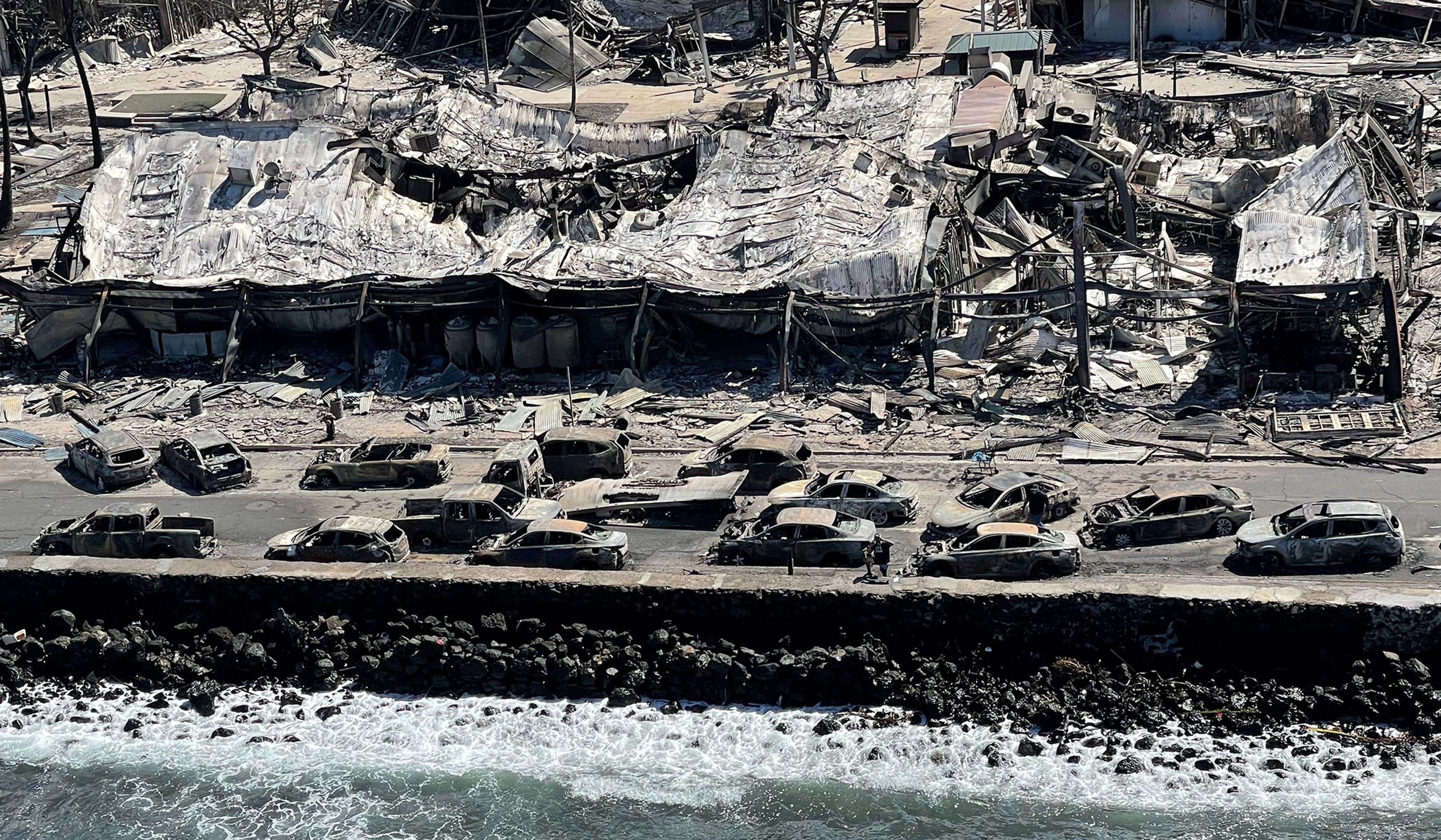
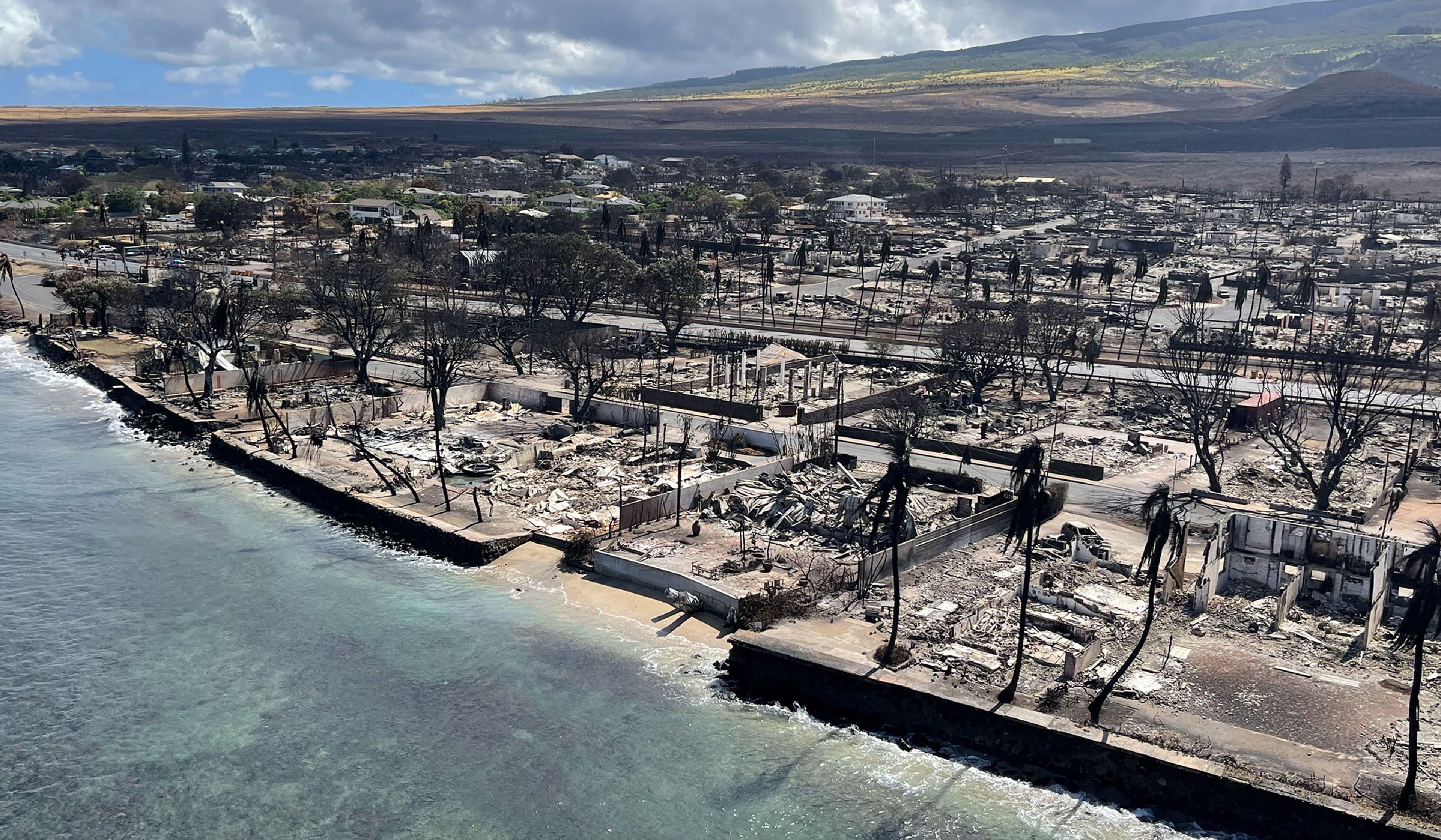
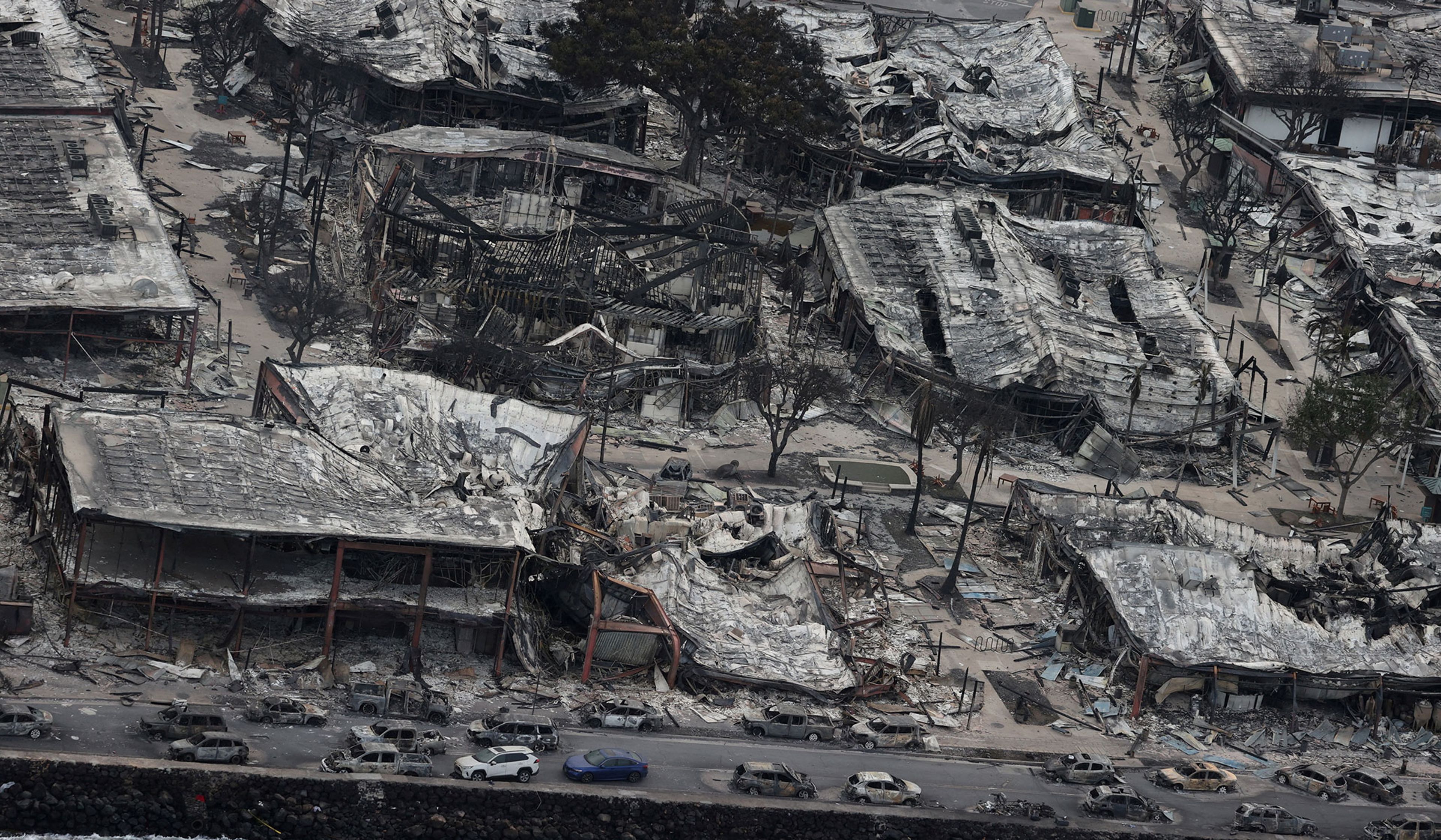
Fire damage in the Wahikuli Terrace neighborhood in the fire-ravaged town of Lahaina on the island of Maui in Hawaii, August 15, 2023.
Mike Blake/Reuters
• Yellow Corporation has been around for 99 years, but it won’t make it to triple digits. The less-than-truckload (LTL) trucking company, known for its low rates and nationwide network, officially filed for bankruptcy after a long, slow glide out of business. After pursuing an aggressive acquisition strategy in the early 2000s, Yellow sought to streamline its operations while retaining its identity as a union company. The Teamsters made this difficult. This year the union’s president, Sean O’Brien, refused even to negotiate with Yellow. As the company bled cash, warnings about the loss of its 22,000 Teamsters jobs went unheeded. The trucking industry has been trending away from unionization for decades, with Yellow one of the few holdouts. The message is clear to competitors: Don’t put yourself in a position where organized labor can block profitability.
• President Biden achieved a foreign-policy breakthrough with potentially massive implications for China’s designs in East Asia: a Camp David summit with Japanese prime minister Fumio Kishida and South Korean president Yoon Suk Yeol. Japan and South Korea may have started a new relationship, aided by the political courage of Kishida and Yoon (who has already faced domestic criticism for his engagement with Japan) and the passage of time since World War II. While Biden’s China policy is often contradictory and anemic, it is appropriately focused on the need to create a latticework of alliances that protect the status quo from the Chinese Communist Party’s dangerous revanchism. The trilateral agreement from the summit doesn’t involve a mutual-defense pact, but the statements out of Camp David revealed a series of new commitments, including plans for the nations to consult one another on international crises, carry out joint military exercises, and work together on missile defense. It’s critical that this diplomatic push succeeds: The fate of hundreds of millions of people in the region, including Americans, could depend on it.
• When it comes to Iran, however, the White House has reverted to form. The U.S. has just granted the regime a $6 billion lifeline and will release Iranian prisoners as part of a deal to free five American hostages held unjustly by Tehran. All Americans ought to celebrate the return of people arbitrarily held by an authoritarian regime. But this prisoner swap empowers the Iranian government and vindicates its practice of strategic hostage-taking. The pivotal part of the complicated process that will result in the hostages’ release involves Washington’s blessing for South Korea to transfer $6 billion in funds frozen by the U.S. to an account overseen by Qatar. While the administration claims that the funds will go only toward food, medicine, and medical equipment, the Iranian government has stated that it alone has authority over how the money will be spent, and since funds are fungible it will have more cash available for nefarious purposes in any case. Tehran seems to be willing to state bluntly what the administration has to deny because it’s so obviously outrageous.
• The American people were told, first under the Trump administration, which negotiated the Doha Accords, and then under the Biden administration, which executed the Afghanistan withdrawal, that the Taliban would become our partner in counterterrorism. Two years after the withdrawal, the U.N. reports what should have been predictable: Under Taliban rule, Afghanistan is once again becoming a haven for terrorists. An August report found that the Taliban have perpetrated numerous human-rights abuses, including 218 extrajudicial killings, against more than 800 former Afghan-government officials. The people most targeted were affiliated with U.S.-allied Afghan security and police forces. A former police officer vanished after he was arrested by the Taliban; his decapitated corpse was found about a month later. A former Afghan-army member was shot in public while walking from his farm. A June report previously found that the Taliban have not lived up to their counterterrorism promises in the Doha Accords and that sanctions have had little effect on the Taliban’s decisions. It also found that al-Qaeda remains close to the Taliban and that the terrorist group views Afghanistan as a safe haven once again. Since 2022, ISIL-K (the Afghan chapter of the Islamic State) has claimed more than 190 attacks that have left more than 1,300 people dead or injured, and the attacks have become more lethal over time. The Taliban government has attempted to fight ISIL-K but has not been effective in doing so, and the number of ISIL-K fighters is estimated at 4,000 to 6,000 and growing. In total, the U.N. reports about 20 terrorist groups operating in Afghanistan now, and the Taliban are incapable of controlling them. In other words, it’s the same Taliban as before.
• “Seven people, including a six-year-old girl, were killed when a Russian missile struck a theater in the northern Ukrainian city of Chernihiv on Saturday morning,” reported the BBC. “Fifteen children were among 144 people wounded.” That is all in a day’s work for Russian forces. On another day, the Associated Press reported that “seven people — including a 23-day-old baby girl — were killed in Russian shelling in Ukraine’s southern Kherson region.” Ukrainians are still defending their country, trying to repel the invader. Oleksiy Khilskyi, a well-known actor, was killed in combat. He had been wounded twice but still returned to the front. When it comes to Ukraine’s allies, there was this news: The Netherlands and Denmark will be donating F-16 fighter jets to Ukraine (42 from the Netherlands, 19 from Denmark). The Ukrainians need the tools to finish a job that would benefit the battered Ukrainians first and foremost but also the world at large. A Putin victory would prove far costlier than a Putin defeat.
• Everything is going so well for the Chinese economy that the government doesn’t even need to print statistics anymore. What a glorious victory for Comrade Xi! Of course, the real reason the Chinese government has been releasing less and less economic information during the past few years is that the Chinese economic picture has been less and less positive. China’s extreme Covid lockdowns, far stricter and longer-lasting than any other country’s, have proved difficult to recover from. Real estate and infrastructure, the two sectors driving much of the country’s GDP growth in recent years, are tanking. China’s former largest property developer, Evergrande, defaulted on its debts in 2021 and went bankrupt in August. The current largest property developer, Country Garden, is frantically trying to restructure its debt to avoid a looming default as its sales collapse and it takes massive losses. The local-government financing vehicles that funded much of the infrastructure boom are in deep trouble. Estimated to total around $13 trillion, local-government debt is causing panic within the national government, which is sending officials to the provinces to salvage their finances. The shadow-banking industry that is involved in every aspect of China’s financial and property sectors is on the verge of collapse, with one of the largest firms, Zhongzhi Enterprise Group, having missed payments on its investment products in recent months. All this in a country with an ageing and shrinking population, youth unemployment of more than 20 percent, and a trend among wealthy citizens of buying houses abroad to hedge against the future. While the relatively free economies of the West continue to recover, the supposed alternative Chinese model is collapsing.
• Further on China’s alarming demographics: State media reported that the fertility rate in 2022 fell to a record low, with the number of babies per woman plunging to 1.09, down from 1.3 in 2020, a more precipitous drop than had been expected. Young people cite poor economic conditions and hopelessness about the future as reasons to forgo childbearing. Last year, China’s population began to shrink, and earlier this year India surpassed it as the world’s most populous country. Attempts by the CCP to stave off this moment have been futile: The end of the one-child policy in 2016, coupled with financial incentives and pro-natal propaganda, have not arrested the trend. Demographers now speak of irreversible decline — which may not be merely demographic.
• Helped by warm weather, imported liquefied natural gas (LNG), much of it from the U.S., and some careful planning, Europe managed to get through last winter surprisingly well without much Russian gas, even if high energy costs brought misery to many consumers, added pressure to stretched government budgets, and appear to have contributed to the permanent emigration of some energy-intensive businesses. The EU’s gas-storage facilities are now a healthy 90 percent full, and the bloc’s ability to import LNG has increased, as has its supply of renewable energy. Absent unusually cold weather or widespread Russian sabotage of key infrastructure, the continent’s prospects for getting through this winter in good shape look reasonable. But it’s too soon to declare victory. Thanks to the break with Russia and its own rush to decarbonize, Europe cannot yet be assured of the reliable, reasonably priced energy on which modern economies depend. So far as the latter is concerned, however, there are glimpses of common sense breaking through. For the purposes of EU financial regulation, natural gas and nuclear energy are now regarded as “green.” Most recently, Sweden has shattered its own taboos by planning to build new nuclear power stations and allowing once-banned uranium mining. Faster, please.
• Ecuador, once one of the more peaceful countries in its neighborhood, shows all too many signs of becoming a narco-state. Its center-right president, Guillermo Lasso, elected in 2021, made some progress on the economic front. But the rejection of a referendum in February designed to strengthen the fight on crime symbolized his failure to slow the growing disorder. That loss reinforced the opposition to the president in a hostile national assembly. This culminated in an attempted impeachment, which Lasso forestalled through a procedure under which the assembly is dissolved but the president must face the electorate. In June, he announced he would not be running for reelection. A new assembly was elected on August 20, but the presidential contest, overshadowed by the assassination of an anti-corruption candidate allied to Lasso, will now be decided in a runoff between a center-right businessman, Daniel Noboa, who came in second, and Luisa González, a proxy for Rafael Correa, a leftist former president convicted of corruption charges and currently living in exile in Belgium. Correa’s party won nearly 40 percent of the national-assembly vote, and should González win the presidency in October, Ecuador will add a sharp left turn to its mounting list of problems.
• Javier Milei, a self-described libertarian, unexpectedly won (with 30 percent of the vote) the first round of inflation-wracked Argentina’s presidential elections. Milei is a flamboyant campaigner, an eccentric, and a provocateur who plays to voters’ anger, but he is also a trained economist who understands that Argentina’s severe problems need more than light surgery. His dogs are named for Milton Friedman, Murray Rothbard, and Robert Lucas. The centerpiece of his strategy, which is based on hacking back Argentina’s overmighty state, is the replacement of the peso with the U.S. dollar. The obstacles between Milei and the presidency are immense. He edged out his two main rivals by only a couple of percentage points in the first round, and much of his success rested on voters’ anger rather than their conversion to purist free-market economics. Even if elected, he will, as an outsider, find it difficult to implement his program. May Argentina go to the dogs.
• In Managua, the Nicaraguan government has seized the property and assets of Central American University, a Jesuit institution and the alma mater of dictator Daniel Ortega. The criminal-court judge who ordered the confiscation accused the university of promoting “terrorism,” which is what the Sandinista regime calls civil opposition to its authoritarian thuggery. CAU students joined anti-government demonstrators in 2018, and protesters fleeing police and paramilitaries found safe haven on campus. The university remained a redoubt of advocates for democracy and human rights. The government has closed more than two dozen institutions of higher education in the past three years. It forced Jesuits from their private residence after seizing CAU. Given the persistence of Catholic involvement in the movement for basic freedoms in Nicaragua, the government proposed a suspension of diplomatic relations with the Holy See, and in April the Vatican closed its embassy in Managua. Ortega’s apparatchiks have renamed CAU. “Casimiro Sotelo Montenegro National University,” they call it, in honor of a young Sandinista killed by forces loyal to the former dictator, Anastasio Somoza, whom Ortega deposed and has spent the past 44 years emulating.
• Oliver Anthony’s No. 1 Billboard hit “Rich Men North of Richmond” and its attendant YouTube video have gotten more attention than most of the people running for president and more analysis than any of their issue positions (everyone talks about Biden’s dither and Trump’s trials, but not about the devalued dollar, which, per Anthony, “ain’t sh** and it’s taxed to no end”). If, as may be the case, song and singer are one-week and one-hit wonders, they nevertheless represent an old vein of praise of the simple life, alongside anger at its perceived enemies, that runs through American agrarians and English Country Party rhetoricians back to Hesiod and probably to the first time someone occupied a cave bigger than his neighbor’s. (For example, Thomas Jefferson, Notes on the State of Virginia: “The mobs of great cities add just so much to the support of pure government, as sores do to the strength of the human body.”) Unless you are a casualty or a refugee, the past can always look good, and when times are rough someone who can carry a tune will point out the contrast. Once more, with feeling.
• Guitarist and songwriter Robbie Robertson laid down his instrument and passed away in early August at the age of 80. Robertson’s legacy is inextricably tied to the music he created with his peers in the Band, touring first with Bob Dylan in 1965–66 and then with songs from their landmark debut album, 1968’s Music from Big Pink. Robertson was not the only songwriter in the Band, whose raggedy communal sound and spirit mesmerized a generation of artists and altered the course of popular music. He was, however, their lyrical heart and soul, tapping into the shadowy world of the “old, weird America” with such preternatural empathy and verisimilitude that he could put you in the shoes of a defeated Confederate soldier in 1865. It is somehow fitting that this very American songwriter was, along with most of his bandmates, a Canadian: an outsider who shouldered the weight of America’s mythologized understanding of itself. Rest easy and take the load off now, Robbie. R.I.P.
• On his 18th birthday, Lawrence Churcher joined the Royal Navy. He wanted to “see the world and have a bit of fun, but,” as he once quipped, “Hitler ruined that.” Posted to the HMS Eagle at the war’s start, Churcher landed in France and worked to move ammunition up to the British Expeditionary Force. When the Germans broke through in May 1940 and raced to cut off the BEF, Churcher joined thousands of Brits in withdrawing toward the Channel coast. In the chaos, he searched for his two brothers, Edward and George, who were serving with the Hampshire Regiment. “When my brothers found me,” he later said, “I just felt relief.” The three brothers sailed to England on the same ship. The war took Churcher far afield — from the Normandy coast on D-Day to the Far East. Dead at 102, Lawrence Churcher was the last known Royal Navy veteran of Operation Dynamo, the evacuation of Dunkirk. Fair winds and following seas. R.I.P.
Georgia Bedeviled
Another Democratic prosecutor has indicted Donald Trump, this time in state court in Fulton County, Ga. This case treats as a crime his campaign to get political actors to overturn the 2020 election through political processes. The indictment overreaches in some respects, but also alleges an array of real criminal activity that deserves the sanction of the law.
The reasons for skepticism begin with District Attorney Fani Willis, a blue-city arch-partisan who has fundraised off her investigation. She charged 41 distinct felony counts, including an overarching charge under Georgia’s version of the Racketeer Influenced and Corrupt Organizations statute. Trump is named in twelve of the specific felony counts; all 19 defendants are named in the RICO count, a heavy-handed use of a law originally written for the Mafia, making this use vulnerable to legal challenge. RICO aside, the specific felony charges mostly do not require the sort of legal adventurism required by Jack Smith’s January 6 indictment or by Alvin Bragg’s case in Manhattan. Yet Willis has still gone overboard, larding up her indictment with allegations about the efforts to pressure state legislators and overturn state electoral votes in other states far out of her jurisdiction.
But for all its flaws, the Georgia indictment raises issues that a state prosecutor can and should address. It will yet again give Trump and his confederates the opportunity to make their stolen-election case in court, should they desire — something they have invariably failed to do thus far.
Indeed, they have balked at doing so in other fora as well. Trump himself predictably reneged on his promise, in response to the indictment, to release a “detailed but Irrefutable REPORT on the Presidential Election Fraud which took place in Georgia.” Don’t expect Trump to admit it, but what Georgia governor Brian Kemp (R.), one of the few high-profile Georgia political figures in the state to have emerged from the past five years with his reputation intact, said in response to his unverified claims remains true: “The 2020 election in Georgia was not stolen.” Kemp added that “the future of our country is at stake in 2024 and that must be our focus.”
But with a multiply indicted Trump as their standard-bearer, Republicans would remain tied to his past — to their and the country’s detriment. Trump’s misdeeds, though improperly addressed by the legal system, are a proper subject of the political system. Republican voters need not affirm every portion of this indictment to let it remind them of the folly of renominating him.
James L. Buckley, R.I.P.
Jim Buckley was dear to this magazine, dear to the conservative movement, and dear to the American idea, if you will. He was a staunch defender of that idea: the rule of law, individual opportunity, personal and civic decency, etc. JLB has died at 100.
He was an older brother to WFB — to William F. Buckley Jr., the founder of National Review. They were two among ten siblings. Jim was Child No. 4. Bill was No. 6. Priscilla Buckley — who for years served as NR’s managing editor — was No. 3. Some referred to the Buckleys as “the conservative Kennedys.” Jim was the last surviving of the ten.
He and Bill were different — each his own man. Jeffrey Hart, our late senior editor, once described Bill as “Wildean” whereas Jim was “Capraesque.” And yet, as the New York Times observed early on, Jim had “some of his brother’s characteristics: much of the same flashing humor; a gift of language and facility of expression; the grand manner engagingly wed to a natural friendliness.”
That was well put.
James L. Buckley was born on March 9, 1923. He went to Yale College, where he majored in English. He served in the Navy while the war was on, fighting in the Far East. He went to Yale Law School. In 1953, he married Ann, who was beautiful within and without. She died in 2011.
Back in ’68, Jim Buckley was the nominee of New York’s Conservative Party for the U.S. Senate. Unsurprisingly, he did not win. He tried again two years later. He was again the Conservative nominee, for the other U.S. Senate seat. Mirabile dictu, as Brother Bill would say, he won. On Election Night, Jim declared, “The American people want a new course. They want a new politics. And I am the voice for the new politics.”
WFB had to decide how to handle Jim in his syndicated column, and other writings. It would be awkward to say, time after time, “Senator James L. Buckley, who, by the way, is my brother” — so WFB habitually referred to him as “the sainted junior senator from New York.”
Senator Buckley went about doing the things he regarded as important. He introduced a human-life amendment to the Constitution. As Watergate deepened, he called on President Nixon to go. He spelled out his reasons in the pages of National Review, in typically thoughtful, sober, and principled detail.
In 1976, he lost his bid for reelection, to Daniel Patrick Moynihan. In 1980, he tried once more. This time, he was the Republican nominee for the U.S. Senate in Connecticut. He lost to Chris Dodd. But Ronald Reagan was elected president that day — and Jim was soon in the State Department.
He was the undersecretary for international security affairs. In due course, he was president of the “radios” — Radio Free Europe and Radio Liberty, then based in Munich.
His career took a turn in 1985 when Reagan nominated him for the U.S. Court of Appeals for the District of Columbia. Judge Buckley was on that bench until 1996, when he assumed senior status. His place was taken by John Roberts, who in 2005 would become chief justice of the United States — a job that JLB, come to think of it, would have done very well.
So, Jim Buckley had significant roles in all three branches: the legislative, the executive, and the judicial. Our Neal B. Freeman has long described him as “America’s most distinguished public servant since John Quincy Adams.”
Jim was a cherished guest at various National Review and National Review Institute events: always gracious, insightful, and amusing. He spoke in that warm burr that many of the Buckley sibs had.
He liked nature a lot, Jim did. Once, he missed an NR anniversary party, and WFB observed that his brother “had a date with some penguin somewhere.”
James L. Buckley was a gent, a thinker, a patriot. His like is rare. His like is good. He will not be the last — there must not be a last. But he was very, very good, setting an example that none who knew him can ever forget.
Coming Attractions
National Review stands for timeless principles, but we’re about to get a fresh look. We will soon begin publishing larger and more handsome issues on a monthly basis.
This shift will enable us to run more regular features and longer essays, to take more time to plan issues, and more generally to capitalize on the necessity of providing something that goes beyond commenting on day-to-day events. National Review Online will of course continue to have more of a here-and-now focus. We are also launching an email version of the Week that will run — and this may be our most radical change — weekly for our subscribers.
At the same time, we admit the chief drawback of the new dispensation, which is that we will have to work more assiduously to drop the word “fortnightly” into regular conversation.
The redesigned magazine will combine beauty and heft, just as its prose has always done. We hope our readers will find delight in its pages, even if not always in what they chronicle.
— Ramesh Ponnuru










Comments