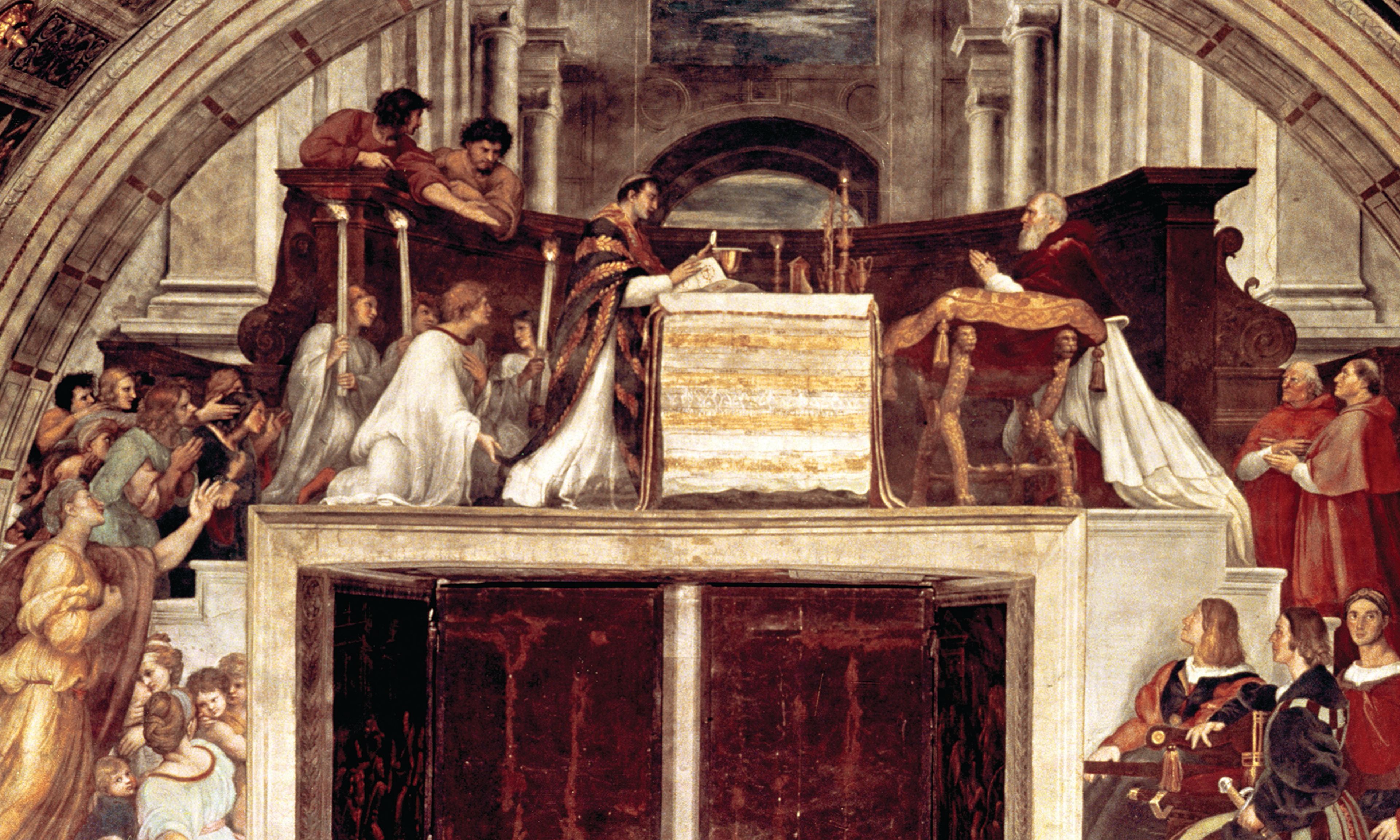
Liturgy and History
I have my concerns about the effects of Francis’s motu proprio. But it’s more concerning to see Michael Brendan Dougherty’s piece (“For the Love of the Latin Mass,” September 1) reducing the liturgical crisis to generational disputes about Vatican II and Humanae Vitae. The attraction of younger Catholics to the “Old Mass” is not as ideological as MBD would like to paint it — and this represents a challenge that Catholics such as I, in favor of the liturgical reform, must face.
Dougherty ignores or dismisses completely the history of the liturgy and the theology of the liturgical reform of Vatican II. The most sensitive issue is the relationship between the church and the Jews: The rejection of the liturgical reform is ultimately a rejection of all conciliar teachings — as Dougherty is not afraid to vindicate, thus proving Pope Francis’s point on the subversiveness of this kind of traditionalism.
In the summer of 2001, at the same time when Dougherty found “the traditional Latin Mass,” I found an even more traditional Mass: in Mar Mousa, a monastery in the desert of Syria, where the liturgy is celebrated in the rite of the Syriac Church in Arabic and in preserved hymns and prayers in the Syriac (or Aramaic) speech of Jesus himself. Arabic — a language that Christians in the Middle East spoke centuries before 20th-century Catholic traditionalists falsely identified the pre–Vatican II Latin Mass with the “Mass of the ages.” I found there something very different from my parish Mass. But to discard the liturgy of my church would have made me a spiritual tourist, a visitor who had refused to inhabit his own religious tradition.
Massimo Faggioli Professor of Historical Theology Villanova University
Michael Brendan Dougherty responds: Like Professor Faggioli, I appreciate the other ancient liturgies of the church. And it is precisely because I want my children to feel brotherly kinship with those who worship in the Maronite, Byzantine, or Ukrainian rites that I am giving them the formation that was denied to so many in my childhood, a formation in the actual Roman rite, the product of centuries of development by popes, saints, and I’m sure a few scoundrels too. The new Mass’s defenders are often candid that its liturgy implies some new beliefs, but when traditionalists notice this, we are told to shut it. Progressives get the rupture from the past they want, and traditionalists are told to call it continuity. It would be interesting to know what precisely these “conciliar teachings” are that would be inconsistent with the traditional Latin Mass. Are they part of the deposit of faith? Show us.
Instead, we have this sly misdirection and an attempt to slur not just me, nor just the traditional movement, but the church’s liturgy itself as anti-Semitic. For this reason I would regret that the editors chose to publish this letter, but handily, it demonstrates the emptiness and evasiveness of the arguments against the old Mass.
Correction
“Don’t Feed the Bears” (Kevin D. Williamson, September 1) identified OurCalling’s executive director as Wayne Wallace. In fact he is Wayne Walker.











Comments