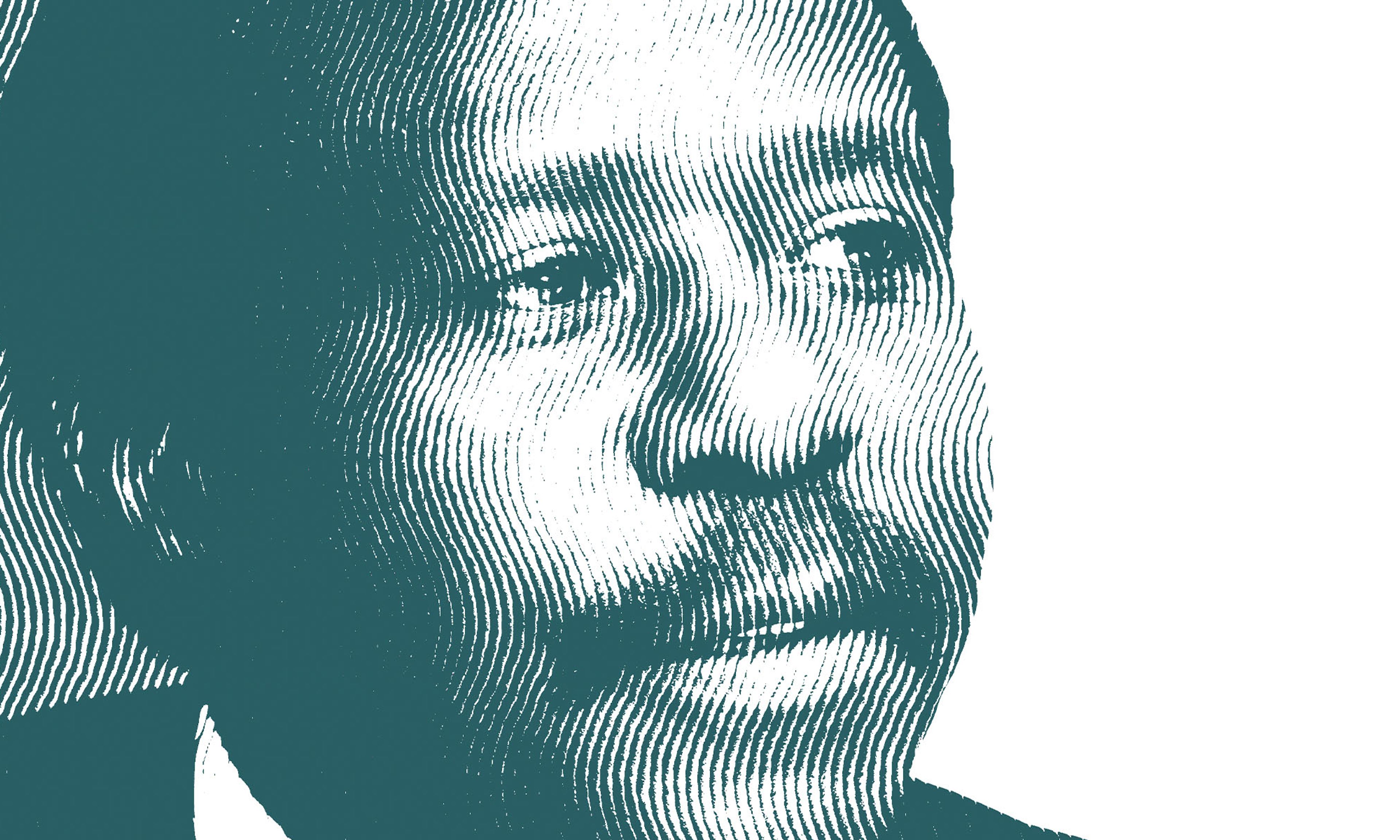
His last name is a mouthful: “Rusesabagina.” Around the world, he is generally known as “the hotel manager.” This is because of a 2004 movie, Hotel Rwanda. Don Cheadle portrayed Paul Rusesabagina, who was the manager of the Hôtel des Mille Collines, in Kigali, the Rwandan capital. Rusesabagina saved some 1,200 people in the genocide.
Do you know what “Rusesabagina” means? The man himself tells me: “disperser of enemies.”
In 2005, George W. Bush bestowed on Rusesabagina the Presidential Medal of Freedom. The two of them discussed, among other things, the genocide in Darfur, Sudan, then a burning concern.
Fifteen years later, when he was 66, Rusesabagina would become a political prisoner. He was held in Kigali for two years and seven months. He was tortured throughout that period.
He has seen, and endured, great horror, obviously. Can he forgive? Forgive his enemies, his tormentors? “We have to,” he says, “because it is the only solution.”
I have met Rusesabagina at the Oslo Freedom Forum, the annual human-rights gathering in the Norwegian capital. In previous years, I met his daughters Anaïse and Carine, who were campaigning for his release from prison. Rusesabagina and his wife, Tatiana, adopted Anaïse and Carine after their parents were murdered in the genocide.
“Here’s a silly question,” I say to Rusesabagina. “Did you ever expect to be famous?” “Well, am I famous?” he answers. I tell him yes. He smiles and says he certainly never expected fame. “I was just an ordinary kind of guy from a rural area.” He wrote an autobiography in 2006, titled “An Ordinary Man.”
He was born in June 1954. His father was a Hutu and his mother a Tutsi. He was born without tribalism, so to speak. Which tribe would he have chosen? And he had the example of his own parents’ intermarriage.
“Even in the Hôtel des Mille Collines,” he tells me, “I did not help Tutsis, I did not help Hutus. I helped human beings.”
His family with Tatiana is mixed: Hutu and Tutsi. “It is a very good cocktail,” he says.
Originally, he wanted to join the army. But he was not accepted. “Why?” I ask. “Some physical issue, some health issue?” No. “It was because of where I came from. That was my only crime. I was from the south, and power was held by people in the north.”
He then wanted to become a pastor, and studied for it. Ultimately, however, he chose hotel management. Yet he has the air of a pastor. His demeanor is kindly and he speaks softly, liltingly, though a firmness is unmistakable.
When we talk about religion, I ask him, “Did the genocide shake your faith?” It did not, he answers.
Here is another question: “Did it change your view of mankind?” Yes, it did. “I do not take a human being the way I used to,” he says. “The genocide showed me what a human being is. He can be good and he can be wild.”
About the genocide, and its barely imaginable nature, I will write just a couple of sentences. Some people paid the Hutu militias to kill them immediately — to shoot them to death — rather than kill them slowly, through torture. One such person was Tatiana’s father.
How did Paul Rusesabagina save all those people, in the hotel? Through “words,” he says. Through cajoling, negotiating, stalling. “Here, have a drink,” he would tell a militiaman. “Here, take a bribe. Maybe come back tomorrow. But no killing today, okay?” He was terrified all the time, though he performed coolly. He figured he would be the first killed, if the killing started.
“At the end, I just looked at myself and thought, ‘Am I really alive? I am really still here, living?’”
He spent two years in Rwanda after the genocide. Then he went abroad, to Brussels. It was a matter of necessity. People were threatening to kill him and, indeed, trying to. For one thing, they were envious. Rusesabagina had become popular, having been interviewed by the media, interested in his story. This triggered the envy, in murderous types.
In Brussels, he drove a cab. Then Hollywood came calling (to borrow an old line). The actor, Don Cheadle, stayed with Rusesabagina and his family for a week. Rusesabagina was present for filming, in Johannesburg, South Africa. Cheadle was nominated for an Academy Award — Best Actor — for his portrayal of Rusesabagina.
Before long, the old hotel manager had to leave Brussels. Once more, he escaped with his life. The world liked Hotel Rwanda, but Rwanda’s dictator, Paul Kagame, did not. He also did not like Rusesabagina’s fame, which was eclipsing his. The Rusesabaginas’ home was ransacked, four times. It became clear that Paul was in danger. The Belgian government got involved. Brussels was no longer safe, no longer a haven, for the family.
Eventually, they settled in Texas — San Antonio. Paul wanted to settle in Washington, D.C., but Tatiana thought it would not be warm enough. (She is sitting with her husband and me as we talk. I assure her that D.C. would have been warm enough.)
Kagame has been dictator in Rwanda since 2000. That is an average tenure for an African despot, or most any despot. Rusesabagina speaks out about human rights. Which accounts for what happened on August 31, 2020.
Rusesabagina took a chartered flight from Dubai to Burundi — or rather, he thought it was going to Burundi. Instead, it was going to Kigali. Agents of Kagame had kidnapped him, in an act of “transnational repression,” as such acts are known.
“Once again, I was in hell,” says Rusesabagina, “almost dead.” He was in hell, and almost dead, during the genocide (1994). And now this.
When they landed, agents tied the prisoner’s arms and legs and put a bag over his head. Torture would be routine. In one of those sham trials, a court sentenced Rusesabagina to 25 years. The charge was a typical one: “terrorism,” for which one can read “criticism.”
One day, emissaries of Kagame came to Rusesabagina’s cell. What would he like, in the future? A cabinet position? An ambassadorship? Some other plum position? All Rusesabagina had to do was tell the nice gentlemen about his activities abroad: what politicians he had been meeting with, what they had discussed.
The prisoner put them off by saying, “Thank you for the message. I’m going to think about it.” That was his way of saying no. As he had done all those years before, he was using words and wit — a kind of diplomacy — to survive.
On March 24, 2023, the authorities released him. Why? “International pressure,” he says.
He had survived the genocide, and now he had survived the prison hell. “I couldn’t believe it,” he says. “I will tell you that, to date, I’m the only one who has been kidnapped, taken to Rwanda, tortured that way, and gotten out of prison alive.”
I tell him that Anaïse and Carine, among others, performed nobly, in campaigning for his release. I saw it. They were superlative.
While her husband was in prison, Tatiana barely slept. Now she sleeps well. So does he. And he will not stop speaking out for human rights, in Rwanda and elsewhere.
“You have to stand up for what you believe,” he says, before we part. “You have to do it until your last day. If you have bad experiences, you must make good out of them. You must not give up. No matter what, you must never give up. You have to use all the time you have, however long it is.”
From most of our mouths, I suppose, these words would seem trite. They are platitudes, clichés. But not when spoken by Paul Rusesabagina, somehow. They are simple, direct, and sincere. And they have power.










Comments