The rule of law is one of the weight-bearing pillars of the American system. No other nation so reveres the idea. But it is often, and perilously, confused with the rule of lawyers. That confusion has things backwards, in ways that could be fatal for our republic.
What is the rule of law? Begin with its history in America. Britain was, and remains, a land of customary or common law. Englishmen learned to respect the development of law by judges over time in light of experience. Even after Magna Carta and the English Bill of Rights, no document binding upon crown or Parliament created their powers or defined them with much clarity. While Americans continued the common-law tradition in their courts, the king and Parliament were too far away to rule directly, so the colonies from the outset were governed by rules written in royal and corporate charters and self-governing documents such as the Mayflower Compact.
The dreamer Thomas Paine, the most radical of the Founding Fathers, wrote in his 1776 pamphlet Common Sense: “As in absolute governments the king is law, so in free countries the law ought to be king.” That stickler John Adams, whom Russell Kirk described as “the founder of true conservatism in America,” wrote that same year that “the true Idea of a Republic, is ‘An Empire of Laws and not of Men.’” Article XXX of the Massachusetts Constitution of 1780, drafted largely by Adams, elaborated on how the rule of law was all about power — who had it and how he could use it (emphasis added):
In the government of this commonwealth, the legislative department shall never exercise the executive and judicial powers, or either of them: the executive shall never exercise the legislative and judicial powers, or either of them: the judicial shall never exercise the legislative and executive powers, or either of them: to the end it may be a government of laws, and not of men.
This classic statement of separated powers influenced the work of the men in Philadelphia seven years later, who agreed more on that principle than on any other. By the time of Marbury v. Madison (1803), Chief Justice John Marshall could assert as a commonplace requiring no citation that “the government of the United States has been emphatically termed a government of laws, and not of men.”
The Framers forged the first nation on earth whose government was created and bound by a written rule book. Writing it down was essential to the project of establishing a nation of laws. It also ensured that the law would always come from the people who elected those who would write it, not from lawyers and judges schooled in the arcana of precedent and the creative arts of interpretation.
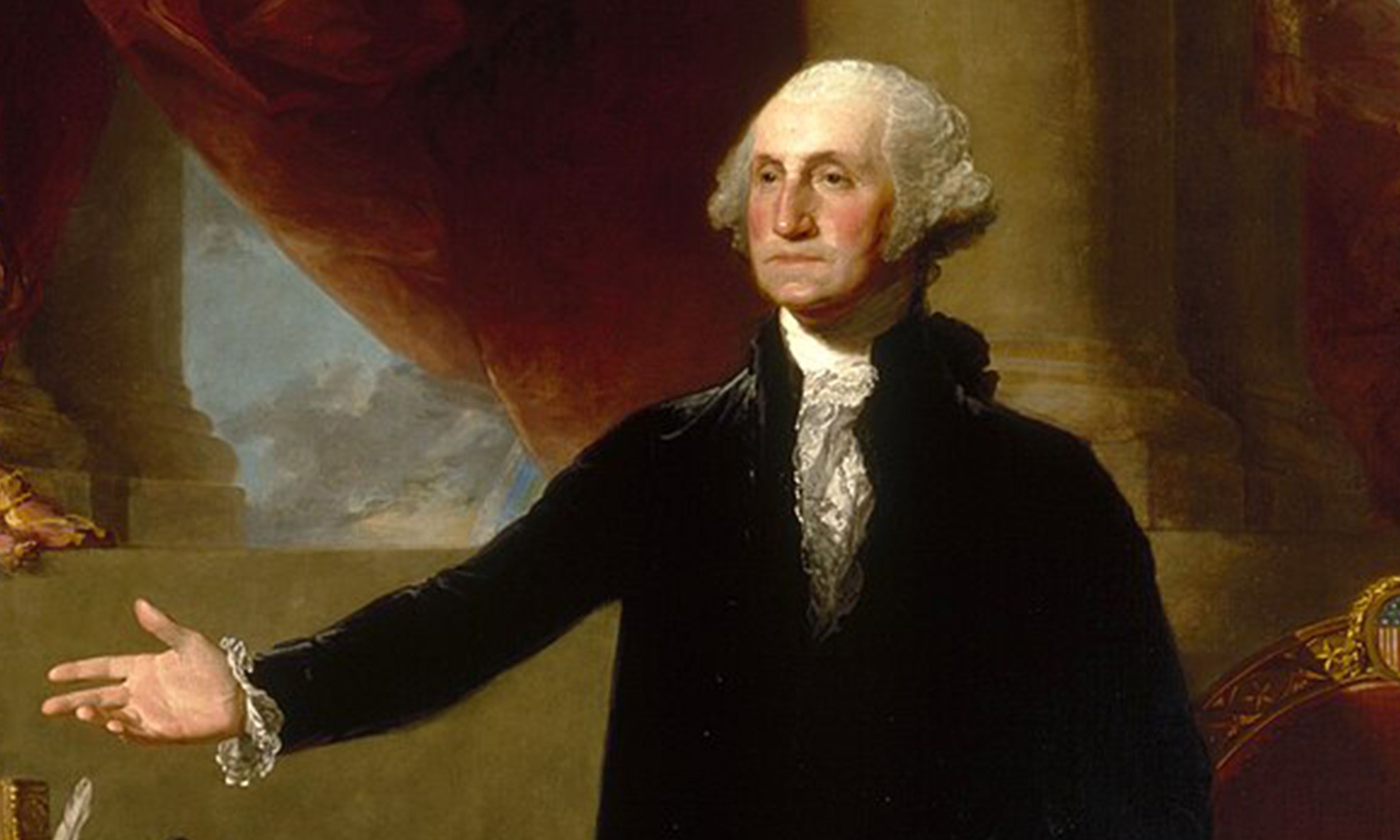
As George Washington stressed in his Farewell Address, “the basis of our political systems is the right of the people to make and to alter their constitutions of government.” “But the Constitution which at any time exists,” he continued, “till changed by an explicit and authentic act of the whole people, is sacredly obligatory upon all.” If the Constitution needed to be changed, said Washington, “let it be corrected by an amendment, . . . but let there be no change by usurpation” — that is, no change that is not ratified by the people.
Punctilious adherence to the law was ingrained early in American habits. Alexis de Tocqueville, in the 1830s, remarked that “there is virtually no political question in the United States that does not sooner or later resolve itself into a judicial question.” John Bingham, later one of the framers of the 14th Amendment, recalled of campaigning for William Henry Harrison in 1840 that “everything was reduced to a Constitutional question, in those days,” requiring him to carry a pocket Constitution to debates.
The rule of law is, in Justice Antonin Scalia’s famous phrase, a law of rules. It begins with the rule of written law and depends on the evenhanded enforcement of that law. Rules are to be written down where all can see and know them, and they are to be applied the same way to all. What it means to be a government of laws, not of men, is inseparable from the proper separation of powers by which the power to write the rules and the power to enforce them are in different hands — and the writing comes first.
The rule of written law — like the rules of a game — has three foundations:
First, the rules are written in advance and not changed retroactively. People are told the rules and are free to do what they want so long as they act within them. They are punished only if they don’t play by the rules agreed to ahead of time. This was James Baker’s mantra during the Bush v. Gore lawsuits, invoking the American sense of fair play: You can’t change the rules in the middle of the game. The opposite approach was satirized by cartoonist Bill Watterson in Calvin and Hobbes, in which the rules of “Calvinball” are reinvented by Calvin whenever it suits him.
Second, the rules are universal. They apply to all. When they are written, nobody knows for certain whom they will be used to punish. Of course, some types of rules are known to benefit or burden one group more than others. But they cannot be tailored to get a particular person for things he has already done. A rule written too specifically for a single person violates the Constitution’s ban on bills of attainder.
Third, the rules are clear. Clarity is essential to preserve the rules as they were made in advance and to keep them the same for all. If rules leave vast room for interpretation in their application, the rule of law is gone and the rule of men takes over. Rules don’t just say “Do as you think best” and leave everything to judgment. As humorist P. J. O’Rourke once quipped, “being specific is the essence of lawmaking and the whole difference between having a Congress and having a mom.”
Once the conditions of the rule of written law are set, evenhanded enforcement by the executive takes over. The constable and the prosecutor, having limited resources, will always have discretion about what types of cases to pursue: when to let go minor and technical violations of law, and when cases of apparent crimes are not strongly supported by evidence. But they always have a duty to enforce the written law, the whole written law, and nothing but the written law.
Of course, interpretation of written rules by the executive and the courts is unavoidable. But this requires a commitment to read the words in good faith as they were meant when written — and not treat them as mere clay in the hands of lawyers. Lewis Carroll’s Through the Looking-Glass captured, in 1871, the cynical modern approach to language as an instrument of power rather than communication:
“When I use a word,” Humpty Dumpty said, in rather a scornful tone, “it means just what I choose it to mean — neither more nor less.”
“The question is,” said Alice, “whether you can make words mean so many different things.”
“The question is,” said Humpty Dumpty, “which is to be master — that’s all.”
Executives may not set aside laws that they dislike but that have not been repealed by the people. Presidents once understood that. Dwight Eisenhower sent the 101st Airborne to enforce desegregation orders in Arkansas even when doing so was very unpopular in the South. Millard Fillmore vigorously defended his duty to enforce the Fugitive Slave Act even when it was politically poisonous in the North and deeply distasteful to him personally. It cost him the renomination.
Prosecutors must not ignore the rules in favor of friends or stretch them against enemies. The Peruvian dictator Óscar Benavides famously declared, “For my friends, everything; for my enemies, the law.” That is no law at all.
Much of what we see today is the elevation of the rule of lawyers over the rule of law. Instead of passing laws through the people’s representatives, executives and administrative agencies scour the lawbooks for something vague enough to use as cover for rulemaking by fiat. Instead of repealing laws through the people’s representatives, progressive prosecutors and federal immigration authorities simply refuse on a blanket basis to enforce them. Instead of persuading voters to adopt amendments, the meaning of the Constitution is changed by creative judges. Control the lawyers, and you control the law — and cut the people out of the picture.
Nowhere is this clearer than in politically charged investigations and prosecutions. Donald Trump’s everything-is-negotiable ethos is understandably provocative to lawyers. But rewriting the rules to get him undermines rather than vindicates the rule of written law. Trump has been investigated and, in some cases, charged under a variety of generally phrased laws that were not written to cover his type of conduct and had never been so enforced in any similar case. The hush-money case against Trump in New York, for example, was the first time a state prosecution was ever used to charge a violation of federal election laws — and those election laws were so far removed from the actual statute under which Trump was charged that the indictment handed down by the grand jury didn’t even mention them.
Defenders of the Trump prosecutions intone that “nobody is above the law.” But when the law is simply an elastic tool in the hands of inventive prosecutors, what that really means is that nobody is above the lawyers. Prosecutors such as New York County district attorney Alvin Bragg decide who their ideological friends are and drop charges against street criminals and campus vandals. Meanwhile, having also decided who their enemies are, they move heaven and earth to find creative ways to retroactively change what counts as a crime. The only consistent thing is that all depends on whether you are in favor with the guild of lawyers.
In the Trump v. United States oral argument, longtime government lawyer Michael Dreeben told the Supreme Court that there was no danger in presidents’ facing political prosecutions because the Justice Department could be trusted never to bring politically motivated charges. He also argued that there was no danger of presidents’ accidentally committing crimes because the Justice Department would advise them what the law is and therefore prevent them from breaking it. But when pressed on whether presidents are safe if they follow that advice, Dreeben kept his options open: The Justice Department could always decide later that the president hadn’t given his lawyers all the facts or that a prior Justice Department had conspired with the president. At every turn, the same department of lawyers decides what the law is, who should be charged under it, and even whether it is safe to follow their advice. They decide who is protected and when that protection is revoked.
The rule of law means something entirely different. It means that we the people make the rules, that they are written down, that everybody knows what they are, and that you are free so long as you stay within the lines. It means that law is law in the unyielding way that math is math rather than being a sword of Damocles ready to drop whenever the lawyers think you have become a nuisance. The rule of written law is, as Washington said, “sacredly obligatory upon all.” There is nothing sacred about the rule of lawyers.












Comments