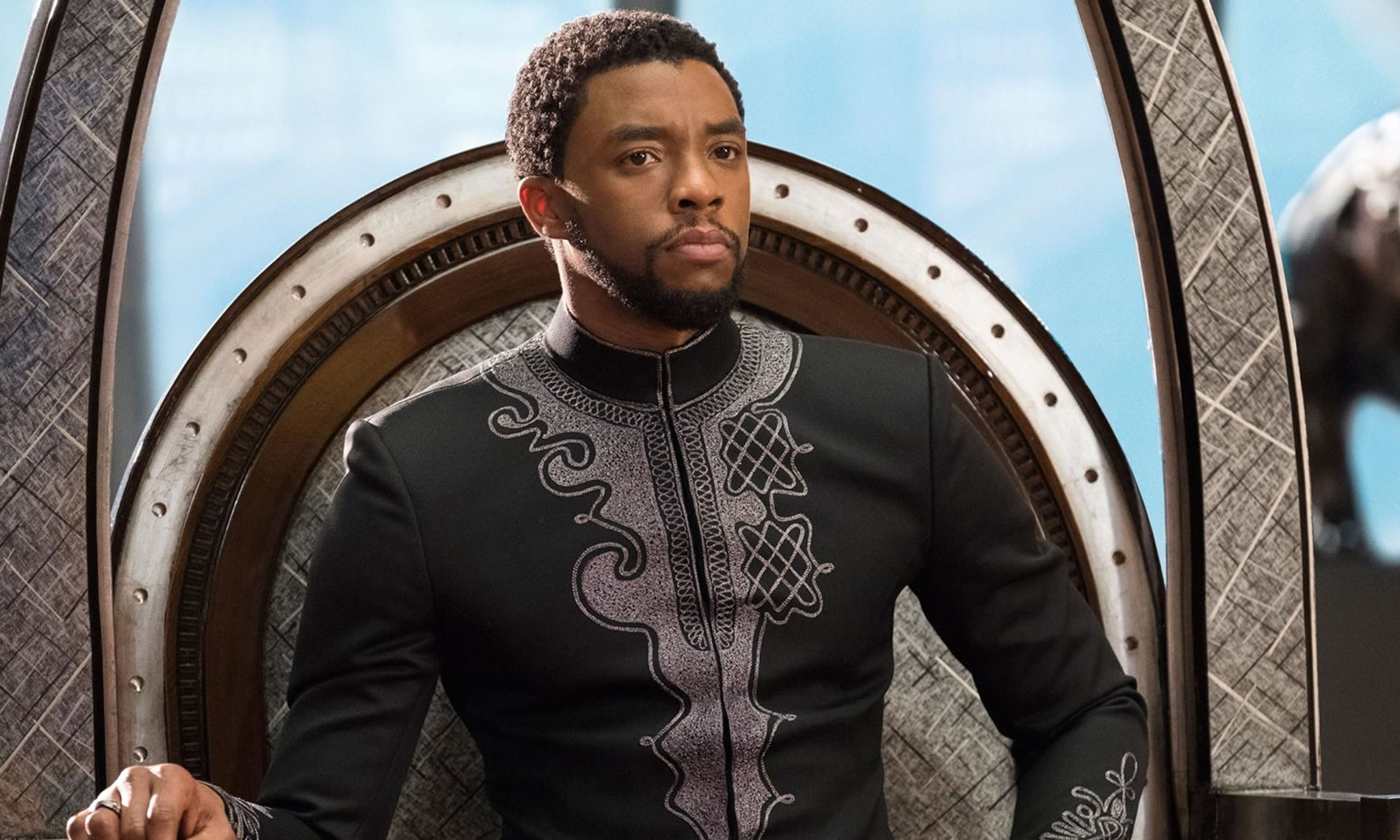
In dying of colon cancer last month at the age of 43, Chadwick Boseman left behind one of the most unusual careers of any modern movie star. At age 35 he was a minor television actor and part-time playwright, with lots of one-off roles on CSI-type shows and zero public recognition. Then he won the part of Jackie Robinson in the film 42, and over the next seven years he played three of the most famous African-American figures of the 20th century — Robinson, Thurgood Marshall in Marshall, and James Brown in Get On Up — plus a comic-book figure you might have heard of named “T’Challa,” a.k.a. “Black Panther,” across four Marvel movies, including the hugely successful one he headlined. And then, with no advance warning of his illness in the tabloids or the gossip mills, he passed away — and it turned out that several of his most successful movies had been filmed during the cancer battle.
For that combination of condensed success, acting-through-illness, and untimely death, the closest comparison might be John Cazale, the 1970s actor who starred in five of the best movies of that genius-kissed decade — both Godfathers, The Conversation, Dog Day Afternoon, and The Deer Hunter — and then died of lung cancer at 42 just after the last of them finished filming. But Boseman’s death is the more shocking one, both because the part of T’Challa made him a global celebrity in a post-privacy age and yet he kept his trials a secret, and because he was famous as a superhero, a muscled-up embodiment of youth eternal, while Cazale was a gaunt character actor in whose face you could always see the skull beneath the skin.
To the extra shock I would add an extra touch of moviegoer’s regret, because for Cazale both the body of work and the movies themselves were unsurpassable, while Boseman generally outperformed his films, acting superlatively in workmanlike biopics and elevating the higher mediocrity of Marvel. Black Panther itself was something of an exception — though not quite as good as claimed, definitely more interesting than the superhero norm — but there the hero necessarily ceded a lot of the limelight to Michael B. Jordan’s Afro-power villain, to whom the ripest scenes belonged.
So if you admired Boseman it was interesting to imagine what awaited him as an actor in the post-superhero phase of his career, or what he and Panther’s director, Ryan Coogler, might do with a more earthbound script — whether together they might be able to achieve something like the run of quality, not just box-office glory, that Cazale achieved with Francis Ford Coppola, Michael Cimino, Sidney Lumet.
Now that future exists only in imagination. Hoping to get a taste of it, I turned to one of the summer’s direct-to-Netflix releases, Spike Lee’s Vietnam movie Da 5 Bloods, in which Boseman plays one of five black platoon-mates who stumble on a cache of CIA gold and then come back to find their buried treasure 50 years later. It’s a really good idea for a movie — an African-American answer to Cazale’s Deer Hunter — but in execution it’s a strange film, and in the shadow of death it plays mostly as a monument to might-have-beens.
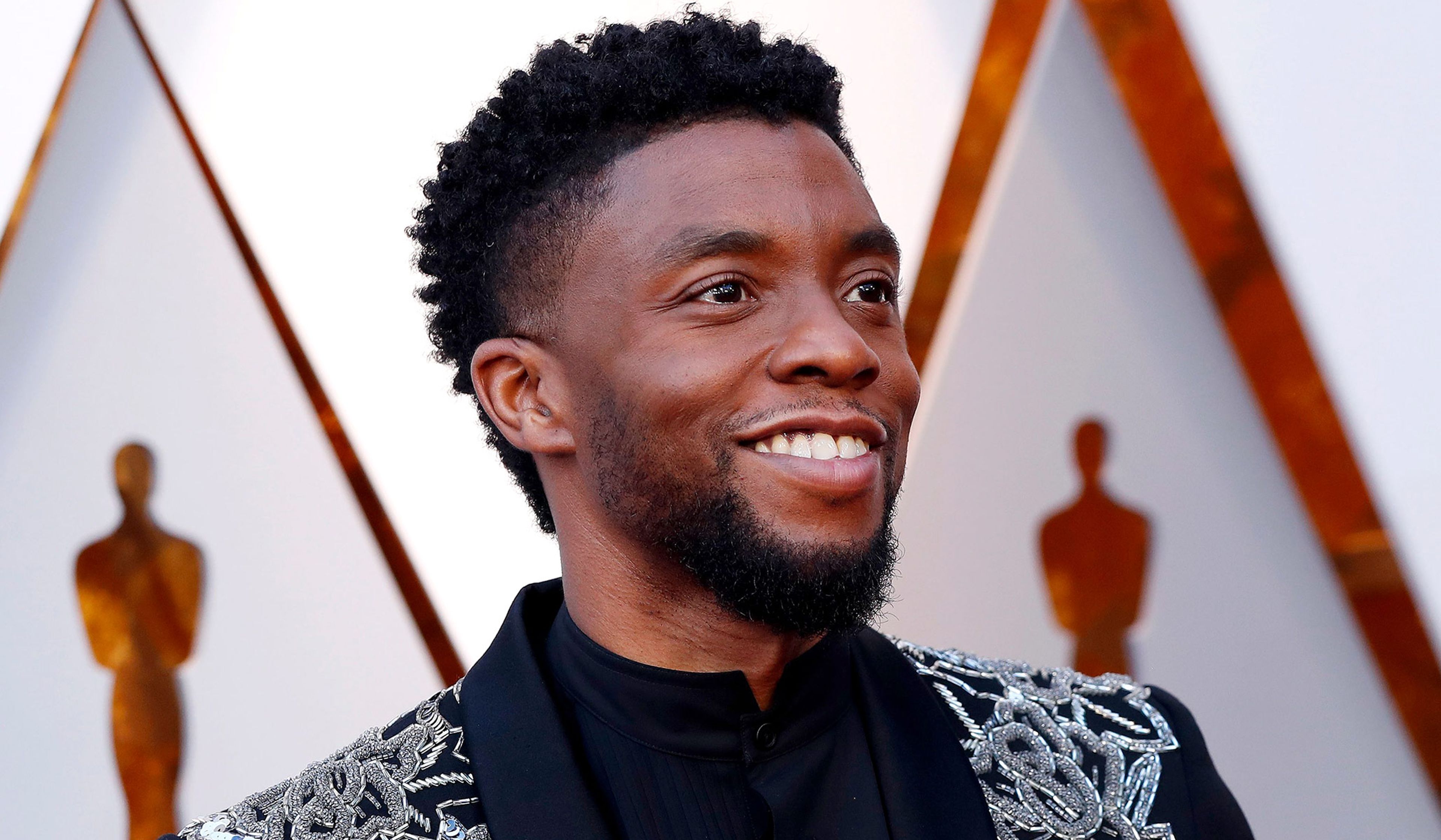
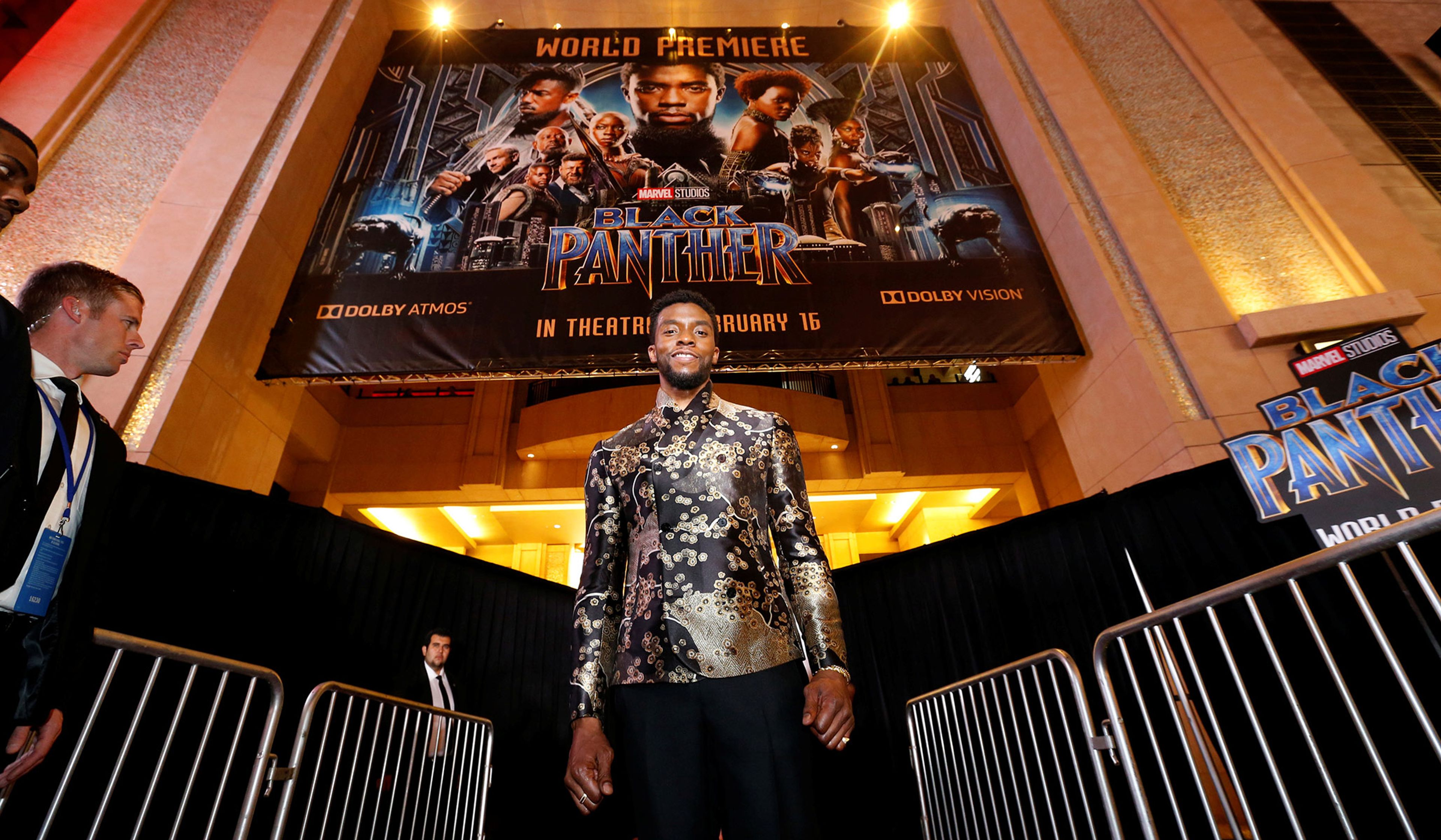
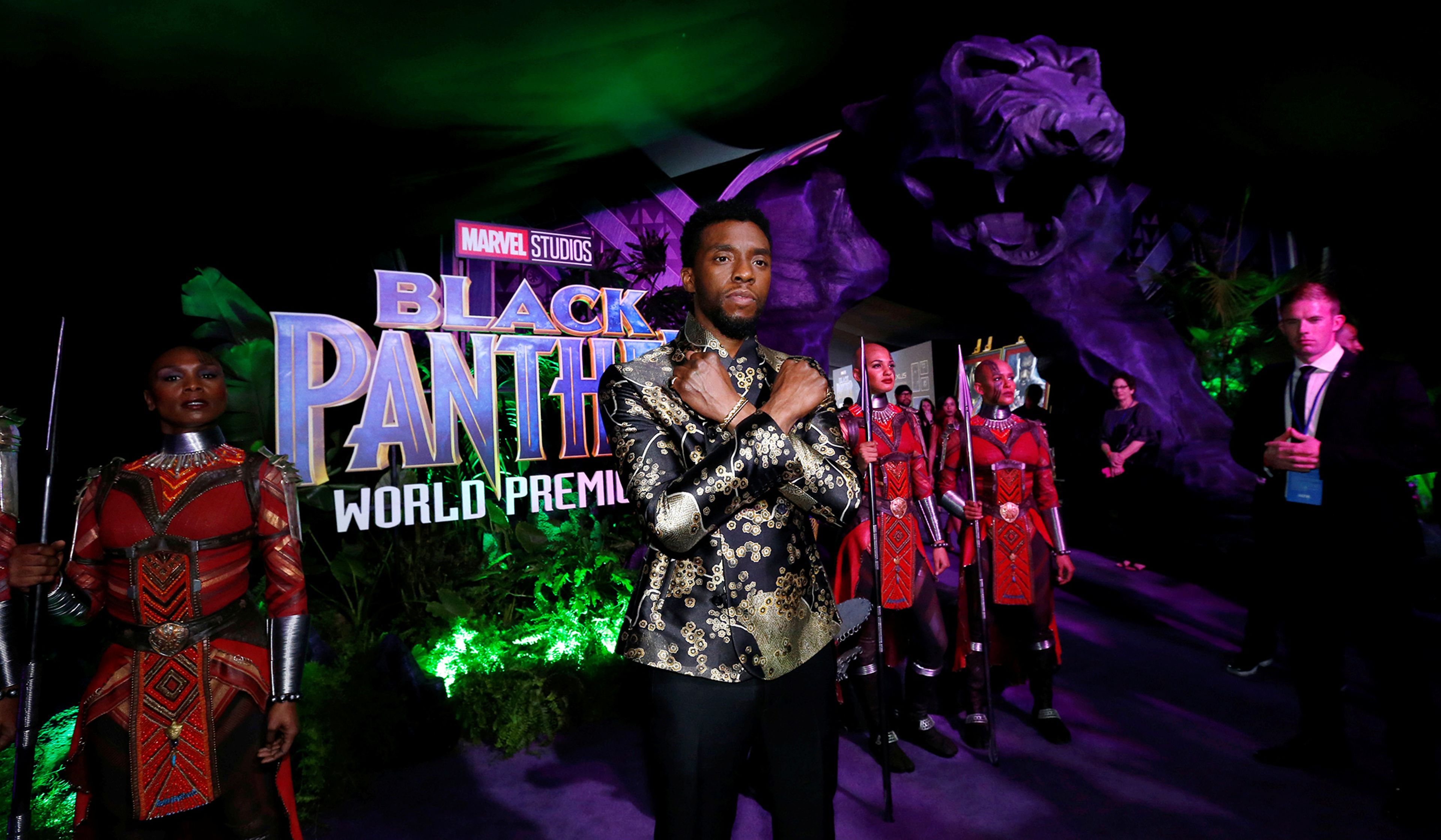
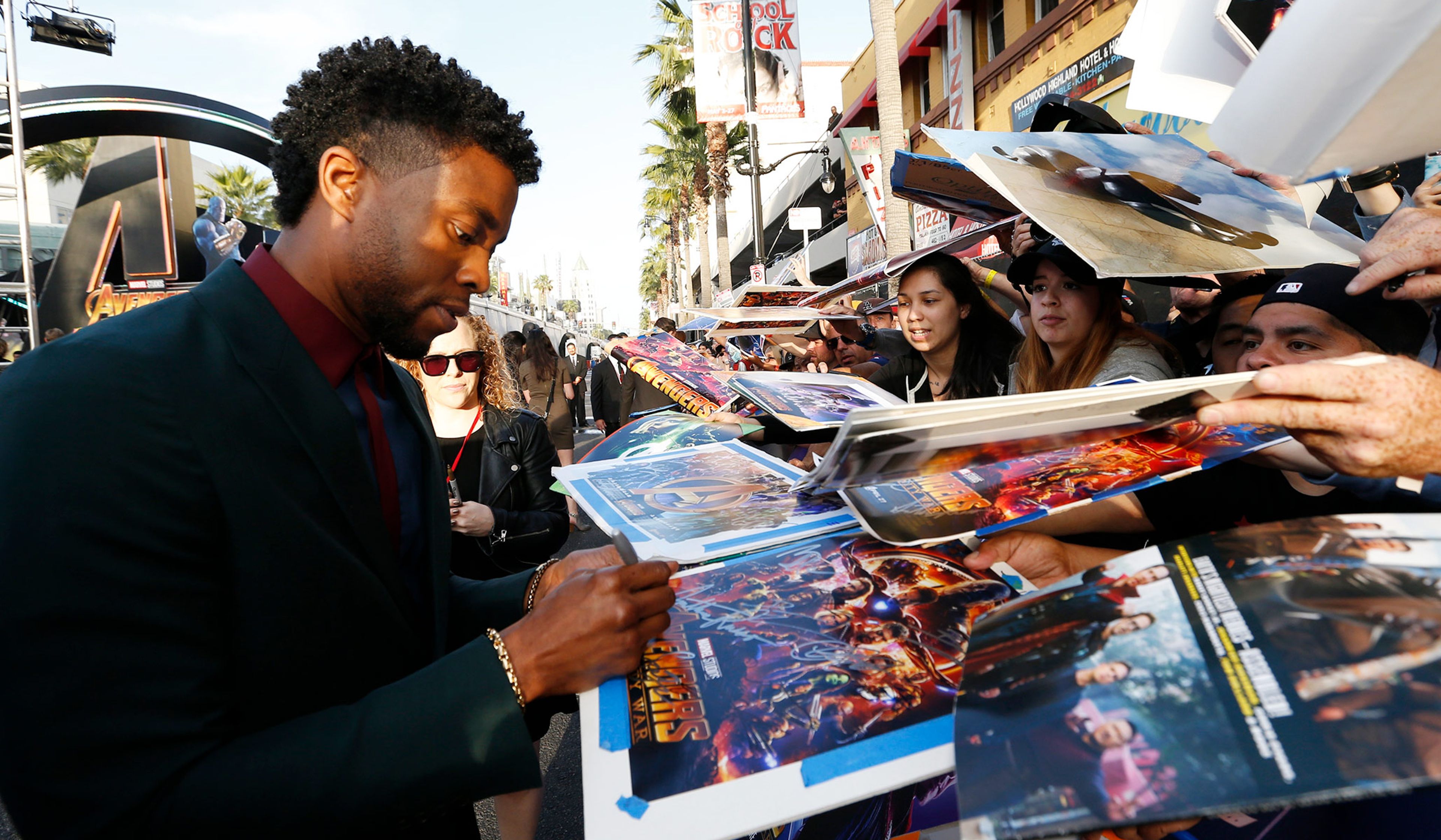
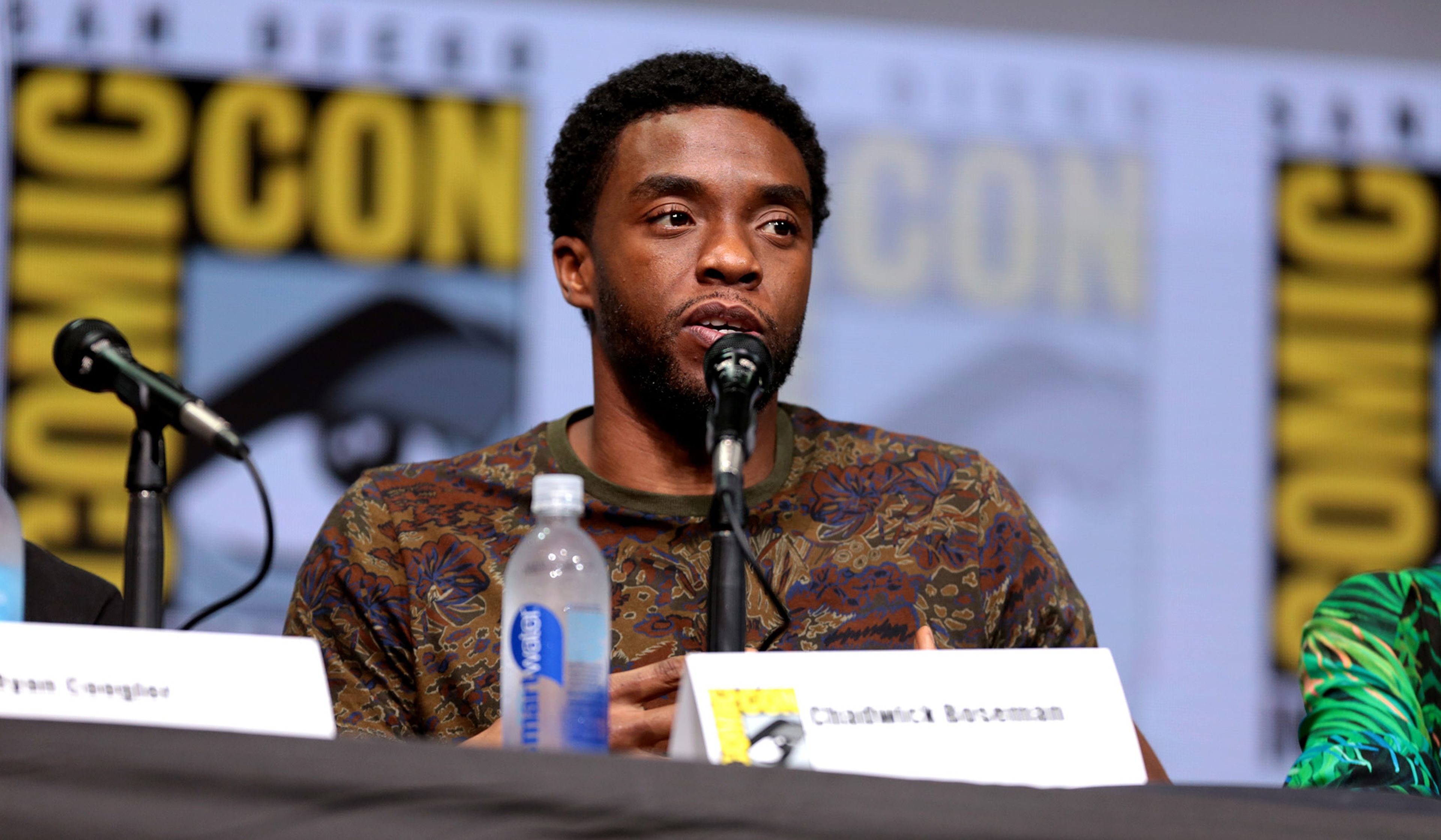
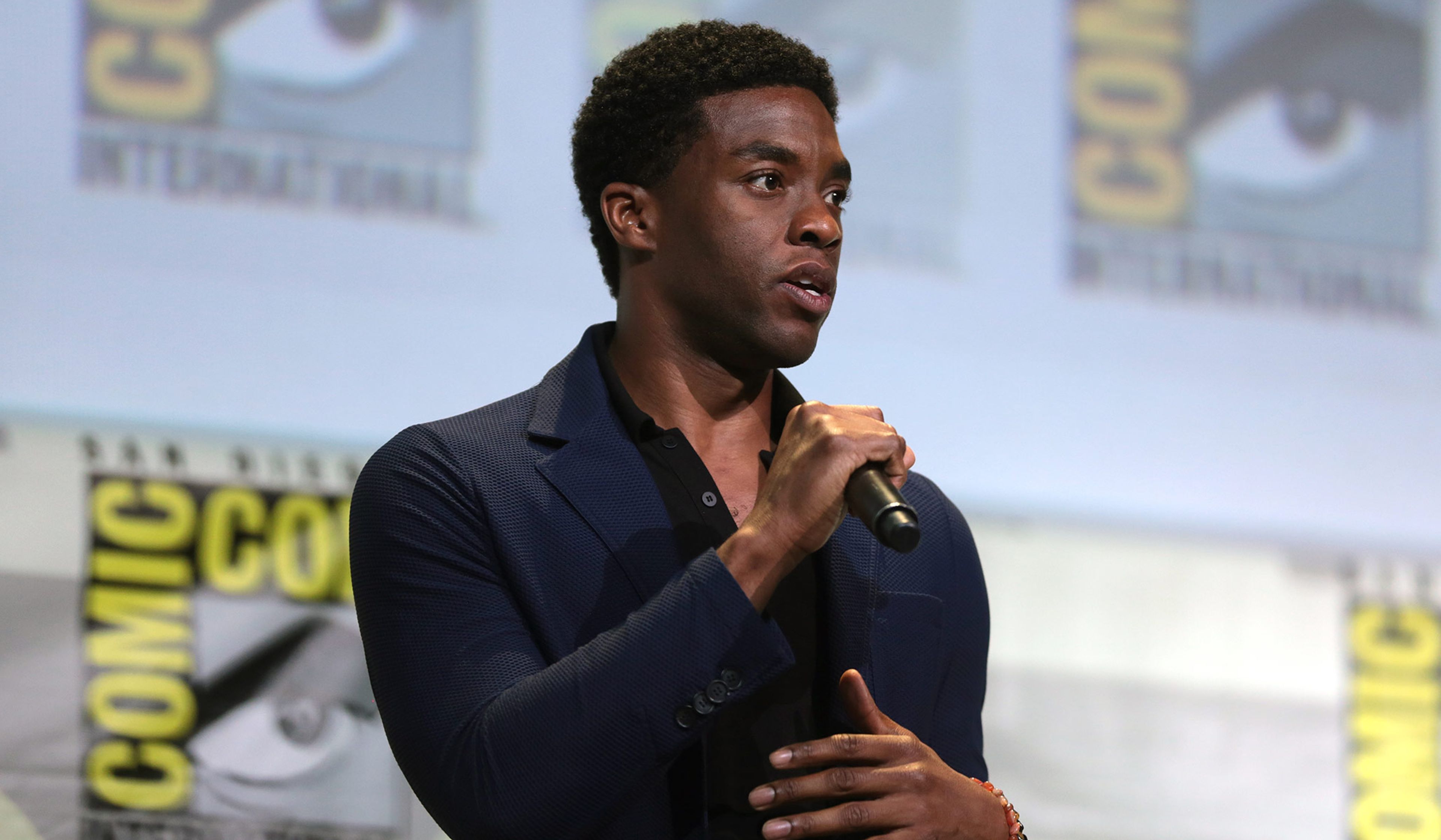

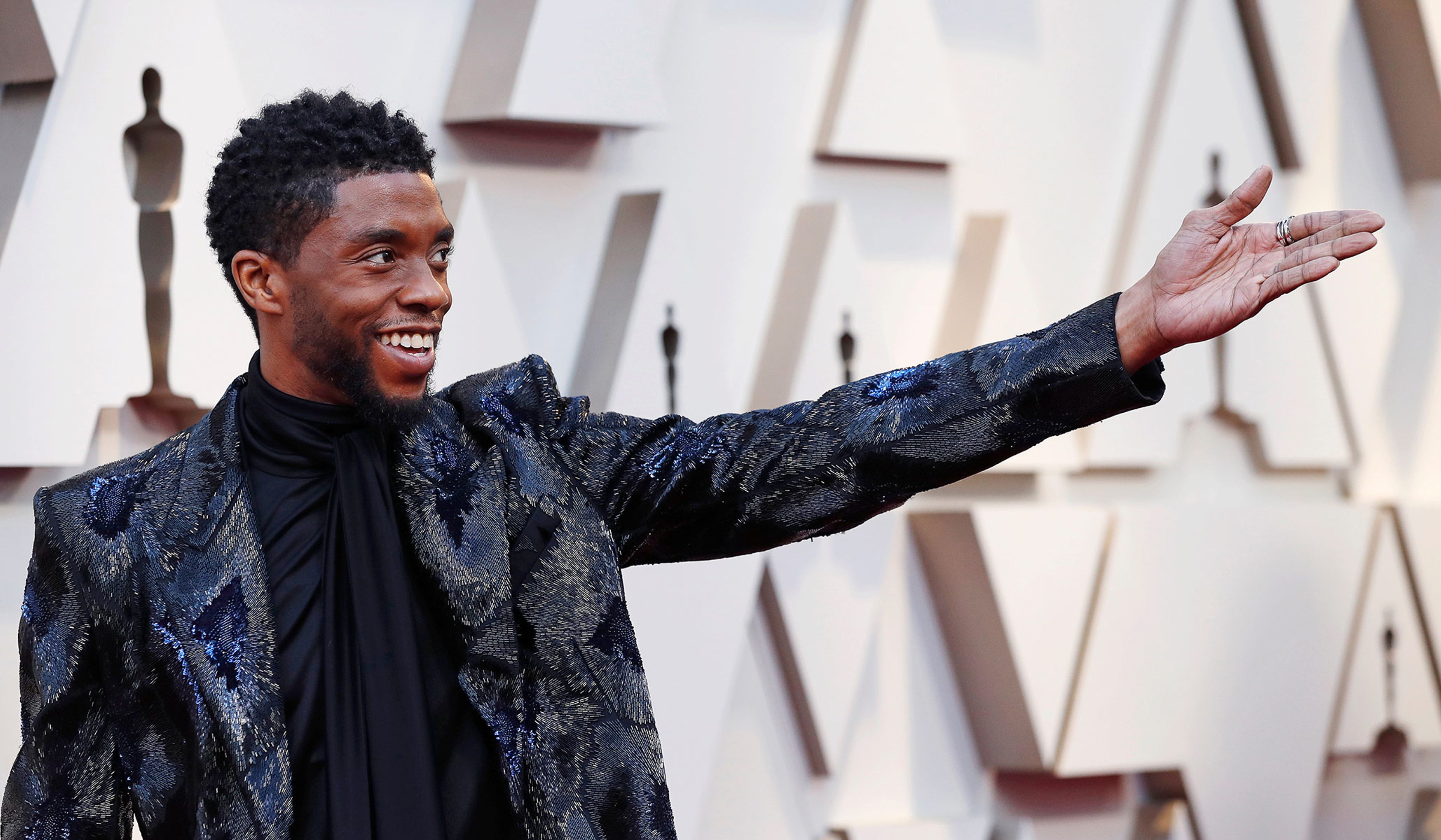


Chadwick Boseman at the Academy Awards ceremony in Hollywood, Calif., in 2018.
Mario Anzuoni/Reuters
The first is the movie itself, which feels as if it could have been great with just a little more effort put into script, editing, pacing, plausibility. The five “bloods” of the title are, in old age, four: Delroy Lindo’s Paul, Clarke Peters’s Otis, Isiah Whitlock Jr.’s Melvin, and Norm Lewis’s Eddie, who join Paul’s son David (Jonathan Majors) on a Vietnam-highlands hunt that’s officially for the buried remains of their KIA leader “Stormin’” Norman (Boseman) and unofficially for the millions’ worth of gold. Their quest tangles them with Otis’s old flame Tiên Luu (Lê Y Lan), a French money-launderer (Jean Reno), and a collection of Western do-gooders doing mine removal, led by a French heiress (Mélanie Thierry) doing penance for her family’s imperialism-gotten gains.
The last bit is a sign that the movie is somewhat overcrowded with historical signifiers, to which Lee adds ample references to a newly elected Donald Trump: Lindo’s character, the most ill used and haunted of the bunch, sports a MAGA hat and boasts about the Wall, to his friends’ derision. That crowdedness isn’t necessarily a problem for a big Vietnam movie (I appreciate the ghostly French-plantation sequence in the extended cut of Apocalypse Now), but the script over-eggs the material, with too many characters who talk in snippets from op-eds or social-media monologues. Meanwhile the editing is weirdly choppy, as though Lee had lacked the footage he needed for some scenes, and the treasure hunt itself plays like he wrote “Fill in details here” and then ran out of time and just gave his characters a metal detector.
But could-have-been-great movies are relatively commonplace; what’s more striking about Da 5 Bloods is how it uses the dying Boseman. Supposedly Lee had no idea the actor was ill during filming, in which case you have to credit Boseman himself for choosing a remarkable valedictory role — one in which his character exists only in flashbacks and as a ghost, a forever-young counterpoint to his retirement-aged co-stars, like a memory in an A. E. Housman poem.
It’s particularly striking to watch Boseman playing the memory of youth alongside Lindo’s searing portrayal of the ravages of age: They contrast like faces in time’s mirror, the high summer of yesterday and the deep autumn of tomorrow.
So Da 5 Bloods isn’t a great movie, but it’s a fitting memorial to a life lost out of season. R.I.P.












Comments