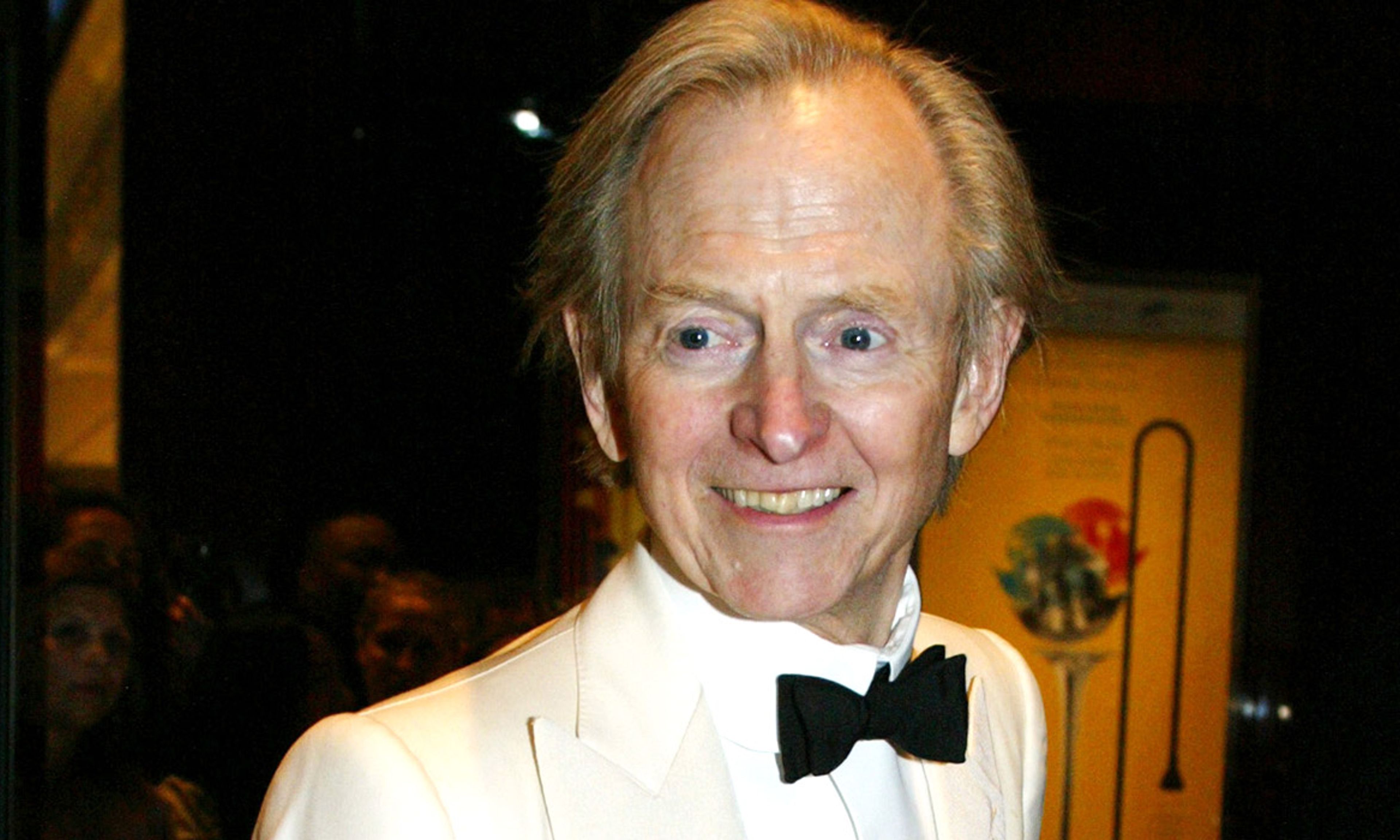
Tom Wolfe, one of our best novelists and essayists, is also a critic of the Darwinian theory of evolution. He thinks that the theory might explain all of nature, all observable reality — up to, but emphatically not including, the human being: the “beast with speech” (Homo loquax). In his invigorating 2006 NEH Jefferson Lecture, he claimed to explain everything we need to know about that singular beast, and in his new book he explains why famous scientists have failed completely to come up with an alternative to the failed Darwinian explanation. To account for the being with speech, evolutionary theorists from Darwin to Chomsky have concocted just-so stories no more empirically credible than those of Kipling. Darwin, in fact, was a better fiction writer than Kipling, even if his story couldn’t account for the existence of fiction writers.
In Wolfe’s view, “Darwin had fallen, without realizing it, into the trap of cosmologism.” Human beings, in their “endless curiosity,” have always been obsessed with devising “an ever-elusive theory of Everything, an idea or narrative that reveals everything in the world to be part of a single and suddenly clear pattern.” What the beast with speech always wants is a compelling answer to the question of his origin as a being “so different from the animals around him.” He wants to be integrated into a whole that includes himself, one that grounds and sustains personal significance. None of the other animals care about that; that’s one reason among many that there aren’t dolphin philosophers, scientists, theologians, and poets.











Comments