‘Hey! Congrats!”
That’s what most of the text messages and emails said. Two years ago, I had listed my house in Venice Beach, and my realtor had ginned up a fancy-sounding press release — something like, “Former Cheers writer sells historic, elegant luxury Venice Beach bungalow,” which was true enough to avoid legal action but false enough to draw potential buyers — and now it seemed like every Californian I had ever met, even briefly, was contacting me to tell me how smart I was to leave California.
“Great move! It’s getting insane here. Thinking about it myself,” a friend texted.
What I didn’t say was that I was merely exchanging one high-tax state run by insane lefties for another, possibly more dysfunctional one. I was moving from Los Angeles to New York, which was sort of like moving from Romania to Bulgaria in 1947 — you do it for the food, maybe, but not for the freedom.
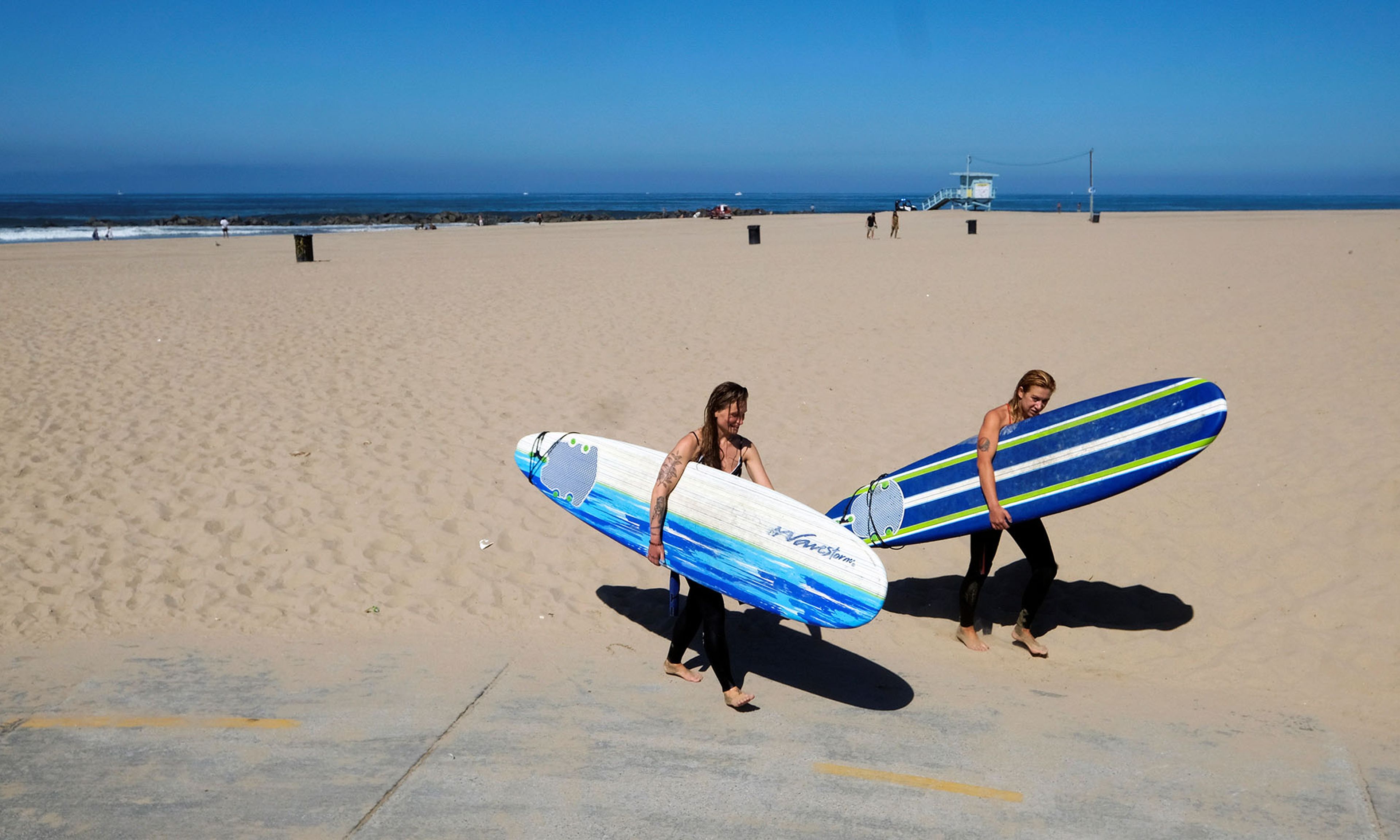
I bought my house in Venice Beach in 1997, when the area was strafed nightly by LAPD helicopter searchlights and the rat-a-tat of automatic-weapon fire mixed in with the roar of the ocean waves. Venice back then was a hot battlefield in the drug-gang wars, as well as a seedy repository of 1960s-era hippies, bums, nearly famous artists, and, especially, very cheap real estate. I loved it.
Over the next 25 years, the neighborhood got nicer — a big drop in the crime rate has that effect — and green shoots of gentrification started popping up all over. The local liquor store told the story in time-lapse snapshots: First the bulletproof plexiglass came down; then expensive ice cream in pint containers appeared; after that, fancy bourbons and chilled Sancerre; eventually a dedicated Champagne cooler in a color I’m told is “Veuve Clicquot orange” was chilling bubbly next to a rack of $50 candles. My neighbors got younger and richer and a lot more attractive.
Venice Beach was officially cool. Google moved its Southern California headquarters to Venice. Facebook leased a nearby campus. Snapchat retrofitted an old office park. There were restaurants and bars and young people riding around on those irritating scooters. It was “Silicon Beach,” and while there were six or seven places to get a cup of coffee you’d have had an impossible time getting one for less than $10.
So, basically, a perfect time to sell.
I wasn’t planning to sell my house, but every now and then I’d be sitting on my front porch enjoying an evening (or, truth be told, an afternoon) cocktail and a young tech person would glide by in a Tesla or something even more ludicrous, come to a silent stop in front of my house, and call out: “Hey! Are you selling your house?”
I would always shake my head and say, “No, sorry.” But inside, I was thinking, Well, I mean, there’s a number.
There is always, as my friends in finance tell me, a number. My exit from California had nothing to do with taxes or city mismanagement or its sclerotic liberal state government. I sold my house because I wanted the money. It was a perfectly timed financial move that I immediately undermined by moving to New York City.
California, though, is a place you come back to. Al Jolson sang “California, Here I Come” in 1924, a few years after the state’s richest and most cosmopolitan city was leveled by earthquake and fire. “California, here I come,” he sang, “right back where I started from.” He doesn’t mention the 1920s-era drawbacks — dam-breaks and temblors and wildfires and labor unrest — he’s just excited about getting back to the Golden State.
Fifty years or so later, in a song called “California,” Joni Mitchell warbled the same basic tune. “California,” she sings, “I’m coming home,” even though, to be precise, she’s from Canada. No matter. California is home to a lot of people who are not actually from there — Canadians like Joni, East Coasters like me, Lithuanians like Al Jolson. Mitchell wrote those words in Paris, one of the most inspiring and artistic cities on earth, but she was eager to push on: “I wouldn’t want to stay here,” she sings. “It’s too old and cold and settled in its ways, / Oh, but California, / California, I’m coming home. / I’m going to see the folks I dig, / I’ll even kiss a Sunset pig, / California I’m coming home.”
This was in 1971, a few years after the Manson Family murders and a few years before Patty Hearst was kidnapped by a domestic-terrorism cult. The state was plunged into a crippling drought, and a tiny Mediterranean fruit fly nearly destroyed its agriculture industry.
In between there were riots and Black Panther murders and campus unrest. Every nutty and dangerous trend in American culture, it seemed, originated on the West Coast in those years. The worst aspects of that era had their fullest and most ungoverned examples on the streets of San Francisco, Berkeley, Hollywood, and, yes, Venice Beach. But Joni didn’t care. She was going home.
Today, the news out of the Golden State is, once again, nearly all bad. People with talent and ambition are leaving for low-tax, pro-business places like Texas and Florida. Some are just fed up with the waves of homeless people casually defecating on the streets in San Francisco or on the beaches in the Pacific Palisades. The state government is controlled by a Democratic Party supermajority and local governments are in distracted thrall to the latest progressive absurdity. And then there are the now yearly wildfires.
In other words, California has been falling apart and putting itself back together again for as long as it’s been part of the Union. Even though the ground — and the culture, and the economy — are unstable, someone is always singing about how great it is, about how free and full of opportunity it is. Despite all the people who throw up their hands and escape the madness, there are always enough left to dream up the iPhone, make a blockbuster movie, invent a new way to skateboard. Being a Californian means learning to ignore the disasters and double down on the dream. California is, first and foremost, a State of Denial.
“Great timing,” a friend of mine texted, and attached a link to an article from the Wall Street Journal. The headline said it all: “The Venice Real Estate Market Is Unstoppable No More.” Somehow, according to the Journal, I had managed to sell my house at the market top. Venice — like the rest of California — was no longer cool.
And yet here I am in New York City, like Joni Mitchell in Paris in 1971, and all I can think of is this: When you land at LAX at night and get into a taxi to take you home, you can roll down the windows and smell the salt air and the night-blooming jasmine. Even at its lowest, California can intoxicate. That’s probably why it keeps coming back. That’s probably why I’ll come back.
Open up that Golden Gate. California, here I come. (When real estate-prices dip a bit, I mean.)










Comments