For much of the country, California has long been the destination of dreams, our nation’s last stop on its westward journey toward making real our visions of a better, more meaningful, more fulfilling life. The Gold Rush, the homesteaders’ trek west, the creation of the Hollywood dream factories, the Sixties counterculture, and Silicon Valley’s radical transformation of how we work, shop, communicate, socialize, and entertain ourselves all happened in California — for good or ill — making the Golden State the national “substance of things hoped for.”
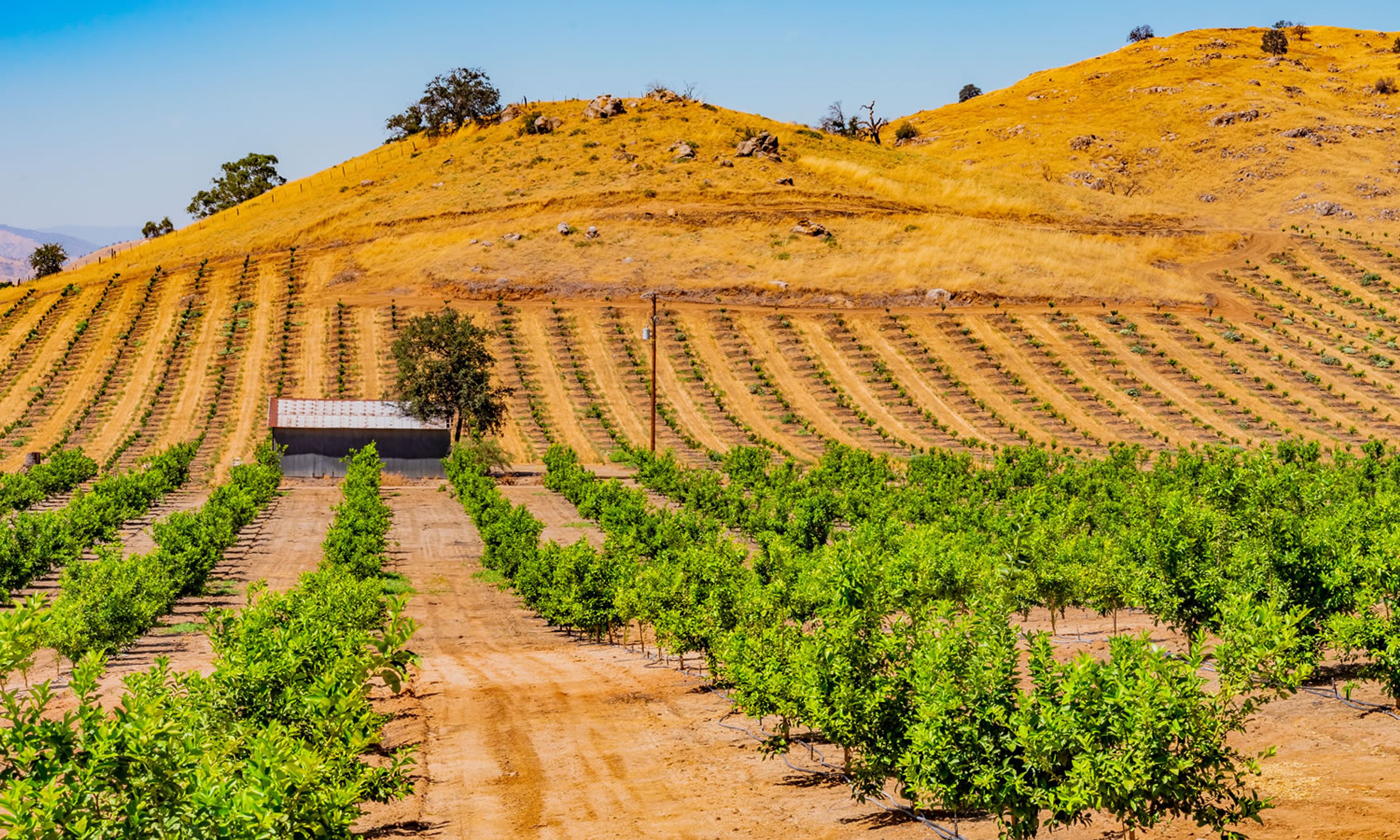
Yet this fable of identity and possibility that is California has always overlooked the San Joaquin Valley, east of the Coast Range. For coastal Californians, the valley is drive-through country, a dreary landscape that one has to endure to get to spectacular national parks such as Yosemite or Kings Canyon, or recreational lakes such as Huntington or Shaver. The valley, however, is not a backward wasteland. It is one of the world’s most productive agricultural regions — its farms, orchards, vineyards, groves, dairies, and ranches accounting for more than half of the state’s $50 billion–plus ag industry, which produces more than 400 commodities, including over a third of the country’s vegetables and two-thirds of its fruits and nuts, and exports its products to the whole world.
More impressive, this bounty was created by human engineering. The semi-arid valley plain possesses rich alluvial soil, and the Mediterranean climate grows a large variety of farm products. But there hasn’t always been a reliable and abundant-enough supply of water. Starting in the late 19th century, farmers and settlers began to build a network of canals, ditches, and eventually dams and reservoirs to capture the Sierra snowmelt and bring it to the crops and fields.
An industry was born, one that can stand with California’s other economic achievements, but with one big difference. Hollywood and Facebook are luxuries that were unknown to humanity before us. Food produced in controlled conditions, in contrast, made civilization and subsequent life-improving innovations possible. Unless people had been freed from the drudgery of providing food, little of our world today would exist. Moreover, the miracle of modern agriculture, including the valley’s, is that such astonishing productivity has been achieved by using the skills and labor of very few people. At the time of the American Revolution, it took 90 people out of 100 to grow enough food for everybody. Now one out of 100 produces more than enough nutritious and safe food for all.
The San Joaquin Valley has also been unique because of the astonishing diversity of the people who have settled there. The great migration to America that started toward the end of the 19th century brought people from regions, such as Eastern Europe and the Mediterranean littoral, that were much less economically developed than northern Europe — Poles, southern Italians, Russians, Basques, Portuguese, Greeks, Armenians, Syrians, and Turks, as well as Mexicans who made the trek north. Later would come the Dust Bowl migrants, mainly from Oklahoma and Texas, and later still Southeast Asians and Punjabis.
Many of these people were like my maternal grandfather, who left southern Italy in 1908. At Ellis Island he was officially identified as an “illiterate peasant,” like many of the emigrants at that time who had come from regions not much more advanced than they had been centuries earlier. And like many others, he made his way west to California and to the valley, where “peasants” could find work and the Mediterranean climate that grew olives, figs, and grapes reminded them of their homelands.
They settled next to one another in the small farm towns scattered up and down the valley, developing many of the ag industries, including the raisin, table, and wine grapes that today account for $5.4 billion a year. In these hamlets a variety of churches, ethnic associations, cuisines, languages, and holiday customs from the old countries jostled together, as did the children of immigrants in schools and playgrounds. Prejudice and chauvinism abounded, yet over time these people managed to get along and gradually become more American as each generation lost the mother tongue, graduated from school, married outside their ethnic group, and adopted American popular culture and mores, though keeping some of their parents’ and grandparents’ festivals, holidays, recipes, and customs.
What our daily, personal experience in my corner of the rural, white-minority, mostly working-poor San Joaquin Valley taught us was more valuable than any “diversity” or “inclusion” curriculum: that in the end, you have to take people one at a time and respect their unique diversity, their capacity to step outside the ethnic or racial uniforms into which they happen to have been born. I left home knowing from experience that I could not look at someone and say anything meaningful about the quality of his character, heart, or mind based on his ethnicity or nationality or race. You had to watch what he did and how he lived over time to recognize his worth. No matter the race or ethnicity, the people who raised their kids right, kept their animals under control, went to church, obeyed the law, and behaved with decorum and dignity were acknowledged as “respectable.” Those who did not were just “no damn good.”
That old world still exists today. But it is fading for several reasons. The small family farms, orchards, vineyards, and diaries have been reduced by the economies of scale needed for producing inexpensive food, and by the proliferation of environmental regulations — on fertilizers and pesticides and land use — that also have cut profit margins.
Moreover, feckless immigration policies for decades have allowed the indiscriminate admission of people without adequate vetting or standards to determine who will benefit this country and its citizens. Public-welfare transfers — California is home to one in three of the country’s welfare recipients, with the San Joaquin Valley having a disproportionate share — are legally available for many migrants and easy to acquire illegally. Culturally different attitudes toward following the law have increased crimes, from drunk driving to murder, in addition to fostering a climate of disorder and fear that preys mostly on legal immigrants.
Now, California is a one-party state, and the coastal cognitive elites run it to suit their own ideological prejudices. “Green energy” regulations and subsidies have driven up the costs of gasoline and electricity to some of the highest in the nation — a burden that hits hard the poorer and hotter valley and its workers, who spend twice as much on electricity as the more affluent, cooler coastal communities. Farmers are regularly deprived of the Sierra snowmelt in order to pursue dubious environmental goals such as protecting the endangered delta smelt, which requires dumping trillions of acre-feet of snowmelt into the Pacific. Meanwhile, new dams and reservoirs that could increase storage capacity and mitigate the region’s periodic droughts are put on hold, while a budget-busting high-speed-rail project is still under construction — now reduced to a short and unnecessary stretch through the San Joaquin Valley, even as the valley’s main north–south artery, Highway 99, is one of the deadliest in the country because maintenance and improvements have been neglected.
The San Joaquin Valley is California’s neglected and scorned stepchild even though it continues to feed the world, and for decades it has been the place where immigrants from throughout the world have become Americans by living side by side in all their diverse identities and unique selves. Over the generations they have created a new, richer American identity. Unfortunately, in our world of illiberal, balkanizing identity politics and spurious allegations of systemic racism, that old way of making Americans is fading away.











Comments