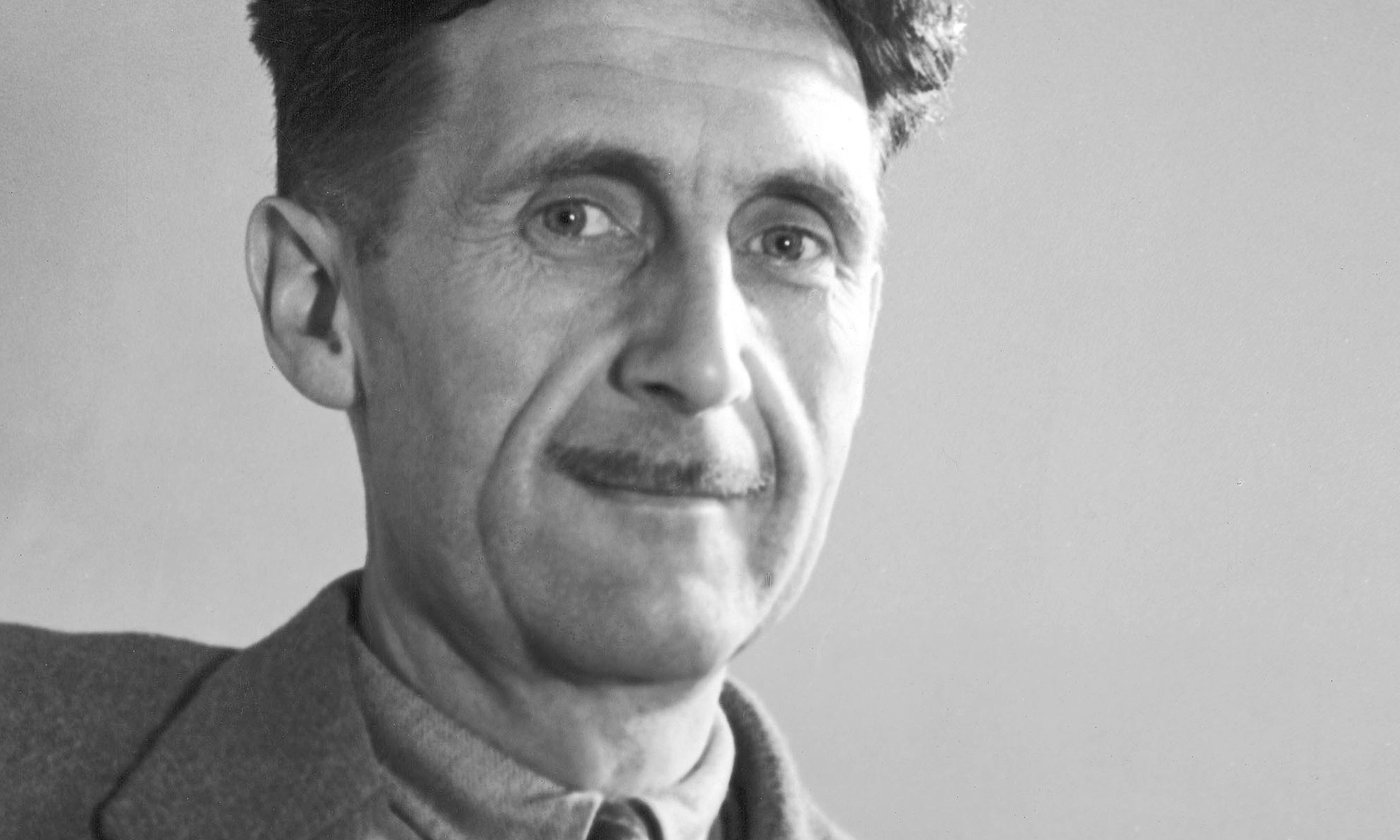
Mario Vargas Llosa, the Peruvian novelist and political thinker, has been writing for about 65 years, and reading for even longer. In 2018, he penned an intellectual autobiography, which came out in English at the beginning of this year: The Call of the Tribe. I wrote about it in these pages. In his book, Vargas Llosa pays tribute to the writers who influenced him, politically.
He has a Big Seven. They include Adam Smith, José Ortega y Gasset, and Isaiah Berlin. He tips his hat to several other writers as well. Among them are George Orwell and Milton Friedman.
Long ago, I asked Charles Krauthammer something like, “How did you come to think the way you do?” He said that, in college, he read Berlin’s Four Essays on Liberty. He thought, This is right. This is true. And he never looked back.
In 1997, when Berlin died, Krauthammer wrote a column of appreciation. “The idea of limited government has triumphed,” he said. “But the moment may not last. The pluralism Berlin championed will be challenged again.”
I enjoy asking people about their influences, political and otherwise. Greg Mankiw, the econ prof at Harvard, said that, when he was young, he read Friedman’s Capitalism and Freedom. It set him on fire. It struck him as true. He assigns it to his students, along with diverse other readings. Students find their own fires.
Online, I asked readers, “What book or books made an impression on you, or set you on fire? What book or books were key in the formation of your politics, or worldview?” They sent me a variety of responses, long and short. Intellectual and personal (intensely personal). Some of the books are familiar, even canonical; others are obscure.
One man sent me simply a picture of a book cover and the words “Changed my life.” That book is Wisdomkeepers: Meetings with Native American Spiritual Elders, published in 1990. My interest is piqued. “Changed my life” is a powerful statement.
Other readers spoke of different chapters — stages of life, when books hit you, at just the right time. A reader writes,
When I was in college, Letters from a Stoic, by Seneca, and the Meditations of Marcus Aurelius steered my thinking. They are exactly the sort of book that a young man reads and latches on to in quieter moments. Now that I’m in my mid 30s with kids, another sort of book leaves a strong impression on me — e.g., Laughable Loves, by Milan Kundera.
Another reader writes,
The Cost of Discipleship, by Dietrich Bonhoeffer, inspired me first to take my Christian faith seriously in high school and second to learn German in college. Both have been immensely rewarding, particularly when the latter comes into contact with the former.
Let us return to Charles Krauthammer’s man, and that of many others. A reader writes,
Isaiah Berlin is worth sticking with for the long haul. I discovered his essays at the age of 30 and they crystallized for me the best and happiest way to think about politics and history. His roots in the Russian tradition give his essays the narrative power we find in the varied writings of Tolstoy and Herzen. A fantastic realism pervades Berlin, and I think of him, and his cautions, whenever the latest shiny thing is presented for our inspection.
And Greg Mankiw’s man (and many others’), Milton Friedman? A reader tells me that Free to Choose, which Friedman wrote with his wife, Rose D. Friedman, “spun me on my ideological axis.” He explains,
As a standard-issue adolescent leftist, I staggered out of college in 1980 knowing to a certainty that socialism was not only the wave of the future but the altogether fitting and proper form of social organization. Ronald Reagan made my skin crawl — an old cowboy actor with a belligerent attitude and a black-and-white understanding of freedom.
Someone gave our reader Free to Choose. He let it sit on the shelf for a long time. One day — “I guess I happened to be at loose ends” — he picked it up, as though handling a dirty diaper.
I’m not sure exactly what I expected to find. Perhaps callous disregard for the downtrodden. Maybe an encomium to the robber barons. What I found was the simplest and best argument for unleashing the creative and productive genius inherent in man. I couldn’t put the book down. Milton Friedman helped me to see the world clearly, and for that I will be eternally in his debt.
Of course, readers mentioned the Bible, and they mentioned Shakespeare. To borrow a British expression: We will take the Bible, and Will, too, as read. And move on to Frédéric Bastiat, who in 1850 wrote The Law. A reader says,
My parents had a copy and suggested I read it. I think I was 14 or 15. It was one of the first books that made me look deeply at what a government really was and introduced the idea that force is force and should be used sparingly and wisely and is not a fun tool to mold the world to your liking.
This reader also names The Giver, by Lois Lowry, a dystopian novel for young adults, published in 1993. Then he says,
Influencing me politically, but perhaps more personally, was Robert Penn Warren’s All the King’s Men. The book made me realize that a person should be careful to ground oneself outside of politics and not be consumed by it and that politics (and politicians) can easily become an idol in the forbidden Old Testament sense. For a political-science major who was interested in law, this was an important concept to grasp.
Speaking of “interested in law,” a reader says,
To Kill a Mockingbird [the classic novel by Harper Lee]. Ask the lawyers of my generation, and you will find that half of us went to law school because we read that book at age twelve and wanted to become Atticus Finch.
Malcolm Muggeridge had a long, restless, super-productive life. But he titled his autobiography “Chronicles of Wasted Time.” A reader writes,
Just as its contents have stuck with me, its title has as well. As I move well into my later years, I wonder about my own “chronicles.” How much of my time on terra firma have I wasted (sadly, a lot) and how much have I put to reasonably good use? Not sure, but worth pondering. Thank you, Malcolm Muggeridge.
George R. Stewart wrote a science-fiction novel — post-apocalyptic — in 1949: Earth Abides. “This book was required reading in my tenth-grade English class,” writes a reader. “Its themes resonate today, and I reread it every three years or so.” That is a high tribute to a book: repeated readings.
One man writes,
Starship Troopers, by Robert A. Heinlein, and The Gulag Archipelago, by Aleksandr Solzhenitsyn (all three volumes). Those books inspired me to join the Army ROTC when I was in college, and then I served 28 years as an officer, active and reserve.
Many readers cited Heinlein. And Solzhenitsyn (particularly One Day in the Life of Ivan Denisovich). Many cited Dostoevsky and Victor Hugo (Les Misérables). They also cited William F. Buckley Jr. — his books of various kinds — and Paul Johnson (same). They cited Czesław Miłosz — his stunning treatise on intellectuals under dictatorship, The Captive Mind.
Captive minds, closed minds? Several readers brought up The Closing of the American Mind, the surprise bestseller (1987) by Allan Bloom. “This was my ground-zero book,” writes a reader. He continues,
I took note of the debate about it and decided to read it. I was shocked and ashamed at how much my mind had turned to mush. Bloom was right, and I began to examine ideas and beliefs that I had accepted, without thinking.
The impact of Thomas Sowell has been great. Many readers mentioned his books, on economics, sociology, politics, etc. I once asked him, “Is there a book that people should read if they want a kind of Sowell 101? The essential Sowell?” He answered, “It depends on what they’re interested in.” One reader tells me,
It wasn’t until I read Black Rednecks and White Liberals that the whole reality of race in America came into focus. The philosophy department where I worked was discarding the book from its library (along with many ancient classics, regrettably), and I grabbed it because I was intrigued by the unusual and provocative title. What a lucky break!
Here is a fascinating note — even profound:
I’m not sure that I’ve ever had a reading experience that told me, “This is what I believe,” but I can identify three books that, for some reason, gave me a sense of the magic of books and in this way informed my “beliefs” (whatever that means).
Two of those books are by Saul Bellow: the novel More Die of Heartbreak and the collection of “three tales,” as he calls them, Something to Remember Me By. The third book combines a short story and a novella: Franny and Zooey, by J. D. Salinger.
One reader was captured by East of Eden, by John Steinbeck — particularly the idea of timshel, “thou mayest”: “Thou mayest triumph over evil.” And I smiled at what a reader said about Atlas Shrugged, the Ayn Rand novel: “I remember thinking, ‘My heart tells me she’s wrong, but my mind tells me, ‘Hold on, there.’”
A different reader says he ought to have a statement by Gibbon, from The Decline and Fall of the Roman Empire, engraved on the inside of his left forearm. Would he have enough room? “A martial nobility and stubborn commons, possessed of arms, tenacious of property, and collected into constitutional assemblies, form the only balance capable of preserving a free constitution against enterprises of an aspiring prince.”
Arthur Lovejoy published The Great Chain of Being in 1933. It is “indispensable for understanding the West,” including our “current crisis,” says a reader. He also says that Aurel Kolnai “should be better known in America,” for “he is among the greatest 20th-century moral and political philosophers.” One such philosopher is among us today: Pierre Manent. Our reader recommends “everything” by him.
Here is a well-known passage from “Self-Reliance” (Ralph Waldo Emerson): “There is a time in every man’s education when he arrives at the conviction that envy is ignorance; that imitation is suicide; that he must take himself for better, for worse, as his portion . . .” A reader says,
These lines and so many others from Emerson’s genius gave me the intellectual underpinning to have the courage to ignore peer pressure as a teenager. I could not read those words and give up what I knew to be true just because someone else wanted me to or expected me to.
This reader ends his letter with a tribute to Louis L’Amour, which made me smile, because Ronald Reagan loved this writer and was mocked for it, regularly. “I know many people belittle his work,” says our correspondent,
but I truly owe so much of who I am to Louis. I suppose that is why some small part of my heart still longs to be a cowboy. But far bigger are the things his characters taught me. I learned to crave education, to work hard, to punch hard and first if I have to. But the best gift Louis gave me was the knowledge of the kind of woman I wanted to spend my life with — a smart, strong woman who would walk beside me, not behind me. And I found her — a woman “to ride the river” with. Thank you to Louis L’Amour.
There was one writer whom my readers mentioned more than any other — George Orwell. For his famous novel, 1984, and his famous novella, Animal Farm, yes. But also for his other books, fictional and nonfictional, and for his essays and articles of various kinds. Here is one remark, standing for many: “My debt to Mr. Orwell is one I gratefully acknowledge and can never repay.” I wish he could know it, and that all of these other writers could know of their readers’ gratitude, somehow. Maybe they do.












Comments