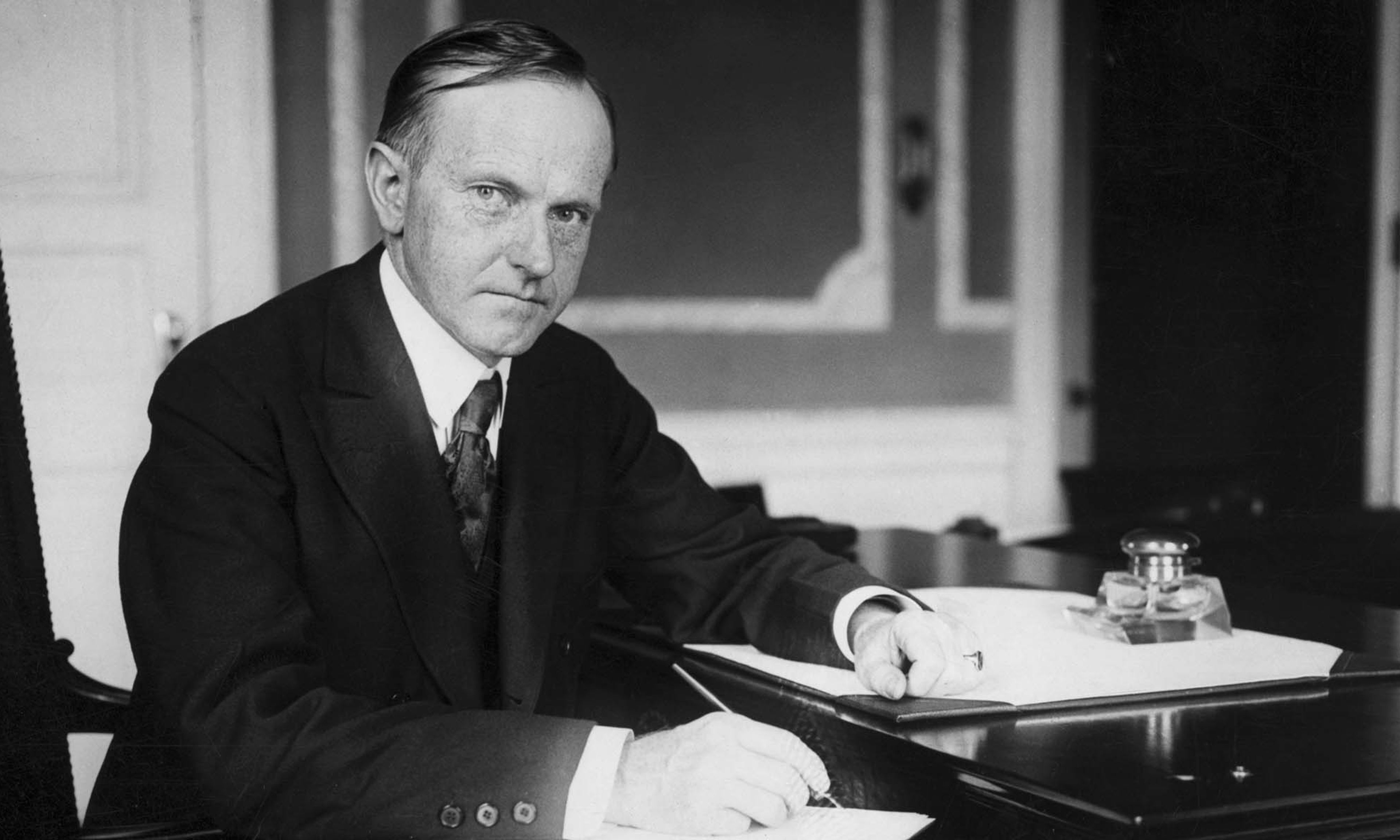
Honoring past presidents is something Republicans are good at. The party is also good at seeing to it that our courts honor at least some of those presidents’ principles, especially those of Founder presidents such as Washington or Jefferson. Still, when it comes to applying the Founders’ principles in making and executing the laws, Republicans and moderates fumble.
One reason for this failing is clear. Challenged as they are in the progressive onslaught, Republicans lack an example of a recent president who consistently and successfully applied the Founders’ principles in our modern high-tech polity. Washington, Madison, and Jefferson gave us federalism, yet Republican Richard Nixon besmirched the very concept with his “new federalism,” which bribed states to follow Washington’s direction. The Founders warned against federal debt, yet any number of recent Republican presidents, even Ronald Reagan, failed to halt spending and the growth of government.
This is where Calvin Coolidge, the centennial of whose presidency we mark this year, comes in. Presidential polls rank Coolidge in two places: middling low, and lower. Conservatives pigeonhole Coolidge as a kind of pre-Reagan, a Morning in America leader who demonstrated that slashing tax rates promotes both strong revenues and prosperity.
While accurate, this portrait fails to capture the scope of Coolidge’s achievement. In 1921, when Coolidge arrived in Washington as Warren Harding’s vice president, the progressive tide seemed unstoppable, as it does today. Yet Coolidge managed to halt that tide, even as he demonstrated that some of his own era’s tech novelties — airplanes, autos, and telephones — represented not threats but upgrades in the lives of consumers. And he managed all these glories through the deliberate application of conservative constitutionalism.
There was nothing inevitable about this feat. Coolidge was born in 1872 into an American village. So were many Americans who wanted nothing to do with the past. Yet Coolidge, the thoughtful boy from Plymouth Notch, Vt., did take an interest. His later descriptions of the town meetings in Plymouth, held above the general store, emphasize the glories of local democracy.
As Coolidge recalled of his fellow villagers: “They drew no class distinctions except toward those who assumed superior airs. Those they held in contempt. They held strongly to the doctrine of equality.”
Coolidge first perused the Constitution around the time he enrolled at a boarding school, Black River Academy in Ludlow, Vt. His first thorough study of American government came down the Connecticut River Valley, at Amherst, in the class of the American-history instructor Anson Morse.
Three accidents of Coolidge’s early career turned him toward conservative constitutionalism. The first was that his frugal father found law school extravagant. So, unlike his Amherst peer Harlan Fiske Stone, who as a Supreme Court justice helped the Franklin Roosevelt administration craft Social Security, Coolidge did not attend law school. Instead, he read law at a firm in Northampton, Mass. — largely Coke and Blackstone, state law, deeds and writs. This spared him the progressive training already predominant at the two law schools Amherst men turned to, Harvard and Columbia. It also gave Coolidge time to continue his study of the Constitution.
The second accident was that Coolidge entered politics at the bottom, running documents for the Republican Committee in Northampton, climbing the Republican ladder slowly, as representative in the town, state representative, and, in 1910, mayor of Northampton. In the law, he also started low, spending his twenties trying to, as he put it, “plant” his own practice. Many of Coolidge’s early clients were small companies — an immigrant brewery here, a new bank there. Both experiences gave the young man a good look at the challenges confronting business.
The third accident was a disaster called Theodore Roosevelt. TR’s brash progressivism was all the rage in Massachusetts, and as a young lawmaker in Northampton and at the General Court in Boston, Coolidge and the rest of the Republican Party duly went along with, and even introduced, some progressive laws, including a teacher-pay raise. But the Coolidges were Republican Party loyalists, and Coolidge grew increasingly skeptical of both Roosevelt and showboating politicians who broke from the party line.
“Unless someone is partisan, no one can be independent,” he commented wryly later. The disaster part — especially for an up-and-coming Republican such as Calvin Coolidge — came in 1912. That year Roosevelt split Republicans by leading a third party, the Bull Moose, into a presidential election that everyone had expected would be Woodrow Wilson vs. Willam Howard Taft. The result was predictable, and even Coolidge’s Massachusetts, theretofore a Republican stronghold, fell to Wilson.
Coolidge detailed the bitterness in a letter to his father: “It was Republicans voting for Wilson to kill TR that brought about the result.” So angry was the young politician that in the same letter he even allowed himself a rare moment of spite: “am glad TR made so poor a showing.”
By 1914, the year he became president of the state senate, Coolidge was ready to come out as a conservative. He did so in his inaugural address, warning party brethren that their habit of furiously churning out laws was counterproductive: “Give administration a chance to catch up with legislation.” More dramatic was the general precept Coolidge offered up: “Men do not make laws. They do but discover them,” this last representing a direct rebuttal to Oliver Wendell Holmes, now on the Supreme Court.
States, not Washington, were the center of government. The speech, today known as “Have Faith in Massachusetts,” ran to fewer than a thousand words, but it stands as one of the finest elucidations of federalism in existence.
The test of whether Coolidge was willing to apply conservative constitutional principles came in 1919, during his first year as governor of the Bay State. Then, as today, the country was coming out of a pandemic, in that case influenza. As today, unrest was rocking American cities. In early September, Coolidge spoke at Westfield, territory of Shays’s Rebellion.
The governor did not take the side of Daniel Shays. Instead, he spoke up for the rule of law, repeating the words of a farmer from the era of the rebellion, Jonathan Smith. Smith described the horrors of the conflict: “Last winter the people took up arms, and then, if you went to speak to them, you had the musket of death presented to your breast.”
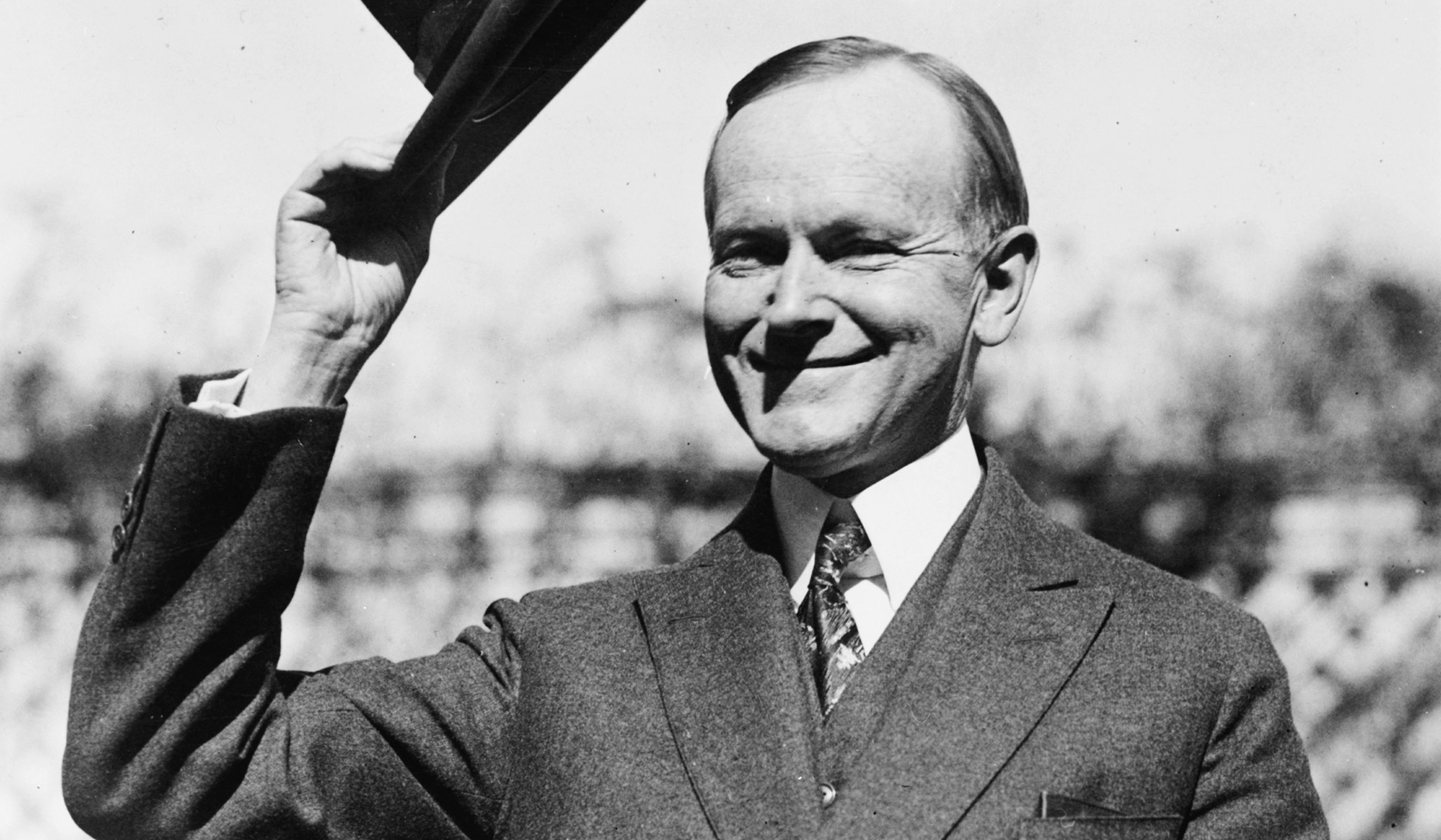
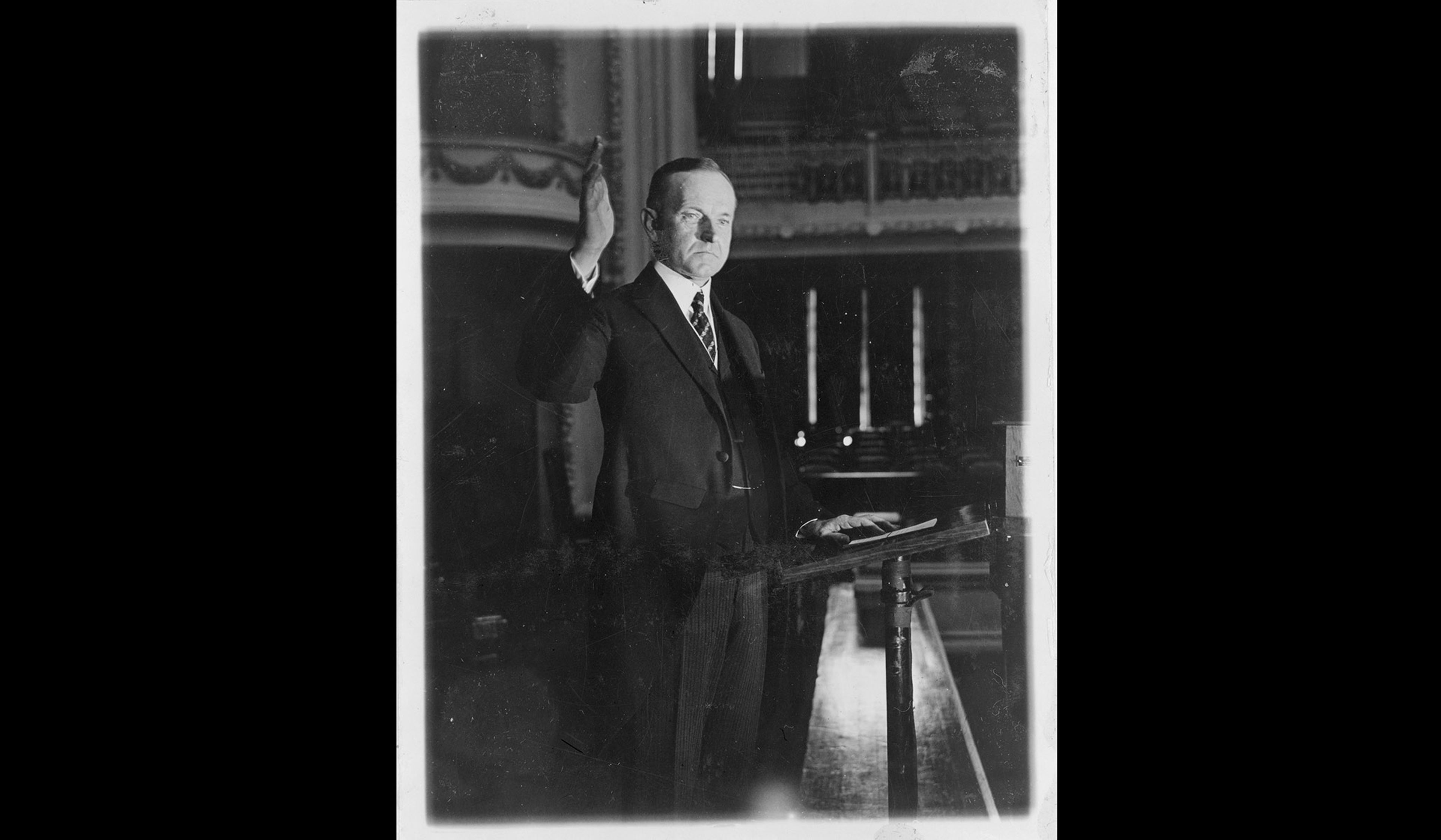
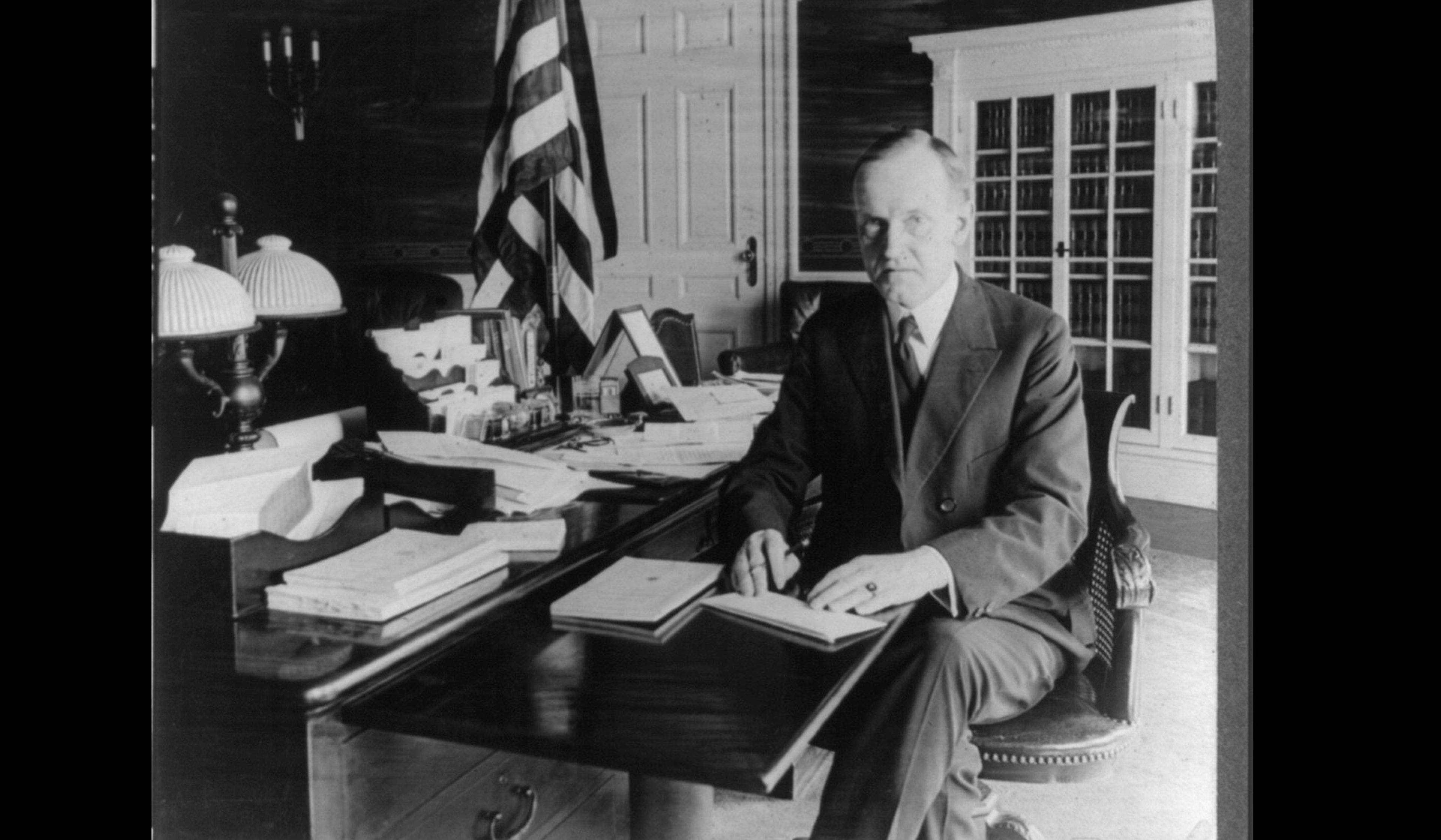
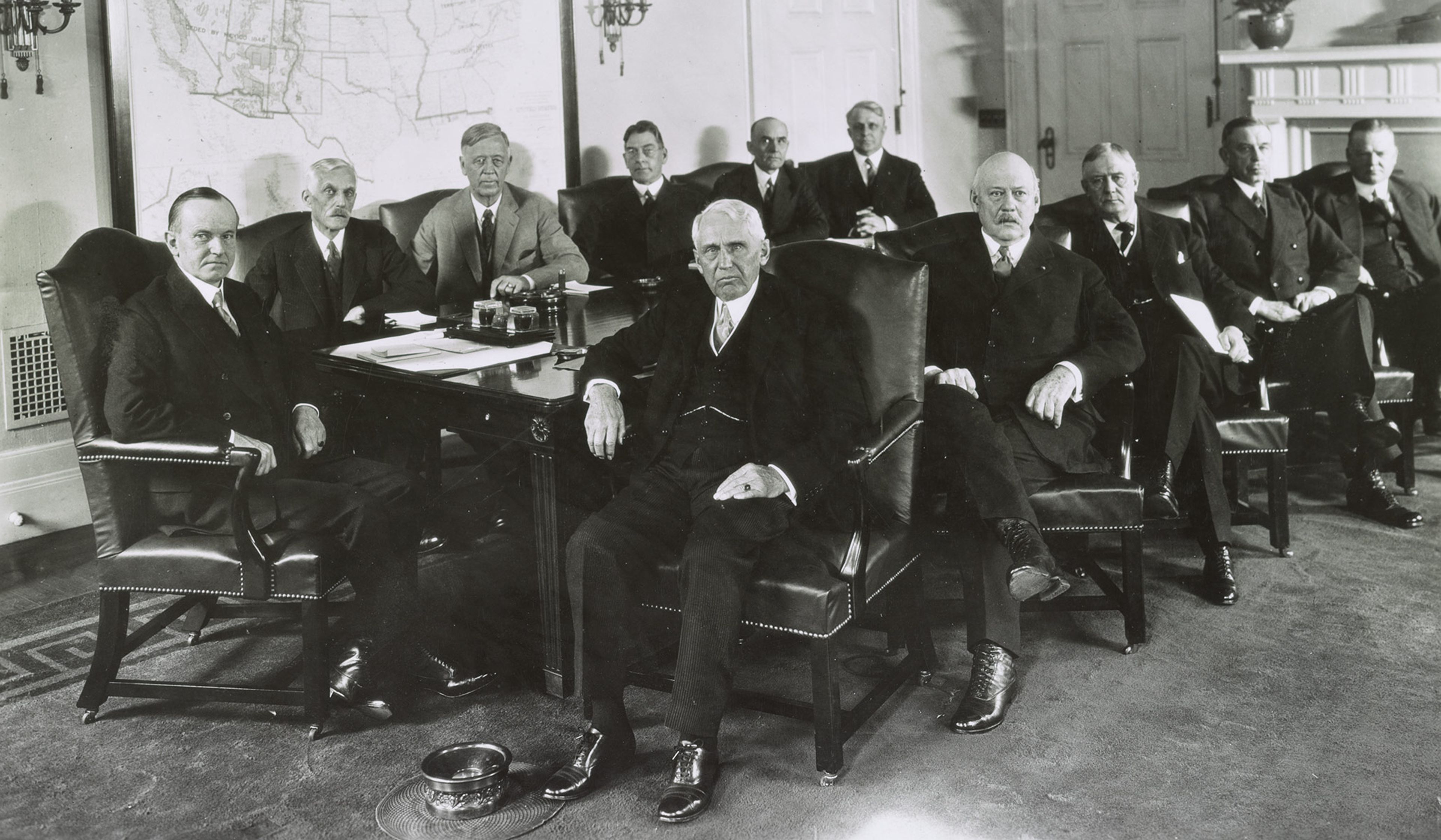
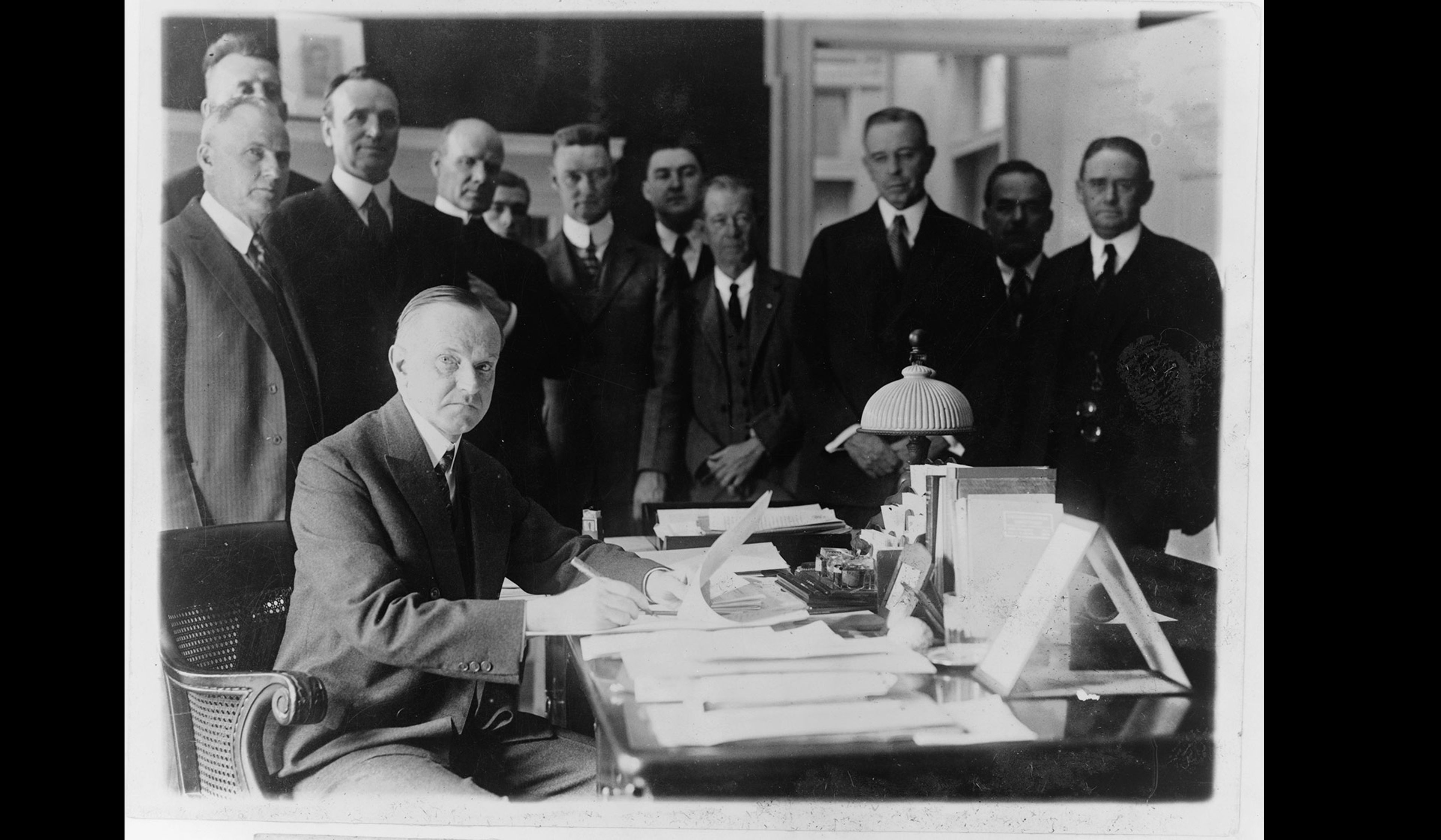
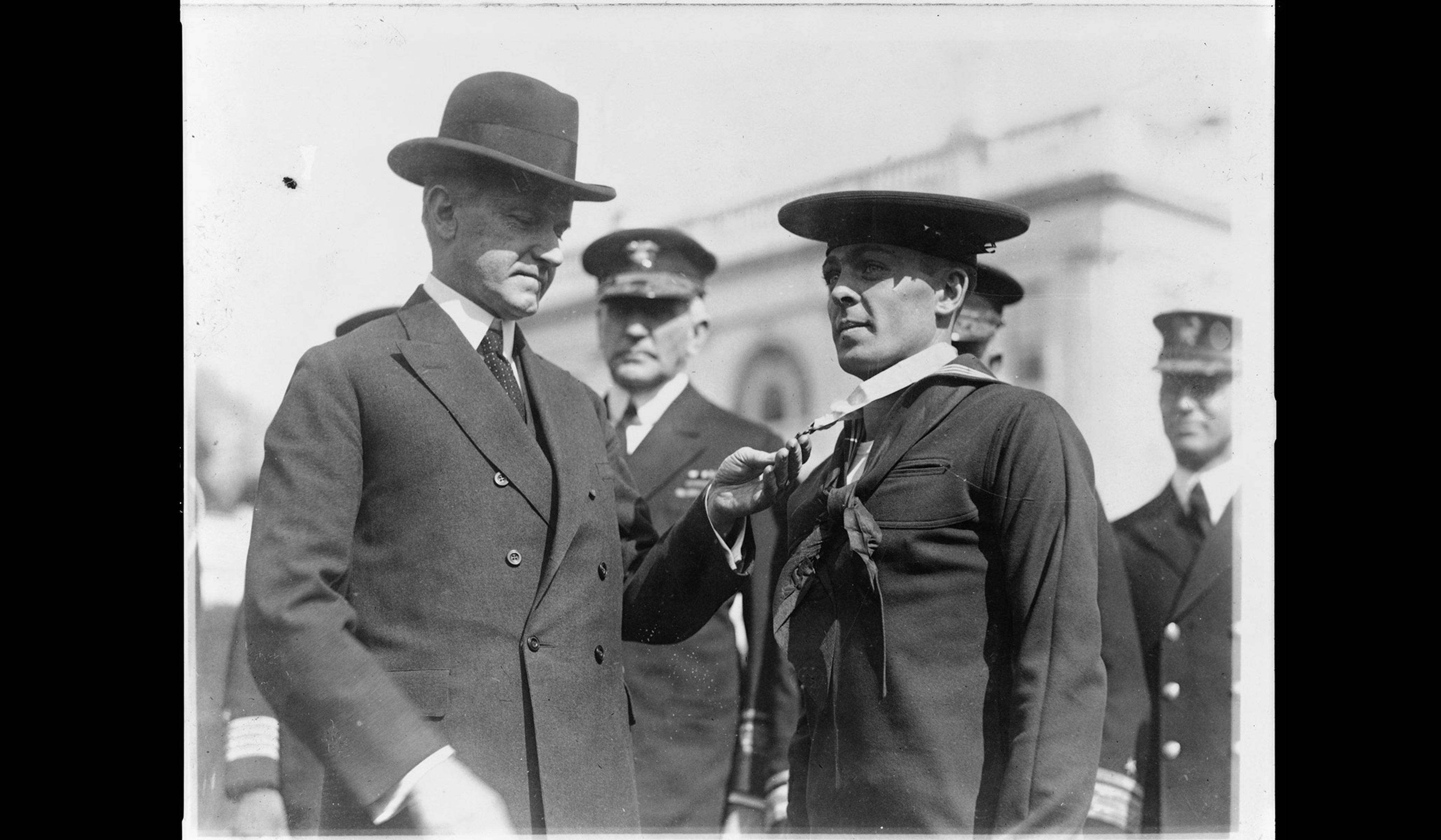
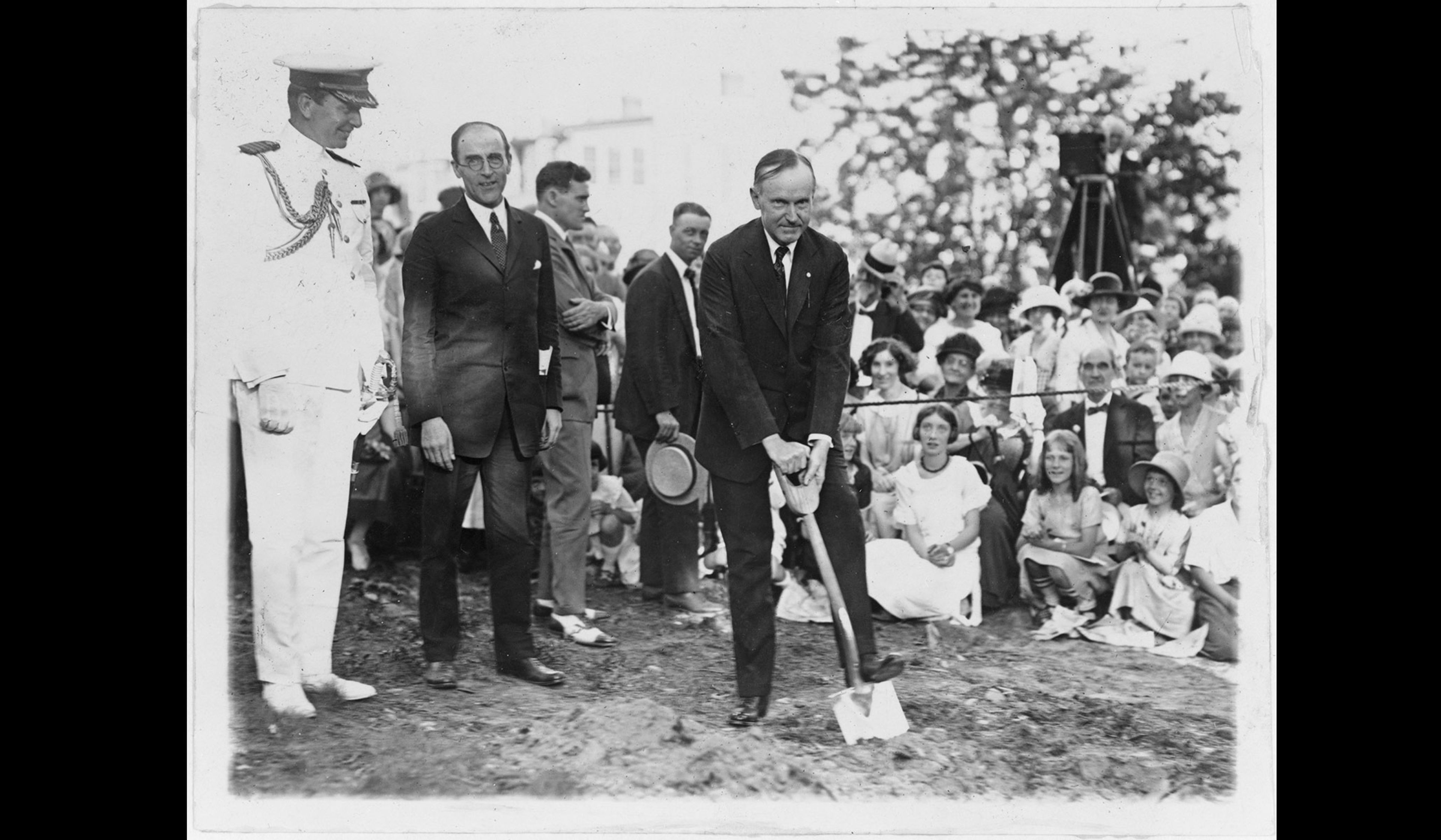
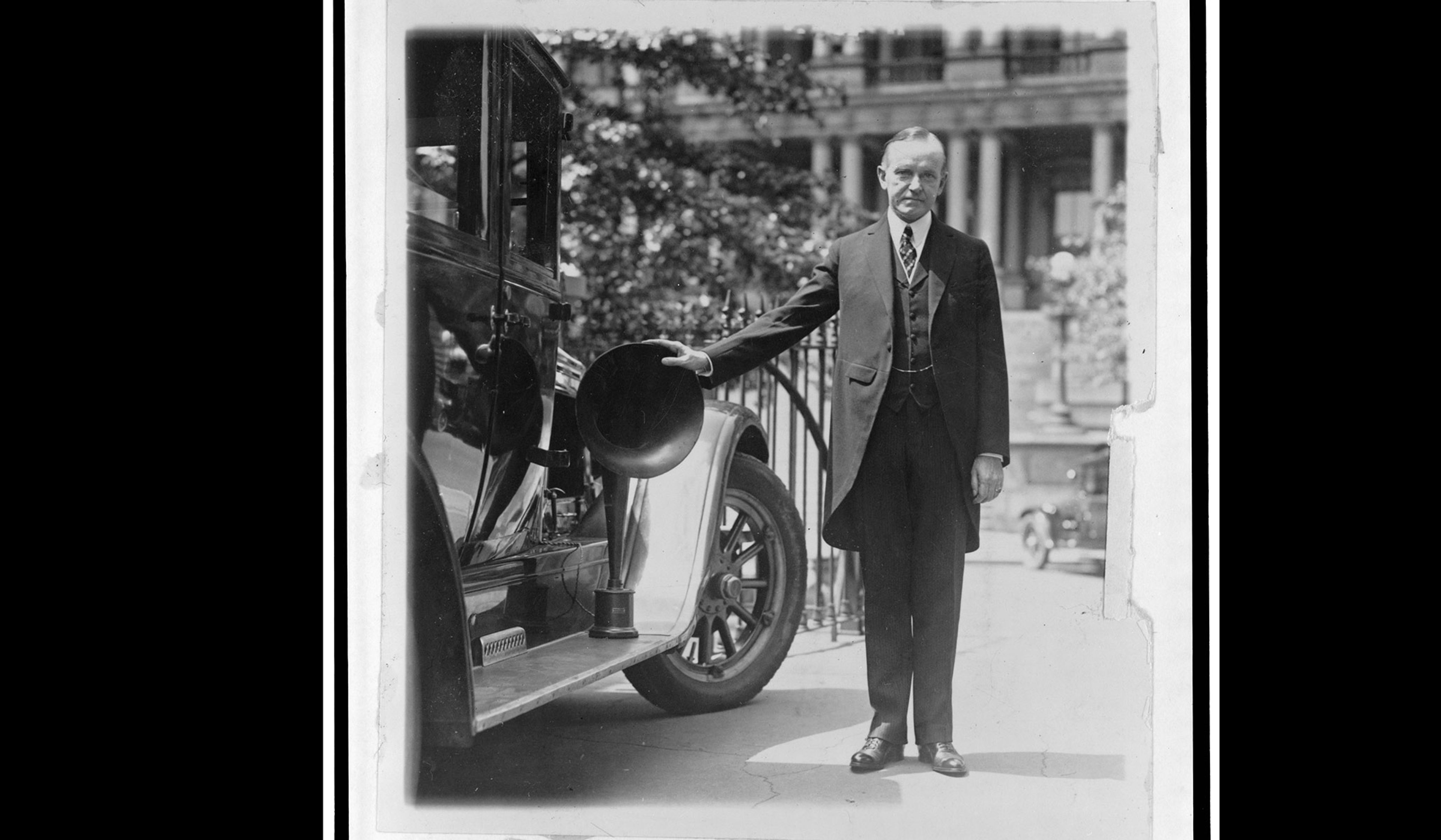
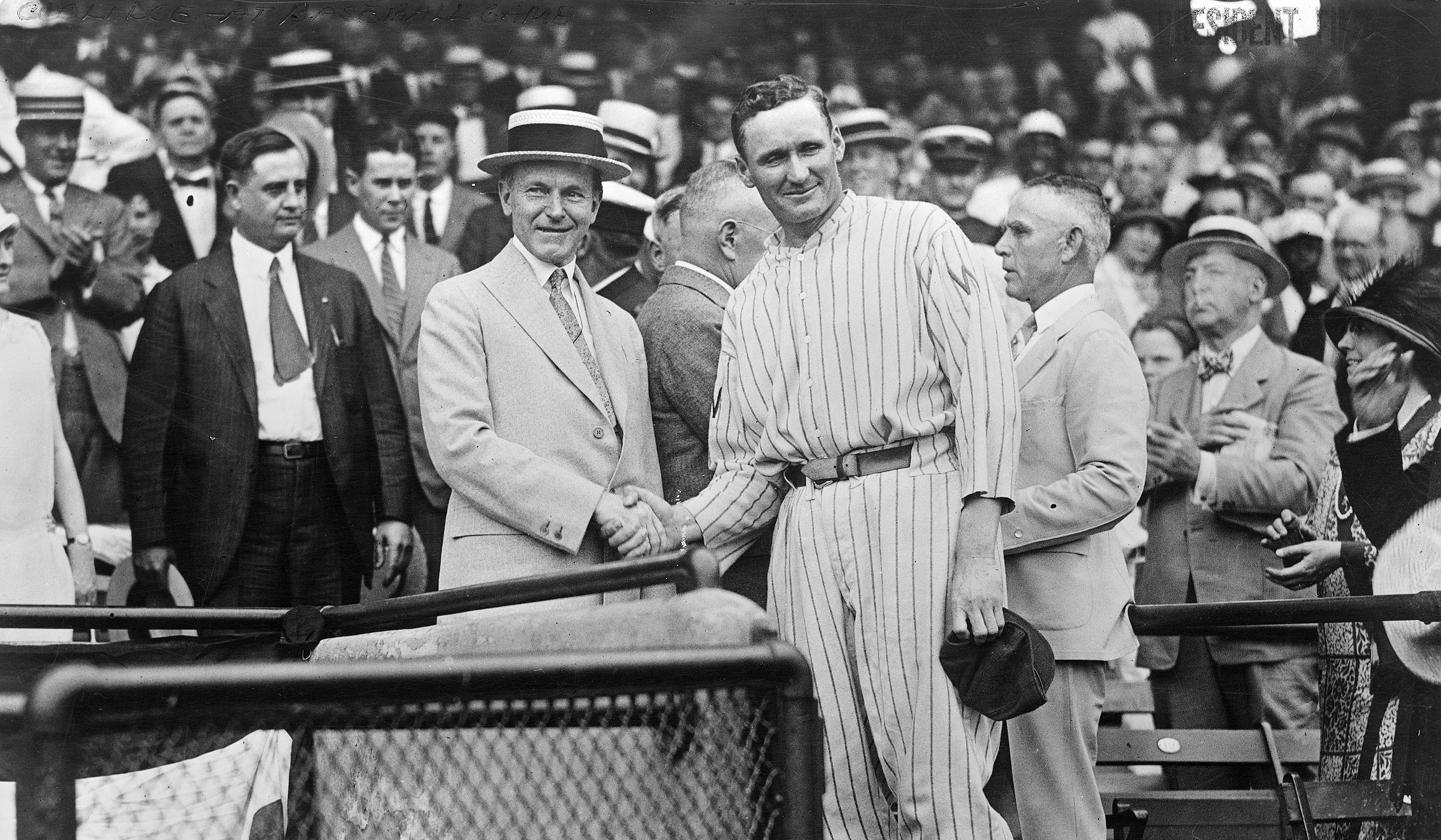
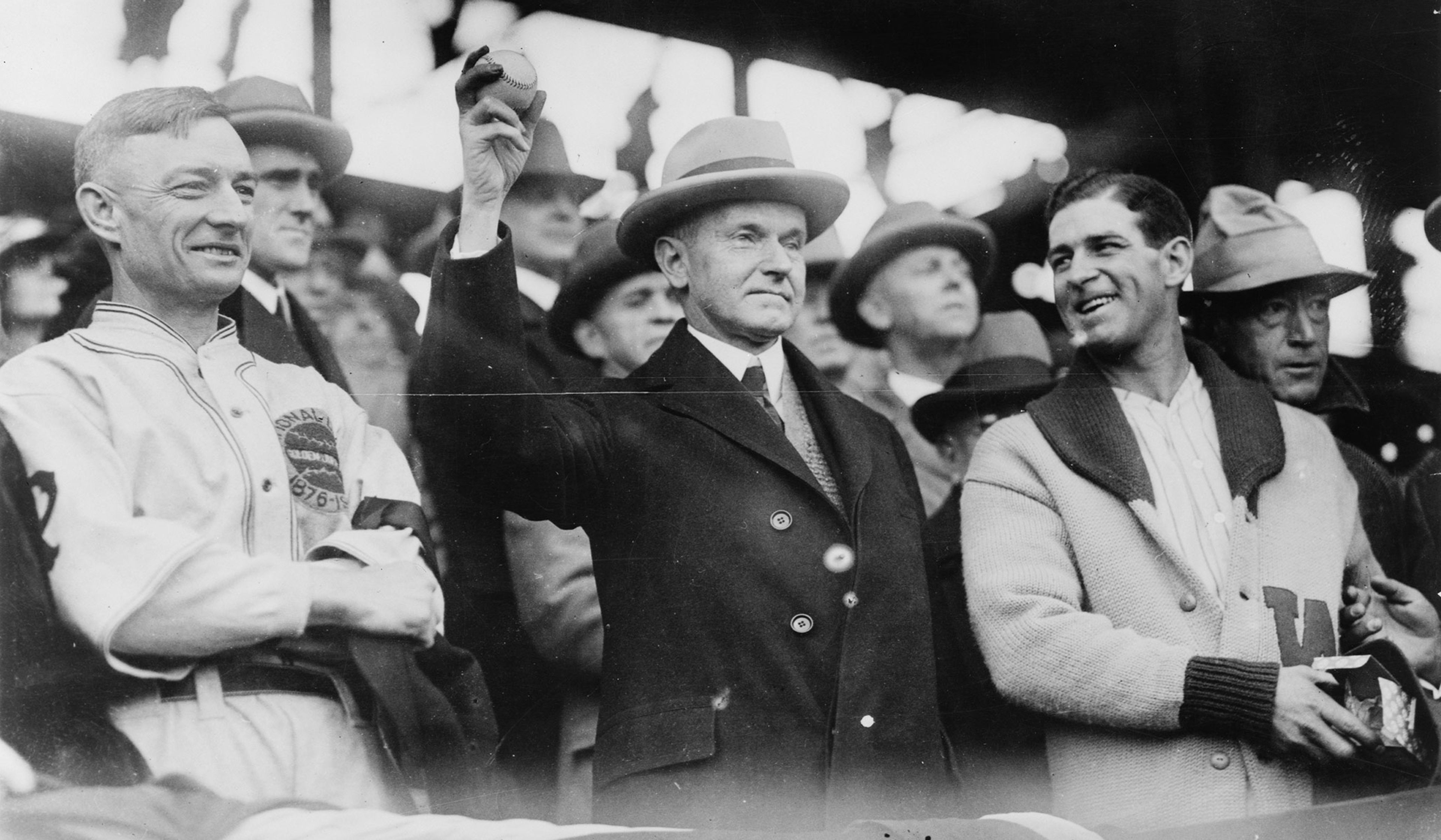
President Calvin Coolidge on October 22, 1924
Library of Congress
Shays’s Rebellion greatly affected the Framers. To the farmer Smith, their work on the new constitution seemed like a miracle: “When I saw this constitution, I found that it was a cure for these disorders; I got a copy and read it over and over.” “Shall we,” asked Smith, “throw the Constitution overboard because it does not please us all alike?”
Within days of the Westfield speech, Coolidge had his own riots to contend with. After the Boston police broke their contract and walked off the job, a mob spread across the city, smashing shop windows and looting department stores. The police commissioner fired the strikers. Coolidge backed him up, not only calling out the National Guard but laying out a line so principled that it reverberated across the country: “There is no right to strike against the public safety by anybody, anywhere, anytime.”
In that time, the term of a Massachusetts governor was only one year, and Coolidge wondered whether the move would lose him the next election, just two months away. Instead, it won him a spot on the Harding presidential ticket, as the representative of law and order.
The post of vice president, where he idled until Warren Harding passed away in 1923, gave Coolidge further opportunity to develop his constitutional muscle. Notable is a speech Coolidge gave in San Francisco, which he titled “The Limitations of the Law.” Here he not only pointed out how congressional overreach violated the Constitution, but also came as close as a politician can to chiding the electorate for laziness.
Should the people desire to have the Congress pass laws relating to that over which they have not yet granted to it any jurisdiction, the way is open and plain to proceed in the same method that was taken in relation to income taxes, direct election of senators, equal suffrage, or prohibition — by an amendment to the constitution.
It is in the context of this constitutionalism that his achievements as president must be understood. Certainly, the Coolidge tax reform was a marvel: Though the top tax rate under him dropped to 25 percent from 58 percent, revenues remained so strong that they inspired 1980s supply-siders.
Certainly, he rejected the era’s equivalent of entitlements — he vetoed the bonus pensions for vets, not once but twice. Certainly, he rejected pork, including subsidies to agriculture, a shock to lobbyists who expected a warm reception from a president raised in a dairy town. And certainly, the decade that resulted lived up to its nickname, the Roaring Twenties.
Voters recognized that. In the election year 1924, Coolidge overcame what he must have thought of as the Roosevelt Curse, collecting more votes than the Democrat John Davis and the Progressive Robert La Follette combined.
But the most elegant and relevant part of it all — relevant for us — is that Coolidge made clear that such successes were possible only because of the Framers’ principles. If he vetoed farm support, it was because he, like Washington, abhorred the “fatal tendency” to faction. If he pulled back government, it was not out of Randian libertarianism. It was to stop government impinging upon what he, in a 1926 address honoring the sesquicentennial of the Declaration of Independence, called “things of the spirit.”
In the same speech, Coolidge made a point that will seem radical today. America’s founders had given all the law that was necessary to make rights equal for every American. More laws could be written — Coolidge himself repeatedly backed federal anti-lynching laws. But the new laws were necessary only because of our own failure to live up to the Declaration.
“About the Declaration there is a finality that is exceedingly restful,” Coolidge commented. “If all men are equal, that is final. If they are endowed with inalienable rights, that is final.” No advance, Coolidge said, “no progress can be made beyond these propositions.”
By the summer of 1927, toward the end of Coolidge’s first elected term, most Americans expected him to run again. He was so enormously popular that the sculptor of Mount Rushmore, Gutzon Borglum, even suggested that Coolidge ought somehow — the details were not clear — to be memorialized in the South Dakota granite along with the Greats.
The Coolidges were spending that summer in South Dakota, and Coolidge did travel up the mountain on a horse named Mistletoe to bless Borglum’s undertaking. In the same week, however, Coolidge handed out to reporters a piece of paper reading, “I do not choose to run for President in 1928.”
At the time, and indeed later, columnists and historians offered reasons for the counterintuitive decision: that Mrs. Coolidge was ill, as she was at the time, or that the 1924 death of the Coolidges’ 16-year-old son, Calvin Jr., had demoralized the chief executive. Coolidge himself acknowledged in his autobiography that his son’s death placed a shadow over his remaining years as president.
The evidence, though, suggests that the main reason for Coolidge’s decision was his desire to go out as Washington had, with a farewell warning. Presidents were not kings and therefore ought to leave office after a “moderate” period. Thus did Coolidge put the final touch on a legacy that makes him worthy of being called “the modern founder.”
Several years after his presidency Coolidge added a thought to his opus. “It is a great advantage to a President, and a major source of safety to the country, for him to know that he is not a great man.” How well that line, too, holds today.












Comments