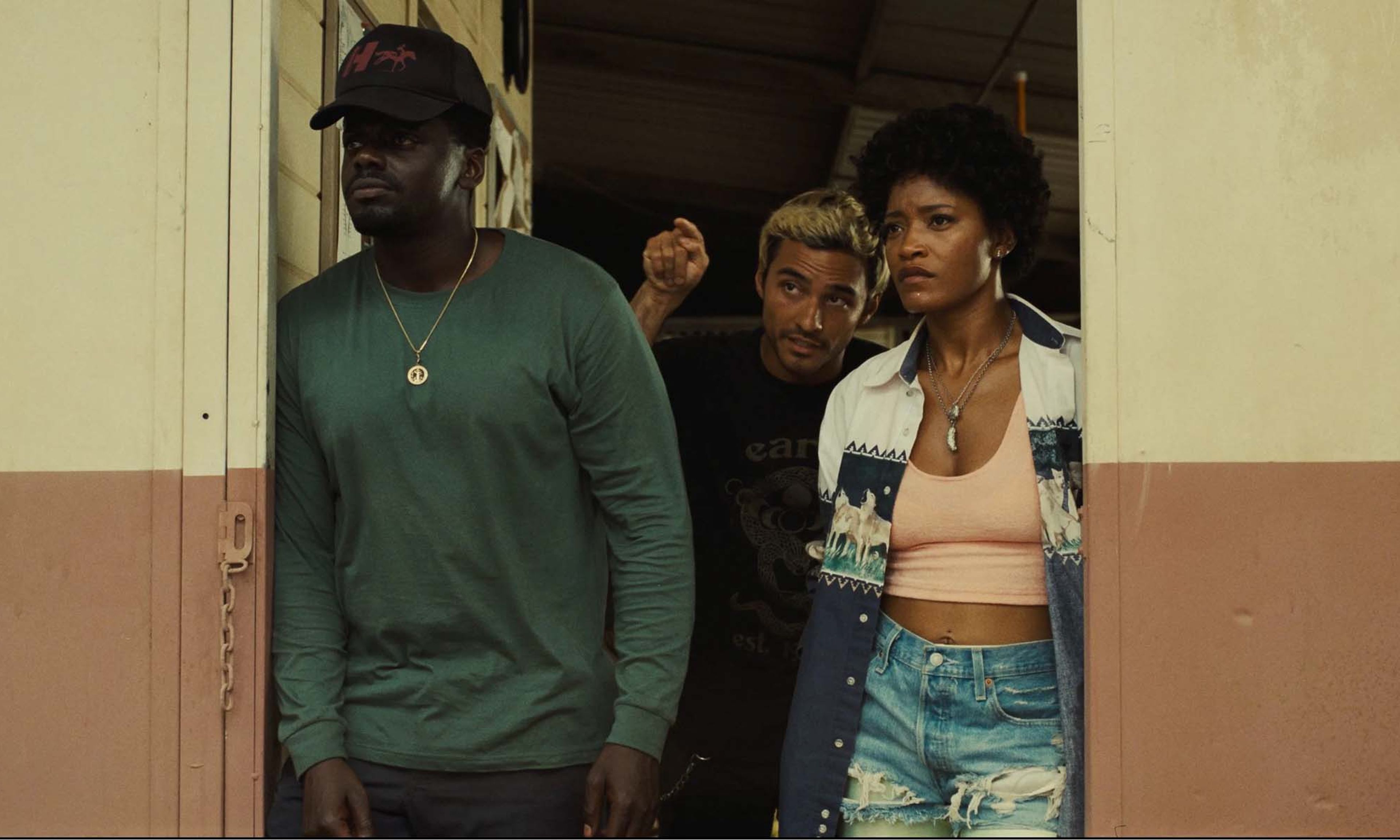
Nope, the third exercise in high-concept horror-suspense from Jordan Peele, is a polarizing movie, with reactions and reviews all over the place. That makes sense once you see it, because the movie contains enough grist to furnish several different mills. It’s a western, of sorts, with a laconic cowboy hero. It’s a movie about the movies, a commentary on celebrity and fame and reality TV. It’s a Spielberg homage — or, if you prefer, an M. Night Shyamalan exercise. It lavishes a truly wild backstory on a character who plays zero role in the denouement. It’s a movie about black people’s uneasy place in two zones of American myth, the Old West and Hollywood. And it’s a horror movie that seems to promise cool restraint, unsettlement, the anxiety of the unseen and not quite glimpsed — and then burns you with a truly grisly mid-story twist.
The laconic hero is Otis Haywood Jr. (Daniel Kaluuya), who goes by “OJ” — there will be a couple of O. J. Simpson jokes, never fear — and who runs the Haywood Ranch way out in the barren mountains and valleys of Southern California. His father, Otis Sr. (Keith David), built the business to service Hollywood productions with trained horseflesh, using a spiel about the family’s descent from the African-American jockey who features in one of the first-ever moving images, a late-19th -century shot of a rider on a galloping horse.
But now Otis Sr. is dead, killed in what seems like a freak accident, a rain of tiny metal from a passing airplane, a nickel falling at a fatal speed from high above. And his son is struggling to keep the business going, not least because he doesn’t have the easy charisma required to charm a movie set; for that he has to turn to his motormouthed sister Emerald (Keke Palmer), for whom the ranch is more of a side gig in her wide-spectrum quest for fame and fortune.
That quest becomes the engine of the plot when OJ has a close encounter with something saucer-like that’s hanging out in the California clouds, making nighttime flyovers, spooking his horses and knocking out the ranch’s electricity. The movie’s title is a nod to what sensible people, rather than feckless horror-movie protagonists, would say when confronted with a monster in the shadows, a terrifying unknown. But even though the main characters say “nope” a few times, backing away from potential cosmic horror, their actual choices are one long “yep,” because Emerald convinces OJ that if they can just figure out a way to film the spaceship — a challenge, given how it knocks out all cameras and cellphones when it passes over — their fortunes will be made, the ranch saved.
This pecuniary hope is the seed of what, by the end, feels more like an Ahabian obsession, one that ropes in an electronics-store employee (Brandon Perea) who’s just lost his girlfriend and then Antlers Holst (Michael Wincott), a grizzled cinematographer in search of the impossible shot — a Quint figure for the movie’s Jaws homage, if Quint were basically Werner Herzog.
Then running parallel to their quest are the activities of Ricky “Jupe” Park (Steven Yeun), a former child star who now owns the western theme park next door. He’s been buying horses off OJ and offers to buy the Haywood Ranch outright, for purposes connected to his own strange history as an actor on a 1990s sitcom whose trained-chimpanzee star went murderously haywire. It’s a trauma that he’s embraced rather than buried, collecting memorabilia from the tragedy, rattling on about it to Emerald and OJ, interpreting his survival as a license to take risks, for the sake of fame and fortune, that another person might deem . . . unwise.
But then everyone in Nope is behaving unwisely, and how believable you find the movie’s various acts of UFO-besotted insanity will help condition your response to this overstuffed story. So will your reaction to a certain nasty gratuitousness in the movie’s grisly turn; I don’t usually mind gore but there is an especially sickening quality to the Nope twist, instilling a nausea I couldn’t quite shake when the movie turned back toward action spectacle.
The nausea isn’t the only thing that lingers, though. There’s also the movie’s version of the perfect shots its characters are seeking — the brown and blue vistas against which the shadow of the UFO appears, the use of sky and cloud and sagebrush and even those smiley-faced wind puppets to create a unique sense of dread and isolation. My family and I just drove through the American West, so maybe I’m overly primed for what Peele and his cinematographer are aiming for, but whatever its problems, Nope achieves at least one clear success: a stark portrayal of a landscape that seems designed, by whatever baleful gods, to make mankind seem small, hunted, and alone.












Comments