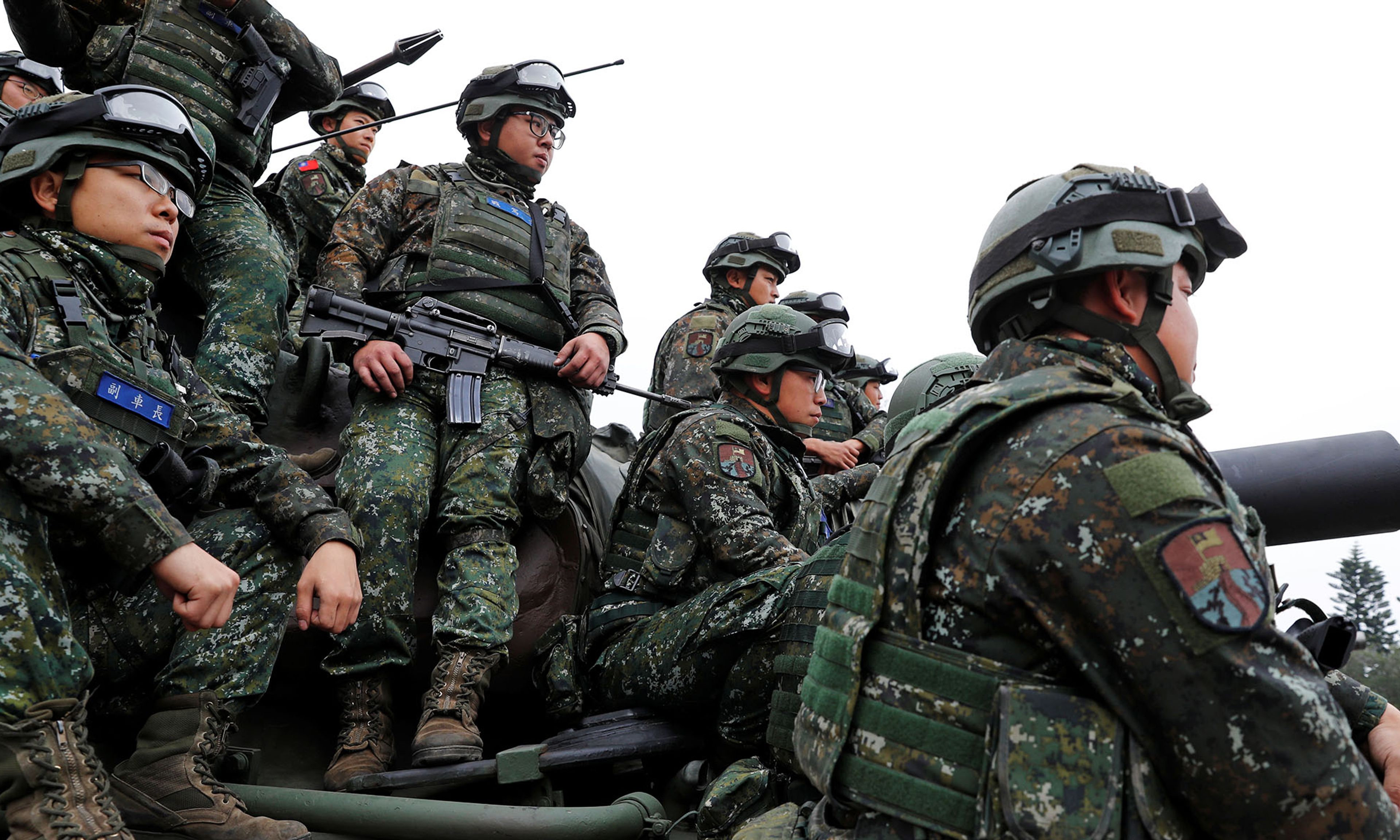
Beware, America. The United States has no strategic position in the Western Pacific without alliances, and its nemesis, China, is an alliance-breaker of long standing.
And by inclination. Two millennia ago, China’s homegrown master of all things military, the (perhaps apocryphal) general Sun Tzu, etched his hierarchy of strategic priorities on China’s way of diplomacy and warfare through his treatise The Art of War.
Foremost among Sun Tzu’s martial preferences: “What is of supreme importance in war is to attack the enemy’s strategy.” Failing that: “Next best is to disrupt his alliances.” Only then should the general join battle or lay siege to walled cities. If an antagonist’s strategy is its alliances, the commander and sovereign can pull off a diplomatic coup by sowing discord or apathy among a rival international fellowship.
The contender that fragments an opposing force can go after its individual elements one by one, simplifying its strategic and operational problems. Better yet, some adversaries may quit the field altogether — sparing the commander the effort of vanquishing them militarily.
Somewhere Sun Tzu is beaming.
The Art of War is vague about how to put such ideas into practice, but the Chinese sage does make mention of the “Hegemonic King,” portraying this mythical figure as an archetype of martial statecraft. Such a warrior-king “overawes the enemy,” making his army and state so formidable that no one dares take league against him. The king “breaks up the alliances of All-under-Heaven and snatches the position of authority.”
If successful, the Hegemonic King wins without fighting, attaining what Sun Tzu calls “the acme of skill.” If forced to fight, the king “attacks a powerful state” to make it “impossible for the enemy to concentrate.” By striking first, hard, and unexpectedly against a single foe, he presents the opposing alliance with a fait accompli — a done deal — and dares the allies to undo it at frightful cost and hazard to themselves.
Allied leaders might despair of mounting a victorious counterattack. If so, the Hegemonic King will have scored a quick, decisive battlefield triumph. Winning a short, sharp war that conserves the state’s treasury and manpower — along with the territory and resources the sovereign wishes to make his own — is the next best thing to winning without fighting.
Let’s conjure up a Western scribe, the Prussian soldier-theorist Carl von Clausewitz, for a more detailed look at how Beijing might go about alliance-breaking in the Western Pacific. Clausewitz espies three ways for one competitor to best another. Its army can defeat its rival on some battleground and impose terms. This is the surest and swiftest route to victory. But, he adds, an enemy’s “inability to carry on the struggle can, in practice, be replaced by two other grounds for making peace,” namely, the “improbability of victory” and “its unacceptable cost.”
Clausewitz’s first method demands an actual trial of arms. The other two operate in wartime and peacetime alike. Consider the improbability of victory. Like Sun Tzu’s Hegemonic King, one contestant can make itself so strong and resolute militarily, economically, and diplomatically that it appears invincible. It overawes and disheartens opponents into submission. Allies desert what looks like a losing cause. The prospects of bloodless victory brighten.
Then there’s unacceptable cost. The contestant’s leadership can try to persuade an adversary’s leaders that they cannot attain their goals at a cost or risk that’s worth it to them, or that their goals are unaffordable — full stop. Allies that don’t prize the goal enough to spend lavishly on it may abandon it. Clausewitz, who fought against Napoleon, was a confirmed alliance skeptic. After all, he personally saw multiple coalitions dash themselves against the little emperor’s legions before one finally held together long enough to prevail.
Here’s his jaundiced view: “One country may support another’s cause but will never take it so seriously as it takes its own. A moderately sized force will be sent to its help; but if things go wrong the operation is pretty well written off, and one tries to withdraw at the smallest possible cost.” Partners can share the same goals, that is, but if one is less fervent about them than another, the alliance tends to be fissile. Some allies balk at paying the price for common goals.
When the going gets tough, the half-hearted look for the exit.
What does General Secretary Xi Jinping need to do to make himself a latter-day Hegemonic King? For starters, Xi and fellow Chinese Communist magnates must keep building their country into a regional superpower. They must amass wealth — and the military might that prosperity makes possible — until the People’s Liberation Army (PLA) appears unbeatable on China’s home turf. China can open new strategic vistas for itself by making itself overbearingly strong, much like Hegemonic Kings of old.
How will it put physical power to work? Unlike NATO, U.S. alliances in Asia are bilateral affairs. To loosen up ties between the United States and Japan, South Korea, Taiwan, or the Philippines during peacetime strategic competition, Chinese martial diplomacy aims to unnerve both partners in each arrangement. Beijing typically strives to split the allies’ view of their common interests while causing one or both to despair of the alliance’s future under the shadow of an all-powerful China.
Consider Taiwan first. Unifying with the island is China’s top geopolitical priority. Plus, the informal U.S.–Taiwan alliance should prove the easiest for Xi and company to crack. After all, U.S. presidential administrations since the 1970s have maintained a posture of “strategic ambiguity” toward Taipei. Washington arms the islanders under the terms of the Taiwan Relations Act (1979) while declining to say whether it would intervene by force in a cross-strait war.
The idea underlying the maybe-we-will, maybe-we-won’t approach is that demurring helps the United States both deter China from attacking and deter Taiwan from declaring independence from the mainland — and breaching a stated Chinese redline for war.
But ambiguity entails dire perils. Beijing could conclude that Washington would hesitate amid a Chinese assault on the island while U.S. leaders bickered among themselves about whether and how to keep their defense commitment. And time is what the PLA needs to conquer Taiwan — time to subdue the island before U.S. forces can mass on the scene to repulse aggression.
What solvents can China apply to the already tenuous U.S.–Taiwan alliance? It can try to overawe the Taiwanese into submission with its crushingly superior demographics, economic prowess, and military firepower. It routinely tries to dissuade the islanders from putting their faith in American saviors. In late June, Chinese Defense Ministry spokesman Ren Guoqiang issued a blunt warning to Taipei, urging the leadership to be “soberly aware that the future of Taiwan lies in national reunification.” For good measure, he added that “any attempt to ‘rely on the United States for independence’ is doomed to failure.”
During an address on July 1 heralding the centennial of the Chinese Communist Party’s founding, Xi restated his “unshakable commitment” to gaining control of the island. Xi pledged to take “resolute action to utterly defeat any attempt toward ‘Taiwan independence.’”
In Clausewitzian fashion, Beijing is trying to dishearten the islanders — helping it win by default.
And the United States? Well, China can try to prove that succoring the island isn’t worth the likely costs to Americans. It can ask, in effect, why the United States would venture a war with a nuclear-armed superpower in behalf of a small island to which America has no formal obligation. It can also point to the likely damage to the United States’ superpower standing from a conflict that could cost it a sizeable fraction of its armed might. In this telling, America has little to gain and much to lose in the Taiwan Strait.
Washington might well tacitly agree. The White House would stand down because it believed the goal wasn’t worth the price or dangers of warfare. And China would have conscripted pitiless cost–benefit logic as its ally.
Mastering Taiwan would also be helpful for alliance-breaking elsewhere along the First Island Chain, the string of islands that runs southward from Japan, through Taiwan at its midpoint, and through the Philippine archipelago. It would drive a salient into the Western Pacific, letting PLA forces emplaced on the island flank Japan and Korea from the south and the Philippines from the north. It would also shatter America’s strategy for using forces entrenched along the island chain to confine China’s navy, mercantile fleet, and air force to the China seas.
A PLA navy and air force enjoying free access to the Western Pacific high seas could apply pressure on U.S. allies at will, and from all points of the compass. Once Manila, Tokyo, and Seoul saw Washington abandon Taipei, they would wonder whether they could trust it to keep its security pledges to them. If they concluded that Washington could not or would not uphold its commitments, they might grudgingly make their peace with Chinese suzerainty.
By discrediting American prowess and steadfastness, in other words, China could demoralize U.S. allies in East Asia — and the United States itself.
Three closing observations.
First, in Clausewitzian parlance, Beijing will try to impress upon Asians that it’s futile to buck China’s will or trust to American support. It will try to deflate morale, pointing to the improbability of victory. Meanwhile Beijing will stress to U.S. leaders the unacceptable costs to the United States of upholding its alliance commitments.
Two Clausewitzian approaches per alliance.
Second, look at your map. China’s prospects for alliance demolition look better to the south than to the north along the First Island Chain. Taiwan’s defense is in a parlous state. Philippine president Rodrigo Duterte constantly flirts with abrogating the visiting-forces agreement with the United States and thus potentially denying U.S. forces access to Philippine soil. Heck, Duterte has threatened to cancel the U.S.–Philippine mutual-defense pact altogether.
Tough to guarantee Philippine security without boots on the ground.
Things are less bleak to the north, where the United States has been a resident power since 1945. Powerful U.S. ground, air, and sea forces call Japan and South Korea home. Nor are these mere “trip wire” forces. For instance, the U.S. Seventh Fleet, including one of just eleven U.S. Navy aircraft carriers, is based at Yokosuka and Sasebo in Japan. America has skin in the game of its northerly alliances in a way it does not to the south.
Furthermore, Japan and South Korea are serious economic powers that deploy armed forces of considerable heft. They are not passive playthings. They have a say in their own destinies.
And third, here’s some cheery news. China is an alliance-uniter as much as an alliance-divider. Xi’s China seemingly cannot restrain itself from bullying fellow Asians, whether it’s Taiwan to the east or nuclear-armed India to the west. Its domineering conduct is inducing Asians to make common cause with one another, with the United States, and with other friendly powers.
That’s the trouble with comporting oneself like a Hegemonic King: Overbearing strategies may not work. China-watchers fret about a “self-fulfilling prophecy,” the notion that treating China like a foe will make it a foe. Yet China is creating a self-fulfilling prophecy all its own.
Xi Jinping: a divider and a uniter!











Comments