• You can’t tell us it’s a coincidence that just as Biden started talking about a global minimum tax, two billionaires have left the planet.
• The U.S. withdrawal from Afghanistan has come off without a hitch – if you don’t count the signs of an impending fiasco. The Taliban is making gains all around the country. Biden says not to worry, we can hit emerging terrorist targets from “over the horizon.” But the CIA has been scrambling to maintain its intelligence-gathering capabilities in the country. Without on-the-ground intel, we won’t develop targets to hit in the first place. On top of this, our nearest bases are going to be eight hours away in the Persian Gulf, making flying missions over Afghanistan incredibly difficult. Meanwhile, the contractors who have done the maintenance to keep the Afghan Air Force in the air are leaving, and we are going to have to rely on the Turks to secure the absolutely essential gateway to the country, Kabul International Airport. Biden says he wanted to pull our troops out because there was no reasonable expectation of a different outcome. But a different outcome now looms – the prospect of a swift Taliban takeover.
• Senators from both parties reached a deal to spend $1.2 trillion on infrastructure, and President Biden endorsed it. The left wing of the Democratic Party wants to pass an even larger spending bill with a bare partisan majority, and fears that moderate Democrats will pass the infrastructure bill and then abandon or shrivel the partisan one. Speaker of the House Nancy Pelosi is therefore pledging that the House won’t vote on the infrastructure bill until after the Senate passes the other one. With some senators thirsting for bipartisan accomplishment and others for a partisan victory for the Democrats, not much attention is being paid to getting the most productive improvement in roads and bridges for each taxpayer dollar – which is par for the course for federal infrastructure spending. If we are lucky, progressive brinksmanship will sink both bills.
• J. D. Vance – author of Hillbilly Elegy, investor, and sometime NR contributor – is running in a crowded field for the Republican nomination for Senate from Ohio. He began his campaign by apologizing for his anti-Trump commentary in 2016, saying he had had a change of heart about the man. His criticisms back then were on the mark, as it happens. But Vance appears to us to have sincerely evolved into a nationalist and populist, and it is not shocking that his political beliefs would cause him to look more favorably on the former president. Vance has recently gone so far as to endorse the Senate challenges to the certification of the 2020 election, although he has not adopted the stolen-election bunkum that formed the backdrop to these challenges. Whether Ohio Republicans will welcome this late boarder to the Trump train remains to be seen. They may also have mixed feelings, as we do, about Vance’s version of populism, which slams day-care subsidies as a sop to two-earner families and frowns on tax cuts because “they’re empowering our political enemies.” It will be useful, at any rate, for it to get a market test.
• At the same time he promotes an international tax cartel, Biden has now issued an executive order designed, the administration claims, to promote competition in the American economy. Not all the suggestions in it are bad. For example, hearing aids should be allowed to be sold over-the-counter at drugstores, and occupational licensing requirements are indeed frequently too onerous. But the order revives certain ideas that should have been left to molder in their graves. Despite the nonappearance of the apocalypse predicted after the ending of net neutrality, the campaign to restore it is, it seems, back on. What is perhaps the most troubling aspect of this order is the distaste for big business – just for being big – that runs through it, a distaste that is particularly, although not exclusively, aimed at tech and sometimes appears to be rooted in paranoia rather than reason. Among the works cited in support of its proposals is one that contends that “the flawed economic arguments used to rewrite the economy to benefit the powerful at the expense of the vulnerable were sold to the American public using strategic racism.” Big business is sometimes predatory – and there are rules in place to deal with that – but the guiding principle for determining whether it has overstepped the mark should be consumer harm, not the predilections of central planners.
• Jack Butler’s report for NRO from Wellington, Ohio, on Donald Trump’s first post-presidential campaign rally captured where much of the conservative movement and the GOP is now: behind a man whose primary focus is the 2020 election, which he believes he won. Ordinary political issues – the border, CRT, Biden’s shortcomings – were raised. But Trump was King Arthur, who will come again. His defeat was a “so-called loss,” “the crime of the century.” “We won in a landslide. . . . We won the election twice, and it’s possible we’ll have to win it a third time.” Butler concluded: “In response to losing an election he could have won, [Trump] decided not to accept any blame. Instead, he casts himself as protagonist against ‘sinister forces’ and castigates the country’s institutions, forcing his supporters to choose between him and everything else.” Trump once got some things right that he seemed to care about, and he fashioned a remarkable political movement. But Trump post-loss is comprehensively delusional or entirely self-centered.
• Ashli Babbitt, a 35-year-old Air Force veteran, tragically died in the Capitol riot. As video of the incident clearly shows, she died because she chose to join a mob that threatened police and members of Congress while violently storming the House speaker’s barricaded suite of offices, a high-security area. She was shot by a police officer while forcing her way through a door window the rioters had broken. She willfully created confrontation that was fraught with lethal potential, with the predictably horrific outcome. As is standard procedure after a police shooting, the officer involved was placed on administrative leave, and then prosecutors (here, the Justice Department) investigated, appropriately closing the case without charges. The right word to describe Babbitt is “rioter,” not “martyr.” For Donald Trump to portray her as “an innocent, wonderful, incredible woman” while demagoguing the government’s refusal to identify the actually innocent officer is yet another disgrace. He should be pondering his own role in these baleful events.
• Nicholas Fuentes is a 22-year-old anti-Semitic and racist Internet troll whose name merits mention only because a sitting member of Congress has tried to forge an alliance with him. Earlier this year, Representative. Paul Gosar (R., Ariz.) spoke at an “America First” conference hosted by Fuentes – long after the latter’s anti-Semitism and racism were well known. Fuentes has praised segregation and once called a writer a “race traitor” for working “for Jews.” In one online video, Fuentes promoted claims denying that millions of Jews were murdered in the Holocaust. “I’m getting really sick of world Jewry – that’s what it is! what it is! – running the show, and we can’t talk about it,” Fuentes said in another video. When news began circulating on June 28 that Fuentes would host a fundraiser for Gosar, the congressman responded on Twitter that he would look past discrete disagreements to work with young conservatives: “Not sure why anyone is freaking out.” The fundraiser ended up not happening, but Gosar made it perfectly clear with his tweet and appearance at Fuentes’s conference that he views Fuentes’s anti-Semitism and racism as one might view a disagreement over tax policy. Any decent political movement or party ought to shun white nationalists such as Fuentes. It also ought to shun their allies, such as Gosar.
• Cori Bush was elected to represent Missouri in Congress this past November. Bush’s status as a member of the most powerful legislature in the world – and as a fiercely progressive black woman who defeated a more moderate incumbent Democrat in a primary – would seem to be a testament to the free society that the American founding and system have allowed for. And yet, on the day set aside to celebrate such accomplishments, the Fourth of July, Bush tweeted that “when they say that the 4th of July is about American freedom, remember this: the freedom they’re referring to is for white people.” She added that “this land is stolen land and Black people still aren’t free.” Using her own implicit definitions, it’d be difficult to find an inch of land on earth not at some point stolen or a human who could be considered truly free. And few are as free or as blessed to live where they do as she.
• Texas governor Greg Abbott (R.) is discontinuing state licensing for facilities that provide care for illegal-immigrant children under a contract with the federal government. The directive could displace more than 4,000 children and adolescents in scores of shelters, sending them to emergency sites with lower standards of care. Representatives of some religious organizations that run facilities object to Abbott’s order. They assert, in effect, a religious-liberty claim, arguing that their conscience requires them to minister to the children. Abbott should exempt from his order those faith-based institutions that seek to serve and advocate for migrants, especially those who are minors.
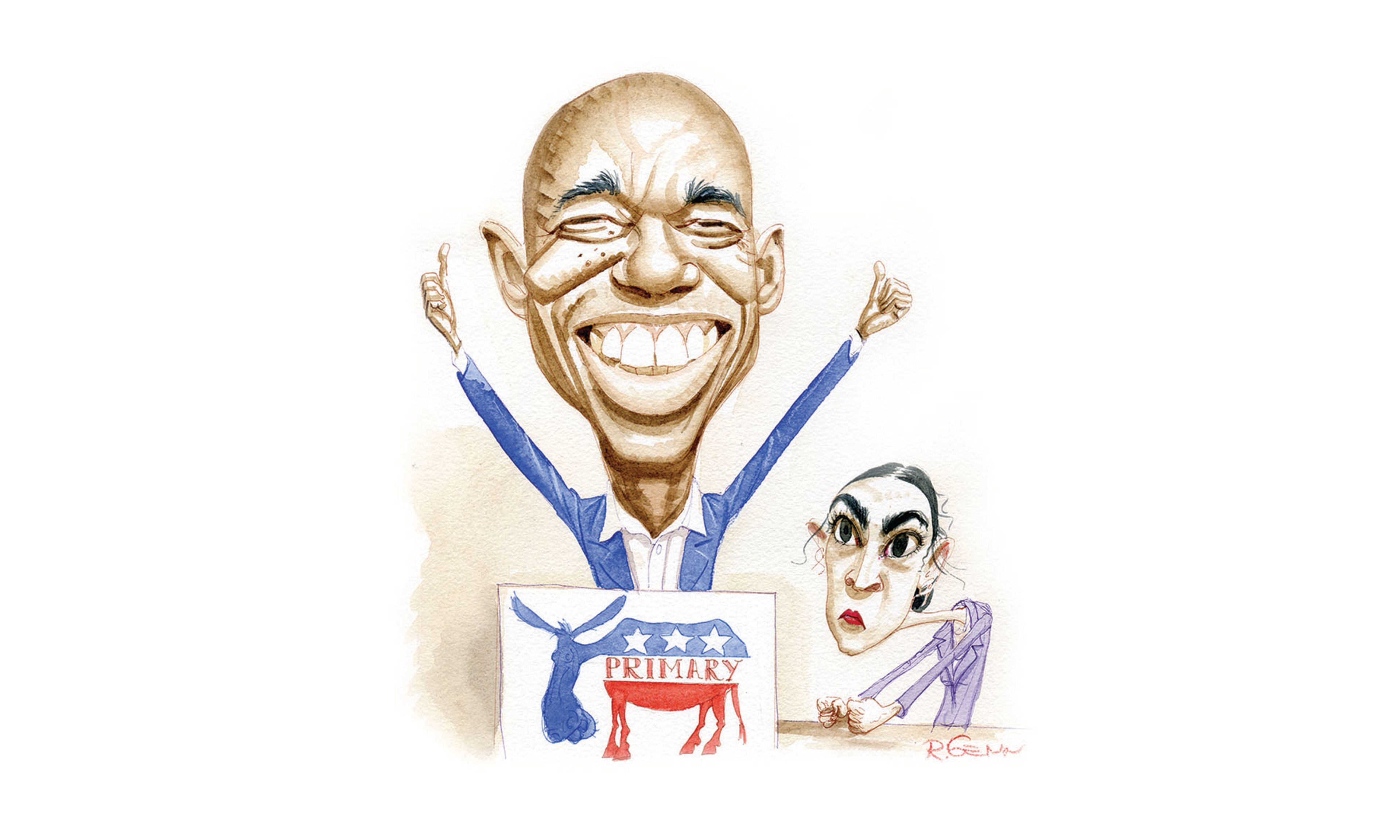
• Eric Adams won the Democratic New York mayoral primary, 50.5 percent to 49.5 percent for Kathryn Garcia. The call came agonizingly late because COVID regulations gave extra time for voters using absentee ballots. The new ranked-choice voting system also puzzled many New Yorkers. Adams, all but guaranteed to beat GOP nominee Curtis Sliwa, has his work cut out for him. He ran a sensible campaign calling for safety on New York’s increasingly lawless and disorderly streets. He will need to do more than call. The likely next district attorney, Alvin Bragg, is a foe of incarceration in principle (look at go-soft San Francisco and see how that’s going). Ideologues on the city council will agitate for left-wing causes. New York’s elite public schools are threatened with immolation in the name of racial equity, while the system as a whole lies in the grip of a sclerotic teachers’ union. Adams has shown passion and wiliness over the years. To succeed for himself and for New York he will need a gimlet eye for detail and a resolve of iron as well.
• John Quincy Adams wrote entertaining imitations of Horace. George W. Bush paints portraits of veterans and immigrants. Now Hunter Biden is the latest presidential son to court the muse. His paintings – non-representational, as suits both prevailing tastes and his abilities – are to be auctioned by Georges Bergès Gallery (showrooms in New York and Berlin). According to White House press secretary Jen Psaki, neither the artist nor his father will be told who the purchasers are, in order to discourage sales for other than aesthetic reasons. This arrangement has been pounced upon by Republicans . . . rather, by former Obama ethics chief Walter Shaub (“They have outsourced government ethics to an art dealer. . . . This is just preposterous and very disappointing”). Save it, Shaub. The spirit, like the cash, will blow where it lists.
• After years of investigation, including two trips to the Supreme Court in his quest to scour Donald Trump’s tax returns, all Manhattan district attorney Cyrus Vance Jr. has come up with so far is a puny tax case against the Trump organization’s top financial exec, Allen Weisselberg. The charges – mainly booking corporate perks (cars, apartments, children’s tuition) as business expenses rather than income – are hardly unique in business accounting. The IRS and state revenue agencies generally handle them as civil matters, not felony indictments. Obviously, the prosecutors don’t care about Weisselberg or his kids’ tuition; they are squeezing him in pursuit of their white whale, Trump. In an unusual arrangement, Vance has joined forces in the probe with New York’s ambitious attorney general, Letitia James, who ran on a promise to use the powers of her office to torment the then president. The indictment also names the Trump Organization as a defendant. Prosecutors normally avoid criminally charging businesses; if the business folds, innocent employees lose their jobs. But it lets them put Trump’s name in the indictment even though there is no sign they have a case against him.
• Donald Trump has filed federal class-action lawsuits against Twitter, Facebook, and YouTube for banning him and suspending others from their platforms. These cases should be thrown out immediately, and most likely will. Trump claims that social-media bans violate the First Amendment. But private companies, however objectionable their decisions, are not the government. If you break YouTube’s terms of service, YouTube will not send armed agents to your door to shoot you or lock you up. Facebook is not bound by the First Amendment, and has its own property and speech rights to exclude people from its platform. Trump’s theory is that the government has unconstitutionally given these companies the power to ban speech. But the Supreme Court ruled as far back as 1974 that even a power company with a state-backed monopoly is not acting as the state. If it is not state action to get banned by your power utility, it’s not state action to get banned by Twitter, either. Trump complains that government policies have “enabled” these three companies to become giants. But government rules shape every market. Using that reality as an excuse to restrict the rights of private companies is itself a dangerous step. Whatever else should be done about these companies’ power, this lawsuit isn’t it.
• Under the First Amendment, nonprofit advocacy groups need not disclose their supporters to governments. The Supreme Court said so in 1958 in NAACP v. Alabama, and again this term in Americans for Prosperity Foundation v. Bonta. In a 6–3 opinion authored by Chief Justice John Roberts, the Court struck down a California rule that required nonprofits that solicit donations in the state to hand over a list of all their donors – in or out of California. Roberts noted that fears of reprisals “are heightened in the 21st century and seem to grow with each passing year, as anyone with access to a computer can compile a wealth of information about anyone else, including such sensitive details as a person’s home address or the school attended by his children.” Arrayed against California was the broadest pan-ideological coalition ever to take the same side in a Supreme Court case. If only Democrats and the Court’s liberals – who scoffed at the “trivial burden” of California’s rule – were as concerned about donor privacy as are the ACLU and the NAACP.
• An exceptionally small percentage of Americans have allergies to one or more of the ingredients in the COVID-19 vaccines and should not receive those vaccines. Another exceptionally small percentage had an extremely strong reaction to the first shot and are discouraged from getting the second. The risk of thrombosis-thrombocytopenia syndrome or Guillain-Barré syndrome from the Johnson & Johnson vaccine is exceptionally small, but the U.S. Food and Drug Administration has offered warnings, and anyone worried about taking that vaccine ought to consult a doctor. But Americans outside those small groups have good reason to get vaccinated against COVID-19. Still, about 99 million who are eligible have not yet gotten any shots. More than 159 million are fully vaccinated, and 25 million are awaiting their second shot. Many of the same medically and mathematically challenged charlatans who insisted that COVID-19 was no worse than the flu roughly 623,000 American deaths ago have adopted a new crusade, which is convincing Americans to avoid the vaccines. They are misinterpreting government data that include all adverse events following vaccination, however trivial or coincidental, as though they were dire effects. They also treat every expert who dispels their nonsense as a paid-off stooge of big pharmaceutical companies. The vaccines represent a small miracle for a world beset by a global calamity, and should be welcomed as such.
• Rarely have Cubans taken to the streets to protest the dictatorship that rules them – such a display is very dangerous – but they did so on July 11. The sight of them was stirring, although also worrying, given the power and ruthlessness of that dictatorship. The protesters were crying against shortages of food and medicine. Cuba has suffered terribly in the pandemic. But they were also crying against the dictatorship, yelling “Freedom!” “Enough!” “Unite!” The protests subsided, and the government seems secure, for now. But once people lose their fear, a dictatorship itself has reason to fear. Cuba’s has been in power for 62 years. The second Castro, Raúl, relinquished leadership earlier this year. Can the dictatorship survive the passing of the Castros from the scene? Let us hope not. The U.S. government should do everything it can – diplomatically, morally, and otherwise – to support the cause of freedom and democracy in Cuba.

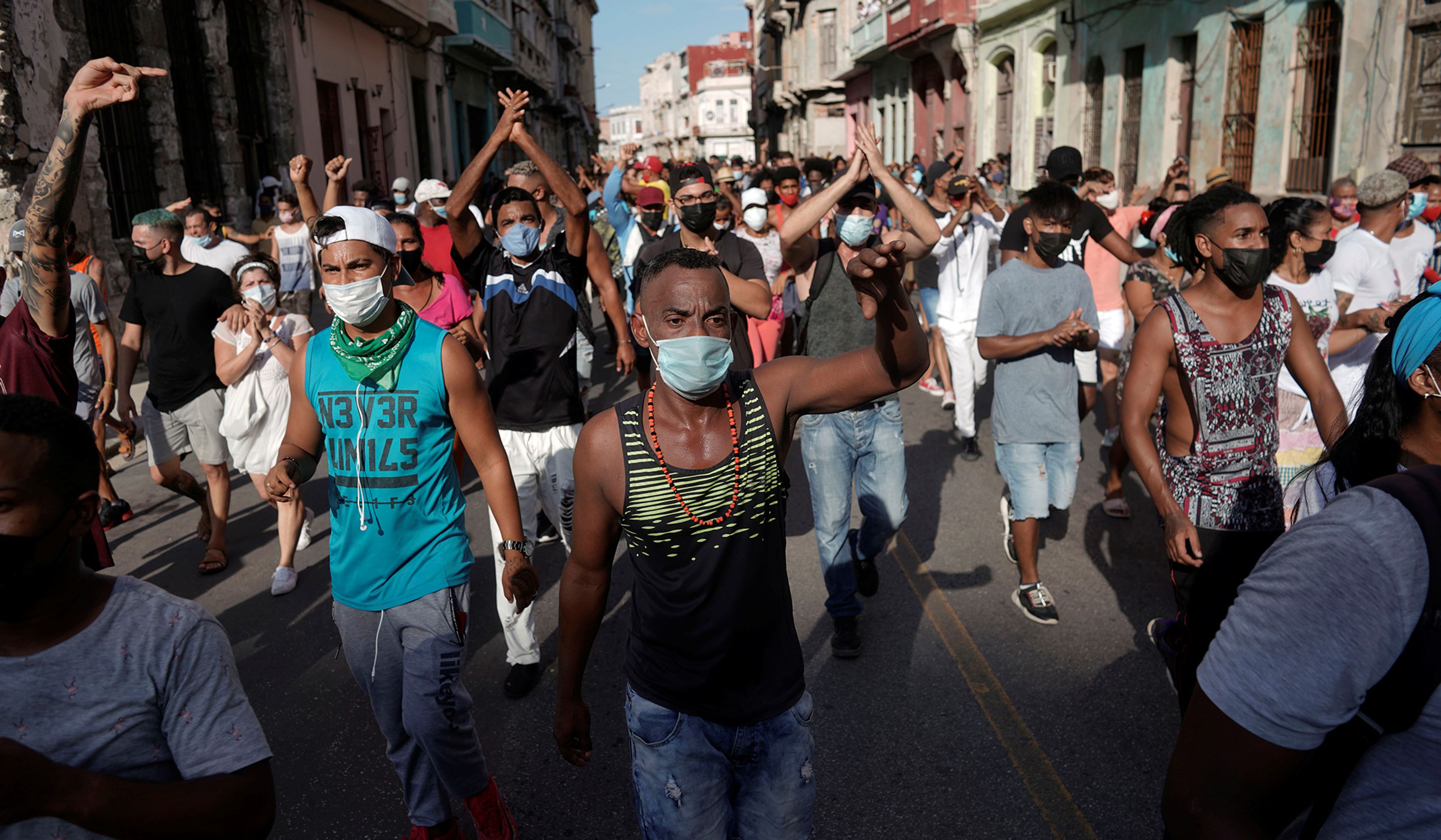
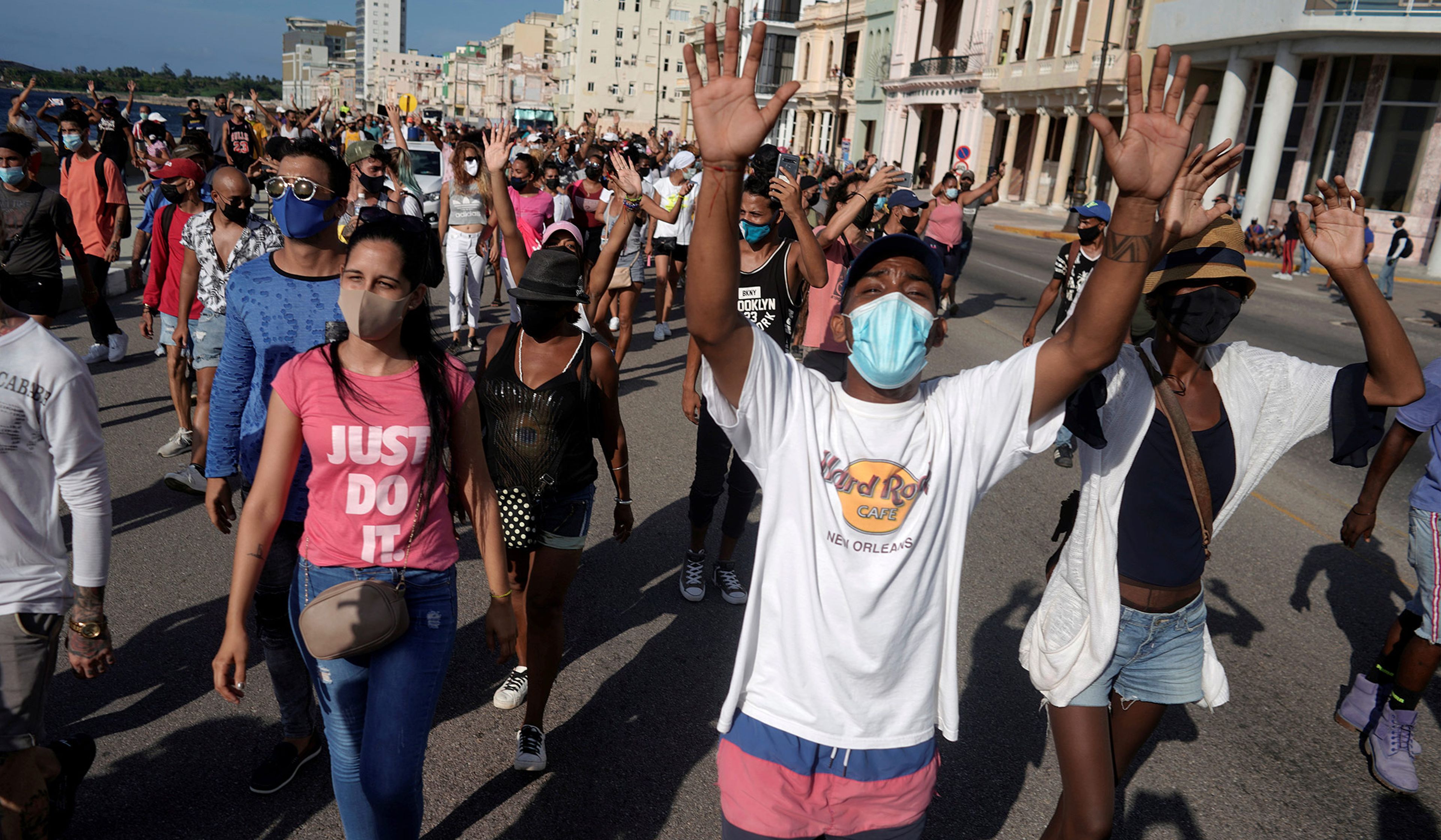
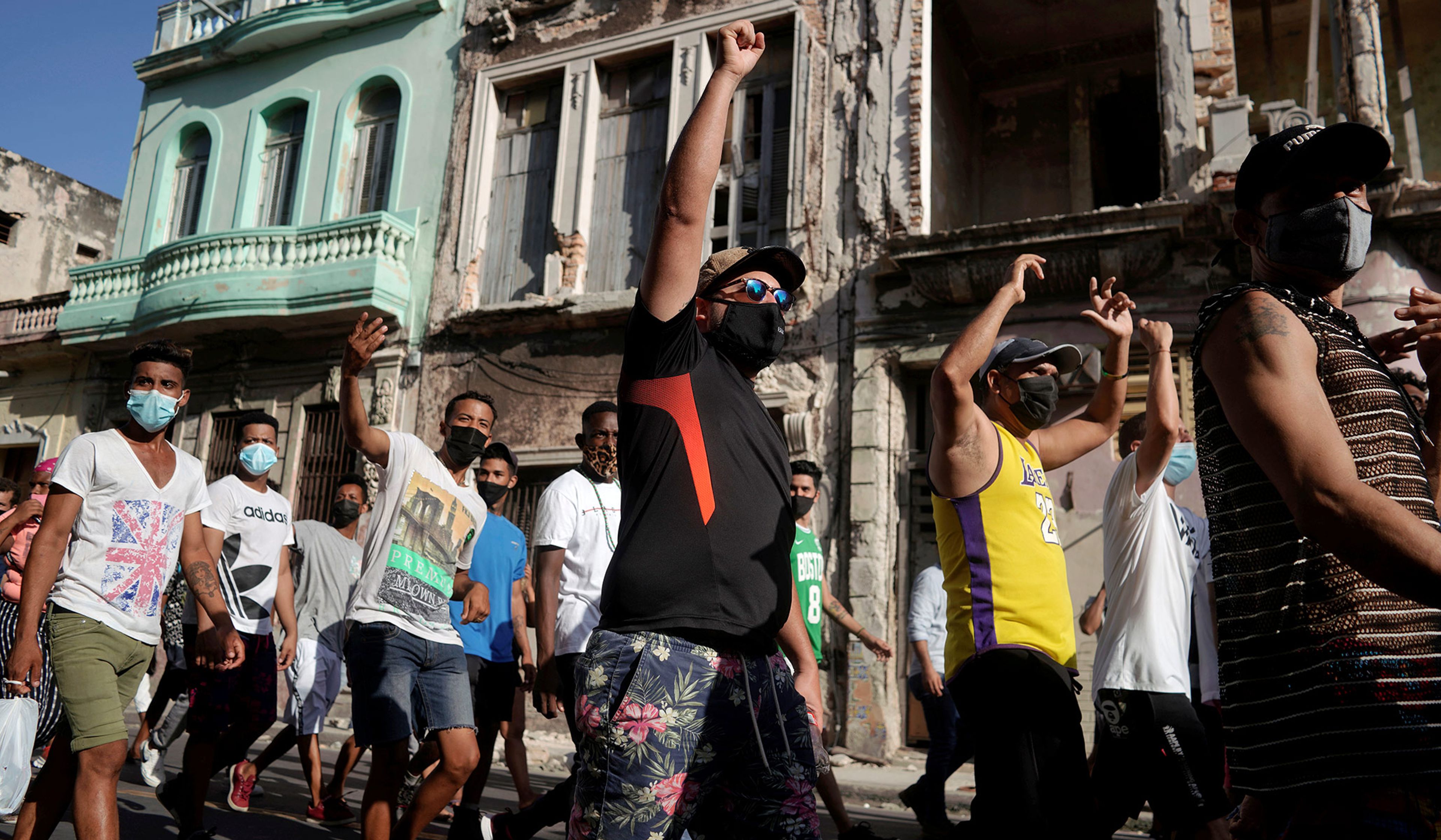

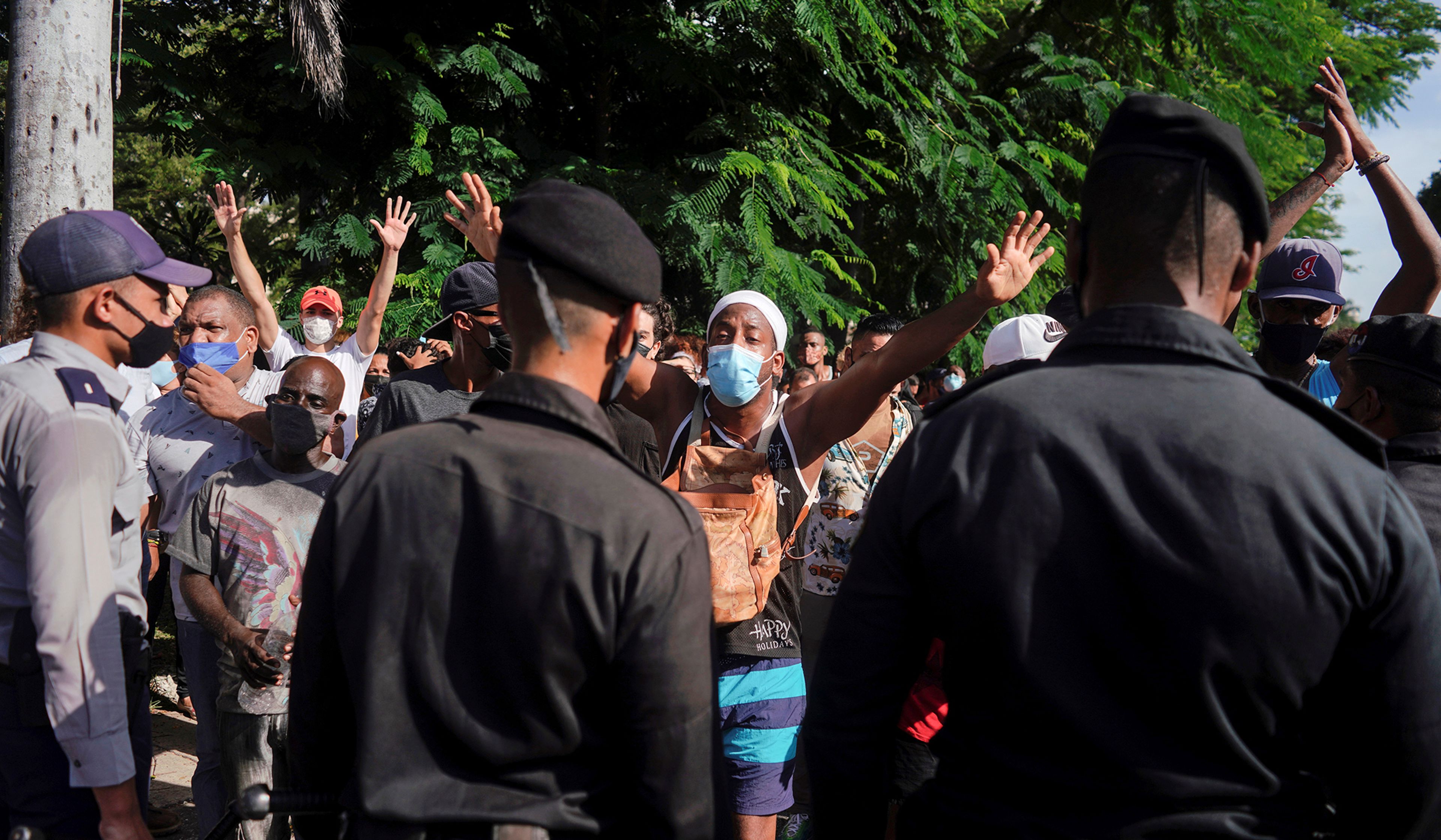
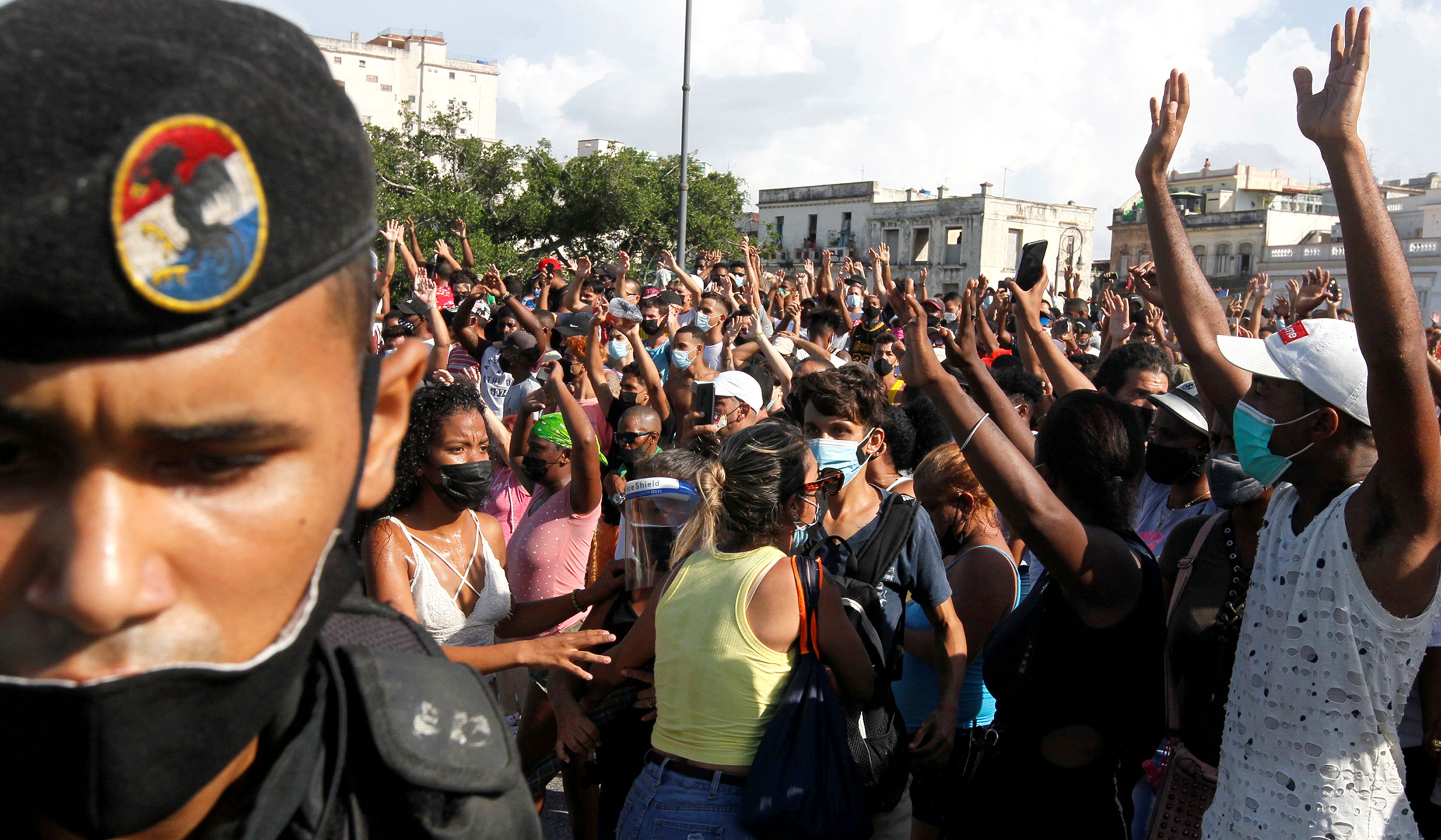


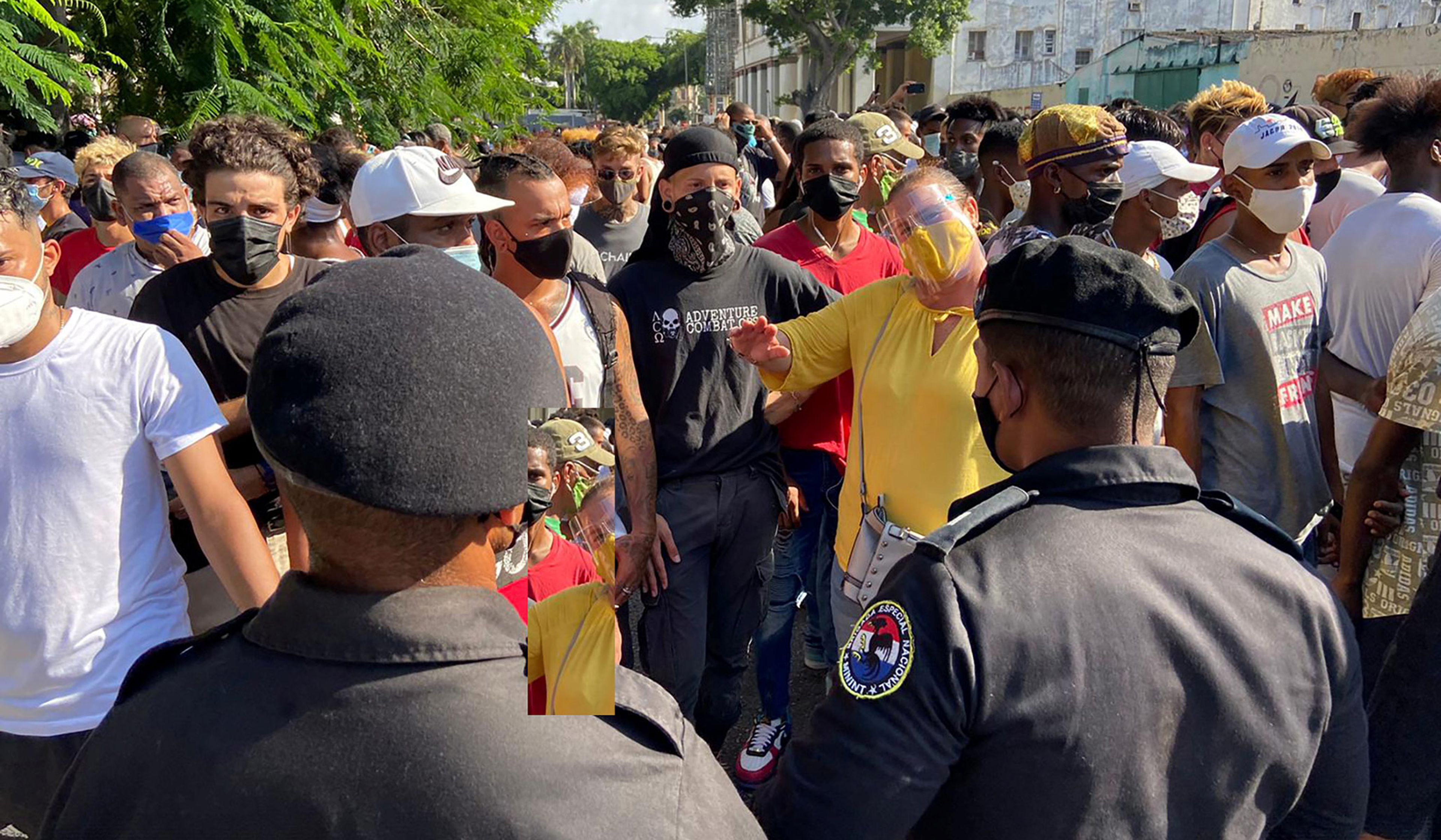
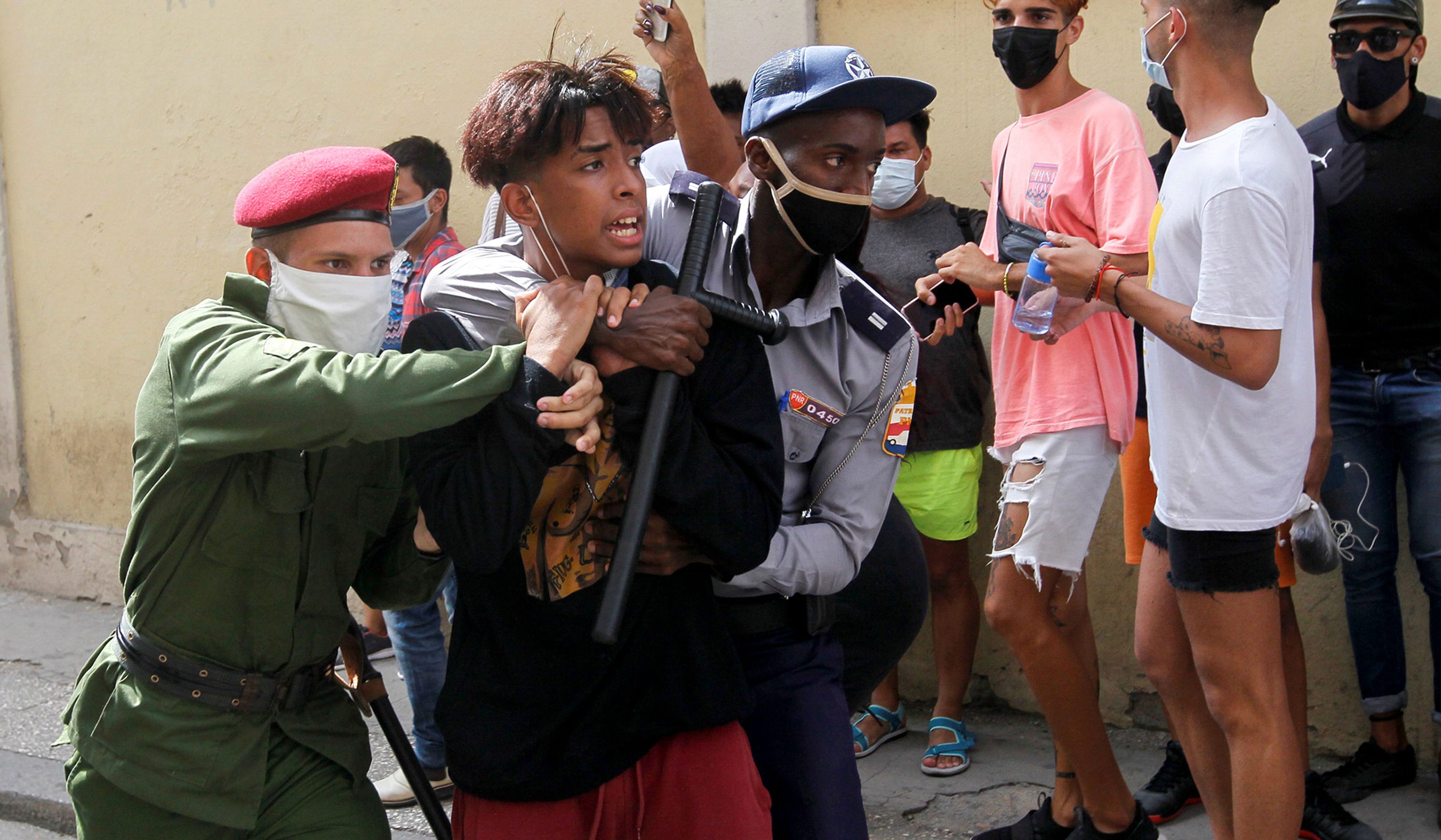
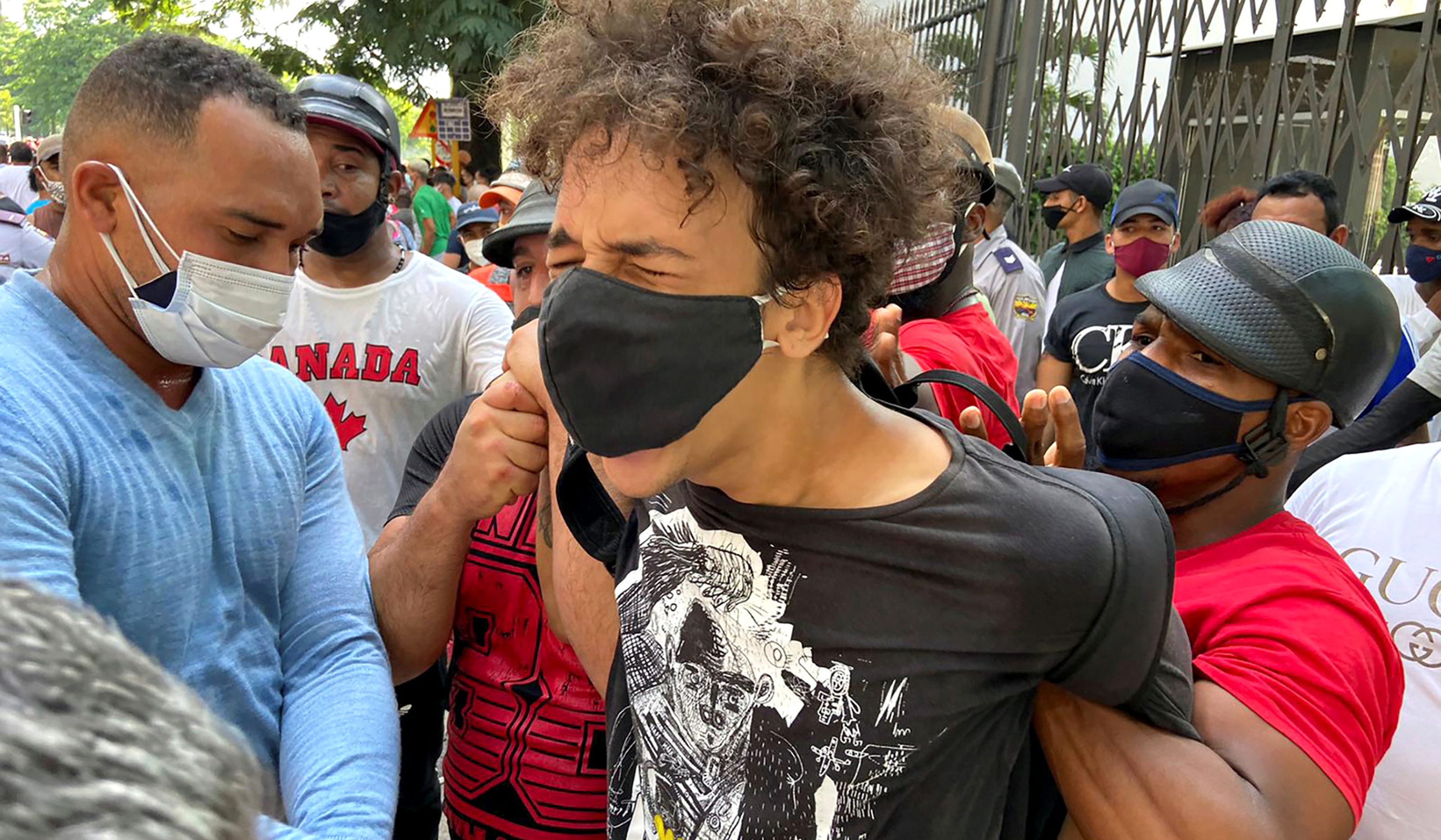
Protesters in Havana, July 11, 2021
Alexandre Meneghini / Reuters
• The Chinese Communist Party marked the 100th year of its blood-soaked existence in a series of celebrations at Tiananmen Square and across China. General Secretary Xi Jinping’s message to the world was twofold: The party saved China, bringing about its “great rejuvenation,” and anyone that stands in its way will “find their head broken and blood flowing against a great wall of steel.” Since its founding in Shanghai a century ago, this Marxist-Leninist cult has worked to impose its will on China, killing tens of millions of people. Through political and religious purges, famines, and other mass killings, the party has achieved an ignominious distinction as the single deadliest entity in human history. From the Great Leap Forward to the gross incompetence and malicious silencing of doctors that helped spawn the coronavirus pandemic, there’s one consistent brutal thread that traces the party’s conduct up to the present. The party’s rulers have no regard for human life. Their every action is to ensure the survival of their highly corrupt, deeply paranoid regime. That insecurity is why they’ve put ethnic and religious minorities in concentration camps; it explains their relentless persecution of such human-rights champions as Liu Xiaobo; and it provides motivation for their expected move to extinguish Taiwan’s democracy, which disproves the party’s lie that political liberty is un-Chinese. May this threat to human freedom not live to see another decade.
• “Nike is a brand that is of China and for China,” its CEO, John Donahoe, said on a recent earnings call. He is doing damage control for a rare good deed. After the Australian Strategic Policy Institute issued a report last year that found Nike, among other large companies, complicit in Uyghur forced-labor abuses, Donahoe’s team issued a statement expressing concern about forced labor in Xinjiang, claiming a company-wide audit had found no evidence of such practices in its supply chains. Americans hardly noticed the tepidly worded statement, but Chinese netizens went on the warpath against the nominally U.S. brand. Celebrities pulled out of sponsorship deals and sales plummeted. Overall, Nike sales were actually up in May, but that rise was driven by the North American market – sales remain low in China, if not as low as the company’s morals.
• At one in the morning, 28 hitmen burst into the private house in Port-au-Prince of Jovenel Moïse, the president of Haiti, shot him dead, and critically wounded his wife, Martine. Such are the facts, but what to make of them is nothing but mystery. The presidential security team apparently did nothing. After a chase, the police shot dead three of the hitmen and captured 20, including some seeking refuge in the Taiwanese embassy, of all places. Two of them are Haitian Americans who claimed they had been taken on as translators. The rest are mercenaries from Colombia, and say they thought this was an operation for the U.S. Drug Enforcement Administration. The head of the national police has announced the arrest of another Haitian American with political ambitions but without the means to mount and pay for assassination. The president was unpopular; he had dissolved the senate and ruled by decree. As many as three provisional presidents are engaged in a free-for-all to be the successor. More to the point, Jimmy Cherizier, known as “Barbecue,” has long been recognized as the country’s leading gangster, and in a television address he urged the Haitians to “mobilize.” A long-suffering nation looks set to suffer some more.
• The election of Ebrahim Raisi as president of Iran was a foregone conclusion. It is of no consequence that voter turnout was 48.8 percent, the lowest level ever in an Iranian election. No fewer than 3.7 million votes were spoilt. Since the Islamic Revolution, policy has lain in the hands of the Supreme Leader. An unelected body, the Guardian Council, ensures the Supreme Leader gets his way. In 1988, when he was only 27, Raisi provided evidence of his character as one of four judges sitting on a Death Committee, secretly supervising the massacre of 5,000 dissidents of all stripes – some estimates of the killing go much higher. In 2019 Raisi became head of the judiciary. This time, 600 candidates put their names forward to run for the presidency; the Guardian Council whittled them down to Raisi and three nonentities. Choice is not the issue. They wanted someone all set for repression, and they found him.
• François Fillon was a strong favorite to recapture the Élysée Palace for the center-right in France’s 2017 presidential election, but a scandal surrounding allegations that he had arranged “fake jobs” for his wife, Penelope, and two of his children was too much for the usually forgiving French electorate and, eventually, a French court. Fillon was sentenced to prison, although he remains free pending an appeal. “Penelopegate” came with one plus for Fillon, however. It largely drowned out much of the talk that he had allegedly been paid to arrange a meeting between Vladimir Putin and a Lebanese businessman, an allegation that was denied by both Fillon and the Kremlin. Under less turbulent circumstances, it would have added to concerns that Fillon was, when it came to foreign policy, too much of what Germans call a “Putinversteher” (literally, a “Putin understander”). In recent years, Fillon’s consultancy firm has reportedly worked for Russian firms, and in late June Fillon was appointed to the board of a state-owned Russian oil company. This follows a precedent set by former German chancellor Gerhard Schroeder (Nord Stream AG, Nord Stream 2, Rosneft) and Austria’s former foreign minister Karin Kneissl (Rosneft). The fake jobs are getting more sinister.
• In British Columbia, seven Catholic churches were burned to the ground in June and July. Researchers in the spring had discovered unmarked graves of hundreds of Indigenous people, most of them presumed to be children, near the sites of former Indian residential schools in three western Canadian provinces. The Catholic Church had operated the schools for much of their existence in the 19th and 20th centuries and in general was complicit, with the Canadian government, in heavy-handed and often abusive efforts to separate Indigenous children from their families and native culture. Leaders of religious orders that participated in the schools issued apologies in the 1990s, and in 1991 several Canadian bishops and Indigenous representatives met with Pope Benedict. Pope Francis will meet with Indigenous leaders in December. Their cause is compromised by the church burnings, whose timing suggests retaliatory arson. “There is a lot of hurt,” said Chief Greg Gabriel of the Penticton Indian Band, “but this type of action doesn’t help.” Chief Clarence Louie of the Osoyoos Indian Band called it “misplaced ignorance, stupidity, a criminal act,” noting that the churches served Indigenous people, too, who worshiped there.
• “I find it extremely offensive that a law doesn’t respect my life, and I won’t stand for it. I want to change the law and I want to challenge people’s perception of Down’s Syndrome.” That’s what 26-year-old Heidi Crowter told London’s High Court about the fact that she has been subject to all kinds of abuse because of what the law teaches about Down syndrome. There is a 24-week limit on abortions in England, Wales, and Scotland, except in the case of handicaps. Some 90 percent of women who find out they are carrying a baby with Down syndrome abort. A mother of a young son with Down syndrome joined the suit, testifying to the tremendous pressure that was put on her to abort and the guilt she was made to feel for fighting for her son’s life. Don’t Screen Us Out is a movement to change this aspect of the culture in the United Kingdom. God bless these women and may justice prevail. The attempt to eliminate people with Down syndrome is a scourge we will have to answer for.
• What a life and after-life Sacagawea has had. Circa 1800, age twelve, the Shoshone girl was captured in a raid by a rival tribe. A year later she was sold to Toussaint Charbonneau, a Québécois fur trader, to be his second wife. In 1804 she joined Meriwether Lewis and William Clark’s Corps of Discovery, assigned by President Jefferson to explore the Louisiana Territory. Over the next two years she crossed the Rockies twice, saw the Pacific, and gave birth to a son. She died in 1812, or possibly 1884 (accounts differ). Early-20th-century feminists adopted her as an icon; in 2000 the U.S. Mint put her on a dollar coin. This month Charlottesville, Va., removed a statue depicting her, Lewis, and Clark from a public square, for incarnating white supremacy: Lewis and Clark stand, while Sacagawea crouches, although isn’t that how a pathfinder looks for tracks? Rabid wokeness is a new challenge for this remarkable woman, but she has overcome many already. The smart money stays on her.
• Everything old is new again, and we’ve got a space race on our hands. But instead of a competition between the U.S. and the Soviet Union, this time it’s between businessmen, and Richard Branson is Yuri Gagarin. Branson flew in space on July 11 in the Unity, a spacecraft made by Virgin Galactic, part of Branson’s business empire. He reached 282,000 feet above the Earth’s surface, which is 20,000 feet more than is required to be considered an astronaut. Jeff Bezos is set to go to space on July 20, and Elon Musk, always enigmatic, does not yet have firm plans. Telephones, air conditioning, cars, and cellphones all began as luxuries of the ultra-wealthy. Perhaps space travel will become as affordable as air travel did.
• Shohei Ohtani “exceeds what is considered conventional” is how Hideki Matsui put it after the left-handed slugger and right-handed pitcher for the Los Angeles Dodgers hit his 32nd home run of 2021, the most by a Japanese player in a single season. Ohtani broke Matsui’s record in July and at the All-Star break was on pace to hit almost 60 before October. As a starting pitcher, Ohtani ended the first half of the season at 4–1 in 13 starts, with an ERA of 3.49. He pitches typically on six days’ “rest,” serving as the designated hitter on days he pitches as well as on most days he doesn’t. Not since Babe Ruth was with Boston has a player shone so brightly from both the pitcher’s mound and the batter’s box. In an MLB season marred by worries over insufficient offense and the possibility that pitchers have been doctoring the ball, Ohtani gives fans much to admire. “As a baseball fan myself, I can’t wait to see what he is able to do next,” said Matsui, with a tip of the cap for the prodigy who has overtaken his place in the record books.
• Zaila Avant-garde is America’s latest sweetheart, and she ought to be. A 14-year-old from Louisiana, she won the National Spelling Bee. The previous twelve winners had been Indian Americans; Zaila is a black American, the first ever to win the bee. The final word was “murraya” – a genus of tropical Asiatic and Australian trees. In addition, Zaila holds three Guinness world records – for dribbling, bouncing, and juggling basketballs. She has accomplished a lot, in her 14 years. On top of it all, she has a smile that lights up a room, and beyond.
• Home from the Naval Academy, Midshipman Jimmy Carter had a date with Rosalynn Smith. They were married in 1946. They still are. They live in Plains, Ga. – population 776 – where they were born. They clearly love each other and depend on each other. In an interview shortly before their 75th anniversary, Jimmy Carter said, “Every day there needs to be reconciliation and communication between the two spouses. We don’t go to sleep with some remaining differences between us.” The story of the Carters’ marriage is a beautiful one, for Americans of all political stripes to appreciate.
• It was November 1950, near Unsan, North Korea, and Lieutenant Ralph Puckett Jr., in command of the 8th U.S. Army Ranger Company, found himself before Hill 205. Only 60 miles from the Chinese border, Puckett and his men were in a bitter fight for the hill in the face of a Chinese offensive. “Leaving the safety of his position, with full knowledge of the danger,” Puckett, according to the official citation, “ran across an open area three times to draw enemy fire, thereby allowing the Rangers to locate and destroy the enemy positions and to seize Hill 205.” That night, Puckett and the 57 men under his command faced five successive human-wave assaults. Twice wounded, Puckett refused evacuation and instead “repeatedly abandoned positions of relative safety to make his way from foxhole to foxhole” in order to “check the company’s perimeter and to distribute ammunition amongst the Rangers.” During hand-to-hand combat with the Communists, a sixth attack overran the Rangers’ position. Puckett ordered his men to withdraw and leave him behind, but two Rangers fought their way back. Despite his orders, his men carried the grievously wounded Puckett to safety – while Puckett continued calling down artillery fire onto the Chinese positions. In the presence of South Korean president Moon Jae-in on May 21, President Biden awarded the Medal of Honor, in the name of the Congress, to Ralph Puckett, who retired as a colonel in 1971. “Why all the fuss?” the 94-year-old Puckett, who lives in Georgia with Jean, his wife of 68 years, is reported to have said when told he would be so awarded. A grateful nation stands in awe.
• Donald Rumsfeld had several stints in business, and he was very good at it. Mainly, however, he led a life of public service. An Illinoisan, he was elected to Congress in 1962. He later served in the Nixon administration, advising on a number of economic affairs. He was then ambassador to NATO. President Ford, he served as chief of staff. Then Ford made him defense secretary – he was the youngest ever. About 25 years later, he would be the oldest ever. In 1998, he served as chairman of the Commission to Assess the Ballistic Missile Threat to the United States, a.k.a. the Rumsfeld Commission. The chairman was a strong, very well-informed advocate of anti-missile defenses. President George W. Bush, of course, made him secretary of defense. Rumsfeld’s conduct in the Iraq War was as controversial as that war itself. Through it all – all of his decades – Rumsfeld was smart, tough, and patriotic. He was a free-marketeer – a devotee and friend of Milton Friedman – and a believer in American leadership in the world. With his wife, Joyce, he enjoyed a warm marriage. She survives him. Donald Henry Rumsfeld has died at 88. America needs such men. R.I.P.
• Henry Parham served in an all-black unit on D-Day. The American military would not be desegregated until 1948. Parham was born in Emporia, Va., in 1921. Ninety-two years later, in 2013, France made him a chevalier of the Legion of Honor. In an interview with CNN in 2019, Parham spoke of D-Day: “I prayed to the good Lord to save me. I did my duty. I did what I was supposed to do as an American.” Our country has been extraordinarily lucky to have people such as Henry Parham. He has died at 99, on the Fourth of July. R.I.P
Republicans Are Right to Push Back against CRT
Critics, including our friend David French and his co-authors of a much-discussed New York Times op-ed, complain that rules that would constrain certain kinds of classroom indoctrination amount to “speech codes.” Of course, we already have speech codes, formally and informally, in public-school classrooms: Try hitting the students with some young-Earth creationism or nonconforming views about the transgender controversy if you doubt that. More to the point, everything said by a government employee in a government classroom is speech by the government, and much of it is already dictated by a thicket of local, state, and government directives.
At issue, of course, is an approach to American history that is referred to under the heading “critical race theory” (really a dumbed-down popularization with roots in critical theory). A bevy of Republican-backed bills in various states would place limits on CRT-inspired instruction. Much of the criticism of these bills has been inaccurate and dishonest – for example, claiming that they would prevent teaching about slavery or Jim Crow. The truth is something closer to the opposite: The Texas bill, for example, mandates that students be taught “the history of white supremacy, including but not limited to the institution of slavery, the eugenics movement, and the Ku Klux Klan, and the ways in which it is morally wrong.”
What many of the bills attempt to address is using the classroom to inculcate students in a crude theory of collective racial guilt – the idea that contemporary whites bear some kind of effectively hereditary guilt for the actions of slavers and segregationists. Some take a similar attitude toward the rhetoric of “white privilege.” While the language and the rationale are sometimes unfortunately therapeutic – presented as protecting students from enduring emotional stress – keeping that sort of thing out of public-school classroom discussions is eminently reasonable. Most of the bills properly focus on instructing teachers not to tell children what they should feel, rather than empowering students to complain about their feelings.
These bills do not represent unprovoked Republican cultural aggression ex nihilo. The left-wing indoctrination and politicization that Americans associate with higher education has long since worked its way down into K–12 teaching. The goal of the bills is not political indoctrination but its opposite: classrooms that equip children with the facts to form their own ideas without an authority figure preaching leftist ideology. Legislators who provide funding for schools and develop state standards have a positive responsibility to address this. Some of the bills are flawed and need some reworking. And in the long run, it is absolutely essential that conservatives get more involved at the local level and in the structure of school systems to exercise control over curricula and classroom instruction and keep it from being distorted by administrators and teachers.
On this issue, push has long ago come to shove, and Republicans are right and overdue to push back.









Comments