I was standing in front of Claude Monet’s Coquelicots — or Poppies — on the fifth floor of Paris’s Musée d’Orsay when two women in sweatpants parked directly in front of me, loudly discussing their lunch plans.
The painting of Monet’s wife and son enjoying a Provençal summer day is a showcase of the artist’s plein air work at the height of the Impressionist movement. The wispiness is quintessential Impressionism, and the formless poppies in the background are suggestive of the artist’s moving toward abstraction. The lush, warm colors are burned into my memory from the print that hung in my childhood bedroom.
None of this, however, was of interest to the loud women in front of me. They were not actually looking at the painting. Navigating to a more propitious spot proved impossible — like trying to penetrate the hedgerows in Normandy.
It only got worse from there.
* * *
My husband and I took our three children on their first trip to France recently. Everything we saw and experienced — philosophy, religion, art, fashion, music, urban design, gastronomy, science, horticulture — was at the heart of the Western experience and had a connection to our lives.
On our first full day in Paris, we met our guide early in the morning in front of the equestrian statue of King Louis XIV outside the Louvre. Despite its being March (spring break for many but by no means the height of the season) and the fact that timed-entry tickets were required, the crowds grew exponentially as we snaked our way through the palace moat, by the Greek sculptures, and past the Venus de Milo.
Visitors bumped and shoved amid the French paintings, rushing manically through the long hallways. Tour guides paused ever so briefly to point out in booming voices Delacroix’s La Liberté guidant le peuple (Liberty Leading the People) while tourists snapped selfies. The hallways grew more crowded, and my husband, increasingly on edge, peeled off layers of clothing. As we stared up at Géricault’s Le radeau de la Méduse (The Raft of the Medusa), the painting seemingly echoed the chaos around us.
We navigated into the room that houses Leonardo da Vinci’s Mona Lisa — the heart of the Louvre, and possibly of Paris — and gathered in front of The Wedding at Cana, by Paolo Veronese. The latter is a dauntingly large and remarkable masterpiece that hangs directly across from the comparatively small Mona Lisa. Visitors were packed into the space, forming a serpentine line to view the more famous painting. My husband broke and fled the crowds; but the children and I soldiered on. The line moved quickly, opening up into an unwieldy mass of students and families pushing to see until the guard (singular) hurried them away. It was like a meet and greet with a VIP — quick selfie and gone.
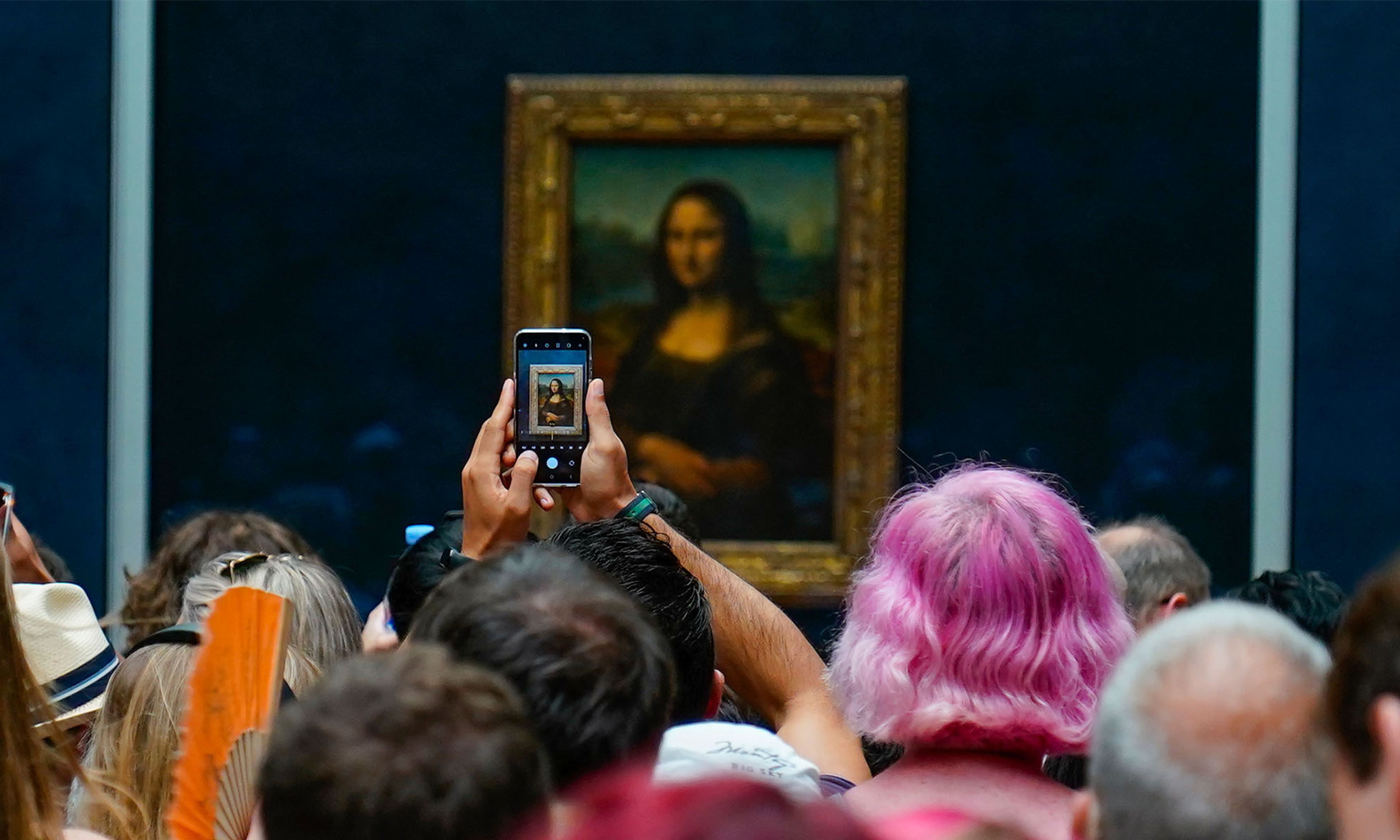
There was no time to pause or contemplate the history — or mystery — surrounding the portrait. No time to explain Leonardo’s use of sfumato around his subject’s eyes, or to reflect on the sadness that tinges her. Rather, it was a brief peek at one of the masterpieces, barely visible over a sea of outstretched, phone-wielding hands.
To be fair, it was the Mona Lisa, we thought — the quintessential bucket-list painting and must-see for every tour group roaming Paris. Surely, our experience at the Musée d’Orsay the following day would be better. Warm memories of wandering the Orsay during my college semester abroad had me giddy with excitement.
Our guide advised us to start on the top floor, with the French Impressionists, and make our way down to avoid the crowds. We moved quickly, smiling at Degas’s dancers, admiring Monet’s almost hazy representations of the Rouen Cathedral (which we would visit a few days later), and taking in the simple, intimate moments captured by one of my favorite painters, the American Mary Cassatt.
Unfortunately, the crowds and noise followed quickly. With our audio-tour guides now set at maximum volume, my husband offered a loud “shush” to try to quiet down a group of high-school students. But it soon became clear that attempting to establish even basic decorum was a fool’s errand.
Students ran between the artworks on a scavenger hunt, goofing around as if they were on a playground. Teens made TikTok videos, stumbling into the rope intended to hold back the crowd. A roar rose up over the room, a cacophony of teachers, guides, families, and schoolkids competing to be heard over one another. The crowd surrounding Renoir’s triumphant Bal du moulin de la Galette was impenetrable — and, ultimately, we gave up trying to see the prize painting.
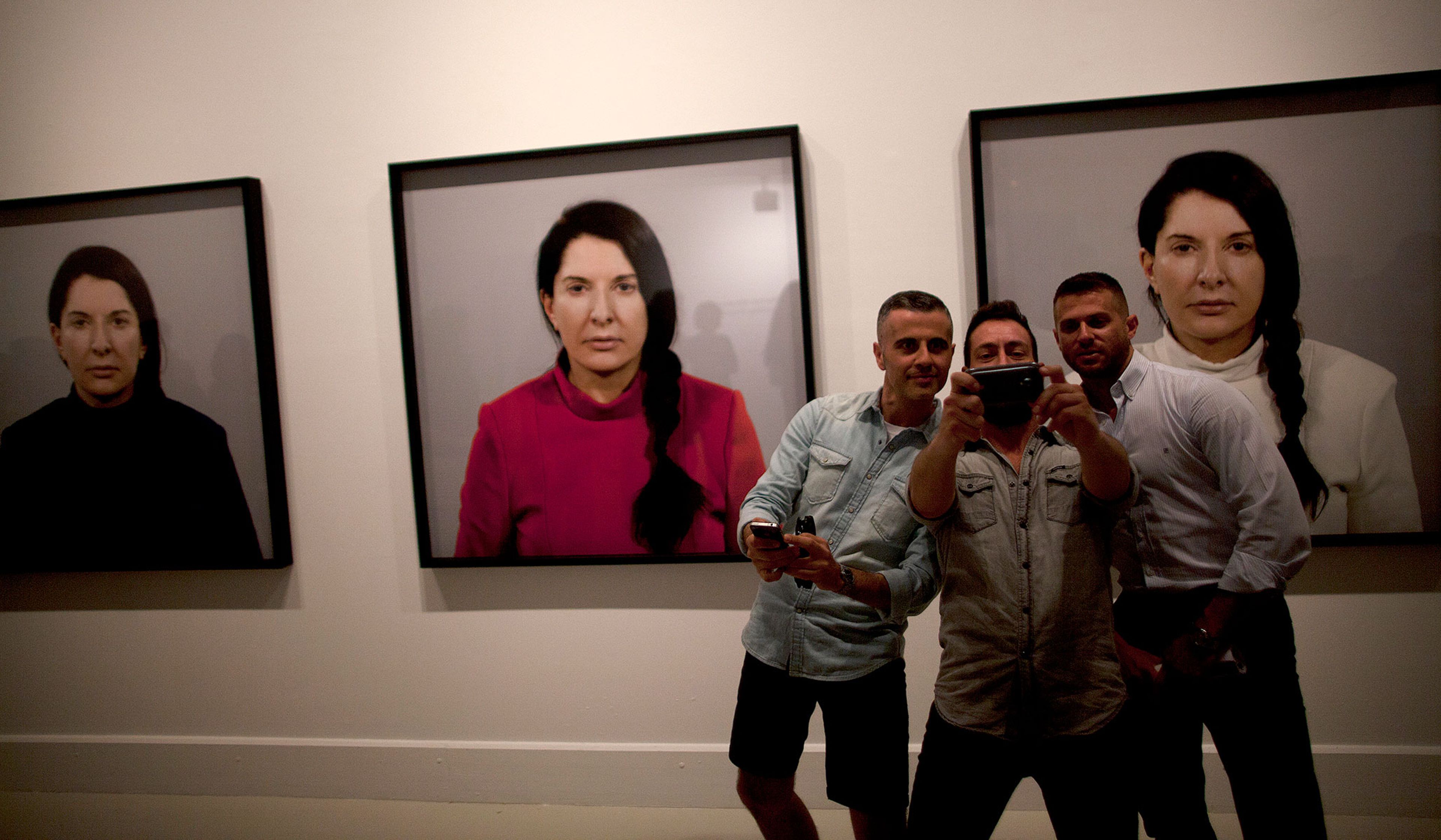
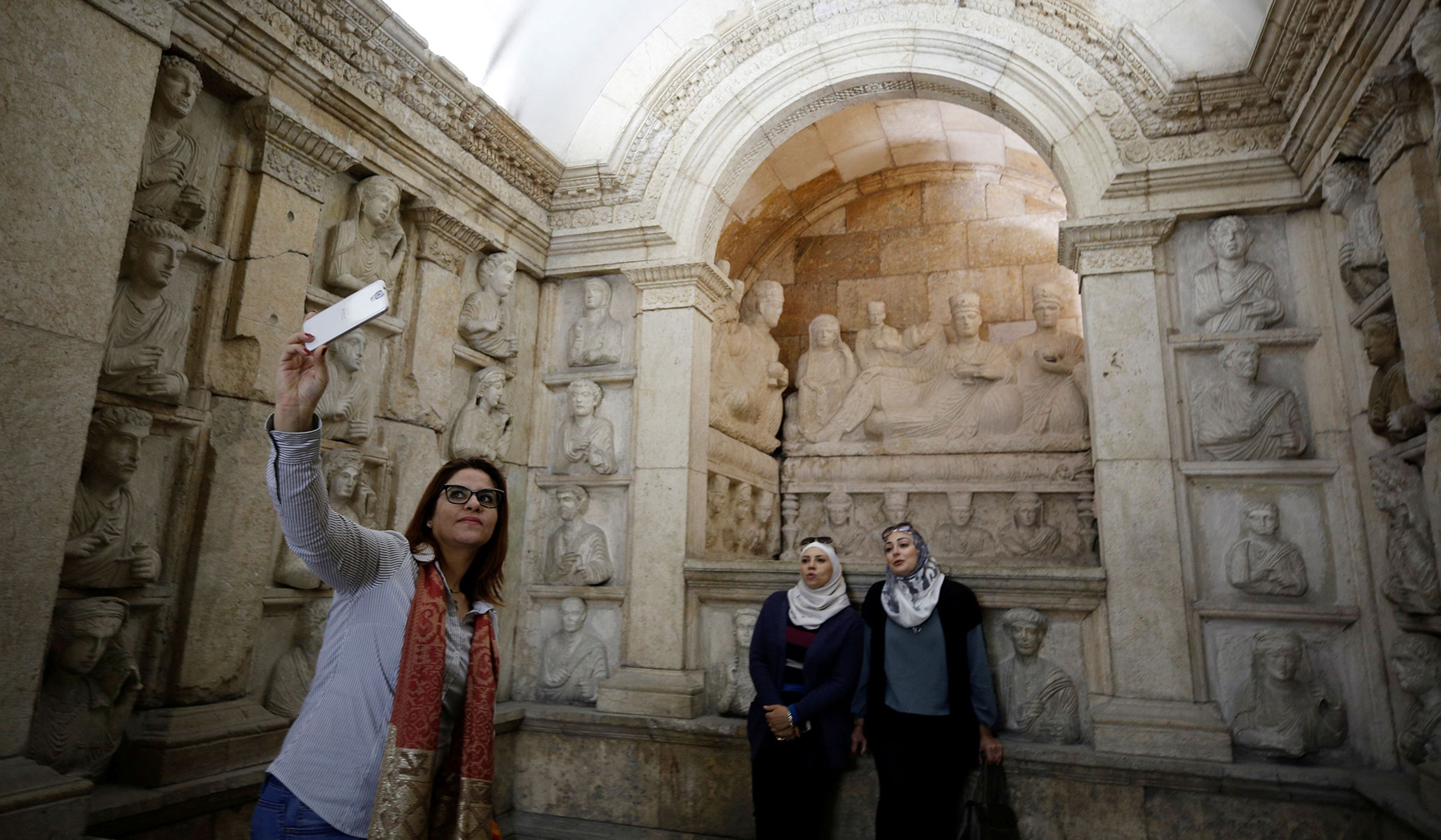
The noise and chaos were bad enough, but the crowd’s “engagement” with this great art was downright depressing. Most visitors were there for their Instagram moment. Compositions of young women gazing “critically” in front of a painting; “duck face” in front of Degas; “bro pose” with Van Gogh. It was ubiquitous and painful to watch, as the art became nothing more than a backdrop for a social-media spectacle.
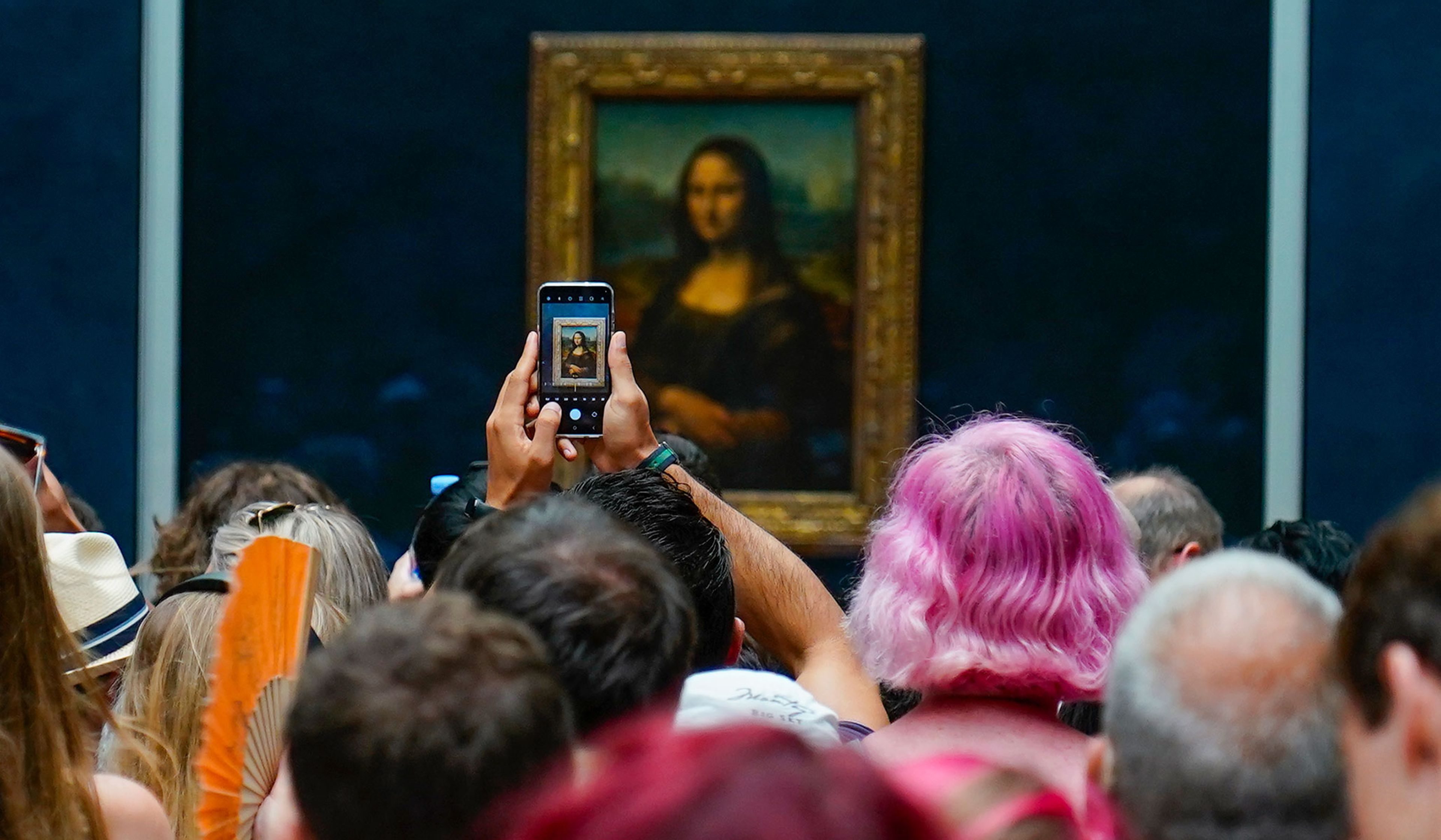
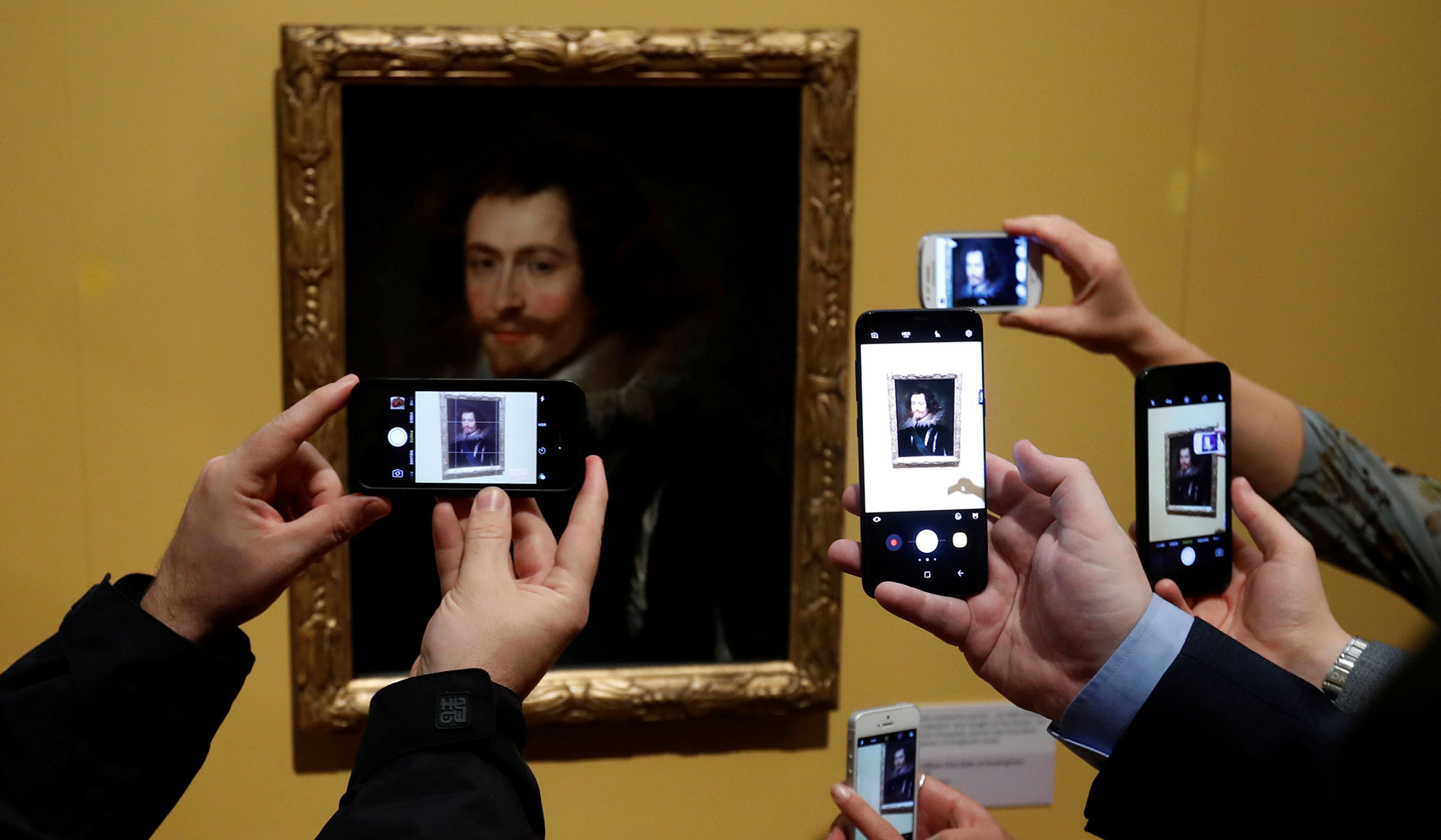
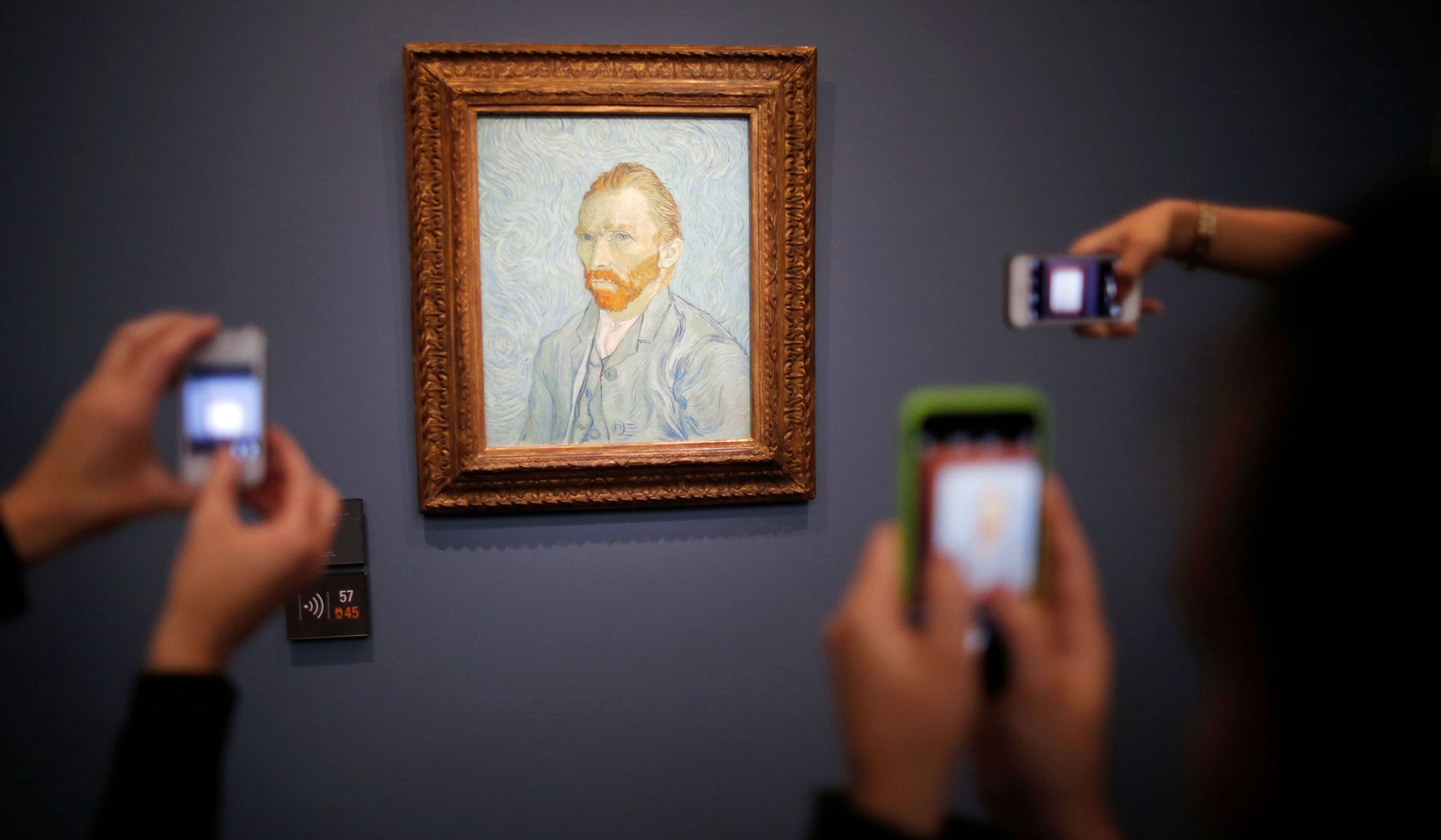
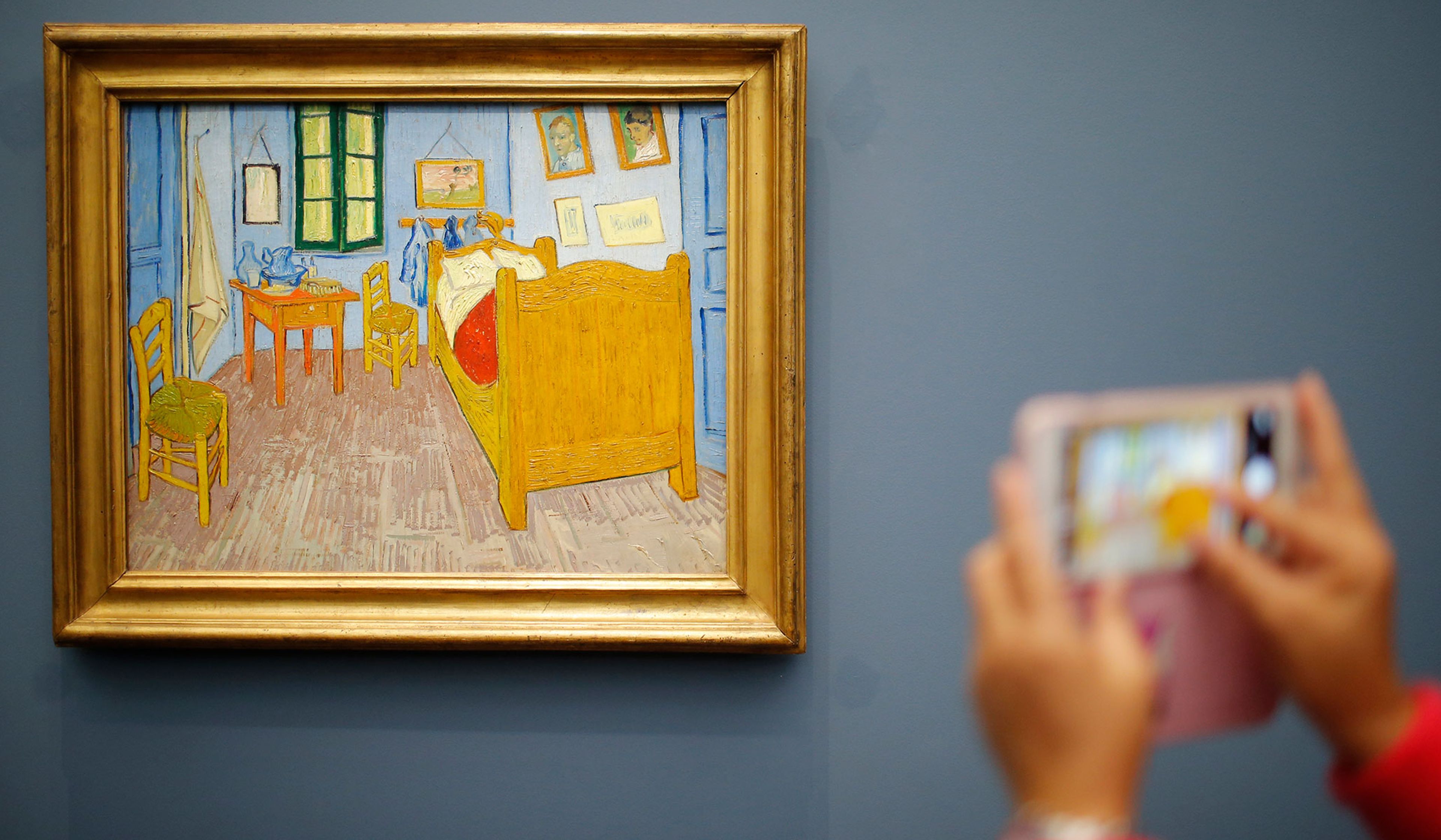
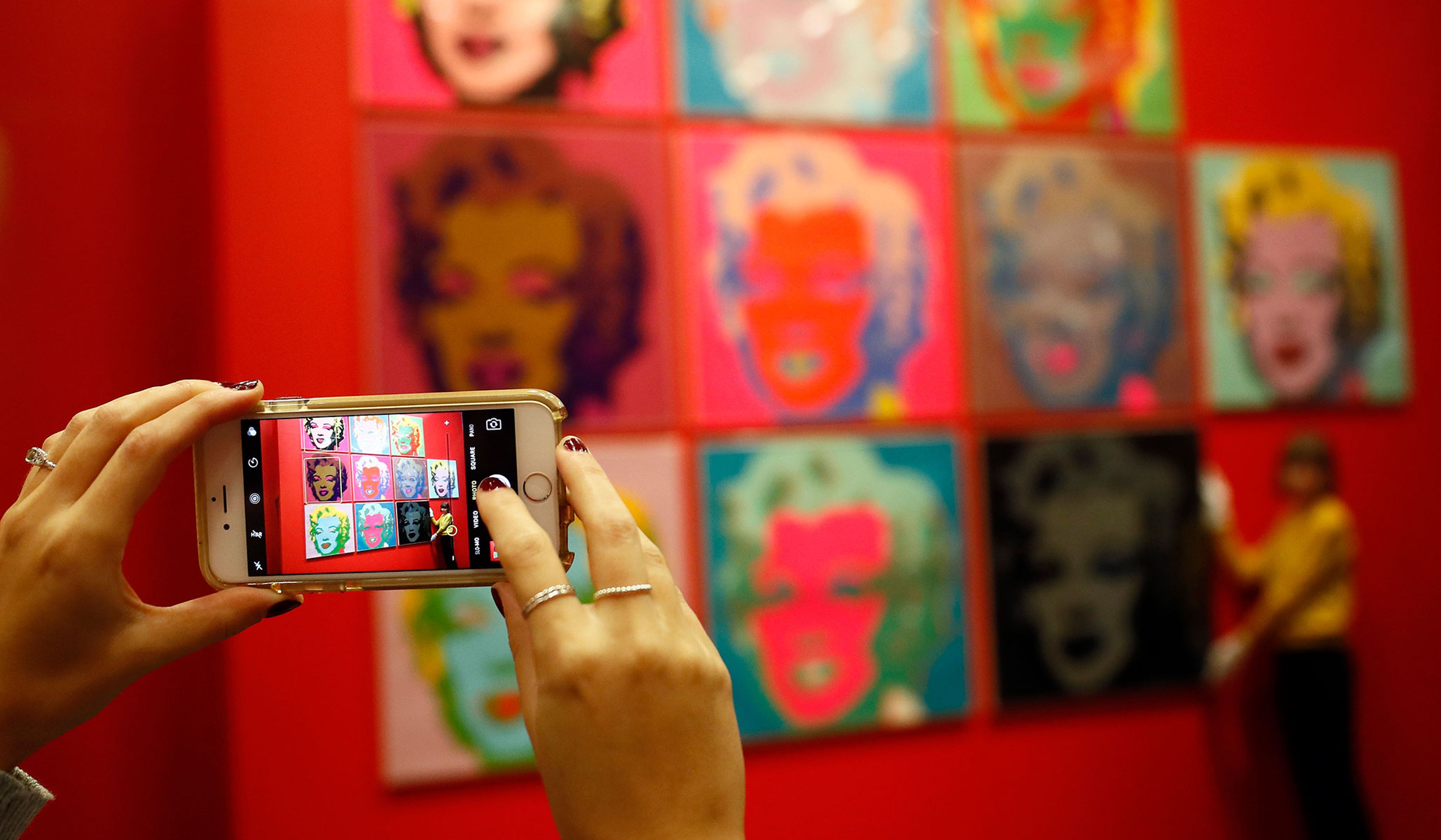
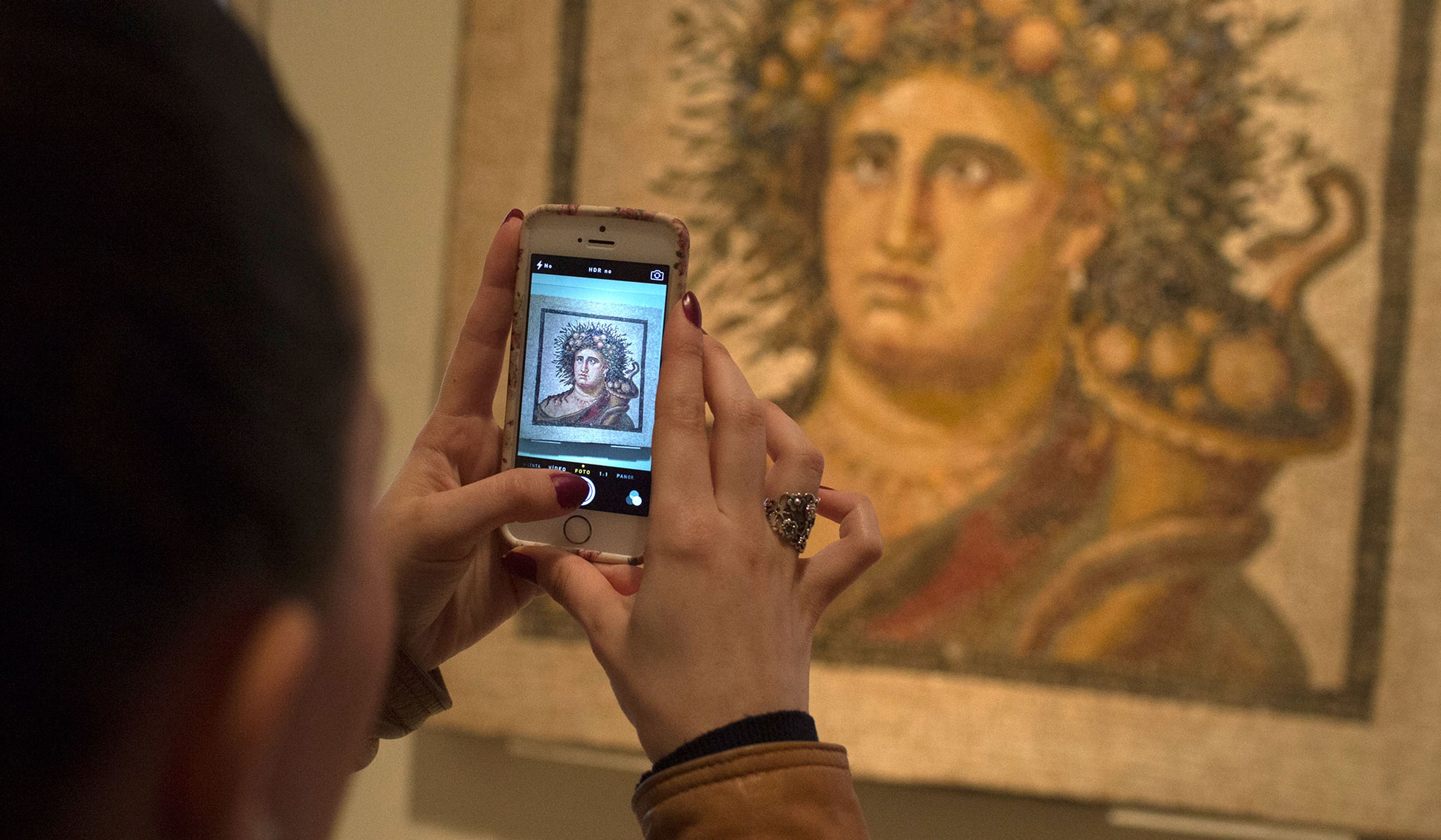
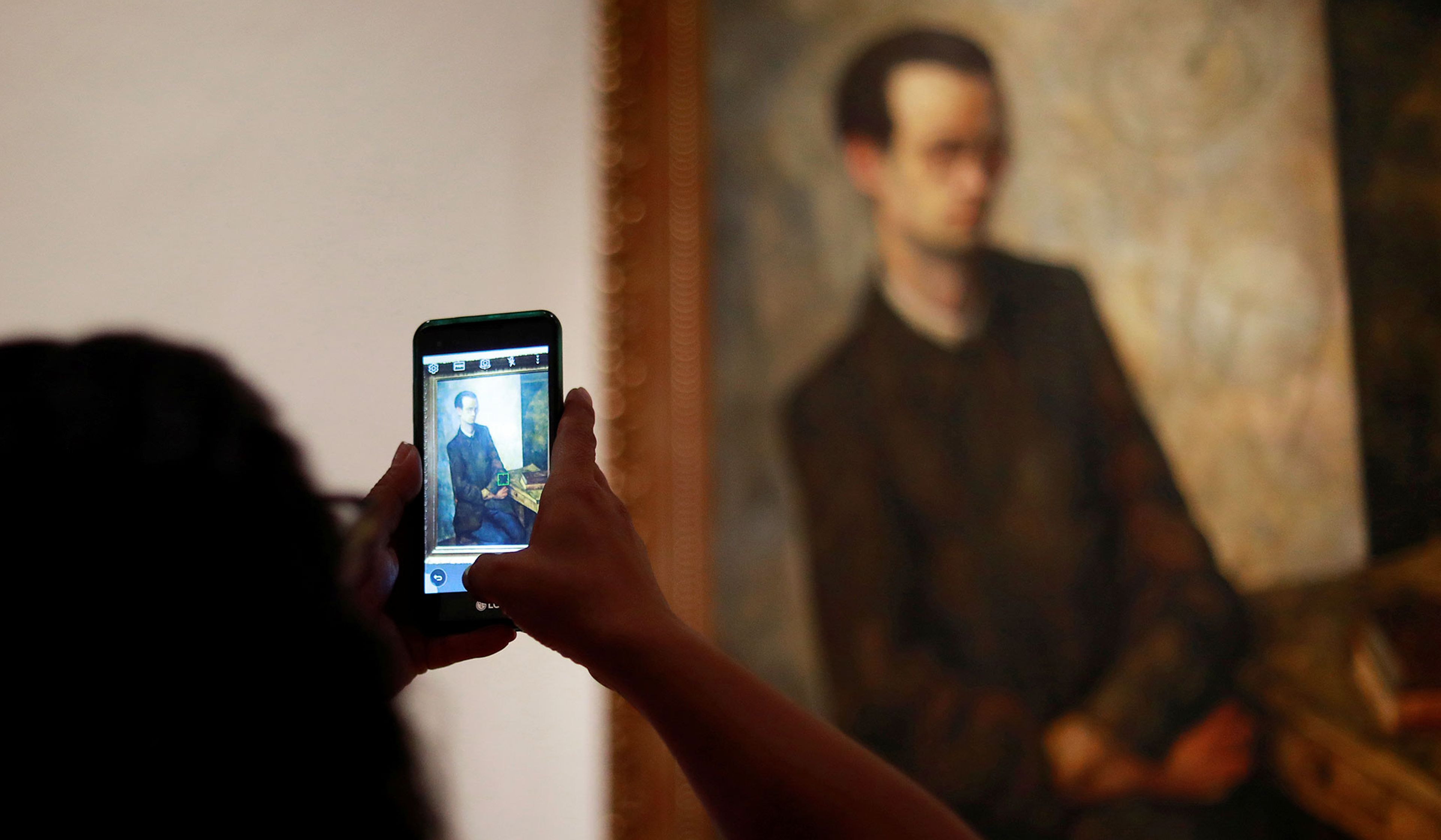
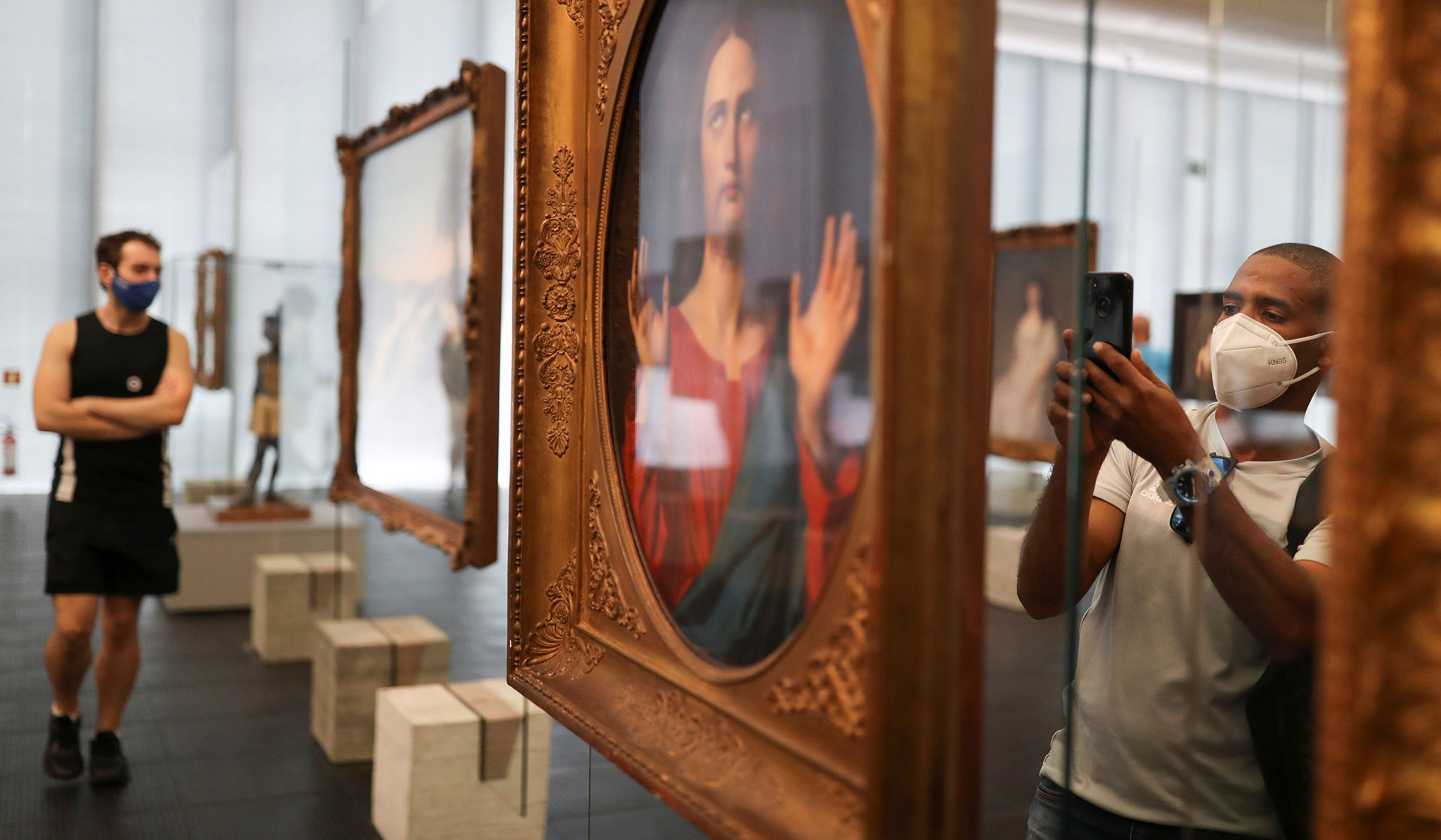
Museum visitors view the Mona Lisa by Italian artist Leonardo da Vinci in 1503 on display in the Louvre Museum in Paris, France, September 8, 2023.
Michael Madrid-USA TODAY Sports
The paintings themselves, art that grapples with the freedoms as well as the challenges of the modern world, were of no consideration. The contrast between the precision of the classical sculptures at the Louvre and the fluid paintings at the Orsay, as well as conceptions of light and form, composition and color, public and private — all of this went uncontemplated.
At home in Washington, D.C. — at the National Gallery, the Hirshhorn, the Phillips Collection, even the small Kreeger Museum — there’s a guard in nearly every room, reminding visitors not to step too close to the art, or to keep their voices down. (We know, as one of our daughters was once rebuked for touching an 18th-century mosaic table — oof.) So, amid the chaos of the special Van Gogh exhibition open that day at the Musée d’Orsay, my husband asked a guard: Why didn’t he quiet down the guests? In dismay, he shook his head, “Oh, no, no, no,” indicating it was simply not something he could do.
* * *
The Louvre Museum opened to the public during the Revolution, in 1793, when France was in the throes of the Reign of Terror. What was once a palace for the king and a symbol of the French monarchy became a treasure house for the public — a representation of the liberal spirit that would define the future of France.
No longer a fortress, the National Palace (which included both the Louvre and the Tuileries) embodied liberté, egalité, and fraternité. In stark contrast with the monarchy, the Louvre and the First Republic welcomed the people inside to engage with the art. The first museum director, Jean-Marie Roland de la Platière, insisted that the museum “be open to everyone,” to “elevate their souls and so stir their hearts, that it will be one of the most powerful means of illuminating the French Republic.”
The Louvre, the largest, most visited museum in the world, was founded during a wave of museum openings across the West in the 18th and 19th centuries, when personal aristocratic collections (art, artifacts, books) were transformed into public places: the Capitoline Museums in Rome in 1734, the Prado Museum in Madrid in 1819, and the Hermitage Museum in St. Petersburg in 1852. An understanding had taken hold that preserving and elevating cultural masterpieces protected history, celebrated civilization, and unified nations.
But right from the start, those administering museums were aware that these new cultural temples needed to be protected. The Louvre was initially open to the public only on select days, with military-veteran guards to protect against stray animals, unaccompanied children, and intoxicated visitors.
* * *
Prior to Covid-19, some 10 million visitors came through the Louvre annually — 45,000 people per day. And over-tourism has come at a cost. The Louvre and the Musée d’Orsay (which opened in 1986) are no longer contemplative experiences. They are part of a social-media performance in hopes of appearing cultured, current, or worldly.
Over-tourism in our museums is not just a Paris phenomenon. Several years ago, I brought our then-nine-year-old daughter to the Museum of Modern Art in New York unaware that it was “free Friday,” and the crowd was overwhelming. I gripped her little hand as tourists flooded each floor, swinging backpacks, stumbling, and shouting. The only relief came in the Picasso room, which simply couldn’t compete with the popularity of Van Gogh’s Starry Night.
The tension over whom high culture is intended for is nothing new. When the Louvre opened, renowned painter Jacques-Louis David thought the collection should be a sanctuary for displaying the great masters so contemporary artists could study their works. Roland’s perspective that it should be open to the public won out — and I’m glad it did. One does not need to be an artist to appreciate great paintings, cathedrals, or artifacts. And it’s shameful to cut the public off from such significant achievements of their culture.
But we must reform the museum-going experience to ensure that museums maintain their value. Daniel Weiss, former CEO of the Metropolitan Museum of Art in New York City, captures this in his book Why the Museum Matters. “Above all,” he writes, museums are important because they can “take us to better places while preserving our history and culture, as they must.”
Viewing works by Leonardo or Delacroix at the Louvre is an opportunity to experience our evolution — to see the West flower and unfold, from the Roman Empire to the Renaissance, through the age of exploration and Enlightenment. The Orsay, similarly, provides a lens on the modern era, bringing into sharp focus questions about gender roles, decorum and modesty, work and leisure — in short, the unshackling of the West — that we are still grappling with today.
All of this feels especially urgent right now as we watch the fight between civilization and barbarism erupt around the globe. There is a need not only to preserve our history and artifacts but to contemplate the shared attempt, over millennia, to understand the human experience — the beautiful, the mundane, the devastating.
* * *
These museums — and others closer to home — have big decisions to make. They need to consider trade-offs in order to get a handle on the frenzy and protect what’s at stake.
They might need to extend their hours, limit the number of visitors, hire more docents and guards, and perhaps even set clear expectations of their visitors. There’s a need to restore order — not to keep the people outside the gates, but to remind them of what’s so sacred inside.












Comments