All holidays are fine, but the warm-weather ones (one down, two to go) draw the city’s dwellers from their hives out into the green and blue yonder, leaving the place, and their neighbors who remain, half-empty, and half-alone.
You must have listened online to the scratchy recording of the end of the world war, the eleventh hour of the eleventh day of the eleventh month when, after the gun din suddenly stops, birdsong. So it is in the city on long-weekend mornings and evenings. The om of meditating traffic never ceases entirely, but the volume drops enough for the notes of wakening and retiring birds to sound through. These are not the bleat-bleat-bleats of sparrows, nor the ruffling of pigeons, nor yet the squawks of crows, but liquid notes, playable on a non-equally-tempered piano, if you had one. I have looked for the singers and seen nothing more than the twitch of a branch one just landed on, and I have looked up recordings of the calls of common city birds without finding a match. Sing on, sweet invisible companions.
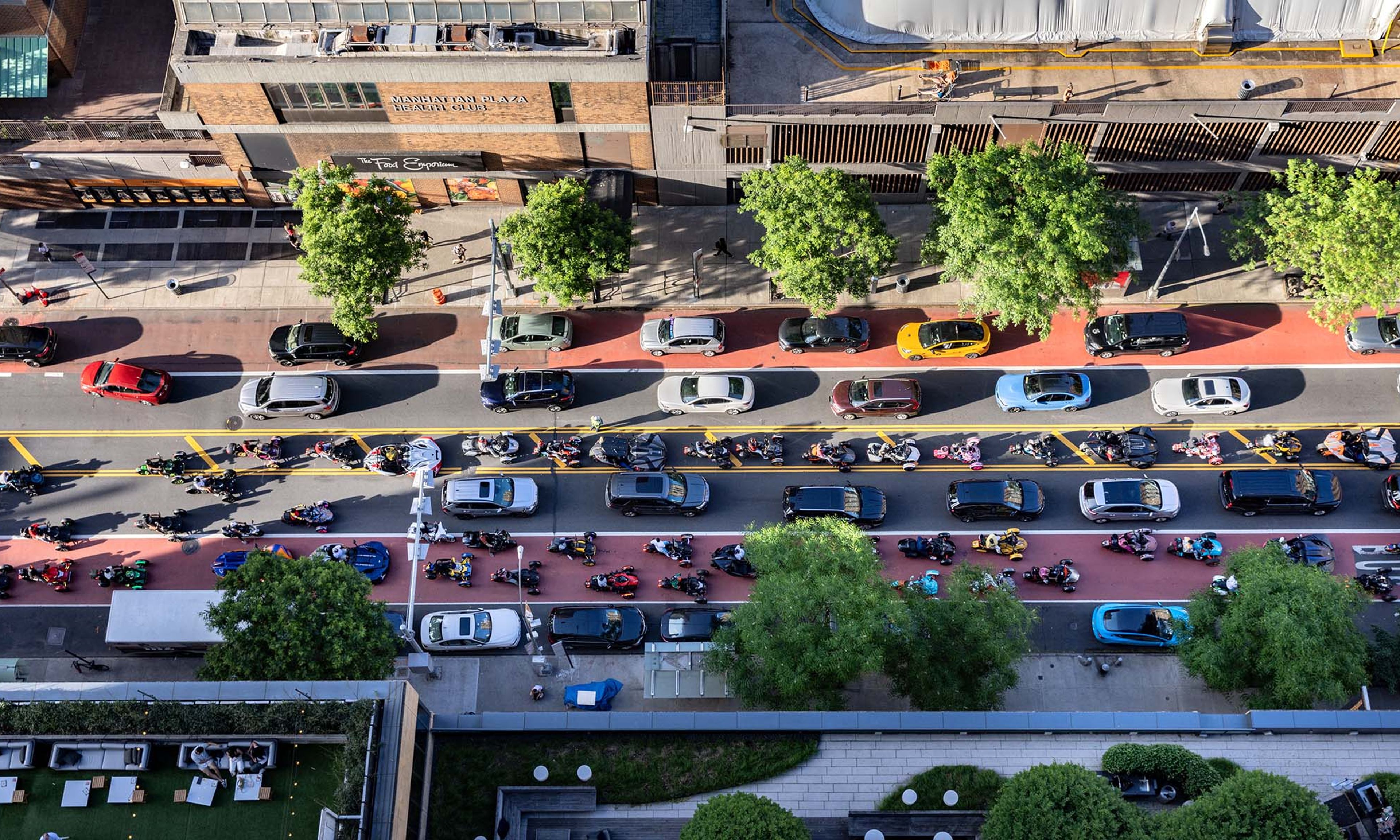
Speaking of traffic, it still moves. And on holiday opening night there was a storm of motorcycles and three-wheelers, unmuffled, up the avenue. But apart from that, how sedate the avenue was. There were moments, at night, when the flow — headlights white, taillights red — was so sparse that single blocks were entirely empty. In the daytime, taxis were gettable. Even EMS vehicles, and their shrieks, were few and far between. Do fewer people hurt themselves over the holidays? Are they being injured at the beach?
The healthy eat out, wherever and whenever they choose. This would be the time to hit those breathlessly profiled hot spots serving unknown cuisines in typically cacophonous soundscapes, but in keeping with the spirit of the day one sticks even more closely to the familiar and the nearby. Every restaurant that can has put chairs and tables on its sidewalk porch, or in its street-side Covid-era patio. Our neighborhood lacks the ethnic or site specificity of tourist traps, and hence their crowds: We are not Little Italy, Chinatown, or the old fish market. The nearest block has a bit of everything: Italian, Thai, Georgian, Steaks Chops Seafood, plus a pot store and a Greek deli. At one or the other of the restaurants you can sit, without touts or bustle, and watch the paseo of dogs, and young ladies displaying anxious choices of undress.
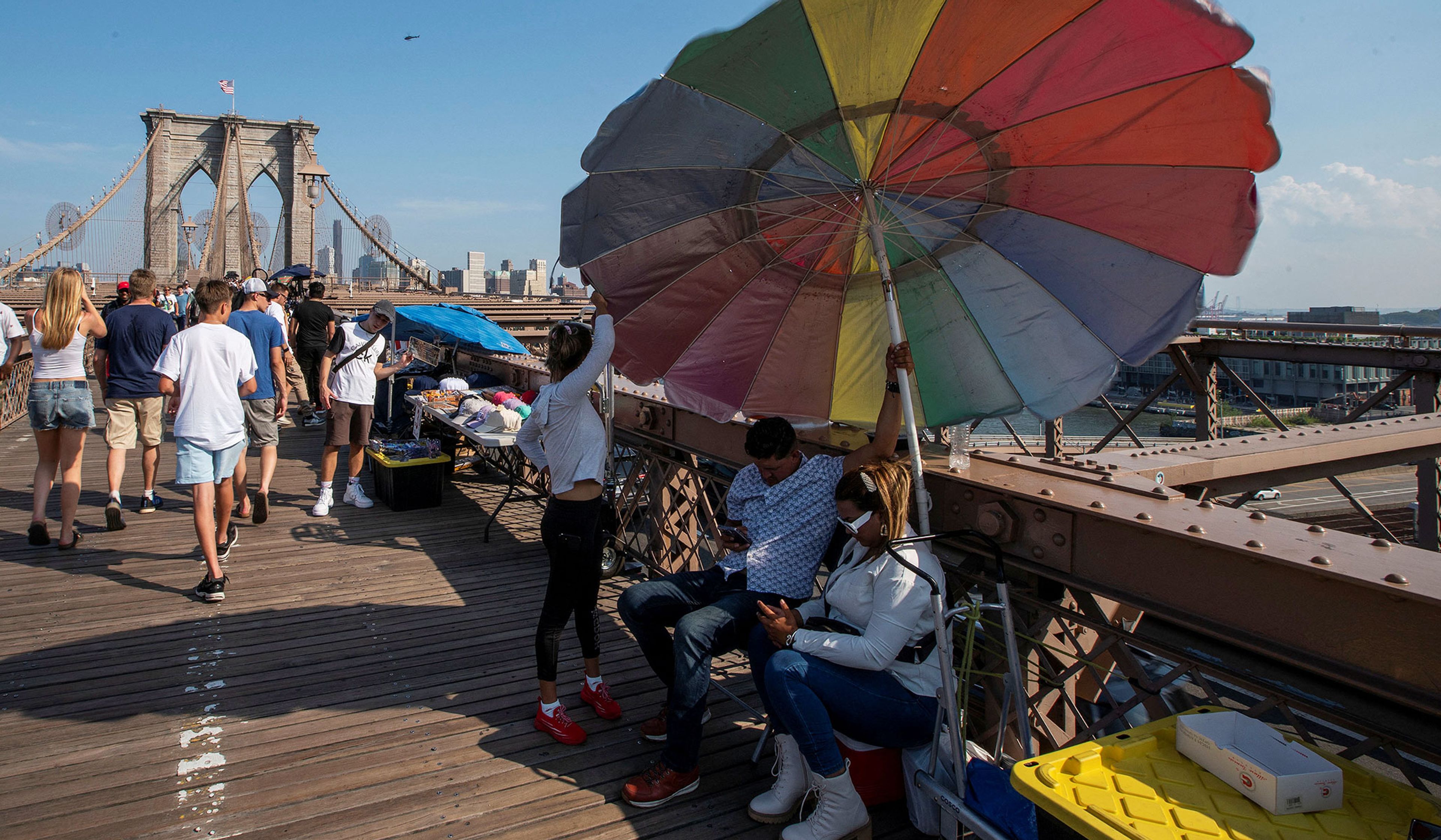
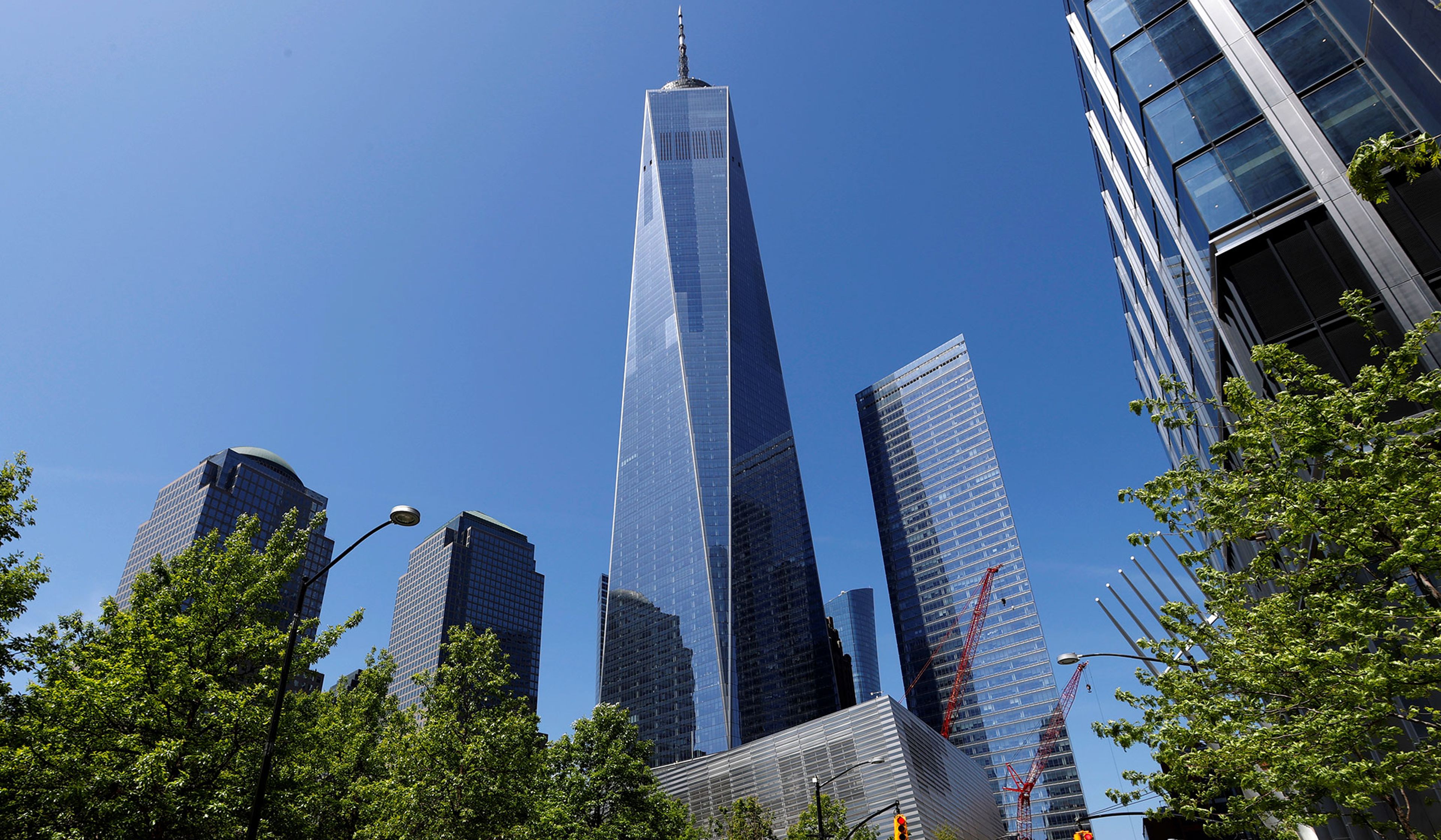
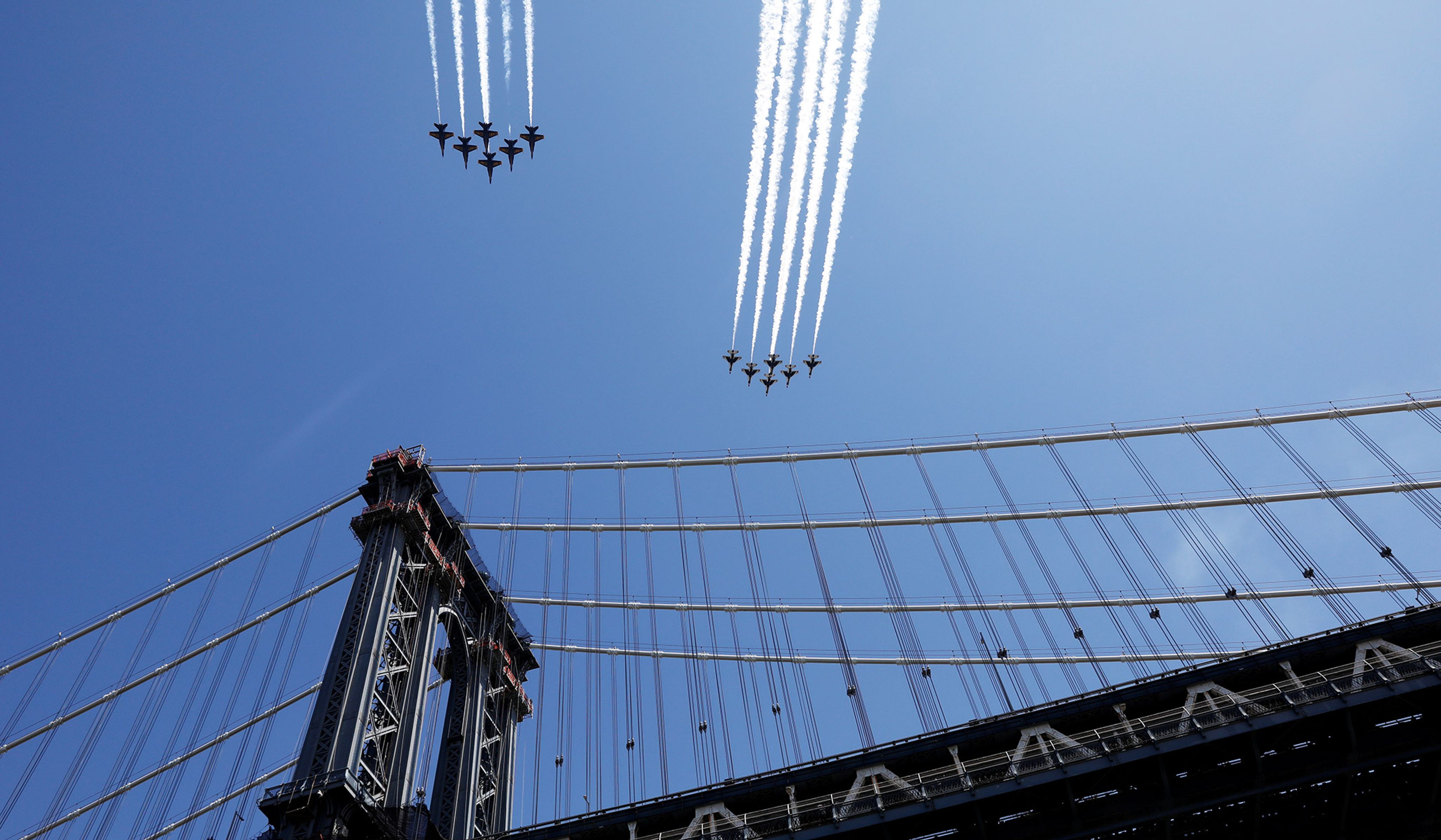
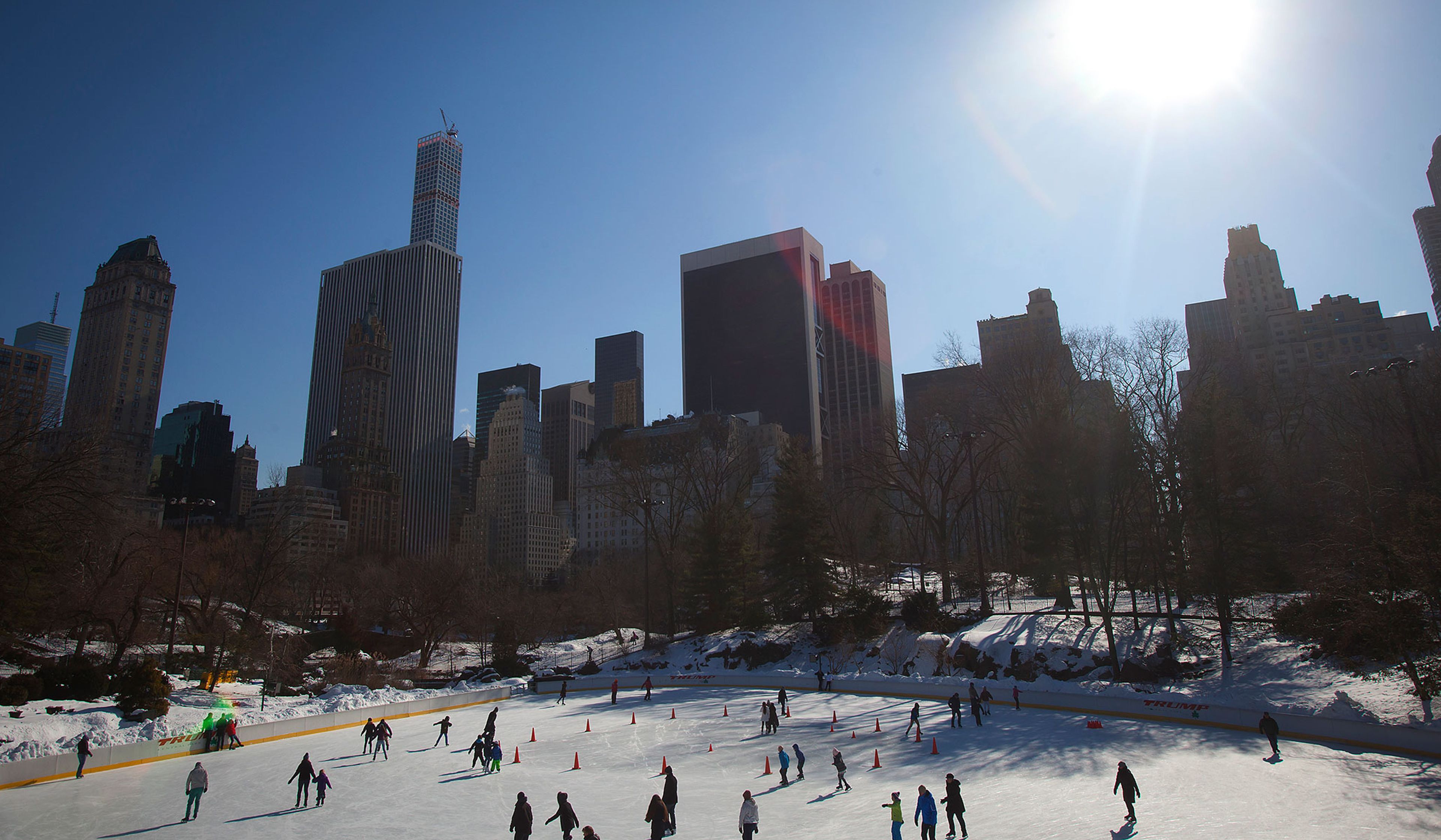
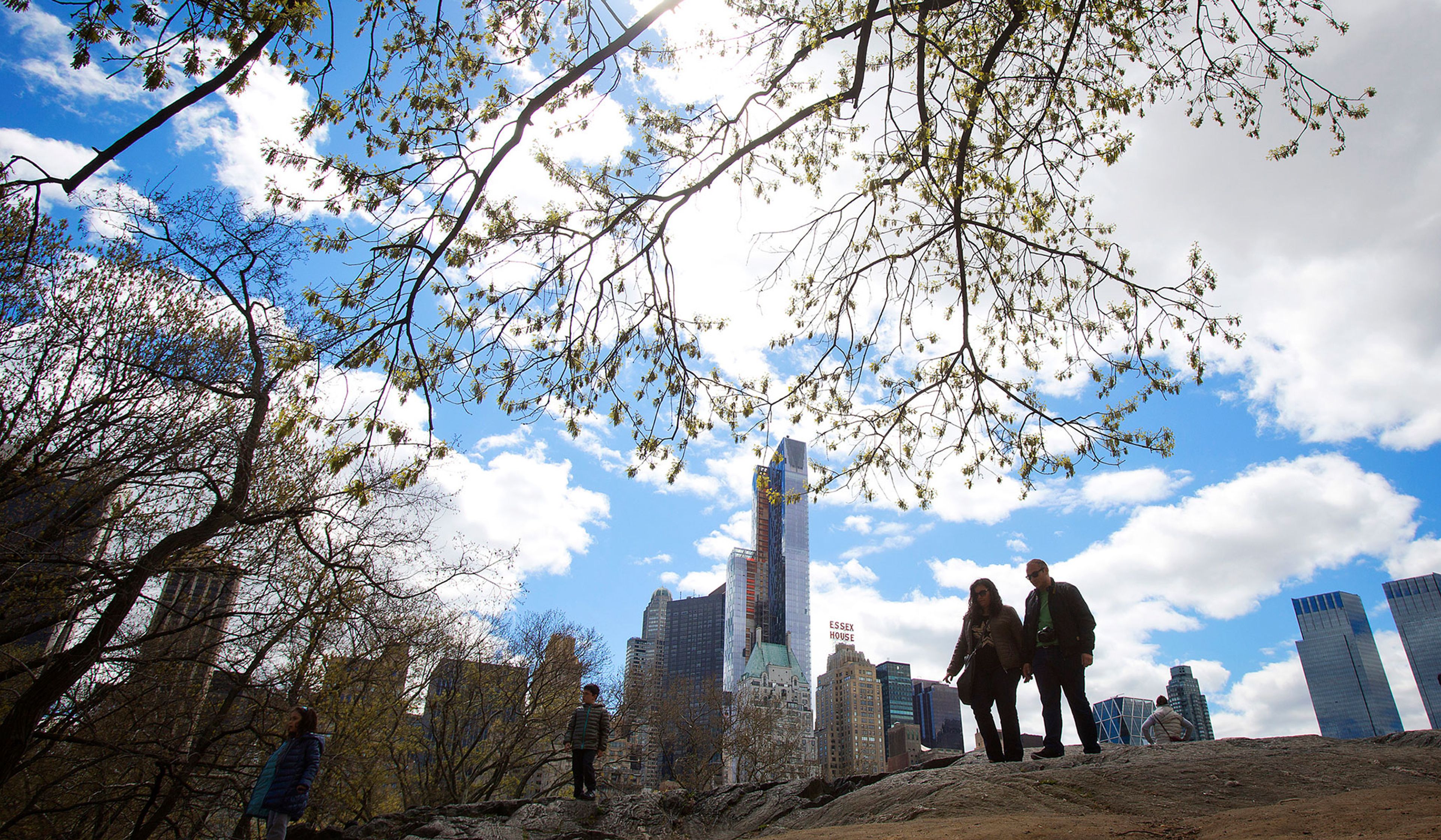
People cover themself from the sun at the Brooklyn Bridge during hot weather in New York City, July 13, 2023.
Eduardo Munoz/Reuters
The school year is ending, isn’t it? Ending or not, scholars are with their families for the holiday. The school buses, idling their engines as they wait to take teams to sporting events, are gone, as are the kids bowed by backpacks. (When did that start? I never wore one in all my twelve grades.) The smallest kids, brought by parents or nannies to the corner coffee shop, are blessedly gone. They are as loud as banshees, as antsy as Jack Russells. I asked the young server if she had ever known an accompanying adult to shush one; with lowered voice and visible regret, she said no. In her early twenties, she was already my colleague in old-fartdom.
The neighborhood beggar is still at his post, the tall unfocused man who stands on the corner, or walks up and down, repeating gimmedollah gimmedollah gimmedollah. He is not (so far) threatening, only persistent. We pay the city dollars, in part, to care for such as him. Is he getting it? Or is all that can be done not enough?
We live for the churn and motion. That, and the activities from which outward signs spring, is what brought us from other cities, suburbs; from El Sur, and from across the sea. We would not want it to resume never. But there is something consoling in the contrast of the time-outs, like a pause in the middle of a line of verse. All that mighty heart is lying still.
Come Tuesday, a ride-share vehicle was trying to get around a truck parked on the side street. It could have squeezed by, but the driver felt like honking and shouting. Home again.











Comments