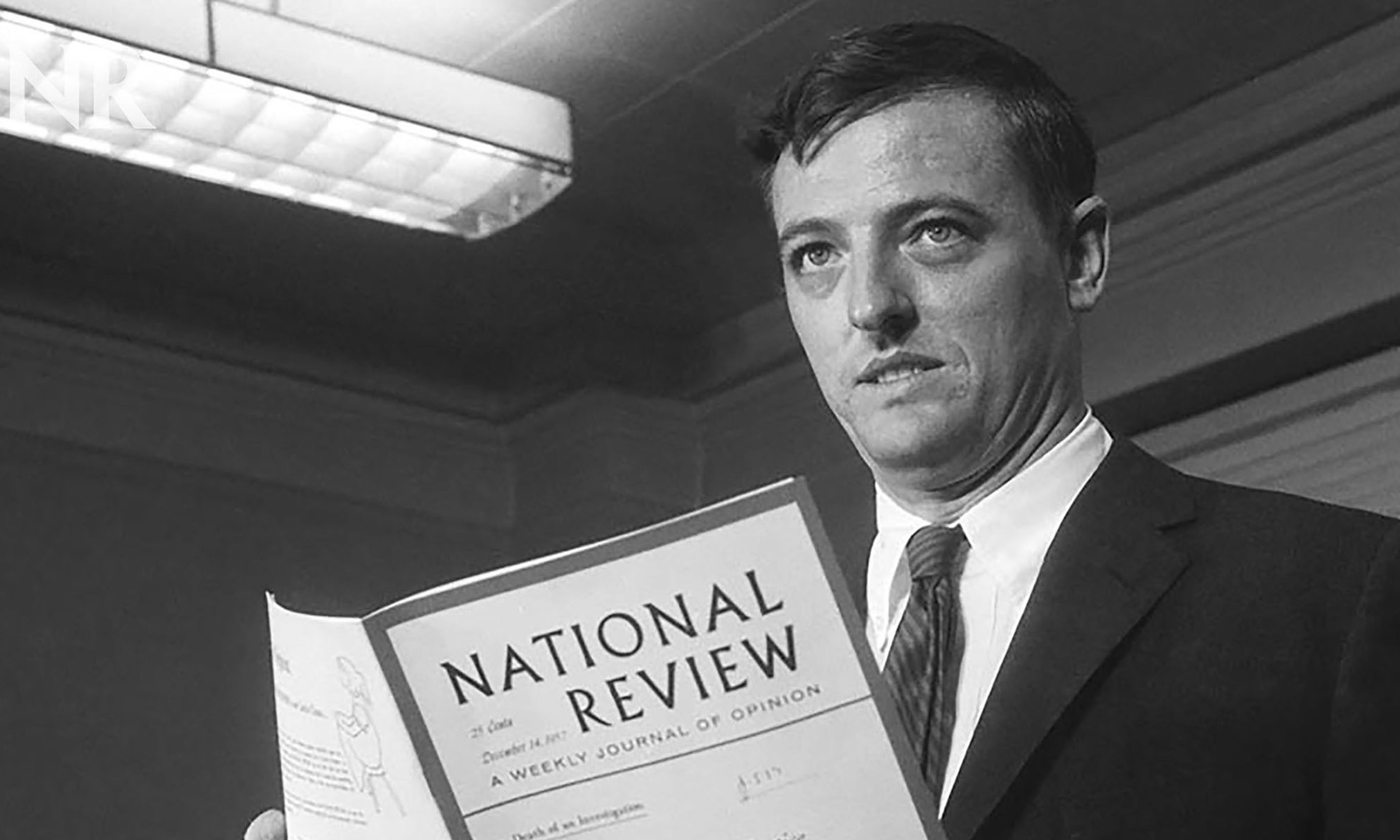
Sixty-Five Years, and Counting
In his famous publisher’s statement in the first issue, William F. Buckley Jr. wrote that “prodigious efforts, by many people, are responsible for National Review.”
The same is true of this issue. It has been many months in the making, from initial brainstorming to sending it to press as I type this note. (I can hear our put-upon production editor, Katie Hosmer, who has been juggling last-minute requests and unexpected changes for days now, anxiously wondering, “So, when is Rich finishing his introduction to the issue?”)
Usually, you don’t thank everyone involved in a project such as this for fear of leaving someone out, but in this case there have been so many hands on deck that I can’t possibly name everyone. Look at the masthead to the left and basically every member of the staff named there has gone above and beyond to make this anniversary issue possible.
The occasion has got me thinking of my memories of NR as a reader. I can still recall reading as a high schooler our 30th-anniversary issue, easily as thick as this one, with a pen in hand to underline what seemed the particularly important passages. NR wasn’t just a magazine for me, it was an education, an introduction to a broader intellectual, political, and cultural world — and a completely exhilarating one.
It’s heartening that NR still has this effect on young readers. We see it in the steady march of extraordinarily talented young people who come here to work as interns and fellows. Some of them we send out into the wider world; some stay and end up running the place. I was on a call the other day when I realized that three members of our very top editorial staff started here as interns (one of them as a briefly homeless intern reduced to sleeping under his desk for a night or two).
I didn’t start as an intern exactly, rather as a very junior staffer in 1992. The era when the NR giants of lore (see Neal B. Freeman’s piece in this issue) had epic arguments around the editorial conference table had passed, but that time remained in the living memory of the institution and seemed still present in every dusty, cluttered corner of our old offices at 150 E. 35th Street.
Working at NR at the time was an ongoing education in journalism, ideas, and life. I learned so much from, most of all, Bill Buckley and John O’Sullivan (who has an essay in this issue), and from so many colleagues who are now departed — the likes of Linda Bridges, Frances Bronson, Dorothy McCartney, and Tony Savage.
It’s my fervent wish that they’d find this issue pleasing. In case you are wondering, the text that is the background of the cover is the aforementioned publisher’s statement, which is still our true north and remains astonishingly apt.
The articles that you will find after the Week grapple with conservatism’s successes, failures, and challenges in this era. They are roughly broken out into sections, including a blue-bordered one on the history of NR. We are fortunate enough to have an original story by the great novelist Mark Helprin, and instead of the usual Books, Arts & Manners section we have essays on important books in the Anglo-American conservative tradition.
I assure you that any regular feature of the magazine that you may miss will return next time.
And, with that, here, Katie, is the introduction, and here, dear reader, is our anniversary issue. We hope you enjoy it, and thanks so much for reading.











Comments