One of the tech overlords, like Meta or Metatron, decided that the system of computer djinn that does our bidding would be replaced by a new one. So I went to a tech store and found twentysomethings who could tell me what tower to buy, transfer the old tower’s brain into it, bring it to my apartment, introduce it to its new friends Printer, Monitor, and Keyboard, and give it electronic life. Two came for the installation. The older and wiser was not 30, infinitely patient with those older and in this area far dumber than he: When he would ask what was the password that activated some vital function, and I said, Huh?, he would glide nimbly over the to-me-frozen surfaces of the internet to find the right Open, sesame.
His partner in help was a young woman, recently past 20. Shy at first, she looked at her smartphone and twiddled a lock of hair. My wife, warm of soul, unlocked the young woman’s warmth, and she began talking. What would you think, she asked, if someone you knew well were keeping a secret from you? I asked, If it is a secret, how do you know that this person is keeping it from you? She answered, indirectly, that from previous experience of liars in her life, she knew the kinds of things they said when they were practicing their craft. I thought, but did not say, find a road sign inscribed other way, and run in the direction it indicates.
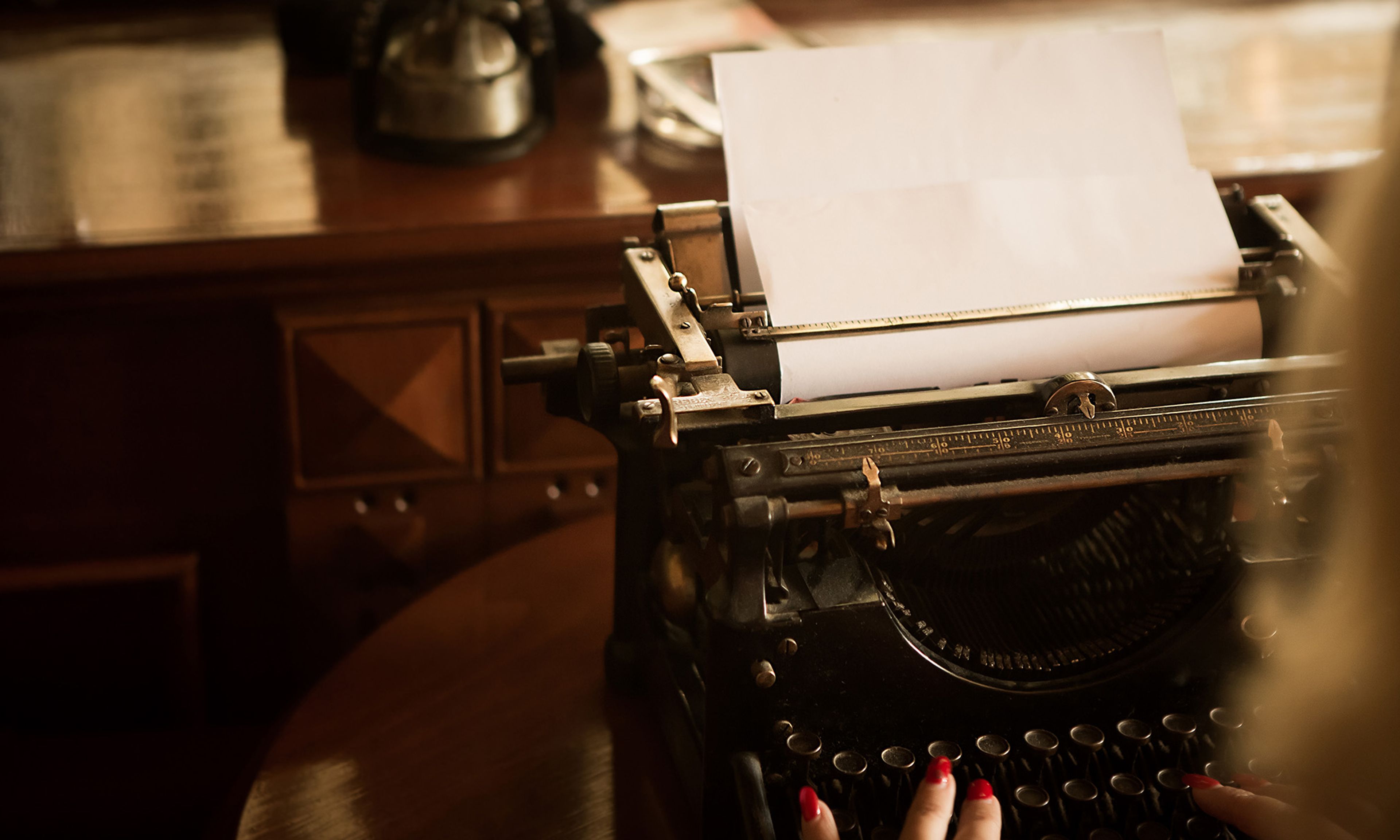
Then I thought to make a technological introduction of my own. I took from the bottom of a hall closet the black case containing my first typewriter. It is a Royal Model O, won by my mother in a high-school typing contest, used for this and that by my parents, then appropriated in high school by me. Love at first type: I did not bother with touch-typing for years, my two fingers seemed fast enough. On it I wrote my first article for this magazine.
The young woman’s eyes widened, as if on Christmas morning. She loved typewriters, as many love classic cars or vinyl LPs. She tapped the keys and watched the type bars rise and fall like legs of Rockettes. She especially liked the carriage-return lever. Strange enthusiasm — eliminating that end-of-the-line swipe was what boosted writing on word processors (remember them?) and computers from fast to ultrafast and gave that first generation of journalists carpal tunnel syndrome.
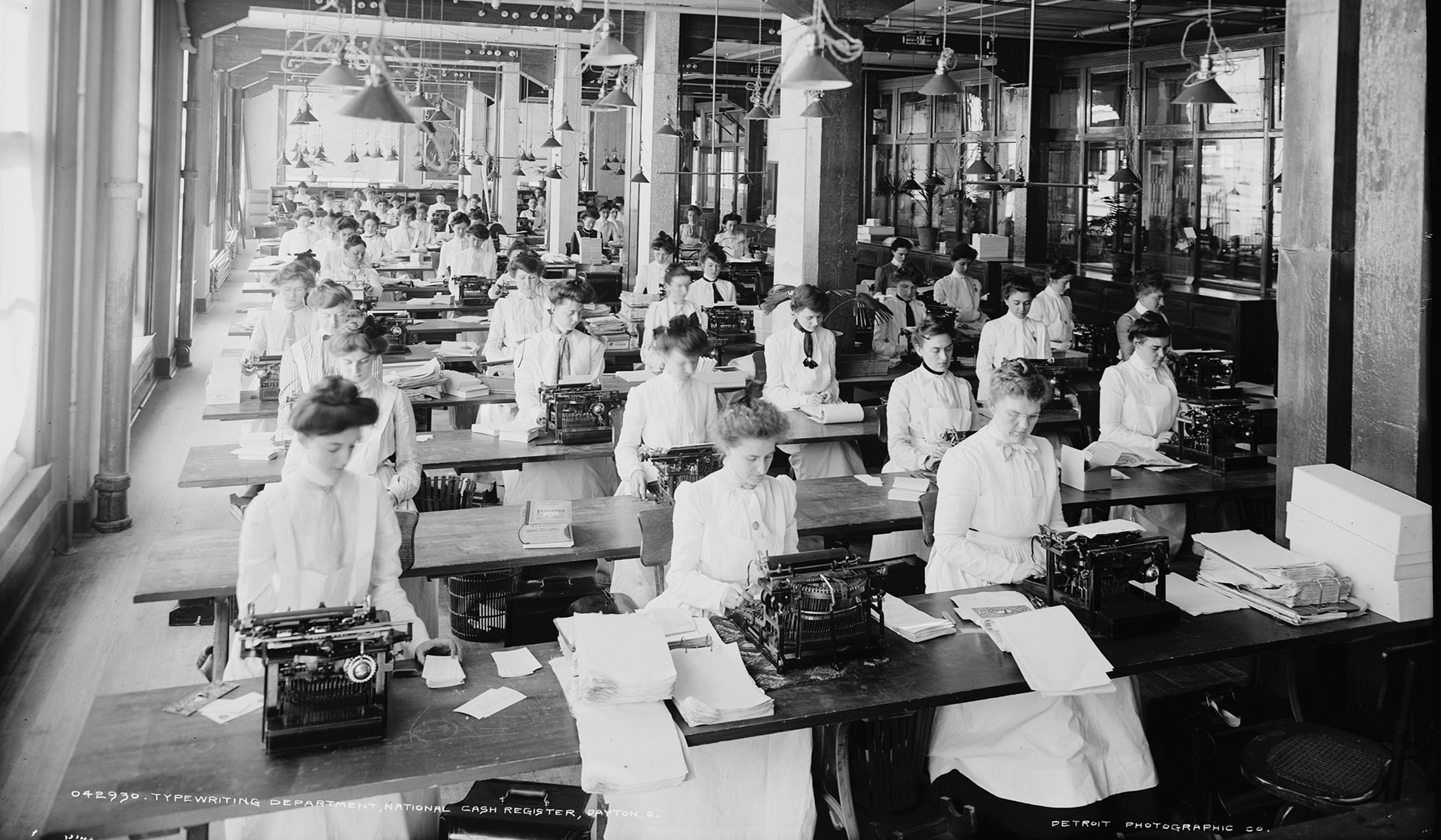
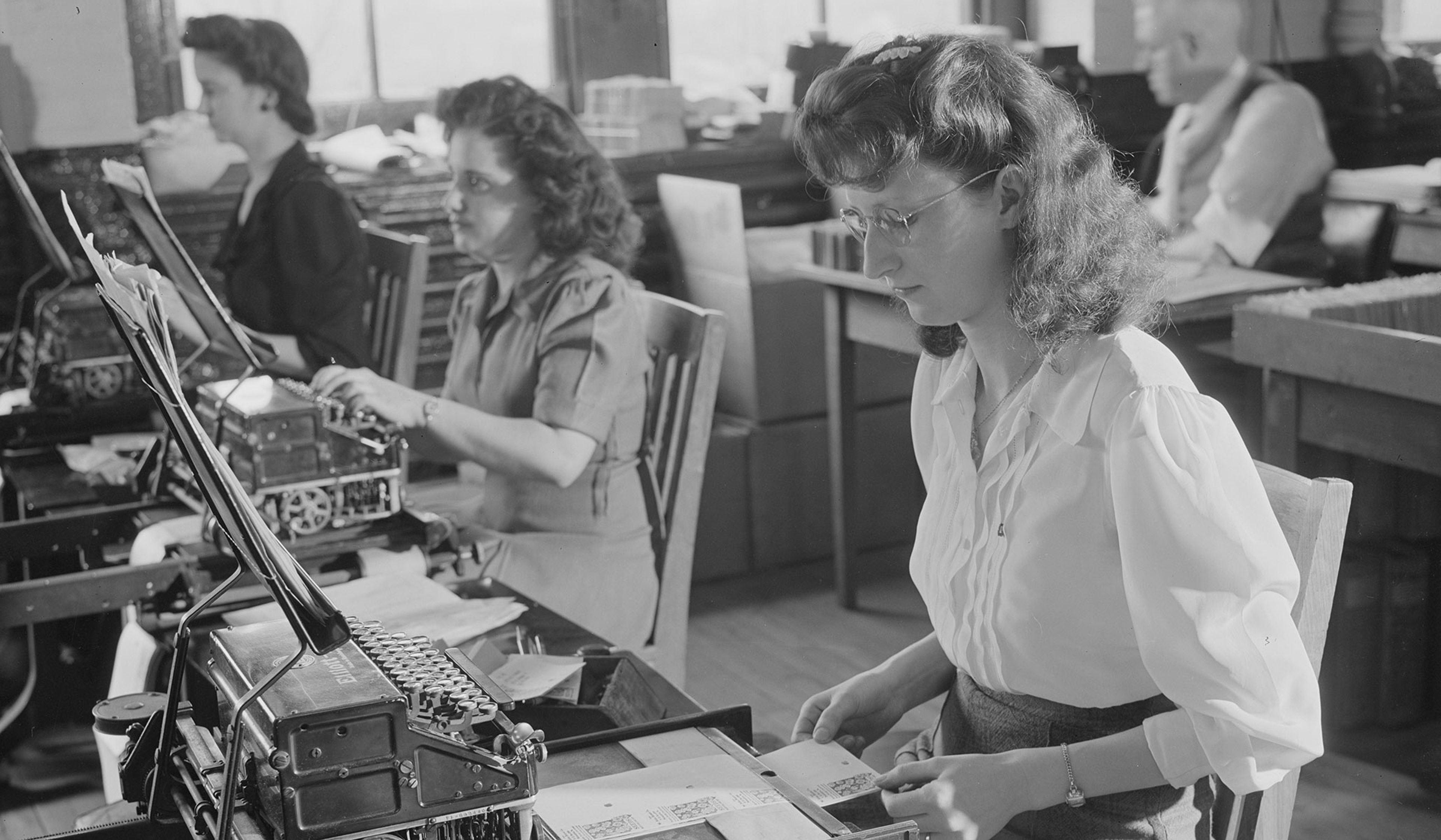
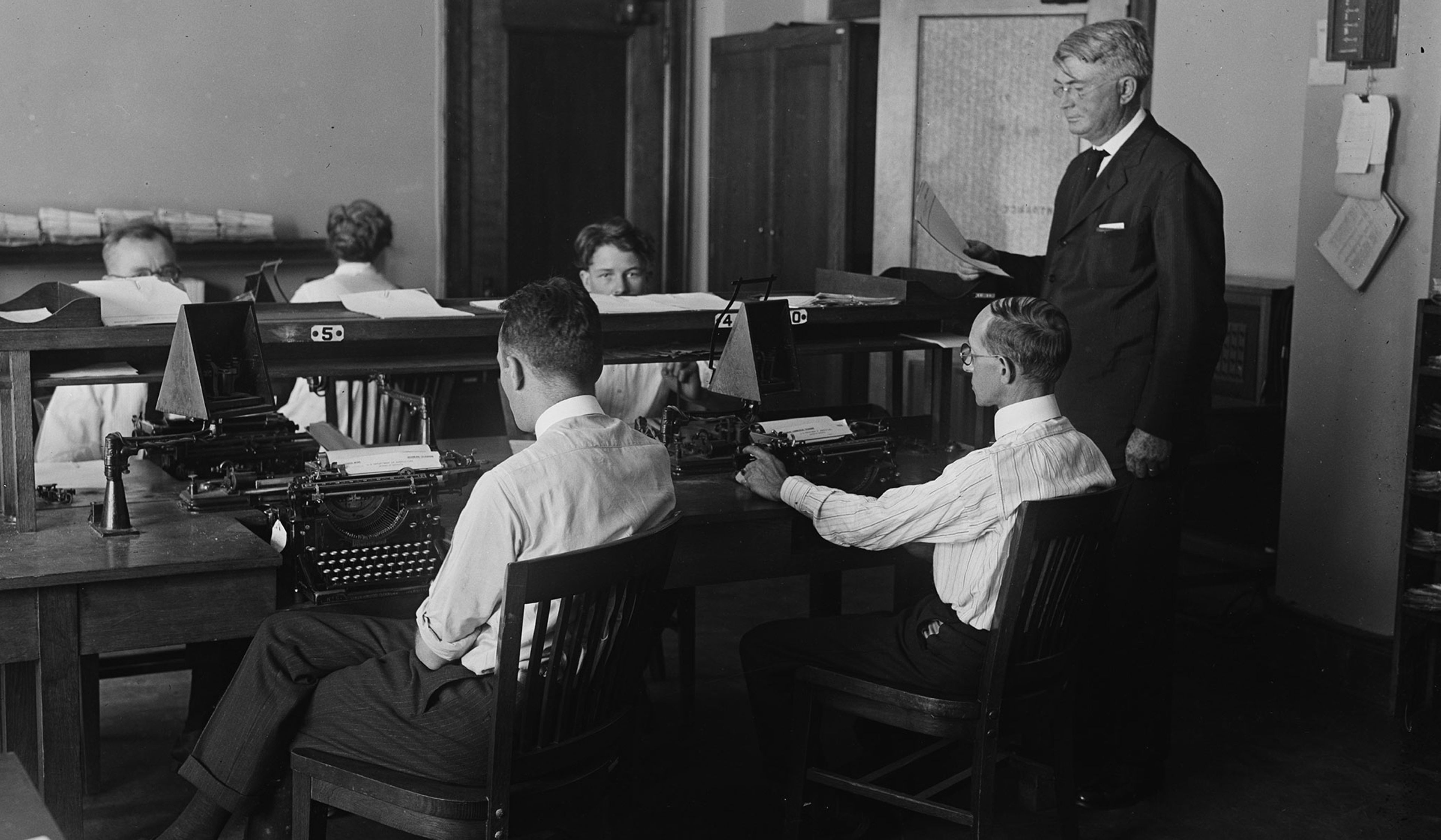
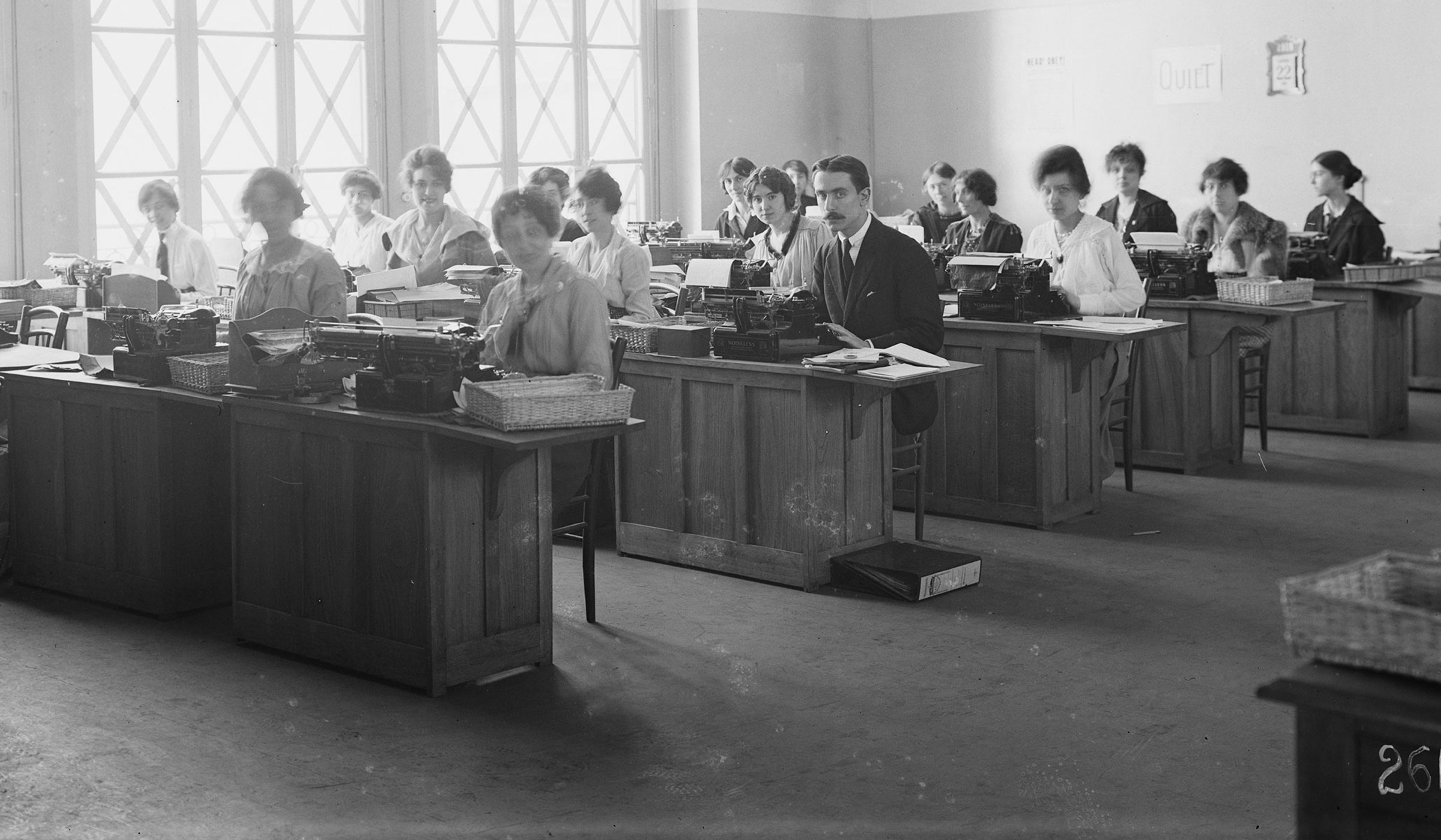
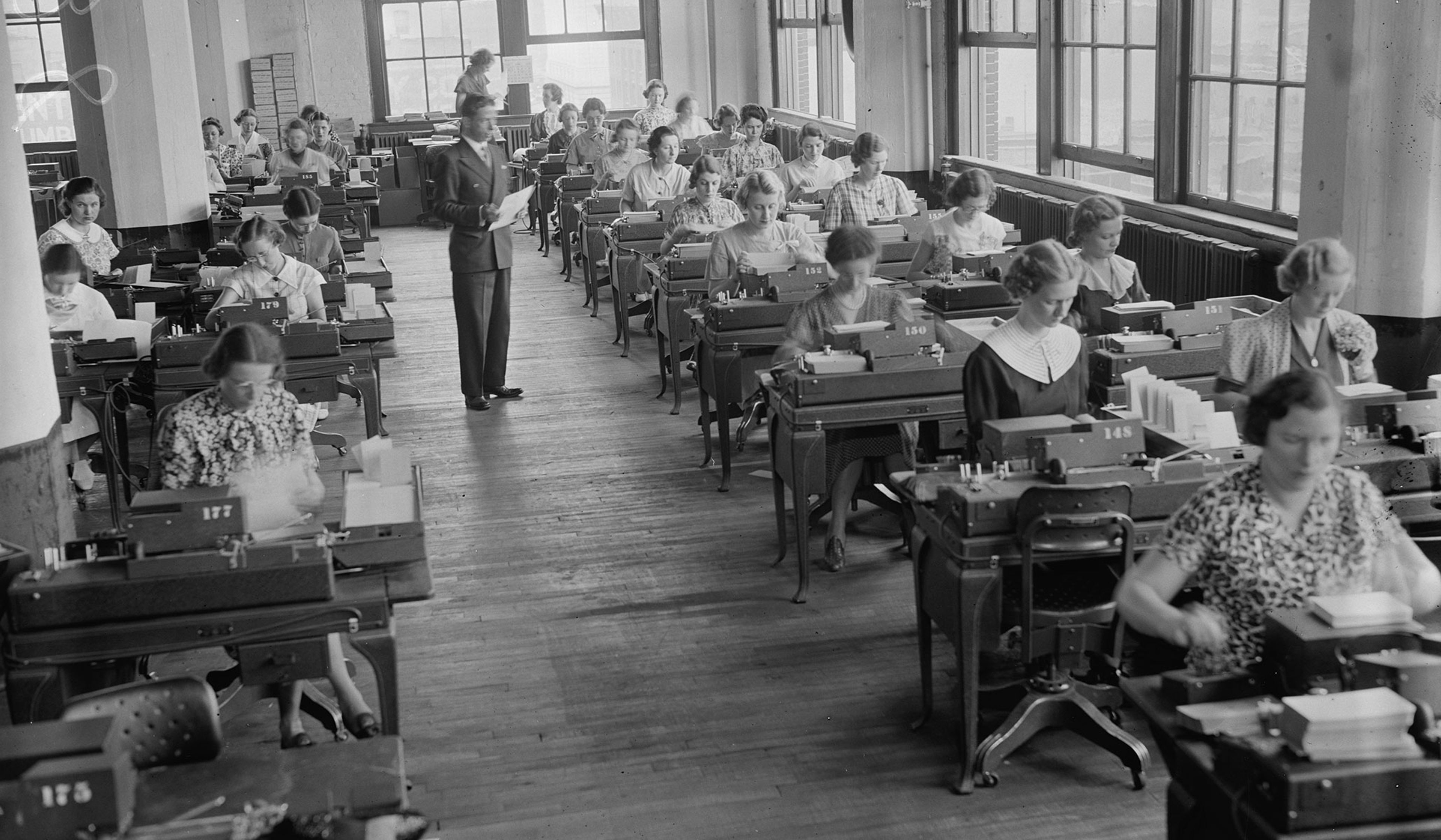
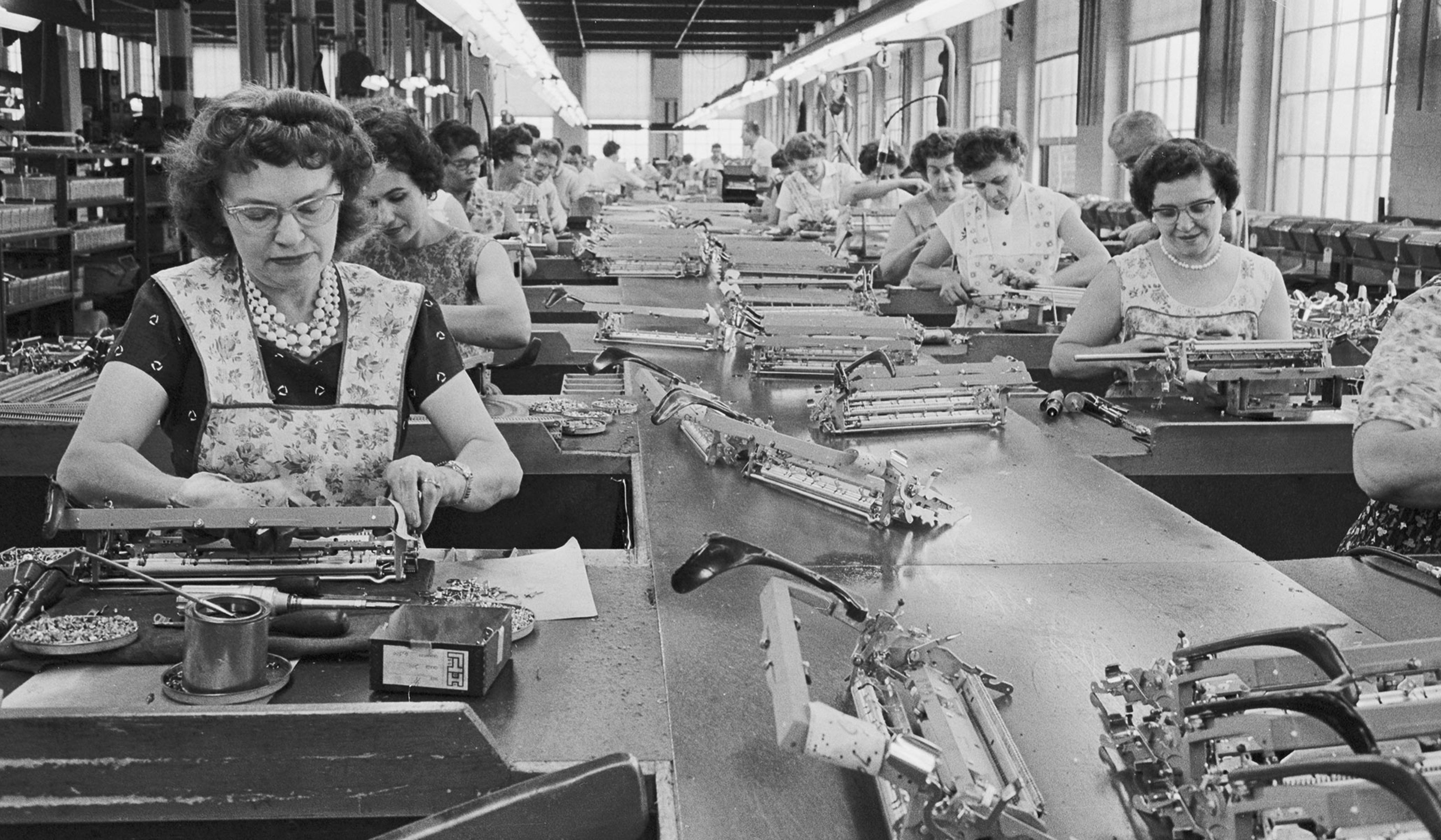
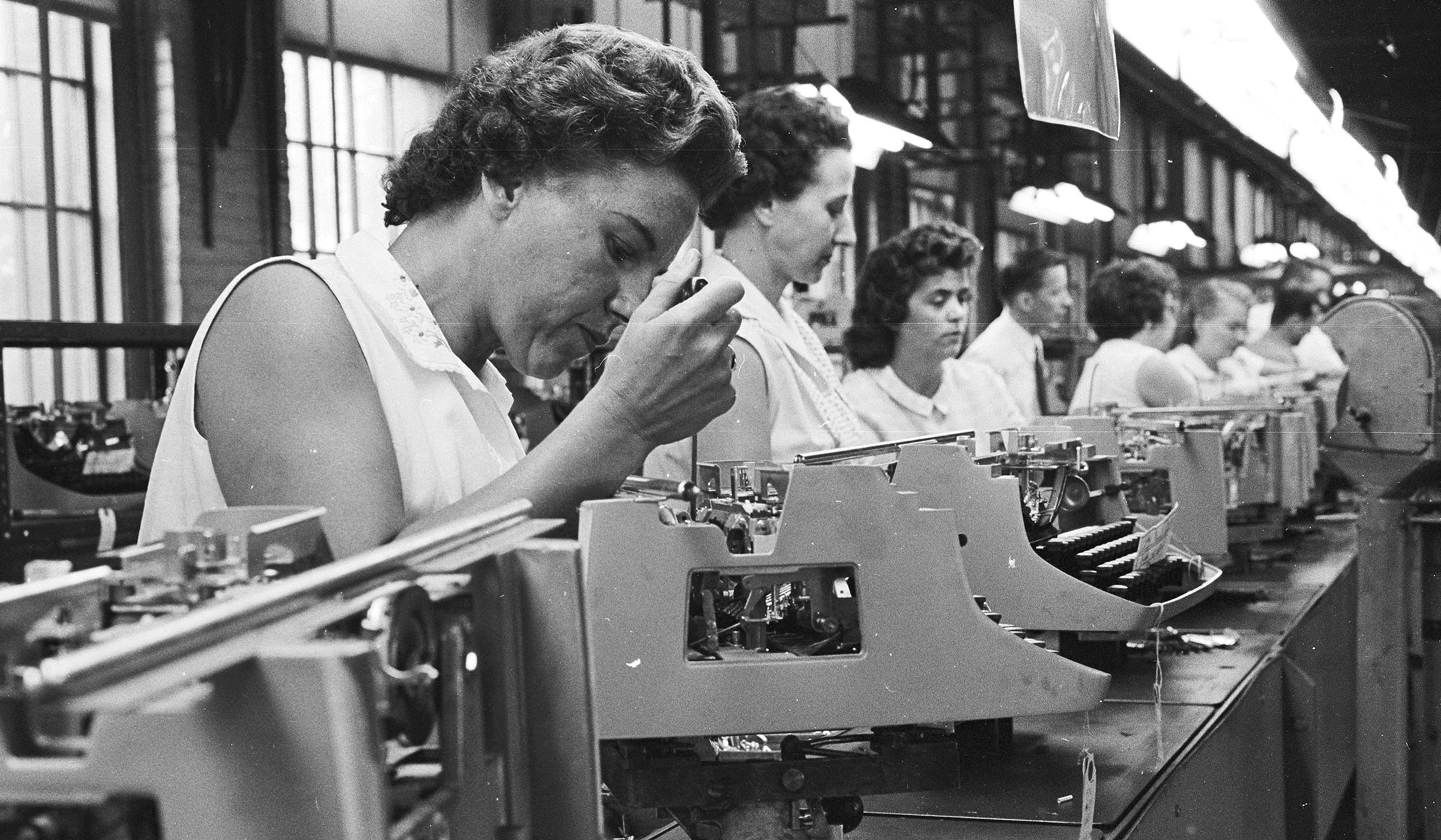

Typewriting department at the National Cash Register company in Dayton, Ohio, c. 1902.
William Henry Jackson/Detroit Publishing Company/Library of Congress
Typewriters were musical. When we scouted the offices of the city’s oldest newspaper for a documentary on its founder, who was also a Founding Father, the editor of the editorial page who showed us around apologized for the stillness: no ringing bells as carriages reached the ends of their lines, no mechanical chattering and slamming as levers brought carriages home, no ticks of key strikes or slams of shifting. Also no ringing telephones: All now was online, sedate. Then a staffer came up to him and said, “[The governor] has been caught with a prostitute!” “Excuse me,” the editor said and hurried off. All at once the place was like an ant farm that someone had knocked over. The exulting staffer hailed the horndog governor: “He’s the gift that keeps on giving!”
Comparing my typewriter now with the laptop on which I write this, I see all that hasn’t changed. The letters are arranged as before, all caps, QWERTYUIOP on the top line. The number line is modified: The superscripts for 3, 4, 5, 7, 9, and 0 are the same: #$%&() (a cartoon character’s curse). @ has joined the punctuation marks; ¼ and ½ have been dismissed. / survived, joined now by \, |, < , and >. Then there is the array of keys for new functions: Home, End, PgUp, PgDown, Num Lock. The touch on my laptop is an order of magnitude lighter. One thing about the typewriter: I never had to wonder where the cursor had drifted.
The typewriter was comprehensible. You looked into its innards and fixed small problems — jammed keys, worn-out ribbons — yourself. To my young friends, computer world is equally open and easy, as they download drivers, summon help, get info messaged to their smartphones. There is, though, an intervening layer of faith, is there not? If a lithium battery dies or Metatron summons a new system, you are out a thousand bucks. And if the grid crashes —











Comments