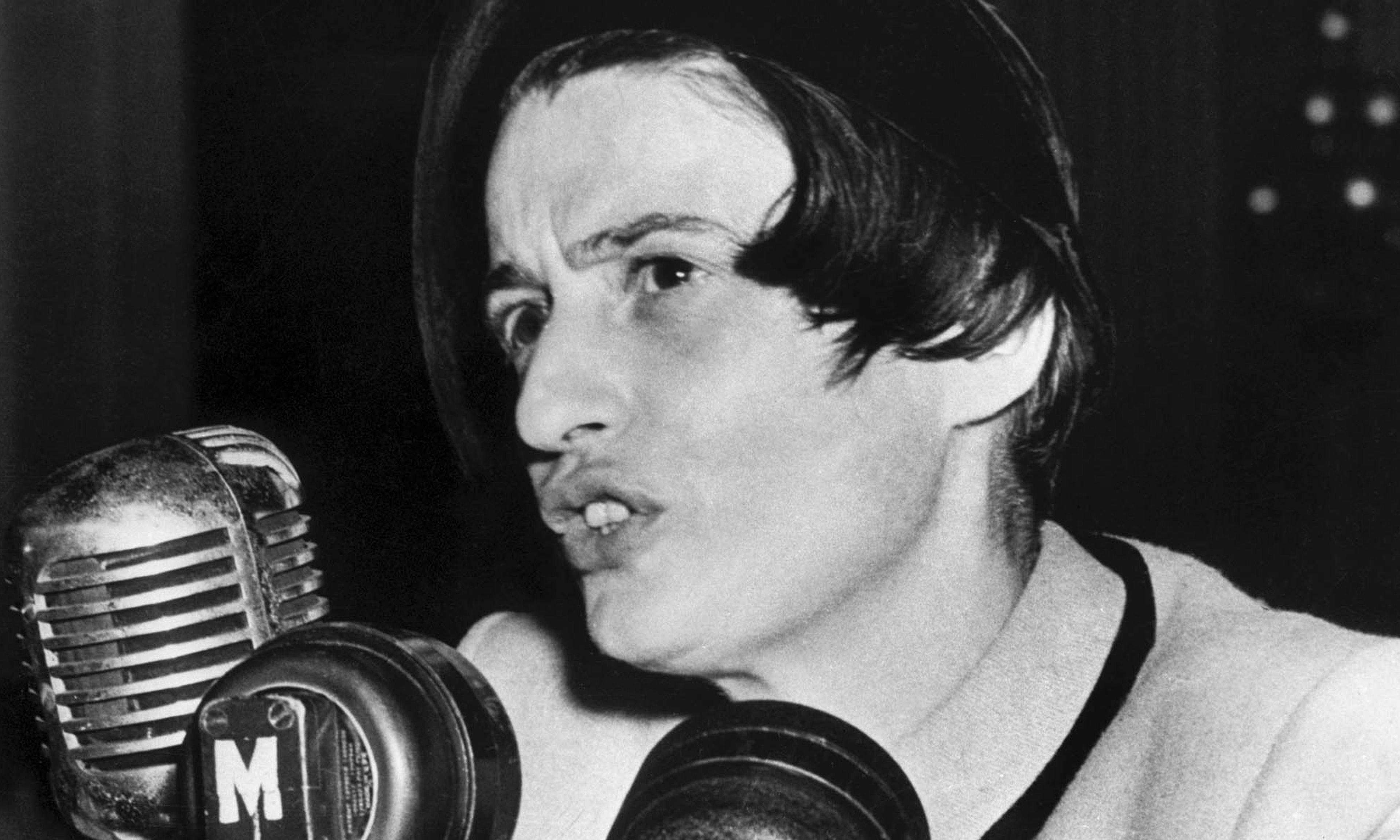
Credit for the apt moniker “the three furies of modern libertarianism” goes to William F. Buckley, who applied the classical Greek reference to three female authors of noteworthy 1943 books of political and economic philosophy. In that annus mirabilis, Rose Wilder Lane’s Discovery of Freedom, Isabel Paterson’s The God of the Machine, and Ayn Rand’s novel The Fountainhead saw publication. Alarmed by the contraction of freedom brought on by FDR’s New Deal, each of these authors sought to explain the necessity of freedom for the prosperity of humankind throughout history and to make a case for individualism. Although the women were friends of sorts, the simultaneity of their publications was happenstance.
Timothy Sandefur’s new book, Freedom’s Furies, delves deeply into the intellectual, political, and economic currents that informed the three women’s work to revive individualism. His detailed historical analysis traces intellectual and literary trends in the 1920s, offers a portrait of Depression-era economic woes and failed governmental responses, and documents the increasing assaults on liberty up through the 1950s. At times, the book meanders far away from its central concern, offering perhaps too detailed an exploration of secondary figures such as Herbert Hoover, Sinclair Lewis, FDR, and Dorothy Thompson.
While the libertarian-minded writings of the three women have been discussed in biographies of each, Sandefur’s tome is the first book-length examination of not just the on-and-off relationships among them but the content of the philosophical discussions that animated and ultimately destroyed their friendships. He travels chronologically through the lives of each of the three protagonists, highlighting their intersections through a close reading of their published writings and extant letters.
Lane and Paterson laid legitimate claims to western antecedents as daughters of the frontier. Both jumped into the world of letters via newspapers. Paterson’s New York Herald Tribune literary column, “Turns with a Bookworm,” gave her a regular venue for publicly airing her brilliant and acerbic observations. Lane learned writing and editing at the height of yellow journalism; her craft of literary journalism incorporated embellished dialogue and other fictional elements into what were ostensibly reported nonfiction pieces. Both published articles in popular magazines and wrote novels. Sandefur places the writings of each in the context of the literary phenomenon known as the “Revolt from the Village,” led by American writers such as Sinclair Lewis and Sherwood Anderson. These writers found the small-town life of most Americans rife with mediocrity and smallness, which they typecast and ridiculed with elite smugness. While Lane and Paterson in some ways lived out this “revolt” — leaving the villages of their youth for big cities, where they reveled in the literary scene — Lane, especially, came by the 1930s to value the ethos that had built those small towns.
Ayn Rand, a college-educated Russian immigrant determined to set Americans straight on the evils of collectivism, detested the realism and hopelessness of Lewis’s Village Revolters, and she sought to create films and novels that incorporated reverence for the greatness of the human spirit (which she called “man worship”) rather than cynicism. A generation younger than Paterson and Lane, she became Paterson’s protégée in the mid 1930s. Together, they worked out a theory of, as Sandefur describes it, “the psychological connection between the creative personality and political freedom” in contrast with “political demands for greater government control over individual choices.” While Paterson developed this idea in The God of the Machine, Rand explored it through fiction in The Fountainhead.
Sandefur categorizes the fictional writings of the three women during the 1930s as “Great Depression novels” since they were “aimed at addressing the moral, psychological, and political crises America had undergone in the ‘Roosevelt era.’” The novels presented arguments that harkened back to the classical-liberal economics of Adam Smith and John Locke, but they were not partisan. According to Sandefur, “the value these three writers were most emphatic about — their commitment to individualism — was grounded in their own personal experiences: the transformation from frontier poverty to technological fortune that Paterson and Lane had witnessed, and the despotism and misery of communist Russia that Rand escaped.”
These novels provided a springboard for each to consider the role of liberty and individualism in human behavior. Lane saw these as part of the natural law “woven by God into the nature of man.” The much-lauded pioneer spirit she captured in her Depression novels connected autonomous individualism to a principle she described as “neighborliness” or “human brotherhood.” Her view, Sandefur argues, was that human interconnectedness “drove people to help one another, not out of duty, but because it was in their own self-interest to do so.” Lane’s frequent references to “brotherhood” in Discovery of Freedom irritated Rand and especially Paterson. Lane was attempting to account for voluntary association, but Paterson thought the term, with its collectivist connotations, was ambiguous and misleading. This proved the opening fissure in what became an unbridgeable chasm between Lane and Paterson. Both continued their correspondence with Rand, but Paterson became so acerbic and bitter in her personal relationships that Rand also turned away from her.
Lane and Rand, frequent correspondents for many years, met in person only once. Eventually, their disagreement about the existence of God, or a prime mover, grew into an impasse. In the end, Rand’s atheism and concomitant insistence on a purely rational basis for morality created a divide that neither Paterson nor Lane could overcome. Rooted in the Judeo-Christian foundations of Western heritage, both women believed that the morality on which liberty was based came from a higher being: “Both believed a purely mechanical universe had no room for free will or for the value of individual personality.”
No biographical work on Rose Wilder Lane can fail to weigh in on the longstanding debate over the nature of her relationship with her mother, Laura Ingalls Wilder, and over Lane’s role in the authorship of Wilder’s Little House series. Freedom’s Furies is no exception. Sandefur gives Lane far more credit for authorship than the evidence suggests she deserves, stating that Wilder provided the ideas but Lane did almost all of the writing. Scholars of Lane and Wilder’s works and lives have studied this question extensively since the early 1970s, when the posthumous publication of Wilder’s The First Four Years showcased writing that seemed far less poetical and crisp than that of the Little House books. Most scholars have concluded that the Little House books emerged through a collaborative process, one that brought out the best writing skills of both mother and daughter. Sandefur, however, dismisses Wilder and places the Little House books squarely in Lane’s bibliography, postulating that they were her greatest individualist work.
Sandefur also is slipshod in his handling of some details, prompting this reviewer to wonder just how many such errors appear in the book. In relating the story of how Lane’s father, Almanzo Wilder, saved the town of De Smet, S.D., from starvation during the hard winter of 1887 to 1888 (a tale central to Almanzo’s development as a heroic character in Laura Ingalls Wilder’s The Long Winter), Sandefur has Almanzo walking with his brother Royal on a clear day between blizzards to purchase wheat from a homesteader. Clearly, Sandefur did not consult the book when he rendered this account. Almanzo and his friend Cap Garland, not Royal, take horses and wagons on their search for the rumored homesteader with wheat. They eventually locate the homesteader and convince him to sell, barely making it back to De Smet before the next blizzard sets in, bringing with them 60 bushels of wheat. This would have been impossible on foot, and with the real possibility that he wouldn’t return alive, Almanzo would not have consented to Royal’s accompanying him, lest both brothers die. This level of error, alongside mistakes in the footnote citations, casts some doubt on the accuracy of Sandefur’s discussions of other novels and works of nonfiction.
Nonetheless, Timothy Sandefur has crafted the first book-length examination of Paterson, Lane, and Rand as a cohort who defied political labels, not merely noting the interesting fact of their 1943 publications but interrogating the sources to learn how their discussions with each other shaped their work. The three women came to the same conclusion in the 1930s and 1940s, arguing that “the spirit of self-reliance was the keystone of American mores — the essential element that allowed for political liberalism, economic growth, the flourishing of geniuses, . . . and the peaceful pursuit of happiness by millions of unknown citizens.”












Comments