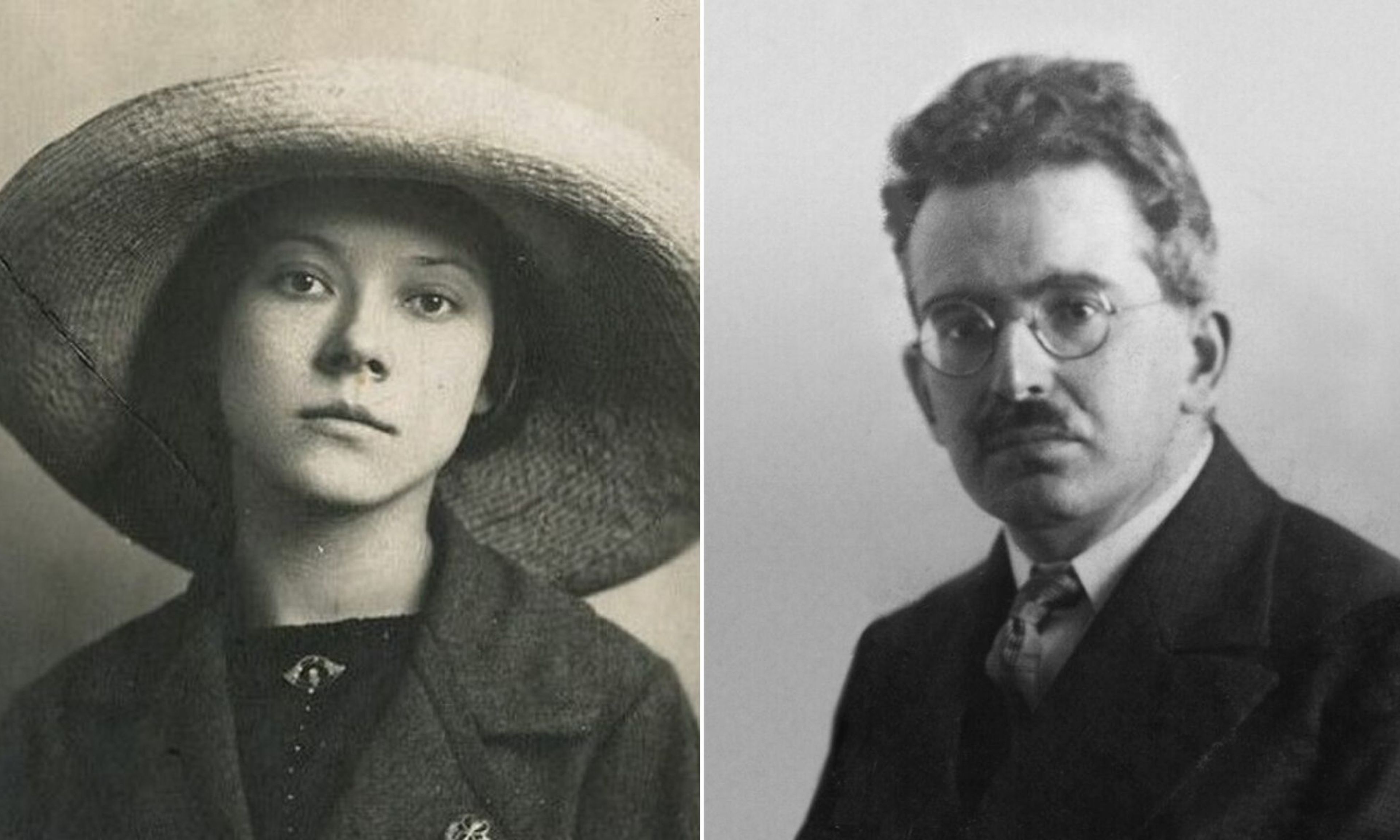
The title of this book alone should appeal to readers fond of Russian literature. Indeed, Love and Russian Literature reminds us of how much literature permeates our consciousness and can even blind us to reality, especially when passions run high amid shootings and assassinations and imprisonments. But first to the contents of the book, which divide into two parts. The first is an introduction to the theme of love in Russian literature, with generous surveys of works from Pushkin onward. In this telling, love is not about romance or redemption but is an affliction. Thus, Rakitin in Turgenev’s play A Month in the Country: “Every love, happy as well as unhappy, is a real disaster when you give yourself over to it entirely.” In Chekhov’s “The Kiss,” the shy and in-experienced Second Captain Ryabovich misinterprets a kiss by a mysterious woman as “an unexpected but destined sign of love,” upon which he plunges into obsessive fantasies that in the end only reveal his foolishness.
The second part is more ambitious. In it Nadel seeks to apply this afflictive nature of Russian love to nine Western intellectuals. The story spans the time between World War I — when the Allies were attempting to hold Russia in their camp against Germany, while also keeping tabs on the evolving Bolshevik revolution — and the end of the Second World War. References in the endnotes and the bibliography indicate that the relationship with Russia of each of Nadel’s subjects has been well studied, but his focus is on the elements of “Russian love.” The accounts are drawn from diaries and autobiographies, as well as from fiction and drama, including such overlooked works as William Gerhardie’s novel Futility (1922), which Nadel calls “a satire of Russian love presented with relief and sadness.”
The individuals in Nadel’s account were certainly looking to be impassioned. Their contacts with Russia were varied, and their passions were diverse, from the aesthetic appreciation of Virginia Woolf and scholar Jane Harrison to actual affairs in the case of diplomat-spy Bruce Lockhart and writers Somerset Maugham, H. G. Wells, and Walter Benjamin, not to mention the infatuation of Edmund Wilson with Lenin. The tales told here concern a moment when a portion of the Western intellectual class had doubts about its own traditions and found itself ready to absorb new modes of thought. The spirit of communism might not have been a sufficient attraction had it not been accompanied by the late-19th-century flowering of Russian literature. As Woolf wrote after reading Dostoevsky’s Crime and Punishment and The Idiot: “How could any young novelist believe in ‘characters’ as the Victorians had painted them?”
While Russia’s dramatic history may have added fuel to the intoxication, an understanding of Russian literature seems to have been, as Nadel writes, “a prerequisite for Russian love.” Indeed, Pushkin’s Eugene Onegin, which “romanticizes and dramatizes disappointment in love,” as well as Turgenev’s early novella of unrequited love, Asya, take center stage in Nadel’s treatment of Walter Benjamin’s unfulfilled relationship in Moscow in 1926 with Asja Lācis, a Latvian actress and Marxist children’s-theater director. The power of disrupting emotions on Nadel’s subjects can also be seen in Woolf’s praise for Dostoevsky (whose works she read on her honeymoon): Of his most famous characters, she wrote, we “go down into them as we descend into some enormous cavern…. It is all dark, terrible and uncharted, but also thrilling.” The Russia-born Gerhardie, a man of many love affairs, introduced similar ideas in his study of Chekhov (1923), in whose stories “life is more complex, fluid and elusive… than we had privately suspected to be told by others, much less to see in print.”
The heart of the second part of Love and Russian Literature concerns deception, duplicity, and intrigue, surely not exclusive to Russian love but heightened by war and revolution. It’s hard to decide what to quote, but how about this: “The uniqueness of Russian love has much to do with the double nature of Russian women, metaphorically representing Russia as an unattainable bride often pursued by westernized figures at the same time they embody independent, forceful voices.” Moura Budberg, who appears to have been a double agent extraordinaire, stands at the center in this telling. She was living with Lockhart in consular apartments (and may have been a Cheka agent) when Lenin was nearly assassinated in August 1918, after which Lockhart was imprisoned in the Cheka’s Lubyanka headquarters. On Lenin’s recovery, Lockhart departed Moscow in exchange for a Soviet agent being held in London. Later, in the 1930s in Prague, where he worked coordinating British propaganda against the Axis powers, Budberg provided him with information about Russian emigration and developments in Eastern Europe, serving, in spy fashion, as “an informant and back-channel source for visible and invisible Soviet activities.”
In between, Budberg was Gorky’s private secretary (and probably his mistress) and served as Wells’s interpreter in 1920 in his discussions with Gorky on “education, the life of nations, technology, and world peace.” She traveled with Wells to meet Lenin in Moscow, where, according to Nadel, she and Wells began “a casual affair.” He already had a reputation as a ladies’ man, mixing marriage and other long and short relationships, and producing children by various women. He and Budberg continued their relationship when she came to England in the late 1920s, when speculation was that she was a double agent.
For anyone who has wondered about the truth of spy novels and movies of the Thirties and Forties: Well, all the underhandedness, deception, and cloak-and-dagger appear to have had some basis. Lockhart, for instance, who had become an unofficial British representative to the Bolshevik government in 1918, was equipped with diplomatic codes and couriers and tasked with assessing the power of Lenin and Trotsky: “But before leaving for Russia,” Nadel writes, “secret arrangements were hammered out in a Lyons tea shop in the Strand.” (It was Lockhart’s Memoirs of a British Agent, published in 1932, on which Michael Curtiz based his 1934 hit film, British Agent.) As for Maugham, who landed in Moscow after the abdication of the tsar and the advance of the Germans in 1917, it is from chapter 15 of his spy novel Ashenden that Nadel takes the title of his study. The stories of Russian love in that novel are skeptical, Nadel writes, but they foreground Maugham’s love of intrigue. Also an unofficial British agent, his business included disseminating propaganda that would convince Kerensky to continue the war against Germany. Imagine 21st-century novelists engaging in such machinations.
Not even the coming Red Terror, the labor camps, the show trials, and Siberian exiles could curb Edmund Wilson’s infatuation with Lenin. In Travels in Two Democracies (1936), he omitted Stalinist trials and praised the Soviet Union, when led by Lenin, as the “moral top of the world.” Likewise, Wilson’s To the Finland Station (1940), writes Nadel, “begins as the history of an idea but quickly becomes a romance,” of which Lenin is the subject. It was only in the early 1970s that Wilson revisited this romance, casting himself as a spurned lover who had no premonition of the “hideous tyranny” that the Soviet Union would become.
Nadel’s final chapter introduces readers to Cold War espionage, with Isaiah Berlin’s posting to the British embassy in Moscow to assess the ideological direction of the post-war Soviet government. On a single evening in 1945, he and the poet Anna Akhmatova met in Leningrad. She (then 56) and Berlin (36) spent the night discussing Dostoevsky and Turgenev. According to Nadel, she was angry at Tolstoy for his treatment of Anna Karenina. Of their encounter, Nadel writes that it “altered their lives, reasserting the experiential authenticity and validity of Russian love, a contest between passion and possession.” Akhmatova would later stress the repercussions the meeting had for her: Stalin thought all foreigners were spies, and by the following year she had become persona non grata. Her poetry lacked ideological content, and her literary reputation was trashed. It was only after 1956, after the “thaw,” that the Soviet view of her gradually changed and her work reappeared. As for Berlin, the meeting of the two led him to reconnect with the intellectual thought of pre-revolutionary Russia, but it also “reignited love” (Nadel details a few of Berlin’s relationships) and led to his translation of Turgenev’s novella First Love.
The after-dark discussion of Russian literature between Akhmatova and Berlin, amid appalling post-war conditions and continuing Soviet repression, returns us to Nadel’s introduction and to the power of Russian writers to portray, as Virginia Woolf put it in her essay “The Russian View,” a “deep sense of human suffering and their unwavering sympathy with it.” Since the introduction shows very close reading, Nadel, a professor of English at the University of British Columbia, might have let readers know of his own passion for Russian writing, a passion that many of us share. It’s not fair to criticize what a writer does not include, but it might also have been of interest to have an ideological counter-narrative. Expatriate Russian writer Vladimir Nabokov, cited in the notes in connection with his literary friendships with Wells and Wilson, was never infatuated with communism. He wrote to Wilson in 1940 that his portrait of Lenin was incomplete and that “not even the magic of your style has made me like him.” It was Nabokov, after all, who wrote the most lascivious love novel of all. Was Lolita an effect of the influence on him of “Russian love”?











Comments