Potter the Profound
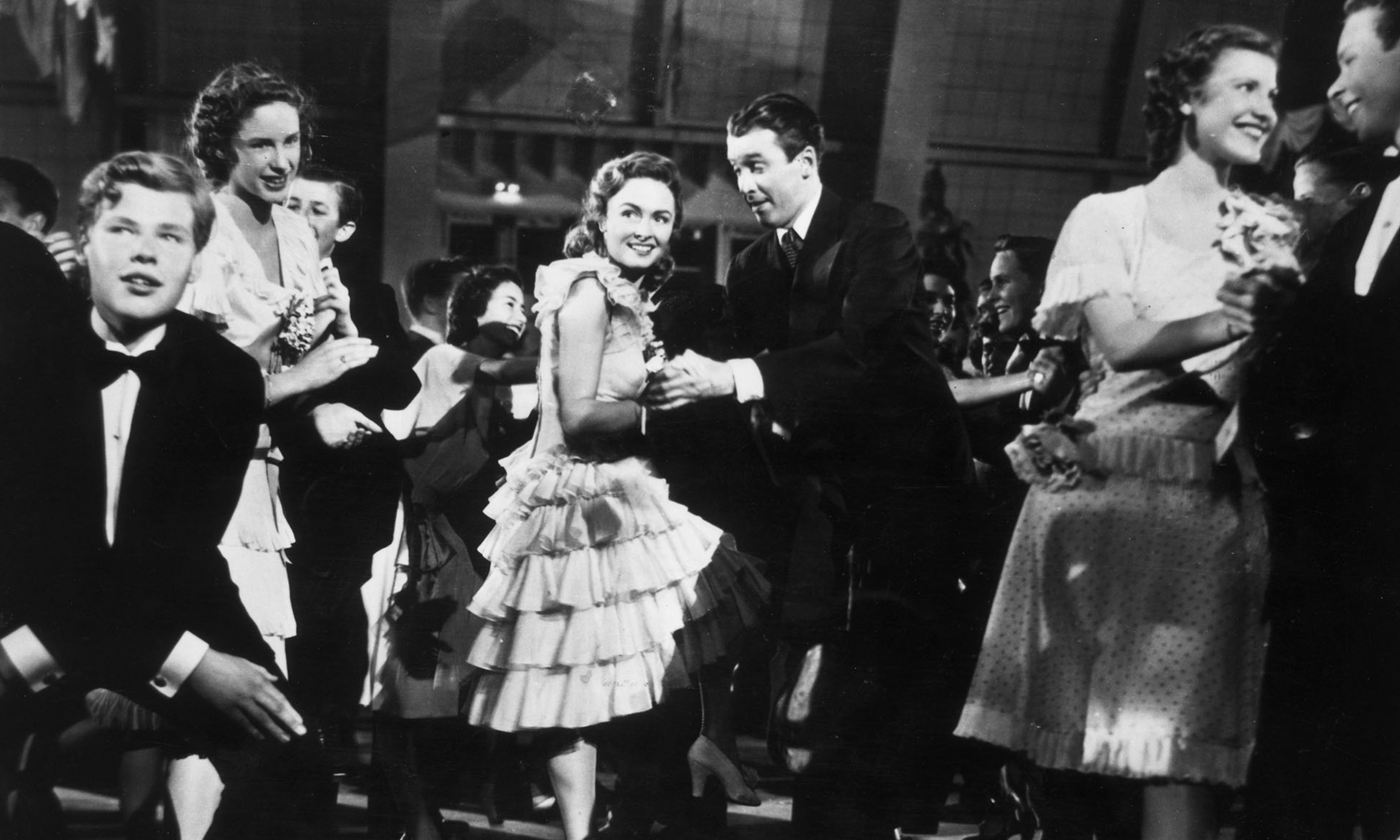
In “It’s a Wonderful Festival” (January 24), Jack Butler describes how, during a weeklong festival every December, Seneca Falls in upstate New York assumes the role of another small town in the same region, It’s a Wonderful Life’s Bedford Falls. Jack cites some good evidence that Seneca Falls was indeed the model for the town conjured up by Frank Capra. The festival sounds, well, wonderful. As I read Jack’s lovely account of his visit, however, it occurred to me that George Bailey, not the most imaginative of businessmen, would never have seen the possibilities of cashing in on the movie in this way. But you know who would? Henry F. Potter. Potter, a visionary entrepreneur, a titan who overcame the disadvantages of disability, goes unmentioned in Jack’s piece other than being rudely dismissed as “Scrooge-like,” a description that doesn’t do justice to the magnificence of his lifestyle. Moreover, as I pointed out in a 2001 appreciation of this much maligned if undeniably flawed figure (stealing $8,000: not good), this “Scrooge” offered to bail out Bailey’s sloppily run Building & Loan and, indeed, Bailey himself (at a salary of $20,000 a year for three years: 1946 dollars).
In the movie, the magic of Pottersville was banished to a different timeline. Nevertheless, I suspect that its creator would look at Seneca Falls’ festivities and allow himself a quiet, dark smile.
Andrew Stuttaford
Jack Butler responds: I am glad that Andrew enjoyed my dispatch from Seneca Falls. I must, however, contest some of his assertions. As Andrew concedes that Potter’s theft of $8,000 belonging to the Bailey Building & Loan was “not good,” so will I concede Henry F. Potter’s business acumen. It is impressive that, as Potter puts it, during the Great Depression, George Bailey saved his own business, while Potter “saved all the rest” of Bedford Falls. What’s not impressive is the Potter-dominated town that emerges in the reality of George’s nonexistence. In 2001, Andrew fawningly described Pottersville as a “glamorous, glittering” paradise. But beneath its glitzy gild is a community beset by anomie and social distrust, one that treats its citizens like the “rabble” Potter disdains them as. Policemen fire shots into crowded city streets, while men search desperately for their absent wives and take to drink to numb their pain. Pottersville reflects the “warped, frustrated” soul of Potter himself. The Bedford Falls of George Bailey, meanwhile, may not be a perfect place, just as the Building & Loan is hardly a perfect business. (George himself wondered why his father ever started it.) But the way its people rally together and view themselves as a genuine community reflects George’s own virtues – virtues that Potter, for all his acumen, could not fathom. That the It’s a Wonderful Life Festival also has something of these virtues makes it more than a mere “cashing in” on the worthy legacy of Frank Capra’s rightly immortal film.
Correction
The Wannsee Conference (“Infamy at Wannsee,” December 27) took place on January 20, not November 20, 1942.











Comments