
Here is a curious fact about the pandemic, which has killed and afflicted so many: Golf is booming. Courses are jammed (weather permitting). Ranges are buzzing. Instructors are overbooked. Equipment is flying off the shelves. Golf, you can play outdoors, and at a “social distance.”
In October 2020, 11 million more rounds were played than were played in October 2019. July 2020 was a record for equipment sales — $388.6 million. (These are U.S. stats I am citing.) And get this: May 24 saw the most viewed golf event in history.
What was it, the Masters? No, that was played in November (instead of in April, as is traditional). I’m talking about the match that pitted Tiger Woods and Peyton Manning against Phil Mickelson and Tom Brady. For those who don’t follow sports: Each team consisted of a golf great and a legendary quarterback. They were playing for charity, and to beat the other team, for sure — these are four of the most competitive people alive.
Their match was the first live sports event that many people had seen for months. The country was starved for it.
All in all, the pandemic year of 2020 was the biggest year for golf since 1997. That was the year that Tiger Woods, age 21, won the Masters for the first time.
I remember my first visit to the range after that Masters. My range was on Hains Point, in Washington, D.C. The place was filled with black kids — whacking at it for the first time, seeing what it was all about. Such a beautiful sight.
Golf played a big part in my life. I came from a golf-minded family: father, grandfathers, others. I worked at golf courses for five years. When I became a writer, I wrote regularly about golf. (You write what’s on your mind.) Then I fell away.
Why? Well, for one thing, I moved to New York City, not exactly Myrtle Beach (a golf mecca). If you live in Manhattan, every round’s a day trip. I practiced at Chelsea Piers, site of Manhattan’s only golf range. But if you never see a course — what are you practicing for?
Still, there is a beauty, and wonderment, in practice alone. When Tom Watson announced that he was basically retiring from golf, he said he would miss the playing and the competition, yes. But he would also miss practicing — for he loved working out his problems, on the range.
“Human beings need puzzles to solve.” That’s what David Normoyle told me in a podcast last summer. He is an old friend of mine, and a golf historian (and the husband of Dottie Pepper, a legendary player, now a TV commentator). During the pandemic, people have done actual puzzles — as in jigsaw. Golf is a puzzle to solve, too.
I returned, full bore. (Am I boring you?)
Back at Chelsea Piers, after a long hiatus, I whacked balls — badly. Out on Long Island, visiting family, I took a lesson from Dave Sands. Wonderful teacher. He gave me a particular drill, to address a particular fault. I had to smile. I was first given this drill — the very same one — by the great Tom Simon, of the University of Michigan Golf Course, in the 1980s.
Sometime in the ’90s, my friend Hersh — who had been captain of the U of M team — said, “Jay, these are your issues. You’ll always have them. The thing is to mitigate them.” But can’t I ever have new issues?
On Long Island, I played a couple of rounds. Felt good, like reuniting with a friend. I snuck out to California, where I played more rounds, with my friend Patrick (another alumnus of the U of M golf team).
Hearing I was back in the game, my National Review colleague Kevin Williamson sent me a dozen balls. You know the most famous line from NR’s mission statement (1955)? The one about standing athwart history, “yelling Stop”? Well, these balls are stamped, “Standing athwart history, yelling Fore!”
(I pause to recall one of my favorite opening lines in all of literature. P. G. Wodehouse begins a short story, “It was a morning when all nature shouted Fore.”)
Since about June, I’ve been digging it out of the dirt. That’s what Ben Hogan said. How do you learn this game? You “dig it out of the dirt.” You work it out by diligent practice. You will not find any dirt at Chelsea Piers, however — or any grass. We have mats.
This is a multi-tiered range, Japanese-style. There are no buckets. Balls pop up on a rubber tee, from underground. The range is enclosed in a vast net, extending into the Hudson River. (No, I don’t reach the net, thanks for asking. I can maybe roll it there, if I really catch it.)
One of the joys of going to the range is the staff: talking with them, getting to know them a little. Think of the theme song from Cheers: “Sometimes you want to go where everybody knows your name. And they’re always glad you came.”
At the range, you see a cross section of humanity. Boyfriends instruct girlfriends. The girlfriends pretend to be interested. More rarely, you see husbands and wives. I heard a tense discussion last week. “No, keep your right arm straight!” “No, it’s supposed to be the left arm!”
As always — at every range, and in every other place — guys try to pick up girls, awkwardly.
Last summer, I saw young Hasidic couples, which was touching. They whacked balls in their traditional wear. I also saw a group of young Muslim women, stylish in their hijabs. They were having an outing, giggling, having a ball.
I overheard a lot of “finance bros.” I dislike the stereotype of them, as I do stereotypes in general. But I must say, after spending session after session in the next stall over from them, I was ready to sign up for a Marxist revolution.
Ranges are supposed to be quiet, except for the sounds of golf (which of course include the occasional “oath”). Ages ago, I took some friends to a range for the first time (theirs). I soon had to explain to them, “It’s sort of like a library.” They thought this was hilarious, and quoted it for years after.
Chelsea Piers is not exactly like a library. The other day, I hit next to a man who was talking on his phone — using his AirPods, while hitting. Impressive multitasking, come to think of it.
When people are loud, I never ask them to keep it down. Never. I just move. Why spoil their fun (if you don’t have to)?
I must say, I love the sound of children — especially those who are discovering golf. A month or so ago, there was a little lefthander in the stall to the right of me, meaning I (a righthander) was facing him and he was facing me. He was personable and funny, providing a running commentary on his game. After a while, I said, “How’s it going over there, lefty?” He wanted to try my driver. “But it’s for righties,” I said. He didn’t care — he turned the club over and hit it anyway.
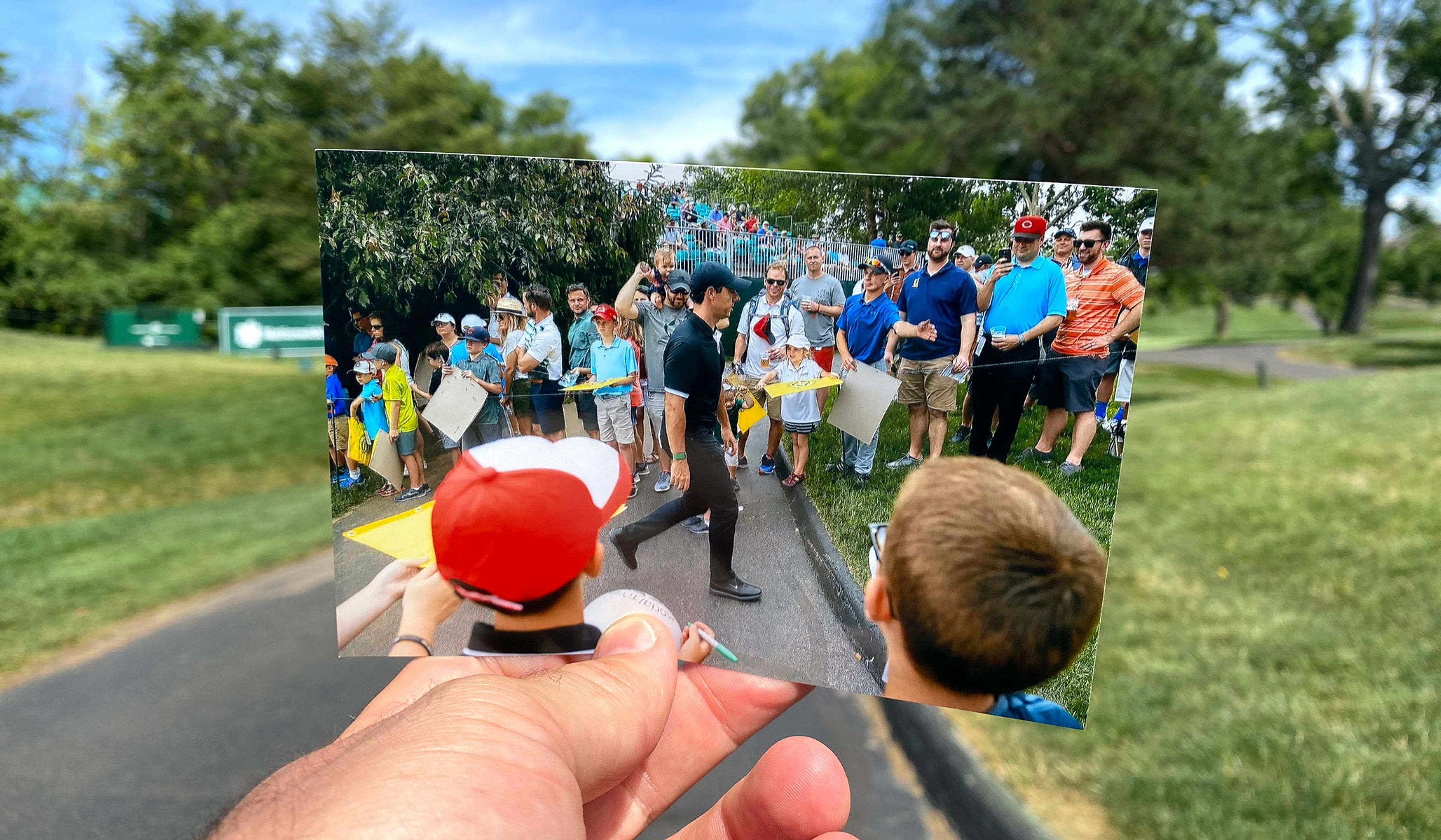
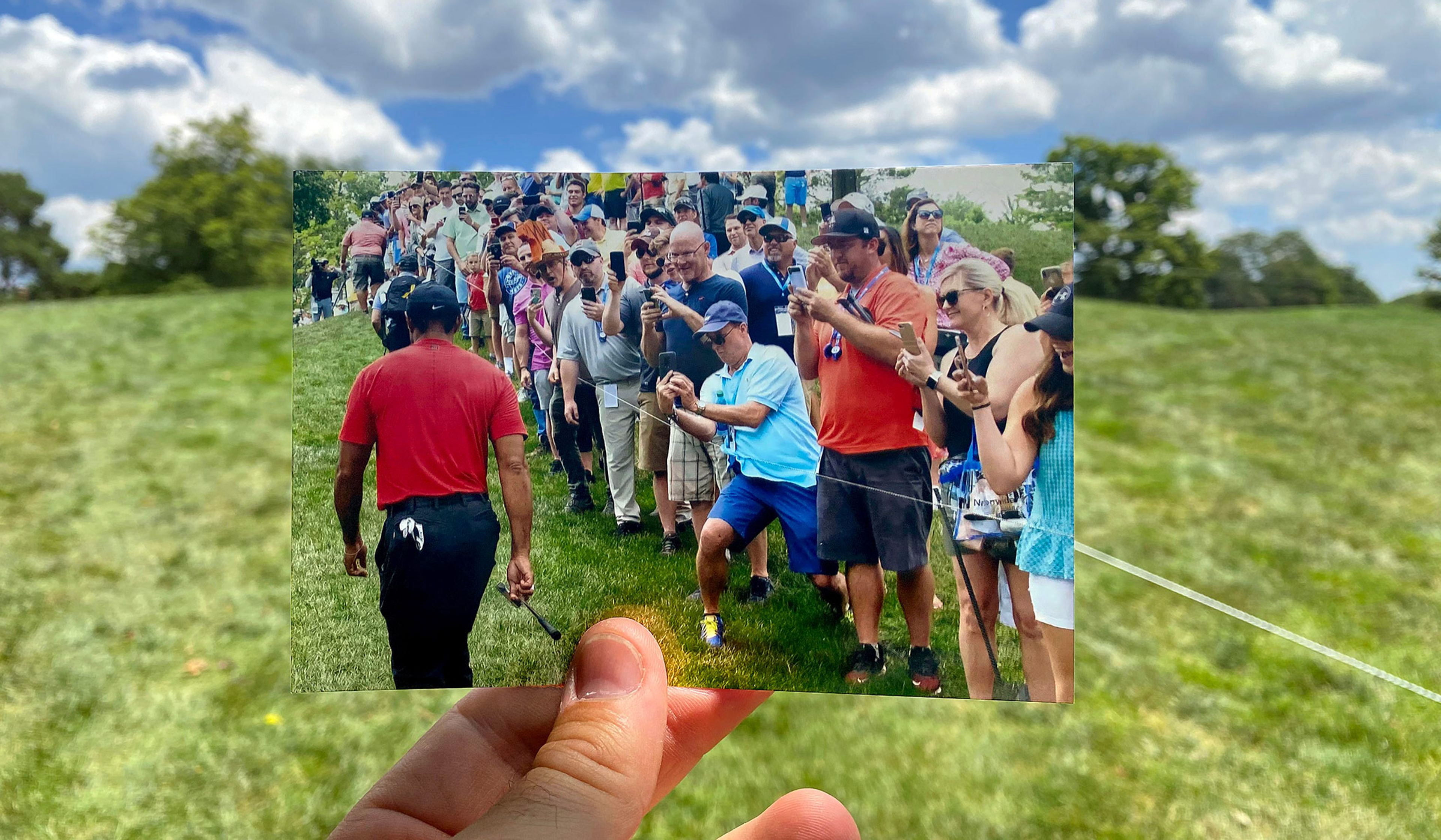
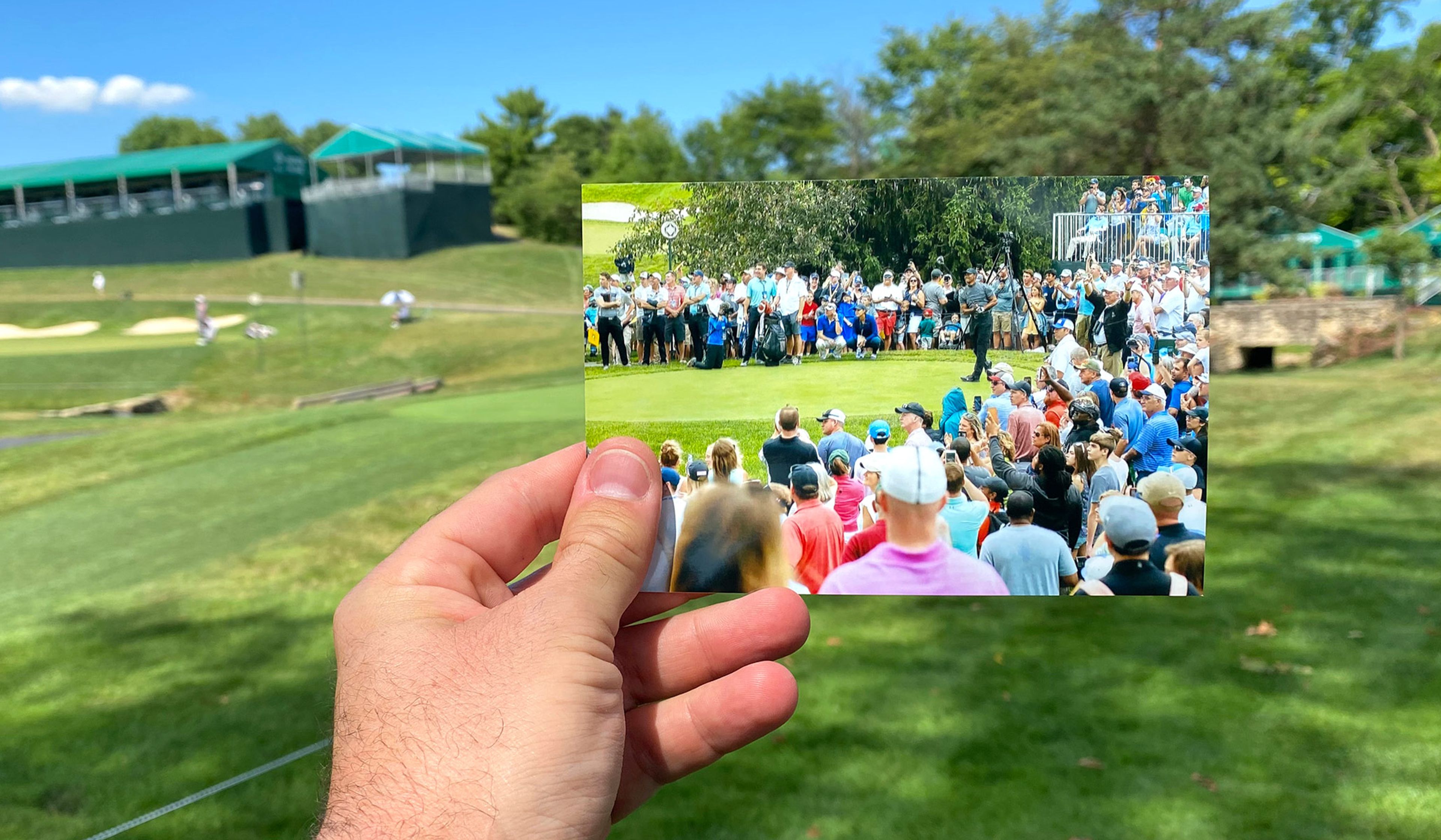
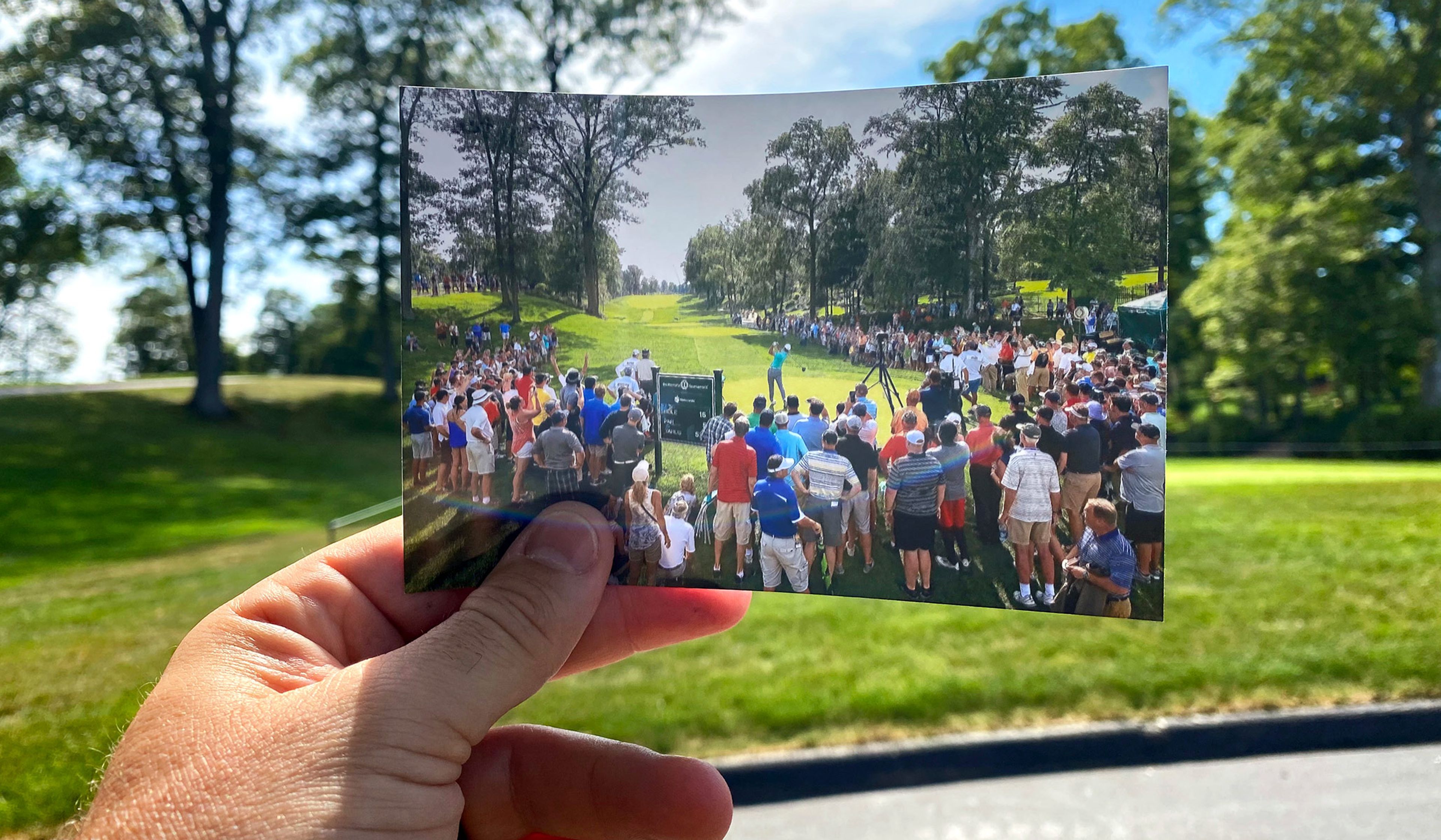
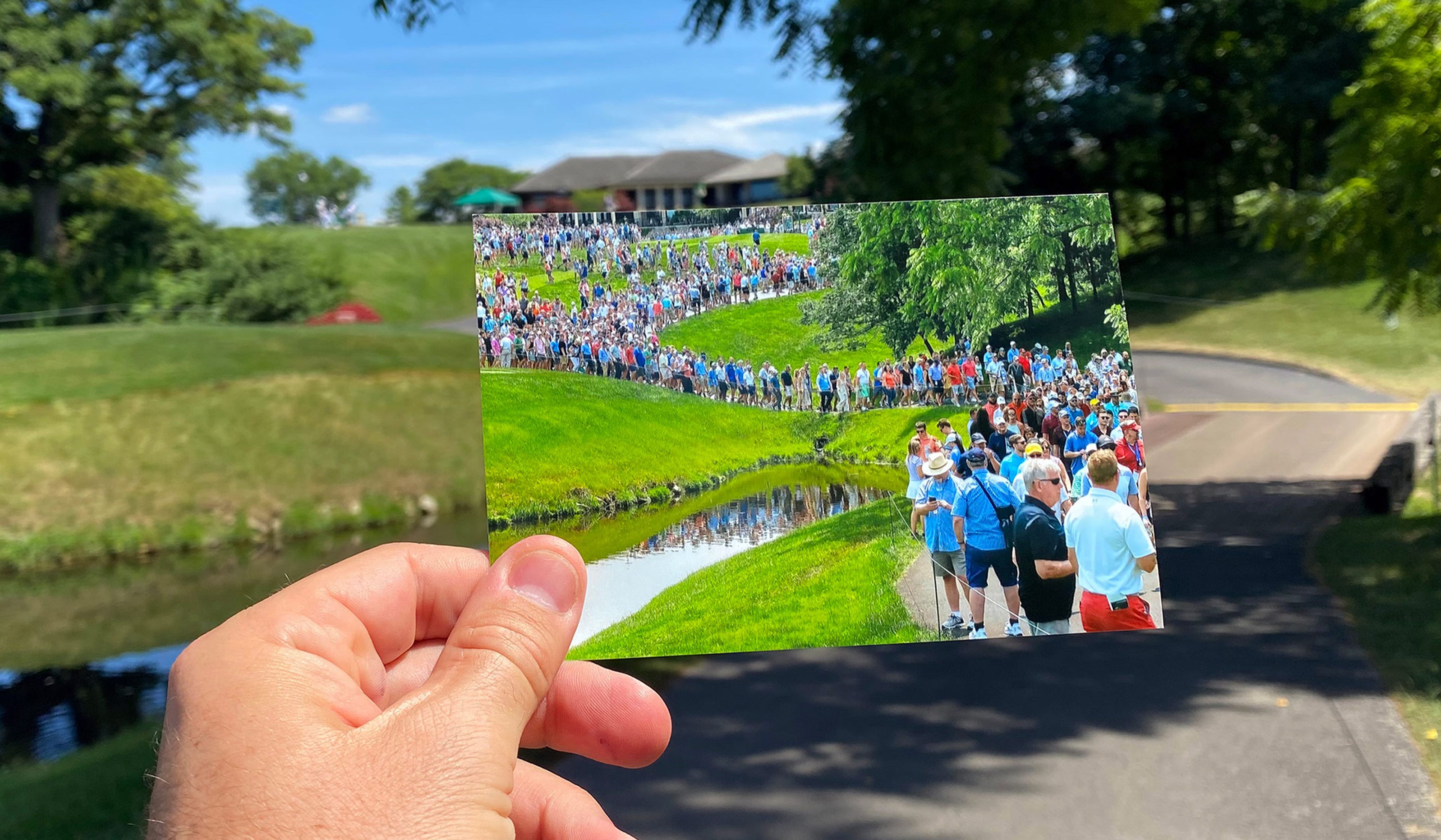
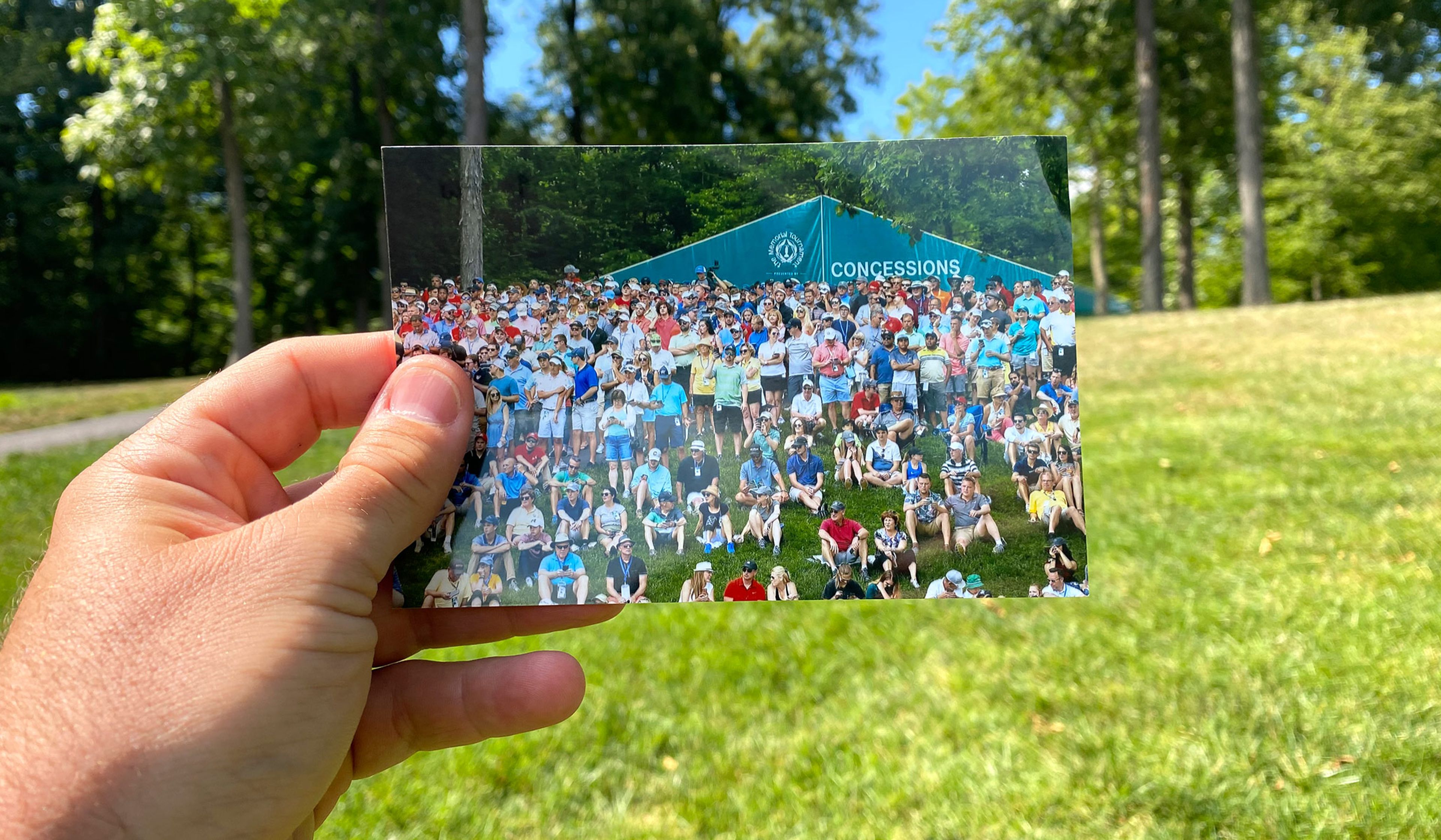
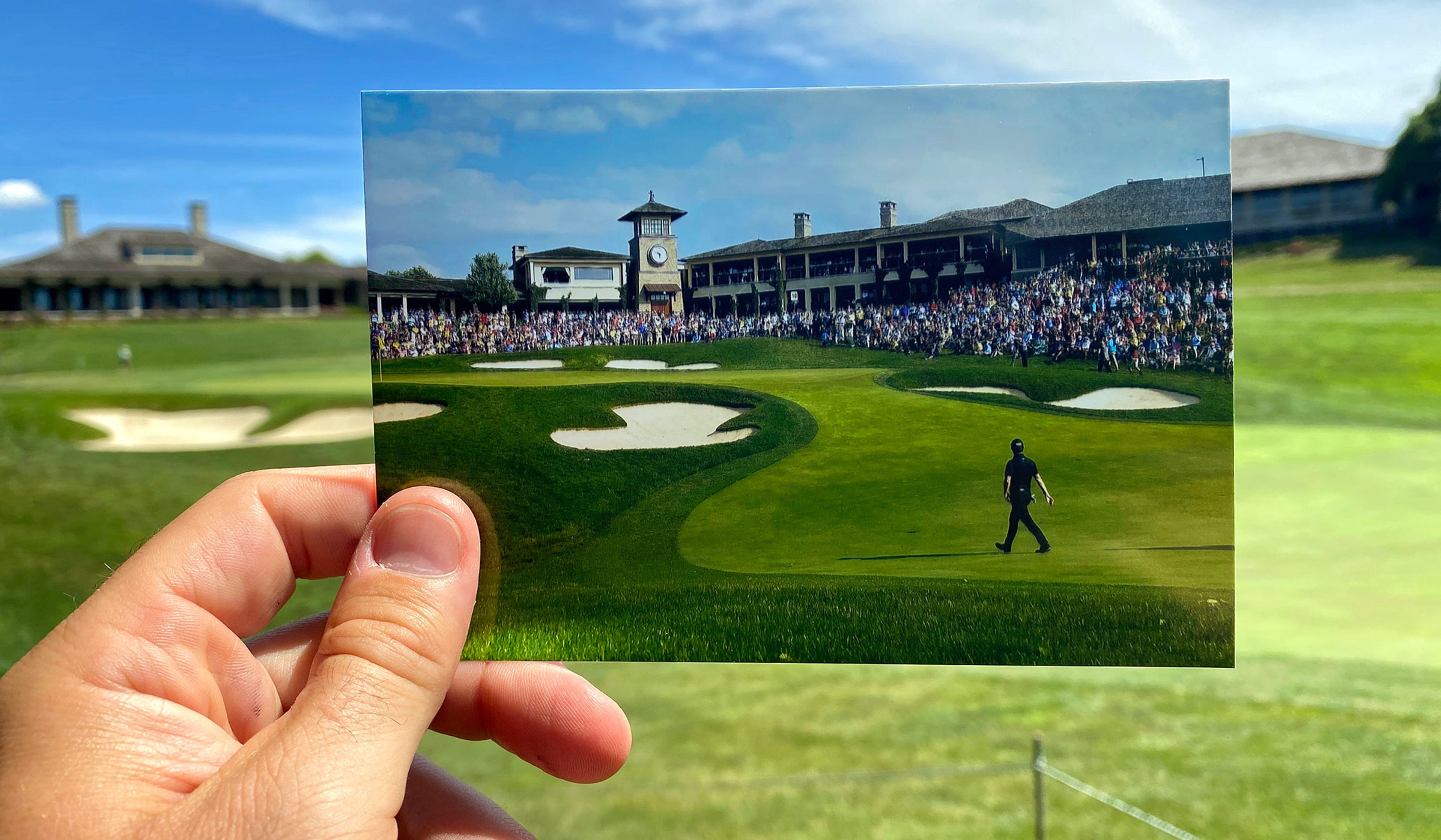
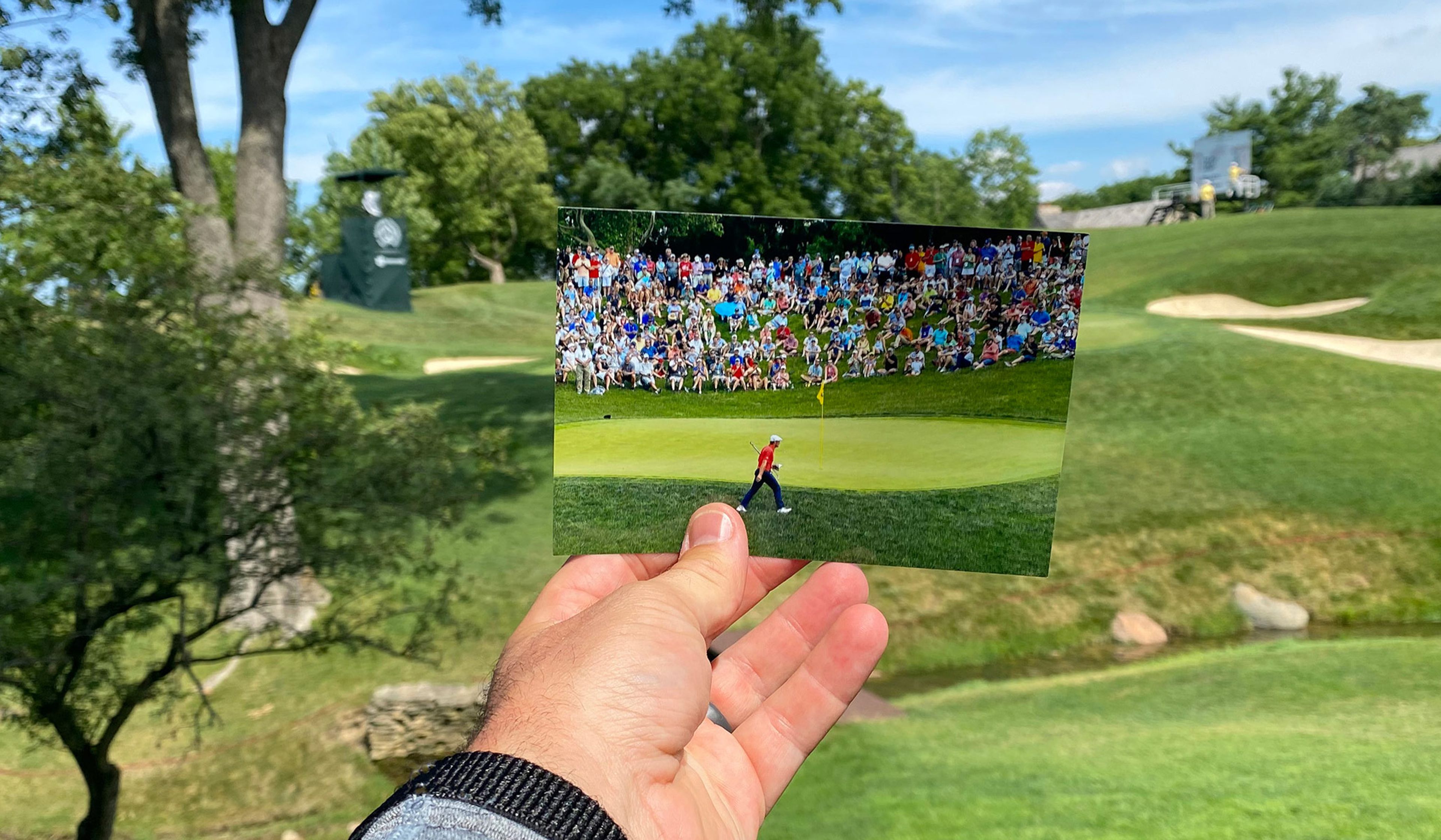
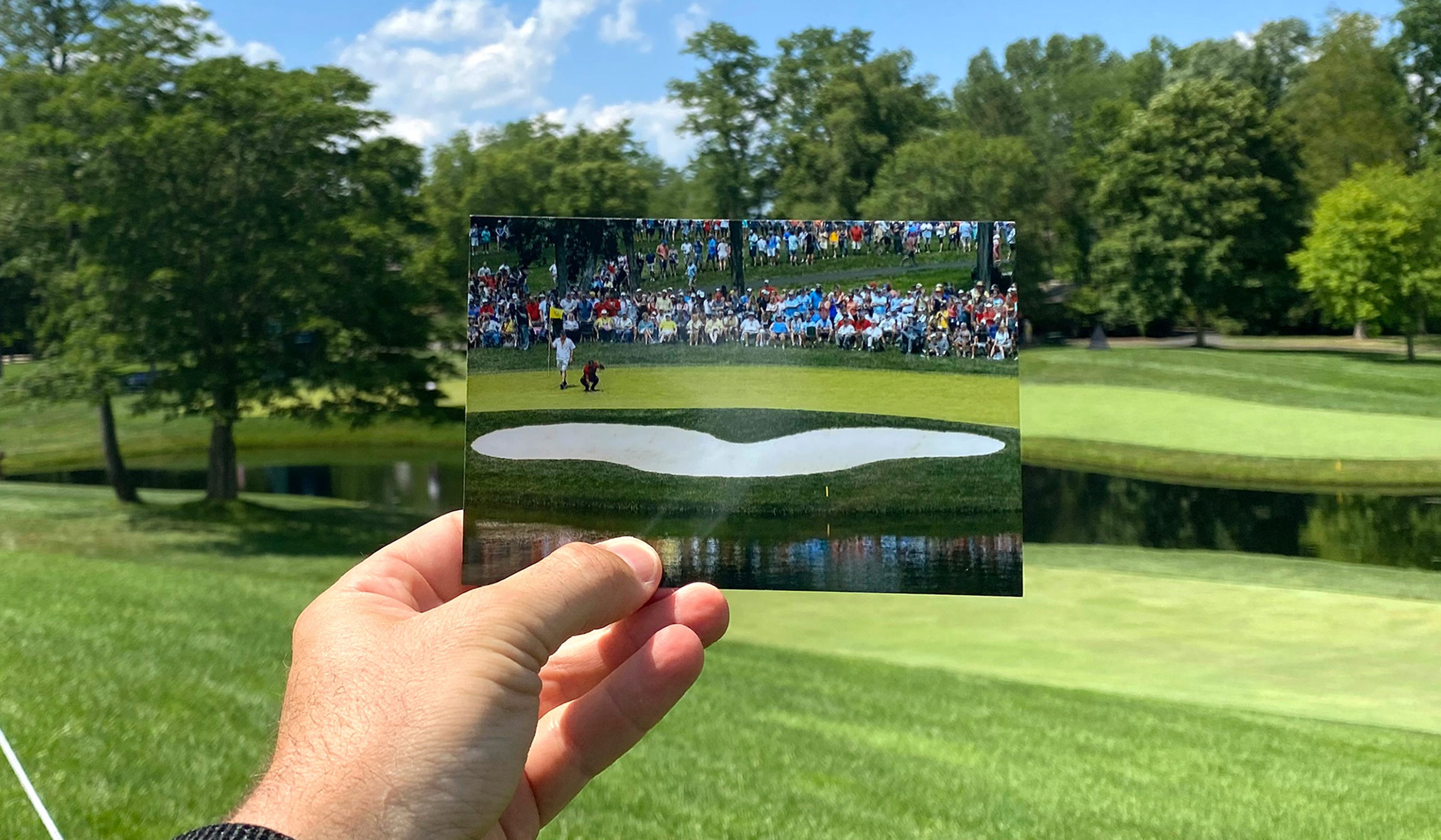
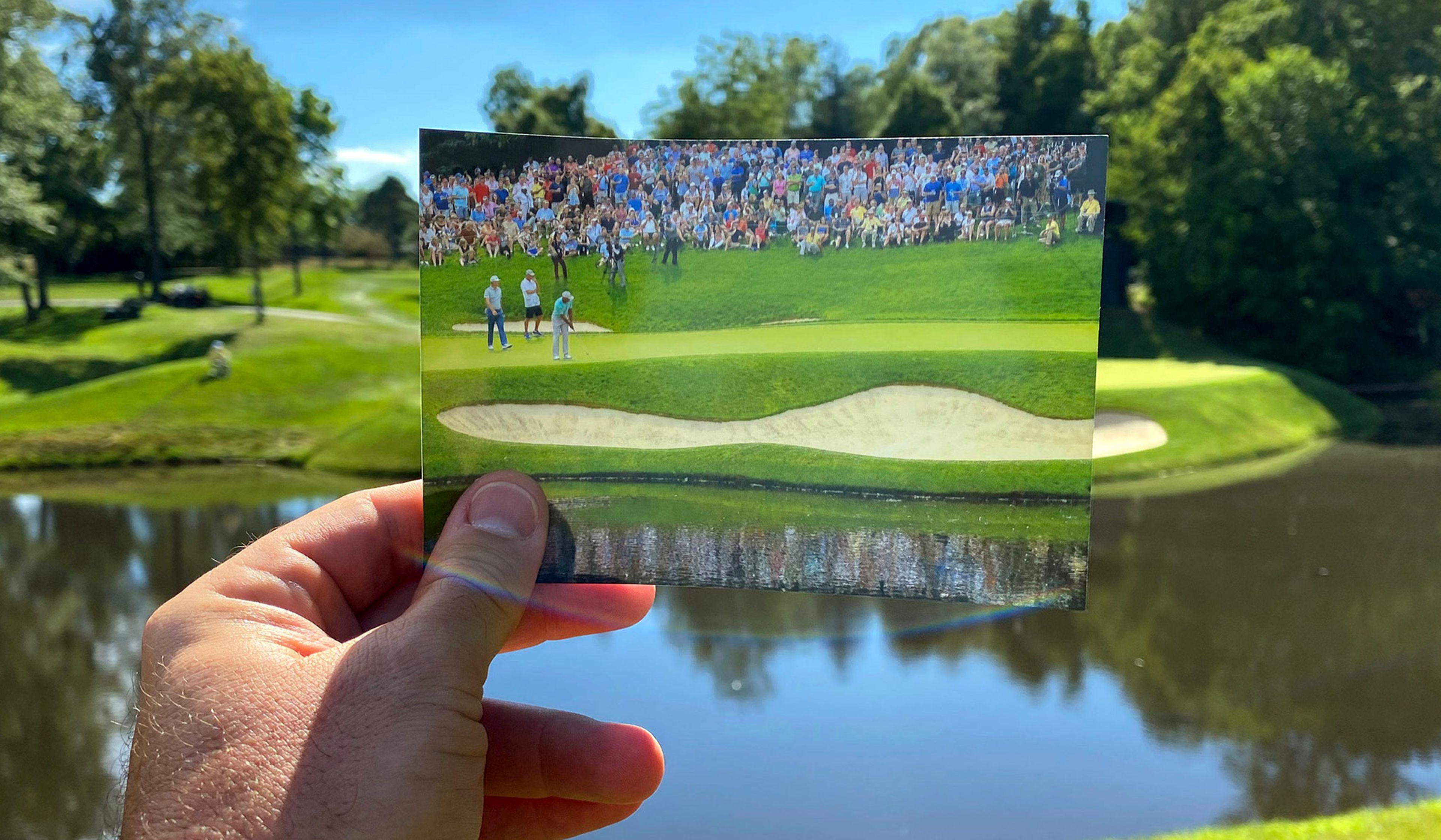
A photo of spectators from the 2019 Memorial Tournament watching Rory McIlroy head to the 15th tee held in the same spot it was taken one year later at the 2020 tournament being played without spectators due to the coronavirus at Muirfield Village Golf Club in Dublin, Ohio, July 17, 2020.
Adam Cairns/The Columbus Dispatch via USA TODAY NETWORK
As they have for centuries, fathers teach sons. One vignette: A Russian father next to me put his hand on the top of his boy’s head, to keep that head still. The lad was so small, he could take pretty much his full swing without hurting his dad.
Hot, hot summer turned into warm fall, which turned into a cooler fall, which turned into winter. One day, I could tell where my ball landed by the puff of snow. Neither snow nor rain nor heat nor gloom of night deters me, usually.
I can practice for about a half hour, 45 minutes, tops. Then I gotta play. What do I mean? Well, I play a round of golf, in my head. I play one of five courses — courses I know every blade of grass of, from my past. (Three in my hometown of Ann Arbor; one in Fairfield, Conn.; one in Austria.) If I miss the ball to the right, I next aim left, and so on. If I think I’ve missed the green, I pitch or chip. I do everything but putt.
All practice and no play makes Jack a dull boy.
Yet, if I don’t end my “round” on a “good one,” I hit more balls. You always have to end on a good one. Sometimes I stay for an extra half hour, trying to end on a good one. Another vignette: I once heard a dad say to his boy, “That was a good one, Max!” It had not been (as Max knew). The dad just wanted to go.
Sometimes, I think I got it. I have solved the puzzle. I’ve dug the game out of the dirt. “Today was positively revelatory,” I once said into my voice memos. (I instruct myself through these memos, on my walk home from the range.) Another time, I actually said, “Eureka!” But then . . .
My beloved friend and coach Ed Klum has a saying: “I got it! I got it!” Wait a beat or two. “I don’t got it.” Jack Nicklaus once said, “Golf is a game of perpetual loss and recovery.”
But what a sweet obsession. There are worse obsessions. Golf can get you away from screens — from your laptop, desktop, and phone — and away from politics (whew). It can consume you, in salubrious ways (mainly).
Two nights ago, I was talking on my phone outside my building. I was wearing a headset. I guess I was feigning my takeaway, as I talked. A young East Asian woman walked by and, with a laugh, said, “Practicing?” I gave her a thumbs-up.
Describing the nature of golf — or at least one aspect of it — I tell two stories. There is the tale of the Scotsman who, after a bad round, threw his clubs into the sea — then drowned, trying to retrieve them. I also tell a tale of my old friend Charlie Green.
One day — hot, hot — he came in off the University of Michigan course. He was sweaty and bedraggled. On his face was a look of utter defeat. He said, “I’ve played golf for 30 years and hated every minute of it.” Then: “What’s our tee time tomorrow?”











Comments