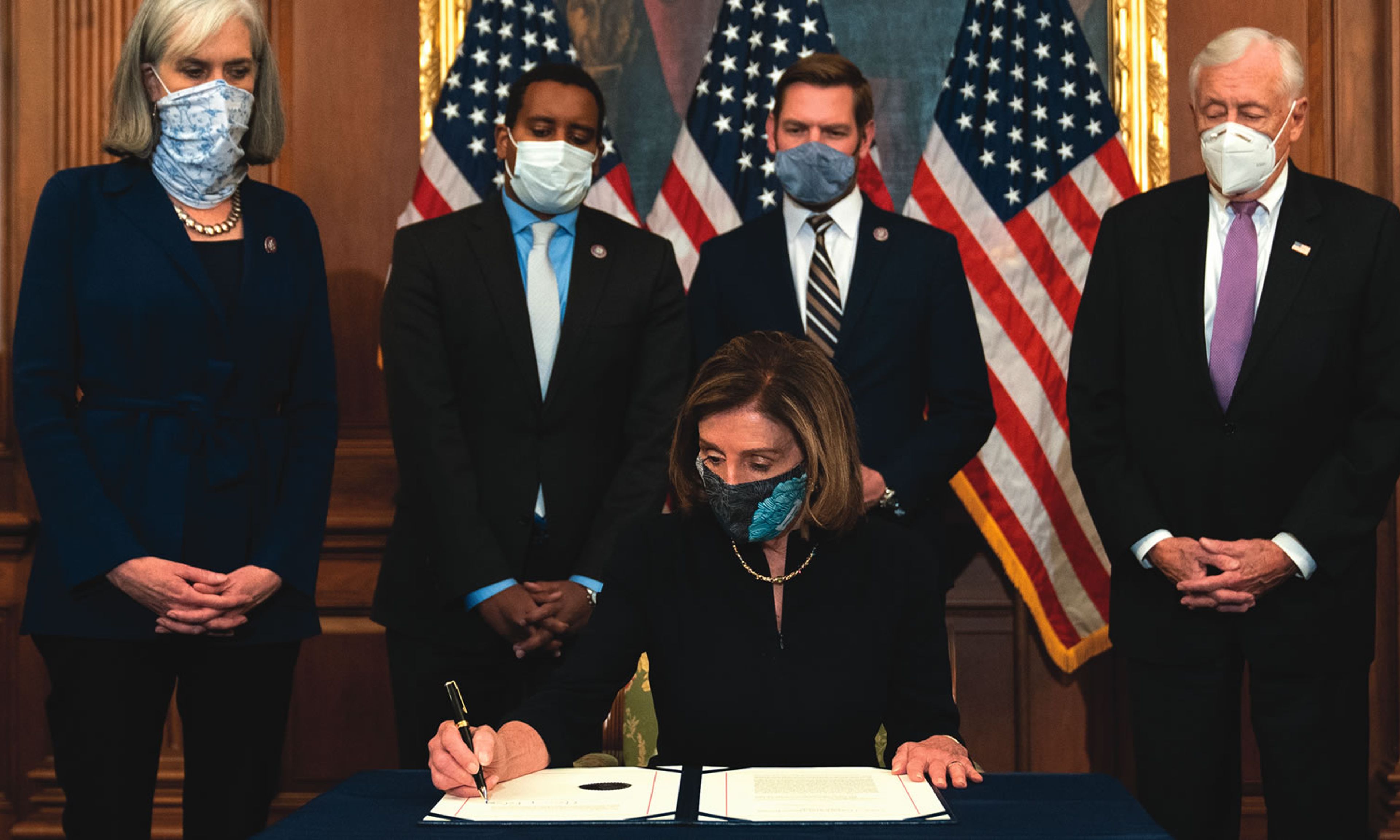
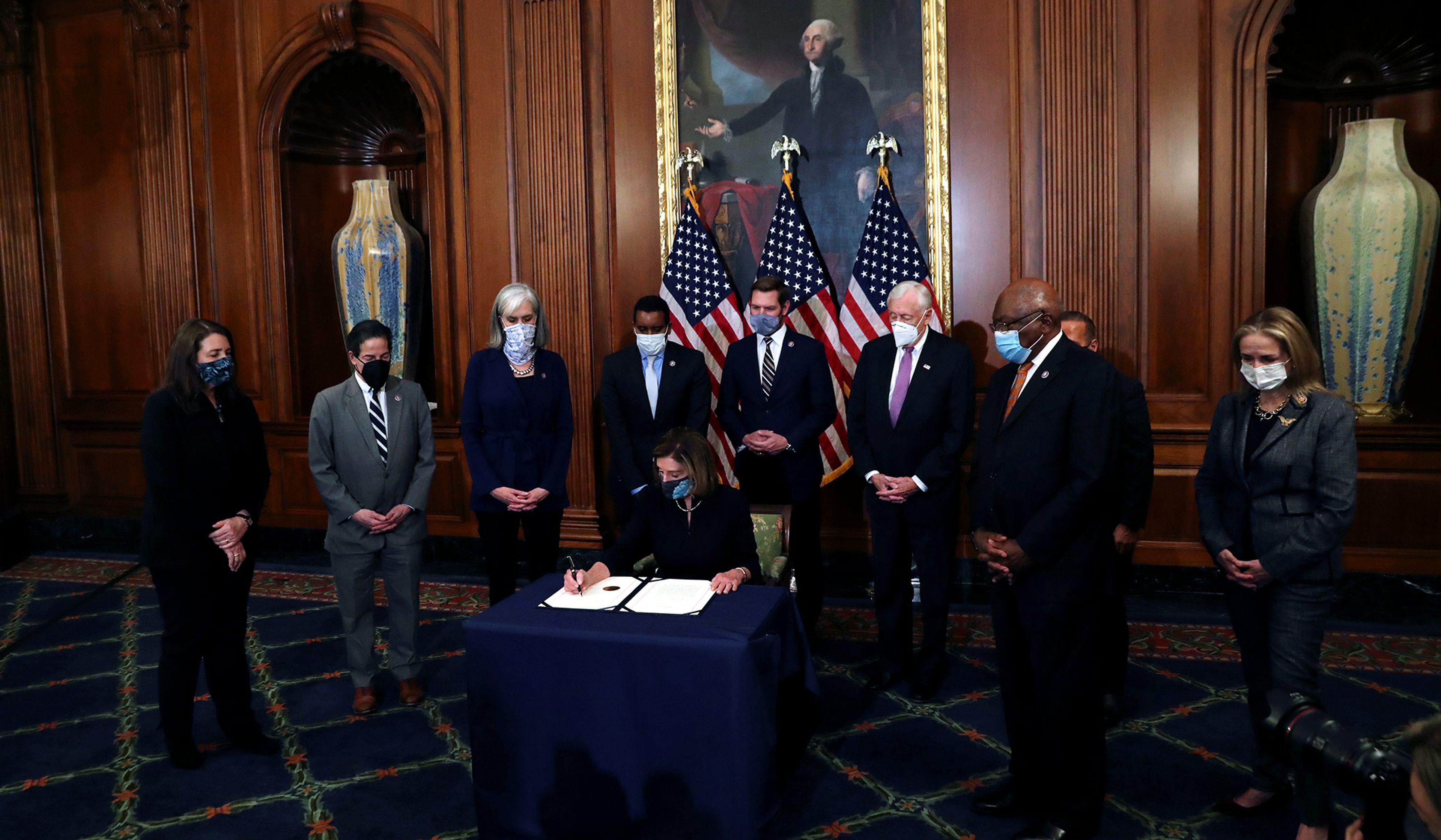
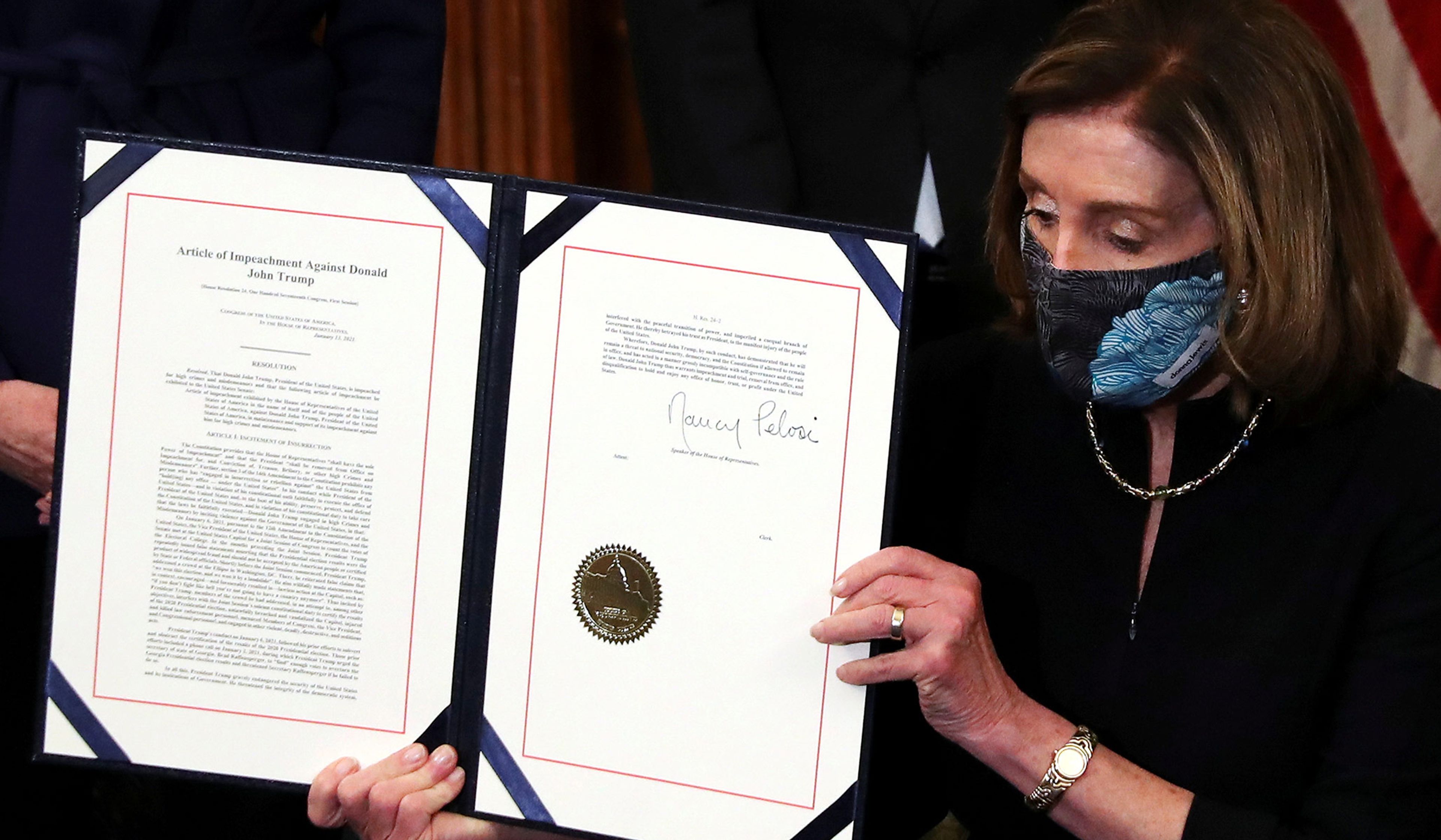
Was the goal to wage partisan combat or to get President Trump impeached? The question is worth asking after House speaker Nancy Pelosi and the Democratic-controlled House rammed through an article of impeachment in a one-day proceeding.
No hearings, no testimony, no Judiciary Committee consideration of the potential legal pitfalls. After just a few hours of clipped arguments, ten Republicans joined all the chamber’s Democrats in citing the president for “incitement of insurrection.” The shame is that it could have been so many more, in a moment that cried out for unified, bipartisan condemnation.
Congressional Democrats overplay their hand more reliably than the sun rises in the east, so a blindly partisan and coldly calculated exercise should never be a surprise. Yet the exploitation of this solemn moment as the occasion for quotidian sleight-of-hand — just days after every member of Congress and Vice President Mike Pence had been under forcible siege, just days after Capitol Police officer Brian Sicknick was murdered while protecting them — is unforgivable.
There was a right way to impeach Donald Trump. This was not it.
The Framers quite intentionally made impeachment very difficult to do, which goes a good bit of the way toward explaining why no president has ever been removed from office by the required two-thirds Senate vote. Three have been acquitted (Andrew Johnson, Bill Clinton, and Trump himself just 13 months ago) after articles of impeachment were adopted by a simple-majority House vote. A fourth, Richard Nixon, who would almost certainly have been removed, was not actually impeached — he resigned before the full House could vote on articles approved by the Judiciary Committee.
Constitutionally and historically speaking, impeachment is rare and acquittal is the default outcome. The Senate-supermajority prerequisite for conviction, expulsion, and disqualification from future office ensures that no president will be removed absent misconduct so egregious that an overwhelming public consensus, cutting across partisan and ideological lines, supports it. Indeed, because impeachment is a political calculation rather than a straight legal question of whether impeachable conduct — “high crimes and misdemeanors” — has occurred, the supermajority hurdle for conviction has generally discouraged the House from even starting down the impeachment path. This is especially true if the grounds are extraneous to core presidential responsibilities, based on flimsy evidence, or transparently partisan (though this prudential restraint was abandoned in Trump’s first impeachment, and in Clinton’s).
Because impeachment-and-removal is so uphill, the task of the House in prosecuting the case is to give the Senate extraordinary reasons to want to convict. Democrats, to the contrary, have given the Senate rationalizations for a not-guilty verdict, most of which involve policy considerations that shift attention away from Trump’s egregious conduct. In tandem with the Constitution’s built-in degree of difficulty, this nearly assures that Trump will be acquitted if the Senate proceeds with a trial.
By delaying several days after the rioting at the Capitol, then ramming an article of impeachment through while the Senate was in recess, House Democrats ensured that Trump could not be tried prior to President-elect Biden’s inauguration. This raises the question whether a president may be “removed” when no longer in office. While the sounder position is that post-presidency impeachment is constitutional (and worth doing to assure disqualification from future office), the issue is disputed among scholars and lawmakers.
Democrats also insisted on titling the impeachment article “Incitement of Insurrection.” There are significant questions about whether Trump’s speech on the Ellipse, as demagogic as it was, rose to the level of incitement in a criminal-law sense (which, because of First Amendment free-speech principles, requires clear calls for violence). Similarly, although the rioting was extremely serious — a violent uprising in the seat of government during which two were killed (Officer Sicknick and a rioter), three other agitators died, and other security personnel were viciously assaulted — the question whether it rose to the sustained upheaval of an “insurrection” is not cut-and-dried.
The insurrection finding is problematic for two additional reasons. First, Democrats rejected claims that months of widespread rioting led by left-wing radicals during this summer’s racial strife constituted insurrection. Second, Democrats clearly wanted the impeachment article to stand as a House finding of fact that an insurrection occurred on January 6; this, they and their allies will argue, triggers the disqualification from holding public office that’s prescribed by Section 3 of the 14th Amendment. Originally adopted to bar former officials of the Confederacy from government positions, the disqualification may be imposed against abettors of insurrection. Progressive legal beagles now theorize that it could be applied not merely to Trump but to any Republicans who were arguably complicit in the insurrection. In the Democrats’ political narrative, these include the many who supported Trump’s two-month campaign, in the courts and in Congress, to alter the result of the election, the objective that ignited the mêlée at the Capitol.
Any of these factors, and all of them in combination, give Republicans defensible reasons to acquit Trump, even while acknowledging that his behavior was condemnable. This is no secret to Democrats, of course. One must ask whether they really wanted to achieve anything more than branding Trump, for all time, the only twice-impeached president.
It would overstate matters to say that a differently constructed case could have made Trump’s impeachment-and-removal probable. But it could have made an acquittal vote much more difficult — as in politically painful — to cast.
An able prosecutor highlights misconduct that is indefensible and that righteously inflames the jury. Tough legal or factual issues are soft-pedaled: The prosecution takes what advantage it can get from them, while emphasizing that they are not make-or-break.
In Trump’s case, the truly indefensible conduct was not the arguable incitement. It was his utter failure — his perverse refusal — to respond as president and commander in chief to a forcible attack on the seat of government. Trump publicly rebuked his own vice president for refusing to tamper with the states’ electoral votes, even as rioters were storming the Capitol. While Pence, lawmakers, and security personnel were under siege, Trump was glued to the television — seemingly thrilled that his supporters were fighting for him, refusing to take phone calls, and turning a deaf ear to staff pleas that he deploy forces to quell the violence. He outrageously refused to tell his supporters to desist and evacuate. When he did finally speak, hours too late, he could not find it in himself to condemn the rioters and instead expressed “love” and empathy for their passion over the supposedly stolen election.
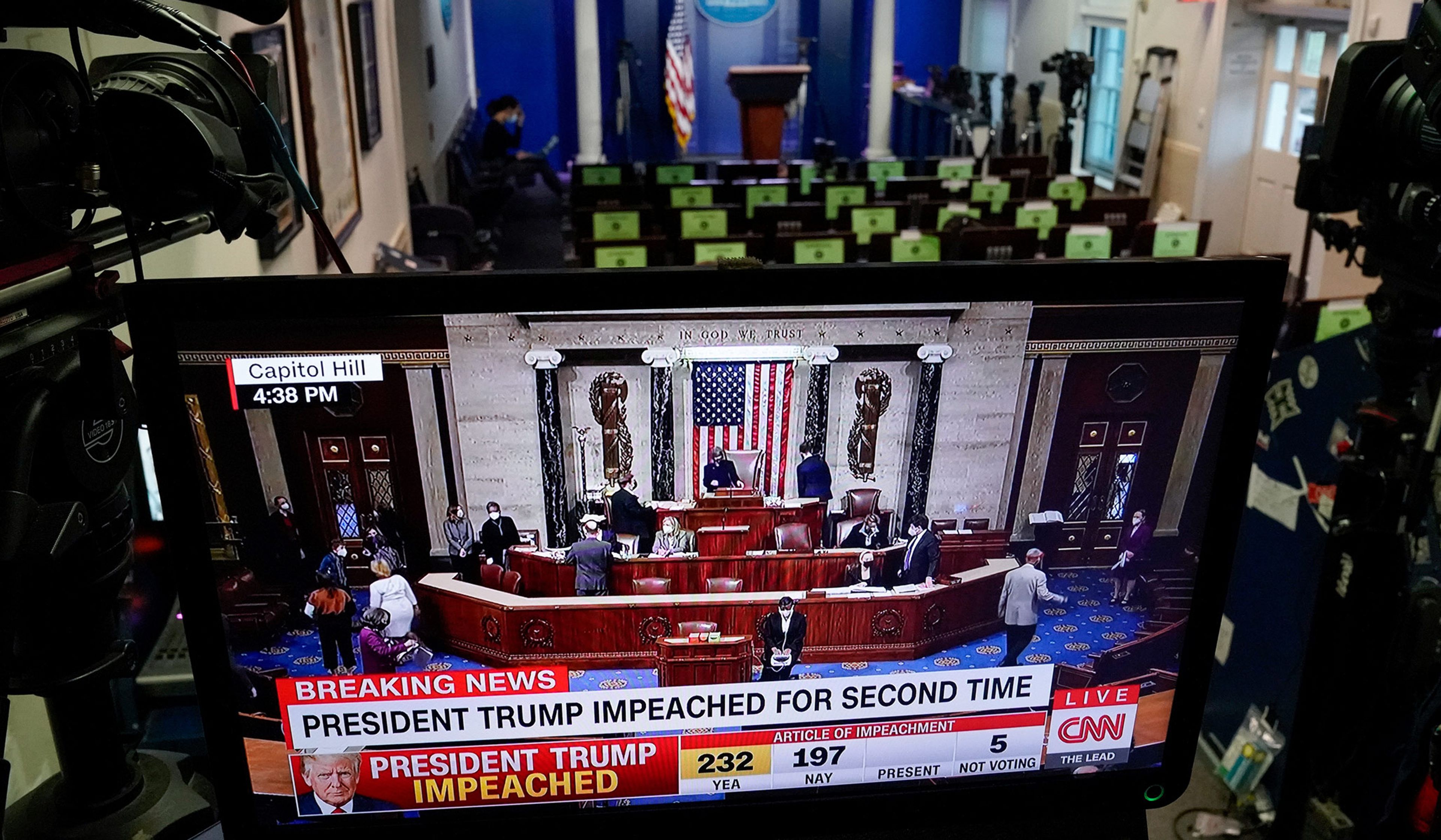
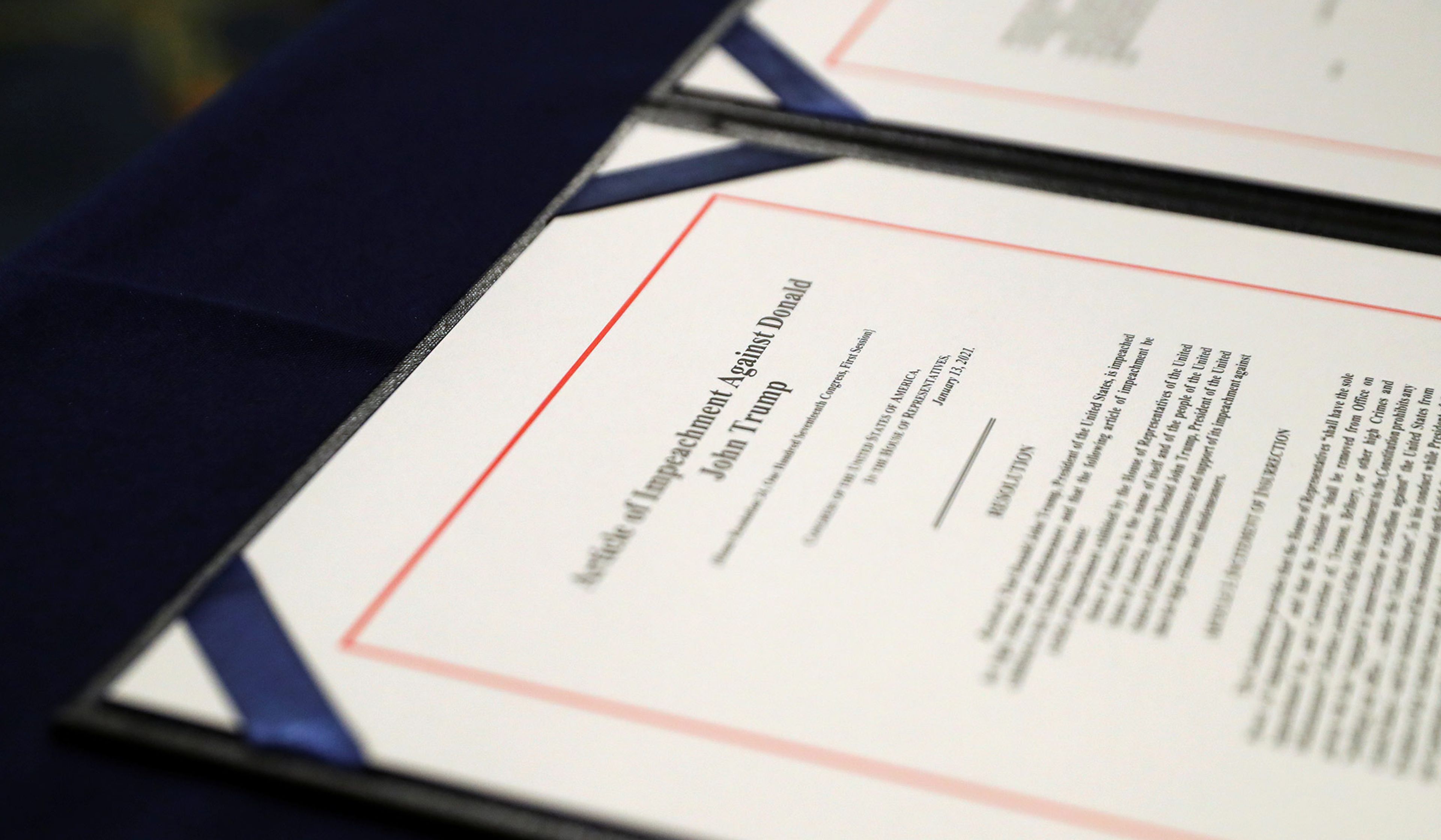
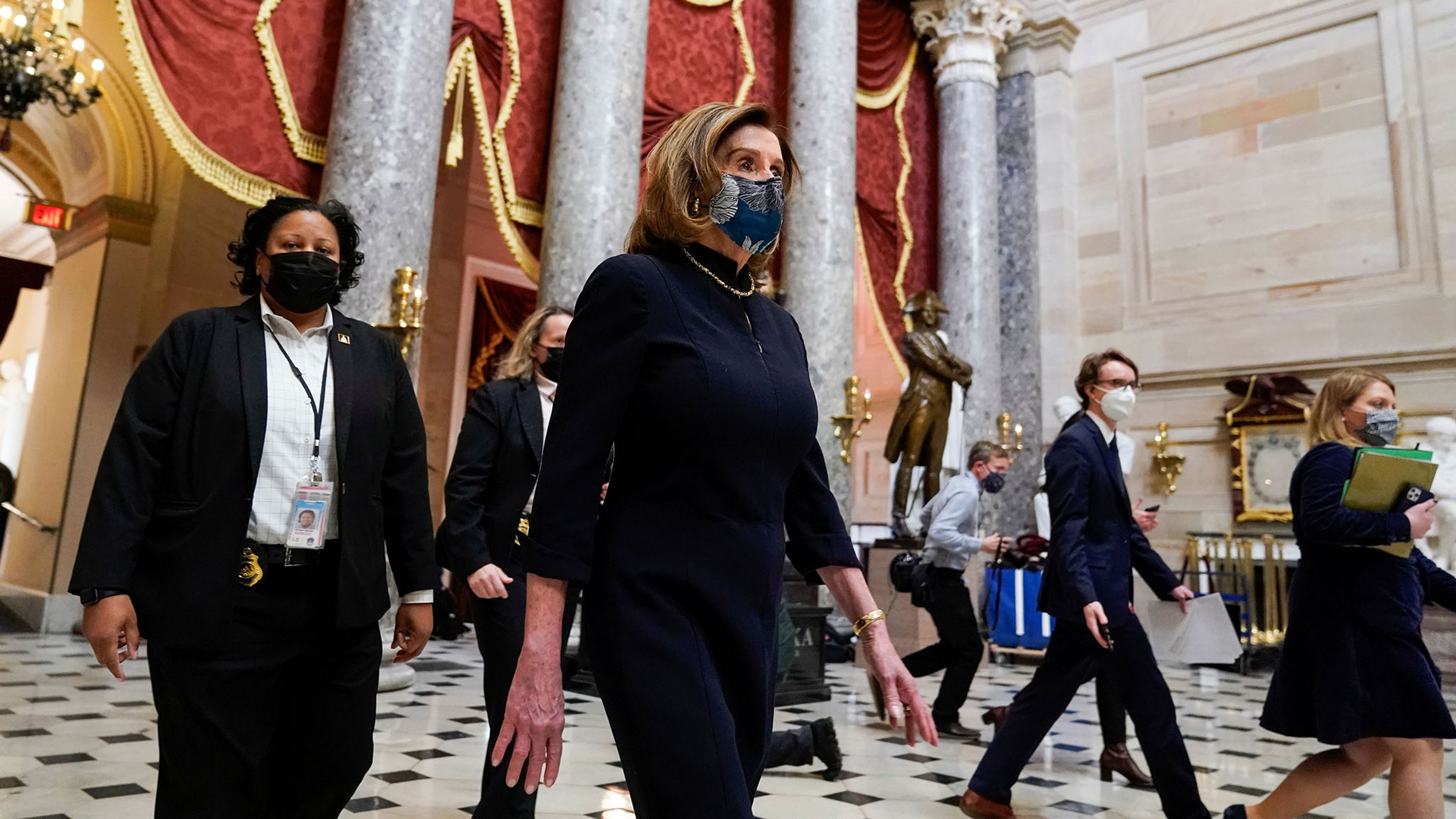
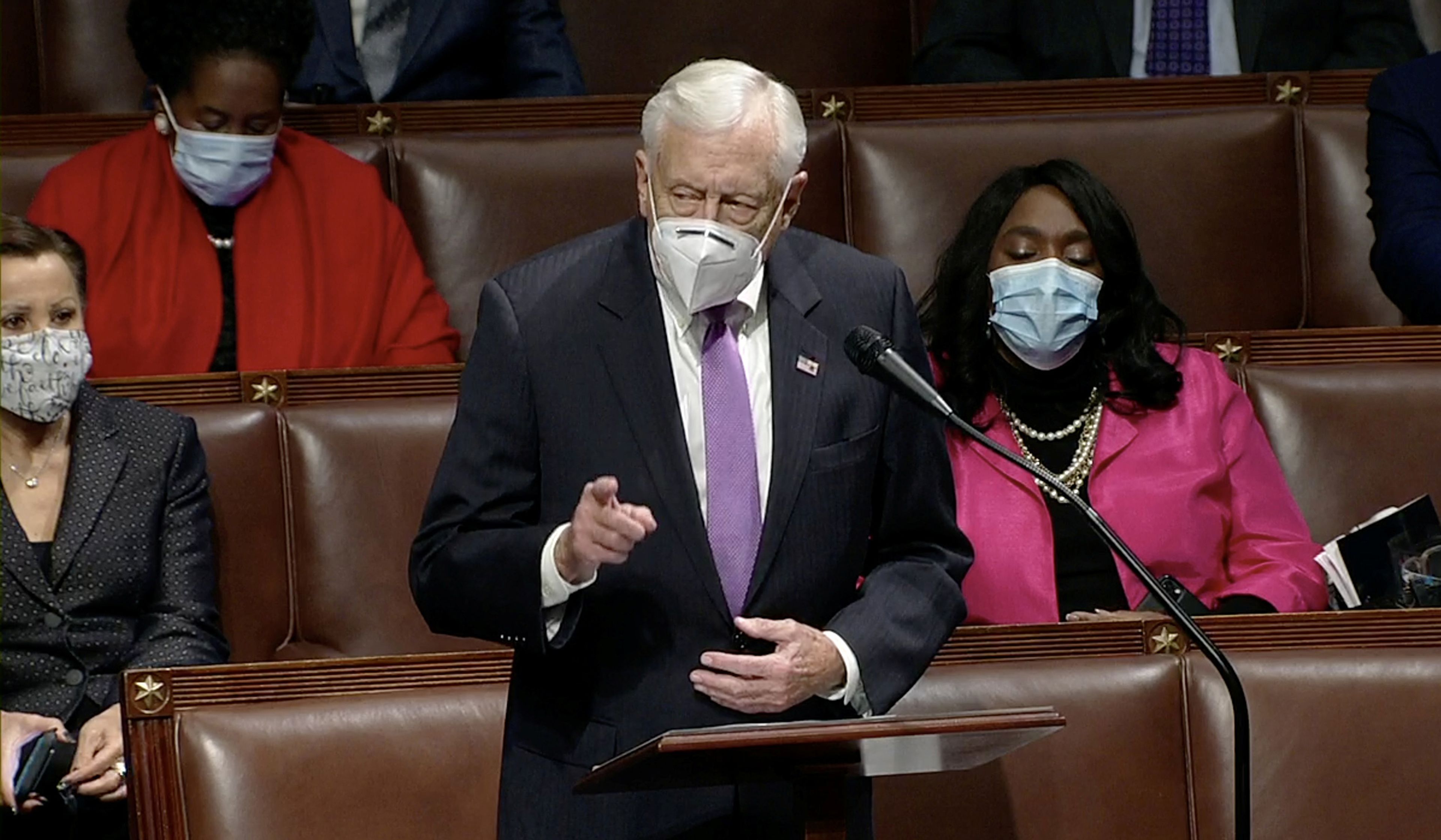
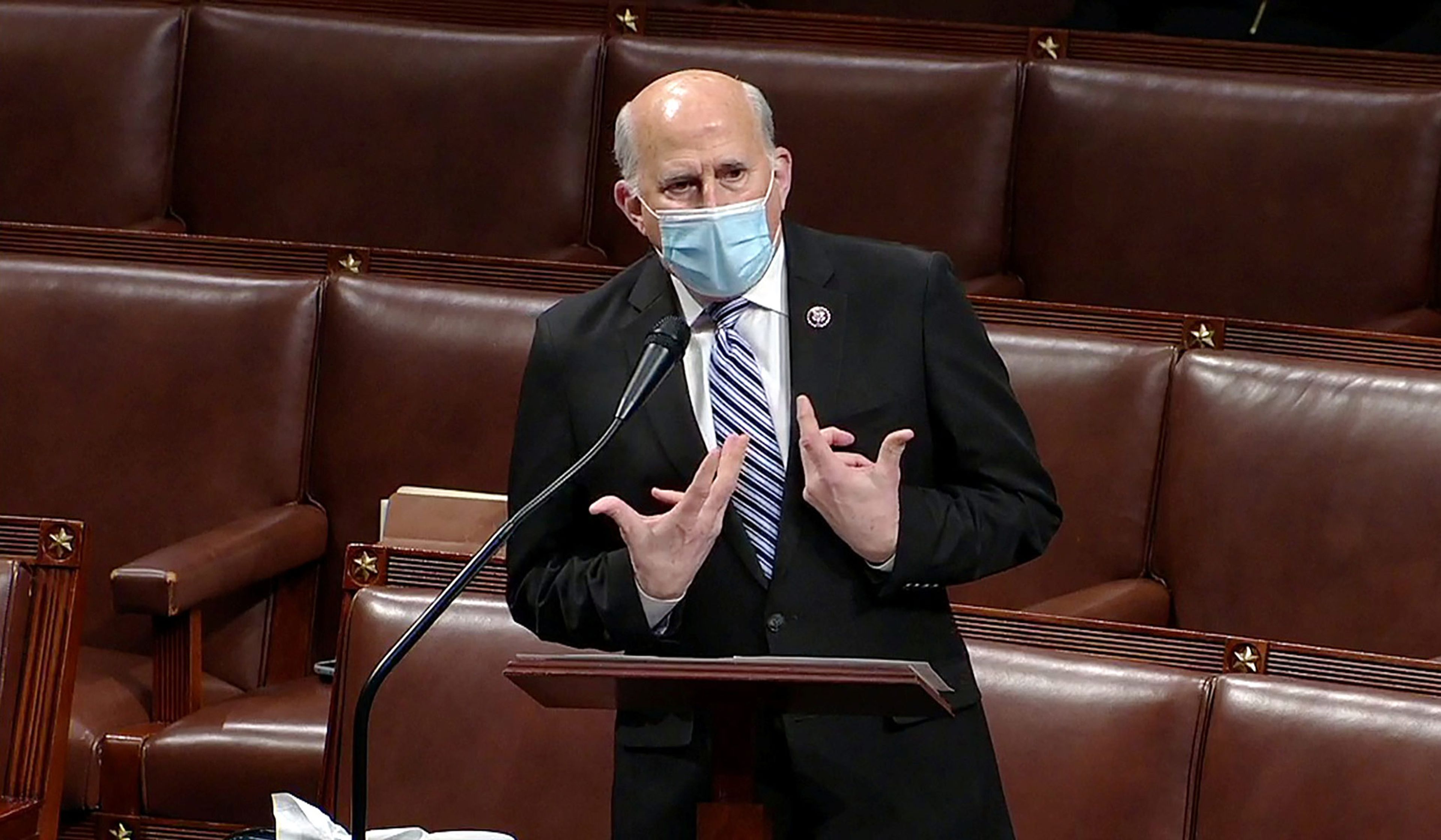
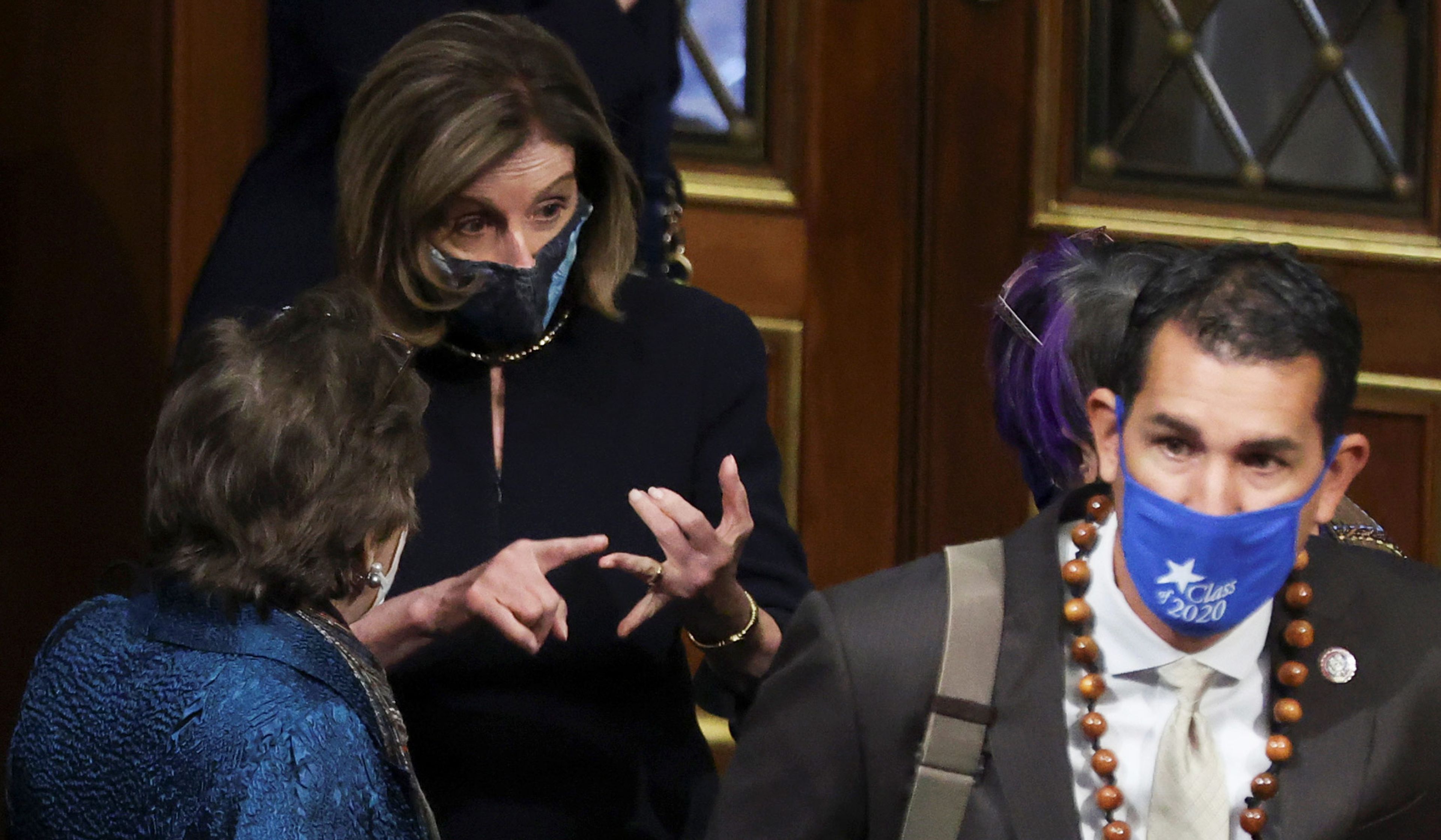
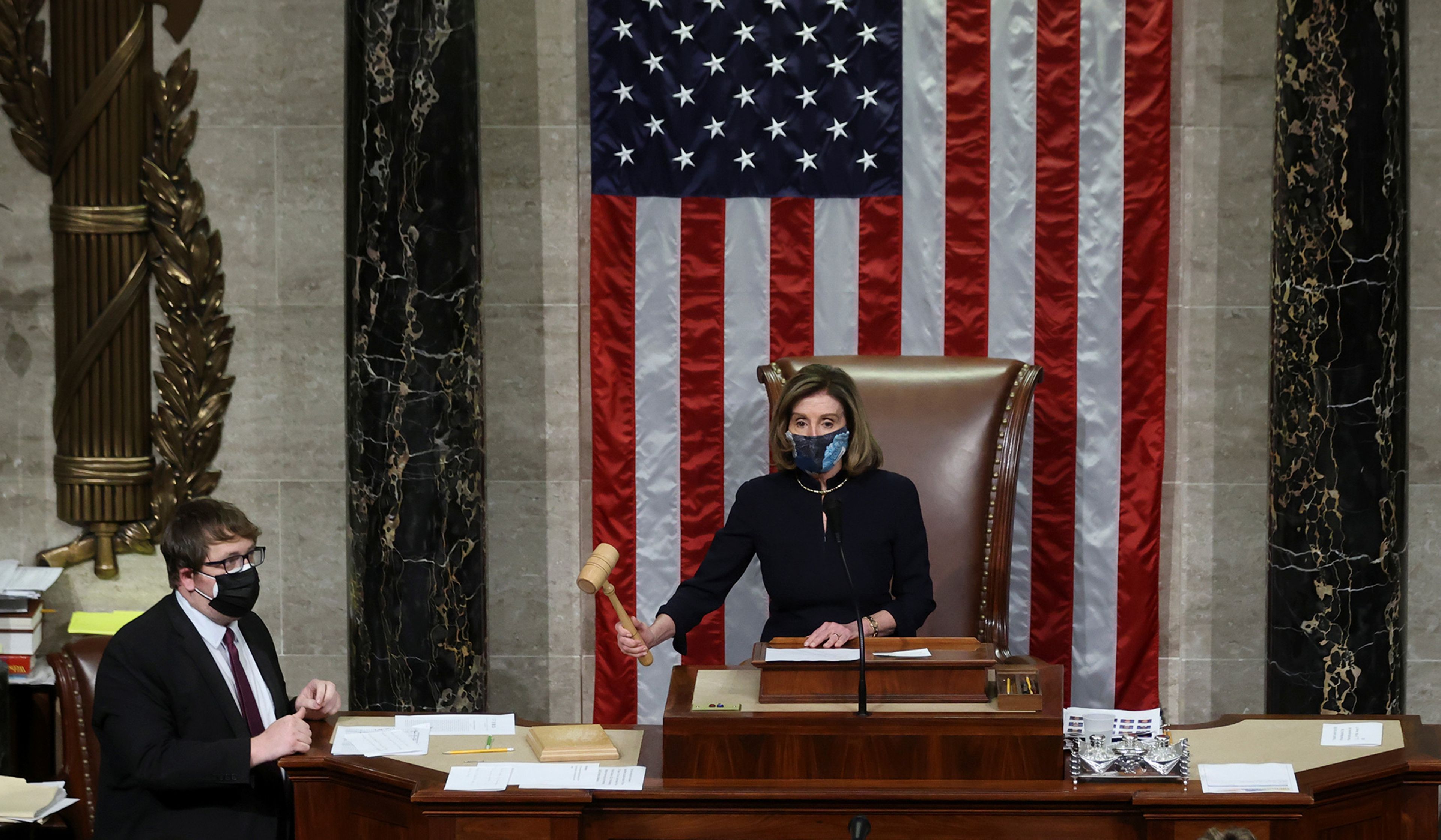
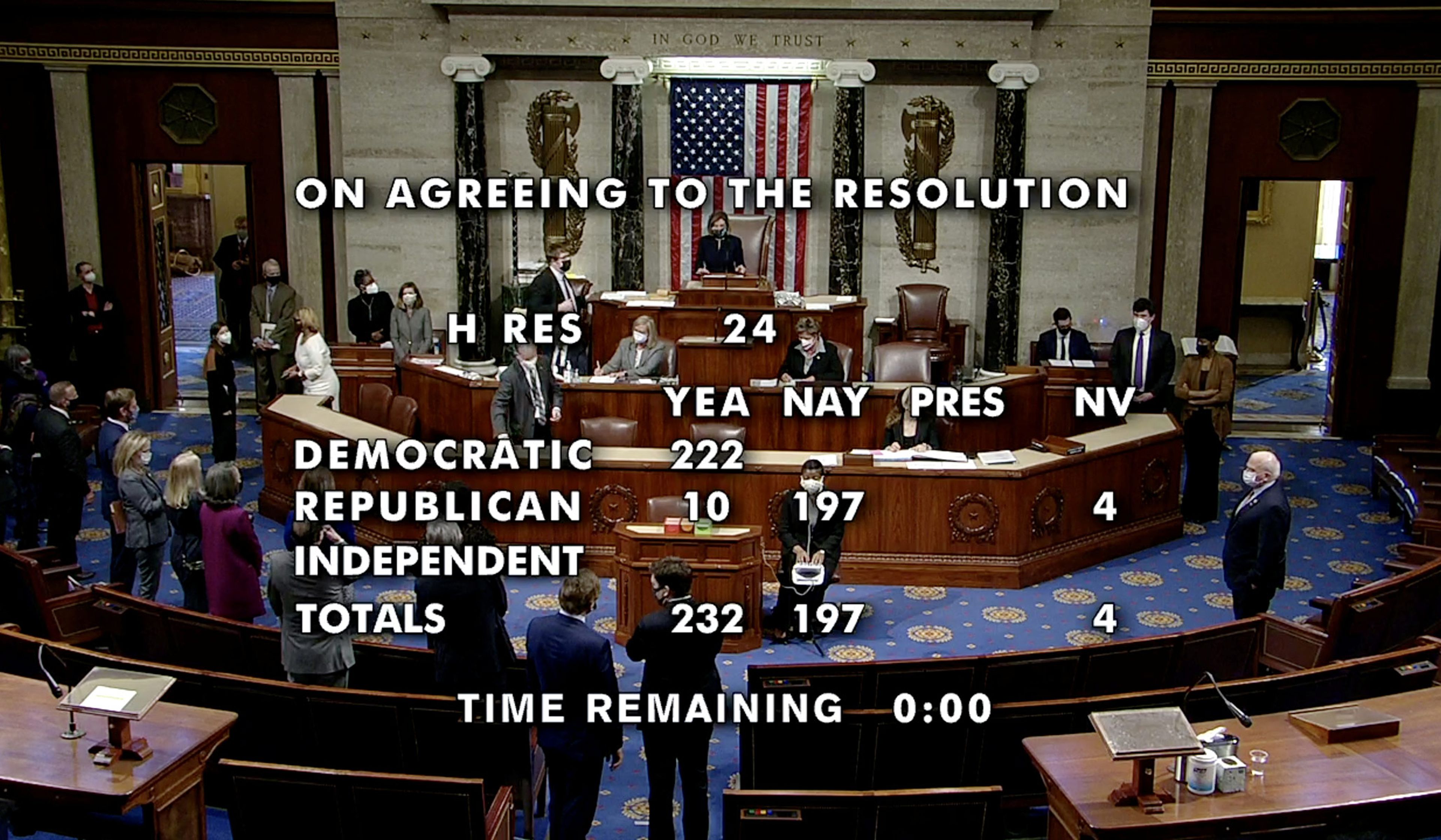
A TV screen in the White House briefing room shows the House of Representatives impeaching President Donald Trump for the second time in Washington, D.C., January 13, 2021.
Erin Scott/Reuters
This was a shocking dereliction of duty. Although impeachment does not require a prosecutable crime, a military commander would be court-martialed for such abdication. To have framed the case as dereliction would have made Officer Sicknick the face of the impeachment trial. Moreover, instead of playing defense in arguing over whether Trump had committed “incitement,” the prosecution would be on offense: Regardless of whether Trump technically incited violence, he is even more culpable for failing to put down the violence after encouraging supporters to march on the Capitol. Furthermore, if dereliction had been the central issue, it would make no difference whether what happened had been deemed an insurrection, a riot, or a protest run amok.
The other indefensible aspect of Trump’s performance relates to why he was agitating supporters. Even if we stipulate that he did not want violence, he was trying to create political pressure to induce the vice president and congressional Republicans to refuse to perform their constitutional obligation to count the states’ electoral votes and acknowledge Biden as the winner of the election. The states are sovereign on the matter of certifying their own election results. Congress has no invalidation authority if a state has certified a single slate of electors, particularly if it does so consistently with its popular-election result. The suggestion that the vice president unilaterally has such authority is patently absurd. Thus, the context for the rioting was Trump’s demagogic undermining of the Twelfth Amendment and principles of federalism. Such a betrayal of the Constitution he was sworn to preserve, protect, and defend is itself worthy of an impeachment article.
Had the House impeached Trump for dereliction of duty and an unconstitutional attempt to delegitimize the election, and done so immediately after the January 6 rioting rather than taking five days off before acting, the case would have been compelling. With Officer Sicknick’s tragic death, and stunning video of another officer being beaten by rioters with a flagpole, the House would have been underscoring that national security would be imperiled by leaving a derelict president in power for one more moment. The Senate would have been placed under enormous pressure to come back into session and at least consider giving Trump a swift trial. Center stage would have been Nero fiddling while Rome burned, not an esoteric debate over the legal technicalities of “incitement” and “insurrection.”
Impeachment-and-removal by Congress is not an impossible task. But it is an improbable one. To make it plausible, the House must act in a crisis as if there really is a crisis and plead articles of impeachment that describe the crisis in all its undeniable gravity. In Donald Trump’s second impeachment, that did not happen.











Comments